
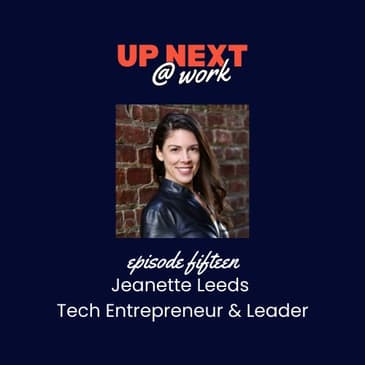
Jeanette Leeds, talent acquisition tech expert and co-host of the High Volume Hiring podcast, joins Jeanne Achille for an insightful conversation on the nuances of recruitment. The former CEO of Hourly by AMS, Jeanette has deep expertise in Recruitment Process Outsourcing (RPO) for high-volume scenarios such as campus recruiting and retail hiring. Drawing on Jeanette's rich background, this episode explores how processes and strategies can adapt across diverse hiring needs while maintaining efficiency and scalability.
Episode highlights include:
- A breakdown of skillsets and personality types suited for campus recruiting, high-volume hiring, and executive recruiting.
- A comparison of high-volume hiring to sales churn, emphasizing compensation level, flexibility, and unique perks as top candidate attractors.
- Guidance on selecting the right talent acquisition platform, tailored to your organization’s specific needs.
- Predictions for 2025, including AI-powered voice agents and Interview Intelligence tools transforming recruitment workflows.
To hear more about Jeanette's work, connect with her on LinkedIn or visit JeanetteLeeds.com. You can also tune in to the High Volume Hiring podcast, part of the WRKdefined network and available on all major platforms, for more valuable insights.
Powered by the WRKdefined Podcast Network.
[00:00:13] Hello and welcome to the next episode of Up Next at Work. We are so excited today because we're bringing you both video and audio, so really getting ready to go into 2025 with a bang. I'm Gina Kille and I'm your host today and it is absolutely my pleasure to have Jeanette Leeds with me. Jeanette and I have known each other for quite some time, but I'm not going to try to introduce her.
[00:00:40] I'm going to ask her to please introduce herself to you, our listeners. Well, Jean, thank you so much for having me today. It's so good to see you. I'm like, I don't know. Do I face you? Do I face the screen? I know. I'm going to face the screen. Probably the right thing to do, yes. Let's see. Well, let me introduce myself, which is always interesting because I've had such a varied background over the past 20-something years in recruiting and TA Tech.
[00:01:04] So, let's see. Right now, I'm the co-host of the High Volume Hiring Podcast. I spent the past, I don't know, two plus years over at AMS running their hourly by AMS business as the CEO and then also sat on their America's leadership team focusing on the high volume practice. You know, not everyone might know what AMS stands for. If we could kind of roll back to their prior iterations.
[00:01:33] Prior iterations, for those that don't know the acronym, they used to be known as Alexander Mann Solutions. Other people will know them as an RPO, more than an RPO. But that was really the area that I focused on was the high volume RPO space, bringing together, as I used to say, the best of tech process and people. Because I've always believed for years you can't have one without the other two. It's a three-legged stool for sure. It is. It is.
[00:02:03] So, let's see. Prior to that, for almost a decade, I think it was nine years, I was running the Americas for Olio. Yeah. Which also had another brand. Rich had another brand. Rich had another brand. So, it ran the rebrand. It used to be known as WCN. Yeah. And I kept hearing that people thought it was a radio station. Missing one letter. Literally. And I'm like, no, no, no. We need to rebrand. So, we came up with the name Olio and I was off to the races.
[00:02:32] I was the first employee there in the U.S. Yeah. And built that whole business up to be, jeez, I think by the time I left, it was 40% of the revenue globally. So, that was really fun. Wow. Just figuring it all out from being first employee in the U.S. to doing it all. Yeah. And let's say before that, I was a practitioner on Wall Street. So, that's where I really started cutting my teeth. So, Lehman Brothers, Credit Suisse, running campus recruiting. Yeah. Yeah. We've got to talk about that.
[00:03:02] That is a wild world. Oh, my gosh. So, a lot of – you know, focus has really always been in – you know, I'll call it the high-volume space. But I include campus recruiting and graduate recruiting in that because it's all – I mean, it's like how do you deal with a ton of candidates, whether it's, you know, the white-collar professional college kids or frontline workers who are, you know, working at retail.
[00:03:27] It's – there's a lot of similarities in terms of how do you deal with the mass and the bulk processing. And that's just been my – Yeah. So, from a process standpoint, like is the process – can you move that process from campus recruiting to high-volume hiring, let's say, at a Walmart? I mean, can you follow the same practices or are they very, very diverse? That's a really good question. It's a yes or no question. It's a yes or no answer, rather, I should say.
[00:03:57] When you're doing things in scale and bulk, like there's a lot of similarities. So, whether you – campus recruiting is an example. You may have – you're about to interview in one day 13, 25, 30, 100 college kids or MBA students. And so, there's a volume there to it and there's a certain way to process and how do you handle that.
[00:04:20] And when you're, let's say, at Walmart and you're hiring, you know, let's say 1,000 or you're interviewing, you have a career fair day or people are coming in. And, again, it's how do you process a lot of people in a short amount of time. Lots of similarities, but it becomes nuanced because, you know, think about it with – and I'll make some generalities here – with, let's say, retail hiring. A lot of times, you know, you just want to say, okay, what are the qualifications?
[00:04:49] And they're simpler qualifications in some respects. Hey, you know, have you ever worked at a cash register? Do you have certain experience? And, hey, are you interested or what are your shifts? A few questions and off to the races, you can hire them really quickly. Can you work weekends? Can you work nights? What are these things? And if the answer is yes, you can actually very, very quickly give someone an offer. And you can use tech to make that happen in two seconds.
[00:05:14] Whereas college recruiting, campus recruiting, that tends to be a longer process. How do you think about someone's educational background or their experience in relating to a different kind of a skills type of job? And so it's sort of – I always think of campus recruiting as a hybrid between real high volume, traditionally what people think about, and professional hiring, which is a one – let me hire one person for this one job.
[00:05:42] And so it's sort of the blend of the two. So that's really interesting. Talk to me about what that looks like from the recruiter perspective. Like are those very different types of recruiters as well? Oh, yes. Completely. She whispers into the microphone. Yes. Yes, I'll look at everyone. Oh, yes. Yes, yes, yes. So it's really interesting because – and also if you throw in, let's say, executive recruiting as well, like that is also, I think, a very different skill set.
[00:06:11] So we'll start with campus recruiting. That role when you're in a campus recruiter, either as a recruiter or a manager or leader, that job changes completely depending on the time of year. It's very seasonal. So you become – sometimes you're doing recruiting. Sometimes you're doing event planning because there's a lot of events.
[00:06:32] Sometimes you become – I always joke around like the guidance counselor for the interns that you've just hired that you're going to give offers to the following at the end. So that role really changes. And that skill set, there's a part of that job that's very much a recruiter, but there are other parts of it that are completely transferable to other jobs. You know, there are some similarities when you're doing – as a high-volume recruiter, you are just constantly hiring, hiring.
[00:07:01] And sometimes there's an event element to it, but it's just how do I take hundreds of thousands and just process really quickly and deal with – It feels like you're referring to churn. I'm watching your body language here. It is a churn. Yeah. It is a churn. And I think the big challenge there is how can you personalize that churn with the high-volume – And hopefully retain some of those. And retain, yeah. And there's different challenges in terms of getting those candidates to show up to the interviews. There's a big issue with ghosting.
[00:07:31] So how can you think about the process and get people to really, you know, show up and then stay there? So is compensation a huge issue for those people? I mean, you know, we hear about McDonald's paying $20 an hour now. I mean, is that it? Or is it – That's part of it. Would it be the work conditions? I imagine it's multifaceted. Yeah, it's multifaceted. It's the pay. It's the flexibility as well. A lot of these are shifts. And so being flexible on what shifts and timing.
[00:08:00] And, you know, people have different things going on in their life. So if you always – a lot of workers sometimes won't know their hours and their shifts that they're working until the week before. Wow. And it's like, how do you run your life? Right. You know – What if you have a wedding to go to? Or like all of a sudden, I don't know, if you're a working parent. Right. And you have to pick your kid up from something like – and you don't know. Right. It's just – Or the school plays that day. And your child is going to be heartbroken if you can't be there. Exactly.
[00:08:26] So from a planning perspective, I find the organizations that are much better with being flexible on the shifts, giving schedules in advance, but having that flexibility, that makes a big, big difference. Certain benefits as well. Really? Yeah. Like what type of benefits? There are some organizations that are – benefits even around when you get paid.
[00:08:48] So there's some interesting tech out there around where you're going to get actually your paycheck like each day. Or like I want to get paid for the hours I worked for the past two days. And maybe I take a little cut where I'm not getting – I don't know, maybe you've paid the tech up at like a dollar or something. But that's a big perk because sometimes you just need your money. Some of these – you know, people are living paycheck to paycheck.
[00:09:15] Or maybe it's, I don't know, a high school kid that all of a sudden wants to go buy – They want to go out for the weekend. Yeah, sure. Or something. Right. They worked Wednesday, Thursday. Exactly. They're like, wait, I'm not going to pay for like a couple weeks. Because I want some money to go buy or whatever. So it's interesting. Some of those like interesting benefits are different than how – I don't know. I even thought about it. Yeah. You know, I can't even imagine. I remember it being like a discipline. If you got paid every two weeks, it was like, oh my gosh, you know, you had to wait.
[00:09:45] Yeah, exactly. And yeah, so I think we assume that there are a lot of kids that take those hourly jobs. What about the adults that take those hourly jobs? There is a lot of adults. And also retirees. You know, people where, you know, maybe it's, again, talking about benefits. Let me get, you know, some health care benefits instead. Or it's like second career. They're like, I'm retired, but I want to do something. Sometimes they have to. Yeah, and they have to.
[00:10:14] I guess some people – Yes. You know, depending on what your earnings history had been. Absolutely. Now, of course, I think no one knows. So, yes. Yes, yes. We'll get into that. That's a whole other conversation. Absolutely. Wow. So, I want to go back to something I think I heard you say about different types of recruiters and the skill sets that recruiters need to have.
[00:10:44] You mentioned executive recruiters. Talk to me about, like, who is – I think when people hear the word recruiter, it's very flat. Yeah. You know, like people just think, oh, well, you're a recruiter and you recruit and that's it. You're handed the rec and you have X amount of recs to, you know, manage. Right. But executive recruiting has to be very unique. It is very unique. I mean, and that's an interesting thing because I think everyone we think of recruiting defaults to –
[00:11:13] I call that regular recruiting, right? Yeah. Like you have one job. It's someone, like, mid-level or what – and you're just, okay, one-on-one. Like, I have to hire one. But, yeah, executive recruiting, I mean, usually those are – you know, those roles are not as many. You have to be super well-networked. The best executive recruiters I've seen are so good at maintaining this incredible network.
[00:11:36] And it's almost where when the role comes up, they can go tap into it and they're excellent salespeople as well. I mean, I do think recruiting in general is – Oh, I agree. Sales and marketing is great. I agree totally. I started as a recruiter. I totally could really – Never did executive recruiting. I imagine that requires a very deft touch. Absolutely. Because you've got to send the right person in on that type of assignment.
[00:12:03] And you really have to understand the role you're hiring for and the business as well. It is like a true partnership. And those are the ones that are the most successful. I mean, I think regardless of any kind of recruiting you do, you need to – you're always going to be more successful if you can understand what those challenges are, what the business really, really needs. But at that executive level, talk about one hire. If that goes wrong? Yeah, that could be more than disastrous. Yes.
[00:12:32] And a career-limiting situation for that recruiter, I imagine. Yeah. So talk to me about the tech. I mean, you – I have known you all these years, which is truly amazing since we're – okay, I'll say I'm 32 and you're 27. I'm 24. You're talking about – Oh, okay. I'm sorry. Oh, my goodness. Okay. Okay. You've seen a lot of tech. Yes.
[00:12:58] There's – you know, everyone's like, oh, ATS wars and, oh, CRM and, oh, here's the next, you know, great buzzy thing that's going to change everything. Yeah. Is it the tech? Is it the people? Is it the process? Like does the tech really change the game? I think it can, and I've seen it change the game if it's used when thinking about the process. Okay. And the people running.
[00:13:26] So you have to think about – again, we were talking about like a three-legged school. Yeah. All three together because you can have the best tech, but if you're trying to use it – and again, how do we define best, right? Let's just sort of put that aside for a second. But if you're not using it for the right use case that that tech was originally built for and to be used for, then you're not going to get anywhere. Or if you haven't trained your people to use it as well. So you could have, let's say, really – I don't know, a bad process, an old-school process and try and, you know, use the tech. Slap tech on it. Yeah, and it doesn't work.
[00:13:55] So you really, really, really have to think of it all together. And when that happens, that's magical. Like that is where there's like game changing. That's so interesting because so many people will blame tech. Always. And throw something out. You know, it's like throwing the baby out with the bathwater and they perhaps had licensed the wrong tech in the first place. They've licensed the wrong tech. They may have implemented it in the wrong way, configured it in a way that wasn't maybe overconfiguration or, again, wrong process.
[00:14:26] What I think is so interesting is hearing people talk about, oh, this tech – oh, they're the worst. Yeah. And then you sort of dig in and you're like, okay, but you were using something that maybe, let's say, that was supposed to be for high volume. And you're trying to, you know, use it for executive recruiting, right? Like that's – of course it's going to be the worst. You're hiring scientists at a pharmaceutical company. Exactly. And you need to hire 30 a year. Of course you're going to be like, oh, this is the worst. So it's really important to, you know, think about, okay, well, what am I trying to do? What am I trying to achieve?
[00:14:53] And then let's figure out, is this the right tech? Do we need to maybe just reconfigure the tech? Do we need to re-implicate? Like a lot of times what people have can be – what would be the word? Optimized. Optimized. Yes. Optimized. I mean, that's not to say like some – Optimization is – Maybe – I'm not sure if it's the 2024 mantra. I'm not sure. I know. I know. Let me ask you about your predictions in a moment. I know. I was going to say, I mean, I do think there's a lot of new tech and AI.
[00:15:21] Not to use the buzzword, but things out there that I do think are game-changing if they're used in the way that they, you know, I feel like should be used to really, you know, change the game. So I'm going to put you on the spot. Yeah. Not that you're already on the spot here. So how do I learn what I should be looking for? How do I learn what questions to ask? Who do I turn to?
[00:15:50] Who's my trusted like Sherpa? You know. I mean – Because we have a lot of snake oil salesmen out there. You know what? That's – Have you ever been to a webinar where the topic was great, but there wasn't enough time to ask questions or have a dialogue to learn more? Well, welcome to HR and Payroll 2.0, the podcast where those post-webinar questions become episodes. We feature HR practitioners, leaders, and founders of HR, payroll, and workplace innovation and transformation sharing their insights and lessons learned from the trenches.
[00:16:19] We dig in to share the knowledge and tips that can help modern HR and payroll leaders navigate the challenges and opportunities ahead. So join us for highly authentic, unscripted conversations, and let's learn together. Looking for the inside scoop on payroll? Whether you're a payroll pro or just curious about your paycheck, we've got two podcasts you cannot miss. It's About Payroll delivers the latest trends for payroll pros, and it's about your paycheck is here for employees. Breaking down pay and rights in simple terms.
[00:16:49] Two great shows, two great hosts, and endless insights to keep you informed and empowered. Subscribe now and elevate your payroll knowledge. Brought to you by Work Defined, where payroll meets people. That's a tough question to answer, actually. There are a lot.
[00:17:13] I mean, I think some of it is really, you know, this has nothing to do, I feel like, with, it's almost trusting your gut is time. This is, like, I feel like general advice for, like, how to live life. Right, right. How to live life. Trust your intuition. Trust your intuition. I actually really think that it, like, and if there's, I mean, really, really, really. And we've all been, you know, again, there's snake oil, there's this or that. But I do think that that's a big piece.
[00:17:39] I think, you know, I love listening and reading and, you know, podcast, everything that's, like, the latest out there. So, I mean, hey, we're talking about a podcast here. So, you know, listen to podcasts. Our goal is to educate people. Absolutely. We want to share thought leadership. Yeah, I'm finding that's where I'm seeing the latest things and just you have to make your own deductions from it. So don't take everything as gospel. And, yeah, if something feels not quite right. Yeah.
[00:18:05] I mean, the other thing is a lot of people think, oh, different tech vendors or any vendors or partners or whatnot, you know, oh, they're just trying to sell me something. A lot of them really are there to help and figure out, hey, is this a good fit? And I think just thinking about is this tech a good fit for this company or what are you trying to achieve?
[00:18:26] And so I think almost going back to something I was saying before, if I think about, let's say, if I'm running, you know, a TA organization, what am I trying to achieve? Like, what's the outcome? And then almost going back to, again, the business, what are their challenges, right? Like, are we not getting, you know, do we know we're going to have to be hiring a ton of people because we're about to open up a new retail location? Right. Okay, let's figure that out.
[00:18:50] Or, you know, we think we're going to, you know, be really having a lot more tech, you know, hiring going on because, you know, an AI or whatever. So starting to, like, understand what we need. Right. What's driving this change and what are the business outcomes? And then go all the way back to, okay, you know. The how. Yeah. The how we do it. Yeah. And think about, like, every step of the way. And then just start talking with people. Yeah.
[00:19:16] It's okay to talk to organizations and have demos and, you know, kick the tires a little bit. I'm going to go back to something I heard you say about, you know, vendors want to sell you something. I mean, yes, you know, we're all in business for profit purposes. But it's been my experience that vendors want to sell you something that's going to be right for you but also right for them. Yes. Because otherwise it's a huge customer service drain.
[00:19:43] If they have put their technology in the wrong setting, no one's happy. It's not a profitable deal. It's not a happy customer. I mean, it's really, like, I don't think people really walk around it and consider all of those variables. Yeah. So. I think that's such a great point because there's nothing worse when you have, you know, your customer success team who's, like, talking to sales. And they're like, oh, my God, what did you sell?
[00:20:11] And now I'm holding the bag and I need to make this client customer happy. And that tension, no one wants that. You know, no one wants that. And in the end, all, like, within a tech organization with sales market, everyone's on the same team, right? Like, if the company, again, isn't going to be. They should be. Oh, boy. And by the way, sales, marketing, it's all the same. You guys are all doing the same thing. Let's row the boat in the same direction. Because, again, with profitability, that's a really key point.
[00:20:40] Because if there's a huge train or then looking into, you know, the tech side of the product, if the product itself and then there's all these requests and then the product and then the engineers team, you know, they're trying to go off. They're constantly trying to get up with. Or there's a pressure to go and maybe bring the product in a way it wasn't intended to satisfy a customer. That's not ideal. Yeah, and granted, there's always a give and take because you want to have customer feedback and there's this balance.
[00:21:05] But when you do it in a very thoughtful way, that's going to be better for everyone involved. Absolutely. Yeah. I mean, when you look at what success looks like, that voice of the customer is very, very important. Yeah. Yeah.
[00:21:24] I'm curious, you know, just going back to when you were in the financial services industry, are there technologies that were like first generation that you used then that either aren't around anymore or that you've seen morph into contemporary versions of themselves? Oh, that's interesting. I'm going back to the year 2000. Oh, my goodness. Yes.
[00:21:50] I mean, I remember when SuccessFactors, we were using that at Lehman Brothers, which is, you know, has morphed into, I mean, still around, you know, Taleo. Right. Right. Which, again, is still around but has morphed. Oh, here's an old one. We're joking. Here's an old one. Verve. Do you remember Verve? Yes. Which used to be RecruitMax. Yes. Yes. So that, I can't remember if we were using that.
[00:22:14] The first time I met the folks at RecruitMax that morphed into Verve, they literally had sand in their lobby like they were in Florida at the beach. And it was fabulous. Yes. I mean, they had great personality. Yeah. So it's interesting. There are, you know, some of these tech companies that are still around has morphed. Yeah. And then there's, you know, obviously a number that haven't. I mean, obviously we look at, you know, PeopleSoft, right? I mean, I'm thinking recruiting because that's always been my, you know, sweet spot.
[00:22:42] But, yeah, I mean, they're around. Yep. Yep. Yep. Well, hopefully. Are they? If they are. Any customer on that is hopefully migrating. Yes. Yeah. I mean, it is 2024, about to be 2025. Yes. Yes. There's, yeah. Oh, my gosh. So, you know, speaking of where we are in history, this has been an insane year.
[00:23:06] I think everyone we speak to says, this is nothing like I expected the year to be. So I think we can all agree on that. What does 2025 look like? Do you have any predictions? Ooh, 2025. Well, I like that it's like a five-year big year. So I think that's. There you go. That's always. That feels pivotal. Yes. It actually really does feel pivotal. Again, if we think back also to like 2020. Yes. And all the craziness. And then I think back to 08.
[00:23:36] I was at Lehman bankruptcy. And even then like going back to 2001. Right. Like I've been in the recruiting space and the tech space for a lot of these major. You've lived through a lot of change. I have. I have. Yeah. So I guess the first thing is I want to say to everyone, it's going to be okay. That's the first thing we tell people. It's like. We've all lived through this before. Maybe you haven't. There's ups and downs. Yeah. Like it's so. That's normal. Just in general. So I have to believe that having lived through a lot of these changes in the recruiting space.
[00:24:07] But I think in terms of predictions, and we were talking about this a little before in the green room, voice agents. So the use of voice in terms of, you know, the past few years has really been a lot around chatbots, texting, text to apply, reminders and that. What I'm really seeing a lot of is, I would say the beginning of it, but it's going to get much bigger in 2025, is voice, right?
[00:24:34] Voice interview or voice screening, voice scheduling. And I'll say this and I'll use it as an example. I have a, my daughter's about to be 14 this weekend and eighth grade. And I saw her, I think it was yesterday. A lot of the kids, the teenagers, they communicate not just the text, but like Snapchatting. But what I saw was amazing because she was like voice messaging five of her friends at the same time.
[00:25:04] And they were trying to organize and do some logistics on something. And it, I was like overhearing this because I was, we were standing in the kitchen and it, it sounded as if all five of these like teen girls were talking to each other. But they weren't. It was like one sent a message and then my daughter Jackie listened to it. And then the next one sent a message and she listened to it. And then Jackie sent it. And it was like, they were planning this.
[00:25:26] And I, I, all of a sudden I had this moment of like, this, they're so used to, they're using it in such a, like a way that just was so natural to them. That if we think about AI recruiting voice agents, it would be very, it's very natural for, you know, again, if we think about high volume, if someone's trying to hire in, you know, work retail stores, I'm thinking about again, you know, like once you're of working age.
[00:25:55] Getting a voice call to ask some questions to screen or, hey, is this time a good time to, you know, interview? That's going to feel. They wouldn't see it as spam. They wouldn't see it as spam. They wouldn't see that as like weird. They would be like, okay, great. Cause I'm used to talking that way. I love it. I love it. Like that is normal. The young teach us so much. And I just, I mean, they, they do, they do.
[00:26:17] But I was, it was that extra hug because again, I'm hearing and seeing so much use of these AI voice agents that again, um, can just really speak. They can, they can understand what you're saying. You can't throw them off. They can do it in different accents and different languages. And it's just incredible. Like it's just, it's really next level. It's what we've all been talking about that, again, I think combining that and we think about the candidates being used to that sort of way of communicating. It's, it's going to explode.
[00:26:46] This is very interesting. So I'm going to play something out. I have no idea if this is where you're going, but you know, if I'm a U S based company, but let's say I'm hiring in, in France. Yeah. And so the voice agent then is speaking in French to the cat. Yeah. I mean, so as a, you know, I could be a very small company with a very large presence, so to speak, because I can now tailor these interviews in native languages. Yes.
[00:27:12] And not only the native language, but I've also seen some tech companies that if we think even like in the U S you know, we're, we're here in Jersey. You got the Jersey accent going on. Yeah, yeah, yeah. I'm afraid you got the Jersey group here. But, um, you know, the, the accents or maybe the way we, we, we speak a little bit is maybe a little bit different from our, you know, friends in Texas. Right. Y'all, how y'all doing? And so I've seen the voice agents have different accents. So they can pick up the local dialect. Yes.
[00:27:41] So you talk about like a real personalization. Yeah. Like that to me, I love that. So it's not just the language, it's those cultural differences that, that, you know, the, the AI, the large language model, all that can start, which is awesome. It is awesome. I don't think enough people are thinking about voice. Yeah. I, I, I think, you know, we're all bored to death with texting. And, and, you know, so I know.
[00:28:10] Which is still better than email. It is still better than email. And if you're not doing text, like you got to add that to your text. You have to. You have to. You have to. You have to have text. Yeah. No one is doing email anymore. I, I laugh because, you know, we're on Slack, we're on so many different communication tools in any given day. And I checked my email and I'm like, I don't get as much email as I used to. Thank God. But holy cow, I'm getting it from all these other places now. Yes. We have lost the, like, oh, I only text you if it's urgent.
[00:28:40] It's more like I text you to have a conversation. Yes. You know, so that we, we have a sense of urgency perhaps. Yeah. But it's conversational. Yes. You know, we're, we're kind of don't have those guardrails. Like, oh, I only use this for this or I only use this for that. But I love the use of voice, especially the ability to tailor it. Absolutely. I think that's very cool. Any other predictions for 2025? Ooh, big predictions around.
[00:29:06] The other thing that I'm really, I'm starting just to see the beginnings of that I think are going to take off as well around interview. I think a lot of analysts are starting to call this like interview intelligence. And it's around, it's interesting. It's around, and I say this not just with interest, but I think this is going to be in business in general. With like these AI organizations that can take notes and summarize. Yes. And so I personally use that when I'm in meetings. Right.
[00:29:35] So if you're on a call with me or if I'm probably recording you, just but it's so I can get a summary afterwards and whatnot because my members aren't what it used to be. But the sentiment. Also the sentiment. Yes. I find that super helpful. And then doing that on the interviews, which gives you a summary. So whether that's a summary of what's happened on the interview, because not all interviews are great interviewers and everyone is biased. Yeah. Or on screening calls. Right. So on the voice agents of screen.
[00:30:00] And so that intelligence and giving like the info, it's like we all will have these extra assistants. And so I'm seeing that start. It's the beginning. It's like we've seen that a bit this year. That's a good way to look at it in terms of that. These are your assistants. Yeah. These are like additional virtual assistants. Yes. To help you be better at your job. Yes. Absolutely. And to streamline some of the minutia that, you know, kept you at the end of the day to just clean something up. Exactly.
[00:30:28] So that's really interesting. I think we're going to see a big explosion of that. Again, it's early adopters have started this in 2024. But 2025 where it's going to be a lot more organizations starting to use it, experiment with it more. You know, there's certain organizations that will always be the early adopters for some of this. Oh, yeah. For sure. But it'll start to become much more prevalent. Because the interesting thing is this.
[00:30:52] If you don't start – if organizations don't start using this tech, in a way, again, they have to be very thoughtful around the process. But your competitors are. Their competitors will be. And they'll be able to do things that you're – and so then you'll fall behind. So it's – Right. And then it'll be able to say, yeah. Yeah. Yeah. That's so important as we look at these large language models and the evolution of AI. Yeah.
[00:31:21] So what about – no, I just – I have one more question. Because you and I, again, have been in the same place at the same time so many times over the years. So many times. What do you think is going to happen with events in this category? Like do you think people are going to go to physical events? Do you think they're going to – you know, as they're putting together, let's say, their vision board for their HR tech vision board. Like are they going to be strictly virtual, do their own research? I'm just curious.
[00:31:49] You think in terms of like employers and people going to like work – like an HR tech, like going to – yeah. To make buying decisions. Yeah, I think – And not just that one specifically, but just in general. But yeah, I mean there's a whole – yeah. Like, yeah. I'm seeing events coming back. I mean this year it felt much bigger than, you know, a year before. It felt much better, didn't it? Yeah. It felt better. And I think everyone still wants to have those connections. Yes.
[00:32:14] So I don't think – so I think we'll see more organizations, more people going to events. I don't think people necessarily make their like buying decision at events. I think it's a way for companies and people to connect, right? And in the end, like let's be clear, like I always believe people buy people, right? You can have – because the fact of the matter is – this might be a little – I don't know.
[00:32:40] I should be saying this, but there's a lot of different tech companies, but they're doing the same thing. And so if you have the same exact product, same features, what's going to be the big differentiator? In my view, that's like the people. Who do you really trust that's going to hold your hand through the process and the client? Who do you want to do business with? Yeah. I think that makes a big, big difference. I agree totally. It does. And so you can get that connectivity in person at the event. That's so interesting you say that because just, you know, from our own brand and messaging work,
[00:33:11] I've sat in so many messaging interviews over the years with clients and they will talk about product, product, product. And I'm like, that's great. If I covered up your product's name, it would look like these other 12 products. What about you as a company? What is your commitment to the market? You know, how are you going to make your customers successful? Like where are all those qualities? Where are those brand qualities? And I think you're right.
[00:33:37] I think when you meet someone face-to-face, it gives you that additional information that might help you decide, you know, who's the right person to work with. Yeah, absolutely. Oh, my goodness. Well, Jeanette, this has been fantastic. Jeanette and I, by the way, could talk for six hours straight with no problem. We might need to do a part two. I was going to say. And a part three and four. I think we have to revisit in 2025 to see how your predictions are doing. I know. Let's say. So put a pin in that.
[00:34:06] We'll be back. Jeanette, how can people get in touch with you? Well, I'm on LinkedIn. So you'll find me on LinkedIn. I also have a website, JeanetteLeads.com. Yes. Yes. And leads double E-DS. So not like sales leads or whatever. Although she's amazing at that, too. Oh, thank you. So, yeah. I mean, that's the best way. Find me there. It's Jeanette at JeanetteLeads.com or find me on LinkedIn. Or, yeah, those are probably the two best. Let's see.
[00:34:34] I mean, I'm on Instagram and Facebook because I'm old. It's not really 24. I know. But I'm still on Facebook. I know. We're on Facebook. Imagine that. I know what we're talking about, like Blue Sky. I think I just signed up for Blue Sky. Yeah, I'm on Blue Sky. Just a Blue Sky. Quid-X. Yes. Done with that. I'm on there, but I haven't gotten on there in a while. Yeah. Yeah. You know, as you can tell, Jeanette's very shy. Very shy.
[00:34:58] So I'm sure she's going to welcome hearing from you on LinkedIn and these other social channels. And Jeanette, thank you for being our guest today. Thank you for having me. Always a pleasure. So much fun. Always. And this is Up Next at Work. Thank you for joining us today. And please stay tuned for our next episode. Bye-bye. Bye-bye. Bye-bye. Bye-bye. Bye-bye.
Sponsors
