
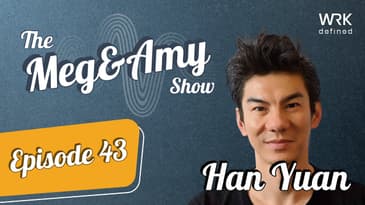
Han-Shen Yuan — who led mobile engineering at eBay and Netflix and took Upwork to IPO as SVP of Engineering — explains why AI transformation is a constraint problem before it's a software problem. Learn why the real bottleneck is rarely the technology, what a "loose grip on your identity" means for senior leaders right now, and why cutting headcount on the back of AI productivity gains is eating your own future, in this conversation on business transformation and leadership.
⏰ TIMESTAMPS:
00:00 Cold open & welcome
03:02 Why Han went back to school: the "checksum of knowing"
06:16 When AI blurs every role, who are you?
08:32 Inside Han's consulting practice
13:23 Holding a loose grip on your identity
17:08 Are the "AI layoffs" really AI layoffs?
20:58 What's real vs. hype in enterprise AI
25:02 AI transformation is a constraint problem, not a software problem
29:38 Anti-patterns: "token maxing" and cutting headcount
33:38 Why making your job obsolete protects it
42:31 Leadership Corner: finding clarity when the ground shifts
51:11 Outro: Meg & Amy debrief
🔑 KEY INSIGHTS:
- AI transformation is a business process optimization problem — find the system's true constraint before applying AI, or you'll optimize the wrong thing and see no benefit.
- The human reviewer is often the real bottleneck. Generate 100x more code and you've 100x'd the review queue, not the throughput.
- The professionals who thrive hold a "loose grip" on their identity — willing to do different things to get the job done instead of clinging to one role.
- Cutting headcount on AI productivity gains is short-sighted: no one has ever had "too little work and too many people." Redeploy the new capacity to grow.
- The way to protect your job is to make it obsolete in service of something bigger — the minute you're defending your role, you've already lost.
📚 RESOURCES:
Han-Shen Yuan on LinkedIn: https://www.linkedin.com/in/hanshenyuan/
Han's article on "authentic chameleon leadership": https://h6y3.substack.com/p/the-authentic-chameleon-leadership
UC Berkeley Master of Information and Data Science (MIDS): https://info.ischoolonline.berkeley.edu/requestinfo/mids
🔗 CONNECT:
Han-Shen Yuan: https://www.linkedin.com/in/hanshenyuan/
Submit Leadership Questions: megandamyshow@gmail.com
Instagram: https://www.instagram.com/megandamyshow/
LinkedIn: https://www.linkedin.com/company/the-meg-amy-show
#AITransformation #FutureOfWork #Leadership #AILeadership #CareerGrowth #DigitalTransformation #MegAndAmyShow
Powered by the WRKdefined Podcast Network.
[00:00:00] I've never, in all of my years working, I've never been in a situation where I'm like, well, we have too little work and too many people. It strikes me as very strange that in this moment when we've all of a sudden have so much capacity, that the first thing we decide is, well, let's just go fire a bunch of people. Han Yuan led mobile engineering at eBay during its breakout era, then at Netflix. He took Upwork to IPO as SVP of Engineering and has held Chief Product and Technology Officer roles since.
[00:00:30] Now he's running an AI transformation practice at PostPC Labs and pursuing UC Berkeley's Data Science Masters alongside client work. Today, Han argues why AI transformation is a constraint problem before it's a software problem, and what having a loose grip on your identity looks like for senior leaders in this moment, and why companies cutting headcount on the back of AI productivity gains are eating their own future.
[00:01:06] Welcome, Han. Hey! Hey, it's good to be here. So great to have you, and it's so great to meet you for the first time. I've heard a lot about you from our very own Meg Baer, who I understand you may have a little bit of dirt on from your days together at Saba, maybe a million years ago in tech time. In childhood. Certainly my childhood. But no, unfortunately, no dirt.
[00:01:36] I think Meg is amazing. She definitely is both a mentor and somebody who really had a big impact on my career over the years because of her strong encouragement. And she gave me a lot of confidence. So I'm eternally grateful for having the opportunity to have worked under Meg. Under Meg.
[00:02:00] I think this story might have softened over the years because I think the real story was I actually scared Han a little bit at the beginning. And then... Well, that tends to happen. I was terrified of Meg when I first met her as well. So we can get a coffee and talk about our fears and insecurities around Meg Baer. I like to say I'm an acquired taste. People like me better over time. Yeah.
[00:02:31] So Han, I understand that you have gone back to school to the MIDS program at Berkeley. But you're also working and running a pretty important venture around AI transformation. Most senior leaders I know wouldn't at this point spend the time to go back to like a pretty significant program like this at this point. Why did you choose to do this? Tell us more.
[00:03:01] So I just finished my first term. So I still have probably about a year or so more. Oh, okay. All right. And it's brutal. I had to relearn how to math again, like, you know, calculus, let alone multivariable calculus. Like, it's tough. So that's been an experience. And the reason I put myself through this was because two things. One is I think sometimes the more you know, the more you realize what you don't know.
[00:03:31] And over the last 20 years, I had a lot of time to think about what worked and didn't work. And some of the things that really didn't work over the years is when I've been responsible for data science teams, I realized that we made a number of, I think, very bad decisions over the years.
[00:03:55] And ultimately, as the DRI, I was not able to catch some of those bad decisions. And in fact, I would go even as far as to say on a very specific topic, say, A-B testing, like just about every company I've ever been at does not run an A-B testing program correctly. In my defense, I would say that I worked with some very smart people over the years, including like teams with dozens of PhDs.
[00:04:22] But the incentives sometimes are not aligned between like, you know, looking like you did something versus actually making an impact of the business. And I think that the checksum of knowing, being able to like not delegate your understanding of what you're being presented is really critical. And that that was a gap that I started to see more and more often, despite all of the self-learning. And so I decided that I just needed to go back to school.
[00:04:53] Oh, I love that. I mean, that has so many good parallels for the current times, you know, data science, AI vibe coding, being able to understand exactly the lower levels of what's going on. I think I'd like to just come at it from a slightly different angle.
[00:05:13] And that is this this moment, what you're modeling here and your thinking here, to me, really does apply more broadly to this moment, like figuring out what do you need to understand yourself to to make good decisions?
[00:05:32] Versus what can you let go and trust either the people you work with or the machines that you're working with, that you're ending up in a good place to shift a little bit to understanding how you're seeing not just the services that you're offering in your business, but like how you're seeing the opportunity in this moment for people to look at things differently. There's a lot there.
[00:06:32] Right. in this industry. So the roles that we have, whether or not I'm a product manager or a software engineer or a designer or all of the different variations of said roles, like I'm a backend engineer, frontend engineer or whatever variant, I'm a machine learning engineer. All of those things are getting blurred
[00:06:56] because you have this simulacrum of human knowledge in a large language model that is capable of generating software. And I think this is a very challenging moment for a lot of folks because I think we all sort of derive so much identity from our jobs. And then there's going to be an obvious fear that, well, if I am not the designer,
[00:07:25] if I'm not the product manager, then who am I? And that's, I think, the place that we're in. But what I like to encourage people to think about is ultimately we are all here for probably the same reason, which is we like to make stuff and see people use it and sell it and make money. And so in that sense, like, you still have the same job. But how we get that job done, it's going to be very different. And what each of us brings to the table,
[00:07:55] which are unique skills, will still matter in this new universe. But how those pieces fit together, I think we're all trying to figure it out. And I certainly don't have that answer. I love how you put that. It's really beautiful. So tell us a little bit about your business, Han. So, you know, so you've been an operator running product and technology at a number of different companies.
[00:08:24] And now you're running your own business and you're going to schools. Paint that picture for us. So this is total counter-selling, but it's fact. I do consulting today. I don't like it. And all of my clients know that I do consulting and I don't like it. But they work with me for a very specific reason, which is I have had, historically I've had a reputation for going into messy situations,
[00:08:53] cleaning it up and shipping product very fast. When I have been actually managing frontline teams, product really, really moved out the door super fast. When I joined Netflix, as an example, within seven weeks of me joining the company, the first Android app was actually in the app store at a time when folks did not think that it was possible to have an application that would perform secure playback available on Android itself.
[00:09:22] And so I've kind of parlayed that into a bit of a specialty. What people reach out to me for are operating in a fractional capacity. If folks have an empty seat in the head of product, chief product technology officer, or the CTO role. And I also do some coaching. But what I really like doing is working with people on a thing for a while.
[00:09:52] But I've also been lucky enough that my career has been long enough that I've become very picky in terms of who I associate with. And so I feel like consulting has been a good middle ground. And are you doing the consulting in order to be able to fit in the school with it? And you're going to go back to being an operator in your mind? Or is it, or is consulting what you're going to do going forward just on your own terms?
[00:10:21] If the opportunity presents itself to be an operator, I'm totally going to take it. Okay. But I also feel like I'm having a good enough time consulting, vibe coding, my own random thing here and there. Yeah. And I still feel useful. And I have a fairly large professional network. So I don't expect myself to be bored. And I'm having a blast right now. I haven't felt this joyfully happy about technology
[00:10:51] since I was like a kid. The career part, it's definitely something I think about from time to time because going back to the role thing, you kind of worry like, well, what am I, what am I going to be? Or who is Han to some degree? But I try not to think too much about that and just have fun. Maybe that's a very childish way of thinking about things, but that's kind of who I am. No, it fits exactly with kind of where we're at too in terms of, you know, this concept
[00:11:20] of a portfolio career and everything on your own terms. And then having financial freedom and being able to make your own decisions and live life the way that you want to is really something so important and it's a gift to be able to do that. One of the things that I think puts you in a unique position in this moment where you're working with a variety of clients as opposed to a single mission
[00:11:50] is the opportunity to start and seeing patterns. That's one of the things that I'm really enjoying about this point in my journey of being able to work with small startups and bigger companies and leaders in different seats and help them figure out what comes next. but this is a moment where I am seeing so much emotional response and anxiety
[00:12:20] in very senior people because it's very easy to see that a lot of the toolkit that you have as a senior leader has to change and depending on your mindset that can be invigorating or terrifying or both at the same time. And so I just wonder let's just stick within the software engineering discipline for now when we start to think about these lines blurring between the different roles. I'm curious if you're starting
[00:12:49] to generate any interesting thesis about how to think about for an individual if they're strong in one kind of anchor and less in another how should they think about becoming more comfortable in these blurred roles and how should they think about you know structuring the work in a way that positions them in a better position
[00:13:19] for what the future jobs might look like. Maybe I'm just going to be provocative in this moment but I wonder whether or not that answer is any different today versus like yesterday versus 10 years ago and I say that because the field has changed quite a bit and I've noticed at least that the people sometimes that are the most successful professionally are those who are willing to embrace change and
[00:13:48] have a relatively loose grip on their identity in the sense that they're willing to do different things to get the job done and I I gotta think that that's gotta be like a part of the recipe right in this moment. Yeah and to your point that's always been true. It's no different. It's just at this moment it there's a a spotlight on it that makes it impossible to ignore that that you have
[00:14:17] to be this way. There's a couple other nuances to this moment that I'm finding interesting so I completely agree we you know we've talked about this as advantage to people that are high agency that see themselves as figuring out problems and applying you know whatever tools they need to solve them as opposed to seeing themselves as a very structured set of skills that can only be applied in a single way one but one of the things that I see
[00:14:47] is very different here is there really is a shift in power the engineering side to the broader base of skills in a lot of organizations there has been a very interesting tension and I'll just focus on the product versus architect engineer pieces because I think this is easier for most people to see there's been an interesting sort of balance of power where in the past product management
[00:15:16] often had control of customer access and engineers had control of the final chess piece you know because shipped code and so that created an interesting tension and sometimes that tension was healthy and sometimes that tension was dysfunctional but it created the way people understand their source of you know contribution
[00:15:45] in today's world that really doesn't work anymore if you don't have access to clarity of the customer and not just watching the customer's clicks like you might in a consumer app but really being able to ask the deep questions of where are the missing pieces where are the data gaps that would uncover a new vector a new opportunity if you don't have the skill of listening for what's not said
[00:16:15] if you don't have the capability to imagine a future in concert with a customer you're really at a disadvantage this is a moment of deep identity crisis within the software development lifecycle I think it's a moment of deep opportunity but no matter where you started you have some skill building to do quite quickly most people don't get a chance to build both sides of those skills today in the way that we structure teams what you modeled at the beginning
[00:16:44] with your observation about hey maybe I don't understand enough of the depth to be able to contribute in data science I think we're going to see that need emerge for anybody to be successful that there's a piece that you're missing of the puzzle that you need to take seriously to become effective in this moment I guess I'm wondering maybe this is not me you know being disagreeable
[00:17:14] but I'm wondering how different that has been in say the near recent past like the year 2000 or 2008 because what I've oftentimes seen is the very best in our field are even if let's say you're the engineer the very best engineers are always very curious about how people will use what they've built and how the company
[00:17:43] makes money and the very best product people are very interested in how the thing works and how they can make it better so that they can deliver the best product for the customer in addition to of course all of the details of go to market and things like that and so there has always been a bit of an overlap between many of the job functions in the SDLC but what I've
[00:18:13] observed is that I think when you've had these ups and downs in the labor markets I think it has a tendency to wash away those folks that were never really that into it to begin with and maybe and this is the provocative part maybe they shouldn't be in the field just back of the envelope work maybe using my newfound data science skills and I
[00:18:42] essentially drew a tech up and through the pandemic and it looks like a bit of a line and it's relatively straight okay and then the pandemic like a bunch of people lost their jobs and then the jobs went way up and then of course folks are these positions are getting eliminated now but the fascinating thing that I discovered was that if the pandemic never happened and we
[00:19:12] did not have all this capital injected digital transformation boom and so on and so forth if you ignored all of that where we are today in the labor markets is where we would have been anyway and so we may still be very much so experiencing like sort of a deflation that's happening in the labor markets that's a hard thing that
[00:19:45] I'm take on something else you have a very interesting vantage point doing the consulting you're doing based on all your wealth of operator knowledge of the past and then now really being like hands-on with vibe coding with the data science work you're doing at Berkeley you have a really good sense of what's possible and what's actually happening
[00:20:15] and recently Meg sent me this tweet and it said Silicon Valley AI is self accelerating agents run everything old people are dumb and the global 2000 I spent a fortune on your AI chat two years ago and got zero productivity my engineers like the coding AI thing but no one else cares agents are scary never seen a gap this huge
[00:20:44] your work is at the center of this gap are you seeing that what what's actually going on what do you think is true and what do you think is hype I think all of it is true in the sense that there's some things that AI is very good at and if you look at some of the workflows that AI is known for most of the workloads for these frontier
[00:21:14] models have been in text generation and that's been great for middle manager office workers where we write a lot of memos or we write a lot of specs and things like that and that's been ostensibly valuable but on the flip side you could also argue that at the end of the day as a software company we really shouldn't be paying people to write documents or generate Slack messages we should be shipping software and
[00:21:44] it's reasonably questionable and on the flip side regarding the software engineering I think the folks in the field are still very much so trying to figure it out and so what I've seen in my clients is a spectrum of AI adoption you have technical teams who generally are very suspicious of AI or they're in heavily regulated industries where they strongly prefer humans in the loop
[00:22:14] and doing more traditional software development especially if their development life cycles are longer you have teams that are in what I would call the pair coding model where they use the agent as a pair programmer and so those organizations are more typical of folks that have adopted cursor or Visual Studio code and the engineer will maybe highlight a method or a function and say like hey refactor this
[00:22:44] or they just have swarms of agents and they're just cranking out code it's much easier to you know be the cool kid if you're starting off with nothing it's a lot harder to be the cool kid when you have an established code base and so whether or not you will be productive I think is both a
[00:23:14] function of you know how you use the technology and then who you happen to be as a company and were you AI native or were you pre AI and for those companies that are pre AI and have been successful so Amy and I have a lot of soft spot in our hearts for these types of companies because we've had to help transform them multiple times in multiple contexts and so we recognize
[00:23:44] how big of a lift that is what is your kind of like first move to help people start to get their head around what they might want to think about success being in their kind of AI journey because one of the things that I see very clearly is that a lot of companies are waiting for someone else to go first for sure that's fine that's normal of the kind of uptake of software and technology in general and
[00:24:14] then they're looking to follow someone else's playbook and the interesting thing about the moment that we're in now is that sure you can follow their playbook at the top level like oh maybe I'm going to use
[00:24:46] so like do you have some sort of standard way you help companies start to ask better questions about how they might want to invest in technology transformation what I try to typically establish early on is what are their expectations like what does good look like like what would success look like and you know how they measure that that makes a big difference some folks will
[00:25:16] tell you well I would like to improve my ticket resolution rate or or they may be more specific like I talk about how the product definition phase is just too painful and it takes us months before we get something that we can work on I think getting down to the problem statement is incredibly important because
[00:25:47] at the end of the day like we're really talking about something that existed even before AI which is business process optimization and it's really hard to optimize you know any process an SDLC or otherwise if you don't understand what is the key constraint of the system is it product definition is it verification what is it because if you don't understand the key constraint
[00:26:17] and you optimize something before the key constraint then it doesn't really matter because whenever the work hits that constraint it's just going to get stuck there and if you optimize something after it because you never fix the thing and so I think the hard part is fixing the thing and identifying the thing and a lot of times there is an opportunity for AI to help accelerate
[00:26:47] that key constraint sometimes there isn't as an example in a lot of engineering organizations there is a guru or chief architect or maybe even the CTO founder and they need to bless everything that goes out to production they need to be the one doing the code review AI is not going to solve that problem because the key constraint is the human in the loop that has to review all the code so even if you have AI generate a ton of code
[00:27:17] you're still going to have the human in the loop saying no we can't ship this and it's even worse because now all of a sudden there's 100 times more code to get reviewed but understanding the key constraint I think opens the door to a conversation around like how much can you actually help this company or how much will this company actually benefit from the technology you sent a bluff to us to prepare for this interview and
[00:27:50] did I get that right okay awesome and and so you shared this was one of one of the bottom lines up front and that was AI transformation is a BPO problem not a software adoption problem and I'm so glad you just said this because of course I read that as business process outsourcing and I did not understand it at all whatsoever I'm glad that you clarified that it's business process optimization because
[00:28:20] everything that Meg and I are looking at in terms of redesigning work and workflow and you know constraints and everything but one of the things that you said in it was that it's really hard to do that from within and and that's something that I'm seeing as well where you
[00:28:50] transformation but they have no idea how to actually do it right like who who who leads it who's involved how do they think about it all of those things are so very difficult and there are no paved paths there are no there's no patterns there's just nothing there for anyone to like grab onto and and and power through and
[00:29:22] what are should be leading AI transformation and what kind of roles are key and how do you leverage inside and out to do that so I'd love to pick your brain on that I think this is such a fun topic I I've seen a lot of anti patterns so before I get into what I think I could talk about some anti patterns I think one of the anti patterns might even be promoted by NVIDIA
[00:29:52] which is you know people are being gold on how much token usage they have right like that doesn't solve the problem right because you could just like talk to AI all day on nonsense they will they will because people absolutely game any sort of compensation strategy that you put out there so yeah right but that that's not solving
[00:30:21] the problem and I think I think that would be an example where a lot of these you know there has been also even in the very near term a history of companies effectively punishing employees for AI
[00:30:51] adoption some of the larger more visible layoffs folks have said hey because we've seen so much productivity like from our AI adoption programs we are now dropping 40% of our workforce that also creates a lot of disincentives within the organization which is why my thesis is that the truly successful organizations
[00:31:20] that will not only survive this moment but ultimately leverage this moment are those companies that are able to be influenced at the highest levels and be willing to not only change the way they work but also figure out ways to harvest who they already have that have the context of the business so you can grow the business and I find it to
[00:31:50] be maybe this is a very Pollyanna kind of view but I've never in all of my years working I've never been in a situation where I'm like well we have too little work and too many people so let's volunteer and fire people I've run out of great ideas right and so it strikes me as very strange that in this moment when we all of a sudden have so much capacity that the first thing we decide is let's just go fire a bunch of people
[00:32:21] I think the folks that will and how do we take that to the next level and how do we grow our town increase revenue make more money I think those are the folks that are going to win but that may be very
[00:32:51] hard to do from the inside and so that might be why folks need to hire Megan Amy yeah well I think you're absolutely right and there is certainly like an org structure and a culture element to it as well right because I think you know the mindset is we can only do this much because we have these historic constraints and and these beliefs of like how much can we really
[00:33:21] deliver how much can our customers absorb how much can how much can our executive team like really wrap their head around and and those sorts of constraints mean like okay well there's only this body of work and therefore we need to shrink the team because we can do so much more with less but if you start to think more expansively about like okay well actually we can do
[00:33:51] 10x more things and we can find ways to have our customers absorb 10x more things and then we can have more squads that are doing all sorts of different things if we start to think about it like that then then yeah then you can take that same number of people and do 100x with a whole bunch more stuff but nobody's really thinking of it like that because they're still kind of
[00:34:21] wrapped around this existing paradigm that feels like they can't so I have a very provocative take on this one my take has been forming around the belief that if you are not actively figuring out how to make your job obsolete in service of finding something bigger then you are very vulnerable to somebody working a budget exercise
[00:34:51] to decide that your job is no longer necessary this is a moment where again most people have not really built the building block capabilities of understanding what else could the business need what else could the customers need what are the levers that could help us accelerate TAM or drive to a new market segment they have spent their time specializing getting really efficient and
[00:35:21] good at the way that their job was described to them and the inputs outputs that they have managed to negotiate within their organization structure and so I
[00:37:16] those they used to done way more QA folks than software engineers and you know I remember talking to my manager about how we had a a 3 to 1 ratio where it took more people to verify what we were writing than
[00:37:42] you know, the actual people who were writing the code. And I, of course, over the years, those ratios have changed. But if you were in QA in the 90s, you and you didn't evolve over time and learn new skills and become more technical, then you would be kind of out of the field. But the absolute number of people in software has still increased, you know, in the ensuing 27,
[00:38:06] 28 years. What else? What have we not gotten to? We have one more segment that we want to talk about, Han, but what have we not gotten to from your bluffs? Bluff. Just bluff. Is there a plural of bluff? I think we've covered the main ones. I think it's important for me to communicate to people that
[00:38:31] it's very important to be curious and to be able to shed your ego as much as possible. I think it's important that people understand that the field is changing. I also think it's important for people to understand that they may not have a job if they're not willing to reinvent themselves. Love that. And what would your hopeful thing that you would offer someone who just has taken that in and recognize that they may not have a job and they need to reinvent themselves? What's
[00:39:01] the hopeful side of that for someone? What's the opportunity side? Going back to school has been so interesting because I see so many young people in my classes. In most cases, my classmates are people who are the same age as folks who would be my children. So I'm literally the oldest person in the
[00:39:27] class. But I have an enormous amount of hope for the future because I meet people who are still very curious and very driven and really interested in making things and really interested in making software. And they would do that even if they weren't paid. And I think that's something profound in the sense that
[00:39:52] I don't think no matter what happens today, tomorrow, next week, next year, I do believe there will be software. I do believe that you still need some entity that wants to do something. So you probably have to have humans in the loop. And I think there will continue to be people in the field who will do this. And so I'm very optimistic of that. But if you are not one of those people who really enjoy making
[00:40:19] things and really enjoy making software, if you're only doing it for the paycheck or because somebody told you you could make a lot of money doing this, then you're going to get crushed by the person who's going to do it for free. But if you are one of those people who are just doing it and love it, you're going to be okay. And you don't have to be afraid.
[00:40:43] So Han, in every episode, we do something we call Leadership Corner, where we take a question from our listeners, which is a dilemma that they're having, and then we answer it. But we're going to do a little something different today. And when I was reading your article about authentic chameleon leadership, and really, it was about some advice on stepping into a new role
[00:41:12] and the importance of getting jobs to be done clarity. It gave me a bit of an aha moment. I've had the situation where I went into a big new executive job, and I got tons of clarity, right? It was really clear to me what needed to happen. But 18 months in, everything changed.
[00:41:38] My boss was different. The CEO was different. My boss's boss, the whole leadership team. No one who I had interrogated to provide that job clarity was there anymore. And I never got new clarity. And so what I would say is that I probably had kind of an erosion of job clarity. And so what I wanted
[00:42:03] to ask you, Han, is kind of applying that same lens and that same expertise that you brought to that really amazing article. Like, what would you recommend to my former self and anyone who's going through that situation? How do you gain new clarity when the ground is shifted below you and everyone who hired you is gone? I've been in those positions as well.
[00:42:35] And for better or worse, I've always taken a step back and asked myself, do I still want to be here? Yeah. The epiphnic moment is, you know, if you say no, then that's problem solved, right? Go figure that out.
[00:42:53] But if you say yes, then I think that gives you some insight into why. And I think once you understand that why, like, why am I here? What is it that led me to be here? What is it that led me to stay here? Then I believe in many cases you can connect the dots between what you know, what you don't know,
[00:43:20] and use your why to guide how you can make an impact. But in those moments, I've often found that it creates this guiding light. It helps me understand, you know, who do I reach out to for help? Or what questions do I need to ask? What kind of clarifying questions do I need to ask so that I can make a bigger impact on the organization?
[00:43:47] Or what are the things that I need to do to stabilize my organization if you happen to be, you know, managing folks or managing an organization? But understanding, you know, why you are there to begin with, I think is really, really critical. And I think the insufficient whys would be, like, say, an answer that is involved around money. If you're only staying in the job because you're worried about money, then that's not going to be
[00:44:16] enough of a why to help you navigate that moment. But if it's something a little bit more concrete, like, you know, I really believe in, there are still a lot of people that I like here and I want to work here and there are aspects of the business of the mission that I truly believe in, then those are areas that I think you can double down on. And in those moments of chaos, I do feel that a lot of
[00:44:46] people end up leveraging those moments into moments of opportunity because in those moments of chaos, that's when things are extra messy. That's when folks oftentimes get, you know, promoted into positions they aren't qualified for and making it up as they go along. And so that it could be an opportunity to actually leverage the moment for extraordinary career growth that's in line with your values.
[00:45:12] So I've also been in this situation and I'm not sure that I have every time sort of navigated it as thoughtfully as I would recommend to my past self to do. So I do think, especially if it's people, a significant number of stakeholders in your career changing, if that's changed, it really,
[00:45:38] to Han's point, is an important moment to just like take a beat and really do a rethink. So where this was super obvious to me, of course, was when PeopleSoft was acquired by Oracle. I was in the middle of a sort of series of projects and things and the decisions that had been made for those investments and all the people and all the stakeholders, every single one of them left.
[00:46:05] I had built champions. I built a lot of goodwill and trust to take some risks, et cetera, et cetera. All of that gone, just like overnight. Everybody said, nice knowing you. And I definitely felt, you know, a little unmoored. And I think, and I actually probably did do this. So I think one of
[00:46:30] the things that really matters in that moment is to figure out what is the critical things now, because that level of change, whether, you know, whether it's happening in place or because of M&A or whatever, when there's a material change, that has been done with some intention of an outcome.
[00:46:54] And so getting some time to get clear on who made the decision, what does success look like for them? What is different than what the marching orders had been? And how can I position myself, my team and my time to make that work? And I think, Han, your point about this creating outsized opportunities,
[00:47:19] every time for me it has done that. I'm very much wired to never waste a crisis and never lose out on a shift to figure out if there's a bigger way to contribute and a bigger way to drive to a successful outcome. You don't always win those, but if you don't do that mental calculation, you're never,
[00:47:42] ever going to realize the opportunities. So I think that your advice is really, really sound. And I also believe that these regular check-ins actually matter, even if everybody is the same people. Because, you know, as time goes on, markets change, customers change, external pressures and forces
[00:48:06] change. And if you don't pick your head up and pay attention to what's going on outside, you could be executing decisions that aren't as strategic today as they were when they were made. And that's, I think, in this moment, we're going to see that pattern accelerating, where the decisions we make with the best information we have today will probably not hold as long. And so it's incumbent on us to build
[00:48:31] those mechanisms to re-evaluate the reality of the opportunity and the market. Because the worst thing you can do is to be putting all of your energy, building something that doesn't move the needle for the business. That's the worst place you can be for yourself, for your teams, and frankly, for your customers. Because that's actually squandering the most important capacity. Reflecting a little bit
[00:48:56] in my situation, it occurs to me, Han, which is a conversation that I think you had about reorganizations and how important it is to always, as an executive, be communicating the value that your team brings and the mission that your team is on and, you know, why that matters to all of your
[00:49:22] stakeholders, how this is a continuous capability that you need to build and how important that is in terms of any, you know, reorganization in particular, but, you know, just any time. And I think I did that. That's probably what got me through it was, you know, this belief in what we were doing, the galvanizing, and then the communication of it. What I didn't do necessarily was, like,
[00:49:52] take a step back and really dig into what all of these new people wanted from me. And that maybe was a miss on my part and maybe, you know, remove some opportunities that I could have had to do even more. But, you know, to your point of having that why and that focus on what it was that you're trying
[00:50:19] to accomplish was enough to keep me going. Anyway, I thought it was an interesting, like, twist on what you had written, which was, I thought, super valuable for anyone going into a new role. But sometimes these, like, weird things happen in, you know, in different, indifferent ways, too. So. I think every time, right? Has it ever been a case in your guys' career that a weird thing didn't happen
[00:50:45] along the way? I mean, seriously, have any of your jobs been as advertised? Have any of them been durably as advertised? Not once for me, really. So I think the expectation that what it is when you start and what it will be as time progresses has to have a dose of reality check that things change, at least in our business.
[00:51:11] One of the things that I think I've oftentimes struggled with in my own career is not promoting myself enough. And I think that's a miss, especially if you are a senior executive, because during these really shaky moments in times of transition, there's going to be a part of you
[00:51:40] that, you know, wants to do the right thing, right? But the right thing is a very nuanced conversation. And some of it is going to be around making sure that, you know, that the most important people on your team that are impacting the business, they also get credit or they're protected because they don't know everything that you know. But you can't do a lot of that work unless you have the political capital, you have the credibility, and you have the visibility within the organization
[00:52:09] around what you bring, you as an individual bring to the table. And so by transitivity, what is the work that other people bring? And I think if you give that up or you don't do enough work up front by the time something bad happens or something unexpected happens, you lose a lot of agency. And I've also been in positions in the past where, in hindsight, I've questioned myself since,
[00:52:36] like I've, something has happened, and I go like, do I want to be a part of this? And, you know, my answer was no. And I left. You have no power when you leave. Because you're not helping anybody when you're the unemployed guy. So a lot of these things are not that straightforward. And to Meg's point, you really have to think about them very, very carefully. You have to play everything out multiple steps and go
[00:53:05] really deep and understand, like, what is it that you care about? And why are you here? Or if you were to leave, is that really the right thing? And I definitely messed that up many times. I love that. I love that. The opportunity to be self-reflective is endless for sure in a long career. Well, thank you so much, Han, for spending time with us. I've always learned something. And
[00:53:31] it's really nice to be able to calibrate with you what you're seeing in the market. So thank you for that. Yeah. Thanks so much for joining us, Han. I've had so much fun in this conversation. This was great. How timely, Amy. What a good time to talk with Han. What'd you think? Oh, well, I mean, you've talked him up for minutes now? No, I'm kidding. For years. And it was, yeah, I can't believe I'd never met him before.
[00:54:01] And yeah, what a guy. Yeah, he's a delight. Yeah. I have to say, this has been an interesting week for me, Amy. So I'm not to brag, but you know, I need to brag. I have finally gotten through my entire load of all of my information to OpenBrain. So I have a complete Meg OpenBrain. Holy crap. Yes. That's amazing.
[00:54:27] Now I need to start using it and to figure out all the stuff that I should have put in my OpenBrain to make it as useful to me as I want. But this does feel like a really... I'm actually a little nervous about what's to come now. I mean, I know it was my suggestion, but like... Yeah, you should be scared shitless, be honest, because fixing recall is very dangerous, I think.
[00:54:55] So yeah, we'll see where this all goes. But I will say I'm looking forward to being able to find clips based on the random way that I think about them. So that's going to probably be the first most valuable use case of my OpenBrain. So... Well, I have a couple of little AI stories myself. So I haven't gone the full OpenBrain
[00:55:18] route, but I have moved my podcast work all over to co-work. And I have high expectations for all of that. So I will have my mini brain, maybe not fully open, but so I'm excited for that. And I've had some funny little moments, Meg. So one is that on our last podcast with Anchor,
[00:55:46] so first of all, the transcript, the Riverside transcript showed up as AnchorBot, like Anchor, AnchorBot, like it's an Anchor B-O-T, AnchorBot. Which I think kind of nails it if you want to know the truth. I know, right? It's perfect. And then the other thing was that in that episode, we talked about, at the very end, we talked about our Claudie language and like all of these terrible phrases
[00:56:15] that I have banned from Claude from using, although Claude does keep using them anyway. But in my new, you know, ramped up Claude co-work that has better memory and all this kind of stuff, theoretically, I was asking for clips from that episode and it came back and it had a bunch of clips, suggestions, and then it said, but I did not include this clip because it has a banned phrase.
[00:56:45] And it was us making fun of Claude using banned phrases. Anyway, so I told Claude, I'm like, well, actually, that was us making fun of you. And it said, ha ha, I will put this sarcasm in the memory so that it doesn't happen. Oh God, I can only imagine what sarcasm in memory for Claude is
[00:57:09] going to do. That's next level. So we have that to look forward to in our future. I'm so relieved that Han did not want to outsource AI when I thought that he was suggesting that business process outsourcing was the real problem that needed to be solved. As opposed to business process optimization? Yes.
[00:57:34] Yes. It's amazing. One word can make a big difference in the full understanding. So everything's cleared up. Everything's good. All's great. Onward to victory again. Well, this has been lovely. Let's invent the future together, everyone. I believe in us. Let's make every day count. Let's make every day count.
Sponsors
