
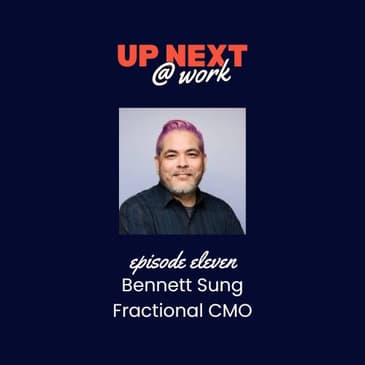
High-quality, accurate candidate-matching software is considered the "silver bullet" of the HR Tech world. Bridging the gap between the language of the recruiter and the language of the applicant to build the best possible candidate pool has been a puzzle the industry has been trying to crack since the mid-90s. Still, solutions are falling short of expectations. Our guest this week, Bennett Sung, draws on his nearly two decades of experience as a Product Marketing Manager and CMO in the HR/Recruiting Tech industry to discuss how solutions providers can make their products more effective for the end user. Bennett and Kate discuss a wide range of topics, including:
- The disconnect between resume and job description language causing issues for automated matching systems.
- The need for stricter job intake guidelines, including detailed ideal candidate profiles.
- The risk of bias in candidate selection, even with AI, and the need for hiring teams and solutions providers to address it.
- Current benefits of Generative AI in hiring and its potential future developments.
Learn more about the state of the candidate matching software landscape by listening to our conversation with Bennett. Thanks for sharing Up Next @ Work with your community.
Powered by the WRKdefined Podcast Network.
[00:00:00] Be productive and have everything in sight with the new foldable Samsung Galaxy Z Fold 6.
[00:00:05] With its impressive main display, it is like creating for AI functions that make your everyday life easier, more comfortable and more productive.
[00:00:13] For example, you can take up with the Note 10 assistant lectures, change text and let them fit together.
[00:00:19] And with the Dolmetscher you translate Meetings Live and just read with.
[00:00:23] Learn more about the new Galaxy Z Fold 6 with Galaxy AI on Samsung.
[00:00:29] Hey you with the podcast in your ear!
[00:00:32] Just a moment, have you already activated your mobile happy hour?
[00:00:35] So you have at least one hour of unlimited data volume every day.
[00:00:40] It's quite new and for everyone who is now getting mobile phone plus internet for home at home on the TV.
[00:00:46] Now Magenta 1 customers will activate the mobile happy hour in the Mein Magenta app
[00:00:50] and it's already off, just go to the 5G network of Telekom.
[00:00:54] So don't wait, now get in and activate in the Mein Magenta app of Telekom.
[00:01:33] I'm a big fan of AI technology organizations and definitely have a passion for really what we're going to be talking about today and such.
[00:01:42] So again, I've worked at a number of technology organizations you may be familiar with back in 2006,
[00:01:48] Virtual Edge that got acquired by ADP and most recently at Humanly and Mimi Bot,
[00:01:53] both AI conversational AI technologies that are really providing support for employees and candidates.
[00:02:00] Awesome, well Bennett excited to have you here today.
[00:02:02] As I mentioned, you and I have had the chance to work together at some of these companies you've worked for in the past.
[00:02:08] And I know you and I both have a great interest, especially on the TA tech side of things.
[00:02:13] And today we're going to be talking about the whole concept of candidate matching.
[00:02:17] Why is it falling short of expectations?
[00:02:21] Bennett, what are your thoughts on candidate matching?
[00:02:23] Candidate matching, so obviously it's the silver bullet and the one tool that definitely lights up when you talk about it with recruiters and sources alike.
[00:02:34] So people are very excited about this.
[00:02:36] Unfortunately, I think there are still a number of contextual challenges facing candidate matching today.
[00:02:44] So first and foremost, when I look at the flaws of what's not happening at candidate matching is that we're leveraging data sets, a resume and a job description that are fundamentally,
[00:03:00] we all have talked about it many times, not the most accurate sources of data.
[00:03:07] Both, you know, a resume speaks in one language, their job description speaks a completely different other language.
[00:03:14] So that is one of the fundamental challenges is that the data sources, which is what matching is really relying upon, especially since we're talking about whether it was early days machine learning matching technology.
[00:03:30] It's from companies like in Genuum to what we're seeing today from the likes of Findem and Hyraezy and such.
[00:03:37] So there are, so fun, we have to begin to understand like, what can we do with these two pieces of data to make them a little bit more cohesive in the context that they can be integrated together and we can actually develop results or develop outcomes or recommendations from them
[00:03:58] because that is a big area that we all are trying to think about, especially as we see the rapidly increasing number of applications coming into a source or our recruiters inbox.
[00:04:11] So that's the number one aspect I think the number two, but before you even get to be both, but before that, one of the areas that I feel like it's not talked about enough, and that is the job intake process.
[00:04:26] The job intake process is this conversation that happens between recruiters and hiring managers.
[00:04:33] And it is to really kind of level set and articulate the requirements for the position.
[00:04:41] So it's not just that, you know, obviously there are some basic things that have to be included, but you know we also want to understand like, what are the soft skills?
[00:04:49] What other things are they going to be needing?
[00:04:52] You know, are there specific backgrounds that they're looking for or specific companies that the candidate has worked for that may resonate more with them than another type of organization.
[00:05:05] So we take a simple example like Java.
[00:05:07] You know, does this recruiter prefer someone who has Oracle Java experience or Microsoft Java experience makes a big difference.
[00:05:15] And so what we're, so the job intake again is this conversation that ends up turning into what I would say is like an SOW, a statement of work between the recruiter and the hiring manager.
[00:05:28] It's not thinking, you know, we're not taking any creating any new like new ideas here.
[00:05:32] We're just taking, you know, inspirations from a lot of things in this, in this case, an SOW, which is a lot of things that happen in project management.
[00:05:40] But when I, you know, as a marketer, you know, I look at the similarity between this job intake agreement and a creative brief.
[00:05:49] You know, before I ever start writing a blog, I'm going to, you know, the client has given me all the things that they're looking for, including all their brand guidelines and all the tones in the voices.
[00:05:59] You know, and here's a number of words that they want for this article, et cetera.
[00:06:02] So we have to really kind of take, we have to kind of formalize and create process because it's probably the one area I have yet to see technology take on until I've heard recently about a couple, you know, exciting organizations that are working on this particular topic of job intake operation.
[00:06:22] So that is one of the elements. And I think the other, you know, so when we, when we, when we start to get a little bit more rigor around job intake, we start to think about ways that we can start kind of blending and understanding the language differences between a resume and a CV and my resume and a job description.
[00:06:44] Then we can apply and then understanding the complexities of all the legal ramifications that surround this because if there was one aspect of job matching, that's probably top of mind with the EEOC and with every other major, you know, AI regulation that's being done at the federal, state and global level is bias.
[00:07:10] So how do we, how do we ensure that this job matching technology match of it is using AI? How do we understand how that AI was trained? Who was trained by, you know, what are the sources of data that's feeding the intelligence of the AI?
[00:07:29] Because that's those are the things that, you know, are going to come into play. I'm going to be asked, you know, about, you know, if something does surface about a situation that potentially, you know, alludes to bias in their decision making process.
[00:07:44] So, so I think those are the three fundamental things in terms of, you know, you know, candidate matching that is that are currently I would say kind of why candidate matching hasn't really reached the kind of North Star yet.
[00:08:03] I almost think it's almost just still getting started.
[00:08:07] Which is fascinating because when I was talking to my co-host, she and she said she designed one of the first applicant matching systems in 1990. So here we are 34 years later.
[00:08:17] And we still haven't quite figured this out. But to your point, Bennett, there is some, there are some subjective elements to this. So the resume being one, the job description being another.
[00:08:27] So those, those were always probably going to have a well job description. If we improve intake.
[00:08:34] Yeah, your point then we can start to add some rigor and some structure to the job description, which would hopefully fix one part of what you're what you've identified here.
[00:08:47] The candidate component. What do you think about that? I mean,
[00:08:51] You know, I always had this dream.
[00:08:54] And it was kind of got it was kind of percolated at when I was working at job science and we always were trying to figure out it.
[00:09:04] And I think it could happen with and that is, is quicker be a universal taxonomy that folks use to build their job descriptions and their CVs.
[00:09:17] So if we think about, you know, the, you know, kind of the rise of everything being talked about skills, everything. Right. I mean, building these skills taxonomies.
[00:09:28] That's fundamentally what we need to create universal kind of descriptions around so we have both understand like this means this and it equals to this right so and so then when we start to think about, you know what candidate as you're thinking about building your LinkedIn profile
[00:09:47] you're building your traditional resume on paper, you know, here are some of here the here the two are the terminologies we encourage you to use so that it begins to mirror the language of the recruiter or vice versa.
[00:10:02] We have to pick like what's interpretation we want to leverage because I think, you know, that is that is, you know, one then we can build, you know, technology and structure around and taxonomies
[00:10:17] around creating this quote unquote universal language. I mean, literally job search is a language in my book. It's a language in itself. It's, you know, that obviously can be translated by generally speaking it is, you know, that is where I feel like we don't have this quote unquote translator
[00:10:36] between recruiter, a recruiter's job description and a candidate's resume. Now if we can figure that out. That would be the utopian of how we cannot have to worry about, you know, interpretations of the matching process it says it's matching same it's matching on the same level.
[00:10:58] You know this I'm matching one with one I'm not matching one with three.
[00:11:04] Right so it's like when you think about the, the idea of, you know, idea of keywords and why keyword searching is never been really beneficial is because the keywords being used are are not universally defined in the air.
[00:11:21] There's there's too much area for interpretation. Now, if we don't go down that route. I certainly going to get more intelligent and understanding and mirror mimicking a recruiter's behavior. So as if we think about, you know, as a recruiter looks through a resume CB, they start to ask themselves
[00:11:43] questions. So, you know, I'm interested to know when you reference Java not to continue to go back on that term but I think that has lingered for me for 20 years.
[00:11:57] Java has always Java has a lot of interpretations if you're from Seattle you're going to think it's Starbucks but in many cases it's a technology language and so
[00:12:06] you know we have to, you know, so if we can think and if AI could start acting and behaving more like a recruiter in the context that when it looks at some of these terminologies, it will then ping or ping the candidate or ask candidates questions to get more
[00:12:26] clarifications on things that have multiple meanings to them. And so I think that is that's and that's why the recruiters are always going to be part of the process as until this is solved because recruiters are recruiters are always curious and they're inquisitive about trying
[00:12:44] to get to you and make sure that they're comparing apples to apples all the time because they're, you know, you compare Apple to apples even within apples you are going to get challenged by a lot of this just you know bias legislation happening out there.
[00:13:00] So, so but I think there's potential for for the AI to start thinking and behaving like a recruiter in the context that when it sees a resume, and it already knows the job description, it's going to ask further questions it's going to it's going to
[00:13:19] be very curious, not as curious human but curious enough that it's going to begin to eliminate and create kind of standardizations about what this what my job description says and what the CB says.
[00:13:33] Yes, I was because yeah as you were talking I was I was thinking to myself. I was like yeah you know recruiters and humans have not figured this out yet. And again we'll use 1990 as you know, the baseline.
[00:13:46] Yeah, a baseline for the early days of applicant matching it could go back further than that. Yeah, if we haven't figured this out in 34 years 35 years will say, but we've seen obviously the rise of generative AI and how quickly that's taken off over the last two years.
[00:14:01] It does seem likely that the technology might might lap the humans in this one in terms of coming to standardization first. So let's say let's say that happens though.
[00:14:12] You know, what obviously you as a marketer in this space you've heard every promise that's been put out there around candidate matching. Yeah, let's say we do get to a place of some some standardization between the resume the job description the technology.
[00:14:28] Yeah. What do you really see as the benefits. What are we what's that really going to unlock.
[00:14:36] So, so really what it's going to unlock is that what I what I the North Star will always be to be able to create build the you know the best candidate pool. It's not matching. You know I'm not looking for one candidate I'm looking for a pool of candidates so I have options right so as.
[00:14:56] So my sense is that I want to there are going to be those matches that are super close and there's going to be a few matches that are probably a little distance but what I what I want to not forget is that these whole notion of potential.
[00:15:12] So we have candidate matching that seems super precise I mean, but you know by precise I mean if I only get one or two folks is that going to be enough for for me to go off of, you know, expect and if they're passive it's going to even be more challenging to get, you know, displace them from their existing job so.
[00:15:32] So what I'm hoping that candidate this this is going to do is it's going to it's going to elevate and enable us to look at the candidates for their potential which means I'm going to have a broader, a broader pool of folks, but still narrow enough that it's manageable.
[00:15:50] Broad enough pool so that we can we can, we can identify those that you know may have may just need a little bit of coaching and development to or may just need to enroll in some technical skills because I think I think the dynamic of today's organization is that you know for me technology
[00:16:10] is that the talent tech skills or hard skills are really going to be democratized and become they're just they're going to be table stakes they're not going to be the things that employers and hiring managers are going to want to prioritize as being their top kind of their top qualification they want to they want to know.
[00:16:29] Is this or is this individual, you know, have you know the curiosity to continue to be able to take AI to the next level are they going to you know is this individual going to have, you know, be able to step into leadership are they cultural enough to then become a leader.
[00:16:46] So looking at kind of the possibilities of each candidate and then using that to creating the pool from there before versus just precise matching. I think, you know, it's because precise matching your only your your it's it's still kind of the whole notion of, oh I found that one needle in the haystack well, that's great but that needle is not ready to move so I'm still not with nobody fill it and go.
[00:17:16] Nobody to fill the seat which means I need to look, I need to look broader right so that's like if we could if the matching is able to also create this.
[00:17:25] This pool of potential so it's like here's a precise matches here's the matches that like they're not I wouldn't put them in tears but here's the next grouping of individuals that have who have the abilities to to definitely exceed and excel at the position.
[00:17:42] Here's some recommendations that may need to happen. If you want to move forward with them before we move on I need to let you know about my friend Mark Pfeffer and his show people tech.
[00:17:54] If you're looking for the latest on product development marketing funding big deals happening in talent acquisition HR HCM that's the show you need to listen to go to the work to find network search up people tech Mark Pfeffer you can find them anywhere.
[00:18:15] Okay, awesome. So this leads me to this next question relates to another topic that you and I had kind of thrown about before we recorded today, which is the candidate experience.
[00:18:27] So knowing that the candidate experience has also been sort of a long running theme that we have never really managed to figure out. We kind of know what we need to do, but actually enacting that has been the challenge.
[00:18:41] Knowing that recruiting teams are super busy. You know, obviously right now applicant volume way up. So again, this is me looking forward. If we get candidate matching. If we work that problem out. Where does that leave us on the candidate experience conundrum.
[00:19:01] Well, I think you know it's it's it's
[00:19:06] You know, I think the candidate experience. The challenge in the candidate experiences that while applaud to the talent board candies now you're a, you know for doing the benchmarking research and certainly helping kind of
[00:19:30] experience one of the factors that go into it. There was definitely various stages in hiring that each of them has a candidate touch point, which means there is a candidate experience with every stage of hiring.
[00:19:43] So the reality is we have to, you know, the question then becomes when in correlation to matching is, you know, some of the things that have always come out of the researchers research from the candidate, kind of experience awards report has always been the challenge of communication.
[00:20:03] Can you guys just tell me why do you keep on putting me in a black hole? The candidate says or why can't you be a little bit more detailed and telling me why I wasn't chosen.
[00:20:14] So are we so the question when it comes to Canada matching, are we going to be more prepared to be transparent into why they were not selected.
[00:20:24] Because that is still because when you think about Canada experience and this is, we have to always put the let part of our candidate hat on and not so much the the compliance side of being in talent acquisition is that I know there always there's always these fear factors of well we don't want to tell them the
[00:20:43] wrong information, or we don't want to make it look like we're discriminating or you know introducing bias into the decision.
[00:20:51] But the reality is you have to how do we balance the compliance and the risk factor of telling people more information with what the candidates want and that what they want is more information.
[00:21:03] They just want to know what is it that they should have. What else can they do to have gotten this job is there some training like even if it was recommendations hey you needed we felt that you needed this this and this and here are some things that you can do today to start building up those skills and becoming more proficient and confident in talking about X, Y, Z.
[00:21:26] So, so I think you know when we break down Canada experience it's not very well defined or measurable.
[00:21:33] But we have to break it down the candidate touch point at each pro each stage of the hiring process and in the matching process. It comes down to, you know, obviously the first level of matching is going to be that that, you know, comparing the application to the job description.
[00:21:51] But there's another layer of matching that always usually happens that's the screening process. So many companies, especially those in high volume will, you know, start to probe deeper in terms of understanding your availabilities and all sorts of other things that factor into to kind of putting you into the slate of folks that they want to interview because that's ultimately the goal is how do I want to I want to be able to drill down and get people into the interview schedule as fast as possible.
[00:22:20] You know, I think at the end of the day, you know, I think, you know, it'll be interesting to tell what the future of Canada matching is in terms of being its in terms of being predictive of quality of hire which for me is
[00:22:35] which is another.
[00:22:37] I was going to say now you're lightening it off.
[00:22:39] Now it's like, that's just another way was like ambiguous ambiguous ambiguous. Nothing is very quantifiable. And because I think quality in my interpretation, my quality of hire tells me like, what are the factors? What are the factors that, you know, increase what we the output that we end up seeing the employee
[00:23:01] delivering back so so it could be things like me maybe we need to change out our candidate matching technology for something that could be a little bit better and see what the outcome is I think that's the big vision of some of the technology providers out there that are
[00:23:16] are that are very hyper focused on figuring out this quality of hire, which is, you know, which is interpreted uniquely by every single company so there's not going to be this like universal standard but it is really going to be, you know, understanding, you know,
[00:23:36] you know, input in what is the output. And then if we switch that input what is that what's the, what's the kind of contextual difference or the delta from the original. And so you keep playing with those trigger that you keep playing with those like, you know, plugs and you put one in
[00:23:54] you take one out you see what the outcome is.
[00:23:57] I did not blow anything up in the process.
[00:23:59] The process which is already happening because people love to just stack tech on tech on tech and not think about the integration experience or the data, the data integrity experience so lots of things to think about but I do feel like, you know, from Canada match from
[00:24:18] the conversation of candid matching and some of the challenges to to what's the impact on candidate experience. You know, I do believe like again if we're able to be transparent and communicate, you know, more, more about more with the candidates about, you know, why they did so well why didn't they do so
[00:24:35] well, or what was the factors that went into the decision. All of these things will end up giving candidates candidates, you know, belief in trust in that company so that the next time they want you know they're not going to just pass on that company if they see another opportunity
[00:24:51] but rather you know what, you know I had experience I know what they're looking for I've done my work I've done the work to, to better improve myself and present myself in a better way.
[00:25:02] Hopefully that's going to show itself off when you know I get an opportunity to talk about talk about it again so so I think that you know all all kind of it's a ripple effect.
[00:25:14] You know I think it but the ripple needs to start at the candidate intake process, because that's that's the start of the snowball.
[00:25:21] We don't master that we don't get that better. Everything else is discord of flail and we're going to believe that we're never will feel like we're not moving the needle which sometimes it does feel like in in our industry is that we've been talking the reason why we've been talking about so many of these topics for decades upon
[00:25:39] decades is because I don't think there is a moving of the needle that people are are able to visually see and understand, because a lot of people don't talk about their progress and their evolution with technology and their transformation with technology it's still being it's
[00:26:08] still there's this mindset mindset that sits in the war for talent. You know we've been we've been sold that since the late 90s that it's a war for talent. And so yeah if you're in a war obviously you would want to keep your, your battle plans.
[00:26:21] You know to yourself yeah you want to be sharing that as everyone's the enemy then. So yeah to your point some of this is the language we use and you know going back to you mentioned quality of hire a couple minutes ago I was having an interesting conversation with
[00:26:35] Caitlin McGregor the CEO of Plum the other day and she challenged me she's like anytime you hear quality of hire plug the word retention in instead. She's like because really quality of hire is about retention. And you know we think about it that it's going to be somehow measurable right after the talent
[00:26:53] acquisition process ends and it's not because it takes time and it's going to change you because you know the quality of hire of a higher at six months in might be very different from the quality of that hire six years in.
[00:27:07] No, I'm sure and I feel like and I feel like we put too much time constraints on defining quality defining these kind of post hire kind of metrics it's like you know why just 90 days you know maybe in this company it's you know 10 days five days I'll be able to know right away if this person is going to be is you know performing at the standard I expect them to
[00:27:30] Right so every company has different set understandings based upon the positions it's done the organization, whatever they surround them the new hire with. So defining new hire as well new hire is only up to 90 days 90 days.
[00:27:47] And not to mention I think this whole notion of like, reboarding, like the minute that there's a whole set of layoffs you know for all these folks are being shuffled around again and they have to new learn more stuff because they're having to do with the whole notion of doing more with us.
[00:28:06] You know which you know ends up being kind of a vicious toxic cycle seems like so you know I think, I think it's.
[00:28:14] It's one of those areas that we have to, you know, retention is definitely an outcome that I feel at every step of the way because as Madeline or Ronald will say, as well as like recruiting and retention are the same coin just on different sides, which is very true.
[00:28:30] And we don't talk enough about retention in the context of hiring and it definitely has an impact like if we're not if we're losing people, you know on the other side.
[00:28:44] Then that's just putting more pressure on recruiters to backfill all those seats that they just filled 3090 whatever days years ago. So it's it just it's a it's a there is a bit of a cycle of recruiting retention recruiting retention recruiting retention.
[00:28:59] The more that we can improve the retention there's going to be less need to backfill those which means those recruiters can focus on the more the new the new roles that are needed for the growth of the organization.
[00:29:13] But if they're always constantly backfill in because retention is horrible then candidate matching hasn't been perfected.
[00:29:22] This is a full circle moment.
[00:29:25] We are chasing our tails aren't we constantly chasing our tails.
[00:29:29] We just have to it just has to be slower and more intention more methodical.
[00:29:35] We just can't continue to to just run the race. It's it's not a while it's some while they equate recruiting to a race. I just feel like, you know sometimes we just have to take our time.
[00:29:47] You know, because at the end of the day it's it's not so much about doing more with less.
[00:29:54] It's about doing better.
[00:29:56] It's like how do we do better in recruiting? How do we get to how do we be better recruiters?
[00:30:03] And and such and that's where you know they need to voice and think about for themselves and for the company what are the what are the tools that they need to do better because they are going to be put in this very
[00:30:16] very specific position of having not the same level of resources or staffing to do the job that they're traditionally accustomed to.
[00:30:26] So you're more with less, the more with less.
[00:30:30] But it's now it's like doing more but better right because I think what technology what technology does help you with is you could do more.
[00:30:39] And you don't need to see you may not you could do you can actually do more and do it better because you now your your time is you reclaim time back that you would have put towards a lot of tasks that take up, you know that this stack up over time to be something significant like even a couple hours a day.
[00:31:00] Imagine what you can do with two more hours a day and as a source or two more hours a day as you know in recruiting you probably could talk to many, many more candidates in person etc.
[00:31:10] So, you know, it's very interesting.
[00:31:13] If only. Yeah, absolutely.
[00:31:16] Well, it sounds like we're trending in the right direction in some ways and I know, you know this this episode is probably going to drop right around the time the Internet technology conference happens.
[00:31:26] So, you know, we're going to obviously between that and the upcoming, you know, there's a few other shows.
[00:31:30] Reckfest is taking place while you and I are speaking.
[00:31:33] So I think, you know, come another month six weeks from now Bennett you and I'll have to reconnect and see what we've heard from all of these shows and all the new new technologies that will be hitting the market and.
[00:31:45] Yeah, that's one of the things that I bought at HR Tech.
[00:31:49] I'm going to be going around to really understand from the solution providers like what how do you look at how does your company look at Canada experience?
[00:31:58] And they are in the recruiting tech.
[00:32:00] What are you doing on the matching side?
[00:32:02] What does that look like?
[00:32:04] And then hopefully we'll surface some folks that are taking it are pushing, pushing the are introducing new things, new parts of the recruiting process through technology like the job intake.
[00:32:15] And see what's out there because I think if we can get, you know, I think there's enough companies that are doing matching but we have to contact, you know, I'm sure they're a bit on hold.
[00:32:25] It's like, I think the fear of matching technology, you know, in parallel with these legislations that are happening at some lawsuits that are already in play, which is nothing new because we've seen that back in the day of assessments.
[00:32:40] Absolutely.
[00:32:40] Yeah, I'm sure it repeats itself all day long, but it's just a new it's a new breed, a new era.
[00:32:47] But you know, I think, you know, I'm going to be going around just taking a polish like how do you look at his employee experience real for you guys?
[00:32:57] Do you hear your buyers asking for employee experience?
[00:33:03] Yeah, the good point.
[00:33:04] Employee experience. That's what I'm interested in most understanding. Are they hearing from buyers that they're looking to improve the employee experience? Is that one of the problems that they present to you?
[00:33:15] And if that is because I really honestly, because I know on the employee experience side because I've been working at MeanyMod for two years, employee experience is not a definable real thing.
[00:33:30] It's more like.
[00:33:31] Yeah, like quality of hire. We haven't quite figured out how to how to define and well because it'll be different every organization.
[00:33:38] There's no standardization.
[00:33:40] There's no standardizations, but we can create a standard definition like what do we bundle under the candidate experience? What are the things?
[00:33:47] What are the aspects of candidate experience that would constitute somebody saying we prioritize or one of the things we can do is help with candidate experience and say, how do you help with candidate experience?
[00:34:00] What do you do? How did what does that equate into tangible metrics and such? So those are the harder hard pressing questions that I'll be kind of mosing around the Expo floor trying to get answers to.
[00:34:12] And then we could come back and kind of, okay, here's what I'm thinking. Here's what I'm here. What is here's what I heard from the vendor side and then absolutely.
[00:34:22] And I'll be in the press manelist room trying to get them to tell me what they what they're saying. So we'll compare. We'll compare notes at the end of this because that's good stuff to be in, you know, the being people in the business of people is really what it comes down to.
[00:34:36] Thank you for your time today, Bennett. I'm going to wrap this up. Why don't you tell folks where they can find you before we go?
[00:34:42] You can find I am most commonly found with my, I have a checker. I have a timber shirt on my LinkedIn profile, but you'll find my colorful hair profiled in LinkedIn and that's where you can find me the best so
[00:34:59] LinkedIn slash in slash Bennett to be an ETT last name, S U N G one word. And that's how you get to me.
[00:35:08] Perfect. Thank you so much Bennett. Thanks for listening. Yes. Appreciate everyone. Have a great day. See you at the conference.
Sponsors
