
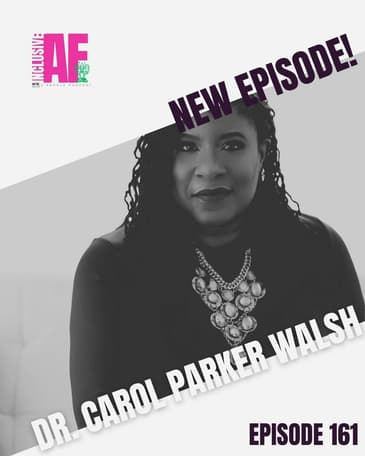
Ready for a fresh, honest take on workplace inclusion and leadership? In this episode of The Inclusive AF Podcast, hosts Jackye Clayton and Katee Van Horn are joined by Dr. Carol Parker Walsh, an expert in organizational culture and psychological safety. They dive deep into what’s really going on in today’s workplaces: layoffs in DEI, the pressures of AI, burned-out leaders, and the ever-changing expectations for managers. Whether you’re unsure about your next career move, trying to foster belonging on your team, or simply want to stay ahead in a rapidly changing job market—this episode is full of practical advice and “aha!” moments. Learn how to control what you can, ask the right questions (of yourself and others), and leverage new tools like AI to build thriving workplaces. 👉 Subscribe and listen for: - Real talk about DEI layoffs and their impact on marginalized employees - How organizations are (finally) embedding inclusion into their DNA - Tips for finding your next role in the age of AI - Why psychological safety is the new must-have skill for leaders - How to hit “reset” on your career and thrive, even during uncertainty Don’t forget to check out Dr. Carol Parker Walsh’s podcast “People Forward” and connect with her for leadership development tips! #InclusiveAF #DiversityAndInclusion #WorkCulture #PsychologicalSafety #CareerDevelopment #AIWorkplace #Leadership #WorkplaceInclusion #PeopleForward #Podcast ✨ Like, comment, and share if this episode sparks new ideas for you—and let us know your top takeaway in the comments! If you like what you hear, we would like to encourage you to subscribe to our channel! We would also appreciate it if you would rate this channel by going here: RateThisPodcast.com/inclusiveaf We create this podcast as a labor of love. But if you would like to support this channel you can buy us a cup of coffee here: https://www.buymeacoffee.com/InclusiveAF
Powered by the WRKdefined Podcast Network.
[00:00:00] You're listening to Inclusive AF with Jackie Clayton and Katie Van Horn. Hello, hello. This is Katie Van Horn. This is Jackie Clayton and welcome to the Inclusive AF Podcast. I'm so happy we did that. We've been forgetting to introduce ourselves for the podcast for the last couple of episodes. So in case people were wondering. In case y'all didn't know where you were, here's where you are.
[00:00:30] Episode number 357. Episode number 9 million. Yeah. It's good times. Good times are had by all. Well, we have the very distinct pleasure of having a wonderful guest with us today. And so we're going to jump right in. And so Dr. Parker Walsh would love to have you introduce yourself and share a little about who you are, all that good stuff. Awesome. Well, I am so happy to be here.
[00:00:56] I, as Katie said, I'm Dr. Carol Parker Walsh and I run Carol Parker Walsh Consulting Group. It is a firm that works with organizations to help elevate leaders at every level, particularly during times of transition or friction or any type of change or development or growth.
[00:01:20] And we do that through executive coaching, team development, full scale leadership development programs to support them. We do a lot of psychological safety work. And we do that to really help organizations create cultures where people can thrive and love what they do. And they can retain top talent and have increased engagement and productivity. I'm glad somebody is doing that work because it's necessary. Am I right? Yes. Yes. Yes.
[00:01:50] We have a very strong, we use a people for leadership framework that I developed. So that's all about, you know, focusing on making sure that your people are valued and fill a connection to the work that they're doing. And so the model that we have is that when people thrive, organizations are inevitably successful. And so when you lean into supporting your people at every level, then you'll definitely.
[00:02:16] And for me, because, you know, most people leave organizations because of leaders is where we lean into really making sure that the leaders know how to be good people leaders so that their people can thrive in the organization. And in case anyone's listening and they're wondering, they're not. They're not. Their leader isn't. They're not ghost lit. Like there's such a difficult challenge right now, as we can tell by the overall tenureship has gotten ridiculous. It's like two to three years now. Yeah.
[00:02:46] Oh, I mean. And I think people feel so. At one point we started digging down, you know, especially on people that are underrepresented. But now I think it's like it seems to be hysteria almost global for especially in the age of A.I. And I wanted to jump in and ask you what you've seen different since January 2025 as far as psychological safety.
[00:03:15] That's different than it was the last time we had you on the show. Yeah. Well, there's a lot of panic. You know, there's a lot of upheaval. There's a lot of, you know, kind of chaos, uncertainty that's really testing people's resilience and agility in this time because it feels like every day, every week, every month you wake up, there's like a new thing to think about or consider in how you do your work.
[00:04:08] And the things that they're trying to do, depending on the agency that they're working with. So there's a lot of chaos right now. And on top of it, with A.I., it's dramatically changing how we work and the way that we work. And so that's also impacting the ability for people to be skilled, upskilled in a way that allows them to respond to the constantly moving challenges that they're facing with.
[00:04:33] So, and then the reason that you're seeing the burnout in leadership is because, you know, overall, there's still the belief that you promote based on intelligence, expertise, and delivering results. I mean, we have been talking about this for years that don't promote on that alone, but that is still the number one reason that people get promoted in upper echelons of leadership without even a conversation of what it means to lead your people.
[00:05:00] And particularly what it means to lead your people in a VUCA or BANI, whatever, you know, kind of framing that you like environment where there's a lot of kind of chaos and transition within the organization. So it's hard enough to lead people when things are all, you know, hunky-dory.
[00:05:16] It's even more challenging to really understand how to create an environment that's responsive to people's mental well-being, you know, valuing what they do, having career progression, you know, conversations and opportunities, worried about whether or not they're going to have a job, worried or not there's going to be a budget that's going to keep them there. So you're dealing with people with heightened levels of stress. So that makes it even harder to be good people leaders in that regard.
[00:05:40] So, you know, and I think what I have been seeing is organizations, because I've been called in to do this work, so I think organizations are starting to kind of catch the message that we got to do something different. We can't continue to do what we've been doing. We're just at a crisis point. You know, we can't lose the talent we have because we're not even sure if the pool of talent we need is out there. So we have to figure out really how to develop from within.
[00:06:08] But we haven't been the greatest, you know, employers to our people and they really don't want to stay. So it's causing them to rethink a lot of things and creating programs earlier on for emerging leaders, not just existing leaders, so that they can start turning the page from this kind of churn that they're seeing in their organization to try to hold on to really good people, develop those good people,
[00:06:35] so that they can actually change the nature of what's happening within their organization. So those are the kind of things that I've been, you know, seeing it in the middle of. And, you know, and like I said, the phone has been ringing a little bit more because of that, you know, to be able to respond to those issues. Yeah, the one question I have and, you know, kind of follow up on what you just shared.
[00:06:55] The piece that I'm seeing and I'm hearing even, you know, in my current environment is a lot of folks have been laid off in this DEI space. A lot of those are people of color or people that have been historically marginalized. Culture is taking a backseat, period. And cultures in some places being thrown out the window in lieu of profits. You know, and so I'm curious to hear your thoughts on what what do you do?
[00:07:25] Yes. You know, we want to focus on leaders. Yes, we want to focus on, you know, how do we actually get the right talent in place to coach and develop? But what are you seeing kind of in the culture space in regards to just, no, we just got to keep our heads down and get through this time or whatever? Yeah, that's a really great question. And, you know, I don't work with organizations that don't prioritize that.
[00:07:48] So and I know some people have, you know, in my opinion, those who are not having those kind of conversations were looking for an out and they finally had it. And so now they're just, you know, running with it. But what I've what I've seen in organizations that we're having conversations with around how do we do culture now in this environment is that they're changing the name to protect the innocent, if you will. So, but still having those conversations about how can we continue to do the work?
[00:08:18] Just what are we calling it? How are we classifying it? What does it look like? Where does it belong? You know, within the organizational structure. So they're having some real dialogue around what does it really mean to embed it in to the entire practice of the organization.
[00:08:35] So from so from one perspective, the good thing, the silver lining of this is that what has always been problematic for me is that diversity, equity and inclusion work has always been this thing over here. That then we kind of try to apply it to the organization, but it's often been a standalone kind of department or area.
[00:09:01] Now, the conversation is how do we finally infuse it into the whole culture of who we are as an organization. So as an example, I'm doing some work with some academic universities. And so instead of having their VP of DEI or their manager or director of DEI, they're actually talking about how do we embed it into our institutional effectiveness. Right. So what does it mean as an institution overall?
[00:09:31] How do we embed it into every aspect and every practice of who we are and what we do, where it becomes a true part of our values? It becomes a true part of how we work together and how we show up. And so for me, this could be an exciting time to think about how do you truly integrate it in a way that organizations may have struggled with thinking about how to do it before because you can't have it as a separate thing anymore. You can't call it anymore.
[00:09:59] And if you're really committed to it, then the thought is, how does it truly for the maybe first time or maybe for some places who have been doing the work continually, how does it get embedded into the very fabric and nature of who we are and how we work?
[00:10:16] So this could be a great potential opportunity for organizations to think of it that way in ways that they may have, you know, subjugated it to something else or someone else's responsibility. Or, you know, oh, if we have an issue, we call the DEI people as opposed to, no, you. How are you going to handle this issue? Understanding how it's impacting your work, your people, your staff, your team or whatever.
[00:10:44] So that's the one silver lining I'm seeing. But you're right. There's a lot of organizations that have just been like, oh, well, we can't do anything. So it's over. And it's a shame. But I'm excited to be in conversation with those organizations that are asking the deeper questions on how do we make it a true part of who we are. I think you're so right.
[00:11:06] And because so many people like it's there's so it's just going across the board of this, like, people that are shocked. And it's funny. It's not funny, but it is kind of funny because I'm like, you know, I've been black all my life. I've been dealing with this all my life. This is not a shocker or a surprise.
[00:11:29] Yeah, I think what has been enlightening in a way that I hadn't seen before are people having these aha moments. I mean, I think earlier it was kind of like, like, what? Like, you didn't know this is happening. But now you're seeing it more and more voices that we haven't heard before. But I think it does go down to a management issue.
[00:11:59] And they are we're looking to those people to lead. I was wondering how can someone implement it? I'm you know, there's people that are in fear. They're afraid of trying to implement any of these changes. And then there's other people that understand the task but don't have a DEI person or a place to go. Like, what would you say to the people besides hiring you to come in and doing all these things?
[00:12:27] Like, like, let's say this is the first time and they're like, OK, this is my responsibility. I need to do this. Where do you point people besides to you into the Inclusive AF podcast to get some of the information to find out what they should do? Yeah, that's a great question, because I do think they need someone. You know, they're one of the tools that that we've used that I think is very much available, even if you were it, which is around psychological safety.
[00:12:56] You know, if you really and you could pick up, you know, the book. Oh, geez, I'm blanking on it. Amy Edmison's work around it. In her book, she has a book called Teaming, but she has the foundational book that actually describes what it is. Oh, my God. I know what you're talking about. And I'm going to blank on it, too. Yeah, I know. I know. And it's crazy because I'm even certified in the work. But I say that because there are articles, there are resources, there are other colleagues
[00:13:26] that you see doing the work that you can be in conversation with them to ask them questions like, what are you doing? What are some of your best practices? What are the things that we can bring over into our organization? How are you equipping your managers? So there's things that you can do without actually having to hire someone like me or bring someone in to do that work that you can use as a resource. I know that that main book that talks about it gives examples of things that you can do.
[00:13:54] And the reason that I use that as a word is because, or that is a framework, is because one of the tenets of psychological safety is around belonging, right? It is about how do people feel safe and, you know, trust, have trust and, you know, feel like they belong within the organization and that they're a part of the fabric and, you know, the things that you're doing. So there's concepts within that that allows you, but it expands it as well.
[00:14:21] So there's a foundational piece in there that could be a great starting place that allows you to just become more aware. I think anyone who's a manager or a leader should constantly be, you know, building their knowledge base, you know, and their library of resources to support them to be effective. And I think that's one of the ways to do it. But so finding, you know, community, talking to other leaders, talking to other organizations, and I think that is a great foundational resource that people can start having conversations,
[00:14:50] have, you know, knowledge shares on your team, you know, get the book for everybody on the team and come together once a month and talk about the things that they read and ways that they think they can indoctrinate it into their team meetings or, you know, how they work together or in their feedback sessions. What are the ways that they're seeing these principles showing up and how they are in conversation and how they're doing their work together? You know, so there's definitely some things that people can do on their own in order to
[00:15:21] start the conversation if it's a new conversation for them that allows them not to necessarily, you know, start with the DEI conversation, but just starting with the conversation of, can we even have conversations with each other? Can we have open communication? Do people feel safe to even start the conversation so that we can then build upon it? And I think that is a great starting place with any team or any new manager or even existing manager that's thinking about, you know, how can we start the process if we haven't had
[00:15:51] that here in our workplace? I'll tell you, by the way, I hear it's called the fearless organization. Yes, the fearless organization. I had to look it up because I was like, how am I spacing on this right now? Sorry, Jackie. I know. I always tell people menopausal brain. Sorry. You know, it's the easiest thing that I'll space out something that's right on the tip of my tongue. So thank you for finding that reference.
[00:16:13] I wanted to make sure that if anybody is interested, I use notebook LLM and I'm way deep off in AI and I created her brain. And so I have conversations with Amy that she doesn't know we've never met. Don't tell her. But if you're interested and need that resource, it's got over 50 instances of times where she's actually spoken. And so it takes all of her books, all of the different things that's publicly. And then you can ask various questions like, how would Amy think about this last year? So, I mean, it's not, you know.
[00:16:43] Well, Jackie, I'm so glad you brought that up because, you know, you know, you started the conversation earlier, like, you know, with AI and the impact of AI and, you know, into our current workplace. And I am a big advocate of leveraging AI and not avoiding it. And so this is a great example of what you said is a way to leverage AI as a starting place to be able to start to do, to figure out how to do the work in your group, right?
[00:17:12] You can, as you said, train it where you can put some information in there, you know, do the paid version and make sure there's some paywalls around it so that, you know, it doesn't, it's protected, you know, as much as you can in terms of the information. Or if your organization, which most organizations are Microsoft organizations, and so there's some firewalls already around the Microsoft suite, you can use some AI tools that are related to, you know, Microsoft as well.
[00:17:38] And ask them, have a conversation and ask them, like, here's our situation and here's where, what our group looks like. And, you know, here's some ideas that I think I have. What do you think would be good resources for me to utilize? Or what would you think is a good starting place for me to do that work here in the organization? So I'm a big fan of leveraging. It's, it's here to stay and it's going to get even bigger. So don't get behind the eight ball. So figure out ways in which you can leverage it to your advantage. So I'm glad you brought that up as an example.
[00:18:07] No, I'm glad because what was so interesting about this, I just got a certification in AI prompting. And as I'm going through and learning all of these things, I was like, this is DEI work because it was like, oh, you can't speak to it the way that you want. You have to anticipate what they would have. You have to talk to a robot. And so it was this, this exercise with Google where they sent, give you a picture and you have to describe the picture.
[00:18:36] And then it shows you the picture that you described and you can compare to see how close you got to what was actually there. And I was like, oh my gosh, like it would be so great if we could do that with DEI work where it's like, this is what you said. Let me show you, let me just show you a picture of what actually this person saw when you said those words and the, what the work is to get the words right in order to get the response
[00:19:02] that you needed is not only DEI work, but it's talent management. Like if the responses you want is X, you have to do Y. And if you have B, you're not going to get the response. And one of the things that was a wake up moment for me is that on one of the things they've said, people like to say that AI didn't give you what you wanted. No, it gave you exactly what you asked.
[00:19:29] And so many times we look at these environments of work, not giving us what we wanted, but it's giving you exactly what they told you they were going to give you or what you anticipated is different than what they anticipate. And understanding the balance was so much less. I mean, that is something that I don't think we have talked about enough. And of course, the way that we've seen it into the media right now is that everybody is doing
[00:19:56] more, asked to do more and have more responsibilities, but not given the resources as budgets have been cut and manpower has been cut. What have you seen as far as like the psychological safety? Now, I think they're calling it, was it, I just saw it was like job hugging.
[00:20:19] It was something where people are so afraid of leaving their work, but also disenfranchised. There's no loyalty. They don't feel the support there and people are breaking and staying at their work. And so I'm wondering what, what do you, what have you seen as far as the psychological safety shift in 2025? Yeah. That was a lot of words, sorry. Yeah. No, no, no, no. That's okay.
[00:20:47] I want to, I want to first say something about what you said about, you know, the AI prompt and people saying, I put it in, but it's giving me what I want because what I heard you also say is that sometimes we don't know the right questions to ask. Right. And, and because we don't know the right questions to ask, we're making an assumption that whatever we get is okay, as opposed to not doing that deeper work within self or having conversations to like really get clear on what's the right questions that I should be asking so I can actually get the information that I need.
[00:21:16] So I felt like I heard that that's what I heard you. You, that's how I translated what you said, which I think is a very important thing. And it leads into what your, the other question about that, that you just asked me about. So, so first of all, there, there's a lot of stress levels are high. You know, people's amygdalas are hijacked right now. And we all know that when that happens, the cortisol floods the prefrontal and we can't think clearly.
[00:21:42] So we stay in this constant state of stress and we are living, you know, VUCA is, you know, volatile, uncertain. I always blank on the C, you know, ambiguous environment. Right. And so it's, it's, and you know, it's when you're constantly in a state of unsurety then, and you don't know what's going to happen. It's hard for you to kind of relax and focus.
[00:22:07] And so you feel trapped, which heightens your stress, but then you have so fearful of the unknown on the other side of it that you don't make any move in terms of what you should do, because you're like, is it going to get worse? Is it going to, you know, if I'm going to jump out of the frying pan into the fire, you know, for me, part of the work that I do, um, the cognitive behavioral work that I do is trying to help people manage their own stress levels.
[00:22:32] You know, I was just in a conversation today with an executive team, um, who was, you know, really stressing about their board and things of that nature. And I'm like, but let me ask you one question. Can you control the board? They're like, nope. I'm like, so why are we spending 20 minutes? Like, you know, I got the board. Right. So some of it, um, what I think leaders can help people do and they need to do on their
[00:22:57] own is to how do I manage the environment around me by not focusing on the things that I can't control in my environment. Right. And so if I'm so focused on these external things that I really can't impact then, and that's my, that's where my attention is. Of course, I'm going to constantly be stressed and not be able to, and feel trapped and all of those things that are going on. And I talk to a lot of people who are feeling that right now. They're like, I hate my job.
[00:23:26] I want to leave, but I need the money. And they, they're very laissez faire or really not even interested in going someplace else or staying because they have no idea about what that next thing would look like. They just know what's in front of them is not the thing that they want to do. So for me, it's about really leaning into what do I have control over? Right. What do I, um, and spending some time figuring out, you know, what does value mean to me? You know, what do I want to do?
[00:23:55] What are the skill sets that I want to lean into that I want to utilize more? Maybe they're not in the workplace. Maybe there's a volunteer thing you could do that'll feed your soul because you're not getting it in the workplace. Or maybe, um, there's some other things that you can do that allows you to, um, you know, feed that desire to feel valued and needed and that you're contributing something or making an impact if that's the kind of things that are important to you.
[00:24:22] So spending some time really leaning into what you have control over, because like I said, we're in chaos right now and it's really challenging and it's not just at work. Right. And, you know, people are bringing, and we're being impacted by all of it. So for people's wellbeing and their mental health and their ability to really function, you know, try to not focus on what you don't have control over, but try as much as possible to focus on what you do have control over.
[00:24:50] And I think if you get clarity around that to the earlier thing I was saying, maybe you can learn to ask better questions to really get what you want, as opposed to feeling as if you're trapped and what the information you're getting is what you have to live with. Cause maybe there's some different questions you can ask that could, that could change your environment for you in a way that allows you to be more effective and not feel so trapped or miserable and wherever you're at right now. Or just ask at all.
[00:25:17] I mean, so that's a lot for, you know, right now. And I appreciate you sharing all of that because there's so many people struggling. I'm one of those people where it's like, you know, I have Katie. What? So, but there's people that don't have a Katie who are just feel so alone. Yes. Yes. So finding your Katie, right.
[00:25:45] Finding your complex. That's what the C is. It's volatile, uncertain, complex, ambiguous. Okay. Yes. Thank you. But yeah, you're right. I mean, and so that to my point is what, what do you have control over? And leaning into, you know, I need a community or I need an outlet or I need, you know, what do I need? Like, like you said, ask the question.
[00:26:13] Just first, like figure that out and then move into going after those things that'll help you, you know, survive in the time that we're in right now. I think that's a piece, you know, that sphere of influence piece is such a critical component to this because I think so much does feel out of people's control. Yeah. I can't control what's going on outside the four walls of my home, right?
[00:26:38] Or even inside the four walls of my home or what I'm hearing and reading and looking at and consuming every day on socials is so overwhelming. Yeah. So stop that. Yeah. And it feels not a control. Exactly. So stop like put your phone down for five minutes. Yes. Yes. Oh yeah. But I think, you know, one of the things I just had lunch with a dear friend of ours last week who is looking for a new role.
[00:27:04] And she's like, I'm at that point of like, I don't know what I'm going to do. And, and I don't know what comes next. And, and so she is to your point, like has this like paralysis of, I don't even know what next step to take, not, Hey, what's my plan on my new role, but what steps should I take today to get to what's next? And, and I think that's a piece too, that, you know, like it's controlling what you can't
[00:27:33] control, as you said, but it's also just what, you know, what can I do? I change right now as a leader, as a person seeking a new role, as a person in a role that you're feeling like what's happening in this company or whatever it might be. So what is your piece of advice or pieces of advice? And I am going to shift to folks that are currently looking for a new role. Cause I think there are a lot of folks, especially our listeners again, who have been pacted by this,
[00:28:01] you know, downstream effect of anti-woke logic. What is your advice to those folks that are looking for a new role or are having to pivot and think about what's next for them? Yeah, that's a great question. And that, that, that I've been having those conversations of late, you know, for me, and I don't want to under emphasize this when you are in a state of panic and stress, um,
[00:28:30] and you're consumed with, I don't know what's going to happen. It really does prevent your ability to think logically and calmly about your options. It even prevents you from seeing what could be options because you are in this state of heightened alert and attack, right? It literally is brain physiology around the amygdala, the cortisone is overflowing. You can't focus and you can't concentrate. You also can't live at that state for too long.
[00:28:58] So, and the brain hates uncertainty. And if you live in a space of, I don't know what's going to happen, you're going to constantly be reiterating that. So what's important for you to do is to try to give as much clarity to your brain as you possibly can. So what I say as a first step is to try to just take a step back. You know, I know you're in an environment that you may not like, I know you may be thinking about what do I do and not sure what you're going to do, but for a moment, if you could
[00:29:26] just put, what do I do to the side and start thinking, what do I want to do? What would I like to do? Um, you know, what, if I were to envision my day, what would it look like? What skills would I be bringing forth to the table? Who would I be working with? Um, you know, what kind of engagements would I have? What, what type of, um, you know, um, you know, environment would I be a part of and just
[00:29:55] allowing yourself, you know, kind of back to what we said a moment ago, asking the questions, just giving yourself a little moment to answer some questions so that you can begin to get some clarity on maybe what next steps could look like for you. Because we are so trained from a career perspective to always look external at opportunities, right? You know, it's, what is that job? What is that company? Who are they hiring for? What's that job title?
[00:30:24] Who has an opening? And then we, you know, kind of contort ourselves into something unrecognizable to fit somebody's external idea of who we should be in that particular role. And when those external opportunities don't seem available, then we feel lost. But what I have seen time and time again, when people take a moment to just answer those questions, to ask those questions and to answer them, what they thought was the next step is not even the next step.
[00:30:49] That actually, instead of this being the potential pathway being narrow, it all was, all of a sudden becomes expansive because other opportunities and other ideas and other possibilities of what you can do open up, right? I did some work with someone who was in that exact situation, had had a career in pharma and was thinking, well, what else can I do in pharma? And it turned out doing this work, she saw a completely new opportunities in nonprofit
[00:31:18] that she hadn't thought about. And I know when people think of nonprofit, particularly from pharma, it feels like a big drop. But it's a different thing to go from nonprofit and work for like the Gates Foundation, which is a nonprofit, than working for your local community, you know, humane society or something of that nature. Right. So, but it requires you to be able to kind of calm the brain down so that you can engage that prefrontal cortex and allows yourself to think logically about what could be possible for you.
[00:31:48] And you have to ask yourself some questions to get garner that information. So that then with that information, then you can maybe put some things into place. Don't think about the next title. Don't think about the next company. Don't think about what the next job is. Think about what skills do I want to put forth? What does my work look like? What does my life look like? What does my environment look like? You know, what are the things that I love to do that I could do all day and twice on Sunday that I want to keep doing?
[00:32:14] Like ask and answer those questions and let that inform what could be possible for you to do next. Then look for the things that fit that as opposed to you looking externally at what's in front of you and getting panicked by what you don't see, because that then opens up a completely different possibility for you. That's the first thing. Then the next thing is that when you have that clarity, this is where community comes in, right? This is where you want to have those resources, that network.
[00:32:44] So then you can have conversations and say, you know, I'm thinking this is when I think about my next step, it looks like this. What do you think? Does this sound familiar? Who do you know? Who do you think I could talk to to help continue to fill this conversation out or frame what I'm thinking about out? And the more you're in community and conversation, the more you'll get that clarity. You know, as I said before, the person that I worked with did that. That was the next phase. And these other opportunities were because she was in conversation networking.
[00:33:13] She didn't touch her resume. She didn't update her resume. She wasn't trying to, you know, send out 20 million resumes. She was in conversation about what her future looked like and what she wanted it to look like. And people knew people. And before she knew it, she was having interviews with people in a completely different line and area based on those conversations because she had more clarity about what her next step would look like.
[00:33:40] And now she's doing something amazing that she loves that she never would have thought about has she not did that, done that foundational work. So get clarity. Allow yourself to kind of come for a moment. Get clear. Expand your network. Talk to the people in your network or expand your network and whoever you talk to, ask who else should I talk to? And share what your vision is. Not that I'm looking for a job or this is what I do. Do you know anybody who can, you know?
[00:34:07] No, talk about what you have discovered in that first step of the process. And then you'll, it'll lead you down the road into something that is more meaningful and let you see that you're more likely to find something you want to do than you probably believe is true for you right now when you're in a state of panic. Awesome. Long answer. I know. Oh, but that was like so amazing because I think that is, that's what I hear so often.
[00:34:36] And people are like, oh, I'm looking for a next job. And it's like, wait, wait, wait. What exactly are you looking for? Yeah. Especially in the, when I was in staffing and people would say, I want to be a manager. And I'd say, do you want more money or do you want more responsibility? And they would say, I want more money. I was like, what about the responsibility? They're like, no, I'm like, okay, so let's figure out how we can get you more money. Like not, don't say you want to be a manager because that's a whole skill set.
[00:35:04] And I think there are things that we do have to figure out in life too, where it's like, no, I really need to get clear on the end. When you say, look at what you're, what you like or what you get, those are things you can control, but also things that you've already done. So you already have that when you start. You have that understanding. The power. And I think it's exactly what we, you know, the kind of, I see an underlying theme of like, you have to know the right questions.
[00:35:33] Because if I come to you, if you know that my last role was an accountant and I haven't done this work, but actually the back of my mind, I really don't want to do what I've been doing. I want to do something different, but I haven't thought through what that looks like. And I come to you and say, I'm looking for another job. Your first thought is going to be, let me go find an accountant job for you. Let me go find for you exactly what you're doing now, because you haven't given me any other data or information to suggest that I would look someplace else.
[00:36:02] But if you came to me and said, you know, I know for the last eight years or 10 years, I've been an accountant, but I really, as I've done some thought work around what my next step looks like, I don't want to be in accounting anymore. I think I want to stay in finance, but accounting is not what I see myself doing. What I see myself doing is doing more advising or supporting or planning for individuals that
[00:36:31] kind of looks like financial management, but not quite in that either. And I'm still working that out, but that's what I'm looking for. That then opens up your mind to, well, who do I know in finance? And maybe what opportunities do I know in finance? And I could say, well, I know this, does this sound about right? And you can kind of go back and forth. Or you may say, well, man, I know three, I have three great friends who are in that industry. Let me connect you with them. And maybe you can have a deeper conversation so you can gain more clarity.
[00:37:00] But also here are three new references that you would have never thought to give them because they didn't give you anything other than I'm looking for a job. And you knew there were an accountant. Right. And I think those are the conversations that, well, I love having those conversations. Like, who do you know? Who are you talking to? What are you hearing about? You know, whatever role you might be interested in and who can give you a different perspective? And, you know, like who can I connect them with?
[00:37:27] Who can I, you know, have them chat with that they hadn't thought about? And, you know, I think all of us know the, you know, you don't find roles by going online and applying. It's who you know, who you're connected to, who your connections are connected to. And I think that's such a critical piece is that that foundation of building those relationships to be able to say, hey, I know Jackie. And yeah, she can go and do recruiting with, you know, her hands tied behind her back.
[00:37:55] But she can also do these 75 other things that she probably won't even bring up to you in the first conversation or the second conversation. But in the fifth conversation, she might mention it. And, you know, and so it's also that stuff of like, how do you connect people? And how do you connect those dots for people? Because you are, you know, you have those blinders on if I just need to find a job or I just need to find, you know, whatever. It's hard to do that. It's hard to say. Completely.
[00:38:23] I mean, I work with someone who has spent 25 years in sales and it has a position as a director in a nonprofit now because we had that deeper conversation. I had someone who that I was working with that was an assistant director at a company and thought that her next step was to be a director, but then realized that really what she was meant to be was a chief of staff, that that's really what she was more inclined to. And now she's a chief of staff with the company. Right.
[00:38:51] And so it's, we think we know. Right. Because we've been conditioned to think this is where I should go or this is, you know, I've been doing it for this long. You know, what else could I possibly do? But my goodness, the sky is the limit because you have amassed a knowledge base, a skill set, a way of thinking, a way of approaching things that would position you to do so much more if
[00:39:17] you look at it from that perspective, as opposed to the limitation or the lens of a job or job description or a title, which is so limiting to just what you said, Katie, that yeah, on paper, or if we look at a job title, we see recruiter under Jackie's name, but there's 75 other things that aren't even considered because we're not looking at the talent and the skills and the knowledge and the expertise. We're looking at titles, which is so limiting, but that's what we've been conditioned to do.
[00:39:47] Yes. That is so, it's so funny because not only have you been conditioned to do that, it's like, I remember talking to my mentor and they were like, I was like, what's next for me? It's like, well, on paper, technically your next role would be like chief people officer. I was like, I don't want to do that. I was like, well, yeah. It's fine, Jackie. You totally should do it. It's the best job ever.
[00:40:13] And that's what well-meaning mentors do. And it's, and that's why I tell people that you have to take control of the process because if you just go and say, I'm looking for something else, or what should I do? Or what do you think? I'm going to give you the benefit of my wisdom based on what's in front of me. And if all I get, what's in front of me is your resume, your current occupation, I'm going to say, well, based on what I know, this is where you should go. And if you
[00:40:41] don't know how to ask the right questions of that person, you're going to get what you get back. It's the same thing. I keep going back to this. It's like giving AI the wrong prompt or a limited prompt, and you're only going to get back what it's going to give you. But you have to do that deep work before so that you know the right questions to ask. So you're more directive of the process. Remember the only thing you have, this is the one thing you have control over. So take
[00:41:06] control of it, right? Get clear, direct the process. Go to a mentor and say, I know it may look like I'm good for this, but this is what I'm really looking for. Can you support me in that process? Do you have resources, a network, or people that can help me in that process? I mean, that happened in my own career. Before I started my practice, I worked in academia, and I went from directing graduate programs, I was an associate dean, and I had a very well-meaning provost who I love
[00:41:35] and we're still close to this day, was positioning me to go to do what's next, to be a provost and ultimately a president of a university. I have no desire to do that. But if I did not speak up and say, whoa, I probably would be doing that now because people saw the potential in me. They said, you'd be great at this. Let's get you ready for it. That would be the next logical step in where we're
[00:42:03] looking at your career and from what I think is a good place for you to go. If I didn't stop and interject to say, but that's not what I want. When I stopped and asked those same questions of myself, I realized that's not where I wanted to go. And so I was able to make a change. And to the external world, it looks crazy, right? But to you, you live your best life and you only have one crack at it. So, you know, you want to make sure that you're doing the things that are good for you and that
[00:42:32] aren't you. You know, in talking about AI and looking at that in my newsletter, I just put like a number of jobs of people that have been affected since 2023 when we started seeing all of this. And I think it's at 400,000 people have been displaced from AI. And so what's important about what Dr. Carol Parker Walsh just said, because a lot of people, the next step doesn't exist anymore. Right. Great point. Oh, wow.
[00:42:58] Gone. And so especially software engineers, original, like if they're all competing for the same roles now, those in talent acquisition, all fighting for the same roles, all of these people, like it's not going to happen. And so it's time to make those changes and thoughts so that you,
[00:43:25] and, and honestly, for a lot of people, this is a gift that they didn't think existed or else they would be the chief people officer or they would be the head of director of whatever. And I think, especially for those Gen Xers where it's like, there's a lot and, and middle management's making a comeback. That's like positive Gen Xers, but it also means you're going to have to take a step back
[00:43:53] because there are roles that people don't hear of. I mean, my husband, he came in, it was like three o'clock in the morning and I'm on my computer. He goes, what are you going to do? I said, I'm going to be a prompt engineer. He's like, what do they do? I was like, I don't know. He was like, okay. I was just like learning. I'm like, I'm just learning. But I mean, it's also an opportunity to tap into those things that you might've like shoved because of when you did take that job that you felt like you had to take so long ago. That's now a career.
[00:44:22] That, you know what, this is so fabulous because what I tell people, you know, if you have clarity around your skills, your expertise, your talents, your abilities and things of that nature, you can, in a lot of ways, write your own ticket, right? I mean, the problem is people don't feel confident to go into an organization and even say, you, I noticed in your organizational chart,
[00:44:49] you're missing a key position. This is, this is why you're, you need this position. This is why it's key to your operation and integral for you to be successful. This is what you're missing as a result of not having this position in the organization. And here's why I'm the only person that could do it. Like if we had that cellular level of belief in ourselves, not what somebody, because, you know, you've been in recruiting. Sometimes people put job descriptions together that are like
[00:45:17] wishlaces, not reality lists, right? And so if you have such confidence, and this is why doing this, this work initially of really examining, what do I love to do? What am I really good at doing? And oftentimes, and I'll just say this for women in particular, we tend to undervalue our brilliance. Things that come easy to us, we think is a problem because it should be hard. And the things that we're
[00:45:41] naturally gifted at, we undervalue. But if we took time to really lean into why that's a value, add to any position or company or organization and really owned it and presented it as to why this is what you need, and how we can learn AI enough to leverage the use of it so that we're not replaced by it, but we know how to leverage and use it correctly, even within our role, that helps to
[00:46:08] advance the agenda or goals or objectives of an organization. It would be, we would change the game because you're, you're right right now, the next job or the next step may not be there. And so, but what should be there? What is missing? And what can you bring to the table that can make a tremendous impact in an organization? Don't, don't undersell the fact that just because the job isn't there, that you can't create one or talk them into why it needs to be there. If you can do the ROI
[00:46:37] and the value add of what you can bring to the table, even if it starts off as a part-time ad hoc project base, and you demonstrate that it needs to be something permitted in the organization, I mean, the sky's the limit right now. I mean, we're in the, we're in the wild west a little bit in terms of roles and jobs and responsibilities, because to your point, how many, how many people have been displaced by AI and the change in nature of organizations and how they're working.
[00:47:05] Um, yeah, it's an opportunity that's out there for people. Right. It is. You're, you're, you're right. And it's a calibration, like look at it as a calibration. Absolutely. I know because a lot of it and it is a gift because a lot of people don't have the opportunity to do a calibration. Yeah, for sure. Well, and it's, it's a caliber, but it's also like, I'm going to say this in the sound, this is a very antiquated term. So I'm going to don't judge me too much, but like, it's also like a,
[00:47:33] like a skills audit of some sort. And like, also just like understanding, like you said, going back to what do you want to do? Not just what can you do? What is the title you're looking for, but sitting down and going, what am I good at? What do I like doing all of those things? So I think that's, you get into that panic mode. Even if you're in a great job that you're like, I, you know, this is good. Everything's going great. You still are sitting there going,
[00:47:59] what else can I do? Or, Hey, how do I make sure I'm not on the chopping block next with AI coming in or whatever it might be. So it's just, it's such a fact. It's a fascinating time to be in right now. It really is. And what we're talking about goes back to what I said. These are the things in your control. Yeah. And if you spend time focusing on this versus everything else happening around you, you'll be able to navigate it much more successfully than if you stay in panic mode about all the things
[00:48:27] that you have no control over right now, because this, you do have control over and you can master the hell out of it. Right. For sure. All right, my friend, um, what is one thing, or as you know, we like to do 17 things. What, what is one thing you want to make sure all of our listeners have heard during this episode or what's the takeaway for you for them? Yeah. For me, the takeaway is ask the
[00:48:52] questions, ask the, you know, spend some time asking yourself the important questions so that you can get in the driver's seat and take control of your next step in your career, um, in your leadership and whatever's next for you. Um, you know, in the world. Awesome. Jackie, what you got?
[00:49:14] I am going to say that my air quotes. One thing is, um, to stop focusing on the things that you can't control. There is so much that you can control, you know, even if it's just like get sleep or get good food or floss, like there's things that you can do. Um, so try as much as you can to focus on the things that you can control and lean into that. That was good. That was one thing. I think
[00:49:43] that's one thing. And it's very, very good. I I'm going to take Dr. Carol Parker Walsh's advice one step further, ask chat GPT, all of these questions as well, and have them do a deep search on you, put your name in there and say, do a deep search on Katie Van Horn or whoever you are and tell me what I'm good at. Tell me what I should be doing. Tell me what role is next. All of these things. Cause I think that's, it's such a fascinating. Yeah. If you haven't played with
[00:50:11] chat GPT in that way, that is some fun stuff. Cause I've had to do that with some of our episodes of Jackie and I have been like, Hey, how do we do this? How do we do this? Um, and it is interesting to do and literally write in, do a deep search. Cause then it starts going out on the web. It starts going different places, trying to find information, which is kind of cool. So, um, anyhow, thank you so much for joining us. Uh, we very much appreciate you always taking the time and, and having some fun
[00:50:38] with us, having a conversation with us. Um, what, where can people find you? Well, the, if you're on LinkedIn, if you're hanging out on LinkedIn, you can find me there. Um, you can always go to my website, Carol Parker Walsh.com. Um, and if you're a leader trying to figure out how to be a better people leader, I would say, check out my podcast, the people for it leadership podcast that, you know, where I interviewed top leaders to understand how they're building these environments where there are people for it. So if that's the skillset you want to have, I would say, find me there as
[00:51:07] well. Awesome. Very cool. All right. Well, this is Katie Van Horn. And this is Jackie Clayton. And that's, oh, wow. Hey, hey, thank you all for joining us at the inclusive podcast. Bye.
Sponsors
