
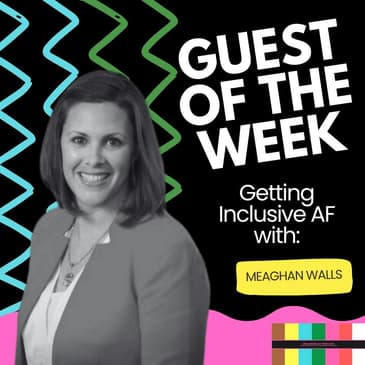
In this episode of The Inclusive AF Podcast, hosts Katee Van Horn and Jackye Clayton engage in an insightful and thought-provoking conversation with Meaghan Walls, an expert in disability inclusion. The discussion centers around the importance of informed decision-making in acquiring assistive technology, the impact of accommodations in the workplace, and the need to shift the corporate mindset surrounding accommodations. Meaghan Walls provides valuable insights into removing barriers to participation through technology, training, and attitudes, emphasizing the cultural importance of inclusive language and trust. Join us as we delve into the significance of accommodations, the potential impact on job performance, and the importance of creating a safe space for employees with disabilities. Stay tuned for an enriching conversation that challenges societal stigmas and promotes a more inclusive and understanding workplace environment.
Powered by the WRKdefined Podcast Network.
[00:00:00] You're listening to Inclusive AF with Jackie Clayton and Katie Van Horn.
[00:00:09] Hi, Jackie.
[00:00:10] Hi, Katie.
[00:00:11] How are you doing?
[00:00:13] You know, living the dream.
[00:00:14] Every day is a holiday up in here.
[00:00:16] I'm home.
[00:00:18] So you know, things are going.
[00:00:19] Miracles.
[00:00:20] You've been traveling a lot.
[00:00:22] Share with others.
[00:00:23] There are some of the places that you've been.
[00:00:25] I'll share as well.
[00:00:26] Yeah.
[00:00:27] Houston.
[00:00:28] Excuse me, I live in Waco and I did not drive for three hours to see you.
[00:00:34] Normally I would.
[00:00:35] Yeah.
[00:00:36] I am sad about that.
[00:00:38] But I was busy the entire time so it really would have been a complete waste of a drive
[00:00:44] for you.
[00:00:45] But let's see, I was in Germany.
[00:00:49] I was in France.
[00:00:50] I don't know.
[00:00:52] And now I'm going to do that again starting Saturday.
[00:00:55] So you know, it's great.
[00:00:57] It's great.
[00:00:58] I'm not tired.
[00:00:59] You're tired.
[00:01:00] I know.
[00:01:01] All of my travel has been local.
[00:01:03] It's been at California.
[00:01:04] I spent some time in Dallas.
[00:01:06] I just got back from Austin, a lot of local traveling and exciting, the exciting times.
[00:01:17] As long as I am not at home, it's been pretty exciting.
[00:01:22] It's very good.
[00:01:23] Well, hey, by the way, this is the inclusive podcast folks.
[00:01:27] So welcome.
[00:01:29] Jackie and I have a special guest today and so want to turn it over to her to introduce herself
[00:01:36] and share a little bit about her background.
[00:01:38] So Megan, I will turn it over to you.
[00:01:42] I'm excited to be here.
[00:01:43] I've heard so much about you all.
[00:01:45] We share some mutual people that insisted that this would be a good conversation.
[00:01:52] So I'm glad to be here.
[00:01:54] Yeah.
[00:01:55] I'm here as well.
[00:01:58] I love you guys.
[00:02:00] I love the girls.
[00:02:01] I am in Omaha, so, I don't know where that triangulates all of us.
[00:02:04] I am, you know,
[00:02:16] Book puzzle nature, plant loving wife and mom of two girls.
[00:02:19] Keep busy with activities and work in the disability realm of things in a
[00:02:24] lived in Chicago, South Bend, Indiana, Boston, and suburbs, I guess. And then made my way back here,
[00:02:35] where I had more family. I drugged my New England-born husband out of Boston and got him back here to
[00:02:42] the Midwest, which was a miracle. A miracle I didn't think was going to happen. But yeah,
[00:02:48] my journey here in Omaha, my mom co-founded a medically based child care when I was young.
[00:02:55] So my exposure to the disability world was really organic and just I was immersed in it. I was around,
[00:03:02] you know, the kids and the educators and the therapists and the parents. And it just became
[00:03:08] a natural kind of process of learning what things got in the way of families and kids being able
[00:03:15] to do what they wanted to do. And then I volunteered and worked at the organization.
[00:03:24] And then as I got older, I realized, hey, I'm really good at problem solving. I'm kind of good
[00:03:29] at this engineering thing. And I really got interested in the adaptive technology side of
[00:03:37] what kids and the families and the therapists were using. And I'm not that old, but it was
[00:03:42] really at the, it was still at the very beginning stages of when assistive technology was mainstream
[00:03:49] and beyond just hospital beds and wheelchairs. And so it was really still an emerging field.
[00:03:55] And I decided to pursue rehab engineering, which is a mashup of physiology and
[00:04:05] engineering, really to solve human access problems. I have a blog on my website about
[00:04:10] what the heck is a rehab engineer, because I got asked that question so many times. So
[00:04:15] it'll take you all in depth if you want to, you want to explore that. But really, I just went to
[00:04:21] learn how to take devices or things, tools that are out there and use them to remove barriers
[00:04:30] for people to do the things that they wanted to do. And that's really been
[00:04:33] the driving passion behind the journey I've taken through grad school and working for
[00:04:38] Easter Seals, Massachusetts. And then into my current role as the CEO for Center for Disability
[00:04:43] Inclusion, it's really been centered around all different ways of removing barriers to
[00:04:50] participation so that people can do what they want to do in the way that they want to do it.
[00:04:55] And so sometimes that's technology based, sometimes that's training, sometimes it's
[00:04:59] environment, sometimes it's just straight up attitudes. So that's me in the very big
[00:05:07] nutshell. It's a very big nutshell. Yeah, exactly. There's so much to unravel. You're welcome.
[00:05:20] I wanted to jump in. I know Katie has questions too, but like,
[00:05:26] I think of adaptive technology and there's so many things, you know, there's so many
[00:05:32] things that we need or places where I could be a need for assistive technology. How do you,
[00:05:39] like what is the most common thing that you work on? I can't imagine it's like, oh, I want to,
[00:05:43] I would want to solve so many different things. It's like, how do you know where to get started?
[00:05:48] You know? Yeah, there is no one starting place really. The, I shouldn't say that in terms
[00:05:56] of the technology, but this the starting place is just understanding the need. And so it's very
[00:06:02] specific to what's the barrier and kind of following that direction. But I think one of the most
[00:06:10] fun parts of talking about assistive technology is that people often think it's really complex,
[00:06:20] like exoskeletons or talking robots that, you know, can clean your house or, or it's very simply,
[00:06:29] you know, wheelchairs and things that you use in the bathroom or, and it's really just helping
[00:06:35] people understand it's any tool that makes your life easier. I tell people, I get chronic migraines
[00:06:40] and when we jump to this highly remote workforce, my migraines went through the roof and I came
[00:06:47] to realize it was a computer screen induced thing. So I wear blue light glasses, everyone thinks I wear
[00:06:54] glasses typically. But that's assistive technology. That's just a tool that makes it so that I can
[00:07:01] function to my optimal amount throughout the day. And so it's really starting with that conversation
[00:07:08] and with those whoever it is or whatever the situation is like, what's getting in the way?
[00:07:13] What are you having trouble doing and why? And then problem solving through what,
[00:07:21] what could solve that. And sometimes you find it in a store and sometimes you get to make it.
[00:07:25] And that's when it gets really fun. But it's really understanding the person and what they
[00:07:32] want to do and why they can't do it. Like left handed scissors. I was looking at
[00:07:38] pin snips. It was a version of the amazing race. This woman was trying to make a
[00:07:44] and that my husband is brilliant and I am not brilliant. And so I'm looking at it. I'm like,
[00:07:50] why are they having a problem? She's like, I can't get it. I'm crying. I'm like, what is going on?
[00:07:55] He's like, those are left handed snips. And I was like, well, should she change hands?
[00:08:00] And he's like, they're not gonna work. I was like, what is happening? Like I don't understand
[00:08:05] and it was like, it's those types of things. Like you said, it's not, it doesn't have to be as
[00:08:11] major. Like you said exo-stellar and sometimes it's just like, oh, if you had a product that
[00:08:17] built it upside down, I could use it. But in this way I can't. And sometimes it's putting in place
[00:08:25] a strategy of using color coded cards to mark things. And so it's really, it's understanding how
[00:08:35] people process information, what physical barriers are in the way and just kind of trial and error
[00:08:45] a lot of times. Absolutely. I will say I have a very slight impairment from I'm over 40 now and
[00:08:55] my sight, if I don't have these on everything slightly blurry on my computer screen. So that is
[00:09:01] a very minor inconvenience. But what is the one thing that you think from an organizational
[00:09:10] perspective? I know you do a lot with children, but is there something that like in organizations
[00:09:16] is requested the most or is the most needed today? Yeah. So most of my work today falls kind of in two
[00:09:27] different realms actually. So under my consulting brand, I do mostly either sensory equipment work
[00:09:38] with schools. So right now I'm in the middle of well the tail end of a year long project
[00:09:43] working with the school district to understand what sensory equipment they have available to their
[00:09:50] teachers and their students, educate them on how to use it, what that means, how they understand,
[00:09:56] its purpose and architectural access. But with the Center for Disability Inclusion,
[00:10:04] we're working with businesses who are striving to be employers of choice for people with
[00:10:10] disabilities. And so we are doing training and consulting with that sole lens of positioning
[00:10:19] them to be successful in that diverse hiring. So you know, we like to say you have to look inside
[00:10:27] before you can project outside because if your insides aren't prepped to train, retain, promote
[00:10:38] people with disabilities in your workforce, then going out and recruiting them and hiring them is
[00:10:42] going to be a wasted effort because they're not going to stay. They're not going to see a place for
[00:10:47] them in your business. And so we do a lot around accommodation process with companies as well as
[00:10:58] a lot of training just to sometimes tell them it's okay to talk about disability. And it
[00:11:06] sounds so simple, but sometimes they just need it's like they need permission. Not a bad word.
[00:11:13] Let's normalize this conversation. And then from getting some of those foundational elements around
[00:11:20] let's have a conversation about mental health and wellness, let's have a conversation about
[00:11:24] neurodiversity. Let's talk about accommodation processes and understand that it doesn't have
[00:11:31] to be super complex and it can be really streamlined so that you get to a good endpoint.
[00:11:36] Then it really, those are those channels to open up the doors to actually change processes and
[00:11:43] change programs so that all of those things are in place. So again, there's another long answer, but
[00:11:53] really from the business standpoint, there's been a really
[00:12:01] elevated interest in talking about it, which has been great because that's how progress gets made.
[00:12:14] Imagine how fast we could solve the world's biggest problems if more SA Startups would gain
[00:12:19] traction sooner. Welcome to the Tech Entrepreneur on the Mission podcast. This podcast is
[00:12:24] dedicated to sharing experiences from B2B SA CEOs who are going above and beyond to deliver
[00:12:30] change that is noticed. You will hear their secrets and learn what is required to build a
[00:12:35] science business that the world starts talking about and keeps talking about and how to overcome
[00:12:41] the roadblocks to do so. I'm glad that you said that. I feel like there's so many things,
[00:12:47] especially with children that we mask as being a child that isn't, that might be
[00:12:56] a disability and you don't realize it until much later. One of the examples that I always say is
[00:13:04] I didn't have an active imagination. I had an anxiety disorder. This was not an active
[00:13:12] imagination. So many times as children, you'll say, oh, they're just being little or when you
[00:13:18] get older, like, oh, you forget things because you're just getting old. No, no, no, no.
[00:13:24] It's because I couldn't hear you because something was going on. So you never got it.
[00:13:29] And there's something that we can fix there so that you can be more active and be more of a part
[00:13:36] of that. You had mentioned more about having the conversations and helping organizations in
[00:13:43] that way. Do you also help people with disabilities know how to communicate with
[00:13:49] their employers? Because there's two sides. If your employer hasn't gotten that, but I still
[00:13:55] need to be able to get my needs met. How do I do that in a non-threatening way of saying, hey,
[00:14:03] so I have this thing and so I'm going to bring this thing with me. I don't want anybody to
[00:14:08] freak out. Let me explain why this is in place. And I don't want to put it back on the person
[00:14:14] with the disability, but it's always one of those things where it's like I know that I'm going to
[00:14:19] bring this thing with me and there's going to be a conversation. So if they don't have it ready
[00:14:25] and I'd like to prep them, is there anything to help the person with the disability as well?
[00:14:31] I mean, there are. So we don't work directly with candidates. So if someone's out there
[00:14:37] job searching, right? We don't work directly with them in their processes. But the way that we
[00:14:45] and we never call anyone out in our consultation with companies, if people share and disclose,
[00:14:53] then that just enhances the conversation. But it's never something that we require or point out.
[00:15:02] But when we're talking to the workforce in general through the training and the consultation,
[00:15:07] you know, we let them know like there are 500 different types of disabilities.
[00:15:12] 74% of them you can't see. They're not apparent. And 26% of U.S. adults identify with the
[00:15:20] disability. So in this room, let's say where I have 100 people, 26 of you
[00:15:27] more than likely have some level or some type of disability. So there are people with
[00:15:30] disabilities are already in their workforces. And so when we talk to them, we talk to them
[00:15:35] with that assumption. And so we talk about language, inclusive language and, you know,
[00:15:42] building that culture where it's like, you want people to talk to you about this need that they
[00:15:48] have, but you have to put a culture in place where there's trust and they know that it's
[00:15:51] not going to come down on them later and it's not going to, you know, not gonna,
[00:15:56] you know, they're not going to experience limited progression in their career because
[00:16:02] they've told their manager that they need this. So it really comes out not one-on-one with
[00:16:08] individuals or individual consulting with the employees with disabilities, but from that
[00:16:14] cultural angle of it's all tied together, you want your employees with disabilities
[00:16:21] to talk to you because then it becomes a performance issue to what you were saying
[00:16:24] about masking things and, you know, kind of brushing them off. And if within your culture,
[00:16:30] you don't have a safe space for me to come tell you that I've been diagnosed with type one
[00:16:38] diabetes and I'm trying to get my insulin managed and I need to take,
[00:16:45] I need scheduled 15 minute breaks to be able to like check and take care of that stuff.
[00:16:50] Then I'm not going to tell you and the side effects of me not taking care of myself are going
[00:16:55] to look like work performance issues, but they're really unmet accommodation needs.
[00:17:02] And so if you've had these conversations where you put in place the structure and the trust
[00:17:10] to have those conversations, you're actually better able to manage the performance of your
[00:17:16] workforce and have more, and then be able to turn some of those accommodation requests into
[00:17:25] best practices that benefit everybody. But you don't get to have those conversations if people are
[00:17:29] afraid to talk about disability. And the other side of it is not every disability is going to
[00:17:36] come with an accommodation request. So sometimes, you know, they just want you to better
[00:17:42] understand them and how they work. So for me, right, if I come to use a manager and I say,
[00:17:46] hey, I get chronic migraines, they're pretty well managed, I have tools, but if a front comes through
[00:17:52] really quick and I don't catch my tells, here's what you're going to see from the pain.
[00:17:59] I may all of a sudden not communicate the same way. I'm going to have a harder time finding
[00:18:03] the words. And if you don't know that I live with chronic migraines, you may think I had
[00:18:09] a lot of fun over lunch and make this assumption that I went out and had fun. And now there's this
[00:18:16] perception of job performance and irresponsibility versus what's actually going on. So I may just
[00:18:24] want you to know if you see this, this is what I'm going through and this is what I need.
[00:18:29] I don't need a whole accommodation process tied to it. So we try to talk through those types
[00:18:36] of scenarios and help with the cultural approach to disability and those conversations.
[00:18:42] And it going all the way back to children. And if you can't tell, my dad likes to say that I tell
[00:18:52] connect the dot stories. So I hope you can keep up because I go around. But what I thought of
[00:18:58] when you first were talking about behaviors with children, my daughter was diagnosed with ADHD
[00:19:04] this last summer. And so much made sense because I always described her as
[00:19:13] a child with big emotions on all sides of things. Someone who saw with their hands, she touched
[00:19:21] everything everywhere all the time. And some other things that kind of got her in trouble in
[00:19:28] kindergarten. And then as we put pieces together and she got diagnosed this summer, it all made
[00:19:35] sense. But for so long, I was just like, she just has big emotions, like happy, sad, mad.
[00:19:43] They're just big. But there was more to it. And so you if you don't raise that level of
[00:19:50] awareness to your point. And that's when I was like, Oh, and then it becomes a performance
[00:19:54] issue, whether that school or social or work. Because those personal needs aren't being met.
[00:20:02] Absolutely. I think you know, at first of all, I love your stories because it reminds me of my
[00:20:06] sister who does the same thing. So we're all good with that. So I think the part that I
[00:20:14] well, I liked everything about you said, but talking to the HR leadership, whoever it is
[00:20:20] to share with them that it's okay to talk about these things. But at the same time,
[00:20:25] it's not outing someone or or or assuming something or going, Oh, do you have this? Is that why,
[00:20:32] you know, you know, obviously you'd never want to do that because that shuts people down very
[00:20:37] quickly. So I love the idea of just having some open conversations and some educational programs
[00:20:42] to help people with how do we how do we talk about these topics in such a way. And
[00:20:49] especially when it comes to mental health or neurodiversity, I think there's so much unknown.
[00:20:55] And it isn't a one size fits all in any way, shape or form on any of these topics. So I like the idea,
[00:21:02] you know, we have an HR, you know, the ADA interactive dialogue where we ask questions of,
[00:21:08] you know, what do you need? All of these things. What I found recently, you know,
[00:21:12] to your point on maybe they don't need an accommodation. The other side of that is
[00:21:16] maybe they don't know what what to ask for or what they need. And so, you know, I think that's
[00:21:21] also just a great way to start the conversation. And as an HR person, as a leader, obviously,
[00:21:27] it's usually HR that's having this conversation. It's the having some suggestions of what might
[00:21:32] help like to your point, Okay, I need an extra break or I need, you know, some of the I need
[00:21:36] to step away during a meeting or whatever it is. So having those in your back pocket to
[00:21:41] suggest to folks is I think such a really important piece as well. But just being able to have an open
[00:21:51] dialogue. I think that means the world to folks when you are just listening and trying to show
[00:21:58] empathy of, you know, I make might not understand it completely but try to help me understand
[00:22:03] and what can we do to make you successful in your in the workplace. So I love that.
[00:22:09] So not a question. Just a comment. Yeah. Well, I'm blown away though by your
[00:22:15] shows up as a performer. And you never thought about it. But I never thought about the fact that
[00:22:22] like it was it was easy for people to understand that like when my mom passed away that maybe
[00:22:28] I wasn't fully pregnant. It was easy for them to understand that. But what if you're just
[00:22:33] depressed? Right. And so and all I needed was maybe an extra 30 minutes in the morning with my dog
[00:22:42] so that I can ease into my day. But instead of doing that it creates all of this anxiety and
[00:22:48] resentment. And now I'm really not focused at all of these different things. And it's
[00:22:52] because I just heard something frightening to me the other day that was like,
[00:22:57] if people stop showing up the way that they used to, you know, they're having a behavioral
[00:23:01] issue, they're probably looking for another job. And it's like, whoa. That is you how are you drawing
[00:23:07] that line without realizing maybe there's something else that we can do. And it or maybe just giving
[00:23:14] people the space because they don't need an accommodation from me. They need this space
[00:23:21] for them to take that extra step blown away. Well, and that ties into that that empathy
[00:23:29] piece. We talked about that in some of our trainings, you know, the different types
[00:23:32] of workplace empathy that you, you know, that exists and how to choose the level that's appropriate
[00:23:39] for the situation. But that how it's like an underappreciated superpower.
[00:23:48] Right. Understood. Do what you have to do, Megan.
[00:23:54] I got three big ones.
[00:23:56] Do you have to do three? All right. Well, we'll let Megan settle. So I think the other piece that
[00:24:04] is really interesting, I want to find out about is just the thoughts on kind of those accommodations
[00:24:11] and what are some of the technological, you know, what technology, you know,
[00:24:17] whether that's robotics, you know, I think the basics that
[00:24:21] the MDS has been years ago, where, you know, just even a, the technology that goes over your screen
[00:24:27] on your computer to enlarge text or to print it in a certain way that someone with dyslexia
[00:24:33] is better able to read it and recognize. I actually, this was years ago and
[00:24:39] one of our friends actually called this out to us that like when you put hashtags
[00:24:43] on a tweet or wherever, capitalizing every word just so it's easier for folks to read it. And,
[00:24:50] you know, and again, this is just, it's such a simple thing that I'm well, I don't have any
[00:24:57] reading issues. And I still at times I'm like, wait, what is that hashtag? I don't know what
[00:25:01] that means. That just basically is because I'm not cool enough. But yes. But, you know,
[00:25:06] I think that would be another part that I would love to understand is just from a technology,
[00:25:11] what are some of the like technologies that you see commonly used?
[00:25:16] Yeah, that's called camel casing for anyone listening. Thank you because of the hump. So
[00:25:23] let's have a hump every time there's a word. You know, and I want to share, I'll share a few
[00:25:28] of those. I'm going to back up a moment because Jackie was when she was to a point
[00:25:36] that Jackie was making, you know, one of the things we tell HR teams, you know, is the lived
[00:25:43] experience of the person with a disability that's coming to you from accommodation or having that
[00:25:47] conversation matters the most in the process because of that if they've lived with it lifelong
[00:25:56] and they've been in other jobs, they may have an idea of what strategies worked or what they
[00:26:02] needed. But if they were in an accident or it was an injury, it's been an onset of an illness,
[00:26:09] they have no idea what's out there. And so being able to know that there are
[00:26:15] experts out there, organizations, the tech app program within your state that can help
[00:26:21] both rehab, different resources to help come up with a list of what's out there versus just
[00:26:32] pulling something off the shelf because I was and the story always comes to mind. There was
[00:26:37] an organization, they had a an admin personnel that they'd had. She worked there like 30 some years
[00:26:45] and she was diagnosed with a degenerative eye disease can't remember which one. And so
[00:26:51] they really wanted her to be able to stay in the role that she was in and keep doing the
[00:26:56] things that she was doing. So they gave her a catalog of assistive technology for low vision
[00:27:03] and blindness and told them told her to tell them what she needed. And she doesn't know. So,
[00:27:10] you know, they bought this and then it didn't work. They bought this and it didn't work. And so
[00:27:13] it was just the cycle of trying trial and error but not in a like an informed way. So then
[00:27:21] that creates more frustration and you don't end up with the right tools, right ripple effect after
[00:27:26] that. So that's why like so my background in assistive technology it's one of the things we
[00:27:32] talked to our partners about is like I'm a certified assistive technology professional
[00:27:35] like I've been trained to have those conversations and help narrow it down, right? Figure out
[00:27:40] what features we need, what the functionality needs to be and give you a few options to
[00:27:46] consider. Because without that it's like you could walk into a poll's pharmacy and like
[00:27:52] pick some things and not actually know what they do or if they're gonna meet that need.
[00:27:57] And so much of those the elements that will make that come within a lot of those accommodation
[00:28:06] class are actually just kind of built into things that technologies that we use now. So
[00:28:10] whether it's closed captioning or contrast or magnification, audio to the speech to text or
[00:28:20] you know audio out. Most of those things are built into the systems that we're using and it's just
[00:28:24] making sure that they're set up in the right way and utilize the right way. So if you're someone
[00:28:32] who can better articulate yourself through speech and writing is hard maybe it's
[00:28:37] because you have dyslexia or maybe it's just the way you process working with your manager to allow you to
[00:28:47] submit voice or video you know versus writing a paragraph or an email or paper like how you're
[00:28:55] communicating information. So sometimes it's tapping into what you already have which is why
[00:29:03] most of the accommodations don't cost anything because you're already it's already incorporated in
[00:29:09] things that you have. You know sometimes it's going to be a footstool lighting a lot. Old buildings
[00:29:17] that have fluorescent lighting are terrible for migraines, provision, they're really disruptive
[00:29:22] to people with sensory processing disorders and so if offices have fluorescent lighting
[00:29:32] it might be more desk and floor lighting that gets requested but not complicated
[00:29:38] and not going to break the bank either which another practice that we talk about that helps
[00:29:48] doing a presentation at the HR Nebraska conference this summer that's on accommodations through an
[00:29:54] equity lens and it's so it's looking at all of those things in the process and one you know when
[00:30:01] we talk about equity in this space having a centralized accommodation fund in an organization
[00:30:09] so that the money that's paying for the accommodations isn't coming from an individual
[00:30:14] manager's budget because right they want to protect their budget so they're less likely to
[00:30:19] be willing to extend on accommodations if it's going to negatively impact their budget but if the
[00:30:26] organization has said here's our pool of money this pays for whatever people tend to get what they
[00:30:33] need faster. Welcome change agents to your go-to place for stories that ignite your spirit fuel
[00:30:39] your purpose and connect us all. We believe in the incredible power of the human spirit
[00:30:45] its boundless resilience and the inspiration it brings to our lives on the driving change podcast
[00:30:51] we'll journey together through the extraordinary yet very relatable experiences of some of the most
[00:30:56] amazing people on earth. Our mission that through these stories we might just spark change within
[00:31:03] you and awaken a newfound motivation to harness your unique gifts to make a real difference in
[00:31:08] the world so get ready to be inspired and join us on this incredible adventure.
[00:31:13] You can find the driving change podcast on Apple Podcasts, Spotify, iHeart radio or wherever you
[00:31:20] love listening to your favorite podcasts. Absolutely and I will say from the HR side of
[00:31:28] things I was told very early on in my career and this was at a very large corporation so this
[00:31:33] is different in smaller organizations but there aren't when you're thinking about
[00:31:40] accommodations there are so many things and usually for folks that have had
[00:31:45] the issue whatever it might be for their entire life they are able to identify very easily here is
[00:31:51] what I need to your point on someone that you know maybe this is a recent situation they might not
[00:31:58] know as well but there isn't any budget like unless it truly is going to break the company
[00:32:04] whatever is needed for the person to be able to do their job is what you should do and
[00:32:09] that you know just from a fair and consistent and also knowing that a lot of folks with disabilities
[00:32:17] unfortunately are underemployed or skipped over for roles for promotions for different
[00:32:24] things like that and that just creates a whole societal issue and kind of perpetuates
[00:32:31] other problems and so those accommodations are just so critical but to your point
[00:32:37] they don't usually break the bank it's usually something fairly simple of just I need a floor lamp
[00:32:43] or I need a stool or whatever it might be and you know how easy that is to fix to be able
[00:32:49] to bring in folks with different ways of thinking about things different way of processing all of
[00:32:54] that so thank you for saying that as well. So many of these things are I'm sorry Katie
[00:33:03] but it's like what came to mind as I was listening is like we give people
[00:33:12] there's I love the equitable process and thinking of having a standard budget but it's almost like
[00:33:19] anything where we give people a budget their own like a stipend because they have a work at home
[00:33:25] need I feel like there everybody there's it wouldn't surprise me if everybody had some kind
[00:33:31] of accommodation that makes things easier for them to be their best especially I'm thinking of a
[00:33:36] remote or hybrid environment so many times we already give people additional resources for an
[00:33:42] extra screen or a specialized chair or all of these things to to make it make it easier for
[00:33:50] them to do their day-to-day tests and I think language is really important I think just the
[00:33:56] word accommodation can be intimidating and the big piece for HR professionals is trying to be a
[00:34:05] movie star and think that you're like the end all of everything like you don't it's not your job
[00:34:10] to know every discipline I'm talking about. I am a movie star. Come on. There's so many people
[00:34:17] that are because they don't know about accommodations don't want people to have the
[00:34:22] conversation because of their own issue like we don't talk about disabilities here because
[00:34:28] everybody's going to need an accommodation like are you listening to yourself right now I like
[00:34:33] number one first of all put trying to handle it all by yourself like get someone to help you start
[00:34:39] with that but then if everybody needs an accommodation and well guess what then they just need an
[00:34:44] accommodation and won't we be so great after we get them all in place. Yeah well you know
[00:34:51] what you bring up is something we talk about too is that connotation that comes with the word
[00:34:57] accommodation and so like if we can find a way to shift the corporate mindset around
[00:35:05] accommodation and what that triggers and what that means it would just make it so much easier
[00:35:11] if we could look at them as tools to be to perform your best in your role like
[00:35:18] if you're a graphic artist I'm not ever going to ask you to and expect you to do your job without
[00:35:26] your preferred software or just do your marketing and fundraising without a CRM or
[00:35:33] you know those types of tools that you need to actually perform the role and succeed in
[00:35:39] your job so if we look at the even something as simple as you know when you're talking about the
[00:35:47] extra screen or you know if we put them on the same playing field and say do you need two screens to
[00:35:53] most efficiently do your job yes okay great do you need a screen reader to most efficiently do
[00:35:58] your job yes great so if we put them on the same playing field then there isn't this sense of like
[00:36:06] accommodations or taboo but extra resources are okay um yeah I'll get off my soapbox no I mean
[00:36:16] that's about why we want to hear you it's not it's not a soapbox I mean I feel like again like when
[00:36:22] we're onboarding we go through a process of making sure people have things for their job
[00:36:26] but allow people to fill in the blank and stop giving people you know your three you know standard
[00:36:34] whatever clauses like number two pencil blue black and red ink like maybe I know what I need in order
[00:36:42] to get my job done because maybe I'm a grown-up maybe allegedly supposedly
[00:36:48] uh I uh I can't help myself because I always go to the HR language because that's just
[00:36:55] where my brain always is so but it it's such a good point like how are we thinking about
[00:37:02] this and talking about this because I mean even just something as simple as I want a mac versus a
[00:37:09] whatever non non-mac I don't even know what you want to call them anymore yeah what is that yeah
[00:37:15] what is that even um but it's funny because it is like our finance folks always want you know the
[00:37:20] the other laptop uh but I love the idea of just thinking of it as tools like how are we making
[00:37:26] sure that people can be successful in their role and going back to what both of you have said
[00:37:31] like we need to take away that scariness of just having a conversation of what is going to best
[00:37:38] help you to do the job what is going to help you be successful um I think that's just such a critical
[00:37:44] piece so uh you know I would love to know like from a advice for professionals that are in this
[00:37:52] space in HR uh you know I think Jackie just nailed one of them with you know get help but what
[00:37:57] are some things that you would recommend for HR folks who are facing some of these asks or I don't
[00:38:04] know where to start or how do I start the conversation in my own company how should they do that?
[00:38:18] There's no I mean it just depends where you're starting in the process you know
[00:38:26] shameless plug at Center for Disability Inclusion we put on a lot of uh we put out a lot of
[00:38:32] programming um we have a webinar that's coming up that's on digital content accessibility
[00:38:40] but we have monthly network meetings that we love to have guests come check us out
[00:38:44] this month we talked about how compliance and culture can work together for innovation
[00:38:49] and how you need both um and and how to start some of those conversations but our inclusion
[00:38:55] summit that's in September is all about it's our theme is audacious dialogues it is all
[00:39:00] about how to start these conversations so our keynotes and our learning sessions will all be centered
[00:39:06] around um these kind of taboo tough topics how to build the framework for them how to build the case
[00:39:14] how to prepare for the conversations how to create psychological safety um because you really have to
[00:39:20] first make sure that you've created a safe space to have those conversations um so I'd say
[00:39:27] if there's one if there's one answer it's it's look look there first what what kind of culture do you
[00:39:34] have for innovation conversation um you know honest honest dialogue and and fix that first
[00:39:44] awesome and and that I wasn't even trying to give you a softball to have you share all of that
[00:39:49] but I mean all those things are perfect so I think that's this is what folks you know need
[00:39:55] and and want to just be able to learn because I think it's also you know we talk about all
[00:40:00] types of diversity and I think for so many people it is I don't want to talk about it because I don't
[00:40:06] know what I'm talking about I'm afraid to approach it because I don't want to say the
[00:40:09] wrong thing or I mean even just the the term disability it has a certain connotation in
[00:40:16] some folks are like I am not disabled I am differently abled or I uh you know have
[00:40:21] special abilities you know certain language just you want to make sure you're you're saying the right
[00:40:26] things and doing the right thing so having a conference having some of these places where
[00:40:31] you can have that honest dialogue and have those open conversations and learn
[00:40:36] is huge so thank you for for doing that and and for starting those conversations
[00:40:41] because I think any way that we can do this the right way and teach people to do this right
[00:40:46] way is such a great thing to be doing so that is awesome so um would love to know
[00:40:55] what are you working on right now that you are most excited about 16 balls in the air right now
[00:41:16] you know I will say I really am enjoying um and the response from the school district
[00:41:22] on learning what resources and the equity of the distribution of their resources
[00:41:27] and giving them tools to try to meet the needs of students with sensory processing needs in the
[00:41:33] classroom and rather than sending them to the office or elevating them for behavior
[00:41:40] that's been a really fun ongoing project but I think from honestly we're we're
[00:41:46] we're neck chin deep in in our inclusion summit planning and it we are it's a collaborative
[00:41:55] conference so the Kansas City Chapter of NAP the Kansas City Chamber the D&I Consortium
[00:42:02] and us and we have been so intentional on how to demonstrate how to walk the walk so
[00:42:09] our we're demonstrating you know vendor supplier diversity and action in the way that
[00:42:14] we've chosen our vendors everything from the book fair vendor to all of our food
[00:42:20] and and just really integrating all of those aspects in and so putting together something
[00:42:26] this unique and pulling the people together that are going to be giving the content
[00:42:35] is just a really fun thing to see developing and you know it's it's gonna be it's gonna be
[00:42:43] it's gonna be awesome so it's ongoing it's it's not gonna sound like a one thing right now but
[00:42:50] you know the intentionality that we're putting behind it I think is gonna it's giving us something
[00:42:53] to be really proud of awesome very cool so we are ending our time with you here shortly but
[00:43:00] I would love to ask what is one thing you want to make sure that the folks listening
[00:43:05] heard one take away one take this action right now what is one thing that you'd like
[00:43:10] folks to know disability awareness is everyone's responsibility and it's okay to talk about it
[00:43:22] and you're going to with with disability being the most intersectional of all the identities that we
[00:43:28] protect in this space it impacts your entire workforce so it's it's a it's the right thing
[00:43:35] to do and it's a business thing to do and it's an innovation thing to do to start talking about
[00:43:41] it awesome thank you Jackie what you got I think don't steal this one Katie but
[00:43:49] I think what I'm taking away is as you're working from a HR perspective or HR BPE perspective
[00:43:58] helping with different things that are coming up I'm thinking about performance
[00:44:02] as you're looking and doing that performance audit make sure that you consider
[00:44:07] that there could be an underlying disability that potentially the person who you know is being
[00:44:12] affected doesn't even know yet just throw it out just let out you know friendly reminder of the
[00:44:19] benefits that we have that maybe people should explore start there because you can save a lot
[00:44:26] of grief and you can also save your company a lot of time and dollars just by being a better
[00:44:36] advocate for people and just doing just it doesn't like it doesn't take a lot just to get those things
[00:44:43] started and I think that to me that's the most important thing that I I took away as we look into
[00:44:50] performance feedback and becoming a culture of of of feedback and actually looking at those
[00:44:56] things can be helpful in more ways than one yeah I think for me you know I recently had
[00:45:02] a conversation with the leader and they said oh every time we're putting someone on a corrective
[00:45:06] action or a performance improvement plan all of a sudden they have an ADA issue and I was like
[00:45:12] or let's flip that around maybe the reason why we're now at performance so I think just your
[00:45:18] call out of is their performance changing because of something that you know is going on
[00:45:23] that maybe has changed for them or that they've recently been diagnosed or maybe hasn't
[00:45:28] been diagnosed yet and are we looking at kind of all of the things that might be going on externally
[00:45:34] there's as we all know a lot going on and a lot of mental health pieces just have been ignored
[00:45:40] for a very long time so I love that call out of don't just assume oh they're just not performing
[00:45:46] anymore there could be so many other pieces to this and so I really appreciate you saying that
[00:45:52] and you know calling that out for folks that are on the front lines um you know working with
[00:45:57] leaders on this so awesome so it's not always burnout it's not oh well
[00:46:05] um so yeah so Megan thank you so much for taking the time to meet with us where can
[00:46:15] folks find you if they want to connect with you um so you can find me on linkedin you can
[00:46:21] check us out at center for disability inclusion dot org and my email is pretty simple it's just m
[00:46:27] walls um m w a l l s at center for disability inclusion dot org awesome very cool uh well thank
[00:46:36] you for taking the time today to chat with us we really appreciate it this has been a very
[00:46:41] eye-opening very interesting conversation so so thank you uh having me of course uh so Jackie
[00:46:49] have a wonderful rest of your day me too i'm gonna be at home are you gonna be at home
[00:46:55] I am yes I am yes well actually I have to look at my claws trimmed because uh I broke one so yes
[00:47:03] but yes kind of at home uh thank you all for listening this is the inclusive af podcast
[00:47:10] bye bye
[00:47:15] hi my name is sarah and I want to tell you about my podcast called can I offer you some
[00:47:20] feedback I'm a business consultant and executive coach with over 20 years experience in change
[00:47:25] management leadership development and naturally providing feedback to high performers my podcast
[00:47:30] is for those of you who have a complicated relationship with feedback whether giving receiving
[00:47:35] avoiding or seeking feedback is essential for our development in each episode you'll hear
[00:47:40] from real people across industries with their ideas perspectives and best practices on feedback
[00:47:46] I'll also be sharing business bites with you simple explanations of organizational tools
[00:47:51] management techniques and leadership philosophies that will help you and your businesses thrive
[00:47:56] you can listen to can I offer you some feedback on your favorite podcast app or learn more at
[00:48:01] evergreenpodcasts.com
Sponsors
