
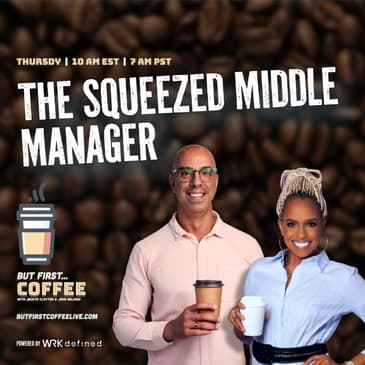
Middle managers are quietly absorbing more pressure than any other layer of the organization. John and Jackye unpack why the role has become unsustainable, what executives are missing when they pile on accountability without authority, and how HR can intervene before the manager class breaks.
Key Takeaways:
- Middle managers are being asked to deliver executive priorities while absorbing the emotional load of frontline teams, with shrinking support on both sides.
- The flattening of org charts during cost cuts has not removed work; it has stacked it on the managers who remain.
- Burnout in this layer is hard to spot because middle managers tend to mask it; they are still the ones holding everything together.
- Promotions into management are still happening without proper training, leaving new managers to learn coaching, conflict, and performance under fire.
- Return to office mandates land hardest on middle managers who are expected to enforce policies they did not write and may not agree with.
- AI tools are being pushed down to managers as productivity solutions, but the implementation work itself is becoming another task on their plate.
- When middle managers leave, institutional knowledge and team cohesion go with them; the cost shows up months later.
- Senior leaders often confuse manager silence for manager alignment, and miss the signals until disengagement spreads to the team.
- Clarity about decision rights, not more dashboards, is what most middle managers are actually asking for.
- HR has a real role here: protect manager bandwidth, restore real authority over their teams, and stop treating manager development as optional.
Keywords: middle managers, manager burnout, leadership development, HR strategy, employee engagement, return to office, manager training, decision rights, organizational design, frontline leadership
Powered by the WRKdefined Podcast Network.
Sponsors
