
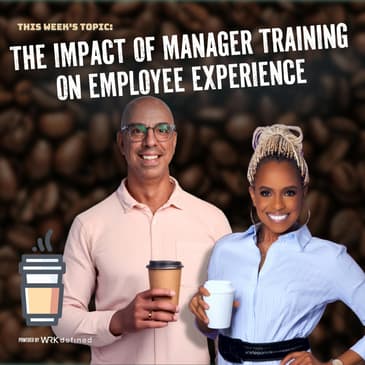
Jackye Clayton and John Baldino tackle the uncomfortable truth about manager training and its direct impact on employee experience. They expose why promoting top performers into management often backfires, how punitive training creates resistance instead of growth, and why organizations spend more time teaching software than building leadership skills. Drawing from their own experience as corporate trainers, they share practical insights on measuring training ROI, recognizing the Dunning-Kruger effect in new managers, and why proactive training prevents emergencies rather than reacting to them. This episode challenges HR leaders to rethink their entire approach to developing people managers.
Key Takeaways:
- Length of service does not equal management ability; leadership is a separate skill from job performance
- Promoting your top salesperson to manager often destroys both their career satisfaction and team productivity
- Organizations spend more time training employees on software systems than on company culture or KPIs
- Punitive or reactionary training creates resistance and fails to drive lasting behavioral change
- The Dunning-Kruger effect causes new managers to overestimate their abilities and resist learning
- Manager investment directly correlates to employee engagement; undertrained managers default to bad habits
- Training departments once had observers who tracked participant engagement for performance reviews
- Online training creates a disservice because you cannot read the room or gauge real engagement
- Training should be proactive and preventive, not triggered only after something goes wrong
- A post-training follow-up two weeks later asking about relevance is more valuable than a day-of satisfaction survey
00:00 - Introduction and banter with Jackye and John
08:12 - Starbucks new CEO policy and the personal experience angle
17:02 - Early career HR professionals thrown into business partner roles too soon
18:24 - Introducing the manager training topic and its impact on employees
19:50 - Practical training vs. theoretical training from their own experience
23:45 - Why promoting top performers into management fails
27:55 - The premise of why manager training is necessary
28:30 - Punitive training vs. proactive investment in leadership development
30:11 - How new software rollouts create false unity and community
35:30 - The correlation between manager investment and employee engagement
44:08 - People leave managers sometimes but also leave companies
45:01 - Measuring training effectiveness beyond day-of surveys
50:15 - Online training limitations and the lost art of training reports
52:25 - Anti-harassment training fatigue and maintaining quality year over year
Keywords: manager training effectiveness, employee engagement, leadership development, promoting top performers, Dunning-Kruger effect management, punitive training, proactive manager development, training ROI, employee experience, HR training strategy
Powered by the WRKdefined Podcast Network.
Sponsors
