
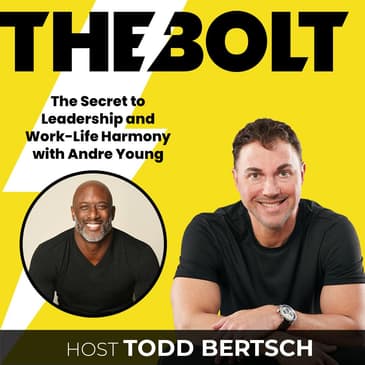
In this episode, we explore why leadership is one of the most important skills people are rarely taught. The conversation covers burnout, difficult conversations, work-life harmony, self-awareness, and practical habits that help people lead more effectively at work and at home. Listeners will learn how to improve communication, build stronger relationships, avoid common leadership mistakes, and create intentional growth through simple daily actions.
Key Takeaways
- Many people are promoted because they perform well, not because they know how to lead.
- Leadership requires learning how to have both casual and difficult conversations.
- Burnout often comes from unresolved personal and professional challenges.
- Making time for intentional self-reflection can accelerate personal growth.
- The way you start your morning can influence the rest of your day.
- Daily habits have a greater impact than occasional moments of motivation.
- Strong leaders create trust before they need to have difficult conversations.
- Work-life harmony is more realistic and sustainable than work-life balance.
- People are more likely to follow leaders who show genuine care and concern.
- Small changes in communication can significantly improve relationships and workplace culture.
https://www.toddbertsch.com/podcast/secret-to-leadership-work-life-harmony-with-andre-young/
Thanks for listening! We appreciate you.
Follow us at:
- https://www.linkedin.com/in/toddmbertsch/
- https://www.facebook.com/theboltwithtoddb
- https://www.instagram.com/theboltwithtoddb/
- https://www.youtube.com/@theboltwithtoddb
⚡ Ready to ignite lasting transformation in your team or event? Book me for keynotes, corporate training, or Positive Intelligence® coaching at ToddBertsch.com
Powered by the WRKdefined Podcast Network.
[00:00:05] Welcome to The BOLT Podcast. I'm Todd Birch, entrepreneur, mental fitness coach, and keynote speaker. I believe every person has a spark, but life, pressure, and doubt have a way of dimming it. Here's the good news. You can reignite it at any moment. That's what this podcast is all about. When you fuel your spark, everything changes. Let's ignite it together.
[00:00:28] Today, I'm joined by the incredible Andre Young, professional speaker, leadership trainer, author, and founder of You Evolving Now. And we're diving into what it truly means to lead effectively while building greater harmony between work and life. After 19 years as a mental health therapist, competing in sports at every level, and building his own business,
[00:00:53] Andre now helps leaders and organizations evolve both personally and professionally. We explore leadership, communication, burnout, and why so many leaders are promoted to perform, but never taught how to lead. Listeners, get ready for an impactful conversation. Andre, welcome to The BOLT Podcast, my friend. Oh, wow. Todd, thank you for having me. I want you to come on the road with me and introduce me. That was awesome.
[00:01:23] And you guys listening, thank you for letting me steal some time. That was awesome, Todd. I appreciate it. Oh, absolutely. On the road, me and you, we could have some fun, right? I mean, we got to know each other over a year now at one of the conferences, HR Collaborative in Cincinnati. But, you know, you and I are very aligned. And I feel like, you know, when you meet somebody and you have that alignment and we start to have conversations.
[00:01:50] And that's what we're doing today. This show is all about personal and professional growth and leadership. And man, do you fit in that box? Right? Well, it's a sandbox that I created a long time ago. I didn't know that I was going to be going this route. And the funny thing is, I did not want to speak and I didn't want to write. And now I can't shut up and I've written five books. So it's all worked out, but I didn't want to do any of this.
[00:02:20] Okay. Well, that's a great segue because you've done, you've had such a diverse journey. Professional athletes, therapists for 15 years, entrepreneur, author of five books. You have all the, all these leadership training tools and an AI tool, which we'll talk about later.
[00:02:40] But so looking back at all those experiences, what really shaped you? And when did you like make that pivot and say, Hey, I have something I need to say and I need to get it out there. Wow. Well, it was two things, but really one. So I, as a mental health therapist for 19 years, I burned out at year 15. And, you know, during that time, I'm a big nerd as we were talking about before we hit record. I'm a big nerd about whatever I love. So at the time I was in love with mental health.
[00:03:10] And I was a very, what I'd like to say, I think I was a very great therapist. And then I got promoted the same way you had mentioned, not because I knew how to lead, but because I was a really good therapist and it was a mine as well type of thing. I got my master's. This was the next step. Go. So I like to think I did really well in a lot, but then leadership had changed over top of me. And the building started to crumble. The leadership started to crumble.
[00:03:38] And it's not that they were bad people. It was just wrong fits, wrong butts in the seat for the time of things. And I did not handle that transition very well. And it exacerbated my burnout. Wow. And most people would think that that's where all of this came from. My leadership and work-life harmony trainings and speaking. And it helped.
[00:04:02] It helped me to learn a lot of lessons because I was right about everything, every single thing that I was saying when I was burning out. But I was so wrong about how often I said it, who I was saying it to, how I was tearing down the new and unknown employees that were coming in. So I was right, but I was really wrong. And looking back, I learned so many lessons from being right and wrong, but now I get to teach.
[00:04:27] The real reason all of this stuff happened and got me on stages and in books is that I went through a divorce around that same time. And the divorce is what kick-started it all. Okay. If you've ever been divorced, it allows an opportunity. There you go. It allows an opportunity for every one of us to look ourselves in the face and say, okay, what did I do really great? What did I do bad?
[00:04:57] And what obviously do I need to change? It could not have been 100% the other person's fault. That's not possible. Right. So since that's not possible, you were a contributing factor. And it really woke me up. And I was not proud of the husband that I was back then, the person I had become. And me being intentional and being a nerd about what I love that started loving me and say, okay, this has to change.
[00:05:26] And through that, I created a men's organization. And my wife now, I remember saying, I want to have guys over. The whole point is for them to come and go home better. And at the time, I just wanted to be like the hair club president and the member. And one day, as it kept evolving, I stood up to make my point. I sat back down. Stood up, sat back down. And one day, I never sat back down. Mm.
[00:05:55] And it was all about work-life harmony. It was a different title at that time. And I fell out of love with how I had to get business that way. I wanted to become a business. So long story short, where are people? They're at work. They're at school. They're on their phones. And I made the transition to scrap what I was doing and go that direction. And then 10, almost 15 years later, here we are. Wow. 15 years. Wow.
[00:06:24] And let's say I started it unofficially in 2011. Okay. Became a business in 2014. Transitioned to doing corporate in 2017. Okay. Well, still a long time. Long time. I mean, yeah, 10 plus years. Wow. So you and I, man, we have so much in common. Even more, even more the more that we talk. Well, first off, I'm divorced as well. So I can relate. It's always better the second time, right?
[00:06:55] For many reasons. One of which you touched on, which is just learning about all your failures and mistakes from the first marriage. And then really bringing that into the second marriage. And that's what I did as well. And interesting, Andre, during my divorce, I started my business. And that's when I started to reflect. I hadn't had any thoughts of being a business owner, but it was just the timing and the age
[00:07:24] of my son at the time. And I really wasn't seeing him as much because we were going through divorce, which I definitely didn't like that part, but I had this time. So I was able to devote all that time to building a brand and building my company, which ironically, I don't know if you looked me up, but my marketing business now 17 years, the name of that business is called Evolve Marketing. I love it. See, right? So we have so many ties.
[00:07:53] I'm like, wow, so your business is you evolve now. And here we go. One of the things that we both said, and I would really hope that the listeners pick up, and I tell them for work-life harmony, the divorce, when you go through a divorce and then you have kids, obviously the kids will go back and forth most of the time.
[00:08:18] And in that time, it's that deafening silence that is so uncomfortable. The silence is so loud. It almost makes you want to cry because you're just not used to it. But in that silence, you start having meetings with yourself. And so many people are busy being busy, whether it's you're a leader within an organization and your schedule has you so busy that you're not better. Or in our own lives, after work, you become a professional Uber driver and you're driving
[00:08:46] your kids around from sport to sport and doing all of these things and cooking dinner. You're so busy. I said, what company has zero meetings and think they can be successful? You know how many meetings it takes? Most companies are having too many meetings, but that's a whole different training, right? Right. But you have to have meetings to be successful. But most human beings never make the time and take the time to have an intentional meeting
[00:09:13] with themselves about themselves on how to succeed and be a better leader of their lives and lead. So, you know, the divorce forces it if you are willing to take it because it gives you this time that you can meet with yourself and purposely evolve. So if you're listening to this, make some time for yourself to meet with yourself, to be intentional about your evolution. Nobody can take that away. And then it'll just build and build.
[00:09:44] And it's amazing what can happen. It is. Yeah. And I love that. And I think the key point is, but you have to make that choice, right? You have to make that choice. That silence can be deafening and you could spiral. And I know at first, you know, I did. It was, you know, and I missed my son. It was just like, how was... Back then, we didn't have the competition of our phone in our hands. True, true.
[00:10:08] So now that silence can be still really quickly because you have a phone and you're going to scroll. That's a good, yeah, that's a good point. Yeah. A little different, but well, this is a great segue, Andre. I want to talk about one of your... Well, I don't know if it's exactly one of your trainings. You have a lot of trainings, but I know this is a key message. It was the introduction of this wonderful book right here, The Leader's Toolbox.
[00:10:37] One of Andre's five books, right? Yes, sir. Five books. The five points of your day. Yes. Yep. I'd love to just touch on that because I read that and I said, man, that's it. That's me. And it's so simple. It's simple, yeah. But you have to do it. So if you wouldn't mind just running, because I think in a lot of what we talk about on this show, Andre is really simple. And even in my keynotes and probably you too, right? You go back and say, wow, these are basic things.
[00:11:07] But they're so obvious. I put it in my books. I share it when I'm on stage. Listen, everything that I'm going to teach and this is what I'm about to share with you is common sense and easy to apply and does not take a lot of time. We're all too busy for something to take a lot of time. So the five points of the day, let me preface. And I ask everybody, do you want to live the life of your dreams, both professionally and personally?
[00:11:34] I don't think most people say no to that, right? Yep. Now, there are thousands of things that you can do, but these five points of the day are the foundation. You do them consistently. Your life will evolve. So point number one is what we consume when we wake up in the morning. Most people, especially leaders within organizations or highly inspired and motivated people, there you go. What they do is they pick up their phone.
[00:12:02] And I've seen most noble workers and leaders go to the bathroom and take their phone with them to start checking emails. As good as that may be, that's a horrible place to start because you know, like I know that your emails are quicksand. Even if it's good news in there, it's quicksand. Once you get in, you can't get out. Other people pick up their phone and start scrolling. Nothing and no one knows you better than your phone.
[00:12:28] So if you, you know, typically there's not always a lot of good stuff on there. There could be some, be mindful who you subscribe to and what you like. I'm big on that. And with my kids, you can change your algorithm by who you choose to like, but it's going to give you some garbage sometimes. And then on a loop and then other people pick up and turn on the news. I've never watched 10 minutes of the news and felt better about life. Yeah, exactly.
[00:12:54] So being mindful of what we consume is what you're consuming first thing in the morning, making you bitter or better. Bitter or better. Point number two, organize your day. Once you get to where you have chosen to be, and that's a, I say those words all intentionally. You are going to a job or coming downstairs to your family. You have chosen to be there. No one, hopefully nobody is waking you up at gunpoint to drag you to work.
[00:13:25] Or to stay in your family. So since that's typically not the case, you've chosen to be there. You get to be there. Organize your day. Once you sit down at that desk or crack open that laptop, have a notebook. Old school. What do you get to do today to run this thing called life for your business? I typically have about 15 to 20 things on my list. And type A people love crossing off the list.
[00:13:53] But everybody knows that that list never stops growing. So to organize your day, organize that. Have a list. But at the top, put wins. What are your wins going to be for the day? Todd, I never have 15 to 20 wins. I usually have one to three or a max of five. And if anything gets crossed off your list, make sure your wins do. You're not just living another day. You are winning the day.
[00:14:23] You have a plan for the day. Lead your day. Also organize who the heck you choose to be around when you get to wherever you're going. As a leader, you acknowledge everyone. You're polite. You're kind. But you also, I tell my daughter, I always tell my daughter, she just left for school. I say, hey, be great today. Make somebody feel special. Hold your ground.
[00:14:53] I say that to her every morning. I hope that will be the mantra of her life. You know, but it's, that's our job. Point number three, relationship building and self-care. At some point, we all hit a wall. Whether yours is one o'clock, two o'clock, three o'clock. At that time, self-care means you're going to do something good for you. Now may be the time to take a walk, eat lunch, remember to eat, eat healthy.
[00:15:23] Now is the time to scroll and laugh at those funny Instagram reels. Relationship building means that there's somebody on this planet that you care about and you love. What would it take for you to send that text to, hey, I was thinking about you. I hope everything is going great. Hey, I wanted to know that I love you. And yeah, whatever it is, whether it's to your significant other, your kid, your parents, if you're still lucky enough to have them.
[00:15:54] But also you. You matter. Remember those meetings we talked about setting up with yourself, the hobbies that you enjoy, the friends that you, that we can have a temper tantrum that we don't get to hang out with because we're so busy. Well, now is the time to put you in your calendar. Is your hobby in your calendar? Have you set a date with your significant other and put it in your calendar? Now's the time. I call it a leader's two dates.
[00:16:24] I'm the activities coordinator for my friends. We all love each other. But if I don't do it, I know it ain't going to happen. So, hey, I'm available this day and time or this day or time. We can all meet for cigars or whatever your thing is. Which one works best for you? I don't say, hey, you guys want to get cigars? Nothing will ever happen. Lead it. Offer two dates. Let's pick one. And then you show up.
[00:16:52] And I'll sit there by myself and have a great time. But somebody's going to come. Yep. Point number four. How we return home. You're a leader within an organization. It is your job, our job, my job to return home the same way you want your people showing up to work.
[00:17:18] You don't want them dragging themselves around, complaining, gossiping all the time. You don't want them showing up to work like that. Not making eye contact. Grumbling. Show up back at home the same way you want your people showing up to work. Now, you got to know what it takes for you to do that. So, for some people, it may be a walk, gym, take a shower, explain to your partner, hey, I'm doing this so I can be better here. And then come back better.
[00:17:49] Maybe you're the one being returned home too. And I want, like, when my daughter gets off the bus, I get to pick her up from off the bus. When I was an employee, I missed so much stuff. I get to now do this. So, I don't want to stand in that bus stop with a frown. I sit there all six foot and 210 pounds of me like a big, huge starfish. And I, you know, arms extended. She gets off that bus. I'm standing there like a starfish. I pick her up.
[00:18:18] I hug her, kiss her, embarrass her in front of her friends. And hopefully she'll remember that for the rest of her life. I do the same when my wife comes home. I hear her hit the door. I grab her and hug her before she even can complain about anything. Point number five, it's the greatest question, I think, that a human being can ask themselves on a consistent basis.
[00:18:44] Before we go to bed from now on, I want you to very quietly say to yourself, and it's okay to speak it out loud. People might think you're crazy talking to yourself, but I talk to myself. I have great conversations with me. Ask yourself, what was my biggest accomplishment of the day? It is such a small and simple question with such a big answer.
[00:19:13] Most of us go to bed at night and think all of the things you didn't get done today and all of the things that you have to do tomorrow. Multiply that day after day, year after year, decade after decade. How were you supposed to feel about you and your life? You have an answer. And the answer is going to come in a millisecond. And you're going to have more than one answer.
[00:19:41] And now you get to have one the day and know that the day wasn't just wasted. The day didn't not mean anything. You did that. And if you ask the person you're sleeping next to, they have an answer that I'm sure you could have never guessed. You weren't at work with them. You don't know as much about them outside of being your significant other as you think you do. So that's the five points of the day.
[00:20:09] And what you had mentioned about it being simple and not time consuming. Being mindful of what you consume when you wake up is not about time. It's intent and consistency. So whether you put me on, whether you go to the Bolt podcast, whether you do a push-up, whether you do something, it's not about time. Organizing your day. You're going to make your list in less than a minute. You know your wins. It's not time.
[00:20:39] Sending a text midday. We all got the fastest thumbs on the planet. That's 20 seconds. Being mindful about how we return home. That might take some time depending on what you want to do. However, coming back so good from that thing that your people in your life give you permission to go do it and you get to be a better mom, dad, husband, wife, person.
[00:21:06] And then asking yourself a question at the end of the night that your brain can answer in a millisecond. Guys, this is not about time. Yeah. I love it. And I want to just add a little bit to it, Andrea, if I can. You know what you consume. Garbage in, garbage out. Right. That's kind of how I look at it. One tip that I've learned over the years, because we are so tied to our phone, don't use this as your alarm. Get an old school alarm.
[00:21:36] Because a lot of people use this. So you're right to it. It is the first thing. Right. So go old school. Get one of those. I got an old Batman. I think it's in my other office. Old Batman from when I was a kid. I don't use it. But that's what I'm saying. Just don't give yourself a reason to pick up the doggone phone. Don't start your day with that. I switched to that, Andre, because I was doing it for years. And I love how you said quicksand. And that's how it was. And then that's it. I'm in.
[00:22:06] I'm in the day. There was no Todd time. So a year and a half ago, I got intentional. I said, look, I'm going to change. So what I do now is I walk the dog. I come back. And I have 10 minutes of prayer and meditation. Oh, I'm so glad you said that. And then I take my daughter to school. And I love this. Oh, gosh, so many things. I'm getting excited. Sorry, but you kept saying I get to. And in positive intelligence, my mental fitness coaching and in my keynotes, that is a big,
[00:22:35] big key phrase for me. And it's the reframe game from shifting from I have to an obligation statement to I get to, which is possibility, opportunity, right? I get to. Even the bad things that happen. There's a gift. You know, first of all, for most things, do you know how many people will take your problem? Yeah. Like, that's your problem? Right.
[00:23:00] Now, I'm not minimizing any pain or trauma that people are currently going through. Sure. People are going through a lot of things. I've went through my things in the past. I will say, what's the lesson you can extract? Leaders extract the lesson faster and better than everybody else. Yeah, absolutely. Yeah, I agree. And organizing, absolutely. Be intentional. Just be intentional with your day. And the self-care, absolutely.
[00:23:29] And, you know, I think I see I have a lot of female leaders on my show. And we've had many conversations about how, you know, women eat last, so to speak. Right. You know, they will do everything for everybody else, especially the kids. And men, too. Right. But females do this a lot because they do.
[00:23:55] Usually, they'll carry, you know, some of the load or more of the load than the male figure, which isn't fair, but that's the way it is. But they don't make time for themselves. And it's really important to have that self-care. Even like you said, it could be two minutes, five minutes, but we all need time to ourself. So just really wanted to reiterate how important that is mentally and physically. Absolutely.
[00:24:23] What you said about women is so true. I've never seen anyone demote themselves quicker than a mom. And my second book that most people don't know about, okay, it's called Seven Ways to Love. And, you know, I talk about getting your triangle right. So this would be for the women. This would be for the men.
[00:24:46] But, you know, I said, look, when I was a therapist, I used to explain that what goes on top of your triangle will run your life. And men would typically come in and they would put their work on the top of their triangle. But your work can be taken away. Okay. Okay. Women would come in.
[00:25:10] In contrast, they would put their kids and, in these days, their work on the top of their triangle. Well, one, work can be taken away. Two, the kids are supposed to leave one day. How did you put them at the top and then think, why shouldn't they be entitled? Why shouldn't they think that they're on your same level? Okay.
[00:25:37] So I said, well, what goes up on your triangle is twofold. One, if you're a faith-based person, your faith. Because if your faith makes you a better person and then teaches you how to be all of those different roles, put your faith up there. Right. And then also, what's your vision for your life, professionally and personally? Put that up there. You can't say that you want your vision for your life is to have a great marriage and do all of this stuff, but then have your kids be first.
[00:26:07] Like, no, it doesn't work like that. And it's so hard for some people to hear. Or my vision, you know, I want a great marriage. I want to be walking and holding hands with my wife in the grocery store when I'm 80 years old. Well, if that's my vision, what are the three to five things do I need to do on a consistent basis to make that happen? Hmm. All right? On this spoke over here, your relationships. And I have what I call get my life together Saturdays.
[00:26:37] And on those Saturdays, once a month, I put down every role that I play from a leader, as a professional, as a partner. So as a husband, as a dad, I have four kids. Believe me, I have four different ratings here. And every other role that I play, that I value. And I'll put, on a scale of one to ten, where am I at? What does that number mean? Be good to yourself. Say something good about that number. You're a seven. What's that seven mean? You know, what's good about your seven?
[00:27:06] But then, what do you believe would take you up a number or two? And then I step back from that list and I go, okay, what number am I most proud of? What number am I least proud of? What do I want to do about anything? And I'm having an intentional meeting about myself. And I walk away from that once a month with a plan. That's intentional evolution. Nobody else knows that it's going on but me. And then lastly, on that last spoke on the triangle is you. What do you need?
[00:27:36] What's important to you? And for the moms out there, the kids are in the middle. The kids are in the middle. When you start taking care of you and your vision and relationships and your husbands and wives and doing all these things, the kids are sitting there watching it all. They're going to do what you do, not what you say. You know, and it's not that we're ignoring the kids or we put them on the back burner. But they need to see you date yourself and it be okay.
[00:28:07] Right. They need to see you date your partner and it be okay and it not be about them all the time. They need to see you chase your dream and get it and then maintain a positive ego and don't let your evolution elevate your ego once you get your dream. All of that stuff is for your kids. They see it. Right. And because you value them, now you're going to take them out on dates. You're going to go out as a family. You're going to go out with them individually because you put it in your schedule.
[00:28:36] It's all full circle. Yeah, absolutely. You know, Andre, I love the Saturday meetings. Is that a PDF? Is that anything that you can share with us? Do you have a doc? Do I? I don't believe so. However, with our Ask Andre, I will certainly create one. That would be awesome. Personally, I would just love to have that. I created a tool at the top of the year called Wins and Wisdom.
[00:29:03] It's more of an annual or quarterly kind of audit. And that's what I, in my mind, I just kind of think of it like that. You know, having that meeting or, you know, like you would look at a quarter and say, okay, here's our profit margins and things that we need to improve. But I also do that in life. My wife doesn't like it so much. She's warming up to the idea. But I'm like, well, how do we know? You know, I'm doing an audit on my relationship with you. How can I improve?
[00:29:30] I want to be the best that I can be for you. So let's just talk about it. But not a lot of people are open to that, Andre, just being honest. And you've seen it too. But just being intentional, having that Saturday meeting, absolutely love that idea. And I do want to go back to the five points. There's one key thing, how you return home. And this was something that I struggled with, Andre, for years.
[00:29:55] And my coach that I hired for a couple of years, there was one thing that she taught me, Andre, that just stuck. And she said, come home as if you're the dog. Because, you know, when you come home and your dog's just so excited to see you, right? They haven't seen you all day. Yes. So come home like the dog. And when I visualize that, I'm like, oh, crap. That works.
[00:30:22] Instead of coming home grumpy or seeing that the kitchen's a mess or, you know, what can I complain about? Just, hey, babe, how are you? How was your day? Or like, I love you. You grab her and give her a hug before she can even say a word. And I still struggle with that for some reason. But I need to go back. So thank you for the reminder. But I just wanted to share that little tip. It worked for me. I love that. Maybe it worked for somebody else. You know, sometimes we just need a little metaphor or visual, right, to get us to the place.
[00:30:52] It sets the second half of your day up so nicely. Because that first few seconds, it really is that fast. That first few seconds sets the tone. People know automatically, oh, he or she had a bad day. Mom or dad had a bad day. Therefore, most people, because they had a day too, your kids have had a day.
[00:31:13] Your kids were at six, seven hours somewhere being told what to do all day with other kids and the bullying or the interactions and then the homework and then practice. Your kids are busier than you. And they have less power in the situation than you. Right. So once they even get a hint that you've had a bad day or you're negative, they do not rush in to be your therapist and say, hey, what was wrong? What can I do? Looks like you need a hug. No, that's not reality.
[00:31:43] What they do is they back off and leave you alone. Right. And then you wonder why there's distance and why nobody is coming to you and things like that. And then that magnifies over time. And it doesn't take long for anything to become a habit. Right. Right. Yeah. And now this is just how we do. This is the ebb and flow of our home. We can change that. Yeah. Two months. 66 days, according to the research, to create a habit.
[00:32:13] James Clear, Atomic Habits. Highly recommend the book. I've said it on the show a million times. So most of the listeners probably have it by now. But, you know, two months, two months to create a new habit that could potentially change your life. So get on it. And the last one, the biggest accomplishment of the day. I absolutely love that. I don't do it. I'm going to start doing that, Andre. You know, in my coaching, positive intelligence. And in fact, I just had a corporate team.
[00:32:42] I was taking through the program yesterday. And we focused on, we always start with the wins. Because as human beings, our inner critic is on us. Our judge is on us. And we're always, you said it, judging ourself. Very critical, especially if you're type A or have perfectionist tendencies. And we just beat up on ourselves. But we need to take the time to celebrate even the smallest wins. So I love ending the day before you go to bed.
[00:33:10] What was my biggest accomplishment of the day? Simple. Only takes a couple seconds. But I absolutely love it. So I'm going to start that. Because I know for myself, I'm always on to the next thing. I'm a visionary type leader and motivational type leader. So my thing is always forward, forward. And I have to be mindful for myself to park it and intentionally celebrate a win.
[00:33:37] And whether it's simply acknowledging it at the end of the day and giving myself a pat on the back, metaphorically. Or celebrating with a cigar and saying, hey, this happened. This was really cool. Because nobody else knows that it happened. Sometimes the people on my team, they won't know it unless I tell them we're all remote. You know? Right. So I want to be able to celebrate the win. We have to be willing as leaders to celebrate our own wins sometimes.
[00:34:05] And then being sure to celebrate the wins of other people. Share it with your team. Right. Don't assume that they know. And I tell employees, when you have a boss, please do not assume that your boss knows everything that's on your list. Most leaders don't properly protect their people because they're ignorant to their list. They don't know how much is on their list. They don't know what it took for you or their people to consistently pull off the impossible.
[00:34:35] You're the employee. It's your job to let them know. Not to complain. You're not complaining. But make them aware of the list. Make them aware of your wins. Don't assume. They just know it got done. Right. They may not know what it took to get it done. Yeah. Yeah. There's so much there. Very simplistic things. But I love just the reminders and just being intentional. Andre, you've worked with many organizations. You have five books.
[00:35:03] You have a ton of leadership training programs virtually and I believe in person as well. So, why do you think so many leaders struggle with difficult conversations and how can they get better at handling them? Why do they struggle and then how can they get better? So, one, why do people struggle? Most people are adverse to confrontation, period.
[00:35:27] Most people do not want to confront anyone and have difficult conversations, whether that's in their marriage, whether it's in a relationship, whether it's with an employee or a co-leader or a boss. They don't want to do it. It's uncomfortable. Why would you want to? Okay. I was gifted with being a therapist for 19 years. So, all I had was uncomfortable conversations for 19 years. So, I don't really – it's not that I want to have them.
[00:35:55] However, I've been having them for so long. It's easier for me. Not easy, but it's easier for me. Another reason why people don't have them is because they were never trained to or it was never given as an expectation to. Most of the time when people get promoted, they get their list of duties and what their administrative task will be.
[00:36:22] But there's no real training on how to be a leader, how to have not only the – not only how to have the difficult conversation, but what about the casual conversations through email, welcome to the office, virtual calls that act as deposits in the bank? When you do have to have the difficult conversation, you've got enough money in the bank to make the withdrawal. There's no training for that. You have the qualifications.
[00:36:50] You are our next person up or it makes sense. You're the best person at what you do. So now I'm going to ask you to stop doing what you're best at and now do this. So that's how promotions are typically given. And they're accepted for all the wrong reasons. Well, there's more money. There's more security. There's more title. There's more this. Doesn't mean you know how to lead.
[00:37:15] So that's a really, really big thing of why people don't know how to do it. Now, your second question was how can people get better at it? Yeah. Yeah. Okay. How do we start with this? So one, I would start with knowing that being in a leadership position, that having difficult conversations, as well as the casual conversations, are a part of the job.
[00:37:40] When I got my first promotion, I remember I went from doing mental health therapy to leading a team of therapists, but my real job was making sure that all clients and patients got paid for. So the authorizations with the insurance companies, nobody talked to me about having conversations with my team and how to lead my team and the different types of employees and all. So knowing that your people are now a part of your job and not just your administrative tasks.
[00:38:08] Number two, have a preface conversation with the team and your one-on-one meetings. It will maintain, I'm big on enhancing communication, connection, culture, results. Okay. Okay. So you first want to preface, hey guys, I'm excited for this new role. I know it could be a little awkward, especially if you've now been promoted and you're leading your friends that you were just hanging with yesterday. Okay. Hmm. So I'm excited for it.
[00:38:38] I know this could be a little awkward or I'm coming into a company new and no one knows me. I'm excited for the role here. I do have some great ideas. However, I think it would be unfair for me to just, you know, start doing something without knowing you, knowing more about here. So I want to be able to sit in meetings. I want to be able to meet with you. I want to have one-on-ones and get a better gist and then we'll re-meet. Okay.
[00:39:04] So I'm looking for, and here's, here's the big thing. I'm looking forward to moving forward. I want to be sure to celebrate the wins that you and I, and we as a team will have, but I also might have some questions from time to time and things that may be hard to hear, but I wouldn't be doing my job if I didn't. Is that going to be okay? You've prefaced your leadership. You've prefaced, I want to celebrate. I made challenge, but I wouldn't be doing my job if I didn't.
[00:39:34] Now you're sitting in the meetings. Now you're having the one-on-one meetings. And I talk about how to have a better one-on-one meeting. Okay. So now when it's time to have a difficult conversation, I get to say, Hey Todd, you remember that time where I said I might have to ask some questions, but I wouldn't be doing my job if I didn't. If you guys don't see Todd right now, he's nodding his head in affirmation. And this conversation is fake. It's made up, but he's nodding in affirmation because he does remember.
[00:40:04] And now I get to say, Hey, and I do some training on how to have the difficult conversations. And you mentioned your professional language was this, or you've been doing really good with this. Can you help me to understand what's going on with dot, dot, dot? And now we can have this more of a conversation. And I may follow it up with saying, Hey, I appreciate you sharing that or your mode of thought with that. This is one of the issues that we're having.
[00:40:33] What do you think you can do on your end so this is no longer an issue? Always have them come up with the solution. One of three things is going to happen. Either their solution is so good. It only makes sense to go with it. You may have to fine tune the solution because they don't sit in your seat. They don't know what the board wants. They don't see your emails. They don't see the bigger picture outside of their job or their department.
[00:41:01] Or this person may actively be trying to get fired. Yeah, that's always a possibility. They don't know. They don't care. So now it's your job to pull out of your back pocket the solution of what we're going to do moving forward. Yeah. And when this continues to be an issue, if it continues to be an issue, we may have to go a disciplinary route. Yeah. And then explaining that. So it's not easy.
[00:41:30] But I will say the one-on-one meetings will help eliminate so many surprises. Mm-hmm. And help enhance so much communication and connection.
[00:41:43] And it never ceases to amaze me how much more people will do with you, for you, because of you, and forgive about your leadership mistakes or some organizational dysfunction when they have a good connection with you. Yeah. So I'm going to start my one. We'll do it three months out. So we're going to meet this month, this month, and this month. And when we start, hey, what's your positive of the week, Todd?
[00:42:13] What would you like to get out of our meeting here today? Then we're going to mesh goals because I have something that I want, you know, to focus on. We're going to have a plan. and then we end with, hey, what's your biggest takeaway from our meeting here today? You do that flow on a monthly basis or my COO, we do it on a weekly basis. There's other people on the team. That's a monthly basis. Know your people. Know your time. But you do that on a consistent basis.
[00:42:44] They will allow you to have a difficult conversation with them when it's time, when you've prefaced it and you do it like a leader. Yep. I love all of it. And I agree with it. And I do all of it in my business as well. And it does go back to time. It's just devoting the time, giving your people the time to talk so that you can be an active listener, be extremely curious, and just get to know them.
[00:43:10] What is their – I call it – are you familiar with the Love Languages book? Oh, yeah. Yeah. So I call it the work love language. I brought that kind of mentality in, you know, not a one-size-fits-all. What is important to you? It might be title. It might be salary. It might be the work. It might be the people. It might be the tech. You know, just really understanding your people and what they love and what ignites their spark, essentially, right?
[00:43:39] Because let's be honest. Over time, a lot of people, that spark dims. And once that spark dims, then we get disengaged and burned out and it's not good. Yeah. It could change. So I'm a big fan of Gary Chapman and the five love languages. As specifically as he placed them, I don't – I think they transition well to work. I created the Leader 7, the seven languages of leadership. So I have a notebook by my computer.
[00:44:07] So when I'm meeting with my people virtually, on that first page, obviously, is their name. I know who I'm talking to. But what are your top two languages out of those seven? I have it written down. I also ask them what's their blueprint. I share with them how I want them to come to me if they need to vent or have an idea. My method is email. Please email me or Slack me. I prefer email.
[00:44:36] This is the first sentence that you can say. And this is the extra information I might need so I can help you with whatever you're coming to me with. And then I ask them theirs. What's your blueprint? How do you want me to – what mode, whether it's email, Slack, text, whatever it is, what do you prefer? What's the first sentence that you want me to say? Whether it's saying it or in the subject line. And then what other information do you think would help you?
[00:45:03] So on that front cover, I have their name, their top two languages, and their blueprint. So anytime I have to say something or there's a difficult conversation, I just look at the book. And I'm like, okay, so this person wants an email. This person wants Slack. This person says, I need help in the subject line. And you speak to people not the way you want them speaking to you, but the way they want to be spoken to. And it makes it so much simpler. And you got to ask it annually.
[00:45:34] Because people change. And the last thing you want to be doing is speaking their old language. Right, right. Always asking. Always being curious. It's kind of taking the StrengthsFinder and DISC, right? Those kind of personality assessments to another level, right? Simpler. I love all of those things. When stuff hits the fan, do people run to that? Right. It needs to be simple.
[00:46:04] Something they can put on a sticky note and write on their computer, right? Yeah. Yeah. And that's funny. Yeah. Yeah. I do that a lot, the sticky notes. You know, a lot of the conversations I have on this show, Andre, with leaders like yourself, global thought leaders, it all really comes back to the same thing, which is our middle managers. Those beginner, early managers. Like you said, they just got promoted for some reason.
[00:46:30] Maybe they really even shouldn't accept the job, but they took it. They don't have the training. So, what happens? And then they get promoted again and again, right? They never have the foundational aspect of leadership. Yeah. And then they might become lousy leaders. You know, some people are meant to lead, right? They just innately have some of those characteristics. But a lot of us don't. I didn't. I was just, I created a business. So, I became a leader. Nobody promoted me to a leader.
[00:46:59] I didn't have the characteristics, you know, as I was coming up, but I didn't know what the hell I was doing. And I just learned by mistakes, which is not a great way. At least I acknowledged and learned from it, right? So, I wouldn't do it again, but still having to make the mistakes. So, being able to have some leadership training. And I know, and we'll have all the links in the show notes, Andre, to all your stuff. You have awesome books, trainings, and the AI tool.
[00:47:27] So, lots of different things there that leaders can leverage. But I think that just the goal here is, or the message, give your team, right? Invest in your team. Not only the time, but also, you know, invest some dollars in some leadership training. So, at least they have some foundation. And that's going to be good for you and for the business and for them. And everybody's going to be better off. Absolutely. I love it, man. Teach your people how to lead as well. Yeah.
[00:47:57] Because, you know, so when they do get promoted, your team grows. Like, they know how to lead as well. Or they leave your job and go to another job. Like, send great leaders out into the world. People will pay attention. I love that. Who are these people that keep coming from this company? They put out good people. Right. You'll become a gold star in your industry. Yeah, that's a good point. Like McKinsey. Based on good turnover. Like, bad turnover is you're losing people because of poor leadership.
[00:48:26] Things are going so good, but you don't have enough promotions and money to pay everybody. You're going to lose people. That's a good point. So, when you're losing people for good reasons and they're great leaders, people will pay attention to what's going on over there. I never thought of it like that. Good turnover. That's a really interesting point. I know we're winding down here, Andre. I want to be mindful of time. But I do want to talk about, there's a message that you talk about a lot, which is the harmony.
[00:48:55] Work-life harmony. And I've had several guests on the show and we've had a bit of a debate about, you know, work-life balance was kind of the old terminology. I've had some leaders say, no, it's work-life integration. So, we've had that debate. And now we have Andre who says, no, it's work-life harmony. So, let's just take a little time because we've talked a lot about this already. But what's your thoughts?
[00:49:23] Why the work-life harmony? I like it because it sounds better. Integration, I think they mean what I mean, but who wants to walk around saying integration in your personal life, you know? So, that's my only knock on that word. So, harmony sounds a whole lot better. I don't like balance because when you're attempting to balance something, do you know the stress emotionally and physically it takes to balance something perfectly?
[00:49:53] And with the lifestyle that most of us live at the mock speed that we live it and how we invest so much of our time at work and then with our lifestyle after work, to balance all of that out and meet everything perfect, that's not – even if you can get it, you can't maintain it. Right, right. So, harmony for me means that I'm creating what I call a leader's marriage.
[00:50:17] I marry what I want to do and give with what the person receiving my effort needs most for me right now. And I do it just a little bit outside of my comfort zone, but not so much that I wind up becoming resentful of them or the thing. So, an example, I want to – I know what I'm willing to give and want to give to my
[00:50:44] wife, to my four kids, to my employees, to my business. I know what I want to do. If what I want to do doesn't match what they need most right now, there's going to be a disconnect. And I'm going to have a temper tantrum because look how much I do for you. Well, if it's not what they need, then so the heck what? Right. So, can we raise our curiosity to find out what each of the people in your life that you
[00:51:12] need or care about the most need most? And then you marry what you want to do with what they need. And then what's your capacity? Because you don't have to do anything, but then you can't complain about the relationship that you have. Right. Or I could do it and okay, that makes sense. I could do that or I could do a little bit of it. That's your choice. Yep. That's all choice. That will create the harmony. And then when you get intentional about your schedule, now you know what to do. Well, now when are you going to do it?
[00:51:40] Putting it in your calendar makes it all kind of makes it all work. Not kind of makes it all work. And now you have a harmony. I have four kids. One, I barely talked to and see that she's in Australia. And like, she, boom. She doesn't need what my 18-year-old who just committed to college to play football needs. My wife, her needs have changed over time. I have a six-year-old. So I have a 26 down to six-year-old. Everybody needs my, I have my dad. They all need different things from me.
[00:52:11] And if I try to give them all the same and make this thing all perfectly balanced. It doesn't work. And then what do I need? Yeah. Yeah, right. Going back to the self-care. And I love it. I love how you said I could visualize like just the stress. I never really tried to visualize it with kind of a balancing act, if you will, right? It's, that's hard, right? Who wants to do that? But it's that harmony. And I love, I can just see the yin-yang, right?
[00:52:39] And sometimes you're going to work more than you are going to play. Sometimes you get to play more than you work. Sometimes one person or one thing or one, something needs more of you and it's okay. Because in the long run, it'll balance out as long as you're putting you in your calendar so you don't burn out. Right. Exactly. I love it, man. I love it. Well, we're coming down to the lightning bolt round, Andre. Andre, these are just a few questions, four questions, one word answers, maybe two words.
[00:53:08] But real quick, what's currently igniting your spark as a leader right now? The next six months, I'm big on internal seamlessness. We provide an external seamless approach for our clients and people we serve in the world. We want to be internally seamless with each other as well. So that's been our goal over the last six months and seeing where all of that takes us for the next six months. Perfect.
[00:53:38] Very cool. If you could describe leadership in one word, one word, what would that be? Care. Care. Okay. Awesome. I love that. Absolutely. Haven't heard that one before. So that's good. Who is a leader you admire and why? Maybe somebody who's still around or maybe somebody who's passed. It's a gentleman named Dan Nickashier.
[00:54:03] He was my first, I don't know, many years ago, he was a boss that I had. And his presence was so calm. He was so knowledgeable. When he walked into the room, I respected him a lot for his knowledge base. And one day I was finishing up a group therapy session and he sat in and he pulled me to the side afterwards and said, you really did a great job.
[00:54:26] And he said, one of the things I would add is at the end, recount everything that you talked about. Most people are going to walk away and remember the last thing that was said. And if you don't recap everything or ask what was important to them, you'll assume what was important. You'll assume that they got what you wanted to give and that's not going to be the case.
[00:54:52] And the way he even provided feedback was like a cool and gentle dad. He was really a catalyst for something that I didn't know that was happening back then, but looking back, wow. Wow. Yeah. No, that's great that you had that person in your life. We all need those people, those mentors. What's your favorite leadership book?
[00:55:20] Not one of yours, one of your favorite leadership books that you would recommend, like your go-to staple? Go-to staple leadership book. I really liked, oh man, I like them all. I read all the time. I like the Six Working Geniuses. I thought that that was really great. Oh, you know what? I like the Surrounded by Idiots. Hate the title, love the book. Oh, interesting. Okay. Never heard of that one? Okay. We'll add that in the show notes. Yeah. Awesome.
[00:55:49] All right, Andre, one last question. Yep. This is how we end. What advice would you give someone who feels overwhelmed, disconnected, or stuck, or in survival mode right now? What advice would you give them? Whatever you're going through, what's the lesson? And I would really recommend doing that R. Like, I call it, you know, sitting down and putting every role that you play, rating yourself. How can you move? What's good about your number? Be good to yourself.
[00:56:18] Even if you're a one, you're not a negative one. Great. If you're a 10, okay, great. What does it take to be a 12? Rating yourself. Be good about your number. And what do you believe would take you up a number or two? Do that once a month and watch how your life evolves. You don't need the acknowledgement, the adulation from everybody else telling you what you should do and patting you on the back. Get good with loving you.
[00:56:46] And this is a strategic way to start bumping that up and feeling good about you. And people will notice your evolution at some point. But it's for you. Yeah, I love it. Man, this has been so good, Andre. Thank you for spending some time with me. It's been a pleasure getting to know you. I love everything that you do. I love your energy. I love your smile, your passion. It's contagious, man. And I'd love to have a cigar with you and a bourbon at some point down the road.
[00:57:15] You're not that far from me. Let's do it. But I'm sure we're going to run into each other again at an event. We're going to have all the show notes. All the links in the show notes, all your books, leadership training, your AI tool to ask Andre that we really didn't have time to talk about. But that's a great thing that you have going on. So many things that will all be there. My friend, let's just stay in touch. Let's keep evolving together. Right? Let's do it.
[00:57:44] Thank you for having me. And have a great day, my friend. All right. Todd, thank you so much for having me. You guys listening. Have an awesome rest of your day. Thanks for spending time with us on The Bolt Podcast. If today's conversation sparked something for you, please share it with someone who could use it. That ripple is how we create impact and light the way for others. Remember, growth doesn't come from giant leaps. It comes from small intentional shifts that build over time.
[00:58:14] Ignite your spark. Fuel the fire and light the way. We'll see you next time, my friends.
Sponsors
