
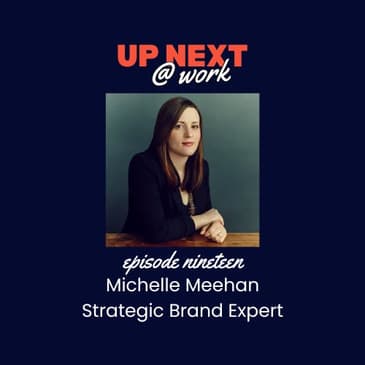
The rules of HR Tech marketing are being rewritten as companies navigate shifting priorities, faster news cycles, and new technologies like generative AI. In this episode, Michelle Meehan, founder of The Silver Thread, joins host Kate Achille to explore how marketers can keep up by adapting, taking smart risks, and standing out in an increasingly crowded marketplace. With deep experience in talent assessment and purpose-driven branding, Michelle shares why the old playbooks no longer work—and what to do instead.
Episode highlights include:
- The risk of clinging to old marketing “rules” and getting lost in the noise.
- Balancing the fast-moving nature of modern marketing with the needs and behaviors of HR Tech buyers.
- Borrowing from the tech world: developing a "rules roadmap" to navigate shifting industry trends.
Michelle shares her perspective on brands that take risks and push boundaries, emphasizing that marketing is both an art and a science—its impact goes beyond just numbers. Connect with her on LinkedIn and visit The Silver Thread at thesilverthread.com.
Powered by the WRKdefined Podcast Network.
[00:00:12] All right. Hi, welcome to another episode of Up Next at Work. I am your host this week, Kate Akili of The Devon Group. Today joining me is Michelle Meehan, known for various roles. She's been at Pandologic, Plum. She's run her own consultancy, The Silver Thread. Michelle, please say hi to the folks. Hey, everybody. How are you doing today? All right, Michelle.
[00:00:37] So today we're going to talk a little bit about change and the rules of the space and what's happening in the general HR tech industry. So the day that we're recording this, it's the end of January here. So we're still at the beginning of 2025 and there's a lot of change. There's a lot of change taking place around us. What are you observing from your corner of the world?
[00:01:03] You know, it's interesting. I think that there were so many predictions of what the beginning of this year would look like. And I don't necessarily know that any of them have actually come true, right? Everyone's still feeling things out. And yet why they're still feeling things out, there's sort of these big items on the agenda that people are talking about that are playing a huge
[00:01:28] role, right? So generative AI is sort of coming at us with a fury. Everyone's trying to figure out what does that look like? On top of that, there's a whole bunch of changes happening within the DEI and B space, both from a political realm, but also taking it down to what individual companies are doing,
[00:01:50] what the implementation of AI actually happens to those things. So it's been really interesting to sort of sit at this moment in time when it feels like there's a little bit of a change in the rules that we've been playing by for a while. Absolutely. And, you know, kind of building on that, I think change is sort of, you know, change is the only consistent thing that I think we're dealing with at
[00:02:18] this point, especially, you know, I was reflecting on the fact that we're coming up on five years since the COVID-19 pandemic started, because that was March 2020. And I was thinking a lot about how back then we were all using the term unprecedented times. And I think we've had nothing but unprecedented times for the last five years. So to your point, you know, especially I think for folks like us who,
[00:02:43] you know, sit on the marketing and communications and PR side of the HR tech space, we were sort of taught that there was this, you know, nebulous rule book. I don't know where it originated from or who wrote it. But I think it's gone out the proverbial window. For better or worse, where do you see the rules going? Are there going to be rules going forward? Or are we just going to have to fly by
[00:03:12] the seat of our pants? I don't know that we are going to establish new rules right away, right? So if I'm thinking about, you know, some key, you know, marketing messaging rules that I've known in the past, like everybody was, you know, you have to lead with DG. And I think what, you know, we've learned certainly at Plum and what Jason Putnam and I believe in holistically is we lead with brand,
[00:03:42] lead with brand because every dollar you spend in DG after you leave with brand is twice as valuable, if not more, right? So I don't think that that's even a thing anymore. But I hear so many people say it. And I hear people from my consultancy, they come to me and they're like, my, my boss or the person I'm hiring for, or my CEO, they just want to know, you know, what is the ROI? Like, how are you
[00:04:09] going to track the leads? How is that going to happen? What are you going to do? When are we going to be able to know that we've seen lift? And I'd rather see share a voice lift and sentiment lift every day of the week versus DG lift when you first get there, right? Because if you're not even telling people the right thing, who cares? You know what I mean? Do they even know what they're getting? So I don't
[00:04:34] think that we know what the new rules are going to be, but I think we're trending towards figuring it out. One of the things I think is that I don't know that there's going to be, you know, the superpowers of the past that have been previously. So it was, you know, you had to have, you know, such and such analyst write the report and there was sort of, you know, a hierarchy or you had to be at such and
[00:05:02] such show. I think there are different things that different analyst groups, different shows can offer. And it's really about kind of finding your own niche and your own way forward that works for you and works for your brand and not going by what everybody else is doing. Because I think that that then just becomes a contribution to the noise, right? There's no way for you to stand out if you're just following the Pied Piper. Absolutely. And I think, you know, one of the things that I've
[00:05:31] written about in the past, you know, a while ago, years ago for Recruiting Daily was that there's a bit of an echo chamber in this space where people, again, try to just essentially model their strategy off of other companies. And, you know, maybe to some extent that'll work if you're selling the exact same thing. But, you know, if you're just, you know, if, you know, okay, Plum is, you know,
[00:05:57] more in the assessment space, but if you're more in the sourcing space or you're more of, you know, a different, you know, a PEO or something else, you can't, you can't model your strategy, your marketing strategy or your comm strategy off of what somebody else is doing. You know, we always say that we, all of our work is bespoke. And I really believe that it needs to be because to your point, Michelle, you can't just pick the same people, the same events,
[00:06:27] you know, the same podcasts, the same publications to go after and think that, you know, it's going to move the needle in terms of awareness, in terms of leads, in terms of demand gen, in terms of any of it. And again, I think, you know, we're in such a niche space to your point. There are a finite number of sort of possibilities, but I bet if we, you know, I bet if we kind of ran the numbers,
[00:06:56] if you put the combinations together, you could, you could come up with, you know, various different options. But going back to what you were talking about with ROI, this is something that, you know, William Tinkup and I have waxed poetically about in the past because, yeah, that's every, every CEO, every CFO's favorite question is, how are you going to show me the ROI on this event? How are you going to show me the ROI on this? William likes to say, I'm not. But it's really hard for a marketer
[00:07:26] to go to the CEO or the CFO and say, well, I'm just not going to show you the ROI on a conference where I'm spending a hundred thousand dollars. So what do you, what do you think, what, what's your, what do you think we can do there to sort of find a, find a way, a workaround perhaps?
[00:07:48] So I think it's a, it's a, it's a little bit around trust, right? So you bring a specific type of person into the role, right? And let's just call it a marketing role. Cause that's what I'm familiar with. You're familiar with that person's work, what they've done, maybe in the space, outside of the space, their background, you've met them, you'd like them, you know, they're an
[00:08:13] expert. To me, there's a bit of a Mel Robbins, like let them, right? So do I have to prove to you every day that there's ROI in the steps that I'm taking? I actually had this really like compelling conversation the other night that there's a bit of an occupational hazard that when you're in marketing or communications, that there's this, you know, leaning on,
[00:08:41] you have to prove the ROI and I have to understand the equation and I have to know how you're getting there. And in a way it's almost comical because if you were to go to like the accountants, you wouldn't say like, prove to me that you know how to fill out our tax forms, right? You wouldn't go to like the compliance officer and say like, prove to me that we have sock too. Like I need to know, right? But there's this thing that, and Jason always jokes with me about this, that like
[00:09:08] everyone's a marketing, everyone's a marketer and everyone understands marketing, right? And everyone's a writer, everyone's a marketer. Right? There's like certain roles where people feel like, oh yeah, I totally get that. I took a class. I know it. I understand that. I'm a big watcher commercials. I listened to all of these different things. And I think that there's, you know, a bit of, um, similar to writing this, you know, science plus art piece. Um, and I don't think that sometimes
[00:09:37] marketing is given the credit for the art piece, um, or the leniency. So first I think you have to trust in the person that you're hiring. Um, but I also think you have to be on the same page in terms of what you're after. So for Jason and I at Plum, the thing that we're always after is
[00:10:00] creating, um, an environment of engagement. And so whether we're hosting a dinner for 20 people in like a beautiful restaurant and sharing a lovely meal, that's one type of engagement. But we also, you know, created, um, a booth at HR tech that was designed to be like hanging outside of an RV. And we had Jerry Crispin stop by and people coming with like candles and being like, I just,
[00:10:27] I just want to sit here, but I also want to have fire. So I brought this and other people bringing cookies and saying like, oh, it just felt like we needed s'mores around the campfire. So to me, there's a little bit of, um, finding new ways to do things that are in alignment, but don't maybe translate into a scientific equation. I'm thinking of when you're a kid and you're learning math, you know, and you're told you have to show your work, you have to show your
[00:10:55] steps. Um, but you know, when you get to like college or, you know, advanced learning for marketing and communications and things like that, like, yeah, no one's ever asking you to show your work when it comes time to design a campaign keyword being design or to, you know, create like, these are the words that we use in marketing and communications and PR, you know, typically when
[00:11:23] we're talking about the assets that we develop, you know, it's not, it's yeah, it's not the scientific ones that we use. We use the more creative ones to talk about our work. So it's funny that then, then we're asked to measure everything. Everything is a KPI. Everything is about ROI. Um, yeah, I, I don't know how we got to this rule driven and, you know, right. I mean, I know how we got there,
[00:11:47] but it's, it's, it's a bit disheartening that we have to, I guess, continually prove our worth. Yes. And, you know, to me, like if the world is changing at the pace that like futurists are predicting, right. And we're in the middle of this great peace paradox that five years of change are happening in like what used to be, or like one year now, it was five years, you know, 20 years ago.
[00:12:16] Um, if that's the case, then the people who are creating designing, like all the people that have those creative minds and are thinking outside of the box are kind of the people you want at the forefront, right? Because they're the folks that don't just see the rules that are in front of them. They're finding ways to push the boundaries. I mean, when I came into this space and I, you know,
[00:12:43] you know, this, but just for the audience, I have a media background. This isn't where I started my career. Right. And so when I came into the HR tech space, um, I was educated on the rules, right? So I'm going to go to a trade show while we're at the trade show. We need to brief analysts. This is the exact formulation of how we're going to brief all of the analysts. This is what the booth has to look like. The booth has to not only like say our value proposition, but it also should have a
[00:13:12] customer quote and two or three statistics to like note that we have proof behind our work. And I think all of those things were great until I went to my first HR tech and I was like, oh my God, everybody looks exactly the same. Yeah. It's like clones. Yeah. It's like a replication after replication of the same thing. And so in coming to Plum and taking the seat of VP of
[00:13:37] marketing and having, you know, Jason behind me to give me the freedom, I haven't done anything that anybody at HR tech would have like thought was okay previously. Right. I mean, I built a six foot yellow submarine. Like I had an eight foot, like neon sign kicking, you know, HR to the curb. So to me, there's power in giving those people who think differently, the opportunity to rise to the
[00:14:06] occasion and seeing what they come up with, because they might just have a different perspective that isn't numerically driven, but, you know, engagement driven. We have people just coming and sitting at our booths and wanting to hang out with us and wanting to be with us, you know? Yeah. I mean, there's, yeah. Again, I also came in obviously a little bit of a different way. I came from a marketing and copywriting background in finance and beauty and all sorts of other industries that
[00:14:35] operated very differently from HR tech. So it's interesting because this, this industry is so insular, which I think is why, you know, we've gotten to that point where things became formulaic and that marketers were kind of told, this is, this is the way we do things here. And also, you know, I think you, you know, this people tend to bounce around here. You know, we, we, we, we seem to like the space once we have, once we've found our, yeah, exactly.
[00:15:01] There's a lot of camaraderie. It's not to, yeah, obviously we're not speaking ill of, of the space in any way, shape or form. So people boomerang a lot. So it's like what worked, what worked, you know, once maybe it'll work again or, but yeah, to your point, things, things become stale and it, your eyes start to glaze over when all the booths look the same or when every white paper has the same title or, you know, like, so, and I, I've, I've, I harp on
[00:15:30] this one a lot content wise. And you've heard me say this since, you know, you and I chattel pretty frequently. This is a space where topics come back because, and again, it's the nature of HR. It's, it's, we're solving common challenges and, you know, humans are the variable. So the challenges remain the same, even as the technology improves, humans are always going to be humans. But, you
[00:16:00] know, I see, I see topics pop up where I'm like, didn't we talk about that 10 years ago? You know, didn't, didn't, didn't we tackle that? Like, don't we need, we need a fresh take. And I think that goes to the rules again, with what you were talking about is like, we can't be so stuck and stayed in our ways. Otherwise we're never going to overcome some of these challenges. And I think that's a note for the marketers. I think it's a note for the comms people. I also think it's a note for some
[00:16:27] of the leaders though, that we're dealing with that, like, we cannot can continue to be so linear in our thinking and hope that, you know, we're gonna, cause I think you and I were chatting a little bit before we, we hit record and we were talking about, you know, if the pace of change is increasing across the board and, you know, you, you referenced that, you know, one year is now like five years, you know, how are you, how are you riding the wave? How are you going to keep up with it?
[00:16:56] If you're still playing the same, the same note you were, you know, or the same role. Is too, and we have to be thinking about this. I think it's a whole industry, right? Is HR as a part of company has always traditionally trailed in terms of how fast they implement change,
[00:17:20] right? And that has sort of been the status quo and they want, they want to be safe and they want to know that what they're investing in is well vetted. But as this pace of change increases, right? The buyer is going to be pushed to make decisions faster because what they are facing is if you just look at a standard enterprise deal, right? 12 to 18 months to make the purchase,
[00:17:48] you need 6.8 people to agree on the purchase. You need, you know, 60 to 90 days to implement the technology and then the change management to manage it. Let's say generously, you can do all that in the best case scenario inside of 18 months. If we just look at what's happened with Gen AI in the last five months, if you bought something right before that, that didn't have the capabilities that
[00:18:13] we have today, that thing that you're not even implementing yet, or maybe half of your organization hasn't picked up to start to use, you're already behind. Absolutely. We kind of can't keep sitting on our heels. Like we need to be rising and showing the buyers the way, like what is the way of the future? How are they going to get there? How are they going to become the superheroes inside of their
[00:18:40] own organizations by ensuring what they put in place isn't obsolete before, you know, it's even been adopted in a really critical mass kind of way. Yeah. And I used, I used to joke that the HR tech companies were like three to five years ahead of the buyer because for a while, I think, I think we were, you know, in terms of, you know, we were talking about AI way before HR leaders, you know,
[00:19:06] it was even on their radar, but now as, you know, I think especially the last five years, as everything has accelerated so, so tremendously, we're all, all of our heads are spinning, I think. So to your point, it's now on, now on the HR tech companies to close the gaps and keep up, keep up with what's happening in the
[00:19:29] technology community and the advancements there, educate the buyers and also, yeah, start to, we have to somehow find a way to shrink down that buying cycle. I don't know how possible that is, especially with, you know, the involvement of IT because, you know, I do know IT is getting increasingly involved in HR buying, which as they should, you know, that's, that's a very necessary component. I'm dealing with
[00:19:56] very sensitive data here, but I think it's something that we have to be accounting for at least in terms of our communications and in terms of the materials we're developing and the conversations that we're having, whether it's at a conference or on a webinar or just, you know, amongst ourselves. Right. And I think there's an opportunity in terms of for the buyer investigating, what does the product
[00:20:23] roadmap look like? Like you have this today, but where is it going and what are, what challenges are you anticipating that that's going to sell so that when these tech folks are in it and the compliance folks and all of those individuals are in the room, you're able to answer for how it's going to be helpful when they implement, but also, you know, towards the end of that five-year contract. Right. And it's a bit of a, it's a bit of a guess because, you know, the way the world is changing,
[00:20:52] who knows, right? It's like, we were supposed to have like these once in a lifetime storms and now, you know, it's snowing in Florida. Like the world is, you know, California is on fire. It's snowing in Houston. People are looking for sleds. Everything is happening at once in this very fast fashion. And so there's sort of this, how are companies going to provide for their customers on that
[00:21:20] best future basis? And how are we going to bring them along for the ride to understand, like, here's why you need it today, but here's how it's going to serve you as this pace of change continues. Yeah. I think we used to talk a lot more in this space about, you know, present state versus future state. And I think maybe that's something we need to bring back. And also to your point about, you know, product roadmap, maybe, you know, we were talking earlier about, you know, it's not so much a
[00:21:49] matter of throwing the rules out, but maybe starting to develop new rules or, you know, maybe kind of like a product roadmap. Maybe we need a rules roadmap. Maybe we need to start thinking about, you know, the direction we're trending in also. And, you know, Michelle, maybe you and I will be the ones to start to write them. Who knows? We're out there doing the work. So why not? You know,
[00:22:14] who better than us, right? Yeah, no, I love it. Yeah. But so anything else in terms of change that you're observing right now, you know, obviously it's still the beginning of the year. There's been a few, you know, few M&A deals that have been announced so far in the space, a few funding rounds, you know, go to market is a big topic, right? You know, that we're seeing pop up. Obviously the AI one,
[00:22:43] anything else trend wise that you're keeping a close watch on? Well, I'm trying to watch who's pushing the boundaries and who's not following the rules. So if we look at some of those M&As, right, we have Jesse Tinsley and employer.com, right? And it was kind of like, oh, they're making some interesting purchases. I don't quite know how
[00:23:11] this fits together. And then all of a sudden it's like, actually they might buy TikTok and Mr. Beast is involved. And I think for a lot of people, they're kind of sitting back like, what the heck is this guy? I'm doing. But to me, I feel like, I don't know, there's an opening of the aperture of saying like, okay, we're HR tech, we sit inside tech. How do these two pieces relate to one another? And maybe
[00:23:40] they do, and maybe they don't, and maybe they're keeping it separate, but it's definitely a throwing out of the rule book, right? It's not the path that we've seen anybody take. It's not the assimilation path that we've seen anybody take. And for me, that kind of creates a level of excitement and intrigue to see like, what are you going to do next? And how is this going to play out?
[00:24:03] So I'm looking at people who are pushing boundaries in ways that nobody's quite understanding yet. I also think like, it's really interesting. You think of somebody like George LaRock, right? George LaRock, he comes in, he's a practitioner, he becomes an analyst. And now he sort of has this, you know,
[00:24:26] stronghold in everything happening on, you know, these smaller companies and starting his own summit inside of HR tech, right? To me, he's kind of breaking out of what that analyst path always was supposed to be and seeing how to involve, you know, investors into the equation and make all of those marriages between the customers selling their companies and the investors. I just think that there's really
[00:24:55] interesting things happening in this space that maybe we don't quite understand yet, but I'm keeping an eye on to understand how they play out. I think when I look at them, like from the 30,000 foot view, it almost seems like there are players in this space who are looking to disrupt that insular feel and bring us to other spaces and create synergies where there possibly weren't synergies previously.
[00:25:26] Very interesting. Well, we'll have to see where all of it takes us this year. Again, it's still, still early days here in 2025. I threw my crystal ball out years ago, so I will not be making any predictions, but Michelle, thank you so much for your time today. Please let the folks know where they can find you. Yeah. Well, first, thanks for having me. This was awesome. And second,
[00:25:49] you can definitely find me on LinkedIn, Michelle, Meehan MBA. Excellent. We'll talk again soon. Thanks for listening, everyone. And keep an eye out for more updates from Up Next at Work.
Sponsors
