
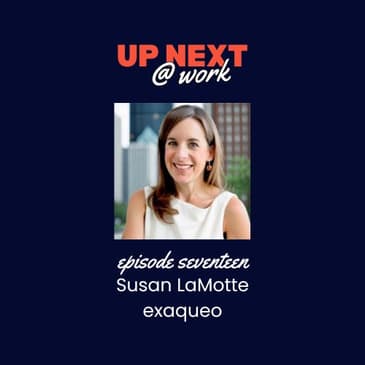
In this thought-provoking episode, Jeanne Achille and Susan LaMotte of exaqueo dive into the profound ways employers and candidates are reshaping the hiring landscape. Together, Jeanne and Susan explore the heightened emotions in the talent market—ranging from excitement to frustration—and how these feelings are redefining candidate experiences. What’s driving this shift? Economic pressures, remote work, and the changing dynamics of employment relationships all play a role.
Episode highlights include:
- The rise of "deeply feeling" candidates and their impact on hiring.
- The breakdown of workplace culture and reciprocity in employment.
- Predictions for 2025: The emergence of Gen Alpha in the workforce and what it means for the future of talent acquisition.
Join Jeanne and Susan for a candid discussion about the evolving expectations of employers and employees, the importance of fostering strong workplace relationships, and how to navigate a rapidly changing labor market. Follow Susan on LinkedIn to learn more about her work.
Powered by the WRKdefined Network.
Powered by the WRKdefined Podcast Network.
[00:00:20] Hello and welcome to the latest episode of Up Next at Work. I'm your host, Jean Achille. And joining me today for another workforce conversation is Susan LaMotte. And Susan is with a company called, let me see if I get this right, exaqueo, which is such a great name. It has so much energy to it. And I know Susan does too. So we're going to have a very spirited
[00:00:49] conversation today. Susan, welcome to Up Next at Work. Would you please introduce yourself to our listeners? Sure. Happy to. Thank you, Jean, so much for having me, especially on this afternoon as we near the holiday season. So I am Susan LaMotte. I'm the founder and CEO of exaqueo. We are an employment brand consulting firm, and we focus on the employment relationship.
[00:01:15] So what is our relationship with our candidates and our employers? And what can we do to strengthen and sustain that relationship so we can better recruit and retain talent? I've been in the space for about 25 years, and I always tell people I sit at the intersection of where business meets behavior. Behavior because employment is a relationship and it's a human relationship, but business because
[00:01:39] we are attracting and retaining talent to grow our businesses and to keep our businesses stable and strong. And so we have to have both sides of the coin when we're thinking about how we manage that employment relationship. I think the relationship with candidates has changed so dramatically over the years. What are you most recently observing in terms of how hiring employers are interacting with
[00:02:07] their candidate pools? So there's two pieces I think that really have popped for me. If you ever, if you have kids and you follow the psychologist, Dr. Becky, Becky always talks about the deeply feeling kid. And I bring that up because this whole conversation we've had about parenting and emotions and psychology is exactly what's happening in the talent market. We have really deeply feeling candidates.
[00:02:34] They're either really excited to share that they've gotten a new job or posting a ton about being open to work, or they're really angry. They're frustrated. They're emotional. They've got that deep rage in many cases, and they're using that rage in a number of different ways. And I think that is really starting to make an impact on the candidate experience and on how we perceive employment. So why are they so angry? Where does this rage come from?
[00:03:03] I think there's two things that are driving that. First is more economical. The decline of the middle class, I think, has put more weight on employment than we've ever had before, right? So losing a job now feels a lot tougher for a number of reasons. One, there's certainly the economic weight of having to put food on the table for your family, right? And fewer people in the middle class means that when you lose a job,
[00:03:28] you are literally putting homelessness as a potential path for you. So I think that's one. I also think there's just a lot of rage out there that's driven by social media. So in the past five years, we've had an increase in meme accounts, social media accounts that love to talk about work being toxic and work being terrible and employers being terrible. And while some of that is unwarranted,
[00:03:54] there's also truth to a lot of that too. When people see someone else express their frustration or their rage, they think, oh, I can do that too. And they feel more brazen to do it because they also have more choices in employment. So even though there's this real concern about putting food on the table, there's still a sense of, well, I could go maybe make ends meet by being a ride
[00:04:19] share driver or doing grocery delivery. So it's this really weird place we're in that's very emotional, but also driven by these very Maslowian needs because at the core of employment, that's what we're doing, putting food on the table or putting a roof over our heads. It's interesting what you just said, because in talking about being a ride share driver, or I won't mention some of the brands, but food delivery, those are very individual activities.
[00:04:48] They're not part of a team. They're not necessarily part of the community that employment builds, that an employer builds a culture. So is culture breaking down? Are employer brands harder to build now that people have additional options?
[00:05:11] Such a great question. We do a lot of culture work at Exacquio and at the root of culture is a shared commitment. So it's a commitment to the foundational elements of culture, which is vision, right? Ultimately, why are we in business? What's the ultimate goal we're trying to achieve? So if you're the Alzheimer's Association, it's to cure Alzheimer's. And we are in business to achieve a mission. What do we come to work to do every day? And then the values, which exist to drive the behaviors,
[00:05:41] the shared behaviors around how we work. The reason culture is really starting to break down is because in my mind, people aren't feeling that reciprocity. And so they're seeing employment as, gosh, you're treating me like this transaction. You made this promise to me that I could work remotely. Now you're telling me I can't. I bought a house. I made investments in myself and my family. And now you're telling me that was all for naught. Or I've been working for this company for a really
[00:06:10] long time. And now you're laying me off without a thought, without communication. I think most people recognize that in tough times, layoffs happen. But if you compare the difference between companies that are honest and communicate about it and are upfront and emotional versus those that just say, you're done. You're out the door. I think Airbnb did a really nice job with their layoffs.
[00:06:34] Part of that is really getting at the reciprocity. And that's what a relationship is. We spent exactly a long time doing research into social psychology around relationships when we saw pre and post-COVID that that employment relationship was changing. And at the core of that is the fact that the strongest relationships in our lives, marriage, family, friendships, those are strong not because of the
[00:07:02] good times. They're strong because we make it through the tough times together. You have that shared experience. Yeah. And employees are seeing that, you know what? You're not being reciprocal. You are not really working with me to help me through the tough times. And that's where I think some of those deep emotions come from too. So, you know, it sounds like we have higher expectations of our employers than perhaps we did,
[00:07:30] you know, in generations past. I think previously, people were happy to have a job. It was transactional. In many cases, it was hourly. You know, I showed up X hours a week, I got a paycheck for X number of dollars. There really wasn't an interaction beyond that with the exception of let's say, you know, if you threw employee benefits into the mix or, you know, the occasional holiday party or something.
[00:07:56] Now it sounds like we're really leaning into higher expectations for our employers. Is that because other things in our society have broken down? And so the employer is our kind of focal point? I think there's so many contributing factors and oftentimes we're looking for what's the one reason, but there are many. So for example, I always help our clients think in these concentric
[00:08:22] circles. So starting externally, right? What are the economic factors that are contributing? Well, there's declining birth rates and people are choosing not to have kids. And many of the reasons they're not doing that is because it's really hard and really expensive. What does that mean for work? Well, that means that I have more flexibility, right? I might not be tied because I don't have a family to feed, just might be myself or myself and my partner to worry about that, you know, I have less responsibility.
[00:08:50] So that gives me more control in one way. So from an, you know, an economic perspective, I think the relationship is also changing because personally people are recognizing all the choices that they have, right? In work they might not have had before. We're more transient now. So we have the ability to pick up and move more so than we ever did before. Not that everybody wants to. And I think remote work initially contributed to that, this idea that I could go anywhere.
[00:09:19] I got used to it. I got comfortable with it. Now I don't want to give that flexibility up. And then I think, you know, inward, right? If we look at the companies themselves, I think that push and pull is starting to feel like a push and pull. And that's where the transactional nature of the relationship comes into play. I always geek out on the history of HR, right? Going back to the triangle short-waist factory fire and the rise of the welfare secretary. Those welfare
[00:09:47] secretaries, right? Then turned into the transactional HR that we know today. And that quite frankly, HR gets a really bad rap for. And I think therein lies part of the problem. We're operating a supply chain, not a community. And that's a big root cause of the challenges we're seeing. Well, especially when we're asking people to bring their whole self to work. And I know you've written
[00:10:09] and have extensive thought leadership on that. You know, there is this expectation that your employer cares. You know, they're offering you pet insurance, for example. I mean, like, you know, they're sending signals that they care about you as an individual and have certain expectations. And then how discouraging it is when you read about people getting emails like, your job has been impacted. This is the last
[00:10:36] email you'll get, you know, standby for a text message or something that's really, really feels cold and harsh. I heard you mention remote work several times though, and I'm both frustrated and fascinated by what is going on with employers that, you know, it was absolutely a necessity to offer remote work during
[00:11:00] the pandemic. And now that it's not a necessity per se, and we're back to, you know, worrying about commercial real estate or whatever our motivation is, we're now forcing employees to move closer to offices. Do offices have some sort of magic in the employment brand schema?
[00:11:25] That is an excellent question because the answer is really complex. Yes and no. One thing I want to remind folks is only 40% of jobs roughly can actually be done in an office. So because of the audiences of, you know, all the big media that we often read, right, whether it's Economist, New York Times, Wall Street Journal, those audiences are largely white collars. They care deeply about, you know, remote or office work. So it's actually less of a problem than we think it is. It's just a problem
[00:11:53] among white collar workers. I think that's a really important element to note. We forget these hourly workers that have no choice. So true. Yeah, you can't, you can't, you know, McDonald's, you have to stand in front of the person. That's right. You have to interact. Yeah, that's right. But for those companies that do have offices, they're for the individual, right, that office can really matter. What the research is showing is that employees just want control. They don't want to be told what
[00:12:23] to do anymore without any flexibility. So they might not mind going into an office. They might even be willing to travel somewhere and stay somewhere for a week if they can then go home for three weeks. But over and over again, the research says people just want control. I think the, the, this is where it comes back to the relationship is that it's, you know, a lot of employees are saying, that's great, you know, company A that you offered it when it was convenient
[00:12:49] for you. Yeah. And now you're taking it away. Take that same theory and apply it to a marriage. It wouldn't work. Your marriage would be doomed if you treated your relationship that way. And I think that's why employees are angry, not because they don't understand. Employees are smart. They get the value of commercial real estate. It's a really important part of our economy for sure. Sure. Yeah. They understand that there's value in that in-person collaboration. What they get frustrated about
[00:13:16] is the very, you know, black and white shift to we allowed you, now we're not. No flexibility, no exception. Very binary. Yeah. Absolutely. Yeah. And I think that there's real value in coming into an office. There's no doubt about it. There is value in being together. You know, even our company, which is fully virtual, we still bring the team together, whether that's traveling for clients or retreats, whatever it
[00:13:41] might be. There's real value in that. It's the how. It's the way we communicate, the way we treat the relationship that's causing the challenges. Yeah. And the how is certainly one of our favorite aspects to discuss. I also think, you know, we're talking about research. I think that research shows that when people have some element of control or perceive that they have an element of control, it does reduce stress. And when stress is reduced, of course, you can be more productive. And that's
[00:14:11] not just in life in general, but certainly in the workplace. You don't want a bunch of stressed out employees who are wondering, you know, how they're going to cobble together some sort of childcare from day to day because now they suddenly have to be back in an office X number of days a week. That is just really challenging. What is the role of data in employer branding? You know, how many,
[00:14:41] certainly I'm looking to you as the expert, how many employers are actually asking for data that shows how effective their employer brands are? I think it starts with what role employer brand plays in your organization. That's always been changing and is really contentious. Some organizations see employer brand as really valuable, and so they'll invest the dollars in it to measure it. Others won't.
[00:15:07] The correlation is then tied to where employer brand sits. So for some organizations, if employer brand sits in talent acquisition, the measures are largely tied to talent acquisition metrics. So things like tracking where the candidate goes, what content they're clicking on, right? Do they react to a piece of content? Measuring really outdated things like source of hire, and then using that data to measure or to drive your media buy or your recruitment marketing spend.
[00:15:37] More sophisticated organizations are measuring the full employee life cycle. So they're looking at the journey that the human being takes, and it's really important to acknowledge a couple of things here. One, where that journey starts. Oftentimes, you know, for as long as I've been in HR, we see the journey starting as, oh, when somebody applies, right? Journey starts long before that. It starts when we
[00:16:00] part of the brand, right? Everyone has an iPhone or, you know, knows of Apple. So when we do our research, for example, we start with, when did you first hear about the word Apple, right? Or you put the logo up. What does this logo mean to you? Because that's the start of the relationship. It's like, you might, you know, be married to someone that you knew from high school, but you didn't get together until you were in your twenties, but you still have an understanding or a person of that.
[00:16:30] And that relationship. Yeah. So then it's following the measures all the way through the journey. That's another huge issue. I think that drives the measures and effectiveness of them is, are you actually branding the entire and marketing to the entire employee journey? Many organizations are still just in correlating employer brand or recruitment marketing. They are not the same thing. Employer brand is branding and
[00:16:55] marketing the entire employment experience. It's the difference between Apple sells to me to get me to buy the phone. And then Apple continues to market to me, to keep me as a customer. We don't do enough of that. We don't do enough of retention marketing, of internal mobility marketing. We don't often see employee communications as employer brand. Every single touch point with an employee is a chance to brand and market to them. And we should be measuring every single touch point.
[00:17:23] So, so Susan, is that because the tools don't exist or our HR professionals aren't schooled in, in how to do this? It is a challenge because historically the function is somewhat siloed. I mean, TA talent acquisition oftentimes sits off to the side of HR. So once somebody on boards, you know, they're kind of lost to me as a TA professional, I don't necessarily have visibility into, you know,
[00:17:53] what their journey looks like. For sure. I think the, the issue, the root cause of the issue falls in two areas. One is the lack of understanding, no doubt. I mean, employer brand as a term was only coined in the nineties and we're still struggling to show the value of it. And we're struggling to show the value of it for two reasons. One, because most employer brand leaders don't have quantitative experience. So they don't understand the role market research plays and they don't have the ability to
[00:18:22] spend the dollars to get the data. So if you think about a company, any big consumer brand, Apple, Starbucks, Target, they spend billions on market research for their customers, right? Apple might be, is probably listening to us right now and taking notes on how Alexa certainly is. That's right. How I'm talking about their product. Yeah. Right. We do no candidate market research in HR. It's one of the things that exactly owe that we love doing
[00:18:51] the most because our clients have never seen the data that we bring them. They've never seen it before. So it's really exciting to say, let us tell you about this audience you're trying to attract and retain and haven't been successful in attracting and retaining them. But to their credit, a lot of these EB leaders have a really hard time getting budget for that because HR is still that cost center. So therein lies the problem, number one. And we're still, I did a webinar with ERE and we
[00:19:20] talked about talent acquisition metrics. A lot of recruiters are still really stuck on those supply chain metrics. Things like time to fill, cost per hire. Right. Which job board. Yeah, exactly. That is so dated. So I'm curious, does EB ever sit under the marketing budget? For sure. Okay. Okay. And a lot of companies, employer brand is sitting under marketing. When it does,
[00:19:48] it's often more effective in getting investment. Where they struggle though, when you sit in marketing is understanding HR. Because marketing a product and marketing a human to a human, right? Because employment is that relationship are two really different things. That's why employer brand leaders often struggle. There's a new group of folks that have come together. It's called like employer brand therapy where folks are just leaning on each other because it's so hard. Sometimes you
[00:20:17] might be a solo practitioner. You don't have anyone to talk to. It really is a niche role and it's still a really young profession. So there are not a lot of people that have been doing it as long as I and some others. There's a good handful of folks that have been in the space a really long time that I greatly respect. But there's not a lot of us that have seen the value over time. Yeah. Yeah. Yeah. That's, that's fascinating. We are of course chatting at the end of calendar year
[00:20:47] 2024. And oh, what a year it has been. I won't wax too much about that. But what are your predictions for 2025? How do you think this might change? Do you want to ask again? I'm sorry I interrupted you. No, no, no, no. I'm curious what, what you think 2025 is going to look like. I'm hearing really wild and bold statements. I'm wondering if people are trying to manifest a better world. So, so what do you
[00:21:17] think the talent of the talent acquisition picture looks like for 2025? I take the lens of the candidate and the employee, which is the lens I think we should be taking. A lot of the conversation right now is all about the tools and the technology, which is important. But again, that's the view from HR. And I like to think about it from the candidate perspective. There's a couple of things happening economically. One, um, Gen Alpha will turn 14 years old or 15 years old in 2025.
[00:21:42] Gen Alpha. Okay. Pause. I'm not even tracking Gen Alpha. Okay. So, so just take a moment. What are the characteristics of Gen Alpha? Gen Alpha. So Gen Alpha, um, like Gen Z, they are digital natives. They have grown up in one of the most tumultuous economic and, um, just world periods, right? Yeah. Um, as we think about what's,
[00:22:08] what happened with COVID, the social justice movement, um, the political landscape around the world. And so they're one of the first generations to be more informed and be more in control of their decisions because not only are they digital natives, but they have access, they have access to more information than any generation before them. Wow. They're the generation that grew up is, is going
[00:22:31] to grow up with AI and access to chat GPT. So they're also a generation that has, this is really interesting, less, um, hand motor skills, less dexterity because they're not having to do the physical things that generations before them did because so many things are automated. This is fascinating and, and clearly a whole other podcast episode, but, but thank you for sharing this with our listeners. Cause I think this is, is very interesting. So I'm going to put you
[00:23:00] back on the spot for your 2025 predictions. I apologize for interrupting you. So the rise of Gen Alpha is really important because at 14, particularly in the U S is when you hit high school or secondary school around the world. That's when you're really starting to think about careers. We also just saw a report out that has a huge decline in people attending college. So when you
[00:23:22] look at the intersection of those things, 2025 also marks the birth of Gen B. So 2025 will be the first year we transitioned to a new generation. We don't yet know what Gen B will be. We know they'll, they too will be digital natives. They too will grow up with AI. Um, but paying attention to that is important. Um, I also think 2025 will bring a renewed attention to all of these declining birth rates
[00:23:47] because that is going to be a huge problem for the talent market and the talent population. The Tokyo metropolitan government just announced that it will introduce a four day work week for public sector employees in April of 25. And this is particularly designed to address the declining fertility rate and provide more support to working mothers. And I think while it's just for public
[00:24:12] sector employees, it's just in the city of Tokyo for a culture like Japan, so committed to work, they are recognizing the economic impact of the declining birth rates. So I think that's also going to play a role on the technology side though. We can't ignore that. I think, um, these generations will shift to a comfort with an automated process. They're used to it and they appreciate the automation that's happening in, in HR tech, no doubt, but they do have a strong desire for either human or perceived
[00:24:41] human interactions. And I anticipate that will continue in 25 and HR tech will pay more attention to not just launching technology, but what's the human element that we need to keep in the process. There has to be something. What does that look like? I also think the big emotions will continue. Those deeply feeling kids are now deeply feeling adults. Um, they're applying for jobs and they're getting real frustrated and
[00:25:08] that's going to play into the career choices they make or don't make. And, and right back to employer brand again. Absolutely. Well, Susan, this has been fascinating. Um, there's something else that you've done recently though. That's very fascinating to me because unfortunately I missed it and that's the heiress tour. Tell, I think it's Taylor Swift's birthday today. In fact, tell us what that experience was like for you, for you. And I think your daughter was with you. Yeah, for sure. And we took some friends of
[00:25:36] ours as well. Um, you know, I am, I've always been fascinated with brand, right? It's the core of what I do. And I'm also a huge live music fan. So, so much so that my husband and I, our wedding invitations were hatch show music print posters. It's the famous letter press in Nashville. That's where we met. Yes. Um, so I actually just saw three concerts in the course of three live music shows in the course of a week culminating with Taylor and her incredible brand. And it really
[00:26:03] is as incredible as, as everybody says, but I think what's most incredible is the power of community because what it does is it creates this sense of community. It was a very safe space at the concert. So many young people, no pushing and shoving to get in. Um, all of the kids were trading bracelets and the adults as well. Everybody was dressed up. So this shared, you know, when we talk about culture,
[00:26:28] that's what she does so well that we could really learn from, um, in human resources and employer brand is she created a relationship with her fans. And then every single activation, every single touch point strengthens that relationship. And any sense that that relationship could be broken, she comes right out and addresses it in an honest and authentic way about who she is and who she's
[00:26:53] not. So it was also pretty, pretty cool to experience. My daughter's 10 and she turned to me and said, mom, that was life changing. Um, really adorable thing to say. And, you know, it's hard to make time out of work, especially this time. But a reminder to me as a working parent, um, how important that is for parents. How well worth it is. Absolutely. You're creating fabulous memories. Um, well, thank
[00:27:19] you. Thank you for sharing that. And thank you for reminding us of, of what a brand building, uh, experience, uh, Taylor Swift has, has shared with the world and one cannot possibly diminish, uh, its economic impact. I mean, it's mind boggling. So, um, more of that, please. I would say. For sure. I would love for, you know, companies have been making so many transactional decisions
[00:27:44] about talent. It would be really powerful if they use this as an example to see the economic impact of building strong relationships there. We just have to harness it. Absolutely. Absolutely. And replicate it. Absolutely. Well, thank you so much for joining us today on this episode of Up Next at Work. I would love for you to share with our listeners how they get in touch with you, how they
[00:28:09] learn more about your organization as well. Thank you for that. Um, we are Exaquio, E-X-A-Q-U-E-O. You can find us at exaquio.com or on LinkedIn. And I'm at Susan Lamott on LinkedIn, L-A-M-O-T-T-E. So really easy to find me there. Love connecting with people. It's the lifeblood of our community and our HR culture to create those networks and connections. So please do reach out.
[00:28:34] And thank you so much for sharing your thought leadership. This is Up Next at Work. We hope that you've enjoyed this episode and we will be bringing you future thought leaders very soon. Thanks for listening.
Sponsors
