
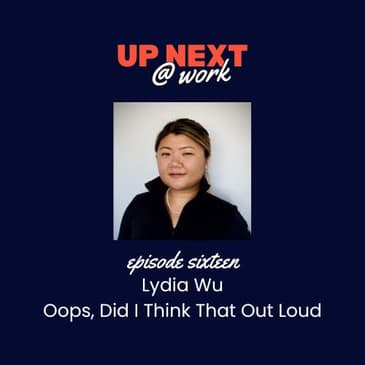
In this episode, Jeanne Achille and Lydia Wu dive deep into the intersection of HR technology, data-driven decision-making, and the critical role trust plays in successful tech partnerships. Lydia takes us through her journey from corporate HR to HR tech, shedding light on her experiences navigating the complex world of vendor relationships and data analytics. From the early realization that HR tech conversations often miss the mark, to the pivotal role trust plays in buying decisions, this conversation uncovers the untold dynamics of tech selection in enterprise environments. Jeanne and Lydia explore how data can drive impactful changes in workforce management, like reducing turnover and optimizing production lines. Their discussion also delves into the unique challenges faced by both large enterprises and smaller organizations when it comes to selecting the right tech solutions.
Episode highlights include:
- Making tech purchasing decisions isn't just about ROI - buyers are investing their political capital and need to trust that vendors will deliver on their promises, not just secure a logo.
- HR tech is not just an HR function. To successfully implement solutions, collaboration with departments like legal and procurement is essential. Speak their language to get buy-in and move projects forward.
- Smaller organizations face a different set of challenges when selecting HR tech solutions, but with more effort and research, they can find alternatives that cater to their needs.
From consulting at big names like Accenture and Deloitte to leading innovation at Panasonic and building HR tech solutions, Lydia Wu has been around the HR industry block a few times and can probably tell you where all the potholes are.
She is a true HR Swiss Army knife—strategist, translator, connector, and problem-solver extraordinaire. Lydia is passionate about demystifying all things HR and Tech and helping everyone in the HR tech ecosystem find their next “aha!” moment (preferably before their coffee gets cold or watery).
Always keeping things refreshingly real, Lydia is your real-talk bff on all things HR and Tech. Don't miss her insights and engaging stories on her popular channel, Oops, Did I Think That Out Loud? and connect with her on LinkedIn.
Powered by the WRKdefined Podcast Network.
Powered by the WRKdefined Podcast Network.
[00:00:19] Hello and welcome to this episode of Up Next at Work. I'm your host, Jean Achille, and we are really delighted to have Lydia Wu with us today. I won't do justice to Lydia's background, which, quite frankly, I did look at your LinkedIn and I was a bit blown away and kind of intimidated. So with that backdrop, Lydia, I'm going to ask you to please introduce yourself to our listeners.
[00:00:47] Awesome. Thanks so much, Jean. Thanks so much for having me here. I think my entire background can be described with a mantra of two words, which is why not. We can definitely get into that a little bit as well. But for all of our audience listening to this, hi, my name is Lydia Wu. I have been in the HR tech industry for about 15 years at this point.
[00:01:06] Started out as a wee little change management analyst, did my little stint in corporate as well as a buyer of about a $40 million HR portfolio. Eventually got tired of climbing the oh so lovely corporate ladder and decided to take a sidestep into the solution providers slash true HR tech industry side of the world and understand how everything works together and how we can make tech work for people.
[00:01:34] That's a very non-intimidating description of someone who has been at Panasonic and Accenture and Deloitte. And you have something at your LinkedIn about, did I think that out loud? Which, by the way, I say to myself a lot in the supermarket, but what does that mean? What does all of this mean? Yeah, please unpack that for us.
[00:02:01] So what's that, did I think that out loud? Is birthed out of a moment of sarcasm, if you will, when I was working corporate HR. To anyone who's listening, who's worked in corporate HR or just sat even in a meeting room before where you're observing around the room and you're having that moment of out of body experience.
[00:02:50] Did I just hear that? things that are in the same way, how do I feel? That are the things that are being said by people leaders truly appropriate for the workforce and the interests of the people that they're representing in certain boardrooms. So that was really how that flop of idea came about. And I'm sure if you kind of sort of do a history backtrack of the very first few blog posts that came up, it was really in regard to that topic.
[00:03:12] Eventually, the audience grew and I realized there needed to really be a forum where we are talking on the same level in an objective lens about HR technology, both from a buyer's lens as well as a solution provider's lens. Because I'm a fundamental believer that the investors in this market, the buyers in this market, as well as the solution providers in the market, all want the same things to happen.
[00:03:36] Except for some reason, one of us is hanging out on the AM radio channel, the other one's hanging out on the FM radio channel, and the third one's like hanging out on satellite radio somewhere. And we're just not talking on the same frequency.
[00:03:48] So what WUPS did I think that allowed has morphed into now is really just a open forum, if you will, for everyone to kind of talk about it, air out their perspectives in terms of what works, what doesn't, both as a buyer, as a seller, as an investor, and just kind of giving that full 360 of the world, if you will. I think that's a really tall order. I mean, I applaud you facilitating a path forward.
[00:04:15] But I think that's a really tall order. My experience in this category is that oftentimes buyers are reacting to a specific pain point or a specific business imperative that's been mandated that they somehow have to cobble something together for. And then investors in the solutions providers, you were kind and said radio frequencies. Sometimes I think we're talking planetary differences.
[00:04:42] Because I hear some conversations that are kind of like, you know, jamming a square peg in a round hole and calling it success. And I'm like, no, it doesn't work that way. Let's take that by audience. Like, you sat across the table from solutions providers. You had budgetary responsibility for all this. What did your decision-making process look like?
[00:05:09] So I think on reflection of about the four or five years I was doing all of the tech buying for Panasonic, as well as like flipping solution providers, switching out contracts and stuff like that. It really comes down to a couple of things. And I am convinced for some reason solution providers still haven't nailed it. Number one, it's an appreciation that in order to move budget, to move any budget decision, you're also burning through my political capital.
[00:05:38] So I'm not buying a solution. Wow. Let's just pause. Let's pause there. That might be the most powerful thing I've heard all year. So this is buying, it's a personal psychological contract, so to speak.
[00:05:56] It's a personal contract because I don't think a lot of times solution providers, especially if you're on the sales side and enterprise sales, you realize that my bonus, my future, my career trajectory as your independent stakeholder across the table is tied to what I bring in. If I think it's a sure bet or not, if I think the company has a potential of becoming a sure bet in the future.
[00:06:21] Because when a solution provider drops the ball, so to speak, as a solution provider, it's kind of easy for you to say like, oh, well, we couldn't do it because of XYZ. Like your HRS couldn't integrate. This person didn't get back to us on time. Your IT didn't set up SSO on time. Your procurement was late and et cetera, et cetera. But as a buyer, I can't translate all of that to my management team, to my senior leadership team. I am where the bucket stops effectively.
[00:06:48] So for me to buy into a solution, is it about the ROI? Absolutely. But ROI is just a surface symptom of everything else that sits much deeper, which is do I trust you as a roadmap partner? Do I trust you as a person? Do I trust you as a company? Do I trust your product roadmap that you're going to deliver? And you're not just going to use me as a logo to flip the next round of funding and to flip the next M&A deal, essentially. So it goes a lot deeper.
[00:07:18] And I don't think we ever talk about this. No, I agree. I agree. I have to say, you know, and as you know, I'm involved in industry conferences and lots of conversations. No one's really ripped this Band-Aid off before. Not in a way you've just described it.
[00:07:37] And so does that set up a dynamic whereby you gravitate toward the tried and true or the big logo, even though that might not be the right fit? So for me, I think as an industry, it really depends person to person from a buyer's side. But for me, what the rule I've established is, is that I gravitate towards the vibes, if you will, quote unquote.
[00:08:05] Like I gravitate towards that trusted relationship. I have brought on vendors who were sort of in that series a no-name until they got Panasonic as a logo. I have worked with the big names who have absolutely disappointed me in terms of how the behaviors and the type of tactics that they've engaged in. So I think it's really case-to-case dependent. And that's why when I talk to a lot of sales teams and when I talk to solution providers, they're like, we're not selling. It's like, okay, but what are you trying to do?
[00:08:33] Because if you're out there just going after the dollars of the customer and trying to get the quickest dollar, people feel that, people get a sense of that, and people will reciprocate that exact same sentiment, if you will, in the entire purchase process. Whereas if you're out there cultivating a longer-term relationship, I think that's an entirely different conversation. I can come up with names of about four or five different salespeople that I've worked with, some of whom I bought from, some of whom who I've never engaged in.
[00:09:02] But we're still in contact with each other today because of that relationship that we've built, because we've been able to use each other as a sounding board. And they have convinced me that they're invested in my success in the long term. And I think as a buyer, especially as an enterprise buyer, that is more critical than anything else, knowing that someone on the other side of the fence as a solution provider has your back,
[00:09:26] and you're not going to be pushed come to shove back against the wall trying to defend yourself with your senior management team, as well as trying to make your solution provider to deliver what they promised in the first place. Yeah, yeah. How does this change if you're in a smaller organization? Because I do think the large enterprise has its own unique set of circumstances. For sure. Does it change if you, you know, is it still the same dynamic?
[00:09:55] So I think the dynamic itself doesn't change. However, I do think the pool of selection changes, right? Because let's just be honest with ourselves for a moment. We work in the world, we work in a capitalism system. So if you're a smaller enterprise going after a big logo, you're a tiny little baby fish in a giant pond. How much attention is it going to be paid to you? How much is the product going to be customized to your needs? I think we can leave that to everyone's assumption.
[00:10:20] However, I think the HR tech industry is so fascinating because there are so many players out there that you're almost guaranteed to find a solution, regardless of what size you are, regardless of what you do, regardless of what you need. Something for everyone. Exactly. It just takes a little bit more digging, right? Like I started working with a lot of SMB focused solutions. And what I realized is that that focus on partnership, that focus on trust is still very much there.
[00:10:48] It's just that these guys don't necessarily have the marketing budgets as some of the bigger logos do to make themselves known across the industry. So when you're a buyer or when you're an HR person in a smaller organization and you need to look for a solution, I think it just takes a little more effort to go beyond the bigger logos and kind of see what other alternatives are and taking that time to explore those other alternatives.
[00:11:15] So I wanted to ask you, kind of take our conversation in a related direction, but another direction. And that is data is a theme that is pervasive in your background. And we're not talking Excel spreadsheet level data. We're talking big stuff. How did you get started in data?
[00:11:39] And how have you used data to guide different functionality and outcomes within organizations? For sure. So I'll take you through my career journey, I guess, and we'll kind of keep data in the background of it. I went to school for marketing and sales. I never went to school for HR. So this is a completely happy accident. I think I shared the story on a few other forums, but long and short of it, when I was recruited out of school for management consulting,
[00:12:07] it was also never for an HR consulting practice. It was actually for a CRM practice. But of course, given my luck, the moment I joined the company, pipeline dries up and they're like, we don't have any more CRM related projects. But we do have this one change management project. Oh, goodness. Do you want it? And at that point in time, I remember my immediate thought was, I will take whatever you give me because I do not want to be that new analyst out of school who got canned because she hung out on a bench for a week.
[00:12:36] Always raise your hand. Exactly. Take initiative. Just stay alive. Because that's priority. Right. So I got into change management and that was my sort of first exposure to the people side, but it was also my first exposure to sort of the quote pseudo data side, I'm going to call it. Because at that point in time, we were running a massive change management effort for a provincial, it was out of Canada at that time, provincial ministry. And it was a system implementation, essentially.
[00:13:06] So we had to measure how many communications were sent out, how many were read. We had to survey people about what is the impact, like are you on the awareness curve? Are you on the knowledge part of the curve? Is there a desire there? So on and so forth. And that was when I realized, oh, this is fun. Like being able to state a fact, like, hey, X many people were made aware, but only Y many people were feeling the desire to do this. So this is why you need to do something different.
[00:13:31] It felt like I had control of the room in a way that a typical anecdotal story wouldn't touch. And that was how I got my first taste into data. Fast forward and working with change management and in Accenture, it was phenomenal. But I was also really curious to understand what kept CHROs up at night. So around 2016 timeframe, I made the pivot into Deloitte, into the HR transformation practice to really understand what kept CHROs up at night.
[00:13:58] But at that point in time, what was selling like hotcakes was actually HR tech selection, HR tech implementation, because everybody was going to the cloud at that point in time. Exactly. Exactly. And that was when my relationship with data got a lot more intricate and a lot more interesting, because when you're running tech selection projects, and when you're running tech implementation projects, one of the most frequently occurring questions is, how do you do integrations? What is your data load look like? How much history do we have to load?
[00:14:28] What is the architecture in the backend that we have to look at? And being a newbie into that world at that point in time, I was really curious to say, like, what do you mean by data? Like, isn't it just like, who's there? What are their names? Where do they live? And that's it. And as we got into it, I realized the intricacy of history. And what really brought me into people analytics was after doing this for about two years, I got to the point of, hang on a second, guys.
[00:14:53] So we're talking data, but we're not talking about how are we using data. Hey, this is William Tenka, Work Defined. Hey, listen, I'd like to talk to you a little bit about Inside the C-Suite, the podcast. It's a look into the journey of how one goes from high school, college, whatever, all the way to the C-Suite, all the ups and downs, failures, successes, all that stuff. Give it a listen. Subscribe wherever you get your podcasts.
[00:15:19] Have you ever been to a webinar where the topic was great, but there wasn't enough time to ask questions or have a dialogue to learn more? Well, welcome to HR and Payroll 2.0, the podcast where those post-webinar questions become episodes. We feature HR practitioners, leaders, and founders of HR, payroll, and workplace innovation and transformation sharing their insights and lessons learned from the trenches. We dig in to share the knowledge and tips that can help modern HR and payroll leaders navigate the challenges and opportunities ahead.
[00:15:46] So join us for highly authentic, unscripted conversations, and let's learn together. So effectively, are we all just buying very heavy virtual paperweights in the sky when we move HR into cloud system? Wow. Yes, exactly. And what are we going to do with all of that? So that was really sort of that why not and that moment of curiosity that- This goes back to your change management experience. Exactly. So you recognized change and what degree of change needed to actually happen. Yeah, interesting.
[00:16:16] And that's what brought me into the people analytics side of the world. Panasonic was looking for a role at that point in time, and I was ready to sort of pivot out of consulting to see what really was happening on the industry side of it. Because as a consultant, you see the 20% of strategy. You don't see the 80% of impact where rubber meets the road. Yeah. So I was just really curious.
[00:16:35] Got into the industry side of it, and that was really where things expedited, where I could get my hands around data, where I understood the intricacy of building relationships, because lessons learned from consulting days, across IT, finance, procurement, legal, of what it took to get the data into pipelining, into production. Into an acceptable output, and really into influencing business decisions, if you will.
[00:17:02] So Panasonic was really where I had the chance of using data to sway a lot of conversations. Like when do we bring people back to work? How can we set up mentorship programs that benefited the women in our organization? How do we do DEI more targeted? How can we predict attrition? How do we staunch attrition? How do we take turnover at a manufacturing facility from 35% down to about 12% in six months' time? All of those fun- That sounds impossible.
[00:17:31] It felt like a pretty tall order until it happened, quite honestly. I still feel like there was- That's exciting. It was great. And the best project I think I've ever done is figuring out the theoretical breakeven point. This doesn't sound so nerdy, but bear with me. The theoretical breakeven point of how many people you put on the production line at any given point in time, before your productivity starts declining, before your defect starts increasing,
[00:18:00] and then figuring that out by equation, by line, by time of the day, so that you're staffing according to the optimized equation. Wow. I think if you're in academia, it sounds like a very simple concept, but when you're in practice in industry, putting all of that together, I didn't know if it was possible during the execution of that project, but afterwards, it was just kind of a moment of like, oh my gosh, guys, I think we pulled this one off. Yeah. Epiphany moment. That's fascinating.
[00:18:27] I heard you say something else though that I think is so interesting. You were talking about bringing legal in, bringing finance in, bringing IT in. And I am sitting, listening to marketing teams every day. And so, of course, I hear, HR is our ICP. HR is our ICP. And I think to myself, yeah, but, you know, HR has to go and work with other organizations within the organization.
[00:18:57] So why don't we ever talk to any of those people? Do they know anything about HR tech when you go, for example, to finance or you go to legal? Or do they just kind of look at you like what's different or unique about it? So in the very beginning, they looked at me like I grew two heads. And soon enough, sort of the consultant in me kind of started diagnosing situations.
[00:19:23] And I realized that they quite frankly don't care about me when I approach them in the HR context. However, they do really care about me, especially procurement. When I tell them that, hey, I extended net 30 to net 45. Or, hey, I negotiated so we have our data hosted on-prem in the US. It's about the angle of which you approach different conversations. And I think once, and this is probably advice to most HR professionals, like once you start analyzing a process of how something is done in the corporate environment,
[00:19:53] you start kind of getting yourself best friends across different functions. You realize organically, at least for me, what legal cares about, what procurement cares about, what finance cares about, what your management team cares about. And how I typically run a contract or any sort of proposal through the ringers is I give them the full story in like under 30 seconds. And then I spend bulk of my time talking about it. And these are the points that I pulled out that's relevant to you.
[00:20:21] So let's talk about you for a moment. And then we're going to bring it back to me. Rinse and repeat, I think it becomes more of an appreciative partnership across the ecosystem. And it also really helps with getting things done a lot faster. Yeah. It goes back to the trust thing also, because they trust you to put what you're doing in parlance that makes sense to them and that actually impacts their world.
[00:20:49] As opposed to, you know, a lot of people just kind of freak out. And, you know, procurement is evil and IT is terror. You know, like, and all of a sudden people are getting labeled. I'm curious, you know, again, you've looked across the HR tech spectrum. How do you get information? Like, do you go to trade shows? Are you like what? How is how is it coming to you?
[00:21:17] And what do you go and look for? So kind of kind of inbound as well as what you're proactively chasing? I think what I proactively chase, interestingly, is not in the HR world. So let's talk about AI for a moment. Right. Everyone's talking about it. Yes. I've never heard of AI at this point. At this point, I was like, we can play like the Skittles and the Jolly Belly game.
[00:21:41] We're at the point where when I go into a social setting now, because people know I work in tech, they ask me about, could you explain AI to me? And I'm like, well, now we could start with large language models, but perhaps we should start with something like a chat bot. Exactly. But anyway, yeah, it's everywhere. It's everywhere. It's not going away. For me, what I've realized about HR tech in my very, very limited time in the industry
[00:22:07] is that we're different, but we're not that different because we have been following the trajectory of consumer to enterprise to HR, consumer to enterprise to HR. If you think about cloud, if you think about BI, if you think about mobile, if you think about experience, it's literally the pattern of consumer to enterprise to HR. So at this point, yes, HR is kind of in that weird little spiral about AI and everything else. But the people I look for are those who have built the AI tech already, like the IT departments
[00:22:35] who have gotten themselves data centers, structures and everything else set up. What are they doing? How are they doing it? And I start kind of picking out the trends and patterns in terms of what has HR leverage? What should HR leverage? Where has IT failed that HR needs to do better on? So I think that for me is one of the biggest inbounds more than anything else. The second thing is I also look into what VCs, PEs, individual investors are doing in terms of where's the money flowing from.
[00:23:04] Because whether we like it or not, money powers our world. I feel like that's like the second understatus secret. Exactly. I know. Well, people resist it, but what you resist persists. So there you go. Exactly. Exactly. So I watch where the money flows to understand where the interest is. And then the third thing I look at are the solution providers. What are the big ones doing? What are the smaller ones doing? Where are their partnerships going? What are what I call the ancient giants doing in this space?
[00:23:33] The moves that they're making, the partnership deals that they're signing. And then for me, what wraps it all up is I just talk to HR people. So my calendar is open on the internet. And the reason why I do that is because I think in those conversations, it's really mutually beneficial in that they'll get my perspective in terms of how to deal. How do you deal with technology? How do you deal with this one stakeholder? How do you do people analytics? How do you do AI? Where do you start?
[00:23:59] And I get their perspective in terms of what do you think of this idea? How did you run this through the approval chain? And this is why I, to be honest, I'm over indexing on the political capital conversation because every single conversation I've had, I think one of the critical success factors and arguably critical failure factors as to whether a solution gets implemented in the organization or even adopted is the political, one, the political capital of the individual that you're talking to.
[00:24:28] And two, how many rules are they willing to bend to make it happen? Because if you have someone who is an absolute rule follower, then you might do really well if you're already an entrenched vendor in their space, but you'll probably not do so well if you're looking to enter that space, if you're looking for them to be innovative or creative or anything along those lines. So that's where the inbound is coming from, if you will. So I'm sure though that I've seen you speaking at conferences.
[00:24:58] Are there certain conferences that you're kind of on the, on the conference trail or panels or where should people look for you, Lydia? So I haven't scheduled anything for 2025 yet. So if there's any conferences listening, I was going to say, we've just manifested that to the universe. So you're going to be getting calls. Exactly. Um, but for anyone who's interested in my perspective, whoops, did I think that that out loud is on
[00:25:26] Instagram, on YouTube, as well as through LinkedIn, um, on my profile. I do regular, uh, short and long posts, whether it's, uh, system product reviews or just sort of tips and tricks, or even just breaking down AI for HR and digestible 90 second segments, which is something that we've started doing recently as well. Oh my gosh. You are just a wealth of information and I have so enjoyed chatting with you today. And I know our listeners are going to get a lot out of this conversation.
[00:25:55] Um, you've let them know how they can reach you, but is email okay? And like, is there a totally fine? Lydia at whoops, did I think that out loud.com. I will probably respond faster on LinkedIn though. Um, let me say that given the condition of my inbox at the moment, I know, I think we have all decided to just start ignoring email, um, because it's just unmanageable and yes, LinkedIn feels better. Although that's getting bad too.
[00:26:22] When I look at all the notifications I have, I'm like, oh no. Well, thank you so much, Lydia. We really appreciate your time today. Thank you for joining us as a guest on Up Next at Work. This is your host, Gina Kille. Please watch for us on the Work Defined Network. Thank you and have a great day.
Sponsors
