
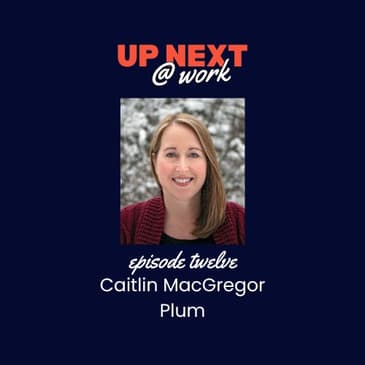
What if the secret to solving today’s hiring challenges lies not in resumes but in uncovering hidden skills and innate behaviors? In this episode, host Kate Achille sits down with Caitlin MacGregor, CEO and co-founder of Plum, to discuss how organizations can rethink their talent acquisition strategies. Caitlin introduces the concept of “gap-closers,” individuals driven to identify and fix inefficiencies in pursuit of better outcomes, and explains how adopting a skills-based hiring approach can unlock the potential of these transformative candidates.
Episode highlights include:
- The unique traits of “gap-closers” and why they excel at solving problems across all areas of life.
- How generative AI tools help HR focus on skills and behaviors over outdated criteria like degrees.
- Why durable, transferable skills are key to long-term success, with a real-world example of skills-based hiring in Barbados, where transferable skills filled critical cybersecurity roles.
- Why leadership must drive innovation in hiring to adapt to a rapidly changing job market.
Visit plum.io to complete your free Plum profile and learn how skills-based hiring can transform your organization. Be sure to listen to the full podcast episode for more insights and inspiration from Caitlin MacGregor.
Powered by the WRKdefined Podcast Network.
Powered by the WRKdefined Podcast Network.
[00:00:12] Welcome to today's episode of Up Next Work. I'm Katie Kelly from the Devon Group, and today I am joined by Caitlin MacGregor of Plum. Hello, Caitlin.
[00:00:22] Hi, thank you so much for having me.
[00:00:24] Yeah, thank you for joining us. So today we're going to tackle a specific topic that Caitlin kind of introduced to me a while back, and that is the gap closers.
[00:00:33] So Caitlin, can you tell us how, you know, what is a gap closer and how did you sort of recognize this person, personality type or person?
[00:00:44] Gap closers are really those that see an opportunity to make things better. So something may not exist, and so they go out and create it.
[00:00:53] They may see a problem and they are naturally motivated to go and solve it.
[00:01:00] They're not just content with the status quo. If they see an opportunity for something to improve, to grow, to be better, they feel compelled.
[00:01:10] Like they're antsy in that they want to go out and they want to actually address it and fix it and make it better.
[00:01:15] They're not okay with it just staying kind of lesser, and they want to make it better.
[00:01:23] And that really is recognizing that there is a gap, and they feel compelled to go out and close that gap.
[00:01:29] And it really doesn't matter what the gap is. There's this constant drive to go and really close that gap.
[00:01:39] So do you see gap closers? Is it like an innate, something innate, something that's inherent?
[00:01:45] Or do you think gap closer, being a gap closer, something that can develop?
[00:01:49] I think that there is something that definitely is innate. It doesn't mean that you can't strengthen it.
[00:01:58] It doesn't mean that if it's something that's really draining for somebody that they can't create compensatory strategies.
[00:02:04] But I think that the ones that truly get out in front and have that internal motivation that, you know, they're going to work on weekends.
[00:02:12] They're going to work late. They're going to advocate to reallocate their time during the 9 to 5 to work on these things.
[00:02:19] Like, they can't let it go. They feel compelled to do something.
[00:02:25] That ultimately is that they feel rewarded by it.
[00:02:29] That by solving something, they get a sense of self-accomplishment.
[00:02:34] And people can feel accomplishment from a whole bunch of different reasons.
[00:02:37] It's just these people specifically feel that sense of fulfillment by closing the gap.
[00:02:43] And so there is that innate drive where they're seeking those opportunities.
[00:02:49] And it could be, you know, it doesn't even necessarily exist in work.
[00:02:53] Like, it could be in their community outside of work.
[00:02:55] It could be what drives them to volunteer.
[00:02:58] It can be like, it shows up in so many different places.
[00:03:01] But the reason that somebody does it is not because somebody told them to.
[00:03:05] It's not because it's in their job description.
[00:03:07] It's because they look at it and they can't help themselves.
[00:03:10] That's what they want to do.
[00:03:12] And when they're done, there is that euphoric, oh, okay, finally, it's better.
[00:03:17] I've been able to solve for it.
[00:03:18] I can be able to prove it.
[00:03:20] Now I can let it go and move on to something else.
[00:03:22] So there is that internal motivation that is there.
[00:03:26] Doesn't mean that it can't be strengthened or improved upon, but it definitely is innate.
[00:03:31] So obviously, Plum, you guys are experts in sort of talent assessments.
[00:03:36] Are there specific skills that you think gap closers have or that you observed?
[00:03:41] Definitely.
[00:03:43] So when I look at myself as a gap closer, if I look at others within my organization that
[00:03:51] have that, just they have to, they have to go out and figure it out.
[00:03:56] There tends to be two trends that I see consistently.
[00:04:00] Now, it doesn't mean that these people are identical in terms of how it shows up, but they
[00:04:06] are something again, that they have elements that really drive them and give them that sense
[00:04:11] of self-worth and give them energy.
[00:04:12] And the first one is innovation, where they look at something and see a better way of doing
[00:04:20] it, which is really that underlying piece of innovation is how can something be more efficient
[00:04:26] or how can it be different?
[00:04:28] It's that thinking outside the box of a different way than how it manifests in the current state.
[00:04:34] So innovation definitely is a talent, a durable skill that we see as being very strong in
[00:04:44] that they just can't look at something and be satisfied if they know it can be better.
[00:04:50] And that's where the innovation really is that just in terms of how they see things as
[00:04:54] definitely a strong talent.
[00:04:57] For me, innovation is not my top three talents.
[00:05:00] It's my fourth.
[00:05:01] So it doesn't have to be the very top.
[00:05:05] But if I look at the competencies and the behaviors within innovation, there's overwhelming behaviors
[00:05:11] that are very, very, very strong within that talent for me.
[00:05:15] And I see in a lot of the gap closers within my organization that innovation's definitely
[00:05:21] in the top motivators for them.
[00:05:25] And it really is about how you prioritize time.
[00:05:27] And it's really about, like, at the end of the day, what's giving you that sense of energy
[00:05:32] and fulfillment versus what's draining.
[00:05:34] And people that are really drained by innovation, that's not going to be the thing that they gravitate
[00:05:40] towards naturally.
[00:05:42] The second one is execution.
[00:05:45] Now, execution has multiple elements to it.
[00:05:49] Execution involves really great problem solving.
[00:05:53] Execution is really great kind of ambition.
[00:05:56] It's like you're compelled to complete as many items on the to-do list as possible.
[00:06:02] But it's also organization and being able to come up with systems.
[00:06:06] And I've seen combinations of these in different elements.
[00:06:10] For example, I'm not great at organization.
[00:06:13] I am great at it.
[00:06:15] It just takes me a long time and I have to prioritize it.
[00:06:18] And it's very draining.
[00:06:19] So I have created compensatory strategies.
[00:06:22] But naturally, if I only have an hour, that's not normally where I'm going to gravitate my time.
[00:06:30] So you can be strong in these things, but it may not show up as the top top.
[00:06:35] So, for example, especially as I've moved in my career, my executing in the weeds activities
[00:06:43] are less important for my job.
[00:06:46] And I've worked really, really hard at deprioritizing that in my own kind of list of priorities.
[00:06:54] But there is elements like that problem solving and that checking off the to-do list that just,
[00:06:59] you know, if I'm in my default state, I get a sense of self-worth from those things.
[00:07:03] And so it's, I think, part of the motivation of wanting to do more, wanting to go above and beyond,
[00:07:10] wanting to find those opportunities to do more.
[00:07:14] They're definitely there.
[00:07:16] They don't fully show up as, again, execution isn't my top three talents, but it is there.
[00:07:21] And I find that people that, especially that aren't managing others, like people that get
[00:07:29] to be an individual contributor or get to spend a lot of their time solving problems versus
[00:07:34] managing other people, they typically have that execution.
[00:07:37] And so they have the bandwidth to just go and solve problems in innovative ways and execute.
[00:07:44] And they tend to be fantastic gap closers because they can get in the weeds.
[00:07:49] They can roll up their sleeves and they can just figure it out until they solve it in a new way,
[00:07:55] a better way.
[00:07:57] So how can, how can like HR and talent acquisition leaders start to spot gap closers?
[00:08:05] Obviously for talent acquisition, it's a little, well, probably more challenging because you're
[00:08:09] meeting someone early in the relationship versus HR who may come in later once someone's already
[00:08:16] an employee.
[00:08:16] But what, what can we be doing to spot gap closers?
[00:08:20] Yeah.
[00:08:21] I think the very first thing we need to do is change our mindset.
[00:08:25] And I can't stress this enough because with generative AI, we have an opportunity to do things
[00:08:34] differently in how we hire and retain people.
[00:08:37] And unfortunately, what I keep seeing is people gravitating towards just automating existing
[00:08:44] systems.
[00:08:44] We're not actually taking the opportunity to do things differently.
[00:08:47] We're just trying to do them faster.
[00:08:49] And unfortunately, faster isn't helping us improve the quality of hire.
[00:08:55] Faster isn't helping us improve retention.
[00:08:57] And so I think it's really evaluating how are we looking at the quality of who we're hiring
[00:09:06] and how are we looking at the best ways to support and retain people once they're in?
[00:09:13] And is the technology that we're using focusing on the most important elements?
[00:09:20] Everything that I've been talking about with a gap closer, none of it has to do with past
[00:09:25] experience.
[00:09:26] None of it has to do with have they done this job previously at a similar size company at a
[00:09:33] competitor?
[00:09:34] When we look at any type of hiring and promotion, typically companies are trying to de-risk their
[00:09:42] decision making.
[00:09:43] As humans, they don't want to be blamed if they make a mistake.
[00:09:46] And so typically what they do is say, hey, I'm going to bet on somebody that has already
[00:09:51] done this before because the chances of them doing it again are higher.
[00:09:57] And therefore, if they've done this role somewhere else, I'm not making a bad decision by bringing
[00:10:03] them in.
[00:10:04] And unfortunately, jobs are changing so quickly that somebody could have done that job that
[00:10:11] you're hiring them for at a competing company.
[00:10:14] But by the time they get into your company, 70% of that job may be totally new.
[00:10:20] So maybe you're getting 30%, maybe.
[00:10:23] In six months from now, maybe that 30% is now 15% value.
[00:10:27] And a year from now, maybe that prior experience is 5% of value.
[00:10:30] Like, we really need to recognize that the opportunity to put this into action is recognizing
[00:10:36] that the science is really clear on this.
[00:10:39] Behavior and aligning somebody's innate behavior to the behaviors that you need for the job,
[00:10:46] that's where you end up getting increase in performance and productivity.
[00:10:50] That's where you get fulfillment from the individual in the role so that they are retained longer in
[00:10:55] the role.
[00:10:56] So how do we focus on looking at the innate behaviors first?
[00:11:03] And so when you're looking at, do I need a gap closer in this role?
[00:11:07] Am I looking for somebody who is naturally driven to think outside the box?
[00:11:14] Am I naturally motivated to go above and beyond and to execute and to keep working at it until
[00:11:21] they find the best solution moving forward?
[00:11:23] And there's often some examples in their past, but they're unconventional.
[00:11:30] So somebody that has had a job in a different industry or a different job title that's excited
[00:11:38] about this new opportunity actually is a good indicator that they're looking for a new experience.
[00:11:43] They're looking to continue to grow.
[00:11:45] Somebody that may have experience that they don't even put on the resume.
[00:11:49] So if we go into my history, I was constantly throughout high school and through university
[00:11:57] finding opportunities to solve problems.
[00:12:00] But they were in my extracurricular activities, which by the time I had had a couple of job
[00:12:06] experiences, they weren't even on my resume anymore.
[00:12:09] I didn't even see them as valuable.
[00:12:12] We often look at people that have entrepreneurial experience where they've created a business and
[00:12:18] they put that on their resume and we're like, oh, well, that's a sign of being entrepreneurial.
[00:12:23] That's a sign of being innovative.
[00:12:24] But there's so many examples of people being entrepreneurs, doing that kind of solving problems
[00:12:30] and starting new initiatives within their own organizations that often it's not visible.
[00:12:35] So it's really important to be able to measure the behaviors and see if they align to the behavioral
[00:12:44] needs of the role.
[00:12:46] And that's, you know, technology can now allow us to do that with a positive employee experience
[00:12:51] and it can allow us to do that at scale now.
[00:12:54] And so really, you know, looking at solutions that aren't just automating keyword matching
[00:13:00] and keyword inference, but looking at measuring those behaviors and then using that data to support
[00:13:07] them and align them to roles that those behaviors are being utilized.
[00:13:11] And not everybody's a gap closer, but there are other behaviors that are really critical.
[00:13:16] I was on a panel last week talking about generative AI and companies investing in AI talent, but
[00:13:22] their internal surveys show that actually the biggest problem right now is that people in
[00:13:27] the organization don't understand this AI strategy.
[00:13:30] So they don't have a lack of AI talent or a lack of AI initiatives.
[00:13:35] What they have is a lack of communication and can, you know, a lack of transparency in
[00:13:40] terms of communicating the why of that strategy.
[00:13:42] So there are people in the organization that are going to be excellent communicators that
[00:13:46] they're not leveraging.
[00:13:47] Maybe they're not gap closers that the company needs.
[00:13:50] They're really strong communicators in having a more effective communication strategy.
[00:13:55] So it's also recognizing that you don't only need gap closers.
[00:13:59] You need to have a mixture of different strengths, but are you aligning those strengths to the
[00:14:04] behavioral needs of the role?
[00:14:06] And most companies aren't actioning on that.
[00:14:08] And it's a real miss and it's more important than ever.
[00:14:13] So we've got, so it sounds like, you know, what you're saying is we've got the technologies
[00:14:17] to improve, you know, hiring and spotting the gap closers and the other potential, you know,
[00:14:24] contributors, but we're still stuck on our traditional strategies.
[00:14:29] And so we need to somehow, I guess, for lack of a better term, close that gap between the
[00:14:35] strategy and the solution to get to a place where we can start recognizing people for,
[00:14:40] you know, some of these innate drivers that they possess, whether that's being a gap closer
[00:14:45] or something else.
[00:14:47] So before we move on, I need to let you know about my friend, Mark Pfeffer and his show
[00:14:53] People Tech.
[00:14:54] If you're looking for the latest on product development, marketing, funding, big deals
[00:15:00] happening in talent acquisition, HR, HCM, that's the show you need to listen to.
[00:15:07] Go to the Work Defined Network, search up People Tech, Mark Pfeffer.
[00:15:11] You can find them anywhere.
[00:15:15] Have you ever been to a webinar where the topic was great, but there wasn't enough time to
[00:15:19] ask questions or have a dialogue to learn more?
[00:15:21] Well, welcome to HR and Payroll 2.0, the podcast where those post-webinar questions become episodes.
[00:15:27] We feature HR practitioners, leaders, and founders of HR, payroll, and workplace innovation and
[00:15:32] transformation sharing their insights and lessons learned from the trenches.
[00:15:35] We dig in to share the knowledge and tips that can help modern HR and payroll leaders navigate
[00:15:40] the challenges and opportunities ahead.
[00:15:42] So join us for highly authentic, unscripted conversations, and let's learn together.
[00:15:47] Where do we start?
[00:15:49] Is it at TA that we start by changing hiring strategies, or is it a conversation between
[00:15:54] HR and TA?
[00:15:57] I mean, I think it starts with data.
[00:15:59] In all honesty, I think it's recognizing that we don't have this data currently in the existing
[00:16:05] processes.
[00:16:06] If you're using Workday, if you're using SAP, no matter what you're using, most companies
[00:16:13] don't have the data.
[00:16:14] And what they thought the data they were missing was a whole bunch of hard skills data, which
[00:16:20] we call perishable skills.
[00:16:23] Let's be honest, six years ago, everybody wanted a Ruby on Rails software developer, and now
[00:16:28] nobody cares.
[00:16:29] So having employees and candidates go in and fill in a whole bunch of keywords around that
[00:16:35] past experience, that's not the data I'm talking about.
[00:16:38] That's the data that people are investing in right now.
[00:16:40] That's the data that's being marketed as, hey, you need more data points on people.
[00:16:44] Let's get a whole bunch of those keywords scraped from LinkedIn or from their resume, or let
[00:16:49] people just add in a whole bunch of keywords.
[00:16:51] And it ends up being a game of bingo.
[00:16:54] But it doesn't really drive down to those innate skills that are really going to be the drivers
[00:17:01] for that performance and that retention.
[00:17:02] So to me, I think it's a data that's missing.
[00:17:06] And it's about allowing individuals to start to get the data for themselves, first and foremost.
[00:17:13] I mean, that's why I created Plum, because I wanted every individual to be able to have
[00:17:20] this data that I've been talking about on themselves.
[00:17:24] I wanted people to be able to go, just like you have a LinkedIn profile.
[00:17:27] Well, LinkedIn talks about what you've done historically, and that's fantastic.
[00:17:31] But I wanted a profile where people could talk about what they could do if just given the
[00:17:36] opportunity.
[00:17:37] And by completing a Plum profile, you get the opportunity to say, what are the things that
[00:17:43] make me exceptional?
[00:17:44] Most people aren't self-aware.
[00:17:46] This is kind of the misconception.
[00:17:48] Even people later in their career, 40s and 50s, you would think that they would understand
[00:17:52] what are their superpowers.
[00:17:54] But the reality is, is it doesn't matter if you're early in your career or if you're mid-career
[00:17:58] or late career, the things that come easily to us, we often take for granted.
[00:18:03] We think, oh, it's easy.
[00:18:05] So why would I talk about it?
[00:18:07] Because it's easy.
[00:18:08] It's not hard.
[00:18:09] But we don't recognize that those things that are easy for us as individuals are exactly
[00:18:15] what makes us exceptional.
[00:18:16] Because we can do those easy things sometimes 10 times faster than our colleague that finds
[00:18:22] that specific thing hard for them.
[00:18:24] And we know that there are things that are hard or draining for us.
[00:18:29] And when we're in a job where we go home at the end of the day and we're exhausted all the
[00:18:36] time and we experience burnout, a lot of the times it's because we're doing those things
[00:18:42] that take us far more energy and time than others.
[00:18:45] And there's a real opportunity to say, hey, this takes me 10 times longer than my colleague.
[00:18:52] I'm going to pass this responsibility on to my colleague.
[00:18:55] And that thing that's really hard for them, super easy for me.
[00:18:58] Let them pass that to me.
[00:18:59] If we were spending 80% of our jobs on the things that are easy, we'd actually be able
[00:19:06] to accomplish a lot more.
[00:19:08] And we wouldn't be burnt out.
[00:19:10] And we'd enjoy our jobs a lot more.
[00:19:12] So as an individual, they can get that data on themselves and start to build that self-awareness
[00:19:20] and really become the CEO of their own career journey by starting with that self-awareness.
[00:19:26] And that same data can be shared with employers.
[00:19:29] It can be shared in the hiring process.
[00:19:32] It can be shared in the talent management process.
[00:19:35] But to me, it's a data problem in that we need this data at the very core of our talent
[00:19:42] decisions.
[00:19:42] And for me, it's getting that data as early as possible.
[00:19:47] You know, I think about the number of people that have spent ridiculous amounts of money,
[00:19:52] you know, going to university and college for the wrong program and getting into the workforce
[00:19:58] and going, oh, wait, I don't like it.
[00:20:01] I don't want to do this.
[00:20:02] Yeah.
[00:20:03] Yeah.
[00:20:03] And, you know, and then they, you know, jump around several different jobs until finally
[00:20:08] they're like, oh, this, this is now the right fit.
[00:20:12] Well, we could have saved so much time if that person had more self-awareness of what are
[00:20:17] the behaviors that actually drive and drain them early on.
[00:20:20] Same thing when we're thinking about mid-career transition, there are so many upskilling opportunities,
[00:20:26] but are we upskilling on the type of opportunities that are going to give us that competitive
[00:20:33] advantage where we're going to outperform our peers and stay longer in the role?
[00:20:38] I love working with the government of Barbados because they realized that so many of their
[00:20:45] people were impacted by COVID because most of the GDP comes from hospitality.
[00:20:49] But they also recognize there's 3.5 million unfilled cybersecurity roles internationally.
[00:20:54] So they said, what happens if we just upskill our population in cybersecurity?
[00:20:59] And that's a big gap they closed.
[00:21:01] That's a big gap.
[00:21:03] That's a big gap that the world's going to benefit from.
[00:21:06] Their economy's going to benefit from.
[00:21:07] Their people don't have to move overseas anymore.
[00:21:09] Their jobs are more stable.
[00:21:10] They can be paid more in cybersecurity.
[00:21:13] And so what happened is that 60% of the people that were upskilled in cybersecurity had no
[00:21:18] IT, no background whatsoever in cybersecurity.
[00:21:23] But Plum was able to identify if they would be successful post-upskilling in cybersecurity,
[00:21:29] if it was going to be a good fit.
[00:21:31] So there's so much advantage by starting with this data.
[00:21:34] And unfortunately, this industry of personality and cognitive data,
[00:21:39] the legacy of it was that it was used at the end.
[00:21:42] It was used at the very, very end to kind of give a go, no-go decision.
[00:21:47] And that's the wrong place to use it.
[00:21:49] We want to use this data as early as possible to help
[00:21:52] select who we should actually have conversations with, shortlist who should be moving to the next step.
[00:21:58] When you get bombarded with thousands of applicants that are using generative AI
[00:22:02] to apply to 5,000 jobs in their sleep, you know, and you're overwhelmed with candidates,
[00:22:07] we should be stack ranking them based on behaviors first,
[00:22:11] and then look at, you know, how long would it take for them to hit the ground running?
[00:22:17] You know, most people now, especially with the time to learn being so shortened with generative AI,
[00:22:24] you know, you can get somebody up to speed in just four months in a brand new job.
[00:22:28] And by the one-year mark, they're outperforming people with several years of more experience than them.
[00:22:34] So it really, we are at this perfect timing where we can close a gap.
[00:22:40] We have new problems emerging and new opportunities emerging with generative AI impacting the workforce.
[00:22:46] We have an opportunity to think about things differently and be gap closers ourselves in realizing that durable skills,
[00:22:54] which are all these behaviors we're talking about,
[00:22:57] are going to keep allowing people to solve problems in new ways,
[00:23:02] to have their behaviors adapt to the new demands.
[00:23:08] Whereas the hard skills, the perishable skills, those are going to constantly be changing and being irrelevant on such a short timeline.
[00:23:17] So there's an opportunity to emphasize durable skills first and to stop emphasizing those perishable skills.
[00:23:25] And look at the technology.
[00:23:26] Is the technology measuring and stack ranking and prioritizing and recommending people based on perishable skills?
[00:23:32] If they are, that's not going to be a solution that is successful for the next three to five years.
[00:23:39] If it is measuring and prioritizing and making recommendations to the individual in the company based on durable skills,
[00:23:47] then you're on the right track.
[00:23:48] And so there is a gap that needs to be closed.
[00:23:51] And the action is close this gap with durable skills.
[00:23:56] And innovation and execution are going to be the behaviors that you need
[00:24:00] if you're hiring your own gap closers internally.
[00:24:03] And, but recognize there's other behaviors that contribute to an organization beyond just gap closers.
[00:24:09] And those have value too.
[00:24:10] It's all about the alignment of what are, instead of KPIs,
[00:24:15] the, you know, key performance indicators that we've all been educated are so important.
[00:24:21] What are the KBIs for the job?
[00:24:24] The key behavioral indicators.
[00:24:25] And when you are meeting with your hiring team,
[00:24:27] or you're talking about internal mobility opportunities,
[00:24:30] sit down with the people that are part of that interview panel and talk about what are the behaviors you actually need?
[00:24:36] Do you need somebody to be a gap closer?
[00:24:38] Or do you need somebody to be really good at working on a team,
[00:24:42] you know, and, and figuring things out two heads are better than one.
[00:24:45] Or are you looking for somebody that's really good at resolving conflict or making fast decisions?
[00:24:52] Like what are the behaviors that you need for the role and match based on that?
[00:24:57] And it's, it's really is a different way of thinking about it.
[00:25:00] We have not been thinking about it this way enough,
[00:25:04] even though when you ask people, you know,
[00:25:06] how did you get to the job that you have today?
[00:25:08] Most people will say, oh, somebody saw potential in me.
[00:25:11] It gave me a, gave me an opportunity.
[00:25:13] Yeah.
[00:25:13] Some manager, some leader.
[00:25:15] Yeah.
[00:25:16] It's always some, some random person,
[00:25:17] but no, I think,
[00:25:19] I think what you're saying too,
[00:25:19] that's important is this is really important for managers and leaders to recognize though,
[00:25:23] because, you know,
[00:25:24] from what you were just saying about like building teams where you have this spread,
[00:25:29] because, you know, gap closers we've already established are great,
[00:25:32] but do you want your entire team to be gap closers?
[00:25:36] Probably not.
[00:25:36] You still need somebody who, you know,
[00:25:39] their, their superpower might be that they're the worker bee,
[00:25:42] who's just going to get all the projects done so that, you know,
[00:25:46] they can show their boss,
[00:25:47] hey, we're up 10% in terms of productivity.
[00:25:49] You know, depending on the culture and the organization,
[00:25:51] but, you know,
[00:25:52] this idea that we build teams around behaviors also and departments,
[00:25:57] you know,
[00:25:58] I think that's something that we really need to,
[00:26:01] to focus on,
[00:26:01] especially, you know,
[00:26:02] I guess for TA,
[00:26:04] maybe that's a conversation to have with their hiring managers as part of the
[00:26:07] intake process to really start to drive this home.
[00:26:10] So I'm trying to think of small ways we can start to shift.
[00:26:14] Yeah.
[00:26:14] Away from the traditional hiring and,
[00:26:17] you know,
[00:26:17] I mean,
[00:26:19] I'll embrace this.
[00:26:20] This isn't a little shift.
[00:26:22] This is a big shift,
[00:26:23] but I,
[00:26:23] I really think that every company needs to reevaluate their education requirements.
[00:26:30] If there is a certification that from a compliance standpoint is regulatory and you need to have it,
[00:26:37] obviously you have to leave that.
[00:26:39] But if there is no regulatory body saying they must have like a driver's license,
[00:26:45] if you're a driver,
[00:26:45] you have to have a driver's license.
[00:26:47] That's a non-negotiable,
[00:26:48] right?
[00:26:49] But if somebody is not driving,
[00:26:52] then you don't need a driver's license.
[00:26:55] You'd never put a driver's license on there as a way of just saying,
[00:26:58] well,
[00:26:59] you know,
[00:26:59] we only want people to drive because,
[00:27:01] you know,
[00:27:01] that says something about them.
[00:27:03] So we're putting that,
[00:27:04] you wouldn't do that.
[00:27:05] You don't have it in there because it's not job relevant.
[00:27:06] A lot of people have requirements in their job descriptions that are actually not job relevant.
[00:27:13] And it really,
[00:27:15] really it's the,
[00:27:16] they do it because they're like,
[00:27:18] oh,
[00:27:18] I'm getting 5,550 people applying for a job.
[00:27:22] I need a quick way of at least reducing that number.
[00:27:25] So I'm going to put in all of these things so that I'm only looking at the most qualified.
[00:27:28] It's total BS.
[00:27:30] So most companies that are at the forefront of becoming a skills-based organization
[00:27:36] and thinking about behavior first type of hiring and retention,
[00:27:40] they've recognized that eliminating a college and university degree is a first step.
[00:27:47] There is no reason,
[00:27:49] unless it's a regulatory requirement,
[00:27:51] to have a college or a university degree on the job post.
[00:27:55] Full stop.
[00:27:56] And I love Scotiabank for this because they started with us on campus recruiting.
[00:28:01] You know,
[00:28:02] they only used to hire from finance and business schools,
[00:28:05] and then they completely dropped that and they opened it up.
[00:28:09] And that's amazing.
[00:28:10] But we also saw that the head of TA didn't have a college or university degree.
[00:28:14] And he was one of the first in the bank to not have that college or university degree.
[00:28:20] And then eventually they dropped it for the entire bank,
[00:28:22] that it was no longer a requirement.
[00:28:24] And I, you know, if a big national, you know, international bank can drop college and university
[00:28:31] degrees as a, as a minimum requirement, I don't understand why other organizations can't take
[00:28:37] that leap.
[00:28:38] So I think that's a first step of signaling because how many, when you talk about those
[00:28:42] hiring managers, you know, you talk about HR and the recruiters talking to hiring managers,
[00:28:46] how many hiring managers have said to their recruiter,
[00:28:49] I want somebody from this university, or I want somebody with this degree.
[00:28:54] Like first words out of their mouth, or they get a staff rank of candidates and they
[00:28:58] automatically gravitate towards the ones that came from the higher, you know, well-known schools.
[00:29:05] Like that, there's no need for it anymore.
[00:29:08] That is an easy step that every company can be taking.
[00:29:12] And what it does is it forces companies to then say, okay, well, if it's not
[00:29:16] the university degree or the college degree, if it's not this, this college that they went to,
[00:29:21] then what is it?
[00:29:23] And then you get into those KBIs.
[00:29:25] What are those key behavioral indicators that you want to see?
[00:29:29] We're 12 months down the road after you've hired somebody or promoted somebody,
[00:29:32] what is going to make them exceptional in the role?
[00:29:36] That's the conversation that needs to be happening.
[00:29:38] And if you look at any best practices, that's a conversation that should have been
[00:29:41] happening for the last 10 years.
[00:29:43] It just wasn't.
[00:29:44] Now is the time to say, okay, we have an opportunity to do things differently.
[00:29:48] Frankly, we have to do things differently.
[00:29:51] You know, the way that the world's been in the last five, 10 years, that's not the way
[00:29:55] it's going to be for the next three to five years.
[00:29:57] We have to do things differently.
[00:29:59] This is the time to change the approach and perspective.
[00:30:01] And this is a very easy way to start actioning things.
[00:30:05] Well, it sounds like we need some gap closers who are willing to fix this,
[00:30:10] to step into maybe some of these recruiting and TA and HR roles to start the mindset shift
[00:30:16] within their organizations.
[00:30:18] Obviously, it's a very big ask, but I would love to see people feel empowered to do so.
[00:30:25] It's the empowerment, right?
[00:30:26] Like part of what happens often is, especially when you get into a corporate kind of work
[00:30:34] environment, there tends to be some fear of screwing up, fear of making a mistake, fear
[00:30:41] that if I do something that's never been done before, I may mess it up and I may get in trouble.
[00:30:47] And so part of a gap closers kind of innate drive is that the negativity of the status quo and seeing
[00:30:58] that mistake day in, day out and seeing that gap day in, day out, that that drive to want to fix it
[00:31:06] is bigger than the fear of screwing something up, the fear of failure.
[00:31:11] There is a confidence that progress and improvement is going to outweigh any kind of downside that the
[00:31:21] disruption may take.
[00:31:22] And there is that risk reward that they are driven to take the risk of doing things differently because
[00:31:29] they know the reward is so much better than just allowing this kind of bad thing to continue as is.
[00:31:37] And there's a lot of people in HR that haven't been empowered to take that risk, that haven't been
[00:31:44] empowered to say it's okay if you try something and it doesn't work.
[00:31:49] You know, and if we think about recruiters, they report to hiring managers.
[00:31:53] If hiring managers are like, this is what I want, it's really hard to go up against them.
[00:31:58] They typically get paid more money.
[00:31:59] The hiring managers typically have more authority.
[00:32:01] So to go against what the hiring manager is saying and say, actually, there's a better way, that's hard.
[00:32:08] We have created this hierarchy where they don't have the power to say to the hiring manager, actually,
[00:32:14] you're doing it wrong.
[00:32:16] I am going to get you better people that are going to stay longer and you need to trust me and you need to
[00:32:21] try this out.
[00:32:22] And I know it's going to feel uncomfortable because you don't want to waste your time with a bad hire.
[00:32:26] You don't want to waste your time with somebody that's not going to work out.
[00:32:29] I get it, but like, this is going to be better.
[00:32:32] So often the companies that are really successful at this, they have mandated to the hiring managers,
[00:32:39] you're going to do things differently.
[00:32:41] And I have mandated and said, I am telling you that if you don't start doing things differently,
[00:32:46] you're going to be in trouble hiring manager.
[00:32:47] And we have this amazing recruiter that's going to work with you and help hold your hand in doing
[00:32:53] things differently.
[00:32:54] But you can't just have a recruiter on their own, go and tell a hiring manager, we're going to do
[00:32:58] things differently.
[00:32:59] The company has to mandate it and empower the recruiter to do things differently.
[00:33:04] And unfortunately, like that means that somebody at the top has to be willing to piss off a bunch
[00:33:11] of hiring managers to, you know, go through the uncomfortableness of change and has to be willing
[00:33:17] to stick their neck out there.
[00:33:19] And again, you know, it's hard.
[00:33:22] People are the most expensive resource at the entire company.
[00:33:26] So the cost of failing is so high, but this is why it's the right moment.
[00:33:33] Because if we keep doing things the way that we've been doing them for the last five, 10 years,
[00:33:37] there's failure no matter what.
[00:33:39] Like failure is inevitable at this point.
[00:33:41] So the question is, do you want to be the person that avoided the failure, that closed the gap
[00:33:47] and did things better?
[00:33:49] Or do you want to keep playing it safe?
[00:33:51] And so gap closers are sick and tired of playing it safe.
[00:33:55] They want to do things differently and they're willing to own the risk because they know the reward
[00:34:00] is worth it.
[00:34:02] Well, that sounds like a big strategic advantage to me.
[00:34:06] Thank you, Caitlin, for coming on to talk to us about gap closers today.
[00:34:10] Super interesting.
[00:34:12] Can you tell folks where to find you?
[00:34:15] Plum.io and everyone can go and complete their own free Plum profile and they can share
[00:34:21] it with their colleagues.
[00:34:22] It's a way of really starting this journey as an individual and seeing what it is to have
[00:34:27] this data on yourself.
[00:34:29] And once you see it, you can start to imagine what would it be like to see it for candidates
[00:34:32] and for employees and make decisions around this data.
[00:34:35] So Plum.io and go complete your own free Plum profile.
[00:34:39] Awesome.
[00:34:40] And if you end up closing any gaps in your organization, please reach out and let us know.
[00:34:44] And we will see you soon on the next episode of Up Next at Work.
[00:34:47] Thank you.
Sponsors
