
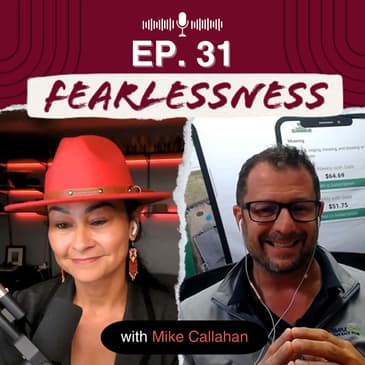
🎙️ Welcome to today's episode of the Fearlessness Podcast with your host, Libby DeLucien!
In this episode of Fearlessness, I sit down with Mike Callahan, a successful entrepreneur who transformed his lawn care business into a thriving automation and coaching company.
Mike shares his journey from pushing a mower in high school to creating Simple Growth, offering valuable insights on overcoming business challenges, automating processes, and maintaining work-life balance.
Tune in to discover how Mike juggles his corporate responsibilities while being a dedicated family man and learn the importance of fearlessness in business and life.
Elevate your recruiting game with WootRecruit 📈
➡️ https://wootrecruit.com/
Comment 💬
Got any questions? Write a comment below to chat.
Stream now on:
➡️ Spotify: https://open.spotify.com/show/42nQV6HEAFByk4dPjDlIZl?si=ae6da9cf524c457c
➡️ Apple Podcast: https://podcasts.apple.com/us/podcast/fearlessness/id1692617883
Let's connect! 👋
➡️ Instagram: https://www.instagram.com/libbydelucien/
➡️ Facebook: https://web.facebook.com/LibbyDeLucien
➡️ Twitter: https://twitter.com/libbydelucien
Follow Mike on:
➡️ Facebook: https://www.facebook.com/mike.callahan.963
➡️ LinkedIn: https://www.linkedin.com/in/simeplegrowth/
Powered by the WRKdefined Podcast Network.
[00:00:00] Hey everybody, it is Libby again with Fearlessness. So what is Fearlessness? It is that underlying grit that empowers us to forge ahead.
[00:00:08] Even when Hope seems distant, it's the courage to walk through those fires of hell, knowing that we're not getting it just come out better on the other side, but we're gonna come out stronger on the other side. Stay tuned and learn how to get Fearlessness.
[00:00:22] I'm your host, Libby DeLucien, and we have a very special guest. I say that on every podcast, you are very special. We have a very special guest, Mike. Why don't you introduce yourself? Absolutely. Now we've got through the special part. I'm Mike Callahan.
[00:00:37] A couple of my teeth back in the green industry started out, literally pushing a push-more round in high school. So my parents taught a great work ethic and they said, hey if you want a car, it's great.
[00:00:49] You need to go out and pay for the car, get the car and share. And so unknowingly started my entrepreneur journey, literally knocking doors around the neighborhood, ended up taking that quote-unquote business through five years of college.
[00:01:01] Ran a few crews while we were in college and then made that faithful decision. Let me as we all do, do we go the corporate route or do we go the entrepreneur route? And you should make guess.
[00:01:12] We took the entrepreneurial route and through that process, really looking at all the business owners I really admired locally, there was one common denominator. They seemed to be the center of the chaos. So as I embarked to my full-time entrepreneur journey,
[00:01:27] I said well if I needed successful business like all these other guys and girls I'm watching, I better have everything this business run through me. So long story short that business ended up causing a divorce to the girl that was dating through high school in college.
[00:01:39] She literally came home on Valentine's Day and said Mike, I'm out of here at this business runger life. So after hit rock bottom we found automations and automated that business and went from 80 to 100 hours a week
[00:01:51] to 3 to 5 to an hour. And now that has been my personal mission as well as the business assemble growth now to help business owners take their life back from their business. So there you have it,
[00:02:03] that's kind of how we got into business and we're revolving now to help other business owners. I love your story. It's very similar to a lot of people story. I think actually Dan Martell has a really similar story.
[00:02:16] Actually happened on Valentine's Day, I think he says and I'll have to recall. But his fiance leaving him on Valentine's Day because the business was running him. Which is interesting to hear and Mike does a lot of stuff. He was in his mastermind group for a little bit.
[00:02:38] Great mastermind group, by the way. And so he going from that field service owner to more that corporate route now. Would you consider simple growth of software, service software enabled? I'm just going to say, I'm going to say something a little bit of everything.
[00:03:01] Explain what the local growth has. Yeah, I was going to say before we got into it, we literally just took the same exact things we had at my long-care company for the marketing and sales automations and brought that to the long-care and home cleaning industry.
[00:03:13] And what we found is, it's basically some of these business owners came to us like we're ready to automate. But they had the rest of the business was just a mass. So foundationally if we had automated this, we had the best of business systems.
[00:03:25] So we went from the marketing automations to our secondary where we did job costs, financials. How to actually set up a process to estimate job costs. And then finally the third prong, a simple growth, was our mastermind's coaching division. Because some folks literally wanted accountability.
[00:03:42] They wanted a proven roadmap. And not that we even teach all this ourselves necessarily myself, at least I've never been to, you know, that's not really what I'm talking about.
[00:03:54] Eight figures, we went out, brought the people that I used to actually teach us how to scale, you know, multi-seventh figures into the mastermind's group. But really it's the marketing automations. It's the estimating the job costs and the business systems.
[00:04:07] And then it's that coaching division to help people along that way to break seven figures. And then eventually with the eight figure business coaches, we bring it like Miranda and Brett. Yeah. You're going to automate their crap and just amplify it.
[00:04:20] So in what work group, I'm currently doing the demos because I let go of the salesperson. And I've been doing the demos and this is totally off topic. But as I was like laying out questions and I'm like, you know what?
[00:04:37] Like if they have a crappy business, which is okay because we've all had crappy businesses and they come in and out, like it's broken sometimes. Sometimes it's beautiful. And a growing business is always somewhat messy.
[00:04:49] But if it's overly messy that my husband said it's like audio when you bring an audio engineer, all that they're going to do is amplify the shit. So so if it sounds horrible and you bring an audio crew, you're just going to amplify it.
[00:05:08] And so the other day I was thinking to myself, you know, it's and it's exactly what you said. You're just automating the crap like the crappy parts of the business with the recruiting when we when we recruit comes in if it's a broken business,
[00:05:19] we're just amplifying that to the to the candidate. And then, you know, we really kind of drill down on that. I just thought it was interesting. It's the same thing that we found with us is this we're just amplifying the broken parts
[00:05:31] versus trying to help them fix those broken parts. Yeah, it was funny we just did a Facebook library there today with Chad Curry of CLC landscaping out the text. Oh I love Chad Curry. Hey Chad.
[00:05:43] Chad and I were talking about some very, very similar but it's you know, when you get really clear on that culture, your higher training and firing or coaching up or coaching out to those core values got really clear.
[00:05:53] And maybe your ads are talking about this amazing business and how great it is. And all these things you're doing, but you go in in their onboarding process 10, 7 days. Even this inner would process or just in the other side.
[00:06:07] That like, you know, it's even the inner of your process was broken for us when we first started. You know, we thought we were better than what we sounded like on paper. So yeah, make some please sense and that's part of the issue that we see.
[00:06:22] So no matter the process of system, if you're not going to go in and at least blueprint and make it actually work before you automated or bring in Woobert crew and actually, okay, we can get all these A candidates through the door.
[00:06:33] But if you're not answering the right questions or actually doing the way you should or maybe you've now that piece but you're onboarding the first 30, 60, 90 days is not in place. You know, it kind of falls apart so it's the whole picture.
[00:06:45] You got to be able to walk, you know, crawl before you walk and you got to get these at least the foundational pieces. Doesn't have to be perfect. You got to have the foundational pieces there blueprinted before we actually implement an automated.
[00:06:56] This is where we've seen a lot of the issues and folks. Yeah, I love that. So I want to go back to more fearlessness topics and we'll talk about recruiting over on the what we're doing YouTube channel so you guys for our listeners can hop over there
[00:07:11] and listening to listen to some listen to us talk more recruiting over there. But fearlessness, I want to know, and ask you that journey going from like field service cutting lawns to going more corporate more service based like software.
[00:07:29] What do you think the biggest lesson was for you in that? So it's interesting, I think that like, the real thing is, like be to see to be so free to be like, it's not that different.
[00:07:42] And my dad gave me the best example he was running multi-million dollar government contracts and we were prepared before he retired. And he still is kind of my sounding block quit it hits the proverbial fan.
[00:07:53] But like I guess, hey dad, it's going to be so much better on I got this software SaaS business now. And he, the way these like my people are people. Those problems never change. So I could be selling men suits at this point, Libby, it doesn't matter.
[00:08:07] It's not that different. Now are the elements of having a different type of service in people's homes or outside in the landscape, that individual may be hiring is a little bit different potentially. But people have people. So the same problems are there.
[00:08:23] So I think once we figured out how to get really clear at those folks, it wasn't that different, which still shocks me today. And on Tuesdays when we record this, half of my day is literally built on one-on-one with the leadership team.
[00:08:36] Those are the conversations that are almost identical. And probably in the early days, I should have been having these types of conversations that's way earlier at the trajectory to come to. I love that.
[00:08:46] Your dad is a smart guy because they are people or people going for my house clean business to software, same problems. Just at different times depending on like the business and the size and number of employees.
[00:09:00] And there may be different levels or types of conversations where my dad was working with PhDs, but some of the issues he was having is like the guys and girls weren't showing up on time or they didn't have time management skills.
[00:09:11] Versus, there are guys and girls in the lawn care, the whole cleaning industry. But at the end of the day, we get down to people with people. They just may be on a set of say politically correctly.
[00:09:19] It might be different levels of conversation based on their job and what they do. But when it gets down to the core that I think that long as you can have those people skills and you can have the management skills, that's a different shader.
[00:09:31] And it's not just us, but it's as we evolve our leadership team. You see evolved with business. And I think that's the other area where it's been different because if we're growing really quickly, that team needs to evolve. Yeah.
[00:09:43] And there's something that you said earlier just about the year two days, which I took from you because today's not Monday. It's Tuesday. I usually record these on Monday, but Monday was a holiday.
[00:09:53] That you spend today doing one to one and it's something that you should have done sooner. Tell me eight more about like, what did you learn from doing these one to one? What changed either for,
[00:10:07] maybe it was just even for you or your insight versus what changed for the people you're doing one to one's with. Yeah. So a lot of times it was just it was mishabbed like we'd run in the office like Katie needing anything like Tammy,
[00:10:19] Christine, Paul, whoever was in the long car office the early days. It wasn't structured. So now we have a set time that's preserved for them. We have some basic questions that we walk through. It's in a Google Doc or Gooshie.
[00:10:31] But the high level is like literally, you know what, what were you working on last week? What are you working on this week? What are the roadblocks or things that you need help with? Is there things you need support for myself or somebody else on the team?
[00:10:42] And just literally some kudos like who on the team is doing a great job if you want to give me a shout out. There's one or two other nuances but I'd like a 40,000 support for the view and just sets a conversation.
[00:10:53] The second level that is when I first implemented this stuff. I'd be going through and sharing the screen and walking through and typing it out. Now the team member literally shows up to the call with it filled out.
[00:11:04] Very similar to our big big three mythology or the evergreen metrics we're looking at in the business. But it's almost like a stop light. Let me so it's red, yellow and green.
[00:11:13] If it's yellow, the team now is actually coming in with plans or solutions how to fix the issue. Because nobody likes to show up when they're in the yellow or green or the yellow or red area.
[00:11:24] But now since we've kind of evolved this over the last 12, the team months, that leadership teams coming up with solutions and plans to fix it. So it's not laying on me as the business owner they're saying, like this is the things we suggest we should do.
[00:11:36] Dan Martell you mentioned before. I think he calls it the three. 3131. We use one three one. Yeah, so basically they're coming in with three solutions potentially and then they're picking the one.
[00:11:53] But now when they come in with that methodology, now I'm just there to give them the resources this port they need. So if you haven't read Dan Martell's book on time management, absolute just yet.
[00:12:05] But some of the stuff we cherry pick from that book as well is been incorporated in those one I want. Oh, it's one of my favorite books. I have a little secret.
[00:12:13] I'm writing a book right now and the writer of that book, the Ghost Rider is writing my book. Awesome. The writer of Buy Back Your Time because Dan didn't actually write it. It was through a series of interviews.
[00:12:27] And so I'm doing the same thing because I'm in Dan's mastermind group. I'm going to give you the name of the writer and the writer like he was like, you know, to be, you know how somebody goes like, how does Quentin Tina's here.
[00:12:39] How do you say his last name? Quentin Tina? Yeah, make such great movies. He's like because he goes out and he only works with the best actors out there. That's how I rate great what that's how I write great books.
[00:12:54] He said it's because I interview my prospects, the candidates and I only select the people that have great stories that I want to write about. And I was kind of like, wow, maybe this book will be good. He makes me sound super smart. That's all I know.
[00:13:09] When I get the blueprint back, I look, I showed to my husband and I'm like, oh my gosh. Like he made me sound amazing. So I'm excited for that. We're only not even halfway through yet. So it's still a little wild to come out.
[00:13:25] But, you know, for us, one of the great things I did for leadership is we do weekly L10s as a group and then we have like the ops team does it. The marketing team does it.
[00:13:40] And one of the companies I have is big enough that they actually now have individual department L10s and then the leadership L10. And one of the greatest things I've done is we take turns running the meeting everybody.
[00:13:53] Everybody, I got a doc of like how to run an L10 and I said, okay, everyone's going to take turns. Everybody has loved it. It's showed like leadership. It's showed who's come prepared. You know, can they lead something?
[00:14:10] And then for that department leader or me when I'm sitting in the leadership L10, it gives me a moment to breathe. So I don't have to run it. Like it's not dependent on me. I can pay attention and that's true for that department leader as well.
[00:14:24] Like the ops manager, they don't have to focus on that meeting on running it. They can focus on what's being said. And kind of absorb it. So we really did that. I love it.
[00:14:37] And so the team as well, all of our account managers have said, oh my gosh, that was fun. I'm doing it. I want to do it again. And it was just insightful to see who wanted to run a meeting,
[00:14:48] who would follow the instructions and take the pressure off the same person all the time. Pretty interesting when the team steps up and does that. And yeah, for sure, like as we do, basically our version of L10 every Monday,
[00:15:00] when we go around the heart and like everybody just takes command of that. And we do shift some of those who run the meeting as well, especially if I'm not in town. And it's so it's really interesting to see those team members who fall
[00:15:11] and you can actually see, you can really see who wants to take it to that next level. So I can't agree to more. It's really, really exciting to see that leadership team kind of up level itself. So let's talk about next level stuff.
[00:15:24] And I'm going to talk about how do you, so many of our listeners like, how do you juggle all of this time consuming stuff and your family? Like you have an amazing little tiny daughter. Oh my gosh, her name is, it's on the tip of my tongue.
[00:15:39] But all I know is she's like the best skier I've ever seen in my life. Yeah, there's actually two of us. So Stella and Rory Stella is the old one. Yep. And she's the older the younger one. She's the older one.
[00:15:49] So she's nine and the younger one Rory is seven. So little known fact, we won't tell the oldest sister but the younger one's stats and rankings. Based on the age, if you look back or almost identical. So we got to the rock stars there for sure.
[00:16:03] So up level. So how do you, you know, you went from service company to more corporate companies software. And then balancing your family. You are always there for your kids as much as you can be. That's what I see.
[00:16:18] And you know, what are some of the things you do to kind of help make sure that you're present in your business and your present in your life? Because I don't really believe in time like work life balance.
[00:16:30] I think there's it's more of like an integration or how do you manage that energy. Yeah, if I found my personal calendar you would be shocked but everything it's all it's it's time coded and blacked out at a Google calendar.
[00:16:43] So we've got the literally breakdown from one on one leadership teams to live events. But everything in yellow is family so it's all integrated on one calendar. It's time block. So very similar to Dan Martell's book.
[00:16:58] I think I probably stole a couple things the way he breaks that out that we've recently implemented. But yeah, I made pretty much a declaration with the kids skiing for sure that I would never miss a skiing event.
[00:17:11] So I had an opportunity two years ago to do a keynote at Mike and his landscape summit out in Seattle.
[00:17:17] The dates didn't conflict and Mike had to change some schedule wise where I literally said, I mean, I've been looked at a private flight to see if I can make it an out thing. Mike can make it.
[00:17:26] I'm going to send you a replacement for myself, which he was obviously happy about. But that's one of the things that I also kind of picked off from Jonathan Potosnik of the long-care millionaire co-founder service all pilot with his kids.
[00:17:38] You know, there were certain things on the weekends that he just they were not negotiable. They weren't, you know, he would not miss them. So that's kind of the this set up that I did now.
[00:17:48] There may be an occasional baseball game or, you know, dance practice I might miss. But yeah, the idea is I really am trying to block that out. I'm really trying to stick to that. The lessons learned through that first relationship were really, really hard.
[00:18:02] So obviously you don't want to make that same mistake twice. So that's been the process my wife's obviously very flexible. We have a communication about some of the traveling. I don't know how you do it with yourself. I respect that you do it.
[00:18:15] I just personally cannot travel anymore than I personally am more than like once or twice in quarter. But yeah, that's the idea is you know, families got to come first and I think that's some of the thing too that resonates at least through simple gross team. Virginia, Keanna.
[00:18:29] Couple of the other folks on the team Josh just has just had a child last 12 months. But we really we build the flexibility in 13 in our team as well.
[00:18:37] Well, that's kind of, you know, it's not necessarily core value, but it's it's kind of how we live and breathe. So everybody has that flexibility.
[00:18:44] So I don't that answers the question, but yeah, I mean it just it's top of frame of mind everything I do and my assistant.
[00:18:51] And now yeah, in my assistant and right now has a direct line with my wife, which I don't know a retrospective that was a great move because I think they talk more than I do with my assistant.
[00:19:01] But their communication like hey, the kids have any baseball games this week or do we have ski practice or what's going on. And she's constantly communicating with my wife is well, because that's one of you know as I get going like I'm not thinking about this stuff.
[00:19:16] So I'm like hey Andrea talked to Sarah switch my wife and flush this out make sure it's good and if the three of us got to go and quit call will do it but.
[00:19:25] I put that safeguard in a help respect my time as well now she's she's my advocate to make sure I'm followed through my responsibilities.
[00:19:32] And that Marilyn my assistant has well she has a direct line with Chris as well to just confirm or ask certain things if she can't find something. But I think that the fact that you have people helping you protect your time.
[00:19:46] And really being intentional is is something that probably when we're smaller or we just haven't gotten there yet.
[00:19:55] And we see the value in that if for our listeners and that's the one thing like Dan Martell will push you on is if you don't have an assistant and your business owner.
[00:20:05] You need to get one and now with like outsourcing or even VAs you could afford one to really help you get back some of that time. And be intentional.
[00:20:15] So we all don't think we need one so I've been this group right it's the software group and they put us in cohorts.
[00:20:22] And it was Paul Paul fast hour my ex partner of what record was in the group with me and so was Chris who's our my husband but also our CTO and there was like four other people in this cohort and it's a sask cohort.
[00:20:37] And I said something and we meet every other week and I said something about an assistant and they said oh my god for the love of god will you just go get an assistant you've been complaining about this for three months and you've done nothing about it.
[00:20:51] And I said to myself I just kind of said to myself I was like oh crap like.
[00:20:57] Because I didn't think I needed one I didn't think I deserved one right there's that like do it I don't he insistent who am I like you don't need one you don't deserve one you can't afford one.
[00:21:10] Like I don't have enough stuff going on that they would have anything to do. And like that's so far from the truth even if you're at like a half a million dollar business. Because between your life and your work there's so much that can be helped and scheduled.
[00:21:28] So that you can have some time back. Like I don't know if you struggle with that you don't think you can. Yeah, so Lorian we've been around since day one a simple growth pretty much within the first year.
[00:21:40] Crazy story for another podcast but yeah like Lorian was like divorce retired was like my you need to say something like that.
[00:21:46] I can handle it I don't need it there's not enough like everything you just said in low and behold like Andrea is busy like she is definitely busy. But it's a bit of game changer because like if I'm driving down the road.
[00:21:58] And I think it's something within working hours and obviously I think that's the biggest thing if you're getting to personal assistant and read.
[00:22:03] I'm sorry if you're watching but I do try to respect your personal time as much as possible might be 505 or 515 sometimes, but obviously got it within their there to be respectful their time.
[00:22:13] Yeah, I mean five grab another road picking the kids up there's certain things that are running through my head and I could just call and kind of mind on bottom the next day it's sitting there or she just already executed on it. It's just it's a game changer.
[00:22:25] Absolutely I have same thing with Marilyn I'll mix a turn slack or voice message her because I'm not a type or and I'll just say like this is first this is for Monday I know it's Sunday right now don't listen to this like listen to it on Monday.
[00:22:41] Because we train everyone to like snooze slack during non business hours.
[00:22:46] But I think that you know for me someone had asked me this question like what were the pivotal moments that your businesses went through and it's so funny because I know exactly what they are the three of them and they have nothing to do with the business.
[00:23:00] It was for organized it when I allowed it actually helped we recruit two but when I allowed the cleaners to clean my own house and I stopped cleaning.
[00:23:09] Was one I got that time back I didn't have to worry about it and I'm such an addict now that I have my house clean twice a week. I know what is this huge line item for discounts they're like that's your house. Oh never mind.
[00:23:24] Jessica's coming to me my place tomorrow I don't know about twice a week. The second one was when I got an assistant it changed everything because I was so focused on okay I'm getting this time back what am I going to do with myself.
[00:23:37] It's like up level I can't just go sit on the couch neat potato chips. And then the third one was when I got an house well. The animals that I'm a house manager I just called mine house helper.
[00:23:50] A house helper which helped me around the house cooked oh my god it was amazing cooked. They don't have to clean because the cleaner cleans but it's all the things in between taking kids driving them.
[00:24:02] It was all the things for me as a mom that stressed me out that I had to take care of. That took my attention or bandwidth away from the company. Yeah love it that third one I'm working at we're almost there so that's probably the next one.
[00:24:18] But it is coming it's coming right around the corner. Yeah so I didn't want to go with a full blown house manager because I'm like well wait a minute like let's.
[00:24:26] I went with just like a house helper I got a senior in high school because they only go like half days. They're they wanted to learn it didn't cost me a fortune although I paid them well.
[00:24:38] Because house managers obviously pretty penny so I started there because it's just like with hiring an assistant you have to learn actually more than they do. I was going to say you don't know what you don't know to you start finding out.
[00:24:54] And I knew that because I went through three assistants like you know let me want it to not hand stuff over and she wanted to my.
[00:25:00] I cram manage everything and so I went through three and they were my fault bad hires wrong choices didn't give them what they needed to be successful.
[00:25:10] And I knew that was going to be true with the house helper so I just wanted to like try temporary until I learned or documented this stuff in the house or what we needed because again it went to that like well I don't really need any help.
[00:25:23] To like oh my gosh I have so much to do. But I love that and then you know so as far as that journey goes with you.
[00:25:35] Learning and growing because you have a lot of stuff going on you have the mastermind group you have simple estimates which is the software and then you have simple growth which is automations. What software is you integrate with right now.
[00:25:50] Service auto pilot and co pilot and soon to be job or. Okay nice. You know you have a lot of stuff going on. What do you think what is the thing that you're the most proud of?
[00:26:04] Honestly I would say in the whole perspective looking back at the lawn care company. One of the I think my keyle's heo was like literally getting on the truck and trying to help the guys and girls on the crew when it hit her real fan so.
[00:26:21] I mean it's crazy as it sounds just to put it perspective living like literally. I went into the shop one morning at the lawn care company and out of the 10 or 12 crews at whatever was that point like a third of them literally had created.
[00:26:37] I think that's the thing that I'm going to do and try to start their company. And so I do was at least three mowing crews that I can remember that like literally sat out that morning.
[00:26:45] So instead of like literally going back to the office and working about this virtual bench that we talked about we had built and I probably could have went and rebuilt like those crews maybe not perfect within a day or two right.
[00:26:55] For two weeks I got on the truck and like tried to mode not one not two but three crews worth of work obviously. I kind of hit ahead of them all those day weekend when I was like cool crap like this is this is going to kill me.
[00:27:07] So I got to fix this but. I think the most like thing that I'm proud of now is that I've gotten out of that mindset.
[00:27:16] And we just get back to the basics and set the strategy and fulfill whatever that gap is so we just replaced our marketing person and set it going in and being the marketing person were we're filling that gap and bringing it up person.
[00:27:32] So I guess that's it like just not jumping in and try to put the fire up but actually be a strategic. Yeah, I love that topic on the mutiny part and you had to go back into the field.
[00:27:45] What did it feel like when that when I mean I've had somebody still customers and not show up maybe what did it feel like when you found out that. Obviously felt betrayed.
[00:27:56] They found out within a week or two that we like I got it literally went out and found out if they tried to take an actual car but they were up business with a week or two.
[00:28:05] I should have handled it but yeah, I mean it was like I was betrayed and it was. You know you probably don't want to cross me and Mike I think we're a little crazy. We. It's not a good idea. I don't get ahead I just get even.
[00:28:21] Yeah, so yeah, so I mean I took it very personally was a personal attack on the family it was a personal attack on the team and.
[00:28:27] Yeah, we ended up putting them out of business with it a week or two but it was you know after I got off the truck. But yeah, it was it was ugly.
[00:28:34] But her worst part about it is that insult to injury now we can't prove it well at least one of the two we could not only did they basically stage a mutiny.
[00:28:43] They just did show up that Monday but according to the trucks are broken into all the tablets to risk off the dashboards.
[00:28:49] And then a week the following week I had insult to injury two or three of the storage garages that we're using for all the equipment got they drilled their locks on stole out all the hand equipment they pull out.
[00:29:01] So, and it was like the perfect storm of all perfect storms and here I am literally trying to get down this freaky trucks to cut these lines and I should like literally. We will be taking care of all this chaos.
[00:29:13] So yeah, I mean it was it was a trying month to put it put it like that.
[00:29:18] Yeah, I posted something on Facebook the other day because I see because with this holiday weekend just passed Memorial Day just passed and it's a busy season for even mowing and house cleaning and vacation rentals and so many people.
[00:29:35] I was just disappointed in themselves because for some reason they had to go back in the field.
[00:29:42] And you know, I posted on Facebook a picture of me because I had just had to go back in the field for the first time ever and like two years I had to go to a customer's house.
[00:29:51] And you know, I posted that it's not shameful or a sign of failure that you have to go back and that you have to go and cover something that you have once handed off.
[00:30:02] Right, it's it's stages and signs of growth and sometimes they don't work out I had to go back in the field because.
[00:30:12] I didn't have a process built for this and one of our cleaners actually two there were two there two of our cleaners were accused of smoking pot in the customer's house.
[00:30:23] And the customer was I rate and you know, I could have just told my office you handle it, but like my office didn't know what to do the cleaner I mean the the cleaners were crying.
[00:30:35] The cleaning technicians were crying because one of them was like seven months pregnant and she was so offended and upset the customer was upset and I said, I just need to go so I can figure out how to deal with this.
[00:30:45] Sometimes you do got a jump in the trench and sometimes that your opportunity is leader to to thrive.
[00:30:51] Obviously that's the exception and trust we've had some deep guys where people pay seven to ten thousand dollars for these these one on one consultants and there may be not a saying issue issue but like it's it's escalated to the point like hey I make jump in for an hour or two on this call just to make sure we get from here to here.
[00:31:10] Or is he authority figure say hey we've done I've done hundreds of these already before we delegate to them. This is actually the same as that process the coaches teaching you. This is what I would recommend and sometimes that that authority are coming in. Conturn those calls.
[00:31:24] Yeah, I mean full transparency I guess it's it's probably the same as jumping in on the cleaning crew occasionally after but that's got to be the exception because I think when I was constantly jumping in that's what literally. Hold the business back.
[00:31:36] Yeah, and it's and you're going to jump in and you're going to have to jump in sometimes so you can learn and create processes around it.
[00:31:44] It's an opportunity and it was funny because everything worked out fine we found out what really happened it wasn't our cleaning technicians it was somebody else in the house we're not going to say who it was. So yeah, if you need to get.
[00:32:00] So it's just really interesting, but I see so many people disappointed be you know in themselves and being themselves up on this topic.
[00:32:06] But I think sometimes as long as we're not doing it every time all the time sometimes that's what we have to do to get through it to get by as long as we're creating processes around it and learning from it.
[00:32:17] As one of my friends said it's where the gold can be found he said I was like I love that statement.
[00:32:24] It's where you can find gold is when you get your hands dirty and you go for interacting with customers doesn't necessarily mean cleaning but interacting with the customers so love that topic.
[00:32:36] So before we wrap up Mike because you have so much going on, is there anything else going on you got anything in the works another company software. I don't think I've had the bandwidth the energy to launch another company we do have another big mastermind event coming down.
[00:32:53] In the end of August in Des Moines Iowa we're going to go into Corey Ballard who's one of the top industry influencers. Ballard Incas where they make all the manufacturer all the different accessories for the mowers things like that in the long industry.
[00:33:07] We're also got a really great shop tour as well with Sam Ranking of patched so well. Looking forward to that and then Garrett Matthews and I have a holiday how did they like round table in Shreeport Louisiana I think it's July 10th 11th 12th somewhere in that area.
[00:33:25] I think I love it 12. Garrett by the way.
[00:33:30] So Garrett and I are going to be going and he's we go on the on the town he's picking up the bar tap that yeah we've got a hands-on event with Garrett and his team where he's open up his shop and he's even got a mock roof he's built in the back of his shop where they can actually climb on a.
[00:33:46] So what I'm going to go roof and actually learn how to put the materials on that so.
[00:33:49] So you know if it's a Garrett event it's will not disappoint it will be entertaining although I have to say if he's listening he has slow down since his service autopilot elite days which is disappointing but we did put it in the way that we will not pay his bail if he does get arrested at the after hours of.
[00:34:07] I know I'm like man he grew up. Maybe I just got older who knows who knows so Mike I want to thank you for being a guest on the fearless podcast and for our listeners that's a wrap into the heart of your listeners.
[00:34:22] If you want to find more episodes like this one you can find them on the fearlessness.com or. Libby D dot com.
[00:34:29] Remember every step we take is a move towards our own strength and courage keep walking through those fires because on the other side lies a version of yourself that's unstoppable. I'm Libby reminding you to embrace your fearlessness until next time stay brave, stay bold and keep pushing forward.
Sponsors
