
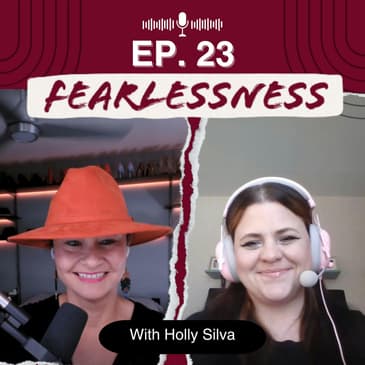
🎙️ Welcome to today's episode of the Fearlessness Podcast with your host, Libby DeLucien!
Dive into the dynamics of entrepreneurship with a friend on this enlightening episode with our guest Holly Silva, co-owner of Chores and More. Explore the crucial role of aligned core values, the challenge of role clarity, and the power of effective communication in business partnerships.
This discussion is packed with actionable insights for entrepreneurs navigating partnerships, emphasizing the importance of understanding and respecting each other's strengths and boundaries to drive business success.
Elevate your recruiting game with WootRecruit 📈
➡️ https://wootrecruit.com/
Comment 💬
Got any questions? Write a comment below to chat.
Stream now on:
➡️ Spotify: https://open.spotify.com/show/42nQV6HEAFByk4dPjDlIZl?si=ae6da9cf524c457c
➡️ Apple Podcast: https://podcasts.apple.com/us/podcast/fearlessness/id1692617883
Let's connect! 👋
➡️ Instagram: https://www.instagram.com/libbydelucien/
➡️ Facebook: https://web.facebook.com/LibbyDeLucien
➡️ Twitter: https://twitter.com/libbydelucien
Follow Holly on:
➡️ LinkedIn: https://www.linkedin.com/in/hollyannesilva/
➡️ Facebook: https://www.facebook.com/hollyannesilva
Powered by the WRKdefined Podcast Network.
[00:00:00] Hey everybody, it is Libby with Fearlessness. What is Fearlessness? It's the underlying grit that empowers us as entrepreneurs to keep forging ahead.
[00:00:08] Even when Hope seems distant, it's the courage to walk through those fires of hell knowing that will come out better and stronger on the other side.
[00:00:18] Stay tuned and learn how to get Fearlessness. Again, I'm Libby DeLucien, you're host and we have a very special guest today. Holly, why don't you go ahead and introduce yourself.
[00:00:29] My name is Holly Silva and I actually co-own a cleaning business on Long Island with my best friend. It is called Chores and more.
[00:00:36] I'm also a fellow podcaster, I'm very multi passionate and we've been running our business for six years and it did take a fearlessness or actually just maybe doing it with fear.
[00:00:48] I'm really excited to be here, Libby. Thank you so much for having me on.
[00:00:54] Awesome, we're happy to have you and so I'm excited to talk about, you know, on the podcast, the struggle is especially doing it with a friend.
[00:01:03] You know, the whole five year marker like businesses aren't even profitable or don't make it through five years.
[00:01:10] Like the percentage of businesses, so you're a fairly new business.
[00:01:14] In business standards, so we can talk about some of those things.
[00:01:19] But, you know, let's just dive in and talk about like what are what is probably like the biggest learning lesson that you've learned when it comes to starting a business with a friend.
[00:01:30] Oh, that's your friend may watch this.
[00:01:34] Yeah, well, I'm very blessed in that my friend and I we tend to be on the same page majority of the time.
[00:01:42] We both get like our productive in the same way. We work well under deadlines. Sometimes it's a little bit of a problem though because
[00:01:50] Our quick start mode is always activated and we're pretty much lack almost all the time on doing like research to see if something is actually like a good idea. I'm going to work because we're both visionaries.
[00:02:03] But it's been, it's been good. The thing that is really important to know when you are running a business with somebody.
[00:02:11] Is you really have to know the person's intentions. You have to make sure that you share the same core values.
[00:02:16] That is super important if you don't you will not succeed running a business with somebody else.
[00:02:21] And I think that the other important thing is having open communication with each other even if you don't agree.
[00:02:28] It really happens between us. Again, I'm very lucky. But when we don't agree on something we are quick to say it out loud. There's no passive aggressiveness.
[00:02:38] There's no resentment or anything like that. We just hash it out. We talk it through. We figure out why we're not agreeing and how we can get on the same page and move forward.
[00:02:48] I think that is the most important thing and communication is hard. It's honestly something you have to kind of learn. It doesn't come naturally.
[00:02:55] And, you know, and I feel like as women we're quick to withdraw instead of just being open.
[00:03:03] Maybe it's because people perceive us as being mean or whatever it is.
[00:03:07] I disagree with that wholeheartedly. I believe in just being open talking about it, whether you agree or disagree and be willing to also have an open mind to your business partners idea.
[00:03:20] Yeah, I think that's honestly the biggest learning lesson for us.
[00:03:25] Starting with a partner, I think you had mentioned something that like really hits home for me and that's aligning with the core values.
[00:03:35] It's huge. And it's hard to work with someone if you are both visionaries, if you're both direct.
[00:03:42] I think one thing I've learned in business and you could agree to disagree or both agree but like there can only be one person in charge even if they're both visionaries.
[00:03:52] Like one person running the shots and maybe that other visionary goes off in place and like marketing or sales or and or ops.
[00:04:02] But it's it's like when there's two that are both leading equally, it can become very complicated.
[00:04:12] It does and I agree with this 100% and one of the big things that we had to do that we did five years in so this took a long time and it was extremely helpful for us is we had to establish role clarity and we needed to know where our lanes were.
[00:04:31] What we were spearheading what we were leading a business has so many different components and for the first five years, we had our hands in every single one together.
[00:04:42] And it did not work at all. So once we broke it down, you know, my partners in charge of, for example sales. She's mostly in charge of hiring.
[00:04:52] I however take care of the marketing, the social media, the schedule.
[00:04:58] And so when I'm doing the schedule, she has no idea what I'm really doing to be honest and when she's making a sale, I don't even listen in on her calls.
[00:05:06] And being separate but being able to come together on bigger projects is kind of what really helped us in terms of like because we both couldn't lead all the same things it was not working at all.
[00:05:21] And so it's absolutely one great exercise that helped me through this role is the book called Fivid Vision.
[00:05:31] It's a great book, it's a great exercise.
[00:05:35] I always look up top because my books are above me.
[00:05:38] It's not up there, it must have it in my other office.
[00:05:41] The vivid vision exercise in the book, Cameron Harold, he wrote second and command as well. It's an amazing book if you're looking for like a second in command.
[00:05:54] But he wrote the vision and that really helped me and my partner who is now my ex partner really aligned on our vision.
[00:06:03] Because we wanted the same thing at the end but journey of how we got there were completely different.
[00:06:09] Yeah, I have that book for sure.
[00:06:13] I have it but I'm happy.
[00:06:15] I got pissed off, I got happy, I got sad, I got emotional, it was a great book.
[00:06:21] And then another exercise I really want to encourage our listeners to do.
[00:06:25] This will help you if you have a partner or this helps you just in life is what are your personal core values like personal values.
[00:06:34] One good exercise is to then ask texts like three of your friends.
[00:06:39] Or just a group of friends to say, how would you describe me using three words?
[00:06:46] And then see if they are resembled within those core values, then you know you're not living within those values.
[00:06:52] It's kind of like a little test for yourself.
[00:06:55] Because I think a business we can get distracted, we can kind of divert from the vision, shiny objects in drum,
[00:07:04] is really, really common.
[00:07:07] And so I think you know business with a partner is a whole,
[00:07:10] another type of business but also level of communication and transparency.
[00:07:16] Yeah, I 100% agree and go back to the core values.
[00:07:21] I love that you mentioned asking people to describe you.
[00:07:24] I was just talking to another colleague about this.
[00:07:27] You think three words though, only three words?
[00:07:30] Three.
[00:07:31] I'm not a client.
[00:07:32] It's a little scary but I'm confident that both of us are living within our core values and you know,
[00:07:38] we came up with our business core values together and we we walk that same line,
[00:07:43] you know, we believe strongly in having an impact on the community and being kind and giving and all these things.
[00:07:52] And we both really find it important.
[00:07:56] And so yes, we do get the, we both get the shiny objects and drove sometimes.
[00:08:00] And let's be real like money drives us to a degree.
[00:08:05] But we have deeper wise than that together.
[00:08:08] And I think it really does help us get along and see the end vision of like where we want to be and where we want to go.
[00:08:18] And it keeps us following the same journey which is, which is good.
[00:08:25] You know, that being said on your journey.
[00:08:30] You know, during your journey could you share an experience that you're probably the most proud of while running this company like in the last six years.
[00:08:39] What would you say that, you know, that that experience is throughout that journey of the six years?
[00:08:46] That's a really tough one.
[00:08:49] There's a few for sure.
[00:08:52] I'm one of those people who you're still believe that I knew more than everybody else.
[00:08:58] And I used to think that I was the best at everything I did.
[00:09:03] And there came a point back in 2022 where I approached my partner and I said, I don't know what the hell I'm doing anymore.
[00:09:09] I just I don't know what I'm doing. I can't do this anymore. I can't like I need help we need help and we decided to join a coaching program and actually.
[00:09:21] Giving up the control of my business and like what I was doing.
[00:09:27] And realizing that I didn't know everything was probably the biggest like turning point in the business and it sounds crazy to say I'm proud of admitting that I don't know everything.
[00:09:40] But for me, it was really important.
[00:09:43] It was really important to the growth of our business and even when we joined our coaching program, I still thought I could do it better.
[00:09:50] I still tried to like put my own hands in it and it didn't work. Yes, I tried to get somebody's giving you the answer and you're like, oh, but let me change it.
[00:10:00] Yep. So that was the biggest turning point of our business.
[00:10:04] And now a big thing that I actually discussed with my coach earlier today is that I am being I'm more emotionally regulated and so is my business partner.
[00:10:18] We used to get very emotional. We still do sometimes it's we're not perfect.
[00:10:22] But we are able to put out a fire in our business and do it with mental clarity and stay emotionally regulated, not let it ruin the whole day, not let it ruin the trajectory of our week.
[00:10:37] And I just discussed this day and it's such a big thing like I pat myself on the back for this one because it has been and again, I'm still not perfect.
[00:10:47] But the improvement in the over the six years is insane. It's insane.
[00:10:53] I would I have to agree. I saw I was running late to this podcast and I just said, oh my gosh, I'm running late. I'm so sorry.
[00:10:58] I was dealing with an employee issue and it wasn't employee complaint. And I said, oh my gosh, like the complaint was like, I don't even know what it was because it was in circles.
[00:11:13] But the old version of me and don't get me wrong. I kind of did want to lose it at times during that meeting just now.
[00:11:20] But the old me would have just lost it. I mean, like,
[00:11:25] During the meeting now, it's like you've matured emotionally to where you can handle some things of them calling you like you don't listen to nobody and I'm like, how if I'm in every meeting and I'm so active and I'm trying so hard am I coming off this way.
[00:11:40] I just want to scream like, oh, but the new version of me, I'm like, oh thank you for the feedback.
[00:11:48] You're like, you're dying inside.
[00:11:53] It's true. It's true.
[00:11:55] When you can you have to the important thing is to take it for me anyway. The important thing is even if I'm like internally screaming at something I always try to figure out like what can I learn? What can I learn from whatever happened?
[00:12:12] Like what can I take away from this and how can I use what happened to make me a better leader? And it's leading is one of my passions. It's something I love doing. I love having a team and I love being their leader and encouraging them and inspiring them and like pushing them to do better and extract more of themselves. Like I love all that live for it.
[00:12:31] Sometimes though, and employee does something to put it bluntly just piss you off and it's quick. It's easy to just be angry and be frustrated and
[00:12:43] put it out there. You know, put that energy out there and yeah. But for me it's and it's something I have to consciously do is like reel it in 100%.
[00:12:53] You know, and just say, okay, I'm frustrated like acknowledge the emotion that you're feeling of course, you know, you don't want to like bottle neck yourself and bury everything.
[00:13:03] But say, okay, how could I prevent this or what could I have done differently or what can I do differently going forward? Like things like that and just really like think everything through deeply.
[00:13:14] Absolutely.
[00:13:16] You know, and you're journey over the last six years, what would you say is the most challenging, you know, besides the employee things that we were just talking about.
[00:13:25] And the struggles and those employee things are mainly like me, like, and I think it's because we care so much and we're trying so hard and we don't know what we're doing and we're figuring out as we go.
[00:13:35] And we're going to make mistakes and when they bring us those mistakes that we've made.
[00:13:40] It kind of hurts more than it upsets. And so we act from hurt versus that emotional place.
[00:13:48] But in your journey over the last six years, what would you say is the thing that was the most challenging that you face so far?
[00:13:55] This is still very much a big challenge for me if I'm being totally honest and it is setting boundaries in my life. And that is with employees and that is also with my clients.
[00:14:06] When I first started my business, you know, it was me and my friend cleaning houses and so it was easy to let people take advantage.
[00:14:15] It was easy to say yes to everything, even if it killed us, even if it hurt, you know, even if like we couldn't there was no way. We still figured out like a way to say yes.
[00:14:27] And there are a lot of boundaries that we are trying to set now as leaders who thought when we first started hiring that being a friend was more important than being a leader.
[00:14:40] And we are trying to set that boundary of like how can we lead without being mean or being condescending or being like a dictator, right?
[00:14:49] And then you know with the clients like how can we say no to something just an unreasonable ask and set a boundary without seeming like we don't care about them or we don't want to help.
[00:15:01] You know what I'm saying? So I feel like boundaries in general in my entire life are the hardest challenge.
[00:15:08] And everywhere everywhere in my life it's a hard challenge.
[00:15:11] So one great thing that I've learned over the years is because I come from sports play basketball for years, coached basketball.
[00:15:20] And this is a great analogy and maybe it will help you and your partner is that yes when we are small we want them to be family.
[00:15:28] But at the same time like I have family that I'm like we're blood but other than that we're good.
[00:15:36] And then we have family that we're great like we love them but we can't choose our family.
[00:15:40] But if you look at it as like you want to build a team you want to be a part of a team with that sports analogy because teams have so much power because you can choose who's on your team.
[00:15:53] Yeah, I can't really choose who's in your family.
[00:15:56] Like I mean you can just own your family but they're still your family.
[00:15:59] But from the sports analogy like a team you look at the way basketball teams and football teams are made and how close they are and how much time they spend and now they lift up each other.
[00:16:07] But also you have to be accountable to be on that team because if you're not a great player you won't be pit.
[00:16:14] So using that sports analogy there's a ton of great books on how to build a team but if you take that philosophy for business it's great because you can have that warm feeling like the feeling of support.
[00:16:29] But it creates that boundary of like the family versus the team boundary.
[00:16:34] I yes, and I'm working on this I'm actually reading radical candor right now.
[00:16:39] Oh that's a good book.
[00:16:41] Yeah and it's definitely helping me figure out how to like gain respect give respect and do it in a way where we can be just like very real and raw with each other but not in a way that like.
[00:16:56] Is fake or too much or like overstepping and things like that or like just being rude you know it's definitely helping me like with my even just like down to like my verbiage like even like just very specific things that I say or the way I see them.
[00:17:12] It's so hard though because like to think every word that's coming out of your mouth is like.
[00:17:19] It's a struggle.
[00:17:21] Yes absolutely it is a huge struggle like and really overcoming that is so hard and then it just takes practice.
[00:17:31] And to be honest are age I think that's why you see a lot of great leaders this is so funny or somewhat older.
[00:17:40] And it's because it comes with a maturity the mental maturity the wisdom the practice that we it's really almost impossible to achieve without age being involved.
[00:17:55] Yeah I feel that and sometimes I feel like I get imposter syndrome myself because I have employees who are older and who have more like life experience than me and things like that and I'm like.
[00:18:09] Am I am I a fraud.
[00:18:11] Oh, that every day I get that all the time because you know we recruit is a software so I own we recruit I own organize it organized service company.
[00:18:22] Software is a it's a SaaS and and I've never owned a SaaS like we built this from the ground up and I have no clue at what I'm doing.
[00:18:32] Most of the time I find that I believe recruit is amazing I'm a fellow customer but it's like I have no clue sometimes what I'm doing or in the decisions we make and then sometimes they get questioned or they're like oh well.
[00:18:49] Why are we doing it like that I'm like I don't know because I want to.
[00:18:53] I do pay a lot of money for coaching and consulting to help me in the SaaS company so that we have some direction but I have that imposter syndrome like all the time.
[00:19:05] We had someone on our podcast a couple weeks ago and she was great and she talked about she calls it the little girl syndrome and I'm like what is that and I thought it was like the best description.
[00:19:21] I probably ever heard of when it comes to like the little girl syndrome her name was Karina so she's all one of our past episodes but she goes yeah sometimes I wake up and I look in the mirror and I get dressed.
[00:19:31] She owns a pretty successful like title company and she goes what am I like I don't know what I'm doing I'm just a little girl like I'm just like how did I get here I have employees and I'm responsible for feeding them and they're and their families and.
[00:19:49] She's like she goes I call it the little girl syndrome that is the best analogy I've ever heard of in Poster syndrome as far as women and business go because I think we have a different mental struggle when it comes to men we lack.
[00:20:03] That natural confidence because we're more nurturing and caregivers.
[00:20:09] And so I feel like it is a real struggle especially for women in business.
[00:20:15] Yeah I relate to that very hard very very hard the little girl syndrome I feel that and I like that too like that analogy that's very really.
[00:20:23] I use it with my husband all the time just a little girl like she said it with like like a little girl and it was hilarious I it was great that is great.
[00:20:31] So let's get into out of the little girl syndrome into managing risk so as a business owner we have risk all the time.
[00:20:41] But how do you manage your balance risk versus reward when making big decisions like when you're making a big decision how do you manage like the risk versus what the outcome is going to like the world the reward of the outcome.
[00:20:57] Libby I don't think you want to talk to me about this and I'm going to say why.
[00:21:01] I am one of those people so I don't know if you've ever heard of or you probably have heard of it I don't know if anybody any of your listeners know about the cold be assessment.
[00:21:12] I took the cold be assessment and I scored almost like I almost to the top on the quick start right and I was pretty low on everything else and what I learned that this means is that I don't do a lot of research before making a decision.
[00:21:30] If I see something in my brain and I couldn't like dream it.
[00:21:34] I want to implement it I want to do it and the weighing risk.
[00:21:39] It doesn't come naturally to me and I usually need to like actually talk to people who are a little bit better at this and like figuring out like is this a good idea.
[00:21:50] My partner actually keeps me and check a lot of the time with this she says okay wait let's let's dial it back.
[00:21:58] And let's like make some bullet points like let's make some list let's figure out.
[00:22:03] Pro and Congress yes we're all about the pro conseless here and so she has to keep me and check our field manager is even more like.
[00:22:13] Very organized and she's not the quick start type so we often approach her collectively to say what do you think about this and sometimes she's very very like.
[00:22:24] She's very honest and she'll be like terrible idea don't do it are you crazy now.
[00:22:29] She's one of those people but a lot of our big decisions actually did come from.
[00:22:36] And I mean just and Laura my partner saying let's just go for it.
[00:22:40] Let's do it and sometimes it doesn't work but a lot of the times it it does we feel pretty confident when we're going into a new project or some kind of decision that we make.
[00:22:53] So I don't know I don't know if this is like a good topic to talk to me about because I don't really weigh risk as much as I probably should.
[00:23:00] But I think it's a great topic because I have the same so I scored in transition with Colby I think it's called I have a five star star three so two of mine came out in conclusive I broke I break most assessments and and most of them say it's oh it's because you're under stress or you're going through like change or I'm like when you're not under stress.
[00:23:24] So with me I have the same issue as I'm pretty fast at making decisions but that being said I have like a little decision making framework so that's why I thought your answer was great because you have a framework whether it's documented or not you have a process that you go through so you're not impulsive or operating from emotion which most entrepreneurs do.
[00:23:46] I always sleep on it.
[00:23:48] But I always talk to someone about it not necessarily because I want their feedback I do but it's saying it out loud processes it differently in your brain.
[00:24:01] When you say that loud then you start to think about it in a different way versus thinking it to yourself and so I always talk through it with either it's gonna sound funny my assistant Marilyn or my husband Chris we talk through it.
[00:24:14] And it's just to help me talk through it sometimes I love their feedback sometimes I don't take it at all.
[00:24:20] And I think just having that framework so you're not impulsive operating from emotion but at the same time one of the greatest gifts that someone could have is making quick decisive.
[00:24:35] Decisions.
[00:24:38] Because it's when we're slow to decide it slows down the business and it stops innovation and creativity and it becomes paralyzing.
[00:24:47] Yeah, that's kind of I love the way you put it though that saying it out loud does it sounds different that it doesn't your head and I always talk to somebody before I do anything.
[00:25:00] But I act quickly on the thought because I will first of all according to my call be assessment and this has proven true in real life too.
[00:25:09] I operate better with urgency like if I have a deadline or if it feels urgent it just I do it better I don't know why it's okay my brain works.
[00:25:20] But I will not move forward with something unless I have some kind of either validation whether it's from myself like okay this sounds good putting it like out loud putting it on paper whatever or from somebody else and I have a lot of faith in the people around me.
[00:25:38] I really don't surround myself with the people who would steer me wrong I really don't and I'm really I try so hard to like protect myself and like keep a tight knit circle.
[00:25:49] But I will not move forward with an idea if it doesn't sound good to me at the end of the day and usually they have to help me like see it myself or you know whatever the case is so.
[00:26:01] I think that that's a good way to thank you for saying that honestly because I always feel like oh, like I'm doing something crazy I'm crazy.
[00:26:09] But breaking it down actually is very helpful so thank you for that awesome you're welcome.
[00:26:16] Going through this experience what would you say is the most valuable lesson that you have learned.
[00:26:26] Oh, that's a tough one that's a really tough one the most valuable lesson I've learned so put me on that comes to mind.
[00:26:34] Well, this kind of just this.
[00:26:38] I have a I have two of them actually I have two of them and this kind of goes back to the setting boundaries thing which is like wait it something that we heavily on me a lot and it's been like at the forefront of my brain.
[00:26:51] Is the importance of just saying no and it sounds like a cliche I know it does but.
[00:26:58] I encourage everybody to get comfortable with saying no and protecting yourself and protecting your business and protecting your employees right.
[00:27:10] And then the other really important thing is so valuable to me is the importance of having procedures and processes in place in your business.
[00:27:23] Which we we never had for like five years like Lauren I were just flying by the seat of our pants doing whatever we didn't even have a CRM until.
[00:27:31] A year and a half ago I think like way too late into it but just to have everything organized and like don't think that getting yourself organized is an important it probably doesn't feel important to like.
[00:27:46] Like that entry and things like that they probably don't feel important keeping notes keeping lists like things like that it's so important and to also know.
[00:27:55] Like what you're going to do in certain circumstances like when things happen or you know as your business grows like what are things that you like what procedures.
[00:28:05] Are you going to have in place for your business and we're still working on that this is not something we've mastered yet but it's really important because otherwise I will forget what I'm supposed to be doing every single day and I just won't know.
[00:28:17] Yeah, you know there.
[00:28:22] So for me, you know organizing process and procedures or the things that I love to do.
[00:28:29] And if you don't for our listeners like if you don't have them and you start to incorporate them you could get some pushback from your employees and staff and leadership because they're used to.
[00:28:40] Like not having accountability like they're used to doing it their way.
[00:28:44] And so we're going we're experiencing some of that and some of our companies because we're either changing the documentation or it wasn't documented well after we looked at it.
[00:28:54] And sometimes people don't like change.
[00:28:57] They just don't like change whether it's good or bad like as humans we love consistency but we hate change.
[00:29:04] But the process would bring consistency.
[00:29:07] But to incorporate that process first must create change.
[00:29:12] So you're going to get pushback from people so don't let the pushback.
[00:29:17] Stop you from doing it don't let it slow you down don't let you think it's not important like when someone says oh why do I have to follow this or I already know how to do the job.
[00:29:26] Because it's going to create consistency in that role and scalability for your company in the future.
[00:29:33] But it's so so important to have things documented that's my jam like don't even get me started.
[00:29:41] So I love that topic.
[00:29:45] So when it comes to staying motivated.
[00:29:51] Like innovative.
[00:29:53] How do you how do you stay motivated to just continually stay in it to continually innovate.
[00:30:03] This is this is a hard this is a hard question this is also something I struggle with.
[00:30:08] But I've had a lot of conversations with a lot of people and there are a few things that are important to me and one of them hugely is having a work life balance it is huge.
[00:30:20] And you know the saying you can pour from an empty cup when I am working all day every day my cup is completely empty and taking time with my family for self care self care is so so important.
[00:30:36] And it's different for everybody. It could be something simple like going for a run in the morning or could be something bigger like going on a vacation like there are different kinds of self care that work for everybody.
[00:30:48] It could be a simple as putting on makeup in the morning that's actually a very big form of self care for me.
[00:30:54] Taking time to practice self care taking time for yourself taking time away from your business and separating it.
[00:31:02] Is huge for me if I work all the time I experienced major burnout and I will spiral and I've done it before and then you start to resent your business and you start to resent your job and you get frustrated.
[00:31:16] And I've been there so the biggest way for me to stay motivated is actually to not work all the time.
[00:31:24] It sounds it sounds so counter like intuitive but it's really important.
[00:31:30] So you're funny because it is very important.
[00:31:34] I love that and so we have to have those daily rituals whatever you need to be balanced but I'm reading the 8020 rule it's an old book it's a classic I'm re-reading it but it's funny because I want to touch on a couple things he talked about in the book because you just said what keeps me motivated is not working.
[00:31:57] So he talks about there's four types of people in business right there's the lazy and stupid there's the hard working in intelligent there's the hard working but stupid and then there's the intelligent lazy.
[00:32:14] And the book it talks about how all of them kind of have their place in where each person goes but it's the intelligent and lazy combination that are the most successful people.
[00:32:24] I think they spoke.
[00:32:28] And he uses the US military to compare like sergeants versus generals versus like where they are and they use each one of those explanations to kind of put them in a bucket.
[00:32:39] But it's funny because he uses Bill Gates that he's intelligent but lazy why because he doesn't worry about his clothes.
[00:32:46] He doesn't care about certain things he's intelligent and very good at a very specific thing and that's it but he's lazy like in other areas of life that people will call him like lazy or boring.
[00:33:01] But he also works very little because he needs that to then work very deeply at the thing he's good at.
[00:33:09] It's that specialized role but I love the the the category so like to be more successful I have to be lazyer.
[00:33:17] It's joke but it's it's kind of true that like you can't like you're not you're gonna burn out if you're working you know if you're giving your business like 80 to 100 hours a week you're just not your.
[00:33:30] You can't you physically and mentally and emotionally cannot so you do need to save your like.
[00:33:38] Brain power and and what you're and you know like don't don't try to do everything don't do it all the time.
[00:33:46] Delegation is like so big for me right now you know.
[00:33:50] And and the reason to the lazy part comes in he says it's because when we've had the best times in our life the best ideas it's because our mind was clear.
[00:34:03] And you cannot come to those.
[00:34:07] Like thoughts if you're mind is full so it needs to be lazy like when you're on vacation when you're taking a walk like you're being lazy so it allows the brain.
[00:34:17] To innovate and to be creative and think of new thoughts and ideas.
[00:34:23] And so you have to be lazy to get to that level and it's just so weird because lazy is such a negative word in like.
[00:34:31] To us.
[00:34:33] I yeah I feel I find that and I do this sometimes I do this more than I'd like to admit I beat myself up when I'm not constantly like doing something that someone would consider productive you know something on the business working on the website working on my personal brand you know all these things but.
[00:34:51] It is so important to sometimes just take time go out to dinner with a loved one go on that walk go you know take a long bath watch of that flick show like you know sometimes it does mean that you just need to like relax and turn it off take time to meditate and things like that.
[00:35:07] But it's easy for people and I'm sure you're somebody listening or maybe like no like I'm not no I'm going to work forever and just you know I need to be productive 24 seven.
[00:35:18] But you know sometimes taking time off is productive for you and for your brain and it leads to like better productivity in the long run and your business and honestly in any project that you're doing.
[00:35:32] So I love it.
[00:35:34] Okay so our last question is through your journey.
[00:35:39] What would you have done differently knowing what you know now?
[00:35:44] This is this is a easy one for sure.
[00:35:46] I would have definitely sought out I would have found a mentor like way earlier way earlier trying to do it on my own and we started our business with no money.
[00:35:57] No business education.
[00:35:58] I mean we both have bachelor's degrees but mine's a journalism person acting I mean way out of left field to do this.
[00:36:05] But we thought we could we were like oh we got that like cleaning a cleaning business that's easy you know we got it's easy it's cheap.
[00:36:14] Right like oh Jo.
[00:36:16] But to just seek out help earlier on would have been though number one thing I would have did differently and I think I would have avoided a lot of the chaos that we endured and like I could.
[00:36:27] I would have to be a whole other podcast episode if you all wanted the T on that because there was just a lot of chaos in our company and.
[00:36:35] I cringe thinking about all the stuff we've been through and we let people do to us and I feel like a mentor early on would have really just saved us from all that so.
[00:36:45] To have a mentor even the best mentors have mentors.
[00:36:48] So 100% my mentors have mentors and my goal is to have their mentors mentor me because I'm like oh they must be really expensive if that's.
[00:36:56] There my mentors mentor.
[00:36:59] So 100% so Holly I want to thank you so much for being a guest on the fuel assistance podcast.
[00:37:06] What can.
[00:37:08] So what's next for you and working our listeners slash viewers find you will make sure to put these in the show notes as well.
[00:37:17] Well we are definitely working on our our cleaning company brand we're just at Chores and more we're on TikTok we are on Instagram as well.
[00:37:25] I also have my personal brand if you want to just follow my personal journey it's at planning and polish I love to talk about paper planning but I'm also you know obsessed with beauty and things like that so I like to have fun with it.
[00:37:37] So you can find me over there and I'm at Holly and silver on based on as well and you can just see a lot more of us like a lot more.
[00:37:45] Educational content.
[00:37:49] Both cleaning related business on a related you can just find a lot of really good stuff in the works coming and I'm really excited so I hope to be able to connect with some of you guys all your listeners.
[00:37:58] I'm really excited thank you so much for having me on today.
[00:38:02] Thank you for being a guest I want to thank you so much and thank our listeners as well if you want to find more episodes of the fearlessness podcast you can just visit the fearlessness dot com also want to thank our sponsor what we're crew who helps sponsor.
[00:38:17] The podcast that way we can bring you guys new episodes every single week so that is a wrap guys into the heart of fearlessness remember every step we take is a move towards our own strength and courage keep walking through those fires of hell.
[00:38:31] Because on the other side of you lies a version of yourself that's unstoppable.
[00:38:35] I'm Libby reminding you to embrace your fearlessness until next time stay brave, stay bold and keep pushing forward.
Sponsors
