
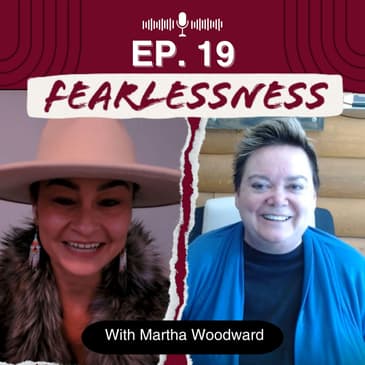
🎙️ Welcome to today's episode of the Fearlessness Podcast with your host, Libby DeLucien!
In this episode, I’m thrilled to chat with Martha Woodward, an entrepreneur who transitioned from healthcare to launching her own successful cleaning business. Join us as we dive into the highs and lows of entrepreneurship, the realities of managing a franchise, and the personal growth that comes from overcoming business challenges.
We'll cover Martha’s journey from healthcare professional to business owner. The lessons learned from starting a business in a small town. Insights on leadership skills and setting the right boundaries. The evolution of franchise perceptions in the business world. Practical tips on maintaining quality and stability in your service.
🔥 Martha shares her profound experiences and the pivotal moments that shaped her approach to business and leadership. Whether you’re a budding entrepreneur or a seasoned business owner, there’s plenty of wisdom and practical advice to take away.
👀 Stay Tuned for how to handle leadership challenges and employee dynamics. Strategies for ensuring consistent quality in your services.
Martha's take on why not all franchises are created equal.
📢 Don't forget to like, subscribe, and hit the bell icon to stay updated with our latest episodes!
Elevate your recruiting game with WootRecruit 📈
➡️ https://wootrecruit.com/
Comment 💬
Got any questions? Write a comment below to chat.
Stream now on:
➡️ Spotify: https://open.spotify.com/show/42nQV6HEAFByk4dPjDlIZl?si=ae6da9cf524c457c
➡️ Apple Podcast: https://podcasts.apple.com/us/podcast/fearlessness/id1692617883
Let's connect! 👋
➡️ Instagram: https://www.instagram.com/libbydelucien/
➡️ Facebook: https://web.facebook.com/LibbyDeLucien
➡️ Twitter: https://twitter.com/libbydelucien
Follow Martha on:
➡️ LinkedIn: https://www.linkedin.com/in/martha-lindley-woodward/
Learn more about QDS on
➡️ https://qualitydrivensoftware.com/
Powered by the WRKdefined Podcast Network.
[00:00:00] I lost my screen. Okay, so we are live. Hey everybody, it's Libby with Fearlessness. What is
[00:00:06] Fearlessness? Well, it's that underlying grit that empowers us entrepreneurs to keep forging ahead.
[00:00:12] Even when hope seems distant and far away, it's the courage to walk through those fires of hell
[00:00:18] knowing that we'll come out stronger and better on the other side. Stay tuned and learn how
[00:00:24] to get Fearlessness. I'm your host Libby DeLucien and I have a very special guest. I say that
[00:00:32] every time, but you are a very special guest, Martha Woodroad. Why don't you introduce yourself
[00:00:39] and tell us a little bit about what you do. Okay, well my name is Martha Woodward and I
[00:00:47] I started in healthcare. I worked in healthcare for about 20 years. I got tired of the bureaucracy
[00:00:55] in healthcare and I had had as a consumer, I had had Marymaids clean my house and then I moved
[00:01:06] and there was nobody but independent and long story short, got tired of bureaucracy, thought
[00:01:13] I'm going to open my own business and I opened a cleaning business which I knew zero about cleaning.
[00:01:22] I just knew that I loved walking into a clean house. So and I really was impressed with the
[00:01:31] systems that Marymaid used, you know even as a consumer and not at all thinking about
[00:01:39] thinking about that industry, I did notice the different things that they did and I know they're
[00:01:47] kind of now that I'm in the cleaning industry or was, I know that is franchises aren't necessarily
[00:01:56] thought of well but I had a great experience and I think it just depends on who's running them.
[00:02:04] But anyway, so I opened my own cleaning business. I live in a town of 8,000 people so
[00:02:12] the town was where you started? Yes, it was we've actually shrunk a little so
[00:02:20] it might have been 10,000 back when I started and all I did but you know what's crazy is
[00:02:28] we ran two teams here, two teams of three at the time and so yeah I feel like we kind of capitalized on
[00:02:40] who was eligible to buy our services. We capitalized on that but it was you know it was kind of a
[00:02:49] safety net because in a way I mean you know they were my friends they were people that I'd
[00:02:56] met through the chamber from my hospital days and so I cut my teeth on local friends and now I'll just
[00:03:07] I go back and say I'm so sorry you know because at that point in time I did not know what I was
[00:03:16] doing in any way as far as leadership yeah so we expanded to a town that was 50 miles away.
[00:03:26] I eventually shut down so I didn't have to operate in two states. I shut down the little one and
[00:03:36] ended up with one branch that was 50 miles away and then another one that was about 100 miles away
[00:03:44] and you know that's where I grew up so I was familiar and yeah so I had to learn early early on
[00:03:54] how to not be there every minute of the day but it took a while. Yeah and then so now what do you do?
[00:04:03] Yeah now I sit at my desk at my high low table isn't working anymore. I'm so bad my stand-up desk quit
[00:04:14] and I do behind the scenes like working with quality driven. I own that and I work with the
[00:04:24] development team and support and plan events we were just talking about that and just working on
[00:04:34] where we're going in the future. Awesome so we love QDS by the way we are user organized at my service
[00:04:41] company as a user and it's funny how we always talk about our cleaning company we forget about
[00:04:46] oh yeah I do this by the way too. So I find it really interesting how yes sometimes
[00:04:55] franchise can be the dirty word within like owner operator businesses or even small to medium-sized
[00:05:04] service-based businesses because we compete against those franchises but I don't think
[00:05:08] all like I owning wood recruit we've been doing recruiting for franchises
[00:05:14] and you see some really well fair ran franchises versus like you see some really not great ones
[00:05:21] that take advantage of the franchisees so I really do think they have evolved and there's
[00:05:26] some great franchises out there that people could take advantage of you know versus they're
[00:05:33] all bad it's not all a dirty word. Right I want to break into some questions and I love your story
[00:05:42] about opening one location in a small town closing it down opening 100 miles away
[00:05:50] I'm doing kind of the same thing I went back to my hometown and we're opening
[00:05:54] a second location in that town because I have that support to try it as far as people help me
[00:06:00] launch it to do interviews to hire um I would say through that journey what do you think was your
[00:06:08] your biggest lesson when it comes to even just you said you didn't even have the leadership skills
[00:06:15] what was what is the story that comes to like one of your biggest lessons and and having to learn
[00:06:20] that the hard way. You know and it's funny because I thought I did I was supervising a department
[00:06:28] that you know we had 30 employees and so I thought I had those skills and I had a masters in business so
[00:06:39] I thought I had those skills but what I didn't realize and appreciate is that the the people
[00:06:49] that I was used to leading um and this is not to degrade or diminish the people that we hire in
[00:06:59] the cleaning business at all but the people I was hiring you know were recruited sometimes from
[00:07:06] other states and they came in with a professional degree meaning that they had really already shown
[00:07:14] that they were motivated and self-directed and all those things and so I really you know I didn't
[00:07:22] appreciate that enough so when I opened the cleaning business I wanted to be a flexible and fair boss
[00:07:34] and I did go in the cleaning business thinking I was going to give the employees an awesome
[00:07:42] opportunity that I was hoping to be like their best boss they'd ever had well
[00:07:50] what I did not realize is that you can't come in with very few boundaries and just allow people
[00:08:01] to make great decisions because uh that did not happen that did not happen and it really took me
[00:08:10] I had to say it took me about three years to figure out that the problem was absolutely me
[00:08:22] um and I tell the story of it was the week of Thanksgiving or maybe the week before but busy
[00:08:31] busy time I had an ill parent I was out of the office and I get a phone call from one of my
[00:08:40] employees and I still refer to her in this day she was kind of my bully employee she was running the
[00:08:46] show but I was letting her and I answered the phone and she starts telling me when she can and
[00:08:56] can't work that week of Thanksgiving now we're talking you know it's a long time ago but it was
[00:09:04] like we're talking just a few days in the future for Thanksgiving week and I remember my mouth like
[00:09:12] falling open on the who the hell is in charge here and then I had to laugh and think well not
[00:09:20] you you know and that honestly I can still remember her name I can remember exactly where it was
[00:09:28] and that honestly was the draw the line in the sand like I'm walking into my parents house and I was
[00:09:37] like you got to get it together and uh from that point forward I really was a changed person
[00:09:45] and so I you got it I gotta thank that girl and um is she really you know when somebody pushes you far
[00:09:55] enough then most of the time there's a point your breaking point and then that's when you're
[00:10:03] not going to take it anymore and that's what I had to go through so it's a great lesson
[00:10:11] yeah it was a it was a really good lesson um and you know I I just saw this topic come up literally
[00:10:18] today in Facebook like someone keeps calling out calling out and what do I do what do I do
[00:10:25] yeah and it's it's kind of like one of those things where I think you got to kind of get
[00:10:29] pushed around a little bit as the business owner uh and then you know I I answered her
[00:10:35] in Facebook and I was kind of like you know this is not so much a culture thing I mean it is
[00:10:40] but I'm talking like to talk to yourself through it why it's like you have to ask yourself
[00:10:47] why am I letting this happen right why am I not doing anything about it yeah and who's
[00:10:53] running the business currently like just to stand back and ask yourself those things those are
[00:10:58] more of a leadership like why am I letting this happen right and you know I've talked to lots of
[00:11:05] people and a lot of people have this exact problem and it's there's a lot of fear you know there's
[00:11:16] just a ton of fear because as a business owner you know you need people to do the numbers and
[00:11:26] so there's just so much fear behind letting people go and having that empty slot and then of course
[00:11:34] that's where root recruit comes in that you don't get there you know but um back when this was happening
[00:11:44] to me that wasn't a normal thing to always be feeling your you know if you feel like
[00:11:51] before you ever have it yeah and um so I mean that's definitely one of the things I learned
[00:11:58] from that is that it was going to have a bench and I had I started hiring for a prn position
[00:12:05] so that I always had that extra hand but you know also when you get over the fear
[00:12:17] of letting somebody go you just have to have that first one or two sacrificial lambs because
[00:12:27] that is that was the turning point for me is when you know after that aha moment I revamped my policies
[00:12:36] and I basically rewrote them to where I kept my best people in mind and I knew that
[00:12:44] I gotta use these policies these policies I have I have to use them so I spent time behind the scenes
[00:12:52] rewriting them and making them flexible enough that my best employees could stay employed and
[00:13:03] the other ones well if you don't you don't and and so I always try to tell people it's better
[00:13:13] if you have lax policies that you actually follow through than to have strict policies that you just
[00:13:22] never have an ostrich put your head in the sand and when you think when you're ignoring it
[00:13:29] do not begin to think that your other employees are ignoring it they know you're letting people
[00:13:36] blow through that well I think it also you don't think this as the owner when this happens
[00:13:42] but it also shows instability in the company because people don't know oh are they gonna
[00:13:50] enforce this are they not am I gonna get in trouble well she didn't so I can do it too
[00:13:54] and so it shows instability in your company and the like one of the things that employees want the
[00:14:01] most is that feeling of stability and so it shows that instability I also think as you were talking
[00:14:10] through that I'm rereading I'm actually I'm not reading I'm studying the book because I've read
[00:14:16] it like four times now I'm studying it so I'm actually like really researching and thinking
[00:14:22] it through is the think and grow rich and in that book they talk about how certain things happen to you
[00:14:29] and they could be irrelevant because you didn't have the maturity level at the time
[00:14:34] to understand it when it happened and then it will happen again or again and again
[00:14:40] and then you take it a different way because you've either aged or you've become more mature
[00:14:47] and I think that philosophy there is so true in leadership
[00:14:53] yeah I agree I'm sure I had a similar situation before that day it's just that
[00:15:05] you get chipped away chipped away chipped away and so when that hit and it could have been
[00:15:12] that like I say I know I had a parent sick I mean really sick and so it could have been that
[00:15:21] you know vulnerability was just raw and it was just the right time and place and it was
[00:15:29] you know it was like okay I've had it I've done but you know I do think there's just
[00:15:37] so much fear around letting people go and having those open positions but
[00:15:44] my one thing that I learned is over time you'll have client creep this is what I call it and
[00:15:53] you know when that happened it forced me to go and say all right who do we have as an outlier
[00:16:03] in our service area or maybe we used to serve that area and now we've shrunk it you know you start
[00:16:12] looking at those not as profitable jobs or maybe you know even in my head like clients
[00:16:22] were on a point system and who skips all the time or who's monthly who's you start looking at
[00:16:31] all right I've got this situation I need to pare down and it forces you to get more lean and mean
[00:16:41] you know with who you're servicing so it's not a fear that can't be solved it's just it is scary
[00:16:51] and like you say it's really one of those I always equate it to the mass low hierarchy of needs I mean
[00:17:00] once you fulfilled giving adequate pay for an employee then being able to trust you
[00:17:09] being consistent and reliable and making them feel safe I mean that's right above
[00:17:16] meeting their financial needs so absolutely um so that was one of your biggest kind of lessons
[00:17:28] what would you say one of your proudest moments in businesses or was well I got you know I built
[00:17:36] the business to where it did not it didn't need me physically there which is good and bad because
[00:17:46] you know we talked beforehand I like that's how I got into like all the contests and the monthly
[00:17:55] activities and those kind of things because that's just the way my brain works is I like that stuff
[00:18:01] so as I got less involved somebody else had to carry that through but I would definitely say for me
[00:18:09] um at the time that I got that phone call we weren't measuring quality but if I were to have measured
[00:18:18] quality at that time uh I mean there was a reason we didn't measure quality because it was bad it was
[00:18:25] really bad and um when we first started measuring we were like uh 2.8 out of four we were on a
[00:18:36] four scale at that time and you know we evolved to where you were basically getting fired if you
[00:18:45] fell below a 3.65 towards the later years so I would say what I'm most proud of is that
[00:18:54] we absolutely turned all that around and you know I I employed people who were
[00:19:04] self-directed self-motivated they delivered 98% customer satisfaction and needed very little
[00:19:14] guidance from certainly me and even the office and uh so and that's a model that a lot of people
[00:19:23] can't ever achieve and so my staff they were great and but it all was from putting the right parameters
[00:19:36] in place and then you know being intentional about rewards and recognition and things like that
[00:19:44] so I I'm very proud of that awesome um I really think that I love the quality you know I think sometimes
[00:19:55] we're scared to ask our customers kind of feedback and quality we're even scared to ask our employees
[00:20:01] feedback right yes because we're scared of the answer I think only because it's an
[00:20:09] unknown it's kind of like going back to firing like we're we're we're scared to fire because we
[00:20:14] don't know what's gonna happen are they gonna leave us a bad review are they gonna slander us
[00:20:17] are they still our customers and so you know yeah when it comes to making big decisions or risk
[00:20:24] management how do you balance risk and reward of making that bold decision in your business
[00:20:32] so I guess I asked myself what if I don't do it what's going to happen
[00:20:40] and then what's the worst that's gonna happen if I do do it and so at that time where
[00:20:48] it was actually a little bit after that drawing the line in the sand I filled in for my office
[00:20:56] manager was on vacation and this is when we were so smaller and I filled in at the office
[00:21:04] and our quality was still bad um and this is when I started surveying if the caller ID said
[00:21:16] current you know as a current client and particularly if it's the day that we service them or the
[00:21:22] day after and I was filling in at the office I quickly learned that this is not good this is
[00:21:30] not good that you know you didn't want to answer the phone and I mean luckily I have to work in
[00:21:37] there very often but that was my aha moment to start surveying and I remember when I first started
[00:21:47] surveying I did not want to do it I didn't want to do it for a couple reasons one one of our core
[00:21:54] values is where we were no hassle service and to me surveys are a hassle but I also knew that
[00:22:02] I had to have this information if I'm going to give them better service I have to know what
[00:22:09] they're thinking and so I'm I'm glad that I was able to reason with myself that by me asking
[00:22:23] whether it be the client or the employee by me asking their satisfaction level I am not
[00:22:31] influencing them one way or another I'm just asking and whether it be your client
[00:22:38] or your employee they are telling everybody what they think so why would I not want to know
[00:22:48] what they're telling people so I can do something about it and so yeah I it was it was super scary
[00:22:56] to start and our when we started the spin wheel for contests I think I think I wanted a 3.3 out of 4
[00:23:10] and that was bonus level and like I say we evolved to where you weren't spending that
[00:23:16] wheel until you had at least a 3.7 or 8 you know but you got to start somewhere
[00:23:24] and and I mean if anybody ever needs any help with that it really is looking at your current numbers
[00:23:33] and then taking that top percentage and then that's where you want to put your baseline and if your
[00:23:39] baseline is a 3.3 for excellence at that point in time then that's where you start because somebody's
[00:23:50] got to win you can't do a program like that where nobody wins yeah absolutely and I think that it also
[00:23:57] gives your employees a great perspective and you like let's put the employees aside but gives the
[00:24:04] owner's great perspective on is their service as good as they think it is I think sometimes we
[00:24:09] don't want to ask because we don't want that fake those rose colored glasses to come off
[00:24:14] right because it is your baby it is our baby we put so much work into it in time and
[00:24:20] we we think it's great but is it as great as we think it is
[00:24:24] yeah and that's a hard reality to face so I think serving open and honesty communication
[00:24:31] I don't think we could communicate enough with our employees or customers that's what I say too
[00:24:36] you can't over communicate you just you just you're not going to air in a bad way that way
[00:24:43] might take more time than you need to take but it yeah it's communication is probably one of the biggest
[00:24:52] problems that I see and I'm sure you see oh absolutely um so I want to move on to my next
[00:25:01] question and I think this is a fun question to ask all entrepreneurs especially you know you had
[00:25:06] your service business you sold it now you have and you've had the software you still have it
[00:25:13] yeah but um how do you stay motivated to continue to innovate and keep pushing forward
[00:25:21] what do you find that keeps you motivated or or driven or passionate yeah it's hard so
[00:25:32] my husband and I were just talking about this when when I took that hospital job here
[00:25:38] my former boss wrote on my interview itchy feet and you know I found that out years later
[00:25:48] but and I remember I was offended I was like what and um that's very true for me I am uh
[00:25:56] I like I like new and shiny objects uh yeah and so that's hard um and I will say I will admit
[00:26:11] that I went through a period with quality driven that it's like I'm not you couldn't get in the
[00:26:22] rabbit hole I mean just like people that I talked to that are in the rabbit hole of just feeling
[00:26:30] horrible about their employees and their business you know I can get in the rabbit hole about
[00:26:36] feeling like I'm not doing this or I'm not doing this and you know a lot of it is comparing
[00:26:44] yourself to others because it's we've all had this experience where we're meeting ourselves up
[00:26:54] and then for whatever reason you get some feedback from somebody and they're just like
[00:27:01] oh my gosh I think you are such and such and such and you're like really you know
[00:27:08] like I don't see that at all so I feel like we can be absolutely our own worst critic
[00:27:16] but as far as staying energized quite frankly for me I've got to keep goals
[00:27:28] that excite me that I'm working on I mean it can't be just
[00:27:34] because for me it can't be just money goal I'm not a big I'm not I like money but that's not
[00:27:42] it's not like my top motivator now I will say this the closer that my husband and I get to
[00:27:50] retiring I am more and more money motivated because you know yeah you know at one point
[00:27:59] we want to live off that and so and thank goodness he's got one of those jobs you put it away and save
[00:28:11] but for me I'm putting it in other businesses and but yeah I like I like new projects and I have
[00:28:22] to really watch myself on new projects so I would tell you like I probably don't have that figured out
[00:28:30] and I just like anybody I go through those periods of time where I'm like
[00:28:38] so I just it's pretty imperative for me that I'm working towards a goal line of like right now
[00:28:47] we're working to try to get something new out for quality driven
[00:28:54] you know I've got I've got goals for other parts of what I do and so to feel like I've got
[00:29:07] new things is pretty important for me now one thing I have found though
[00:29:14] and another find the hard way is I'm not a good have 10 businesses at a time person
[00:29:26] I'm just not and I 10 I mean some people can do it well but I mean you seem to do it well
[00:29:36] but for me I definitely let I pick my favorite and the others are stepchildren and I just
[00:29:50] and honestly that's why I made the decision about the cleaning business is because
[00:29:56] I truly felt like I was no longer giving my staff the time and energy that they deserved
[00:30:08] my office manager had moved remote as well and she was remote the last two years
[00:30:15] that we were operating and we still did really well but yeah I there was just a lot of guilt around
[00:30:26] not giving that business the care that I felt like it needed now a funny thing about that is
[00:30:34] when I did when I did decide to that I wasn't going to have that business anymore then
[00:30:44] when I left and I told the employees you know it was just like this is the best place I've ever
[00:30:54] worked or you're the best boss I've ever had and mother and the stories I told him my head
[00:31:01] was that I sucked yeah and I was doing terrible and and you know funny thing is
[00:31:08] I felt that way with the clients as well because I knew I wasn't doing you know I used to be so good
[00:31:15] about client newsletters employee newsletter you know all of the things and so when I told
[00:31:22] the clients same thing like I've tried all the services and you guys are by far the best and
[00:31:30] all these things so after all that came back there was a moment I thought well I guess I should
[00:31:38] cuss but oh you can cuss on this okay well I thought well shit I should have not done that
[00:31:44] you know
[00:31:49] sure we got a lot of five stars and stuff but the only thing you're paying attention to are
[00:31:54] the mistakes oh my gosh so learning lesson for all I mean I was really I was really beating
[00:32:04] myself up and I don't lose sleep and I was losing some sleep over just feeling like I was doing them
[00:32:12] a disservice and it turned out I actually wasn't but I still made the right decision for me
[00:32:21] yeah but yeah it maybe I would have delayed it I don't know yeah it's funny I think we get in
[00:32:30] our own heads you know that imposter syndrome we talk about it often here you know if I feel
[00:32:37] like we all still have it to a certain degree but you have to have the exercises the the daily
[00:32:43] rituals to get you through every day of that because that will probably keep us stuck more
[00:32:50] than anything yeah I love that story so you know my last question is any advice or tips for that
[00:32:59] young entrepreneur or advice to your the young version of Martha right um what would you
[00:33:06] have done differently like what what what do you wish you could go back and tell yourself or what
[00:33:11] could you tell some young entrepreneurs that may be struggling um when it comes to anything
[00:33:17] at the end of the day it's a lot of mindset when it comes to being an entrepreneur um yeah
[00:33:23] uh you know my early days and I still do this to some degree but I kind of kept my problems into
[00:33:36] myself and you know I sit here thinking if I would have been more forthcoming with even
[00:33:45] just a small peer group and said all right here are the problems I'm having and I don't you know it
[00:33:53] could have been because I didn't feel like the people I was with really had the answer to that
[00:34:00] and maybe because I think we all were kind of struggling but I I would guess
[00:34:06] that probably my pride got in the way of me telling the full story of you guys this is how bad it was
[00:34:17] and then I should have asked for help is where I'm going and uh I I I should have asked for
[00:34:26] help and then when you get the help listen listen and take action yeah I like that I think when we're
[00:34:37] young we are so hardheaded yeah I think I don't know it goes back to the thinking girl rich book
[00:34:45] about how some people do not reach they cannot reach success it says in the book until late 40s
[00:34:52] to 50s because you don't have the maturity level yet to handle certain circumstances or understand
[00:35:00] the lesson um and so for the young people out there young versions of us um I don't think you
[00:35:07] have to necessarily be old to understand it it's just you don't you don't have the patience
[00:35:12] or appreciate the lesson at that age you know in the younger version and peer groups are absolutely
[00:35:21] amazing I think they're so popular now maybe they've always been um and it's just confiding
[00:35:30] in people who are going through the same thing right but there is one thing that I see about
[00:35:36] peer groups like and I'm talking mainly Facebook groups and stuff but there's one thing I see about
[00:35:42] them that I think it's very helpful and healthy to try to get some feedback but anytime you're
[00:35:54] it's at all hang you know the the people you the five people you hang around
[00:36:02] whatever that exact saying is you're the average of the five people you spend the most
[00:36:06] yes there you go and what I see sometimes in those Facebook groups is just sure it's great to have
[00:36:13] people commiserate with you but if that's all that you do is just commiserate with each other
[00:36:23] that's a terrible place to live because it's not action oriented and it just it sure it gives you
[00:36:31] the permission to continue to spiral or be in that hamster wheel but it doesn't get you out of it so
[00:36:42] get in listen and get out well you know that's a great topic because I think that
[00:36:49] it's one they can be dangerous because they allow you to vent but if all you do is vent it becomes
[00:36:56] negative or you fall you fall into that negativity of constantly complaining
[00:37:02] yeah because you have somebody listening but then I'm not taking action
[00:37:07] and I also think and a whole bunch of mentors are gonna kill me when I say this but
[00:37:13] you know Jonathan actually said this to me Jonathan Potashnik you should be graduating
[00:37:18] out of your peer group you should be graduating past your coach because if you're not
[00:37:25] then is your coach coaching you right is your is the mastermind group really helping you if you're
[00:37:31] just staying there and you're not up leveling or moving on to the next thing or the next thing
[00:37:36] or the next thing and I know that like I said some coaches are gonna kill me consultants
[00:37:41] are gonna kill me when I say that because but from from his standpoint I was like
[00:37:48] man and I was in his peer group right exactly a really humble thing to say like he goes to me
[00:37:55] it's an honor to see people move on because like I they've learned what I've got to give
[00:38:00] and now they have to move on to the next mentor
[00:38:03] um yeah and there's something yeah something to be said about that and you know to see
[00:38:10] people move on past like what what you know I've done or other people have done or coaches have
[00:38:15] done is just like a great feeling at honor to see like uh onto the next um so to wrap up Martha
[00:38:25] what is there anything in the works anything sexy or saucy for qts coming out maybe no yeah
[00:38:32] you have your events the event is coming up and um I'm super excited about that we already talked
[00:38:40] about that's that's a distraction for me for sure I mean I love to plan a party and so
[00:38:48] and I get the best of both worlds this year because Dom and Megan are doing the
[00:38:54] the speaker part and the topics and so I get to just do the fun stuff and so that's pretty
[00:39:01] awesome but yeah the the retreat will be great and we were talking about this will be my last one
[00:39:09] because just like you were just saying I think that's the same for conferences and uh I think that
[00:39:17] after a while people have evolved and they're looking for something new and so you know I kind
[00:39:26] of want to reinvent something different with somebody else and um but yeah because for me
[00:39:35] I kind of graduated from industry only conferences to all industries and then just like you were
[00:39:44] involved with like the sass side and you know you go to a lot of independent conferences
[00:39:55] I go to some and it's energizing to go and be a new like you don't know people there
[00:40:04] yes I think that's really but as far as what qts has in the works um so we are building
[00:40:13] more and more our HR module which I'll probably rename to people module because it's not really HR
[00:40:20] law module at all who likes HR and uh Jason cup and uh oh yeah actually just talking the other day
[00:40:28] yeah yeah and there's some other guy that's a HR guy but anyway um yeah that's not the part
[00:40:36] I like the data part and so we're building out a really cool dashboard that is going to give you
[00:40:44] a lot of metrics regarding you know length of employment all this stuff in cool calendar so
[00:40:52] can't say too much until we get it out there but it it was on my original vision for qts and
[00:41:02] it I think that original vision we've evolved we've keep evolving it but that will be met by the end of
[00:41:11] the year so that's awesome awesome it will make sure to put in the show notes ways for you to get in
[00:41:17] touch with Martha and also if you want to find out more about qts we'll have those links in the
[00:41:22] show notes well Martha I want to thank you for being a guest on the Fearlessness podcast
[00:41:26] and I want to thank our listeners for listening and if you guys want to find more episodes you can
[00:41:30] find them on LibbyD.com or the Fearlessness.com and that's a wrap guys for today's journey into the
[00:41:36] heart of Fearlessness remember every step is a move towards our own strengths and courage keep
[00:41:42] walking through those fires because on the other side lies a version of yourself that's unstoppable
[00:41:48] I'm Libby reminding you to embrace Fearlessness until next time stay brave stay bold and keep
[00:41:54] pushing forward
Sponsors
