
What is potential? As humans, how do we go about putting potential into action in our work and life? These are big questions that businesses and leaders struggle with each day. The good news is that the solutions can be quite simple and highly effective with a strategic shift in mindset and perspective.
Today, we're going to unpack potential and look at how individuals, teams, and organizations can harness it for transformative change.
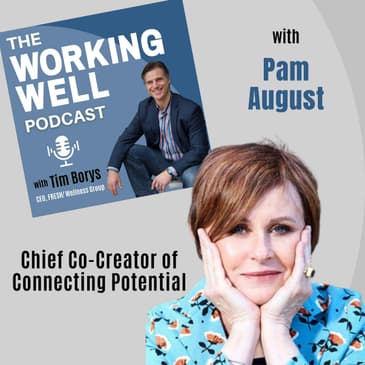
My guest today is Pam August. And she knows a lot about the power of potential in people and businesses. Pam's pedigree includes 14 years helping curate one of Canada's most admired corporate cultures. Pam guides organizations, teams, and leaders to unlock their potential for transformative results.
She's a fierce champion for how developing people and culture enables strategic business success. As Director of Culture Activation at WestJet, Pam spent over a decade proving and refining this business case. Today, she's a trusted partner for high performance organizations around the world through her firm, Connecting Potential.
Pam is a sought after speaker, facilitator, and organization and relationship systems coach, with a Bachelor of Adult Education and a Master of Arts in Leadership. Pam takes pleasure in solving tricky problems Listening deeply, learning always, and laughing a lot.
Powered by the WRKdefined Podcast Network.
[00:00:00] What is potential? As humans, how do we go about putting potential into action in our work and life?
[00:00:08] These are big questions that businesses and leaders struggle with each day.
[00:00:13] The good news is that the solutions can be quite simple and highly effective with a strategic shift in mindset and perspective.
[00:00:21] Today we're going to unpack potential and look at how individuals, teams and organizations can harness it for transformative change.
[00:00:30] Welcome to the Working Well Podcast, the show that explores the rapidly changing landscape of work and well-being.
[00:00:37] Each episode we dive into the hottest topics in leadership, employee well-being and the future of work.
[00:00:43] I'm your host Tim Borys.
[00:00:45] My guest today is Tam Agnes and she knows a lot about the power of potential in people and businesses.
[00:00:52] Pam's pedigree includes 14 years helping curate one of Canada's most admired corporate cultures.
[00:00:58] Pam guides organizations, teams and leaders to unlock the potential for transformative results.
[00:01:04] She's a fierce champion for how developing people and culture enables strategic business success.
[00:01:11] As director of culture activation at WestChent, Pam spent over a decade proving and refining this business case.
[00:01:18] Today she's a trusted partner for high performance organizations around the world through her firm connecting potential.
[00:01:25] Pam is a sought after speaker, facilitator and organization and relationship systems coach
[00:01:31] with a bachelor of adult education and a master of arts and leadership.
[00:01:36] Pam takes pleasure in solving tricky problems, listening deeply, learning always and laughing a lot.
[00:01:43] It is so good to chat with you again and have you on the Working Well Podcast.
[00:01:47] Thank you, Tim. It is great to be here.
[00:01:50] Awesome. How have things been with you? What's new in your world these days?
[00:01:54] Oh gosh, lots and nothing continuing on with working family and weather and all the things
[00:02:00] and something exciting that is new though is I've written my first book.
[00:02:05] Yay, awesome.
[00:02:07] I know, I know. I stopped going, I'm writing a book too. Yay! I have a book coming out in the world
[00:02:13] and it's coming out on release date is May the 7th.
[00:02:18] Very cool.
[00:02:20] Yeah, so it is available. It's up on Amazon for pre-order and yeah, I'm designing a number of things to go with it.
[00:02:27] Tools for my readers, development programs to help them take their learning from the book
[00:02:32] and make it stick even more and yeah, I'm quite excited about all of it.
[00:02:37] Very cool. I know from writing my first book that that sense of accomplishment and relief and just amazingness
[00:02:47] is there when you've finally handed in and it's done and yeah, you just now the waiting process until it's officially out.
[00:02:55] Yeah, and someone said to me yesterday one of my actually one of my clients said
[00:03:00] when you're writing the book, it's yours when you release it to the world no longer is.
[00:03:05] Yes. Yeah, it's an interesting journey going from this to this.
[00:03:12] So I mean, it's exciting and all the things.
[00:03:15] And that's one of the reasons I wanted to have you on the show is that the not just the top of your book
[00:03:21] but the work that you do has a very real meaning for the workplace today
[00:03:27] and your work is revolved around unlocking potential in organizations and individuals.
[00:03:34] What do you see? How do you define potential?
[00:03:38] Yeah, and it's my actually my practice that I run. I call connecting potential
[00:03:44] because what I found in all of my career experiences is this common thing
[00:03:52] is that we all have the need to connect or bring together the capacity to develop or become
[00:03:59] which is potential. And so that's the frame when I'm talking about potential.
[00:04:04] Most often I talk about it as this capacity to develop and become
[00:04:10] that we all have had this experience in our lives.
[00:04:14] We use the language of achieving our potential, reaching our potential, striving towards our potential
[00:04:21] and all of those things I think are worthy pursuits.
[00:04:24] What I found though is that potential is already always there.
[00:04:30] And so using the verb of connect it or connecting it brings it into the here and now
[00:04:37] because it's small acts of connecting or bringing together our capacity to develop and become
[00:04:44] that actually then leads to these bigger things that we aspire to.
[00:04:48] And I found we all have the need to do that.
[00:04:51] And that potential is something that's close to my heart in one in my own coaching consulting
[00:04:58] for me what my hang line if you want to say it that way is igniting potential.
[00:05:04] And I purposely chose that word because you had mentioned unlocking your potential or achieving your potential
[00:05:11] and a lot of people see potential as fixed.
[00:05:14] It's like your only is like this innate amount of potential that everyone has and you can only get to a certain point.
[00:05:21] And I think that's a slightly shifted mindset in the sense that it's we're looking at people as fixed containers
[00:05:30] of a certain amount of potential and you've mentioned a couple times growth and development.
[00:05:34] And while some of that is normal in day to day workforce,
[00:05:40] I think having the approach that we all have unlimited potential.
[00:05:45] It's how we develop and connect with people and how we structure our workplaces, our work environments
[00:05:54] and our own mindset. That's what allows us to accomplish incredible things.
[00:06:00] Yeah, absolutely. And I love Tim how like you use that word ignite because it also captures
[00:06:07] that there is an end if we talk about it even in science potential energy, right?
[00:06:13] There's an energy to potential and it's enticing.
[00:06:18] Right? It's the thing that moves us forward and yet the reality is in the worlds that we're in
[00:06:24] and the complexity and complication of work and life.
[00:06:28] It's often left unconnected or disconnected or not ignited or unrealized.
[00:06:35] And as you were speaking, what I also thought about is what something else that I've learned
[00:06:40] and my background, it started years ago in the fitness industry, which is one of those ways
[00:06:45] in which we connect is around this taking a whole body approach to everything we do.
[00:06:51] Brains don't roll into work. We don't log into Zoom and just put a probe in into our frontal cortex.
[00:06:58] We show up as whole humans.
[00:07:00] Not yet anyway.
[00:07:02] I don't, okay. I may opt out on that one, but we'll see how it goes.
[00:07:06] And we show up as whole humans and as well this notion what I found as well is that potential
[00:07:13] not only lives within us as individuals, there's potential between us in our relationships and teams.
[00:07:21] As you just talked about that connecting with others, right?
[00:07:25] And there's also potential around us.
[00:07:28] And the context I use in that, in the context that I do the work I do in organizational culture
[00:07:33] is it's like in the water of the culture around us.
[00:07:37] And so I talk about and I work in the work that I do is I work in the three dimensions,
[00:07:43] what I call the three dimensions where potential lives within us as individuals
[00:07:47] between us in relationships and teams and around us in cultures.
[00:07:52] Because the other thing is all of those dimensions are connected.
[00:07:56] And so the great news is it's not if you're listening to this podcast and going,
[00:08:00] oh my gosh, there's so much here. The wonderful thing is they're all connected.
[00:08:03] So if you actually influence any one of them, you influence every one of them.
[00:08:08] And that's how it becomes exponential.
[00:08:11] And to your point talking about this notion that it's infinite.
[00:08:15] It's a generative thing.
[00:08:17] Potential begets potential.
[00:08:20] Absolutely. And so you mentioned a bit about your background fitness industry.
[00:08:25] I know you've done a number of different things over the years.
[00:08:28] What led you to focus on cultural activation and potential?
[00:08:33] That's a great question.
[00:08:35] And I just even in thinking about this show and reflected on it
[00:08:39] and my career started out in the fitness industry.
[00:08:41] I was an aerobics teacher in the 80s.
[00:08:44] And so then I realized that, gosh, there was this thing called nutrition
[00:08:48] that really mattered as well.
[00:08:50] And so did a diploma at SAIT in food and nutrition.
[00:08:55] And it was actually when I got to SAIT as a learner
[00:09:00] that there were a number of things that happened that really helped me see my own potential,
[00:09:06] helped me see the blocks that come into connecting it
[00:09:10] and really ignited this passion around learning.
[00:09:13] And so I went back, I worked in corporate wellness
[00:09:16] and corporate wellness was all about, was and is all about this thing called potential.
[00:09:22] And my focus was around working with individuals in their physical potential
[00:09:27] and nutritional potential.
[00:09:30] But then when I went back to SAIT as a faculty member,
[00:09:33] so I worked at SAIT for 13 years in faculty and then faculty development,
[00:09:37] I realized there was something bigger than the food and the exercise
[00:09:42] and it was this thing called learning.
[00:09:44] And I started my educational career really focusing on the learner and never lost that focus.
[00:09:50] But then I started to see that, oh, there's the potential of the individual learner,
[00:09:55] but how I relate with that learner, that matters too.
[00:09:59] And then the culture, and I probably didn't even use that language back then,
[00:10:04] but the culture of the learning environment, right?
[00:10:07] We talked about how did the classroom feel would be the way that we would talk about it.
[00:10:12] And I realized that there was potential there that often wasn't being connected or being realized.
[00:10:18] So unconsciously, I think it started then.
[00:10:21] I left WestJet, sorry, left SAIT in 2004 went to WestJet.
[00:10:26] And there I started focusing on core skill development with individuals,
[00:10:31] moved into leadership development with individuals,
[00:10:35] then realized, yes, this matters, but again, what about in teams?
[00:10:39] So I moved into working in team effectiveness and supporting teams all across WestJet.
[00:10:44] But then again, I saw something more than that or different, not even more, but different than that.
[00:10:49] And it was this thing called culture.
[00:10:52] And so I was at WestJet from 2004 to 2019.
[00:10:55] And when I got there, WestJet had an amazing culture that was somewhat immature
[00:10:59] because it was like an eight year old and cultures are like people.
[00:11:02] We go through developmental curves.
[00:11:05] And so then I started seeing, gosh, if we don't pay attention to what's around us
[00:11:12] and work to influence that all the team development in the world,
[00:11:17] all the individual development in the world isn't going to have the impact that it potentially could.
[00:11:23] Haha, there I snuck in the word again, right?
[00:11:25] Potentially could.
[00:11:27] And so my work evolved from individual potential to team potential
[00:11:31] to this thing called culture potential somewhat organically and like my wallpaper,
[00:11:36] my journey in my career has been always forward, never straight.
[00:11:39] And so then it was when I left WestJet then in 2019 and started working with organizations rather than working in organizations.
[00:11:49] I had to become really clear what the work was about.
[00:11:53] And that clarity came over time.
[00:11:55] But I became very clear that in every organization,
[00:12:00] you will find potential in three dimensions, individual within us, between us in relationships and teams and around us in culture.
[00:12:08] And while there's different interventions to influence that and have the impact of connecting that potential,
[00:12:17] really the dynamics are very much the same.
[00:12:21] And the practices with which to do it really I've landed on one core practice.
[00:12:29] What is that?
[00:12:31] Haha, yeah, I said a lot there.
[00:12:36] So in so the practice is this, it's three parts intend, notice and move.
[00:12:41] Very cool.
[00:12:43] Yes.
[00:12:44] So what's the what we've got?
[00:12:47] The commonality I see between all of that is leadership.
[00:12:51] Yes.
[00:12:54] How do leaders go about connecting this potential?
[00:12:59] What's their role?
[00:13:01] Yeah, and I think their role is.
[00:13:05] So I think their role is if this is going to sound a bit punny perhaps or maybe not or maybe a BFO or blinding flash of the obvious.
[00:13:13] The role is to go first, which really ultimately is what leadership is about right is to go first and do what?
[00:13:23] They need to do as leaders to ensure that the way they show up the way that they lead their intentions that they have for their leadership,
[00:13:33] align with the actions that they're taking.
[00:13:37] And then engaging their team in the same kind of practices.
[00:13:41] And so again, it comes back to this, these three key actions and oh, and just even backing up a little bit from that.
[00:13:49] Is I think one of the things that happened in organizations just as we said earlier, brains don't roll into work.
[00:13:58] We have a very heavy emphasis in the world of work on thinking and knowing from the ears up.
[00:14:07] When the reality is.
[00:14:11] There are resources that we all have in our feeling and in our action.
[00:14:18] That all need to come together with our thinking in order to have the impact that that leaders and organizations desire.
[00:14:25] And yet we treat people as if all they're there to do is this thing.
[00:14:31] We see that on a day to day basis across companies and I like what you said about going first or that change has to come within the leader.
[00:14:43] Because the brain showing up at the office or the whole people showing up the office know when a leader is not being genuine.
[00:14:52] And they don't have to get it right.
[00:14:57] They just have to lead with the intention of.
[00:15:01] Human first and.
[00:15:04] Integrity on I don't I hate that word actually like the genuineness to care for the team and be clear about the results that they're wanting to get.
[00:15:16] And yeah, the word integrity is one of those words that's often overused and whenever and right had integrity as one of their values as an example.
[00:15:24] Right.
[00:15:25] And while words count actions matter and what's interesting is you said that Tim I think about the word integrity.
[00:15:31] It's to be integral and to be integrated.
[00:15:35] And so that that notion of aligning integrating action with intention is really important.
[00:15:42] And so what I mean by this practice of intent notice and move.
[00:15:47] And those three actions were I use that language very intentionally and it's the practice I do also teach it's a practice I always use with everything I do.
[00:15:57] And it's also the practice that I teach the readers in my readers in my book is we start with intention because there's the saying energy follows intention.
[00:16:09] Right.
[00:16:10] So if we think about our operating systems as humans is our whole system that the brain is what is that the body is the thing that receives things.
[00:16:19] The brain is what interprets it and decides what to do that then gets acted by the body.
[00:16:24] If we think that we're designed to do three things which is to act to feel and to think.
[00:16:29] And on a good connected day we can do all three on a not so good day and not so good moment we disconnect.
[00:16:36] And we all have that experience when that happens.
[00:16:39] Right of not being in a place of strain or stuck or swirl or whatever your flavor of disconnection looks like.
[00:16:47] So intention the practice always starts with intend and intention because energy follows that because what it does is it orients our operating system and points it in the direction of where we want to go.
[00:17:03] And how we want to be in the process.
[00:17:06] For example before I jumped on this the call with you for this show.
[00:17:10] My intention is to be clear and connecting.
[00:17:16] Right.
[00:17:17] So what I do when I work with leaders when I work with teams when I work with organizations, I ask questions like this.
[00:17:23] So what are you doing and saying when you are you at your best.
[00:17:27] What three words would others use to describe you to describe your team to describe your organization when you're at your best.
[00:17:37] Questions like that.
[00:17:39] Right.
[00:17:40] And so it starts with intention but it doesn't go right to action.
[00:17:46] Because there's an important thing in the middle which is noticing where you are now.
[00:17:50] And so that's why the second piece is notice.
[00:17:54] And so you can have your intention but if you don't notice where you are now.
[00:18:01] It's really hard to take the next step.
[00:18:04] You can impact that a little bit talk about what people might notice.
[00:18:09] Yeah, and often in our world today we don't notice anything because we're too busy on our phones were too busy on our screens.
[00:18:15] We're just too busy.
[00:18:17] And there's a great cartoon out there that shows a person walking with their pet.
[00:18:21] And it says, are you is your mind are you mind is your mindful or you being mindful.
[00:18:27] And whenever I show that to groups that I work with everyone uncomfortably laughs puts up their hand and says I'm more like the person on the left.
[00:18:34] And mindfulness in the context that I'm using it is not let's get on a mat and sit and breathe although those are great practices.
[00:18:42] It is about taking the pause to notice that you were in the present moment.
[00:18:49] Right, because when we notice where we are in the present moment and we notice our experience, even if the experience isn't what we want it to be.
[00:18:59] So for example, if I want to be clear and connecting on this call.
[00:19:02] And before this call like many of us had many things going on and jumping around and doing all the things.
[00:19:08] I was scattered in chaotic.
[00:19:11] I didn't want to be scattered in chaotic, but it was important to notice that because once you notice it then you can be at conscious choice about what to do next.
[00:19:20] Yeah, awareness, self awareness of our emotions are body feelings the environment, all these different things are things that most people don't think about and we see the fallout of that in
[00:19:37] again running into a meeting with all these other things on your mind and you haven't taken the 10 seconds even to
[00:19:45] center yourself, collect your thoughts and walk in as you said with intention to that meeting.
[00:19:52] Yes, rather than being reactive.
[00:19:54] Yes, and intention and presence.
[00:19:57] Right.
[00:19:58] And by presence I'm not talking presence.
[00:20:01] I'm talking being present.
[00:20:04] It's probably the most important thing that we can do in this world today and probably the thing that we got pulled away from the most in modern work.
[00:20:16] And it has impact because when we're not present for others, we're sending them a signal that they don't matter.
[00:20:25] And the actions that come out of that are going to be much more effective when you've taken that.
[00:20:32] Yes, because then that's the third part of the practice which is move.
[00:20:36] Okay, so I want to be clear and connecting right now I'm scattered and chaotic.
[00:20:41] What's the thing I need?
[00:20:43] What's the move I need to make in order to get closer to how I intend to be.
[00:20:48] In my case it was honestly as simple as taking three breaths and having a drink of water.
[00:20:54] It reminds me of I forget who originally said it.
[00:20:58] It's been ages.
[00:20:59] It's been said lots of times, but I still remember it very vividly my son's elementary school teacher or principal and we got called into the office for a behavioral thing and she was very great and just said,
[00:21:05] Hey,
[00:21:07] your son's a great kid. He has to think and we've talked about to him about taking the steps and he's like he right now he feels and then acts.
[00:21:16] There's a step in the middle called thinking.
[00:21:18] Yes.
[00:21:19] Feel whatever you're feeling, honor that.
[00:21:23] Think in the moment take a breath and then take a breath.
[00:21:27] Okay, so what's the most effective way to act with the intention I want and yeah, love it.
[00:21:33] Yeah, and it is because that intention oriances to where we want to go noticing places us in the now.
[00:21:43] So we can call that the best way to act is by thinking.
[00:21:48] attention, oriances to where we want to go, noticing places us in the now so we can consciously
[00:21:58] choose the next move to get closer to our intention.
[00:22:03] And what I love what you did, Tim, is the order of those things wasn't quite, wasn't
[00:22:08] intend notice move.
[00:22:09] It was more note, it was like notice, intend move.
[00:22:15] It really honestly doesn't matter.
[00:22:17] There's something about the magic of the three coming together that makes for powerful practice
[00:22:22] and the connecting of potential.
[00:22:26] And the most impactful things are often not rocket science.
[00:22:32] This is simple proven science.
[00:22:37] Yes.
[00:22:39] And it's just a matter of actually making sure it happens.
[00:22:44] Yeah.
[00:22:45] And yeah, and that is it's interesting.
[00:22:47] I often ask groups I work with in the staples that was easy button.
[00:22:52] I'll say pretend you've got a red button there and it doesn't say easy.
[00:22:55] It says simple now hit the button if it's okay if this is simple for you.
[00:23:00] And people look at me what are you doing?
[00:23:01] I say hit the button and can then ask the next question how many of you would like
[00:23:05] things in life to be more simple?
[00:23:07] Everyone puts up their hand.
[00:23:08] How many of you unconsciously and unnecessarily complicate or make things more complex than
[00:23:13] they need to be?
[00:23:15] Everyone puts up our hand.
[00:23:17] And so this simplicity of just three things I think is really powerful.
[00:23:24] And when you described your story to me, there were three elements like three is the magic
[00:23:30] number.
[00:23:31] It is.
[00:23:33] And I looked up I did a little bit of what I call research but in this case it was
[00:23:36] going to the Google.
[00:23:38] Three is the smallest number that we can remember that forms a pattern.
[00:23:46] The brain loves threes and likes spores and can handle seven plus or minus two.
[00:23:52] Yes.
[00:23:53] But if we want to navigate through noise and air quote busyness, this rhythm of three
[00:24:01] things is one that you see a lot of ways in a lot of places and I found to be really
[00:24:06] powerful.
[00:24:07] Yeah, the science and neuroscience behind how the brain connects with three is fascinating.
[00:24:15] Yeah.
[00:24:16] Yeah.
[00:24:17] So when we're talking about leadership and the actions I guess the intentions that
[00:24:24] leaders have, I've always looked at culture as being essentially the summation of the
[00:24:34] actions that leadership takes and the impressions that teams have of those actions.
[00:24:42] What are your thoughts on that?
[00:24:44] I think I would say on that one it's a yes and I would say it is that and I would
[00:24:50] say it's more than that, right?
[00:24:53] Leaders definitely again leaders because they are in a position of power and because
[00:25:00] as human beings we're wired to be safe first feel second think last.
[00:25:04] Let that sink in for a minute, right?
[00:25:05] We're wired to act first because action equals safety.
[00:25:09] We're designed to feel second because determining if something is friend or foe,
[00:25:14] safe or unsafe is key to taking the right action and we're designed to think last
[00:25:20] because in a moment of emergency stopping to pause and look at the data and weigh our
[00:25:26] choices really is not useful.
[00:25:29] And so this wiring of the need for safety is we're always looking to leaders for
[00:25:36] signals about what matters most.
[00:25:40] We're always doing that and particularly the higher a leader is in an organization
[00:25:46] the more signaling or even yeah, the more what they do signals what really matters
[00:25:54] and we all know the saying action speak louder than words and walk the talk and
[00:25:59] all of those kinds of things because aspect of us being designed for action
[00:26:04] and designed for action as a safety mechanism is so much a part of our makeup.
[00:26:10] And when you said there that yeah leaders people are looking to leaders 100%
[00:26:19] I think the to abd not I'm using a judgment there so I won't do that.
[00:26:27] It's not just leaders because culture the way in which I define culture is
[00:26:34] culture is a dynamic that is co-created by everybody every day in every action
[00:26:40] and every interaction.
[00:26:44] Every time you agree it is.
[00:26:46] And the tricky thing about culture is most of what really drives culture is
[00:26:52] unconscious, invisible and implicit that the classic example someone goes through
[00:26:58] a new hire orientation or welcome aboard and they come out and they're all
[00:27:02] excited they've had their training and they get out in their team to do their
[00:27:06] work and everyone goes yeah I know you learned that from HR but that's not
[00:27:10] how we do it at all.
[00:27:11] How things really happen around here is this.
[00:27:14] And that's where we come back to the leadership actions because yeah culture
[00:27:18] is this dynamic of everything that's going on and all but leaders are also so
[00:27:25] much more influential they have their thumb on the scale I guess we call it
[00:27:29] in the culture position of power.
[00:27:31] Yeah and we I think a lot of the challenges that we're seeing in
[00:27:37] organizations today engagement stress burnout come from this increasing
[00:27:44] disconnect between what culture says it should be and what it actually is.
[00:27:53] The and I always go back to the health and being side and companies have
[00:27:58] checked all the boxes on hey we care about our employees we're doing this
[00:28:03] we have expanded our mental health coverage we offer this we offer that
[00:28:08] yet the reality of it is that the actions of many leaders aren't
[00:28:14] aligning with that.
[00:28:17] The day-to-day reality for employees is very different than the marketed.
[00:28:22] Oh a hundred percent I was just talking with one of my clients who's joined
[00:28:27] a new organization and that exact case is happening.
[00:28:31] They have the best benefits program the best EAP the best health credits
[00:28:36] like all of the things nobody has time to avail themselves of anything
[00:28:41] because it is well known in the organization that 40 hours a week is part time.
[00:28:47] Notice I say they're well known nobody actually talks about it.
[00:28:51] It's not certainly not written in any handbook and it's certainly not one
[00:28:55] of the values of the organization.
[00:28:57] In fact but and yet it is oh but this is how things really happen here.
[00:29:02] And so a lot of that's why again coming back to this if we think about on a
[00:29:07] culture context intention would be this place around.
[00:29:12] So what are the things that matter most to us Oregon as an organization.
[00:29:16] What is our vision for the future.
[00:29:18] What are our values more importantly than the what are the values.
[00:29:22] What are the behaviors that put those into action and what do we do when
[00:29:26] we see them in action when what do we do when we don't see them in action.
[00:29:30] What do we celebrate what do we tolerate.
[00:29:32] I recently was doing some speaking about this and I have this like non
[00:29:36] math and math.
[00:29:37] This is not like data accurate at all but I call it the formula of cultures
[00:29:42] in some total of C to the 10 plus T to the 100.
[00:29:47] C to the 10 is what do we celebrate T to the 100 is what do we tolerate.
[00:29:52] Right because what we tolerate that goes against or is in misalignment
[00:29:59] with what we intend is actually the loudest thing.
[00:30:03] And it is the thing that tells people what really matters.
[00:30:07] Right.
[00:30:07] And so it is this what happens often in organizations and I hadn't I'm
[00:30:12] thinking through my words right now is organizations spend a lot of time
[00:30:17] on getting clear on their intention which is really important because
[00:30:20] again it orients us where we go and they'll do they'll do engagement
[00:30:24] surveys and they'll do different culture surveys and different things.
[00:30:28] What they often don't do though and now I'm speaking again of leaders is
[00:30:33] they don't take the moment's day to pause and notice what's actually happening
[00:30:41] because it's the small moments that gradually then suddenly to quote
[00:30:45] Susan Scott over time lead to those aggregate numbers.
[00:30:50] Absolutely yeah.
[00:30:52] And some of that is I've seen a lot of leaders that aren't even aware
[00:30:57] of the in DEI they call it microaggressions and things like that.
[00:31:02] But there's these micro actions or instances.
[00:31:07] Yeah.
[00:31:07] It can contradict completely what the leader might be saying in the bigger picture.
[00:31:13] Yeah.
[00:31:14] But in the moment teams people are smart they pick up on that and they're
[00:31:18] like oh yeah okay.
[00:31:19] They not only pick up on it they look for it unconsciously
[00:31:23] especially coming back to your point about leaders play a critical role in this
[00:31:28] and which one which I have absolutely agree with
[00:31:31] because the leader is the person in power.
[00:31:34] We're always looking we're always looking to OK.
[00:31:39] What do they really mean here.
[00:31:40] What really is important here.
[00:31:42] Which means what do I then need to do in order to meet the expectation
[00:31:46] or be in good favor of this person that's in power.
[00:31:51] And it's the smallest things that will derail the biggest and best of intentions
[00:31:57] always.
[00:31:57] It's very interesting having this conversation give a head a all with
[00:32:02] he's the national head of a global consultancy.
[00:32:07] They're in multiple countries and he runs the Canadian operations
[00:32:11] and we were talking about
[00:32:15] just the consultant market and employee well-being
[00:32:19] and he said oh yeah like in the consultant field it really is about.
[00:32:27] Survival of the fittest the first he's there is a was it a three month
[00:32:32] and 18 months and a three year he said like burnout phase
[00:32:38] that happens and he's yeah the people that survived the first three years
[00:32:41] usually become great consultants and he's anyone who else that doesn't
[00:32:46] whatever they're they weren't cut out for it.
[00:32:49] And the implicit understanding was that yeah you get into this field
[00:32:54] you like suck it up or go home.
[00:32:58] And I was just like wow that is so 1950.
[00:33:02] Maybe not in 1950 1980 even still now but I was actually
[00:33:06] shocked to hear him say it in just such plain matter of fact language
[00:33:12] and he's yeah that's how we run the business.
[00:33:14] And I was like hmm OK.
[00:33:18] I knew there was still that out there but to hear it in such plain words
[00:33:22] in a in 2024 when there's so much information and knowledge
[00:33:28] about the downside of that approach.
[00:33:31] Yeah and I'm curious Tim what did you hear underneath what he said there.
[00:33:35] What was he really saying from your perspective.
[00:33:38] A big part of it is that the culture across not just the organization
[00:33:43] but the industry is set up that way and he had said something
[00:33:47] about people know that going in but they're still often shocked by it
[00:33:52] and then so we see this rapid flame out at those three those three phases.
[00:33:59] We can help a little bit to try and get them through it but the reality
[00:34:03] of it is that there's just we worked them hard and work loads high
[00:34:09] and you got to suck it up.
[00:34:10] And so I was it was almost like he at one hand he was like yeah I see that
[00:34:18] but then it's really hard to change.
[00:34:21] So that's just the way it is.
[00:34:25] Yeah and then what I hear in that too then so it's it is and here's
[00:34:30] the thing those are hardwired under underlying beliefs and assumptions
[00:34:34] that quite honestly this person that you're speaking with probably
[00:34:36] didn't even know what he was he or she was actually saying is that
[00:34:43] we're in a system that we're set up to burn people out
[00:34:47] and only the fittest will survive.
[00:34:50] Yeah and I'm pretty sure those are not the values written on the wall
[00:34:53] of that global organization.
[00:34:54] Guaranteed or not.
[00:34:55] I've actually looked at them.
[00:34:57] But that is the culture.
[00:34:59] Right.
[00:34:59] That is the water there that they're swimming in and it's interesting
[00:35:02] that so it what you make me think about there is a story and it is a
[00:35:07] story I do share it in my book but it was one that happened like a
[00:35:10] couple of years ago when I was writing that really just hit to me how
[00:35:14] important it is to align intention and action and then how important
[00:35:19] it is to just notice what's now.
[00:35:21] And so I was working with a team and I teach in a large
[00:35:25] global organization and they brought me on to help them with their
[00:35:29] visioning and their strategy and those kinds of things.
[00:35:32] And so this was all done it was through the pandemic.
[00:35:35] So all done on Microsoft teams.
[00:35:37] And what this team kept saying they were really clear and aligned in
[00:35:40] their intentions so clear and aligned.
[00:35:42] They wanted to be partners in the business.
[00:35:45] They did not want to be order takers and I laugh when I first got to
[00:35:49] WestJet I was the first professional educator that was ever hired
[00:35:54] prior to that folks that were in a learning function were subject
[00:35:57] matter experts from the business that were then brought in to teach
[00:36:01] others.
[00:36:02] And so I used to get all these phone calls from the business saying
[00:36:05] we need training for this we need training for that to which I
[00:36:08] would say to them would you like fries with that.
[00:36:11] And they're like I'm sorry and they'd say it again and I'd
[00:36:14] say would you like fries with that and they're like I'm sorry
[00:36:16] and I said be your calling me ordering up training like it's
[00:36:18] fast food.
[00:36:19] So I'm just wondering if you want to side of fries or would
[00:36:22] you like to have a conversation about the business challenge that
[00:36:25] you're dealing with what your success and how we might partner
[00:36:28] to solve it.
[00:36:29] So anyway I digress a little bit but there's something about when
[00:36:32] you're a servant like a support department within an organization
[00:36:37] there's this expectation that you're an order taker.
[00:36:39] And so they were suffering from that right.
[00:36:42] And whereas they had this incredibly brilliant team that
[00:36:45] really wanted to partner with the business.
[00:36:46] So everyone was like yeah this is good this is what we see
[00:36:49] for the future.
[00:36:50] And then there there was one conversation in particular where
[00:36:54] one of their team members she was going to say something and
[00:36:58] kept being on mute.
[00:36:59] And it was like one of those we've all done it you're on mute
[00:37:02] you're on mute had to do it four times when this person
[00:37:06] came on the call she said the thing that was the mic drop
[00:37:09] moment.
[00:37:10] She said I'm sorry it took me so long to unmute myself.
[00:37:13] I'm usually not asked to contribute in meetings like this.
[00:37:16] And there were 30 some people on the call every you could just
[00:37:20] feel the silence through the screens.
[00:37:22] And so I said to them I said OK everyone what just happened
[00:37:27] here and what do you notice.
[00:37:29] Awkward silence.
[00:37:30] I'm a mom I'm good with awkward silence I let it go.
[00:37:34] And finally one of them said oh we can't be partners
[00:37:37] with the business if we don't invite each other within
[00:37:40] our own team.
[00:37:43] Right.
[00:37:44] Right.
[00:37:45] It was that small moment.
[00:37:48] That then changed everything.
[00:37:52] Because they realized oh yeah we might have this vision.
[00:37:57] We for the culture and the organization we need to take
[00:38:01] it back to how we operate between us and make that
[00:38:05] change right now.
[00:38:08] It was back to what you said in the beginning change
[00:38:10] starts from within.
[00:38:11] Change starts from within the person within the team.
[00:38:15] And then they can expand out to the organization.
[00:38:18] Yeah and that noticing it was a really awkward moment.
[00:38:21] That's the other thing about noticing is it's usually
[00:38:23] really uncomfortable because it's often when we notice
[00:38:27] we're not where we want to be.
[00:38:28] And so we like to avoid it.
[00:38:30] The problem is it's already happening.
[00:38:33] And only when we notice it can we actually be at
[00:38:35] choice about what to do next.
[00:38:37] And so I can't really let to the listeners I can't stress
[00:38:40] enough how important that middle piece between
[00:38:44] intention and action is.
[00:38:46] Yeah.
[00:38:47] Yeah.
[00:38:49] So with I guess that brings back to our up another
[00:38:53] question is once we notice it how do we deal with
[00:38:58] that misalignment the gap from where we are to
[00:39:01] where we want to be.
[00:39:04] Yeah I would and I actually just think of a story
[00:39:06] that happened yesterday on a one to one coach
[00:39:08] and call that I had was having with a leader.
[00:39:11] And one of this leader one of their goals is to
[00:39:15] be more comfortable jumping into conflict rather
[00:39:18] than jumping back from it.
[00:39:19] So that's the metaphor that resonated and brought
[00:39:24] to the conversation a really great example of
[00:39:27] yeah jumping in and then not necessarily skillfully
[00:39:29] handling the situation.
[00:39:31] So there were some elements there that didn't work
[00:39:35] out great.
[00:39:36] And so I think Tim go back to your question because
[00:39:40] I got into the story and then I forgot the question.
[00:39:42] So come back to that.
[00:39:43] Yeah how do we deal with that misalignment once
[00:39:46] we've noticed it.
[00:39:47] And so honestly so once we notice it so anyway
[00:39:51] that this leader that I was talking to was
[00:39:53] going on and on about this misstep in this
[00:39:56] conversation.
[00:39:58] And so I said oh I said so I can what I heard
[00:40:00] from you is your intention was to together
[00:40:04] work through this solution.
[00:40:06] The thing that you what what you said instead
[00:40:10] happened to result in a fracture in that relationship.
[00:40:14] What's one action you can take.
[00:40:16] Like it was that it was that question.
[00:40:19] What is one action you can take.
[00:40:22] What is one action we can take.
[00:40:26] Again coming back to that simple button.
[00:40:29] So often we think oh there's so many things
[00:40:31] that we have to do.
[00:40:33] It feels like too much.
[00:40:34] It's what is one action or what's the next thing
[00:40:37] that we can do to move closer.
[00:40:41] And where what where this leader landed was oh I
[00:40:44] could pause and ask a question.
[00:40:47] That was it.
[00:40:49] Right.
[00:40:51] Small but powerful next action.
[00:40:55] But in our in our previous conversation you
[00:40:58] mentioned something that really stuck out to me
[00:41:00] was that a key part of success is shifting
[00:41:04] your mindset from seeing problems to seeing potential.
[00:41:07] Yeah.
[00:41:07] Can you expand on that a bit particularly with
[00:41:10] respect to how leaders can shift their mindset
[00:41:12] and then help their team shift that mindset.
[00:41:15] Yeah.
[00:41:15] And I think one just to back up on that a bit.
[00:41:17] One of the challenges is one of the reasons
[00:41:21] leaders are in the roles that they're in is
[00:41:23] because they're really good at solving problems.
[00:41:25] Whenever I work with groups I'm always asking
[00:41:27] who's here is really good at solving problems.
[00:41:29] We all put up our hands.
[00:41:30] Right.
[00:41:30] It is a really well developed muscle.
[00:41:34] The problem with a problem mindset is that
[00:41:38] when all our problem or like when you're in a
[00:41:40] problem mindset all your problems it's like
[00:41:42] when you buy a red car you see a whole bunch
[00:41:43] of red cars.
[00:41:44] If you're always in problem solving mindset
[00:41:47] that's all you ever see and the reality
[00:41:50] is in every problem there's always
[00:41:54] something that wants to happen.
[00:41:58] Potential.
[00:41:59] Right.
[00:42:00] So if I go back to the conversation that I had
[00:42:03] recently with this one leader the problem was
[00:42:06] that something was said in the conversation
[00:42:09] that severed the relationship and this
[00:42:12] leader was not happy about that and was
[00:42:14] somewhat beating them.
[00:42:15] And I said and so what do you want instead?
[00:42:19] What wants to happen here?
[00:42:21] And she said I want to be able to
[00:42:25] disagree and still have a relationship.
[00:42:29] OK.
[00:42:31] So let's work on that.
[00:42:32] And so that that shifting from problem potential
[00:42:35] to potential often does often looks like a question.
[00:42:39] So if the problem is if the problem is
[00:42:44] I'm not skilled at conflict what wants to happen
[00:42:47] or the potential is I want to be able to
[00:42:49] disagree and still build relationship.
[00:42:53] So now our focus shifts away from the thing
[00:42:55] we don't want and shifts towards the thing
[00:42:59] that we do want.
[00:43:00] And from a neuroscience perspective it's a very
[00:43:02] different experience.
[00:43:03] Right.
[00:43:04] Because when there's things we don't want we
[00:43:06] contract what's that kind of threat response
[00:43:09] when there are things that we do want our
[00:43:11] system shifts and opens up to possibility.
[00:43:17] Did that get it?
[00:43:19] Yeah, absolutely.
[00:43:20] OK.
[00:43:24] So I know we
[00:43:26] that I could talk about this for so long.
[00:43:29] I know.
[00:43:30] It's yeah, one of the things I always like to do
[00:43:34] as we start to to wrap up is look at where
[00:43:38] practical takeaways.
[00:43:40] You mentioned your three the three notice move.
[00:43:43] Yes.
[00:43:45] So what are some practical ways
[00:43:48] leaders can put that into practice on a day to
[00:43:51] day moment to moment basis?
[00:43:53] What I talk about or what I'll share with you is
[00:43:57] the three by three.
[00:43:59] Right.
[00:44:00] So this is a do this practice three times a day.
[00:44:06] OK, so the practice is three parts do it three
[00:44:08] times a day and do it for three weeks.
[00:44:11] What that might look like is this when you get
[00:44:13] up in the morning rather than scrolling through
[00:44:16] the news or social media feeds, get up, drink.
[00:44:22] Now I'm getting into some biohacking stuff.
[00:44:23] Drink, drink some water.
[00:44:25] Drink some water before coffee because I am a nutritionist.
[00:44:28] Caffeine is one of the four food groups along with
[00:44:30] salt, sugar anyway.
[00:44:32] And so get up in the morning and ask yourself
[00:44:34] the question, how do I want to be today?
[00:44:38] Right.
[00:44:39] And that's intent.
[00:44:40] What's a word that describes how I want to be today?
[00:44:43] Then notice, how am I right now?
[00:44:48] Then ask yourself what's a move I can make right now
[00:44:51] to start my day in the right way.
[00:44:54] And then I would say before an important meeting,
[00:44:59] before a tough conversation, before going into
[00:45:03] a body of work that requires your best
[00:45:05] thinking, feeling and action.
[00:45:08] Again, ask yourself going into this budget plan
[00:45:11] planning, how do I want to be?
[00:45:13] Okay.
[00:45:13] I want to be clear.
[00:45:15] How am I right now?
[00:45:16] Flustered.
[00:45:17] What's one action I can take?
[00:45:19] I'm actually going to turn off my phone and go for a walk.
[00:45:22] Or I'm actually going to pause and take three breaths.
[00:45:26] The wonderful thing about breathing, we could go so
[00:45:28] much into breathing and the power of breathing.
[00:45:31] But the wonderful thing is it's our most powerful
[00:45:33] regulating tool because it's the one practice that
[00:45:35] we do unconsciously and we can do it consciously
[00:45:38] to regulate our own body.
[00:45:40] To regulate our operating system.
[00:45:43] So taking three breaths.
[00:45:44] And then the other time might be at the end of a work day
[00:45:47] when you're either leaving your workplace or shutting
[00:45:51] your computer if your workplace happens to be at home.
[00:45:54] And as you're transitioning into your life outside of work,
[00:45:59] how do I want to be?
[00:46:02] What do I notice now?
[00:46:03] What do I need to do?
[00:46:06] And again, it might be I need to put on some music.
[00:46:08] I might need to take the dog for a walk.
[00:46:11] I might need to hide in the bathroom.
[00:46:15] Whatever the thing is, I don't know.
[00:46:16] I don't know what the things are for you, but it is that.
[00:46:21] How do I want to be?
[00:46:22] How am I now?
[00:46:24] What thing I can do?
[00:46:26] Love that.
[00:46:26] And I was particularly the one coming home at the end of
[00:46:30] the day resonates for me.
[00:46:31] It's less than I learned the hard way many years ago
[00:46:34] when my kids were young and coming in with head spinning
[00:46:37] of all this work stuff and then still being in that work mode
[00:46:41] and trying to engage with family never went well.
[00:46:45] And thankfully my wife is amazing and helped smarten me up.
[00:46:49] And so I started having just a little mini routine
[00:46:53] that I did on the way home.
[00:46:55] And sometimes it was in the car.
[00:46:56] Sometimes I would just even sit in the driveway for a couple
[00:47:00] minutes if my head was spinning about something and.
[00:47:03] Physically and psychologically mentally transition to home.
[00:47:10] And it made a world of difference.
[00:47:13] Yeah, my office is in my dining room because we live in a small house
[00:47:17] and I actually love the space.
[00:47:19] So I love to work in the space and be in the space.
[00:47:22] And I have a lamp that I've just looked over at that lamp.
[00:47:25] And part of my routine that's now become almost a ritual
[00:47:29] because it's so meaningful is when I turn off that lamp.
[00:47:34] I turn off for the day.
[00:47:36] Like I've made that association, right?
[00:47:39] And just even just for a moment here thinking about teams.
[00:47:43] When I was talking about the intent notice move at the beginning
[00:47:45] of a team meeting say, OK team, we've got this meeting is about blank.
[00:47:50] How do we what are three words that describe how we want to work
[00:47:53] together through this meeting?
[00:47:54] OK, what are three words that describe?
[00:47:58] What's happening here right now?
[00:48:00] What's the one thing we're going to do as a team in this meeting?
[00:48:04] Right. Again, the same questions, different context.
[00:48:09] Love it.
[00:48:10] And when you said about the lamp, I have the same thing.
[00:48:13] I've got two ring lights here that I don't even keep my overhead light on.
[00:48:17] But when I turn those off, it's like, yeah.
[00:48:19] And I come in the morning and it's like my startup routine.
[00:48:23] I turn them on and here.
[00:48:25] Yeah.
[00:48:26] Yeah. Yeah. Our oldest son is doing doctoral research in the intersection
[00:48:32] of neuroscience applied mathematics and computer science.
[00:48:34] So that's all I can say about what he does because I don't understand
[00:48:37] any anything else about it.
[00:48:40] And it's at the University of Calgary and we live in Calgary.
[00:48:42] So he's at home with us still.
[00:48:44] And part of his morning routine is he plays the violin.
[00:48:47] And now the good news is he started, he picked up the violin during the pandemic.
[00:48:54] So that ritual or routine a few years ago was not very pleasant for the rest of us.
[00:49:00] Thankfully it's getting a lot better.
[00:49:04] I used to play with saxophone in high school and in junior high.
[00:49:08] And my mom said, I stopped playing it just as I was getting good enough
[00:49:12] for her to enjoy it.
[00:49:14] There we go.
[00:49:15] There we go. Maybe that's why we're happy.
[00:49:17] No, we're happy. He's still with us.
[00:49:18] He's a great young man, but maybe that's part of why we're happy
[00:49:20] because I'm enjoying his music now.
[00:49:24] Wonderful.
[00:49:25] It's been a pleasure having you on the show and I will have to do another show,
[00:49:28] another episode at a different time and continue on this topic.
[00:49:32] Where can people find you?
[00:49:33] So people can find me on LinkedIn.
[00:49:35] So Pam August, August, I always say August like the month.
[00:49:37] My last name is memorable.
[00:49:39] You can find me on LinkedIn.
[00:49:41] My company name is connectingpotential.ca.
[00:49:45] There you'll be able to find a link back to my book that's up on Amazon
[00:49:50] and the book is potential,
[00:49:51] How to Connect What's Already There for an Exponential Impact.
[00:49:56] And I'd love to connect.
[00:49:58] Wonderful.
[00:49:59] I will put those in the show notes so people can link directly to them.
[00:50:03] And it's been a pleasure having you on the show.
[00:50:06] Thank you so much, Pam.
[00:50:07] And I look forward to chatting again soon.
[00:50:09] Thank you, Tim.
[00:50:11] Have a wonderful rest of your week.
[00:50:14] That wraps up another episode of the Working Well podcast.
[00:50:17] If you enjoyed the show, please rate, review and subscribe
[00:50:21] wherever you get your podcasts.
[00:50:23] Which guests or topics would you like to see featured on the show?
[00:50:27] Message me through LinkedIn or on the contact page of timboris.com.
[00:50:32] Thank you for tuning in.
[00:50:33] I'm Tim Boris with Fresh Group
[00:50:35] and look forward to seeing you on the next episode.
Sponsors
