
Remote work, hybrid work, and back to office orders. These topics are taking up a lot of bandwidth these days. A key part of this focus is because companies are still coming to terms with the massive workplace changes of the past few years. That has led to a mental health pandemic that doesn’t seem to be going away, and rising levels of stress and burnout in the workplace.
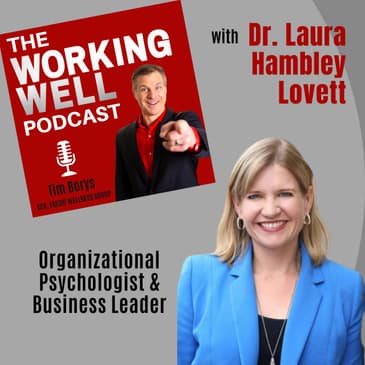
To shed some light on these challenges and solutions, I’m excited to have Dr. Laura Hambley Lovett on the show today. She’s a rockstar PhD and organizational psychologist who was researching remote work way back in 2003.
Dr. Laura is an Organizational Psychologist and expert on workplace psychology with a specialty on the future of work and career development. Her work passion is creating cultures where people stay and thrive, so that companies can attract top talent.
Dr. Laura has founded several psychology and consulting practices, including Canada Career Counselling in 2009, where registered psychologists help 1000s of Canadians navigate their career and workplace challenges, and support organizations with career transitions.
She holds a Ph.D. in Industrial/Organizational Psychology from the University of Calgary, where she is currently an Adjunct Professor. Dr. Laura received a Canadian Women of Inspiration Award as a Global Influencer in 2018.
Powered by the WRKdefined Podcast Network.
[00:00:00] Remote Work, Hybrid Work, and Back to Office Orders
[00:00:04] These topics are taking up a lot of bandwidth these days
[00:00:07] And a key part of this focus is because companies are still coming to terms with the massive workplace changes over the past few years
[00:00:16] This has led to a mental health epidemic that doesn't seem to be going away
[00:00:21] One that's causing rising levels of stress and burnout in the workplace
[00:00:25] Now to shed some light on these challenges and talk about solutions
[00:00:29] I'm excited to have Dr. Laura Hambly love it on the show today
[00:00:33] She's a rockstar PhD and organizational psychologist who was researching remote work back in 2003
[00:00:41] As an organizational psychologist and expert on workplace psychology
[00:00:45] Dr. Laura has a specialty on the future of work and career development
[00:00:50] Her work passion is creating cultures where people stay and thrive so that companies can attract top talent
[00:00:58] Dr. Laura holds a PhD in industrial organizational psychology from the University of Calgary
[00:01:04] Where she is currently an adjunct professor
[00:01:07] She also received the Canadian Women of Inspiration Award as a global influencer in 2018
[00:01:13] Welcome to The Working Well Podcast
[00:01:18] The show that explores the rapidly changing landscape of work and well-being
[00:01:22] Each episode we dive into the hottest topics in leadership, employee well-being and the future of work
[00:01:28] I'm your host Tim Borus
[00:01:30] Dr. Laura, great to have you on the show
[00:01:34] Welcome to The Working Well Podcast
[00:01:37] Thank you so much Tim, it's a pleasure to be here and working with what I'm all about as well
[00:01:43] Exactly, I've been excited to have you on the show for a while
[00:01:46] And we've got lots of topics to cover
[00:01:50] We had discussed a number of different things
[00:01:52] And I'm curious to hear your perspective on things like remote work and toxic workplaces
[00:02:00] And how those come into play
[00:02:02] And some of the changes that we've been facing over the past few years
[00:02:07] Where do you want to start today?
[00:02:09] Wow, maybe some of the changes that we've been facing
[00:02:16] So the bigger picture context that we're in
[00:02:20] And then how that impacts people's lives and the ways they want to work
[00:02:25] And the leadership skills that are needed going forward
[00:02:28] Absolutely, and that's a lot about what you do in your work as well
[00:02:34] And even some of the research you've pulled in
[00:02:37] I know you're an adjunct professor at the university
[00:02:40] What are the changes you're seeing over the past few years in employment in general
[00:02:47] But particularly toxicity of workplaces
[00:02:52] Sure, so essentially I have specialized in remote and distributed work
[00:03:00] So working apart from one another, teleworking the human dynamics of all of that
[00:03:06] The considerations from a leadership perspective
[00:03:09] The considerations from a personality perspective
[00:03:12] And how some people adjust really quickly to working remotely
[00:03:16] And other people struggle without that structure and routine of the office
[00:03:21] But COVID changed everything in terms of almost everybody
[00:03:27] In some way, shape or form was doing that
[00:03:29] Or exposed to that with their loved ones
[00:03:32] And pivoting to remote over the period of a number of weeks essentially
[00:03:37] And so it really turned things upside down in terms of people's experience
[00:03:43] Of being able to work remotely, being able to have more flexibility in their lives
[00:03:49] And we thought of it as researchers, we thought of it as
[00:03:53] Wow, this is like a huge pilot project
[00:03:56] And this is actually being taken up in a widespread manner
[00:04:00] And we have to spread the messages about what works and what doesn't
[00:04:04] And how to lead it and manage it
[00:04:06] But the genie is out of the bottle
[00:04:08] So that's one of the biggest things is now the genie is out of the bottle
[00:04:12] People have experienced it
[00:04:14] And the latest trend is there's a widespread mix really going on
[00:04:19] There's a mix of pulling everyone back into the office
[00:04:22] So some companies are declaring that
[00:04:24] Those are the ones that tend to make it into the media
[00:04:27] And then there's a lot that are saying
[00:04:29] No, we're going to continue along this line of flexibility
[00:04:32] And use it as a way to keep our organization healthy
[00:04:36] To keep a strong culture and to retain talent
[00:04:40] And attract new talent
[00:04:43] Yeah, I'm definitely seeing a lot of those things as well
[00:04:46] And let's just to clarify
[00:04:48] You've been doing research on remote work
[00:04:50] Well, I've been waiting for it was cool to do
[00:04:53] When did you start researching remote work?
[00:04:56] In 2003
[00:05:00] Yeah
[00:05:02] Yeah, so I did my doctoral research on that
[00:05:05] And I did a really large study of teams that were communicating
[00:05:10] By video conference versus teams that were communicating
[00:05:13] By text based chat
[00:05:16] And then teams that were communicating face to face
[00:05:18] And then how each team went about solving problems
[00:05:21] Communicating and what leadership styles worked best
[00:05:25] For those different, we call them media
[00:05:28] Different communication media
[00:05:31] And it was so funny because the video platform we used back in 2003
[00:05:36] Is similar to Zoom
[00:05:38] Everybody's in a square on the screen
[00:05:41] But I have photos of that
[00:05:43] It's really retro but it's as if Zoom
[00:05:47] Was a premonition back in those days
[00:05:50] Yeah, and I think people forgot
[00:05:55] Or people forget that this wasn't anything new
[00:05:58] There was a significant section of the population of the workforce
[00:06:02] That was working remotely
[00:06:04] Even people that traveled all the time
[00:06:07] And in the fitness well-being side
[00:06:11] We had clients for probably
[00:06:14] We've had clients for 15 years that we've worked with remotely
[00:06:17] Because they were traveling for work
[00:06:20] And we would still do our coaching sessions with them
[00:06:23] And we would do some over video, some over phone
[00:06:27] It didn't really matter just based on the circumstances of that person
[00:06:33] And this isn't something new
[00:06:36] But the volume of people going through it
[00:06:39] As you said was a huge social experiment
[00:06:44] People were thrust into it unwillingly
[00:06:47] I guess you would say at that point
[00:06:50] Yeah, and then with this
[00:06:52] But people are changing
[00:06:55] There's some way more focus now on mental health
[00:06:58] Than there's ever been
[00:07:00] Which is really great as a psychologist
[00:07:03] To see that really being less stigmatized
[00:07:07] Than it was before
[00:07:08] I say less because it's still stigmatized
[00:07:10] But less so there's more open conversations
[00:07:13] And more people being vulnerable and authentic
[00:07:16] About their own mental health struggles
[00:07:18] Or those of their families
[00:07:20] And so that's gaining a lot of attention out there
[00:07:24] Which I think is really needed
[00:07:27] Because we're in a mental health pandemic
[00:07:30] It's an after shock of the pandemic
[00:07:33] And the world is very uncertain
[00:07:36] There's lots of challenges and the news is typically negative
[00:07:40] And I think people are struggling
[00:07:43] So that's another trend that I focus a lot on
[00:07:49] What are the key reasons you're seeing
[00:07:53] About why people are struggling and continue to struggle?
[00:07:56] I think there's lots of reasons
[00:07:58] So there's reasons that have to do with work and career
[00:08:02] And there's reasons that have to do with non-work
[00:08:04] And life and family and relationships
[00:08:07] And all those kinds of things
[00:08:09] I decided as a psychologist
[00:08:10] I wanted to focus on work and career
[00:08:13] Because people spend a lot of their waking time
[00:08:16] In those domains
[00:08:17] And not a lot of psychologists
[00:08:20] At that time were specializing in that
[00:08:22] There's way more that specialize
[00:08:24] In clinical and counseling
[00:08:26] Than work and career specifically
[00:08:29] So I got into my niche
[00:08:31] Turns out that you can't separate career and work
[00:08:34] With the rest of life
[00:08:36] Especially in a remote work environment
[00:08:40] Yeah, but in general
[00:08:42] People bring themselves to work
[00:08:45] If work is in an office or work is at home
[00:08:48] You're dealing with human beings
[00:08:50] And the whole mental health conversation
[00:08:53] Coming into workplaces and the pandemic
[00:08:56] It's really blended the two
[00:08:58] And I've had to blend the two as well
[00:09:01] As my master's is in counseling psychs
[00:09:04] So I have that background
[00:09:06] But my PhD being an organizational
[00:09:08] Which is a different lens
[00:09:09] But both really overlap these days
[00:09:13] And I'm pulling on both fields
[00:09:15] In addition to business
[00:09:16] Because in the end of the day
[00:09:17] If you don't have a thriving business
[00:09:19] Nobody's gonna have a job
[00:09:21] So it needs to be tied in
[00:09:24] To organizational success
[00:09:28] Yeah, I agree wholeheartedly
[00:09:30] I'm seeing a lot of companies these days
[00:09:34] Especially being a wellness
[00:09:36] Has always been the first thing to go
[00:09:38] When times are tight
[00:09:40] And in the workplace
[00:09:43] Since COVID
[00:09:44] There's so much more awareness around that
[00:09:47] And one of the trends I've noticed is
[00:09:51] This, I guess, slide or lean
[00:09:55] Or focus on digital
[00:09:57] And everyone's got the mental health apps
[00:10:00] And they can be amazing tools
[00:10:03] But without addressing the interpersonal factors
[00:10:08] Within the organization
[00:10:10] All the mental health apps and websites
[00:10:14] And portals are essentially useless
[00:10:17] Because they're just at band-aids
[00:10:20] Yes, totally
[00:10:23] And I've been focused a lot on culture
[00:10:26] Over the last number of years
[00:10:28] And if you have a toxic culture
[00:10:31] All of those band-aids won't work
[00:10:33] Because it's going to make people sick
[00:10:35] Basically, it's going to make people unwell
[00:10:38] And a culture can turn into a toxic one
[00:10:42] In a heck of a hurry
[00:10:43] If you have toxic people at the top
[00:10:46] So I am starting a research project
[00:10:48] On the behaviors and
[00:10:51] How do I say it?
[00:10:53] The behaviors and impacts of toxic leadership
[00:10:55] In organizations
[00:10:57] So how would you define toxic leadership?
[00:11:01] So toxic leadership are
[00:11:03] When someone in a supervisory position
[00:11:06] Or a position where they have direct reports
[00:11:10] And that can be from the CEO
[00:11:12] All the way to a first-time supervisor
[00:11:15] Is when their behaviors do damage
[00:11:18] To the person's ability to be productive
[00:11:21] And their ability to feel well
[00:11:24] About themselves, their confidence
[00:11:26] Their stress, their well-being
[00:11:29] And it can take a variety of forms
[00:11:32] And I'm still on a learning journey with this, by the way
[00:11:34] But it can take the form of narcissistic behaviors
[00:11:38] Bullying abusive behaviors
[00:11:41] Passive aggressive leadership
[00:11:44] Sliding a whole bunch of other things as well
[00:11:48] But those are some examples
[00:11:51] Yeah, and then I guess from what you said
[00:11:54] Is the culture is in part determined
[00:11:57] By the actions of all the leaders
[00:11:59] But how do the individual leaders
[00:12:01] In the cultures interact with each other
[00:12:03] Across the whole organization?
[00:12:06] And what are some of the...
[00:12:08] Oh gosh, I always say I think culture
[00:12:12] You can have an organizational-like culture initiative
[00:12:15] Or have a culture that is something
[00:12:18] That you work on as a company
[00:12:21] But the bigger the company, the more subcultures there are
[00:12:25] Just by the way of how it's structured
[00:12:28] And you can have one subculture being toxic
[00:12:32] While some of the others aren't
[00:12:35] But the problem is toxicity tends to spread
[00:12:38] And you have to be very vigilant about
[00:12:42] Looking at it, understanding it, seeing it
[00:12:45] Where it is, catching it, finding it
[00:12:48] And that needs to be something that's done from the top
[00:12:51] But the problem is at the top, if you have too much ego
[00:12:55] It's really difficult to let the ego
[00:12:59] Aside so that you can actually
[00:13:02] Want to understand and understand your impact
[00:13:06] And try to make a difference throughout the organizational culture
[00:13:11] I have a lot to say on this, but it's something
[00:13:14] I'm really passionate about
[00:13:16] And I think culture is formed leader by leader
[00:13:18] So you've got to address the leadership
[00:13:21] Yeah, and you made a good point about starting at the top
[00:13:24] Really comes down to what are senior leaders
[00:13:28] Willing to put up with
[00:13:31] And the actions and behaviors
[00:13:34] What gets rewarded, what gets ignored
[00:13:37] What gets addressed directly
[00:13:40] And we see, at least I've seen
[00:13:44] In clients who worked with a big disconnect between
[00:13:47] The marketed culture of the organization
[00:13:51] And the day-to-day reality
[00:13:54] The super driven results at all costs
[00:13:58] Leaders get rewarded financially
[00:14:01] They get promoted
[00:14:04] So it's looking at the not just the what
[00:14:07] Or the results, but looking at the how
[00:14:09] And the human impact
[00:14:11] And there's no doubt about it
[00:14:13] The human impact, if you have toxicity
[00:14:15] Eventually it's going to harm your production
[00:14:18] And your success
[00:14:20] It just may take a while
[00:14:22] And yeah, it's really tricky
[00:14:26] But it's a values-based thing
[00:14:28] It's about what do you really value
[00:14:30] As a culture and an organization
[00:14:32] And you shouldn't be putting up those values
[00:14:34] If they're not showing through in behaviors
[00:14:37] And leaders are being held accountable
[00:14:39] And people are being held accountable
[00:14:41] For honoring and living out those values
[00:14:44] Otherwise it does so much damage
[00:14:46] With the hypocrisy of all of that
[00:14:48] Agreed, yeah, and I've seen
[00:14:53] Coaching clients come in and their
[00:14:56] This is an event session about
[00:14:58] What their workplace is like
[00:14:59] And what their boss did today
[00:15:01] And what the, I guess
[00:15:04] The organizational or operational
[00:15:07] Norms that are in place
[00:15:10] Are not useful or functional
[00:15:12] And they're creating this tension
[00:15:14] And stress and teams and departments
[00:15:19] Because of what leaders are
[00:15:23] Not addressing or what they're just
[00:15:26] Not even noticing sometimes
[00:15:29] And I think another trend is that
[00:15:32] Young people, younger generations
[00:15:35] Are not wanting to put up
[00:15:38] With as much of the corporate BS
[00:15:41] As maybe the generations before
[00:15:44] Where for boomers, oh it was a rite
[00:15:46] Of passage, it was just the way
[00:15:48] It was done, right?
[00:15:49] For my generation, generation X
[00:15:51] It was, yeah we don't like it
[00:15:53] But you gotta, you don't want
[00:15:56] To risk your job or, right?
[00:15:58] But the younger generations are saying
[00:16:00] You know what, I'll leave
[00:16:02] I'll go to the next one
[00:16:04] If it doesn't align with my values
[00:16:06] And if it doesn't make sense
[00:16:08] And it's, it doesn't make sense
[00:16:11] For me to be in an office 40 hours a week
[00:16:14] Doing things on my computer
[00:16:16] That I could do half the time from home
[00:16:18] That that doesn't make sense
[00:16:20] So I think that an organization
[00:16:22] Has to be really careful about flexible work policies
[00:16:24] Because bringing everyone back to the office
[00:16:28] Is a sign of a culture of distrust
[00:16:31] And a sign of a culture where
[00:16:34] Presenteism is key to performance
[00:16:39] And I think those are really
[00:16:42] Dangerous traits to have as a culture
[00:16:45] If you don't trust your people
[00:16:47] And that's why you're bringing them back
[00:16:49] And then they use the reason
[00:16:51] Our culture is better if we're together
[00:16:53] And say, but do you need to be together
[00:16:55] 40 hours a week? Really?
[00:16:57] Are you making great use of that 40 hours
[00:16:59] Every hour counts for collaboration and culture
[00:17:02] Or are people on their computers a lot
[00:17:05] Getting work done that they could have done
[00:17:07] Other places
[00:17:09] And you brought up two points there
[00:17:11] One is trust and we will dive into that
[00:17:13] For sure and the other one was
[00:17:15] The presenteism aspect
[00:17:17] And that's something that's not addressed
[00:17:19] A lot in workplaces
[00:17:21] But something that I've over my career
[00:17:23] Tried to promote and really raise awareness
[00:17:26] Of in organizations when we're consulting with them
[00:17:29] Is all the studies about how
[00:17:33] Actually effective and productive people
[00:17:35] Are throughout the day are stunningly low
[00:17:39] In terms of presenteism
[00:17:41] And there are lots of factors that contribute
[00:17:43] To that as you said
[00:17:45] External to work as well as internal
[00:17:48] But it's three, three and a half hours per day
[00:17:52] That people are actually directly focused
[00:17:56] And productive from some of the more recent studies
[00:17:58] That I've seen
[00:18:00] And that is crazy
[00:18:04] Yeah, it's definitely not 40 hours
[00:18:07] Actually talking to the gentleman Andrew Barnes
[00:18:10] Who was one of the founders
[00:18:12] Of the four-day workweek global movement
[00:18:15] And that's exactly what they find
[00:18:18] Is that people don't need to be employed
[00:18:21] For five days a week
[00:18:23] They can do it in four
[00:18:24] And when they do it in four
[00:18:25] They're more productive on those four days
[00:18:27] In order to honor the flexibility
[00:18:30] Of the fifth day in their lives
[00:18:33] Do you know what I mean?
[00:18:34] They get as much done in the four days
[00:18:37] And the data says that over
[00:18:40] And I'm going to learn more about that
[00:18:41] I'm going to read their latest data
[00:18:43] But it's just what you say, Tim
[00:18:46] It's that people are not productive
[00:18:49] Eight hours a day, five days a week
[00:18:52] On average
[00:18:53] And that's another factor
[00:18:54] That I've addressed in various programs
[00:18:57] We've run too is that the whole mindset
[00:19:00] Of leaders and this comes back to
[00:19:02] The trust that you talked about
[00:19:04] Is you got a clock in it, nine o'clock
[00:19:06] And you clock out at five
[00:19:08] And whether you're actually using
[00:19:09] A physical punched clock
[00:19:11] And no one uses that anymore
[00:19:12] But there's the mindset of this
[00:19:14] Nine to five
[00:19:15] You show up and do your work
[00:19:17] And you take your lunch break, maybe
[00:19:19] And then you work till the end of the day
[00:19:23] A lot of people, especially when we talk
[00:19:26] About neurodiversity have trouble
[00:19:29] In that box
[00:19:32] And by adapting and adjusting
[00:19:35] What we do and how we approach work
[00:19:38] We're able to not only help people
[00:19:41] Be happier, healthier and thrive
[00:19:44] But be more productive
[00:19:46] They will get more work done in less time
[00:19:49] By structuring the work day
[00:19:52] In ways that help people improve their energy
[00:19:56] Improve their focus, improve collaboration
[00:19:59] And teamwork and do all these things
[00:20:01] And a lot of that doesn't have to do
[00:20:03] With being physically in the same office
[00:20:05] Exactly
[00:20:07] Yeah, culture is not just the physical artifacts
[00:20:10] And the bumping into each other in the halls
[00:20:12] And culture is so much more than that
[00:20:15] It's how you rally around someone who's struggling
[00:20:18] And it's how you serve a client
[00:20:21] Who needs something from you
[00:20:23] And how you make decisions
[00:20:24] And how much autonomy and trust you have
[00:20:27] That's all part of being in a culture
[00:20:30] And yeah, I call BS on
[00:20:32] You need to be together 40 hours a week
[00:20:34] Unless you're on an assembly line
[00:20:36] Where the thing that I'm doing goes to Tim
[00:20:38] And then it goes to the next person
[00:20:40] Yeah, we need to be together for that
[00:20:42] But yeah, I have news
[00:20:43] Anything repetitive like that will be AI in the future
[00:20:47] And...
[00:20:49] From what we've talked about before
[00:20:52] And what I've seen from some of your work
[00:20:54] Is talk a little bit more about the remote work
[00:20:57] And the hybrid
[00:20:59] Being able to still maintain an effective culture
[00:21:03] What types of things need to happen for that to
[00:21:07] Thrive
[00:21:08] For people to thrive in remote or hybrid culture
[00:21:12] Yeah, so first of all it's...
[00:21:15] Again, I think culture is team by team
[00:21:18] So each team or unit or working unit
[00:21:22] Might have different idiosyncrasies
[00:21:24] In the way that they do their work
[00:21:26] And the way that they collaborate
[00:21:28] And the coordination and handoff of things
[00:21:31] Etc
[00:21:32] So if you think of a team of programmers
[00:21:34] Compared to a team of sales people
[00:21:37] It's very different
[00:21:39] Like it's the amount of the verbal exchange
[00:21:41] The amount of client interaction
[00:21:43] Etc
[00:21:44] So we have to say A, it's not a one size fits all
[00:21:47] B, it differs team by team
[00:21:50] And there's this concept that I talk a lot about
[00:21:52] Called me versus we
[00:21:54] So it's important that as a leader
[00:21:56] You understand what Tim's needs are
[00:21:59] What Laura's needs are
[00:22:01] We may each have different needs
[00:22:03] In terms of I might really appreciate
[00:22:07] Going into an office, right?
[00:22:09] I might have two little kids at home
[00:22:11] With a nanny and I need to get out of that house
[00:22:15] Because it's gonna...
[00:22:16] The kids are gonna constantly interrupt me
[00:22:18] I may not have a good home office set up
[00:22:21] In my home
[00:22:22] And I love the structure of the office
[00:22:24] And I may need that
[00:22:26] And people on the other hand may have a place in Camor
[00:22:29] That you want to spend Thursday through Sunday at
[00:22:32] And you may want to and need to work remotely
[00:22:35] In order to do that a day or two a week
[00:22:37] And then someone else might prefer three days a week
[00:22:40] Remote because of the nature of their job
[00:22:42] So it's important to understand
[00:22:44] Each of us have unique needs
[00:22:46] In terms of our lives, our commute times
[00:22:49] Our...the ability to work
[00:22:51] Based on our personality and our work style
[00:22:55] On top of that, there's the we
[00:22:57] What we need as a team
[00:22:59] What we need to help serve the other people on our team
[00:23:03] Like what our leader needs, right?
[00:23:06] It's about, okay, what are the broader needs here
[00:23:09] And let's find a compromise that'll serve me and we
[00:23:13] And as a team we'll figure out
[00:23:15] Okay, how many overlap days do we need
[00:23:18] And during those days
[00:23:19] What are we going to intentionally focus on
[00:23:21] To make the best possible use
[00:23:23] Of the interactive in person time
[00:23:26] And then when we're apart
[00:23:27] How are we going to communicate
[00:23:29] How are we going to stay in sync, etc
[00:23:31] And what are my expectations when I reach out
[00:23:34] What hours will you be available
[00:23:36] How quickly will you respond
[00:23:38] And you start to build trust that way
[00:23:41] In terms of you're there when you say you'll be there
[00:23:44] And you're reliable and work gets done
[00:23:46] Regardless of where you are
[00:23:48] So that's the way that I always suggest it is
[00:23:52] To do a team playbook or charter
[00:23:54] Around how each team is going to function
[00:23:57] In a hybrid model
[00:23:59] Yeah, and that realistically should be happening
[00:24:03] Whether you're in the office or not
[00:24:05] Is here's our mission vision values
[00:24:07] Here's our purpose
[00:24:08] Here's the goals we're shooting for
[00:24:10] Here are the expectations of how we interact as a team
[00:24:14] And here are the check-ins
[00:24:16] And my wife likes to say trust but verify
[00:24:19] Trust that people are going to want to do the work
[00:24:23] But you need to verify by checking in with them
[00:24:26] One thing I've seen over the past few years
[00:24:30] Talking to coaching clients and just colleagues
[00:24:33] Within the corporate industries
[00:24:36] Is that great leaders are people focused
[00:24:43] And they're checking in
[00:24:45] And they're making sure that their teams have what they want
[00:24:48] And they were doing that before
[00:24:50] But it's really highlighted for leaders
[00:24:54] Since we've moved to the remote or hybrid
[00:24:59] Is because technical leaders that are used to doing the work
[00:25:03] And not leading people
[00:25:06] Are their teams are languishing
[00:25:10] Because they're not checking in with them
[00:25:13] They're not making that personal connection
[00:25:16] They're not helping them work through the challenges
[00:25:20] You need to show up at the office
[00:25:22] So I can make sure you're there and doing your work
[00:25:24] It's to you, yeah
[00:25:26] Exactly, bums and seats, right?
[00:25:28] Yeah, it's just...
[00:25:30] And the younger generations
[00:25:32] Some of them are going to copy us on this
[00:25:34] And they already are and they'll walk
[00:25:36] Yeah
[00:25:38] Yeah, it's the...
[00:25:41] I love the fact that the younger generations
[00:25:43] Are not putting up with the status quo
[00:25:46] As a business owner, entrepreneur
[00:25:48] Like the corporate world has not ever made a lot of sense to me
[00:25:52] Because even when I was a personal trainer many years ago
[00:25:56] I would deal with the aftermath or the fallout
[00:25:59] Of stress and burnout in the workplace
[00:26:02] And people would come to go to the gym
[00:26:04] And I'm like, you're a mess
[00:26:06] Your body's not ready to perform in the gym
[00:26:09] Because you're not taking care of yourself
[00:26:11] Your work environment is toxic
[00:26:14] The laundry list of things that weren't happening
[00:26:18] Yet that was just seen as the status quo
[00:26:21] It's like, we've got to do the grind
[00:26:23] We've got to put in the work
[00:26:25] I just have to put up with it
[00:26:27] Because that's what's always been done
[00:26:29] And now this next generation is like, hell no
[00:26:31] I don't want that
[00:26:33] Yeah
[00:26:36] How long do you think it's going to take to
[00:26:38] Create and get the flywheel going for long-term change?
[00:26:44] Oh Lord, first of all, generations
[00:26:47] So there's lots of, there's mindsets
[00:26:49] And you can have generational tendencies
[00:26:52] And not be in that generation
[00:26:55] So sometimes I'm seeing leaders who are in their 30s
[00:26:59] Okay, that have boomer mentalities
[00:27:02] When it comes to work as a place
[00:27:05] Not an activity, I must see you
[00:27:07] So just because someone's in a younger demographic
[00:27:10] Does not mean that they are open to flexibility and trust
[00:27:16] But I think overall, if we were to look at the trends in general
[00:27:20] I think the genie's out of the bottle
[00:27:22] This isn't going away
[00:27:24] And people will speak with their feet
[00:27:26] The problem is we have an unstable economy
[00:27:29] With high interest rates
[00:27:31] And the market has softened
[00:27:33] And now employers are saying, okay
[00:27:35] Yeah, no, I'm not worried about losing people
[00:27:37] Where are they going to go?
[00:27:39] Versus before it was the great resignation
[00:27:41] And the fight for talent
[00:27:43] Now they get way too complacent too quickly
[00:27:46] And I think what's going to happen is the next time
[00:27:50] There's a shortage of talent, etc
[00:27:53] It's the ones that espouse flexibility
[00:27:56] And trust their people and have healthy
[00:27:59] Versus toxic cultures
[00:28:01] Where people are going to want to work
[00:28:03] End of story
[00:28:06] Yeah, and we're already seeing some of that
[00:28:11] But like you said, I think it will take
[00:28:14] Quite a bit longer to really see the longer term impact
[00:28:18] Of living into people and culture more
[00:28:26] Than just flat out business results
[00:28:29] The companies that focus on both
[00:28:31] Are going to thrive long term
[00:28:35] I really believe that
[00:28:37] 100% believe that
[00:28:39] And I believe in the impacts
[00:28:41] I believe in karma, I believe in
[00:28:43] If you are negatively treating people
[00:28:47] Chances are it's going to come back at you
[00:28:50] So you've got to be very...
[00:28:53] How you treat people matters
[00:28:55] And I just posted on this today
[00:28:57] How you treat people in layoffs matters
[00:29:00] Because it's the people who stay
[00:29:02] Who remember how you treated their friends and colleagues
[00:29:07] And it's those friends and colleagues
[00:29:09] Who are gone that they're going to either say
[00:29:12] Neutral things about your company
[00:29:14] Or terrible things
[00:29:16] Or maybe good things
[00:29:18] Depending on how you handled it
[00:29:20] Maybe they were ready for a change too
[00:29:22] They were handled with dignity
[00:29:24] Treated fairly
[00:29:25] Given a good package
[00:29:27] Given career transition support
[00:29:29] Which is one of the things
[00:29:31] My company Canada Career Counseling does
[00:29:33] But they're treated with fairness
[00:29:36] And then they're likely to be ambassadors
[00:29:38] Versus out to get your culture
[00:29:41] Flaming it on Glassdoor and indeed
[00:29:44] Despite all this negative energy
[00:29:46] Out there is not good for your reputation
[00:29:50] On that note, we've got
[00:29:52] A lot of companies now
[00:29:54] Back to work five days a week
[00:29:56] What are the repercussions of that?
[00:29:58] So first of all, the wording
[00:30:00] Back to work is something that I'm on a mission
[00:30:02] To change because it's not back to work
[00:30:04] It's back to the office
[00:30:06] Yes
[00:30:07] Back to work is actually
[00:30:09] A form of microaggression
[00:30:11] Because it's like you weren't working that hard
[00:30:13] Before Laura
[00:30:14] Get your butt into this seat
[00:30:16] And then you'll be working hard
[00:30:18] Yeah
[00:30:19] So it's subtle
[00:30:21] That it's a languaging thing
[00:30:23] And you can't catch it all over the place
[00:30:25] I'm so glad you mentioned that
[00:30:27] Don't worry, it's easy
[00:30:29] I've even done it, right?
[00:30:31] My husband, you always do it
[00:30:33] I correct him every time
[00:30:35] And then it starts to take
[00:30:37] 150 corrections because
[00:30:39] It's work is a place
[00:30:42] It's like a noun
[00:30:44] It's combined as a verb
[00:30:47] And a noun in one
[00:30:49] And this whole notion
[00:30:51] Of where you can work from other places
[00:30:53] Is it's about the notion of
[00:30:55] Where are you working from today?
[00:30:57] And if I'm calling everybody back
[00:30:59] Five days a week
[00:31:01] You better have a profound why
[00:31:03] About that
[00:31:04] Because people are going to see through the BS
[00:31:06] And they're going to see, you don't trust me
[00:31:08] You don't care about
[00:31:10] Where I work best
[00:31:12] You don't care about
[00:31:14] Soul-sucking commutes
[00:31:16] That I'm going to have to do
[00:31:18] And I'm going to be on
[00:31:20] Online a lot of the time anyway
[00:31:22] It's just, it has to be well thought out
[00:31:26] And you need to hear your employees' voices in it
[00:31:29] And I've just seen senior leadership
[00:31:31] Just say enough everybody back
[00:31:33] We're not doing this hybrid thing
[00:31:35] We don't do hybrid
[00:31:37] We come together as a culture
[00:31:39] And I would say that's a symptom
[00:31:41] Of not a great culture
[00:31:43] I'd be shocked if it's a great culture
[00:31:45] And you've done that to your people
[00:31:47] And the牛 has one percent
[00:31:49] Yes, absolutely
[00:31:51] And I'd say it's a failure in leadership
[00:31:53] To build that
[00:31:55] The trust, the accountability
[00:31:57] The skills in there
[00:31:59] They're leaders across the organization
[00:32:01] To create thriving teams
[00:32:04] And thank you again
[00:32:06] For bringing up the point
[00:32:08] Of the back to work
[00:32:10] Versus back to office
[00:32:12] It's very much like the social distancing
[00:32:14] Versus physical distancing
[00:32:16] know, we're just physically not together, but we're still
[00:32:19] connected and we can still build a relationship and a culture
[00:32:22] and teams.
[00:32:26] Exactly. Maybe because I've done it my whole career. So when I
[00:32:29] finished my masters in 1999, I was on virtual teams and my
[00:32:35] team was in Calgary, Toronto and New York. And then we got
[00:32:39] acquired by a global firm. So I had colleagues all over and I
[00:32:43] was used to communicating and collaborating from a distance. And
[00:32:47] I felt like I had some really good mentors. I had some really
[00:32:51] good colleagues. I had some colleagues that we developed
[00:32:54] great bonds before we even met in person. And I experienced all
[00:32:59] that. And anyone that says you can't have culture unless you're
[00:33:02] together every day, like, that doesn't make sense to me.
[00:33:07] Wholeheartedly. Yeah, I've had some great guests on the show
[00:33:10] that have built globally distributed teams and companies
[00:33:16] and are thriving. You can absolutely do it. And people
[00:33:21] say, Oh, that's just like software. We're not a software
[00:33:24] company. And it's not just that. It's the mindset of
[00:33:28] leadership to put the work into change their skill set and
[00:33:33] change their perspective on what it takes to build thriving
[00:33:39] teams and people.
[00:33:41] Exactly. And it's not a one size fits all. And it's not a one
[00:33:45] size fits all for a team. Every team is different. And again,
[00:33:49] like coming to the office every day that if that works for you
[00:33:52] and your job, then great, right? Awesome. It just doesn't
[00:33:57] work for everyone.
[00:33:58] Yeah.
[00:34:00] And explain a bit about what your definition is of flexible
[00:34:04] work. Flexibility can be time. So you can have flexibility
[00:34:10] about your start time, your end time, that sort of thing. Time
[00:34:15] is one metric. And then location is another metric. So
[00:34:19] you're flexible to work. And usually it's from home, but
[00:34:23] you're flexible to work from home, your recreational
[00:34:26] property, a coffee shop if you focus well in that way, who
[00:34:30] know, security issues and stuff to play into all of this, of
[00:34:34] course. But it there's the flexibility is about time and
[00:34:40] location primarily.
[00:34:44] And how does that relate to mental health? What are the
[00:34:48] stats showing or study showing?
[00:34:51] Yeah, so it's idiosyncratic. So it depends on the person,
[00:34:56] right? So some people get get their most social connection
[00:35:01] through coming into an office and being around human beings,
[00:35:05] because maybe they do not have that in their personal life.
[00:35:10] Maybe they're single, they live alone, they're quite
[00:35:13] isolated. And those ones really struggled during the
[00:35:16] pandemic really sucked for them. So like those people, if
[00:35:23] you eroded an office and you said we're going to be 100%
[00:35:26] remote, it probably wouldn't be as good for their mental
[00:35:29] health. On the flip side of it is some people who have social
[00:35:35] anxiety or different forms of anxiety, they or their hike
[00:35:40] they're sensitive, they're highly sensitive person, or
[00:35:44] they're neuro divergent, right? Certain forms of neuro
[00:35:48] divergence and neuro diversity do better from a home location.
[00:35:54] They're less triggered, there's less things in the environment
[00:35:57] that'll distract them or impact their stress levels, their
[00:36:03] focus, their productivity, micro aggressions. So diverse
[00:36:07] groups report fewer micro aggressions when you don't
[00:36:11] have the face to face comments of the office and things or
[00:36:16] in groups, out groups of the office. So I'm the one who sees
[00:36:21] everyone going to lunch and I'm not invited things like that,
[00:36:25] but it can be those in groups and out groups form more easily
[00:36:29] at the office. So those are just considerations, but
[00:36:34] flexibility is inclusivity. So if you don't have
[00:36:38] flexibility, you're not being as inclusive with
[00:36:40] different working needs and personal needs.
[00:36:46] And how does just autonomy of choice fit into it? I know one
[00:36:52] of the if we go to the Gallup like the Q12 or whatever, one of
[00:36:58] the questions is, do you feel you have control over your
[00:37:03] decisions at work? And how would flexibility fit into that
[00:37:09] if people can choose whether they come into the office or
[00:37:11] not? I know that's another form of autonomy. But what are
[00:37:14] you seeing in that area?
[00:37:16] It's a huge form of autonomy. And one of the reasons people
[00:37:19] are resisting this call back and heard the cattle back to the
[00:37:23] office, I call it is because they are losing their autonomy.
[00:37:28] And they're losing the choice. And when you take away
[00:37:32] choice from people that had the choice, it's not a good
[00:37:36] thing. It's like the gift of flexibility is a gift and
[00:37:40] you're taking it away. It's almost like saying to someone,
[00:37:45] you're going to get a bonus and then you're not going to get a
[00:37:47] bonus, right? So it changes the conditions of your, your work
[00:37:54] agreement, whether it's a paper agreement or a psychological
[00:37:57] contract, where you came on to this company because they
[00:38:01] did have flexible work and they did trust me to work two
[00:38:05] days from home and now they're trusting me to work zero
[00:38:08] days from home. So my choice is taken away. That's a real
[00:38:11] problem for human motivation and commitment.
[00:38:16] And I know I'd be conscious of our time today, and this could
[00:38:20] be a whole other podcast episode on its own, but to open
[00:38:23] Pandora's box by saying how does that lead into the stress
[00:38:27] burnout equation?
[00:38:31] I honestly think
[00:38:35] Pivoting back to full time in the office scenario impacts
[00:38:41] people's stress and it is a condition in a workplace that
[00:38:45] can contribute to burnout in some people, depending on a whole
[00:38:51] number of factors. But it definitely works against
[00:38:56] wellness overall. It works against wellness overall. And
[00:39:01] I'm not a fan of 100% remote either in a lot of cases. I
[00:39:05] think if a company's declared 100% remote, that's fine.
[00:39:10] People can self select into that. And I've seen great
[00:39:13] examples of that working well. But it's, it's I think a lot
[00:39:17] of times people do benefit from some over a lot time and the
[00:39:23] two three days split tends to be the best in terms of most
[00:39:28] people's personality and lifestyles can fit somewhere in the
[00:39:32] two three days split. And then you have exceptions to that such
[00:39:36] as the one day remote or the one day in the office sort of
[00:39:41] things, but the value proposition of having an office
[00:39:44] and stuff and utilizing it to come together two or three
[00:39:47] days seems to be what makes a lot of sense for a lot of
[00:39:53] factors.
[00:39:54] Mm hmm. Well, I know some of the globally or nationally
[00:39:58] distributed remote first workplaces will use the like
[00:40:05] every quarter or something or a couple times a quarter, they'll
[00:40:08] bring everyone together in one spot and have more of a
[00:40:13] collaboration. And it can look like a lot of different things.
[00:40:16] It could be a planning day, a strategic day or all kinds of
[00:40:21] different I've seen lots of different options for that, but
[00:40:23] it brings people physically into one spot almost like many
[00:40:26] conferences once or twice a quarter and people have said
[00:40:32] it works really well. And then the rest of the time they're
[00:40:35] just connecting remotely. And yeah, so I'm seeing that and a
[00:40:40] lot of the local companies wouldn't necessarily have to
[00:40:44] go to that means but borrowing some of those strategies can
[00:40:49] work depending on again how you set the expectations. What's
[00:40:52] the psychological or even written contract that we have
[00:40:55] with people and how are we living into that and helping
[00:40:59] people?
[00:41:00] Exactly. Exactly. Yeah, there's a lot of work to be done in
[00:41:05] leadership in general I would say when you think of some of
[00:41:09] the best leaders that you've ever worked for they're not
[00:41:12] that many right there's a lot more stories people have of
[00:41:15] difficult leaders than great ones which is why I'm really
[00:41:19] driven to do this toxic leadership research to see the
[00:41:22] current state of toxic leadership post pandemic and in
[00:41:26] this end a lot of negative news in the media and all this
[00:41:29] going on. I'm curious about how toxic leadership is
[00:41:33] playing out. And my hypothesis is that it is a major
[00:41:39] contributor to mental health for people and to burn out.
[00:41:44] I yeah, I would support that hypothesis.
[00:41:49] That goes back to the old saying is people don't leave a
[00:41:52] company to leave their boss.
[00:41:55] Yeah, when we look at the number one
[00:41:59] cause of stress in the workplace it's usually conflict
[00:42:03] with their leader. Second would probably be workloads these
[00:42:08] days but I've seen lots of different stats on that so if
[00:42:11] we look long long term let's say mid midterm what about the
[00:42:17] next one to three years? What do you see as the shift you
[00:42:22] already said is not going away but how do you think it's
[00:42:24] going to evolve?
[00:42:28] I think there's good. It's going to be there's this
[00:42:31] pull to the way it was before which is almost
[00:42:34] nostalgic right I want it to be the way it was before
[00:42:37] where work is a building that you go to and there's
[00:42:41] going to be this continued hold there's going to be this
[00:42:44] resistance and a market conditions and then more
[00:42:48] people retiring from the oldest generation where we have a
[00:42:51] higher percentage of work is a place right they grew up
[00:42:54] with that they didn't grow up with the technologies. Once
[00:42:58] the generation Zed or C gets in there more and more in
[00:43:04] leadership roles I think that's going to be a major
[00:43:07] turning point but I think the road is paved now for
[00:43:11] organizations are going to use this and they're going to
[00:43:15] stake their claim in terms of I'm a flexible organization
[00:43:18] or I'm an organization where work is a place and then
[00:43:22] people will self select in and out or they'll leave
[00:43:25] yeah they'll leave the organizations that aren't
[00:43:28] fit and employers of choice ones who win the awards
[00:43:32] like best employer in Canada and stuff they'll tend
[00:43:35] to be ones that embrace flexibility and are human
[00:43:38] centric in their approaches and more mature when it comes
[00:43:42] to talent people treating talent well and developing
[00:43:47] people and supporting people as human beings.
[00:43:53] Yeah it comes down to marketing right what's who's
[00:43:55] your target market what's your what's your company
[00:43:58] about and I've had conversations with senior
[00:44:01] leaders where I've said hey it's like if you want
[00:44:04] to run a sweatshop like literally that's okay I
[00:44:08] might not agree with it but if that's what you
[00:44:11] envision market the crap out of that there are going
[00:44:14] to be people that resonate with that I'm going
[00:44:16] to pay you a lot of money show up at work shut
[00:44:19] up and go home and when you burn out I'll hire
[00:44:22] someone else and pay them lots of money like
[00:44:25] that's been the status quo in lots of industries
[00:44:30] for a lot of years and there are people that
[00:44:33] will do that but if that's how you are operating
[00:44:38] don't say you're a flexible workplace and you've got
[00:44:40] this great culture that's the biggest value
[00:44:45] employee you value your people or you value
[00:44:49] well-being or like these sorts of words you
[00:44:53] gotta be really careful if you don't practice
[00:44:55] them then don't preach them because yeah walls
[00:44:59] don't hold up values leaders do and the leaders
[00:45:02] need to be living out these values and yeah and
[00:45:07] the CEO or the chair of the board of directors
[00:45:09] they need to have the courage to understand
[00:45:13] act on and address toxic leadership from the
[00:45:16] top down yeah and the problem is if they're
[00:45:20] the problem then they're not gonna no way
[00:45:24] exactly and I think that I'm going to make up
[00:45:26] a stat here 95% of toxic leaders think
[00:45:31] they're good leaders yeah but yeah 70% of people
[00:45:36] think they're above average so yeah exactly yeah and
[00:45:41] okay I definitely want to have you back on the
[00:45:43] show at some point we can check next year we'll
[00:45:45] meet and talk about the evolution of what's
[00:45:47] happened and we can talk about some of the
[00:45:50] new research is coming out thank you so much
[00:45:53] Dr. Laura for being on the show I it's been
[00:45:56] pleasure and before we go any websites you
[00:46:00] want to promote where can people look
[00:46:02] yeah sure so dr. Laura dot live that's my
[00:46:06] website and the where work meets life
[00:46:09] podcast I'm having a lot of fun doing it's in
[00:46:12] its fourth season and then I also run
[00:46:15] Canada career counseling so it's the
[00:46:17] biggest group of career psychologists in
[00:46:20] the country and people can use their
[00:46:21] insurance and benefits to see a
[00:46:23] psychologist to talk about career
[00:46:26] workplace pivots they're making in
[00:46:28] their lives stress challenges they're
[00:46:32] facing at work and a lot of people aren't
[00:46:34] aware that there's this branch of
[00:46:35] psychology that's very specialized in
[00:46:38] this arena and a lot of people are
[00:46:40] suffering and struggling at work and
[00:46:43] I'm really privileged that we can help
[00:46:45] people throughout the country to
[00:46:48] figure out their scenarios and make
[00:46:50] pivots where they need to
[00:46:51] wonderful thank you so much I'll make
[00:46:54] sure those go up in the show notes
[00:46:56] so people know where to find you and
[00:46:58] thank you again look forward to seeing
[00:47:00] you for doing the great work you do to
[00:47:02] spread these messages Tim in your
[00:47:04] podcast in your speaking and your
[00:47:06] consulting and coaching that wraps up
[00:47:09] another episode of the working well
[00:47:11] podcast if you enjoyed the show
[00:47:12] please rate review and subscribe
[00:47:15] wherever you get your podcasts which
[00:47:18] guests or topics would you like to see
[00:47:19] featured on the show message me
[00:47:21] through LinkedIn or on the contact
[00:47:23] page of Tim Boris dot com thank you
[00:47:27] for tuning in I'm Tim Boris with
[00:47:29] fresh group and look forward to seeing
[00:47:31] you on the next episode
Sponsors
