
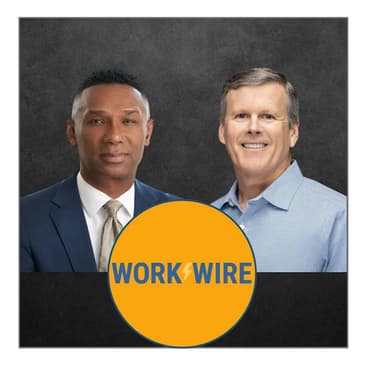
Join us for an insightful conversation with Johnny C. Taylor Jr., CEO and President of SHRM, as we uncover the essence of embracing change in a rapidly evolving world. Discover how swift advancements in technology, like AI tools such as ChatGPT, demand that we adapt or risk obsolescence. We'll explore how embracing change transforms potential stress into powerful advantages, propelling us into the future with confidence.
Inspired by a riveting keynote at SHRM 24 in Chicago, we discuss the metaphor of buffaloes versus cows in tackling adversity. Much like buffaloes charging into storms, purposeful leadership is about confronting challenges head-on and steering teams through turbulent times. With insights from Seth Godin's "The Dip," we highlight the power of resilience and purpose, motivating people to push beyond the initial highs of a new journey through the inevitable dips that follow.
Our episode also navigates the complexities of skepticism in change management, distinguishing between skeptics and cynics. We highlight the value of diverse perspectives in enhancing decision-making and fostering inclusive environments. Through personal stories, we emphasize the importance of commitment and genuine feedback, building trust, and resilience during change and uncertainty. Join us as we explore the art of effective communication in leadership, ensuring everyone's voice is heard and valued.
Powered by the WRKdefined Podcast Network.
[00:00:00] You're listening to Work Wire, sponsored by Career Club and SHRM. Career Club has a range of services aimed at job seekers with an empathetic approach. Whether you are a job seeker yourself, know someone who is in job search, or an HR professional looking to bring a more empathetic approach to transitioning employees, check out Career.Club. If you are an HR professional seeking to enhance your skills, subscribe to SHRM and explore their extensive resources. Visit SHRM.org. That's SHRM.org.
[00:00:31] Hello, everybody. Welcome to another episode of The Work Wire. I'm joined here by my good friend, the CEO and President of SHRM, Johnny C. Taylor, Jr. And I'm Bob Goodwin, the President of Career Club. Good morning, Johnny. How are you doing?
[00:00:42] Good morning. I'm doing really, really well this morning. It's beautiful, a little chilly. Life is good.
[00:00:47] Yeah. And I've got a giant cup of coffee, so I'm good to go. So it's great to see you. Thanks for making some time today, Johnny. What we're going to talk about today is change.
[00:00:59] And, you know, one of the ways just kind of kick it off that that I've been thinking about change here recently is today is the slowest day for the rest of our lives.
[00:01:10] Right. And whether it is the pace of change or the magnitude of that change, it's just getting more and more.
[00:01:20] And as people, sometimes we don't like change. Change is scary, right?
[00:01:24] Most of us don't. Most of us don't. And it's a threat, oftentimes perceived as a threat.
[00:01:29] But and yet, you know, I'm going to not try and use your lines on you.
[00:01:33] But but if we don't embrace that change, we leave ourselves vulnerable to being left behind.
[00:01:41] And so I was wondering if you might kind of kick us off a little bit of how you think about change.
[00:01:45] Yeah. I mean, you you you've said it. It's one of those things that I've found that all of my years in HR and as an executive,
[00:01:52] as much as people talk about change, the reality is very few of us like it, even when things are going well.
[00:02:01] Right. You just like, well, if things are going well, why would I want it to change unless I was guaranteed that it would change for the better?
[00:02:07] And so I think that's what's inherently problematic about change is you don't know if the change is going to go with or against you.
[00:02:15] And so naturally, people say, I know what I do know. And that is where I am right now.
[00:02:19] I've seen people embrace change when things get really, really tough.
[00:02:23] You and I were talking recently about a book which speaks to when certain types of leaders are chosen.
[00:02:29] It's during real tough times. So people are willing to make change.
[00:02:33] Actually, if you think about it, we just went through a presidential cycle and an election cycle.
[00:02:39] Incumbents win because people don't like change. That's just how it is.
[00:02:43] They prefer just let this thing ride out. And so when things get really, really bad or there's a lot of uncertainty,
[00:02:48] then people will be a little bit more tolerant of change. They still don't like it.
[00:02:52] That's right.
[00:02:53] So so in business, as business as a business leader, you and I have seen it.
[00:02:58] There's a general resistance to it. That's number one.
[00:03:01] Number two is the perhaps the point that you made that really sticks out in my mind.
[00:03:06] And that is we have to accept that if you're not changing, you're losing.
[00:03:11] That's just it. There's a quote that I was in Ghana, Africa, West Africa just recently.
[00:03:17] And from the stage of this CEO of a company, I wish I could remember the name of the company,
[00:03:23] but he made a really good point. He said, when the pace of change outside
[00:03:29] is faster than the change inside your business, you are headed to failure, period.
[00:03:35] And that really was you got to think about that when outside change, which you already set us up with,
[00:03:40] that is everything's changing. But if it's changing faster than you are internally,
[00:03:46] then you're about to fail because the change is going to outpace you.
[00:03:49] And when it does, you will fall behind. And naturally, falling behind is not a positive thing.
[00:03:56] Business perspective, but also from an individual's perspective.
[00:03:59] And I want to use just a real tactical and then turn it back over to you.
[00:04:03] Right now, AI comes on the scene. November 29th, 2022.
[00:04:08] No one's even heard of such a thing. And it pops out. There's chat GPT.
[00:04:13] And for the people, you know, naturally, some people played with it.
[00:04:17] Those were the sort of people who jump out and toy with everything.
[00:04:21] They're the first users or whatever they call it. There's a phrase.
[00:04:25] What do you call it?
[00:04:26] Early adopters.
[00:04:27] Early adopters. I was going to get it. I knew you'd find it because you knew all of the right words,
[00:04:30] but the early adopters. And then you have some people who are so resistant to change.
[00:04:35] Guess what? Those are the people who are losing their jobs right now.
[00:04:38] Because I say this often.
[00:04:40] Yeah, I'm waiting for this.
[00:04:41] This is the same question. HR folks often ask me,
[00:04:45] is AI going to take my job? And I said, no, no.
[00:04:48] Someone who is proficient in AI is going to take your job.
[00:04:51] That's how that's going to work. Right?
[00:04:53] So those people saw the change, embraced the change.
[00:04:57] They were fearful of the change, but they still embraced it.
[00:05:00] And they're keeping up with change.
[00:05:02] Those who resist it or just are frozen in fear are in real trouble.
[00:05:07] So that's how I take changes.
[00:05:09] No one likes it.
[00:05:10] All of us have to embrace it because if we don't, we lose.
[00:05:14] You know, and going back to the gentleman in Ghana,
[00:05:17] that idea of if the pace of change outside is faster than the pace of change inside.
[00:05:22] If you just sort of use your hands and think about that,
[00:05:25] that's stress.
[00:05:26] That is creating tension.
[00:05:28] That is creating stress.
[00:05:31] Conversely, it could be like this major tailwind.
[00:05:35] Right?
[00:05:36] And these things are working together.
[00:05:38] Right?
[00:05:38] And you're moving in harmony with the pace of change.
[00:05:42] Well said.
[00:05:43] I like the visual.
[00:05:44] I love that.
[00:05:44] You know,
[00:05:45] but you,
[00:05:45] well,
[00:05:46] you sparked it because that's what the man's basically saying.
[00:05:48] It's like this,
[00:05:48] you're just being further and further pulled and stretched.
[00:05:51] And that hurts.
[00:05:52] And nobody likes pain versus how can I get an alignment with this force?
[00:05:58] That's it's going,
[00:06:00] whether I'm going or not going into story.
[00:06:02] Right.
[00:06:03] Get with it.
[00:06:05] So,
[00:06:05] you know,
[00:06:05] it's kind of time to sign up or sign out,
[00:06:07] but you know,
[00:06:09] the,
[00:06:10] the thing with,
[00:06:11] with this,
[00:06:12] that,
[00:06:12] and I want to,
[00:06:13] we can talk about,
[00:06:14] you know,
[00:06:15] you mentioned the presidential election and I don't want to get into the
[00:06:18] puts and takes of policies,
[00:06:19] but we know there will be policy changes.
[00:06:22] That's the mandate.
[00:06:24] So,
[00:06:25] and he's got the majority and like that ship has sailed.
[00:06:28] And then we'll continue to sail.
[00:06:29] Right.
[00:06:30] Then you mentioned technology.
[00:06:32] That's clearly happening.
[00:06:34] Now kind of blend those two things together.
[00:06:37] Business models are going to change,
[00:06:41] right?
[00:06:41] Business strategies and tactics by their very nature will be changing,
[00:06:46] which means my job is likely going to change.
[00:06:51] And so that kind of,
[00:06:53] I guess,
[00:06:54] sort of leads to your point of,
[00:06:55] you might want to get good at it.
[00:06:57] And faster than we've ever seen before,
[00:06:59] you know,
[00:06:59] in the past,
[00:07:00] if you actually go back in our lifetimes and you and I are old guys,
[00:07:04] but in our lifetimes,
[00:07:05] you could safely go to school,
[00:07:07] major in something and continue to be relevant with a few little courses,
[00:07:12] you know,
[00:07:12] updating,
[00:07:13] you know,
[00:07:14] classes that you take for 30 years.
[00:07:16] You really could.
[00:07:17] Cause we just didn't have that much change.
[00:07:19] Sure.
[00:07:19] You went from,
[00:07:20] I'm going to use my blockbuster stories,
[00:07:22] you know,
[00:07:23] from VHS to Blu-ray to DVD,
[00:07:26] but those were,
[00:07:27] those were,
[00:07:28] they were the same thing.
[00:07:29] You were just placing a different product into a different machine.
[00:07:32] You were still getting the same results.
[00:07:35] So if you grew up in a VHS world,
[00:07:37] you were still relevant all the way through the DVD world.
[00:07:42] What happens when all of that goes away and streaming takes over?
[00:07:45] If you have not been trained,
[00:07:47] if you have not trained yourself to keep up,
[00:07:51] then you now have skills that are not useful.
[00:07:54] So I think that's,
[00:07:55] that's,
[00:07:55] that's really interesting.
[00:07:56] You pulled drew on my blockbuster days.
[00:07:58] For those of you who don't know,
[00:07:58] I was a blockbuster and early blockbuster executive.
[00:08:01] Uh,
[00:08:02] we have got to accept,
[00:08:04] uh,
[00:08:04] that,
[00:08:04] that the,
[00:08:05] the pace of change is like nothing we've ever seen before.
[00:08:09] You actually,
[00:08:09] it was once an opponent,
[00:08:11] once upon a time,
[00:08:12] you could safely go to college,
[00:08:13] get prepared to do something and rely on doing that,
[00:08:16] uh,
[00:08:17] with a few modifications over a 30 year career.
[00:08:19] That's done.
[00:08:21] That's done.
[00:08:21] In fact,
[00:08:22] most of us are going to work more than 30 years now because we're living so much
[00:08:25] longer.
[00:08:25] So coming out of college at 24,
[00:08:27] 25,
[00:08:28] working 30 years on the question of 55,
[00:08:30] no one is stopping working at 55 anymore.
[00:08:34] Not even 65 increasingly.
[00:08:36] So all of this means it's,
[00:08:39] it's really,
[00:08:39] it's the,
[00:08:40] it's the,
[00:08:40] the change that you're talking about is real for every person.
[00:08:44] And it's especially,
[00:08:45] especially real and difficult for people in their forties because we're not
[00:08:51] digital natives and we didn't grow up in a world.
[00:08:55] This change is like really unsettling.
[00:08:57] Yeah.
[00:08:58] So,
[00:08:58] um,
[00:08:59] do you mind sharing just real quick?
[00:09:00] And I want to get into some practical,
[00:09:03] like we can kind of agree on air quote,
[00:09:06] the problem statement,
[00:09:07] but I want to,
[00:09:08] I want to definitely get into for myself because I'll benefit from this,
[00:09:12] but also for our listeners on how to live in this new world.
[00:09:17] But do you mind just sharing the,
[00:09:18] the metaphor of the cows and buffaloes real quick?
[00:09:22] Yeah.
[00:09:23] So,
[00:09:23] you know,
[00:09:24] everyone,
[00:09:24] I,
[00:09:24] I was blessed to have the opportunity to address the audience at,
[00:09:29] uh,
[00:09:29] SHRM 24 in Chicago.
[00:09:32] And as I,
[00:09:33] throughout the year,
[00:09:33] I reflect on what am I going to say to the largest community of HR people in
[00:09:37] the world when I get that stage.
[00:09:40] And it,
[00:09:40] I was,
[00:09:41] I don't,
[00:09:41] can't remember where I was.
[00:09:42] I think I was in the air or somewhere,
[00:09:44] but somehow I learned maybe Washington national geographic on a plane or
[00:09:48] something.
[00:09:48] It might've been Dr.
[00:09:49] Andy too.
[00:09:50] Cause I know he talks about that.
[00:09:51] Right.
[00:09:51] So I don't know where,
[00:09:53] but this notion that,
[00:09:55] um,
[00:09:56] Buffalo,
[00:09:57] the Buffalo are very,
[00:09:59] very different.
[00:09:59] And so that a cow,
[00:10:00] you kind of see them kind of the same one as a bigger version of the other
[00:10:04] one,
[00:10:04] whatever.
[00:10:04] Uh,
[00:10:05] we eat the meat interchangeably.
[00:10:07] You can have a Buffalo burger,
[00:10:08] buy some burger.
[00:10:08] You can never be like,
[00:10:09] they're kind of the same thing.
[00:10:11] We'd like to think,
[00:10:12] except what we know now is that when storms come,
[00:10:18] cows or cattle seek shelter,
[00:10:21] they run away from the storm because they simply don't want to deal with
[00:10:26] what's going on.
[00:10:27] And the idea is if I outrun it,
[00:10:30] I win.
[00:10:32] Buffalo,
[00:10:33] interestingly are just the opposite.
[00:10:35] They run head late.
[00:10:37] They run right into the storm.
[00:10:39] And the logic of the Buffalo is let's just get it over with.
[00:10:42] Like the storm's going to be there.
[00:10:43] If I try to outrun it,
[00:10:45] I may not win.
[00:10:45] I'm going to use a lot of energy,
[00:10:47] uh,
[00:10:48] trying,
[00:10:48] I'm a big animal.
[00:10:49] So I don't know that I can outrun it anyway.
[00:10:51] So they do just the opposite.
[00:10:53] They run right into the storm to just get it over with.
[00:10:57] And so I encouraged our HR professionals and frankly,
[00:11:01] all business people is to just start thinking more like a Buffalo and less like a cow.
[00:11:06] That you got to run into the storm.
[00:11:09] And so oftentimes the running into a storm is like truly running into change.
[00:11:16] Yep.
[00:11:16] So,
[00:11:17] and it's such a great word picture.
[00:11:18] So there's a few ideas and kind of principles I'm hoping that we can explore.
[00:11:24] One is just working with the Buffaloes for a second.
[00:11:29] They're moving to a destination.
[00:11:30] They know where they're trying to get to and they go together.
[00:11:35] That's right.
[00:11:36] They,
[00:11:36] they,
[00:11:36] they come together,
[00:11:38] right.
[00:11:39] And know that some are stronger and more able to,
[00:11:41] you know,
[00:11:42] encounter more change initially than some of their colleagues.
[00:11:46] Right.
[00:11:47] And so we,
[00:11:47] we might have some of the bigger,
[00:11:48] stronger ones up front,
[00:11:50] but they're protecting the ones who may not be the early adopters,
[00:11:54] if you will.
[00:11:54] Right.
[00:11:55] But bringing them along,
[00:11:56] they're not leaving them.
[00:11:57] They are not leaving them.
[00:11:58] They are bringing them.
[00:12:00] They're shepherding.
[00:12:00] That's leadership.
[00:12:01] Yes.
[00:12:02] But it's leadership with a purpose.
[00:12:05] And so that's sort of the first idea that I want to kind of explore with you,
[00:12:10] which is why managing through change and learning how to not just survive,
[00:12:16] but thrive through change is really undergirded by a sense of purpose.
[00:12:22] Why are we doing this?
[00:12:24] And the,
[00:12:25] you know,
[00:12:25] it's gosh,
[00:12:26] you're really good at this,
[00:12:27] Bob.
[00:12:27] I'm not just saying it because you're the most brilliant podcaster in the world,
[00:12:30] but forget that Joe Rogan.
[00:12:33] Joe who?
[00:12:35] Right?
[00:12:35] Joe who?
[00:12:36] But it's this,
[00:12:38] it is why leadership is such a responsibility.
[00:12:42] You know,
[00:12:43] people often want leadership titles because they typically come with more money,
[00:12:47] a bigger office,
[00:12:48] whatever.
[00:12:49] But at the end of the day,
[00:12:50] there's so much responsibility tied to those who sit in leadership roles.
[00:12:56] And as you pointed out,
[00:12:57] because of the pace of change and types of change,
[00:13:00] we need leaders who truly own that responsibility,
[00:13:05] that obligation to shepherd their people through this.
[00:13:09] And it's hard.
[00:13:10] I mean,
[00:13:10] it's really hard because there's,
[00:13:11] I said,
[00:13:12] almost everyone resists change period.
[00:13:15] So while you're having to encourage other people,
[00:13:17] you're dealing with your own doubts,
[00:13:18] your own vulnerabilities.
[00:13:21] Like,
[00:13:22] you know,
[00:13:22] it's not when I go run into a storm,
[00:13:24] I too,
[00:13:25] I'm afraid of dying.
[00:13:27] Right?
[00:13:27] It's not that I'm fearless or fear-free.
[00:13:31] Like,
[00:13:31] I'm just,
[00:13:32] I know what I have to do for the good of my flock and my colleagues.
[00:13:37] And so that's why it's so incumbent.
[00:13:40] But,
[00:13:40] but I'll say when you realize,
[00:13:42] okay,
[00:13:42] I know what I've got to do.
[00:13:44] The most important thing you've got to do now is explain,
[00:13:48] communicate,
[00:13:49] articulate to the rest of the people why we have got to do it and give them
[00:13:54] confidence that you're going to bring them through to the other side.
[00:13:57] Cause one runs into a storm where they think they're going to die.
[00:14:01] Just because you said,
[00:14:03] do it.
[00:14:04] It's like,
[00:14:04] I'm going to tell you what you go.
[00:14:06] If it works out,
[00:14:07] come back and tell me.
[00:14:08] That's how most people would do it.
[00:14:09] You have to bring people with you.
[00:14:12] No,
[00:14:12] no,
[00:14:13] that's exactly it.
[00:14:14] And,
[00:14:15] you know,
[00:14:16] again,
[00:14:16] the leader is sort of the face and the front one out there,
[00:14:21] you know,
[00:14:21] experiencing the harshest of the conditions,
[00:14:24] right?
[00:14:24] Because they've got the most responsibility for everybody else.
[00:14:27] The other points that she made reminds me of a book by Seth Godin called
[00:14:31] the dip,
[00:14:32] where we can start off with great enthusiasm,
[00:14:36] but inevitably there's that really hard periods.
[00:14:39] Like why,
[00:14:40] why did we even start this?
[00:14:41] Why are we even here?
[00:14:42] By the way,
[00:14:43] shout out to Steve Brown,
[00:14:44] who we all know and love.
[00:14:45] He's the one that turned me onto that book.
[00:14:47] And it's not even a new book,
[00:14:49] but it's a little book called the dip.
[00:14:51] And this thing though,
[00:14:52] of like,
[00:14:53] there's going to be a point where this storm is really nasty,
[00:14:56] really nasty.
[00:14:57] And it's like,
[00:14:58] why in the heck did Johnny bring us out here?
[00:15:01] What was that?
[00:15:02] Why didn't we do like this smart cows over there?
[00:15:04] Cause I think they're doing okay right now.
[00:15:06] That's right.
[00:15:07] Right.
[00:15:08] And then,
[00:15:09] but,
[00:15:09] but it's,
[00:15:10] it's pushing through because so many people will quit.
[00:15:14] When the initial enthusiasm,
[00:15:17] rah,
[00:15:17] rah,
[00:15:18] Johnny gives an amazing speech.
[00:15:19] He got me all fired up.
[00:15:20] Let's go.
[00:15:21] And then all of a sudden say,
[00:15:23] Whoa,
[00:15:23] I didn't know we were signing up for minus five and heavy snow.
[00:15:27] And like that one part of the deal.
[00:15:28] Was it?
[00:15:29] Yeah,
[00:15:29] it was.
[00:15:31] Some of that.
[00:15:31] What I study wars,
[00:15:34] I'm intrigued by them,
[00:15:37] particularly back in the day when it was hand to hand battle.
[00:15:41] So it was not this,
[00:15:42] you know,
[00:15:42] drop a drone or do this or that.
[00:15:44] I mean,
[00:15:44] you fought,
[00:15:45] you fought.
[00:15:46] And I've always asked myself,
[00:15:48] Bob,
[00:15:49] how did those leaders convince that front line of people to run into another
[00:15:54] front line?
[00:15:54] It was just math,
[00:15:55] right?
[00:15:55] If 10,000,
[00:15:57] 10,000 of us rush another side,
[00:16:00] 9,000 are going down.
[00:16:01] And the people in the front are really going down first because that's,
[00:16:04] that's just what it is.
[00:16:05] You have to ask yourself,
[00:16:07] how did those leaders effectively convince rational,
[00:16:12] normal,
[00:16:12] well-trained people to go into this,
[00:16:16] to,
[00:16:16] to go into that storm.
[00:16:17] When the math was just,
[00:16:19] it was clear.
[00:16:20] Some of you are not coming back at all.
[00:16:21] Many of you are going to come back missing limbs,
[00:16:24] et cetera.
[00:16:25] At a minimum,
[00:16:26] if you made it back,
[00:16:26] you're going to be traumatized emotionally because you saw things that
[00:16:29] people probably shouldn't ever have to see.
[00:16:32] You do wonder.
[00:16:33] That's why military leaders have such a storied reputation and,
[00:16:37] and,
[00:16:38] and are so highly regarded in our,
[00:16:40] in our country.
[00:16:41] And not only government,
[00:16:43] but in business because they have the uncanny ability to one,
[00:16:48] be strategic and to be thoughtful,
[00:16:51] to build the sense of pride in the flock,
[00:16:55] and then to,
[00:16:56] to get them to,
[00:16:57] to run into the storm.
[00:16:58] It just amazes me.
[00:17:00] There's,
[00:17:00] I often ask myself,
[00:17:02] call it world war one or world war two,
[00:17:04] even just like,
[00:17:05] no way.
[00:17:06] I can't imagine being convinced to go run into another side,
[00:17:11] run into it.
[00:17:12] I just don't get it.
[00:17:13] It's very hard,
[00:17:14] but it,
[00:17:15] and I,
[00:17:15] I don't pretend that we'll be able to completely understand that,
[00:17:19] but I do believe that when they,
[00:17:21] you know,
[00:17:22] get to the deepest convictions of somebody,
[00:17:25] you're doing this for your country.
[00:17:26] You're doing this for your family.
[00:17:28] Right.
[00:17:29] And if you don't do it,
[00:17:30] who will do it?
[00:17:31] That's right.
[00:17:32] Right.
[00:17:33] And it's like,
[00:17:33] okay,
[00:17:33] I'm going to be that kind of person because I want to,
[00:17:37] to get the people that I care about in the cause that I care about to the
[00:17:41] other side of this storm.
[00:17:43] So now take that,
[00:17:44] take that.
[00:17:44] And I'm going to push this back to you.
[00:17:47] We want our businesses to be successful and we're leaders.
[00:17:50] All of us are doing it.
[00:17:51] And those of you listening out there in HR world,
[00:17:54] or if you're a people manager,
[00:17:55] a business leader.
[00:17:56] So how do you do it when not so sure,
[00:18:00] you know,
[00:18:01] the company being successful running into a storm,
[00:18:03] that's not a life or death thing.
[00:18:05] That's not about country.
[00:18:06] That's not God.
[00:18:07] That's,
[00:18:07] this is a job.
[00:18:09] Like,
[00:18:09] how do you convince people to run into a storm,
[00:18:12] to embrace change,
[00:18:13] to do all of that stuff when ultimately it's a job?
[00:18:19] So it's a super good point.
[00:18:21] I think a couple of things.
[00:18:23] One is not everybody will make the trip and just accepting.
[00:18:28] Not everybody wants to go on that trip.
[00:18:30] Ideally they're self-selecting.
[00:18:32] Right.
[00:18:33] Right.
[00:18:34] Cause this is where we're going.
[00:18:35] This is what we're about.
[00:18:36] You said this many times,
[00:18:37] Johnny,
[00:18:37] our culture may not be for you and that's okay.
[00:18:41] So if you don't want to be on this trip with us,
[00:18:44] but that's where we're going.
[00:18:45] And if you don't want to be on this trip,
[00:18:46] that's okay.
[00:18:47] But I do think,
[00:18:49] and you're the master of this,
[00:18:51] of casting vision,
[00:18:53] purpose,
[00:18:53] like why we're doing this and being an effective communicator that draws on
[00:18:58] people's deeper convictions of why we do what we do and why it matters.
[00:19:02] If I don't have some,
[00:19:03] and I do really think this gets to the core point on purpose because everything else sort
[00:19:08] of flows from there,
[00:19:10] that if you don't believe in the customers that we serve,
[00:19:13] the way that we serve them,
[00:19:14] the culture that we're building at this company,
[00:19:17] how you can grow as a human being,
[00:19:19] whatever it is that you can get passionate about,
[00:19:21] about why we do.
[00:19:23] To your point about the frontline people,
[00:19:25] they could be there for different reasons.
[00:19:28] I care about country.
[00:19:30] I care about the cause.
[00:19:32] I'm doing this for my family.
[00:19:33] Like whatever your motivation is,
[00:19:35] I believe God's called me to this.
[00:19:37] Like whatever your motivation is,
[00:19:39] as long as it works for you and it's in alignment with the action that the organization is trying to take,
[00:19:46] that works.
[00:19:47] Right.
[00:19:49] Right.
[00:19:49] That's right.
[00:19:49] But I do think it's really key for people listening.
[00:19:53] Not everybody's going to want to go on the trip and that's okay.
[00:19:57] And the sooner they can figure out,
[00:19:59] they don't want to be on the trip because dragging people up the hill with you is not a winning strategy.
[00:20:05] No,
[00:20:05] no,
[00:20:05] no,
[00:20:06] not at all.
[00:20:07] Not at all.
[00:20:08] Yeah.
[00:20:08] That it's funny that you say that because as leaders,
[00:20:12] I mean,
[00:20:12] listen,
[00:20:13] it's challenging because there's some people when you first ask them,
[00:20:17] and I know you've been in leadership roles where you have some people who are full,
[00:20:23] let's go Bob.
[00:20:23] Like Bob,
[00:20:24] I trust Bob.
[00:20:25] Bob,
[00:20:26] I'd walk through a wall for him.
[00:20:29] You have some people who are never going to go with Bob.
[00:20:32] Right.
[00:20:32] Period.
[00:20:33] They're not even sure why Bob's the boss.
[00:20:34] Right.
[00:20:37] Who you been talking to?
[00:20:40] Right.
[00:20:41] And then you got,
[00:20:42] you know,
[00:20:42] oftentimes a significant number of people in the middle who have to be convinced.
[00:20:46] They're naturally fearful.
[00:20:47] Oh,
[00:20:48] so what you're trying to do first and foremost,
[00:20:52] in my mind,
[00:20:53] when you talk about it is to quickly figure out who's on the front,
[00:20:56] who are those people that are team Bob and who are those people who are never
[00:21:00] Bobbers.
[00:21:00] Can we talk about this for a minute?
[00:21:02] Yeah.
[00:21:03] I've just interrupted Johnny telling him,
[00:21:05] but,
[00:21:06] but what you're talking about,
[00:21:09] I,
[00:21:09] the way that I dimensionalize that is the difference between a skeptic and a
[00:21:14] cynic.
[00:21:15] Hmm.
[00:21:16] The middle.
[00:21:17] I had a conversation in an executive coaching session last week on this exact
[00:21:21] topic.
[00:21:21] This is so important is a skeptic doesn't believe yet,
[00:21:26] but is open to believing.
[00:21:28] So they're asking hard questions and it sounds like they're being cynical,
[00:21:33] but they're not.
[00:21:34] A cynic says,
[00:21:35] I don't care what you say.
[00:21:37] I'm never going to believe.
[00:21:38] Yep.
[00:21:39] The cynics have to go.
[00:21:40] You have to rid your organization of cynics.
[00:21:43] I believe in just kind of one more thing with this healthy skepticism is.
[00:21:50] In my experience,
[00:21:52] people need to know that you care more about them as a human being than as a work producing
[00:21:57] unit.
[00:21:58] Right.
[00:21:59] That's trust.
[00:22:00] Because if I believe that you as my leader have my best interests at heart,
[00:22:05] when there's a gap that I don't understand what you're asking and what I understand right
[00:22:10] now, that that trust bridges that gap until my knowledge and experience starts to get closer
[00:22:18] to what you already know is the leader.
[00:22:21] Gotcha.
[00:22:21] Right.
[00:22:22] But because not everybody's going to get it again.
[00:22:24] Not everybody can be the lead Buffalo or should be the lead Buffalo.
[00:22:27] There are people in the middle of the pack that are just kind of going along,
[00:22:31] trying to figure it out as we go.
[00:22:33] Yep.
[00:22:34] Yeah.
[00:22:34] So, so, but this, this, this is so important that you will have people on your team
[00:22:39] who are skeptics.
[00:22:41] Please don't confuse them with cynics.
[00:22:43] That's right.
[00:22:44] A cynic does not want to believe a skeptic doesn't believe yet.
[00:22:47] And the beauty of a skeptic is once they're converted, they're your greatest advocate
[00:22:52] because they've already asked all the hard questions in their mind or explicitly and have
[00:22:58] gotten satisfaction in the answers.
[00:23:01] And now are some of your greatest advocates.
[00:23:04] Do you know this communication model feel felt found?
[00:23:07] No, no.
[00:23:08] You know everything.
[00:23:09] What do you do?
[00:23:10] Okay.
[00:23:11] But go ahead.
[00:23:11] Tell us.
[00:23:11] This is awesome.
[00:23:12] This is awesome.
[00:23:13] When you do, I want to come back to why skeptics are also important.
[00:23:19] No, that, that, that, yes, highly agree.
[00:23:21] Feel felt found.
[00:23:23] You know, Johnny, I understand how you feel.
[00:23:25] In fact, I felt the same way, but what I found was it is to use your native language.
[00:23:32] It's a very empathetic approach.
[00:23:34] It's listening first.
[00:23:36] It's listening first.
[00:23:37] And I understand how you feel, Johnny.
[00:23:39] In fact, I felt the same way.
[00:23:43] What I found was, and it's like, wow, you're meeting me where I am.
[00:23:49] You're hearing me out.
[00:23:51] And now you're giving me new information, at least from your experience.
[00:23:57] Yes.
[00:23:58] And helping lead me to a different conclusion.
[00:24:02] So go ahead.
[00:24:03] Let's talk about skeptics.
[00:24:04] By the way, I wrote that down.
[00:24:05] If you all saw me, like I was ridiculous.
[00:24:08] That is really feel, felt, found.
[00:24:10] You know, we all, leaders do it anyway.
[00:24:13] It rests in empathy, right?
[00:24:14] As you say, it's a concept of how to be a more empathetic leader.
[00:24:18] Feel, felt, found.
[00:24:21] Yeah, that's interesting.
[00:24:22] Okay.
[00:24:23] Know how you feel.
[00:24:24] I used to feel that way.
[00:24:25] I felt it.
[00:24:26] And this is what I found.
[00:24:27] God, I love that.
[00:24:28] Okay.
[00:24:28] So I always learn something with you, Bob.
[00:24:29] Thank you.
[00:24:30] So, but this idea of skeptics, I think it's so important to distinguish between the skeptics
[00:24:36] and the cynics.
[00:24:37] And once you've distinguished it, you've got to embrace the skeptics.
[00:24:42] What I have found as a leader, especially when you're engaging in transformation or change
[00:24:46] programs is an initiatives is the skeptics can sometimes unearth potential pitfalls that
[00:24:56] you haven't thought about.
[00:24:57] Because sometimes your team, Bob, people who will follow you no matter what they are.
[00:25:02] So following you until they don't challenge anything.
[00:25:05] It is, if Bob said it, I believe it and I'm doing it.
[00:25:09] You do want that population of people to say, hmm, I'm not so sure, Bob, make me, Bob, have
[00:25:16] you thought about this?
[00:25:17] Because as I reflect on it, I'm not really sure that you have heard.
[00:25:21] Those people will help you get through transformation and get through change.
[00:25:26] And so it's a very, I'm glad I had not thought of the concept and thank you again for skeptics
[00:25:31] versus cynics.
[00:25:32] But there's a lot to be said for embracing that skeptic.
[00:25:36] Exactly.
[00:25:37] And so one of the things I say is, I don't want to be right.
[00:25:40] I want to figure out what is right.
[00:25:42] Gotcha.
[00:25:43] Write that down.
[00:25:44] And but it's true.
[00:25:46] One of the things, you know, Johnny, again, you're a very, very gifted communicator.
[00:25:50] And when you're sharing an idea because you're so good at it, that it can, it's like, well,
[00:25:55] that's an unassailable point of view that Johnny must have and giving people not just permission,
[00:26:01] but inviting, you know, I don't want to be validated.
[00:26:05] Like, tell me what you genuinely think.
[00:26:08] Right.
[00:26:09] Because you'll make this better for all of us.
[00:26:12] But when you're a gifted communicator, sometimes people are like, well, I guess he's thought this
[00:26:16] all out and he don't want to hear anything else about it.
[00:26:18] It's like, no, no, no, no, no.
[00:26:19] You've got to build a culture of if you don't agree with this, if you've got another point of view,
[00:26:26] bring me some new information, bring me a different insight that because we all have blind spots.
[00:26:32] There's things we don't see.
[00:26:34] And it's good to have cheerleaders, but it's good to have challengers too.
[00:26:39] Well, that's that's the whole case for diversity is is that, you know, bringing people with different
[00:26:45] sets of experiences to the table, making them all feel like they're included so that they can
[00:26:51] challenge, decide and commit.
[00:26:54] And, you know, you can tell the audience when I think about that, because, you know, it's
[00:26:57] it's really, really important.
[00:26:59] But it starts with and I don't just mean civil rights categories of diversity, gender, race,
[00:27:04] age.
[00:27:04] I'm talking about diverse perspectives, diverse experiences so that they can give you alternative
[00:27:10] ways of solving for challenges.
[00:27:13] It's so critical.
[00:27:14] It's funny, I can't believe I ended up on a diversity conversation.
[00:27:18] But who knew?
[00:27:20] But you talked about purpose and it is really important.
[00:27:23] You're spot on.
[00:27:24] You have to give people purpose if you're going to get them to embrace change, manage change.
[00:27:30] You talked about feeling, felt and founding, if that makes sense.
[00:27:33] Feel, felt, found as a concept.
[00:27:35] But it is so important.
[00:27:38] None of that happens if you don't have a diverse group of people around you and diverse in the
[00:27:43] broadest of sense.
[00:27:44] Because you can't if we're all thinking the same, have the same set of experiences and
[00:27:49] backgrounds, et cetera.
[00:27:50] We we're we literally are going to miss some of the opportunities to embrace the change.
[00:27:57] OK, it's so now clear to me how all of these concepts of empathy and diversity and inclusion,
[00:28:02] et cetera, are all woven into how you get back to the fundamental question that we have begun
[00:28:08] talking about today, which is change.
[00:28:10] How do you get people to embrace change?
[00:28:13] How do you identify the people who are never going to change?
[00:28:15] And sadly, there are people who who are still, you know, I have.
[00:28:20] Can I tell you a real funny?
[00:28:21] So my grandmother, God bless her.
[00:28:24] She's she's left us now, but she was 99 years old.
[00:28:27] So had a wonderful life.
[00:28:28] Right.
[00:28:29] But even after they so back in the day, they went from cash.
[00:28:33] She would get up Saturday mornings, dress up.
[00:28:37] All of us would get dressed up.
[00:28:39] We'd go downtown and pay her bills.
[00:28:43] Light bill, the water bill.
[00:28:44] But like I grew up in that era.
[00:28:46] Right.
[00:28:46] And so then they began introducing checks and she was like, I don't I don't need a check.
[00:28:51] And then they started.
[00:28:53] The fun part is once we came about online payments, she said, there's no way I'm going to do that.
[00:28:59] Like, I'm not going to go in front.
[00:29:01] So imagine this 85 year old woman dressing up still on Sundays and going downtown and paying
[00:29:07] the department store bill and paying.
[00:29:08] And it's so funny.
[00:29:10] But she was never going to change.
[00:29:12] She decided this works.
[00:29:14] And that was it.
[00:29:16] And we could argue all day it's inefficient.
[00:29:18] I said it's risky because now people know when you're dressed up, you're carrying a lot
[00:29:22] of cash on Saturday mornings.
[00:29:23] So now you're at risk.
[00:29:25] None of the above.
[00:29:26] She was resisting change.
[00:29:28] I love her to death.
[00:29:29] But I understand that there is a percentage of the population who live their lives that way.
[00:29:36] Yeah.
[00:29:38] You've got such a rich family history.
[00:29:40] I love hearing your family stories.
[00:29:42] I just want to put one little bow on this because you've said it a couple of times.
[00:29:46] At some point.
[00:29:48] So we have the debate.
[00:29:49] We challenge.
[00:29:51] Right.
[00:29:51] And we're having discussion.
[00:29:54] All points of view are being heard.
[00:29:56] Right.
[00:29:57] And so that's the inclusion part that you've got.
[00:29:59] You know, the right that the invitation to bring your point of view to the table.
[00:30:05] We will consider it.
[00:30:06] It is being considered.
[00:30:08] At some point, somebody's got to make a decision.
[00:30:11] Period.
[00:30:12] Right.
[00:30:12] Right.
[00:30:13] And it's in all cases, some percentage of people are not going to completely understand
[00:30:20] the decision.
[00:30:21] Right.
[00:30:22] And that's OK because we have to commit to the action.
[00:30:26] What would be really detrimental to the organization is the people who are kind of sabotaging.
[00:30:34] They haven't committed because I never really believed in what we were doing.
[00:30:38] And therefore, either through your kind of passive aggressive, active aggressive, whatever, you're
[00:30:46] not being aligned with the herd and where we're going and trying to lead us off in a different
[00:30:52] direction or why is Johnny taking us this way?
[00:30:54] And that is really not great.
[00:30:57] So for listeners, and I know this is part of your organization, Johnny, but just the importance
[00:31:04] of people kind of subsuming their ego, their preferences, their fears back to purpose.
[00:31:14] If we have challenged the decisions been made, I'm with the organization.
[00:31:20] Let's go.
[00:31:21] Or not.
[00:31:22] And that's the other thing is you have to give people.
[00:31:24] I don't vilify the skeptics.
[00:31:27] There are times I'm tempted to as a leader.
[00:31:29] Right.
[00:31:29] But I don't.
[00:31:31] They're actually doing me a favor.
[00:31:32] Tell me who you are.
[00:31:35] And there are places for you to go.
[00:31:37] It just might not be here.
[00:31:39] I say this.
[00:31:40] I have helped more people who I may have even fired or they knew that I wanted them to go.
[00:31:47] But it wasn't because I thought they were bad people.
[00:31:49] I thought this just wasn't the place.
[00:31:52] I've done everything as a leader that I can to open and create an environment where you
[00:31:56] can challenge, give you the opportunity to challenge and then to make a decision and you
[00:32:01] be involved in that decision.
[00:32:03] But at some point you made this visual that, you know, imagine tug of war.
[00:32:08] Five people on one side, five people on the other side.
[00:32:11] You are pulling for your life to get to beat, pull the other side.
[00:32:15] But you've got one person who's pushing.
[00:32:17] Just one.
[00:32:18] You will lose.
[00:32:20] You will lose.
[00:32:21] Like you can't afford to have one person on your team going against the team.
[00:32:26] So in this change in this, if there's anything as we wrap up that I as a leader have really,
[00:32:33] really, really come to understand is skeptics are great because as I said, they make you
[00:32:38] better.
[00:32:39] The cynics, you cannot effectively or you put forth a disproportionate amount of energy,
[00:32:46] effort, time, resources if you have cynics pulling the other way.
[00:32:51] And that is probably the death of change and transformation initiatives is when you have
[00:32:55] people who simply will not change and don't even have to agree with you.
[00:32:59] God, they can't go against you.
[00:33:02] Yes.
[00:33:02] So so, you know, just to kind of wrap this one up, you know, it seems like we to accept
[00:33:09] that change is hard on everybody and we like what we like and we don't like it being changed.
[00:33:14] If things aren't going well, we probably are closer to embracing change because we don't
[00:33:18] like our current situation.
[00:33:20] But, you know, being able to be whether it's as a leader casting a vision for the purpose
[00:33:25] and why we're doing what we're doing or as a follower of the leader, which there's a
[00:33:30] whole lot more of them.
[00:33:31] Yes.
[00:33:32] How do we get behind them?
[00:33:34] How do we support them?
[00:33:36] And one of the ways to your point, Johnny, this is probably a very counterintuitive
[00:33:39] point is being a skeptic is help to the leader when it's well intentioned and is designed
[00:33:46] to help achieve the purpose of reorganization, the initiative, whatever it might be.
[00:33:52] And to your point, if you can't get aligned with what it is, that's OK.
[00:33:59] Right.
[00:33:59] That is OK.
[00:34:01] It just means this probably isn't it probably doesn't feel good to be in an organization where
[00:34:05] you're not aligned with it anyway.
[00:34:06] So do yourself, do the organization a favor and make a change yourself to where you find
[00:34:13] yourself going every Monday morning.
[00:34:15] You're here.
[00:34:15] Come on.
[00:34:16] So, Johnny, amazing as always.
[00:34:20] You know, to our listeners here on The WorkWire, if you've got suggestions for topics that
[00:34:26] you think would be interesting, if there's any feedback that you've got for us, we're
[00:34:29] always open to that.
[00:34:30] You can email me directly at Bob at Career.Club.
[00:34:33] We'd love to hear from you.
[00:34:35] But in the meantime, we wish you well.
[00:34:36] We thank you for listening.
[00:34:38] And Johnny, come on down.
[00:34:39] WorkWire.
[00:34:40] Thanks, everybody.
[00:34:41] Bye-bye.
[00:34:41] Happy holidays.
[00:34:42] Happy holidays.
[00:34:43] Yes.
[00:34:43] Thank you.
[00:34:43] Check out Career.Club for personalized help with your job search.
[00:34:47] Visit SHRM.org to become part of the largest human resources organization worldwide.
Sponsors
