
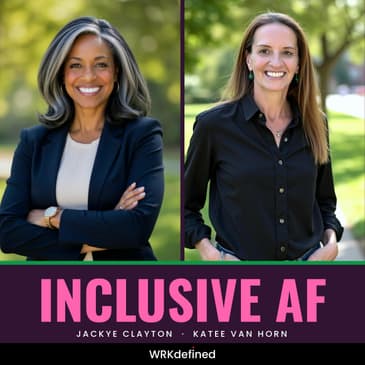
In this episode of the Inclusive AF Podcast, hosts Katee Van Horn and Jackye Clayton dive deep into the important topics of diversity, equity, and inclusion in the workplace. They pull apart the D, the E, and the I, discussing the unintended consequences of not considering diversity and inclusion and highlighting the need for intentional inclusion at every level of an organization. From the impact of performance reviews to creating an inclusive employee experience, they cover it all!
Tune in as they share practical insights on addressing bias in performance evaluations, the importance of recognizing the contributions of people of color within organizations, and the ongoing effort needed to support and promote an inclusive environment. Plus, listen in on their banter about glasses, Black History Month, and their upcoming plans!
Join the conversation by watching the full episode now and be sure to like, share, and subscribe for more thought-provoking discussions on diversity, equity, and inclusion in the workplace.
If you like what you hear, we would like to encourage you to subscribe to our channel!
We would also appreciate it if you would rate this channel by going here: RateThisPodcast.com/inclusiveaf
We create this podcast as a labor of love. But if you would like to support this channel you can buy us a cup of coffee here: https://www.buymeacoffee.com/InclusiveAF
#InclusiveAF #DiversityandInclusion #DEI #PerformanceReviews #BlackHistoryMonth #InclusiveWorkplace #WorkplaceDiversity #EquityInTheWorkplace #PodcastDiscussion
Powered by the WRKdefined Podcast Network.
[00:00:00] You're listening to Inclusive AF with Jackie Clayton and Katie Van Horn.
[00:00:07] Hello, hello. This is Katie Van Horn and this is Jackie Clayton. And I just was about
[00:00:16] to click leave meeting. That one is going to be helpful. Don't do that today, maybe
[00:00:23] tomorrow. 11 meetings today, Jackie. How many meetings do you have today? I have had
[00:00:30] six meetings today. Six so far. Okay, good. Yeah, I have two more after this. So you know,
[00:00:39] it's good stuff. So this is the Inclusive AF Podcast and Jackie and I have a lot going
[00:00:43] on but we love you and want to be here. Jackie, your glasses, I don't know if I'm, they
[00:00:49] look crooked. They're probably crooked. They might be crooked. My headphones are making
[00:00:53] them crooked. You're crooked. I'll just tilt my head. Jackie will be tilting her
[00:01:00] head for the remainder of the episode. I think it's your, I think it is your headphones.
[00:01:04] Yeah, every time I take it behind my head, it pops up. And I just have to tell you that
[00:01:08] normally I wouldn't like call that out while we're recording. I would have done it ahead
[00:01:11] of time but I just noticed A, but then B, since you're such like a fashion, fashion
[00:01:16] Easter now, like all fancy with your cool hair. Yeah. You like call it out and
[00:01:22] be like, listen, Missy, get it together. You're going to change careers. That's
[00:01:26] fashion model. Yes. Okay, so I have a couple of topics for today. I would like to
[00:01:31] discuss. Yes. Number one, it is February 1st. We are recording this on February 1st.
[00:01:39] You all won't hear it until like the 7th, I think. So but would love to know,
[00:01:45] Jackie, what are you looking for from organizations this Black History Month?
[00:01:52] I don't know what all organizations are. I just feel like, but I could tell you
[00:01:56] what you're looking for from organizations. What would what would make you feel like,
[00:02:01] yep, they get it. I don't know if there's anything they would make me feel
[00:02:05] like they get it, but I do think it is important just recognizing success.
[00:02:12] I feel like there is a, it's really important of understanding how people
[00:02:17] have contributed because a lot of times these things, I loved, used to love Tom
[00:02:22] Joyner's like little known Black History fact. Yes. That he used to do every day.
[00:02:27] There are lots of things that are coming out of that and so I think it's time to celebrate
[00:02:33] people and know what the contributions that might have gotten left out as much as possible,
[00:02:38] especially within the industries because it's in every industry, whatever industry you're in,
[00:02:43] you can find people. It is, it is fascinating to see the contributions and I think
[00:02:49] we've seen some things in Hollywood in recent years to like show off or showcase
[00:02:56] some of those folks that have been lost through history but there are so many and to your point,
[00:03:01] there are so many cool inventions in different things. You're like, wait what? Like how that's
[00:03:08] awesome. But I also, for me, I think it's the how are they actually showing up from a numbers
[00:03:18] perspective and how are they like? I don't honestly, I won't say I don't care. Like I don't
[00:03:25] want so much the, oh here let's put some Black people on a wall and tell us, oh there's MLK,
[00:03:34] you know, whoever, whoever that most folks know. I like that what you're saying of like the more
[00:03:39] unknown, right? So more of like, no, what are you actually doing to work on promoting folks that are
[00:03:53] in less impactful roles or lower level roles? What are you doing to help them and like kick off
[00:04:03] a mentorship program or a sponsor program, something along those lines? Like I want some
[00:04:11] action not just some talk. Yeah but I don't want that just for Black History Month but that should be
[00:04:16] the beginning of the conversation. I would hate for someone to be like only in February. No,
[00:04:23] 100% agree but I think it's the like high like the highlight that you're talking about of like
[00:04:28] unknown. I also would like them to highlight people in the company that have done great things
[00:04:35] that are color and I think that's the piece that is also missing is there are so many
[00:04:43] folks that have been with companies forever and ever and keep the lights on and are leading
[00:04:49] great projects and are doing amazing things and and and so highlighting that would also be
[00:04:55] amazing. I think that would be cool. It's like, oh this person had the influence on this or this
[00:05:01] was the person who owns the patent on this or you know making those things because it like
[00:05:09] I mean tomorrow today is history tomorrow. Like it doesn't have to be all you don't have to go
[00:05:17] that far to find the history of what we and what we find significant and recognizing the
[00:05:23] contributions. I think that has I would love that especially at those organizations that have been
[00:05:28] around forever. You know like your JP Morgan Chase's. Yeah well I'm thinking about even just a few of
[00:05:36] my clients that I know like that have manufacturing plants in the South and have a high population
[00:05:44] of Black people working for them and they are you know 20 years, 10 year, 15 years,
[00:05:51] 10 year all of these things and again like they're keeping the lights on and they've contributed in
[00:05:57] such a way that it's like oh you know that thing we do in this process. Oh that was because of Jackie
[00:06:03] that was because of whoever so I also like I think it's just acknowledging the hard work and the
[00:06:10] impact that folks have made. That's my my two cents on the matter. I think that was a nickel
[00:06:16] that was a nickel to a dime. Okay okay that's fair I am feeling generous today I guess.
[00:06:26] What else what else Jackie from Black History Month because we're not going to dwell on this
[00:06:30] too much because we know I know we've talked about this before and it's just do stuff people.
[00:06:37] I think it's taking these things like like as you're looking at these celebrations making sure
[00:06:44] that you're look at all of the multidimensionals of like people of how people show up it's like more
[00:06:52] than your Blackness and so I think people get caught up like what am I supposed to do but
[00:06:59] there are still lots of other when you look at the intersectionality of people like it is
[00:07:08] recognizing within various spaces as people are doing their research of making them known.
[00:07:13] I don't want to like it's kind of like when we talk about pride that's where I get caught up where
[00:07:21] it's like I want to make sure that people know that it exists and giving people resources and
[00:07:25] telling people where to go and also inviting people to share the things that they've looked
[00:07:31] and learned and encouraging people to do that work and allowing people to share things
[00:07:40] that they maybe they saw a movie or read an article or went to a museum it's important to share that
[00:07:45] information too and do it on a regular basis. It could be as easy as your own departments or as you
[00:07:54] go you know company-wide meetings and I think that so many people are like what are we supposed
[00:08:03] to do what are we supposed to do but there's something going on every month and the point
[00:08:08] of these things are to bring awareness and so make sure that as you're doing this that you don't
[00:08:16] lose track this is not about coming up with a new logo or saying yay black people.
[00:08:23] Agreed. Yeah yeah um okay next topic I would like to discuss at this juncture we are at
[00:08:36] time of year that folks are planning their annual performance reviews and obviously I know Texio has
[00:08:46] a dog in this fight if you will and so I will we can call that out that obviously you might have
[00:08:55] some bias in how to focus on bias in annual performance reviews. There are technically
[00:09:02] a sponsor under duress right. There you go. Yes there you go so I I think it's good like just to
[00:09:10] remind folks so you know when you are doing performance reviews and you are training your
[00:09:18] leaders even training your employees on how they put together their reviews I can tell you I've had
[00:09:25] more than one manager on many different occasions say to me things like oh I just copied and pasted
[00:09:30] what I wrote in review which is not great but being aware of the language that you're using and how
[00:09:38] you're describing different people on the team and are you using the same lens for folks and I don't
[00:09:47] mean the same lens as in deliverables because you might have folks at different levels doing
[00:09:50] different work focused on different things but being very thoughtful like I have had the
[00:09:58] fortune to work with the Clayman Institute which is not called the Clayman Institute anymore
[00:10:04] out of Stanford and they did a review of all of our performance reviews and the language that was
[00:10:11] used by leaders and it you know goes back to the same thing that we've been talking about for
[00:10:15] years and years of women people of color are described in ways that are very much
[00:10:21] not as positive whereas you know for and this is again not to ding white men but white men it's
[00:10:29] normally they're very assertive they are a go-getter all of these things where for women and
[00:10:35] for people of color it's oh they're aggressive they're you know the angry black woman they're
[00:10:39] the oh they don't get along with anyone that type of thing and so there's that like
[00:10:45] bias of are the ways that we're looking at talent the same regardless of who the person is
[00:10:53] let's start with this go have you updated a job description like do you know what the person
[00:11:00] was hired to do did you hire those what was the premise that this person was hired in the
[00:11:06] first place I think it's fascinating how people tell people that they don't do a good job
[00:11:13] don't do a good job and yet don't know the job that they're supposed to do in the first place
[00:11:19] like start with the job description is it updated is the person been made aware of any changes
[00:11:27] right are there any gaps that this person might need to look at within the next year because you
[00:11:33] can't do it last year because you want to have an updated job description this is way where height
[00:11:39] this is where you came from this is where you're going so I want to suggest first before you even
[00:11:43] start make sure you understand who the people are in your department their job titles and the job
[00:11:49] description that they were hired under HR depending on the site their company is going to be really mad
[00:11:54] at you when you say hey can you print off a copy of the job description but so be it they have
[00:12:00] access of when the person was hired we know the hiring dates because unfortunately if you look
[00:12:06] across five years and you have five people one person hired each year they might have all been
[00:12:11] hired at a different job description yet get the same rate of pay or even worse it is increased
[00:12:19] substantially but they have the same titles like save yourself some grief yeah start with that
[00:12:25] right you know and going through so that when you give use the job description as a reference
[00:12:32] point for the feedback that you're giving in reference and that will help you in advance before
[00:12:38] you make some major mistakes and going in and saying like you know giving somebody a bad review
[00:12:48] if you're facing it facing it on the job description and just make sure that that
[00:12:53] doesn't have the bias language in there in the first place so that you're giving a reference
[00:12:57] to the activity you're you're judging their activity and not them personally if you can
[00:13:02] remember that that is like 50 percent imagine how fast we could solve the world's biggest problems
[00:13:10] if more SA Startups would gain traction sooner welcome to the Tech Entrepreneur on the mission
[00:13:15] podcast this podcast is dedicated to sharing experiences from B2B SA CEOs who are going
[00:13:22] above and beyond to deliver chains that is noticed you will hear their secrets and learn what
[00:13:27] is required to build a sales business that the world starts talking about and keeps talking about
[00:13:33] and how to overcome the roadblocks to do so I'm going to take a step further Jackie get rid of
[00:13:42] job descriptions and have job leveling guides and um and that way you can actually uh look at it
[00:13:52] from the perspective of hey um it doesn't change as much but you can look at it from a level one
[00:13:59] level two level three level four depending on where you place that person I hate and I do mean hate
[00:14:06] I'm not very a big word you're using it's a very big word and I normally wouldn't say that but I do
[00:14:12] hate the full concept of job descriptions because working at HR's for as long as I have I will
[00:14:19] tell you the amount of times that they change um that's right it just it's bananas the moment that
[00:14:27] you press publish it's wrong um and so I think that's for me the the piece that I always come back to
[00:14:37] um so yeah like I don't know I but you can't have nothing right like yeah one million like
[00:14:46] these things and the thing is is that once you have it like set the standard this is not for
[00:14:51] hiring managers this is this information is going back to HR first because you have to have one or the
[00:14:57] other whatever system you have as long as it's been implemented as a policy don't leave hiring
[00:15:03] managers to their own devices it's a little thing I like to call safe people from themselves
[00:15:09] because nobody's doing these job you know performance reviews when they're writing them
[00:15:14] it's not at 10 o'clock after a cup of coffee like on a Tuesday no they're like 11 30 Sunday night
[00:15:22] they're doing them tomorrow and they just get worse and worse and worse to the point where like
[00:15:27] the last one is saying stay cool how are they doing great what do they need to change
[00:15:34] nothing what advice do you have for the next year keep doing what you're doing right and I
[00:15:43] we again I know you know this we've all seen those exact reviews when it is like come on
[00:15:51] like you can do better but um I also think it is hard to remember and you know and so it's just
[00:16:04] good to have these reminders every single year when you're training your leaders on how to
[00:16:08] do their reviews having that piece in place where you look at how can bias come into play
[00:16:17] what are the types of bias that might come into play as they're evaluating folks
[00:16:21] because it's also the other piece to this can't be comparing Jackie to Katie if just
[00:16:28] because they have the same job you should be using the job description or leveling guide or
[00:16:33] whatever not how does Jackie compare to Katie because that's not fair the bias that people don't
[00:16:39] recognize that go in and you see this all the time where it's like oh this person works so much or
[00:16:45] so hard yeah the bias where it comes in and I think this is important for people to know
[00:16:52] is that that like me like oh always willing to give up you know always ready to travel
[00:16:58] jumps into all these things I don't have young children right I don't have any reason I don't
[00:17:05] have anything pressing at this point where I can't go do what I need to do and so when you do that
[00:17:11] that means you're almost penalizing people who do have children that's where the bias comes in
[00:17:15] and then when you reward that regardless of what your policy is that's where the belonging piece
[00:17:20] goes into play where people don't feel like they belong or they're not being included
[00:17:24] um and I don't know we should talk more about how bias does show up in performance reviews because
[00:17:32] I think people don't recognize oh I'm not supposed to reward people for doing a hard job yeah no that's
[00:17:39] that's not exactly what I'm saying I'm saying compare them to the job description and do yourself
[00:17:45] a favor don't allow people to like overwork themselves and throw themselves into a tizzy
[00:17:51] in the understanding that we are basing it based on how hard or how much someone works
[00:17:58] absolutely absolutely yeah I think that's uh that is another piece to this that's like um
[00:18:07] how how like how do we look at rewards how do we look at the way people
[00:18:14] um perform in these different positions but also how are we looking at
[00:18:23] apples to apples and by that I mean truly looking at it compared to what their job is so yeah um
[00:18:30] so yeah uh what else on like when we think about the performance review what are other good reminders
[00:18:40] that you can think of I think the personality feedback and so the way that that shows up is
[00:18:47] you might say oh uh you don't contribute enough and you're talking about the way that somebody
[00:18:55] maybe they don't want to talk as much because somebody is introverted or they might culturally
[00:19:01] feel like they're not in a place or they have not had a history of of showing up um and so we're
[00:19:09] being unfair to those particular people because that's not the job you know or it's like oh I want
[00:19:16] you to like I I know I I promote and and support people who do remote work I've worked at from
[00:19:23] home for so long but I hate this whole oh you have to be on camera you have to be you know
[00:19:29] you don't come up I don't I want to see your face more like stop yeah let's look at the actual
[00:19:36] work based on what the assignments are right and why does it matter yeah um I don't know um
[00:19:48] what else would I say what else what else I've had leaders in the past who have like had a
[00:19:57] day that they basically like no meetings allowed and you just focus on writing your reviews
[00:20:04] yes and they give one to the employee for a self-assessment day and then another
[00:20:08] what I'll also tell employees is keep a brag book or a brag file whatever you want to call it
[00:20:15] of kudos that you've received from partners from managers from whomever and also any projects
[00:20:21] like throughout the year keep that kind of list together of what you've worked on and what you've
[00:20:26] accomplished so that you remember when you do sit down to write your review in January what did I
[00:20:32] do last February what right arch because I don't know about you but I can't remember what I had for
[00:20:38] dinner last night so I'm not sure I could remember what did I work on in January that's great today
[00:20:45] yes absolutely that is absolutely uh a good thing to do and make sure that you have that for
[00:20:52] yourself or keep those things for your employees because they might have those slack messages and
[00:20:56] keep a file for all the people that report to you if you're in management keep one for yourself
[00:21:00] it's also good to read and when you're having a bad day it's just nice to go on there yes one
[00:21:05] million percent I agree with you wholeheartedly is that on those days when you're like I just can't
[00:21:10] do this anymore having those is a very nice thing to have yes um it's good um okay what
[00:21:24] I'm gonna jump on you you have to pay you're not you're not here I'm actually I am I'm trying
[00:21:30] how I want to approach this next topic so what are the hot topics what are the things that are on
[00:21:35] your mind right now today around DEI just how we should look at it and putting those things together
[00:21:45] I mean I think there are four like that's three different letters and um we've put them all
[00:21:54] together and they don't always they don't work at the same pace or at the same time and people in
[00:22:00] departments are at different levels you know it's like health and fitness like those are two different
[00:22:07] things that we slap together and expect them to always go in there and you're like oh I thought
[00:22:14] you were a health and fitness but you're eating pizza and you're like oh yeah I'm running today
[00:22:18] or something like you you can't just lump everything all together so that is what's on my mind is how do we
[00:22:29] show up and make people feel clear about what the work is I mean it's almost like DEI can just
[00:22:39] be employee experience 100% like I that's I that's why I think both you and I go from that inclusion
[00:22:49] first approach where it is like what is the experience someone has when they are sourced as an applicant
[00:22:58] for a job what's their experience when they come in for the interview process what's their experience
[00:23:02] when they're onboarded what's their experience with development with all these things and I think
[00:23:06] if you always are looking at that from an inclusion first lens yeah I mean my whole
[00:23:12] thing and what I have been known to say is that if you aren't if you're using systems that we're not
[00:23:19] intentional that everyone feel included then someone is being excluded yeah you know you can say who
[00:23:25] it's like I don't know because we have to look at where these policies came from and take it
[00:23:29] from very beginning to end and so you have to audit all of these different spaces to know
[00:23:34] where you need to be and the the diversity part is the easy part it is now that we have all of these
[00:23:43] different people and it's everybody who's in your space today how are we making people feel like they
[00:23:52] can feel safe and get the work done that that is that needs to be done and so it's like how
[00:23:58] are we including and how are people showing up and so it just takes making sure like we're
[00:24:03] doing this with intention and so these are the other people that these are this is how this benefits
[00:24:09] I think I think about sidewalks we we've talked about it so many times about you know first it came
[00:24:15] like oh we need people with wheelchairs so they can go take all these sidewalks and then we see
[00:24:19] people with strollers kids with bikes you know people who are older all of these different
[00:24:24] groups of people that are benefiting the intention is was maybe it came from one direction
[00:24:29] but everyone can benefit from that and so it's looking at it from multiple lenses is what the
[00:24:35] most important thing is because the point is to not have anyone feel excluded yeah and I think
[00:24:43] that's like it's an unintentional of that you know that example it's an unintentional positive
[00:24:47] situation but it's looking at it from that angle and from the other angle of by doing this
[00:24:54] thing whatever this thing is what are you also taking away from another group or from another
[00:24:59] person or whatever so it's also looking at inclusion from like those different
[00:25:08] I'm gonna say groups which is not but personas well no so it's funny that you're bringing
[00:25:15] that up because we were I was having a conversation about personas and you know marketing and sales
[00:25:22] always like to have those personas as we know but a lot of times it does put a not so inclusive
[00:25:32] bent on products and you leave people by the sidelines that maybe you're not going to then
[00:25:38] sell to or not focus on and you lose money or they do that on purpose
[00:25:43] yeah another there's that too possible yeah I do think like it's funny a little fun fact back
[00:25:50] in the day I used to sell Tupperware and it was really funny how like we were practicing
[00:25:57] selling bowls I'll never forget this example and the like head like Miss Tupperware USA was like
[00:26:04] all I remember I fancy that I don't remember all of it and then all of a sudden she goes like
[00:26:08] it's a Barbie pool and I was like what like everybody they would like the whole exercise
[00:26:11] was like how many ways can you sell this bowl right people are like oh it's a salad bowl
[00:26:16] it's a fruit bowl it's a bowl for chili it's a bowl for stew you know it's a jello mold and then
[00:26:21] finally he's like it's a Barbie pool and you're like what are you talking about but you do have to
[00:26:26] look at like okay what do we need what is the system that needs changing that seems like there's a
[00:26:31] little rigidity that somebody could be left out let's look at some of the possible changes and
[00:26:37] how does that going to impact various groups I think a personal example that I like to use
[00:26:41] within Textio giving the interview questions in advance so the thought process was so that people
[00:26:46] that are neuro-reverbers can show up better prepared but it also helps introverts that be better
[00:26:51] prepared it helps people when it's their first job it levels the playing field so people can
[00:26:56] do their research and show up as their best you know it gives people a chance to practice
[00:27:01] and allows us to get more from them we can dig in a little deeper because they've had a lot
[00:27:05] you know like there's all of these benefits yes um we're hiring faster it's we can look more at the
[00:27:12] skills do skills based hiring all of these things and so I think it's important that everyone look
[00:27:19] at like again the policy is we want to make this as as inclusive as possible take it from
[00:27:26] beginning to end and look at the different places where you can make the experience
[00:27:32] more equitable among different groups that is something that you have to do on a regular
[00:27:37] basis and people feel better knowing that somebody is doing that work amen and I uh having someone
[00:27:48] focused on it but also everyone should be thinking about it but but yeah to your point
[00:27:55] like I don't I mean you know this like there's so many times when it's even the most
[00:27:59] uh kind of basic things hey we're having a town hall okay well let's make sure it's not all men
[00:28:06] speaking we hey we're whatever however we're showing up like making sure that everyone
[00:28:13] not everyone like that there is diversity showing up in different places so people can
[00:28:19] see that diversity and know and is anyone going to go oh you guys were very intentional with
[00:28:26] who presented because you wanted to make sure there was diversity they're going to go oh it's great
[00:28:30] that we got to see two or three or however many people that weren't the same people every single
[00:28:38] time so I think that's a piece for me that also like kind of comes to mind so one million percent
[00:28:45] I think it's important to get different perspectives of knowing because you don't know
[00:28:48] who's going to align right um or what's going to resonate it is you know it's just like in
[00:28:55] the ways and methods that people will have different approaches I have different types of slides
[00:28:59] different if they use them different methods at different tone um and it's just important that you
[00:29:07] in order to make sure that everyone has a part of it you want to do in multiple ways
[00:29:10] in multiple voices that makes sense some of the stuff is just not it's just not that difficult
[00:29:15] and people want to make it more difficult than it is well I that so that actually brings
[00:29:21] me to another point where you and I've talked about this multiple times and I think it's just a good
[00:29:28] reminder as well at this time of year when you are gearing up for different months that are you
[00:29:35] know history months or how do we do this the right way that type of thing there are so many
[00:29:41] things that you can do for free within your organization but then there's other things
[00:29:46] that you should be spending money on so having a speaker come in for a black history month you
[00:29:52] should spend money on that having you know taking the time to go how are we showing up here here
[00:29:59] here it's totally free and it's just a matter of like what are you actually the choices that
[00:30:04] you're making and how are you creating a space where people can feel included and feel a part
[00:30:11] of the company in a different way how much do you understand the future of finance i'm jim maruz a top
[00:30:19] 10 banking influencer and host of the podcast banking transform where we dive deeply into the rapidly
[00:30:26] evolving world of banking and financial technology join me as I interview industry experts thought
[00:30:32] leaders and innovators as they unravel the latest banking trends disruptions and game changing
[00:30:38] technologies reshaping the world of finance redefine your understanding the banking ecosystem
[00:30:45] subscribe now to bank and transform available wherever you get your podcast and now available on
[00:30:51] youtube yep yep what else you got jackie what's on your mind i know i just like have been driving
[00:31:00] the topics but what else you got no i mean that's really where i'm at and how are we showing up and
[00:31:10] looking at how we can
[00:31:15] where the work doesn't end regardless of like how people look at the eye work it's not like
[00:31:22] you're not going to have people from diverse backgrounds right that's impossible right
[00:31:28] you're not going to not have people that things are not fair equitable that's not possible and
[00:31:35] you're not going to need it's not you're never going to be in a place where you don't need to
[00:31:41] include everyone or where people feel good about being included so there has to be ways
[00:31:50] of getting the work done and that's why I was like we're looking at a full employee experience
[00:31:55] that's the part that's really on on my on my mind about how people are doing that and we have to see
[00:32:06] how what is going to happen as a result of people going in with that like you know we have
[00:32:15] different frames of reference and no one's being clear of what that is of the definition of what
[00:32:22] what makes people feel like this is like why what are people afraid of when it comes to DEI
[00:32:31] what exactly are do you think is going to happen by having a fair equitable job process help make
[00:32:39] it make sense for me yeah you know that I think that's a piece that I am baffled by right now
[00:32:47] with so many of these things that we're hearing kind of with the politicians and what not of like oh
[00:32:54] like Elon Musk at DEI must die and you're like then you don't know what it is like then you
[00:33:02] you actually would fall into a category of folks that is
[00:33:08] that we would want to protect or that we would want to provide a safe space for
[00:33:13] the fact that you don't understand that is baffling to me but you know the
[00:33:20] the fact that he is wanting to kill off and all of these people are wanting to kill off DEI you're like
[00:33:28] what your question is right like what are you afraid of what is going to happen that you
[00:33:32] are so concerned about because guess what it's not yeah I don't think it makes sense it's like
[00:33:40] I need to I think it needs to be more specific on what like what are you trying to say
[00:33:50] what is it what are you afraid of right I don't know because I don't I think that
[00:33:56] you have people that are are banning if you're banning programs what program are you banning
[00:34:04] right and again and why right what is the benefit
[00:34:11] you're asking the wrong person I don't know again I don't know I'm not sure I'm banned I really don't
[00:34:20] I don't know it's like maybe we should ask people on what like have somebody come in and say
[00:34:27] what they're afraid of because I don't know what the answer is right they're afraid of a lot of things
[00:34:39] not as afraid as I am like I can guarantee that you want to ban equity and inclusion then
[00:34:50] like if you just hate black people just say it right you know just say it and and we'll be okay with
[00:35:01] that I mean we won't we won't be okay with it but we will pretend to be okay with it and
[00:35:07] slowly but surely fix it yeah and I think those are the things that we really have to look at
[00:35:16] of what people are trying to do and I think that there's going to be a problem and and
[00:35:23] you know it's a lot I know so I can't really talk on it it's just too sensitive to have a
[00:35:32] conversation I mean you're asking the wrong person I should be asking you what is it
[00:35:37] no I don't want to because it gets back to you have to I don't want to answer any questions
[00:35:42] today I have decided I'm I'm vetoing questions for today I know no you can't do it it is important
[00:35:50] because I yes you know like I it's one of those things that I have to be able to look into it
[00:35:59] because you can ban a program to make yourself feel better I'm going to be a black woman still
[00:36:04] after you do that right no matter what are my protections none right is that what you're saying
[00:36:11] like I should not feel safe no I need you to feel safe well I don't and so there's nothing I can do about
[00:36:19] it and that's how I have to show up in the world and now you're going to say I'm an angry black
[00:36:24] woman so it doesn't matter so you can't win so you know it's like the edge of giving up
[00:36:34] don't be on the edge of giving up Jackie there's nothing if there's nothing there
[00:36:39] there's no point but there I don't I don't like this Jackie I need some positivity to
[00:36:51] you can have some I can't I still have to show up in the world and it's just the reality of it
[00:36:57] yeah so it's like the half because we have to have the conversation that's the conversation that
[00:37:07] has to be had of how do you show up how are you saving your employees are you just saying that you
[00:37:13] don't care and you're going to follow everything else like I'm not I don't really coward of bullies
[00:37:20] but other people will right so it just goes back to the work and this is what's happened
[00:37:28] historically over and over and over again you might not know that if you're like an American
[00:37:33] in the United States but there's like a history of it that's the other reason that you know
[00:37:39] you should look at that while you're going through your black history of understanding that
[00:37:43] what is happening right now it's it's time for things like that to happen right now as soon as
[00:37:49] they feel like the power is unshifted like oh you know I might there my I'm a threat so it's
[00:37:56] just better to affect black and brown people instead but I have to live in that world right so
[00:38:06] you know it's one of those things where I have to make a determination of of
[00:38:14] where to go or where to feel safe and how to show up you just say no one's going to protect me
[00:38:20] I will protect you always thanks Katie I I always I always protect you that's my job
[00:38:33] and because you know yes that's very true I do like to do that as well yes I think the other
[00:38:40] piece that I would say is the we're at the point now where we can't like kind of to your point
[00:38:48] where we can no longer just say oh hey we're going to do something about this
[00:38:53] but then not really do anything about it and that's the part that I think people are also missing
[00:38:59] is no but what are you actually doing right nobody's going to do anything because they're
[00:39:06] too afraid I'm not afraid I know you're not but you know it's like how there are enough people
[00:39:16] that are and that's what's going to you know be important of figuring out how we do those things
[00:39:26] you know yeah and so I think those things are there and so it's we really have to figure out
[00:39:35] what we can do for employee experiences because all of this is going to happen and come back
[00:39:41] um and I think those things are going to be important yeah and we just have to keep plugging
[00:39:52] along was the other one I would say because I think that's the other piece that I feel like we're
[00:39:58] at this point of exhaustion about everything and we have to keep pushing
[00:40:08] and someone does someone does not you someone does well I mean some just in general it's like
[00:40:17] we somebody's gonna have to figure out figure out those things and it's like I don't know who
[00:40:23] it's going to be but it has to be more than one person right it does and that's the the
[00:40:32] kicker where people are going to be looking to people like us of like how can I do that
[00:40:36] and the answer is
[00:40:41] figure it out um the answer is
[00:40:46] let's talk about it let's continue talking about it I think because I
[00:40:51] that's the other piece I don't think there's a one one and one answer as you know as we all know
[00:40:58] no there's not that's I mean and everybody's at different levels and their companies are
[00:41:02] at different spots yeah and the impact is yeah Penny would like to say hello oh oh by jumping on
[00:41:10] top of my tummy um I love you yes I love you okay um y'all can't see this if you're just listening
[00:41:20] but Katie just got mauled by it's true love he loves me he loves me the most um all right so
[00:41:30] so Jackie what are you looking forward to this week what's coming up for you what's exciting
[00:41:37] well I'm going to go running on Saturday I actually ran this past week I'm kind of excited about it
[00:41:43] it was actually kind of fun the weather has been lovely here so I've been spending time outside
[00:41:49] it has to be coming it has to be coming your way because I've got overcast nasty
[00:41:54] it's not an interview it can't stay here um I'm sick of it um good yeah exciting plan
[00:42:05] I mean I'm waiting for gallantines I'm excited about gallantines do I'm going to tell you
[00:42:10] what's exciting so this weekend I'm going to actually go to a play or an actually a musical
[00:42:19] uh jagged little pill at gamutge oh it's a you know a musical based on Alana Smores
[00:42:27] one of my girlfriends invited me and then we're going to do a gallantines book club for the
[00:42:33] the book club that I'm in um and uh it's a book that I would highly recommend to anyone
[00:42:41] that is a book lover it's the the seven husbands of Evelyn Hugo um if you haven't read it
[00:42:48] it's very interesting and I won't say more than that because I don't want to ruin it for anyone
[00:42:52] that will go read that um and also I have been able to work out again so much like you I won't be
[00:43:01] running because if I fall when I run right now I'm not dealing with worse issues with my elbow
[00:43:08] but I am back to at least riding a bike in and that or you know a stationary bike at the gym
[00:43:15] um and walking the dogs but I will be staying off the mountain for a while still until my elbow
[00:43:21] is completely healed so yes well at least we're both getting some activity I'm sorry that it's
[00:43:28] overcast but I know it'll change yeah I'm sure it will be sunny within the next like hour or two
[00:43:33] because that's just how it works here in Arizona but all right my friend um we love you all that
[00:43:41] are listening we miss you all if we haven't seen you in a while um and also I would like to just extend
[00:43:48] I know we have some friends recently who have unfortunately been impacted by reductions in force
[00:43:55] across multiple organizations and um I'm just I'll speak for myself and I'm sure Jackie feels
[00:44:03] the same though that uh we're here if you need to talk if you need to cry if you need to
[00:44:08] laugh uh we're here um and we'll send any leads your way that we hear about so um do reach out to us
[00:44:17] if you are looking for resources or if you're uh looking for a shoulder um we appreciate you
[00:44:26] this is Katie Van Horn and this is Jackie Cliekton bye
[00:44:36] you might be surprised to know that not all serial killers are straight cisgender white men
[00:44:41] and the victims of true crime are not a monolith either she's Wendy and I'm Beth and together
[00:44:46] we host Fruit Loops Serial Killers of Color a true crime podcast together we take deep dives into the
[00:44:52] true crime stories about marginalized and minor ties perps and victims that often go untold we
[00:44:58] also provide the context and nuance that these stories deserve at Fruit Loops we're serving up
[00:45:03] true crime with a side of history society culture and some fun listen to Fruit Loop Serial
[00:45:08] Killers of Color on Spotify Google Play Apple Podcast or wherever you get your podcasts
Sponsors
