
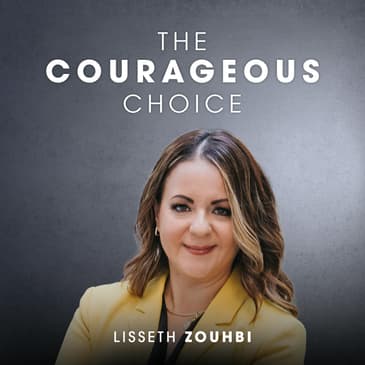
What does AI actually mean for HR teams and the people they support? In this episode, Lisseth Zouhbi, Chief People and Culture Officer at Child Care Resource Center in Los Angeles, explains how to approach AI transformation without losing the human side of work.
You'll learn how to decide which parts of the employee lifecycle can be automated and which need a human touch, why some organizations are bringing interviews back in person, how to move a fearful workforce toward curiosity and experimentation, which skills are becoming more valuable as AI spreads, and the concrete first steps to build an AI governance structure and roadmap in your own organization.
Key Takeaways
- Start with what AI means for your people, not what AI can do for your technology stack.
- Map the full employee lifecycle and separate administrative tasks from moments that require human connection.
- Benefits administration and onboarding workflows automate well, but onboarding still needs a real human relationship.
- Candidates are using AI to answer interview questions, which is pushing some employers back to in-person interviews.
- Assess your workforce's current skills against the future skills you'll need, then build a roadmap to close the gap.
- Use AI to upskill your workforce rather than to replace it.
- Curiosity is the entry point. Hands-on experimentation and team hackathons work better than waiting for formal training.
- Fear about AI cuts across every generation, including college students entering the workforce.
- Soft critical skills such as change management, emotional intelligence, and critical thinking are becoming more valuable, not less.
- Always validate AI output. Job knowledge and critical thinking are what make the output usable.
Timestamps
00:35 Introduction and guest background
01:29 The current HR transformation and thinking people-first about AI
03:16 Mapping the employee lifecycle for automation versus human touch
04:00 AI in talent acquisition and the return of in-person interviews
06:20 Assessing current versus future workforce skills
07:17 Building curiosity through hands-on experimentation
08:55 Fear of AI across generations and the case for upskilling
10:22 Why soft skills are becoming critical skills
14:23 The aha moment: building an HR agent end to end
16:36 The future of the HR function and evolving roles
18:34 Three actions leaders should take today
20:04 Keeping culture and mission at the center
24:51 Closing thought: the human-AI balance
Connect with Lisseth Zouhbi
https://www.linkedin.com/in/lisseth-zouhbi/
Thanks for listening to “The Courageous Choice.” Be sure to leave us a review and subscribe so you don’t miss any conversations.
For more information, visit gigtalentagency.com or email us at podcast@gigtalentagency.com if you have any questions.
#StartupCulture #OrganizationalTransformation #StrategicLeadership
Powered by the WRKdefined Podcast Network.
[00:00:04] Welcome to The Courageous Choice, a podcast about what it really takes to lead at the edge of change. Because here's the truth, strategy isn't enough anymore. The world of work is moving faster than ever, and the leaders who stand out aren't the ones with all the answers. They're the ones willing to make bold decisions in moments of uncertainty. This podcast is about those moments, about those leaders, and because leadership today isn't about certainty, it's about courage. The courage to see differently, act decisively, and step forward anyway.
[00:00:35] Hi, everyone. Welcome to this episode of The Courageous Choice. We're excited today to be joined by Lisseth Zahobi. She's the Chief People and Culture Officer of CCRC in Los Angeles. She's also a speaker and board member, and we're thrilled to have you with us. Thank you so much, Lisseth. Thank you. I'm excited to be here, and it's great to catch up, Jamie.
[00:00:55] I know you're doing incredible things up with CCRC. For those of you who don't know the Child Care Resource Center, they do amazing things in our community, and Lisseth has been at the home of their HR leadership for quite a while now. One of the things I love about Lisseth, in addition to her great work there at CCRC, is her involvement in the community, the HR community, and also really being a thought leader around how work is changing, the impact of AI, and kind of what that means across the workforce,
[00:01:23] and just things to be thinking about. So I can't wait to pick your brain today, Lisseth. Thank you. Well, I'm really passionate to just, you know, talk about the current state of HR and the future of work, something that, you know, every day we're working towards, but it's a whole different world now. Yeah. So how are you looking at that, and how are you diving in with your team?
[00:01:48] I feel like right now we're going through this phase of the next evolution, right? A couple years ago, we dealt with COVID, and now it's the HR transformation. And as HR professionals, we're being asked to work in a different way, think differently, always with thinking about the business strategy in mind and the people, right? Never losing sight of the people.
[00:02:11] And obviously the hot topic question is, what can AI do for us, right? And I'm thinking in reverse more of what does AI mean for us that we lead people that we are in the everyday with our workforce? And so it's thinking about the people first and not so much the technology and the change management that comes with the AI transformation for any organization.
[00:02:40] Yeah. We know a lot of people are feeling kind of fearful, right? Because there's this discussion about the impact to jobs and those kinds of things. But really there are certain things that humans are great at and we're going to always need. And regardless of whether it's, you know, through the change or kind of post some of the transition, those humans are going to play a critical role.
[00:03:01] When you think about kind of like the conversations that you're having at CCRC or in the community with other organizations that you're speaking with, like how are you starting that kind of human first conversation? Yeah. Within our HR team, we're looking at the entire employee lifecycle, right?
[00:03:23] And looking at all those key points in the employee lifecycle and looking at where are the administrative tasks, where is the human side, and looking at what process can we automate without losing touch of the human side. Right. There's a lot of administrative transactional things that HR can automate, such as maybe benefits admin or some of the onboarding workflows.
[00:03:48] But again, looking at if you're onboarding someone, not just letting the technology onboard that person, but have that human connection to connect with that person, get to know them. And so looking at what is a transaction that can be administratively used with AI versus work, is it important to still have that human touch? You know, one of the areas where I think has had the biggest impact AI is definitely in a talent acquisition.
[00:04:18] You know, and it's interesting because during COVID, a lot of these processes were done virtually, right? So all the interviews, for example, were done virtually. And what we've learned, particularly over the last couple of months, is that, you know, as much as organizations are using AI to help expedite the recruiting process, the applicants are also using AI to answer questions.
[00:04:43] And so we're bringing those interviews back in person to really generally make that connection with a candidate and really get to know them and, you know, probe those questions. Which is interesting because, you know, there's a convenience of being virtual, but then there's a technology that's also impacting, you know, that particular process. And so that's just one example of where, you know, you constantly have to be looking at your business process.
[00:05:13] Where's the human interaction? Where's the business, you know, administrative task? How do you continue to improve that process to improve the employee experience? And we really can't miss that step. And I feel like there's this, I don't know, tension or pool between, you know, automating and fast and even leveraging, you know, some of these really incredible tools to think faster as thinking partners.
[00:05:38] But, like, we still need to be able to ask a thoughtful interview question and respond to an interview question. As you're, you know, talking with other CHROs and business leaders, what are the challenges? Like, we kind of know this intellectually, but then when the rubber meets the road, you're navigating these kind of internal dynamics. What are some of the challenges that you think people are facing the most right now?
[00:06:04] I think one of the biggest areas of opportunity for us right now from the HR field is assessing what is the current skill set that you have in your workforce? And what is the future skill set that you're going to need? How is AI going to impact that? And what is going to be the roadmap to get there? And it's not about using AI to replace people, but it's using AI to upskill your workforce, right?
[00:06:33] And how can you improve those business processes, but with keeping the human in the loop? And I think that's the biggest opportunity is finding that balance between the AI adaptation and utilization and keeping the human side of the business. Yeah, I love that. I think that what's cool, too, is like the outcomes.
[00:06:58] When you think about the business outcomes, that process of imagining what's possible today is kind of fun. Have you? I know you've been on your own learning journey, right? Just to kind of move yourself through this change. What are some things that you've done to just educate yourself and start to imagine what could be possible? I think one of the biggest things that anybody can do is have the curiosity to learn, to play around with it, to test it.
[00:07:25] I'm actually very proud of my people and culture team because we were the pioneers of experimenting with AI about two years ago. And we wanted to pilot a specific platform. And so we did. And that opened the door for other departments within the agency to start exploring it. And so now we're looking at using different tools. But it starts with the curiosity, right? The curiosity to play with it on your own.
[00:07:53] I was having a one-on-one with one of my directors today. And I was sharing with her, you know, I'm going to change the structure of our divisional meetings. And I'm thinking about breaking into groups and having our own sort of, you know, hackathon experience where we get our teams into groups to just start experimenting, to start playing with it, to getting comfortable with it. You know, having the curiosity to come up with questions. Well, can it do this? Or what if, can we build this?
[00:08:23] And that's where it starts. You know, there's tons of webinars and, you know, free resources available. But unless you start with that curiosity to just start playing with it, you're never going to evolve, you know. And what maybe worked six months ago is not going to work anymore because it's just changing so rapidly. It's so true.
[00:08:46] Have you had to have conversations with people where maybe fear is keeping them from taking those steps to experiment? And it's across the board. And it's not a generational thing. I think there is that fear because you do hear a lot of what's happening in the workforce of companies eliminating positions because of AI. But what I do find interesting, too, is a couple of months ago, I did a presentation at a college, at a university.
[00:09:15] The topic was HR, but obviously top of mind was AI. How is that going to impact my future career? And there seems to be a fear from college students, particularly. And I experienced that firsthand in having that conversation with them during the presentation. But also in talking to counterparts or individuals that have college kids, students that are feeling the same way.
[00:09:43] And so this is where the, you know, curiosity comes into place, the ongoing growth and development, because we're going to have to constantly upskill ourselves. AI is driving this because the jobs are going to change. How businesses operate is going to change. So we need to think about it in the way of, well, how can I upskill myself with AI to become a much more valuable asset to an organization?
[00:10:13] And, you know, one of the other things that I think a lot about lately is those soft, critical skills that are becoming much more important. You know, we've spent a lot of time over the last couple of years focusing on the technology, on the functional skills. But we've kind of lost sight of those critical skills, you know, change management, emotional intelligence, the critical thinking.
[00:10:37] In my opinion, those are becoming much more critical than ever, because it is going to be a combination of managing AI and managing a human. And that is the reality of the future of work. I was just having a conversation about kind of early career talent or people coming out of school. And I think that to your point, it's that adaptability and curiosity that is really what they can do to future-proof themselves is to approach work in that way.
[00:11:07] They have definitely learned through education and through life experience, valuable skills. And it's really how can they apply them in, you know, evolving ways as organizations shift, you know, how work happens. So I think that advice is really crucial and how we support them to, you know, some people might be more innately kind of adaptable than others.
[00:11:30] And so part of it is how can we help move them in that change curve to just start to get comfortable with something that might be uncomfortable for them. You know, I'm having a similar conversation with HR teams. So to your point, like we're all people, right? And have different approaches to work and life and comfort with change.
[00:11:50] And I think about some teams that are really front end like yours that are being that activator within organizations to really help leaders think differently and kind of at those points of decision, whether it's how we do a workflow or how we solve work getting done, whether it's a resource or a technology tool. HR business partners and other HR professionals often are that like front line.
[00:12:17] But, you know, the analogy we've been using is we have to put our own oxygen mask on first. Have you said you're integrating it into your team meetings? I heard. Have you done training or you're just encouraging people to do training that they find they're interested in? How are you approaching that? We haven't done formal training. Well, let me back up. When we first introduced AI, this tool a couple of years ago, we did do some initial training. But a lot of it really was more of hands on experimenting.
[00:12:47] As an organization, you know, we're looking at our AI strategy and that is going to be one of those topics is sort of a more formal training. So it's going to be a combination because you have to think about what level is that individual at? How are they going to use it? Also, how do they feel about AI? And so we need to create an environment where it's having that positive environment where encourage people.
[00:13:17] It's okay if you make a mistake. You have to learn from it. Right. And having that curiosity to ask the questions about how can you actually utilize this to improve your workflow, to improve what you do. And think about, okay, if I'm going to save maybe two hours and drafting a job description, where can I add value in what I do to the organization?
[00:13:44] Maybe this means having more time on collaborative meetings to really think about, you know, strategies or being proactive about, you know, if we're anticipating bringing in a new program, a new funding to the organization, how can we get ahead of it? Right. So it's looking at it from that lens of where can I save time, but where can I add value in other areas of the business? Is having the curiosity to test it, not being afraid of it and learning from it.
[00:14:13] Are there any stories or wins that you've had that like, whether it's on your team or within the business where someone had an aha moment that you'd want to share? Well, it's initially when we started using AI and one of my directors was building an agent. It was such a big aha moment when the agent was done. We were thinking about, okay, if we start with this and we want to end with this, how do we close that gap? Right.
[00:14:39] And we started with something very simple as job descriptions. And then we took it a step further. Once we've updated the job description, bring the person and onboard them, then how do we create an individualized training plan? And then what if we created a 30, 60, 90 check-in with questions for the leader to ask the new employee, but also questions for the employee to ask the leader?
[00:15:07] And then how do you create a learning development plan based on that role and based on the individual's experience? Right. So we just kept like, you know, asking more. What if this? What if that? And so when they finished building the agent and, you know, we saw the outcome, we're like, wow, why haven't we had this? Right. Because it saves you so much time.
[00:15:34] Of course, you still have to vet it out. Right. You still have to review it. You know, it's like anything. You have to validate the output. And this is where the critical thinking skills and the knowledge of the job comes into place because you need to be able to analyze the output of AI. You need to be able to ask the questions to keep refining the output. And that's still important.
[00:15:58] We can't assume that AI is going to do everything for us and that it's going to give us the answers to everything without validating it. And so that is the wrong assumption. But that was such a big aha moment for us. And we're like, wow, just think about the endless possibilities. Right. Like the true limitation is like what we can imagine. It's really incredible. So you and I were talking a little bit about just like that. What does this mean? Right. In the future of like HR, the whole function.
[00:16:28] I know there's a lot of predictions. What do you feel like some of the most significant shifts are going to be from a functional perspective? I do believe that roles are going to be redefined. And, you know, there is this partnership between the function of HR and IT when it comes to AI integration into the organization.
[00:16:49] But I do believe the functions are going to change with keeping in mind, you know, you are going to have to manage AI and the individual. And so the skills are going to evolve where, you know, there's going to be a higher probably necessity for, you know, HR practitioners to have, you know, those analytical skills. Obviously, the AI skills, the change management.
[00:17:14] And, you know, even though change management, if we think about it in the HR world, we've always done it, right? Whether you rolled out any performance management or you roll out any training, there is change management around it. But I think, you know, we really have to be more cognizant of how we are managing that change and also assessing if that change was effective.
[00:17:39] And that's why I think, from my perspective, I think there's going to be a bigger focus on that. I think knowledge or background and work redesign and workforce planning, because that is going to be constant. Yeah. I almost think, like, the functions and the silos as we know them today, like, will look totally different.
[00:18:00] When you think about advice to other leaders who are, you know, whatever stage of this shift themselves, like, there's a certain amount of courage, I think, to really be driving these conversations in the organization. Because we all are busy, right? There's the just run the day. The regular business doesn't stop. Most people are short on bandwidth anyway. And then you layer in potential fear or not knowing how to do things.
[00:18:27] And what advice or actions do you maybe have that people could start today? I think there needs to be collaboration across cross functions. I think starting there with defining a core group within your organization, somebody from IT, somebody from finance, from PNC, from operations, legal, cross functional, so that you do get that input from all the key stakeholders. Because it cannot be done in silo.
[00:18:56] So, to me, that's a starting point is defining who that core group is that is going to be defining that AI strategy, building that AI governance, and thinking about what does this mean to your organization? How does it tie into your strategic plan? Use that as starting points, starting conversations to think about the impact that AI is going to have and think about how do you build your roadmap with that in mind? Yeah. Yeah.
[00:19:25] You know, one of the things that we share is a background in hospitality. And I'm so grateful for that because it really grounded, I think, the rest of my career with a focus on culture. And I think that this is a moment where culture is going to continue to be one of those things that differentiate companies, both from a customer and an employee perspective.
[00:19:47] So, as leaders are thinking through the strategy and they're thinking about how they start, embark, or manage kind of this potential transformation, how have you kept culture on the forefront as you're navigating some of that activity? Yeah, you know, it is top of mind. And not just with the AI, but with so many different things that impacts culture.
[00:20:14] And to your point about hospitality, I was just talking to someone about this. It's like hospitality was my school on so many levels, right? We learned so many critical skills that have carried on throughout my career. You know, problem-solving customer service culture were definitely, you know, top of mind and where you're really honing in on those skills.
[00:20:38] So, from a culture perspective, you know, everything, every program we implement, we think about, okay, what's our mission, vision, values? How does it align to our strategic plan, to the service, to the community? And so, even from an AI perspective, you know, we started having conversations about using AI within our programs.
[00:21:01] So, it's embedding any type of tool or change or new structure into how does this align with our mission, our vision, our values, the services to the community? Because at the core, that is, you know, we're here to provide services to our community. And so, when there is no alignment to that, you start seeing breaks, you know, frictions within the culture.
[00:21:26] And, you know, since I've been here, every single interview that, you know, that I've done and brought in new employees, I ask the question, you know, why CCRC? And the predominantly most of our staff, they're driven because of the mission and services that we provide to the community.
[00:21:46] It starts from bringing on teams and continuing to have that focus of that mission driven, you know, what our purpose is, and also making that connection to internally to our mission, vision, and values. I think that's just really important for all of us as leaders to not lose sight of that connection.
[00:22:07] Like, we know it intuitively and we may think it's implied, but I think it can get lost and we risk people maybe misinterpreting that we are changing those priorities or our values or who we are as an organization.
[00:22:22] When we think about that communication plan and strategy, and even if people are only seeing components of what's actually happening, that I think is so important to be really clear about who you are and why you're there and what, you know, how you feel about the people and what you want them to feel and all of those things. As you think about actions, I'm just trying to imagine, so listeners are probably on all stages of kind of readiness or activity.
[00:22:52] Like, when you think across the board, what are just like three big things that if they haven't done it, you recommend somebody do today? First of all, get a seat at your AI governance table. And if you don't have an AI governance, I would recommend highly to build one within your organization. Think about how the work is going to be redesigned, not just the roles.
[00:23:17] And as you're thinking about replacing positions, think about not just the short term, but sort of what is the long term impact going to be, especially with the AI. Thinking about auditing your workforce for AI exposure. Again, where is that risk? What guardrails do you have in place? Do you have a policy, right? Right. So I would say for me, those would be the top three things to think about. Those are excellent. Yeah.
[00:23:46] And it's happening, right? So we may not, if we haven't put in the guardrails, it's happening anyway. So we probably, we definitely need to get our arms around that. I love the cross-functional conversation because that's what we're doing with Pedro and Wallaby. He ran Tableau. And when you talk about credibility, he has that expertise from the data, technology, and AI side of the house. And we had kind of the organization, leadership, culture, change management, the other side.
[00:24:14] And really transformation today is that cross-functional lens and the ownership as you're sharing. I love the idea of an AI governance committee because that it really is shared, right? We were just talking about like this turf war that there's some articles around people having turf wars and nobody's going to benefit from that. And it's not about me or you, it's about collectively as an organization, how do we make it succeed? Yeah. Well, I'm so grateful that you joined today.
[00:24:42] As you think about courage and you think about this moment in time and leadership, any thoughts you want to share with the audience before we close up? The organizations that will be successful in this new AI world aren't the ones that deploy AI the fastest.
[00:24:58] It's really the ones that think about the human impact first, that are purposeful and strategic about the adaptation and the deployment and thinking about what is that transformation that the organization wants to fundamentally achieve. And it's not just about the technology piece. It is about the human side.
[00:25:25] So if you can balance the AI and the human, to me, that's a win-win equation. I love that. Well, I think we're going to end on that note. Thank you so much for joining us today. And thank you everyone for listening. We look forward to seeing you in the next episode of The Courageous Choice. Thank you. Thank you for listening to The Courageous Choice. If you'd like to know more about gig talent, please visit gigtalentagency.com or email us at podcast at gigtalentagency.com.
[00:25:55] See you in the next episode.
Sponsors
