
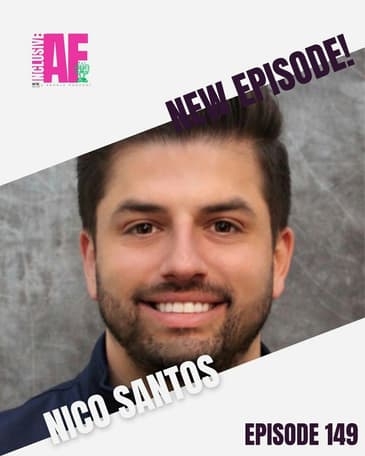
🌈 Welcome to Episode #149 of The Inclusive AF Podcast! 🌈
This week, hosts Jackye Clayton and Katee Van Horn sit down with Nico Santos (he/him), a passionate DEI strategist, communicator, and advocate for organ donation and health equity. Nico shares his inspiring journey from broadcast journalism to leading inclusive change at the Donor Network of Arizona. Together, they dig deep into why representation matters in healthcare, the unique challenges facing communities of color in organ donation, and the power of intersectional outreach.
🚀 What you'll hear in this episode:
- How Nico's family background in healthcare shaped his values
- The impact of cultural trust and representation in increasing organ donations within marginalized communities
- Behind the scenes of moderating a bold DEI event in Arizona
- Why DEI work is crucial (and challenging) in both nonprofit and corporate spaces
- Eye-opening facts on disparities in organ and tissue donation, especially in Arizona
- How DEI committee work can be made more accessible and actionable for all
- Easy, practical ways YOU can support health equity and organ donation, wherever you are
Filled with powerful stories, inclusive strategies, and actionable tips for being part of the solution, this episode is a must-listen for anyone invested in equity, healthcare, or simply making a difference!
Learn more, join the convo, and help make organ donation accessible for ALL. Don’t forget to like, subscribe, and share your thoughts in the comments!
✨ Resources & Links:
Arizona Organ Donation: www.telehealthaz.org
National Registry: www.registerme.org
#InclusiveAF #DEI #OrganDonation #HealthEquity #DiversityAndInclusion #ArizonaPodcast #InclusiveLeadership #OrganTissueDonation #RepresentationMatters #DonateLife #HealthJustice #PodcastCommunity
— Subscribe & hit the bell to never miss an episode! 👇 Drop your questions or experiences with health equity and organ donation in the comments!
If you like what you hear, we would like to encourage you to subscribe to our channel!
We would also appreciate it if you would rate this channel by going here: RateThisPodcast.com/inclusiveaf
We create this podcast as a labor of love. But if you would like to support this channel you can buy us a cup of coffee here: https://www.buymeacoffee.com/InclusiveAF
Powered by the WRKdefined Podcast Network.
[00:00:00] You're listening to Inclusive AF with Jackie Clayton and Katie Van Horn. Hello and welcome back to the Inclusive AF Podcast where we dive into all things diversity, equity, inclusion with thought leaders, change makers and disruptors. That's a lot of words. I am Jackie Clayton. And I'm Katie Van Horn. Today we're thrilled to welcome a very special guest.
[00:00:27] So Nico Santos is a DEI strategist and advocate and communicator. He's been instrumental in fostering inclusive conversations, especially in the space of organ donation awareness and health equity. So, you know, we I know that Nico recently moderated an event in Arizona around the business of DEI. And that was hosted by the Arizona Diversity Council and the Donor Network of Arizona where Nico works.
[00:00:54] And these crucial conversations, obviously, about representation in the organ donation space. That's, you know, really what this is about. And, you know, how do we take that center stage? So welcome, Nico. Thank you for joining us. Thank you so much for having me. What did I hear there? Thought leader, disruptor, strategist. I think you're giving way too much credit. And change maker. Yeah, it feels like you're giving me a little bit too much credit.
[00:01:21] But it is an interesting topic to kind of intersect with organ and tissue donation. So I'm happy to be here to talk and answer any questions you may have. Well, we're going to hold you to all those descriptors that we use. So just be ready, Nico. OK, this is going to be a tough, hard as nails interview. We're very tough interviewers. I'm on the hot seat. Rapid fire. Fair enough. Well, shoot, let's go. I do want to start with your background, though.
[00:01:50] Can you tell us a little bit, like, about your journey in healthcare and public awareness space? Because I really, it's so interesting when we get people onto the show and we look into it more deeply and it's like, yeah, how did you get started doing that? That's a very fair question, because as we know, no one grows up saying, I want to be an organ donation, you know? So I didn't plan this. This was not a career choice per se. I think it kind of found me.
[00:02:19] And why do I say that? So I have a background in broadcast journalism. I was in some capacity in broadcasting for eight years before I made this, what some people might see as this radical career change. But I like to think that it's actually very similar to the role that I used to have, if you think about it, because I work in marketing communications. I'm a spokesperson for the organization.
[00:02:41] So there's a lot of reporting about really complex information, but distilling it in a way that is easy to grasp for the purpose of marketing. We tell the stories of the family members of donors who have passed away, as well as the recipients who have a second chance because of that. And very much from a journalism perspective, video content creation, presentations, speeches. So I like to say I'm still a reporter. I just happen to always be reporting on organ and tissue donation.
[00:03:09] And for me personally, it happens to always be content that is personally fulfilling for me. So it is a weird change. But when you really think about it, it's not. Awesome. And, you know, I think that's such a I like the hey, the work found me. I I am very familiar with that. Very similar situation. And so, you know, I think that's what makes it powerful is that, you know, there's some sort of calling or, you know, some pull that you get. Into some of these spaces, which is awesome.
[00:03:38] But like a defining moment or moments that really shifted your focus on to that health equity in particular. Health equity in particular. I mean, there's multiple ways to think about this. I come from two parents who worked both of them still alive. And I praise the universe. They worked both 30 plus years in health care. But on the community side. So nonprofit clinics, for that matter. Fun fact.
[00:04:07] Well, they're no longer married. My parents were divorced, but that's OK. They met because my mom hired my dad as a doctor at one of the clinics. So and so they service offered. I'm glad the fun fact wasn't that they got divorced that it went right. I was like, where are you going with this, Nico? What's up? Well, I don't know if my dad will see this, but that's also a fun fact because it was just for the best. You know, as an adult, I can recognize that. But the fun fact was that my mom hired him and that's how they met. The rest is history, so to speak.
[00:04:36] But the emphasis of their their community clinics that they worked at and the people that they served and offered medical care to were immigrants, regardless of documentation status. Sex workers were among the clientele that they had people who were not insured underinsured. So there was this idea of how everyone deserves access to this. And I just grew up with that. It felt normal to me.
[00:05:01] But now as an adult, I realize how difficult of a path to take to make sure people like this get equitable access to health care is. And the same is true in organ and tissue donation. I'm lucky to work at an organ procurement organization. We call ourselves an OPO, better known as Donor Network of Arizona. And the executive leadership team is really on board with diversity, equity and inclusion internally and externally. That's awesome.
[00:05:28] So recently, you know, you did moderate the business of DEI event here in Arizona. Can you walk us through what were the themes or what was that discussion about? So it was an honor. We were members of the Arizona Diversity Council, and we invited them to host that event here for multiple reasons, including the fact that our leadership team is really supportive.
[00:05:51] Some key takeaways from that were how there's a lot of obstacles to DEI. I am sure you two more familiar than I, be it the political sphere as we know it now. And so there were really, I was almost surprised, but I think it is necessary how there was such a reiteration about the business case of DEI.
[00:06:14] And so when it really comes down to it, if we're nonprofit, right, but if a for profit company is really kind of on the fence about it, you're literally going to make more money. So not only is it good for the person and the people as a team, more around, but also retention and diverse ideas, better products, so to speak. So there was an emphasis on that. And there was a lot of talk about, for example, one of the people who was a presenter was from a city here nearby.
[00:06:42] So actually working for that city from a government perspective, but also offering DEI initiatives, programs, events, really an emphasis on inclusion and diversity in a state, Arizona, that historically Republican conservative, not entirely on board with that. So it was a very interesting, I think, four hour discussion with guests and questions, multiple presenters.
[00:07:11] It was such an honor to be even a part of that. And I'm a forever learner. Yes, I was hosting, but those were the experts. And even I took some nuggets away to kind of apply in multiple places, including our own DEI committee. It was fantastic. I was going to ask, with that, four hours is a lot. That's a heavy conversation. That's a long conversation. Anything that stood out that you were surprised to hear? Or you said there were a couple of ideas and different things.
[00:07:41] Anything that was any new concepts or things that you think you want other people to know about? So yes, the last part. It wasn't surprising, no, but it was something that I was struggling with myself as I was then the chair of our diversity, equity and inclusion committee here at Donor Network have termed out. So was it a surprise? No, but I hope it would be useful for people to learn what I learned.
[00:08:07] One of the nuggets that I took away from that was it's really easy to rally support for DEI in the workplace. It gets a lot more difficult, even for the people who say they support it and I believe them, but to get them to actually do some of the work with us. Right? Because there's only three leaders of the committee for the entire organization. Those three people can't do it all. So there were a lot of questions about that, discussions about that. It was one of my own personal questions, even as the host.
[00:08:36] And our takeaway, and we've applied it, was yes, so it's easy to get people to say they want to relatively easy to be a member of the DEI committee, but then having them commit more time outside of the committee meeting on top of their daily job and they're not getting paid more for it is really difficult. So we've started allotting time at the end of the meeting. Well, typically half of the meeting now is a working meeting. Hey, here's updates. Here's what we're going to do next.
[00:09:03] Here's time for you to work on this since you've already dedicated this hour and a half of your time to this cause. Let's actually do something and walk away with an accomplishment. A simple solution, but one that I hadn't thought of. So maybe there's other people out there who didn't think of that. And it's worked really well for us. That's amazing. And I mean, I think that is definitely something that anyone that's listening can can take that away.
[00:09:25] You know, I think Jackie and I work with a lot of companies that have employee resource groups or have, you know, a diversity council, things like that. And so I love the idea of having those working sessions, because I think that is one of the, you know, the biggest barriers, I think, for folks to join and to start participating in some of that work. I was going to add to that. I think. I think.
[00:09:50] In talking with a lot of people and just some of the things that I've seen, it's it's difficult when you can't see all of the parts. It's so nuanced, right? Like, it's like, you know that this is a problem, but like, you might not know what I'm talking about is being a problem. You know, we were talking about I, you know, I'm over 40. Oh, wait, over 50. And when I like went through, I was getting a hysterectomy. I was like, I'm really worried.
[00:10:19] And they're like, oh, it's like the safest surgery ever. It's like, no, I'm not worried about the surgery. I'm worried about treating my pain and listening to me like that's my concern. And it was like, oh, I didn't even know that that could be a possible concern. And so I know that a lot of people are open to looking at this, but may not always understand what we're talking about in dealing with. Like, like I can conceptualize that this is an issue, but I've never seen it.
[00:10:45] So then asking to help can be a little, a little risky. And there's just so much historically looking at challenges or trusting within health care, but then knowing that there's all these things going on. You know, we're looking at I know August is National Multi-Ethnic Donor Awareness Month. That's a lot of words. It's a mouthful. Yeah. And it's specifically to Arizona.
[00:11:13] There is over 1600 people on that list with about 60% coming from non white ethnic backgrounds. So how does this disparity highlight the need for DEI efforts in health care and donation awareness? Well, it sounds like you've done your homework, but believe it or not, that data changes every single day. So in Arizona alone, it's closer to 2,100 people. The 60% ratio does remain true.
[00:11:39] And so to address like this, these gaps in service, so to speak, is a little bit difficult for an organization like ours. Because let me break it down for you a little bit. So we, Donor Network of Arizona is an organ procurement organization, but we are only one link in a longer chain that is donation to transplantation. And that's done intentionally because we want to prevent both actual or perceived conflict of interest.
[00:12:08] So for example, us as a recovering agency, we work with the donor families after someone has passed away and walk them through the process of that person was registered or get to know more about the potential donor and see if it aligns with them. If we earn authorization, we move on, recover any organs that are viable to save lives, tissue that are possible to recover for saving and healing lives as well. But then we have to pass the baton. So who ends up getting actual donation in the end?
[00:12:37] Our organization as an OPO actually has very little control over that, except for the fact we're working and have been successful, thankfully, in making more organs available so that more people at the end of that line, the patients who rely on our work, get more yeses. I don't know if that's, I don't know if that's, if I was too complicated with that, but I wanted to make sure that it's a clear separation and we can only indirectly impact that. And we're certainly trying. So Nico, I'm going to ask what might be a very stupid question.
[00:13:07] So I am going to apologize in advance, but those are the best ones. Okay.
[00:13:11] So when you have organs that you are procuring, is there, I know like a lot of times, like the matching of organs or matching of whatever to that receiver, how, like, is there, are there differences physiologically in how donations can be given for a non-white person versus a white person or gender or whatever it might be?
[00:13:40] Are there differences there of who can receive what? So, yes and no. It's not that simple. A large part of our marketing is telling the story that, you know, a person who may look or act or eat or celebrate like you is more likely to receive an organ from you.
[00:14:02] So someone who registers in any given community, there are higher chances for them to save or heal someone within their own community. But it's not as simple as skin color because we know skin color doesn't have really a lot of biological backing. It's just a racist social construct that doesn't have a lot of science behind it. Right. So, yes and no. But if you happen to come from the black community, then there's a chance that your genetics are similar in some way that makes the matching a little bit easier.
[00:14:32] So, and we can talk about this if you would like to go into depth. There used to be an indicator that determined how people or how well their kidney was functioning. And I use kidney because, one, this is what this is about, and two, that is the most common organ that is needed for donation to save someone's life. And there was a decision on that that was based on a study from 1990.
[00:14:59] And in 1990, the study suggested that, the study revealed that black people had a higher level of a certain waste product from the muscle tissue that the kidney typically filters out. And so, based on those studies' findings, they started, I'm trying to remember what they call it. There was like an estimation of the filtration process and how efficiently it was done.
[00:15:27] And since the study showed that black people had higher levels just naturally, then they were also spotted less often for kidney failure. They were less likely to be listed for a transplant if they were in kidney failure. And then even when they were listed, they had to wait longer in order to qualify or for their organ transplant surgeon to accept. Because the estimation was like, there is the creatinines. Their levels are naturally higher.
[00:15:56] So, they're not really that sick. As it turns out, it's really only affecting about 20% of the black population. So, it is higher than average. But when you break it down to an individual perspective, what about the other 80% who have these higher levels because they're in kidney failure, but the medical system is just assuming, or was just assuming, that it was just naturally a higher rate of occurrence in black people. So, that really, I think it's a good example of how, why we describe racism as systemic sometimes,
[00:16:25] and not just some rich, powerful person who wakes up and says, like, I want to ruin the day of the next black person that I see. Also a problem. But in this case, it was just built in and ingrained on, you know, results from a study that they largely misinterpreted. Thank you that has gone away. The National Kidney Institute, is that what they're called? National Kidney Foundation, excuse me, and some other agencies and organizations a couple years back recommended removing that.
[00:16:51] And then UNOS, United Network for Organ Sharing, which has a hand in saying how organs get allocated. Also agreed, this should not be part of the allocation policy. It needs to be patient by patient determination, not just an assumption based on your skin color. I just went down the rabbit hole, but that one is really- I love the rabbit hole. No, it's so important because people always wonder, like, how we get here or what is happening. And so much of it is archaic. Like, I mean, we look at that when we talk about, like, technology.
[00:17:21] If you went to school at a certain time, you're not going to get all of the education. You might not be aware of the stuff that's the latest versus another time frame. And if you didn't, you know, open your mail, open your email or whatever, you know, did you get that information? And how soon, like, it has to be those official things or talking. And I think, again, people who click to listen to be here to listen to this want to know this kind of thing because we hear about it more now.
[00:17:51] You know, there are people that want to make a difference but don't recognize that this is a huge issue because how many people had to die before that got undone, right? Right. That's a lot of in there when you're talking about a loved one in someone's life. It's just key to know that, you know, I just think that so many people want to break down these barriers.
[00:18:21] And it's just key that we look at those things. Yeah. I would love to know. I know it's a little bit stressful, but given, like, what's going on now within the administration, do you foresee any initial barriers or complications to organ donation just with everything going on? I don't know if you've heard of anything or are new.
[00:18:46] No, not entirely, because I guess we're in a lucky position that something like organ donation is very bipartisan. It's very middle of the aisle or both aisles or all aisles, I guess, depending on how you look at it. In Arizona, for example, with our state lawmakers on both sides of the aisle, so much support for organ donation. It just makes sense.
[00:19:10] It's market research shows that a little bit more than 95 percent of people believe that organ donation is inherently a good thing. So we see that as well in the political sphere. They're all just really on board. Now, who ends up in charge of certain positions and how they may directly impact us? It's hard to predict. But this organization has been around since the 80s. And so they've been through a lot of presidential administrations.
[00:19:37] We are still not only surviving, but thriving and constantly saving even more lives every single year than the year before. So certainly it's on our radar. But from a DEI perspective, as I said earlier in this interview, I think off the top, our executive leadership team is really on board for that. Even though recently there was an executive order for at least government agencies to remove DEI, we haven't budged. That's great.
[00:20:05] So I want to go back to one of the pieces that Jackie mentioned earlier about her own personal kind of medical experience. And I think historically we know that there are challenges from a trust perspective in some of these non-white communities of just not trusting in health care overall or in the medical community. So how do you overcome that?
[00:20:32] And how do you think about that in your role and then kind of generally within the organization? Very slowly. We're seeing some successes, though, and I am proud to say that. For example, one of the barriers, if you will, is that among the 22 sovereign nations, indigenous tribes and communities and reservations in Arizona alone,
[00:21:00] a lot of them, part of their cultural values to avoid anything that has anything related to death. So that has been a long-term challenge because organ donation, yes, there is living donation, but that's done at the organ transplant centers. Our sole focus is this person has passed away and made this decision that when they're no longer required on this earth that they want to help others.
[00:21:26] Or in some cases not, but will the family authorize this? It is a very delicate dance to have that conversation with some of the Native American communities, particularly people of the Navajo Nation. We've already known that. And we also recently had a lunch and learn that was hosted by our DEI committee from a Native American patient navigator from Mayo Clinic who really provided a lot of insight.
[00:21:53] And so part of that is, of course, being respectful for cultural differences, understanding specifically the Navajo Nation is matriarchal. So who is the female decision-making here? I'm also respecting that, even though we happen to have to go through legal next of kin. But it's a very delicate balance of the two to make that happen.
[00:22:15] But the goal, really, of asking this family to either support or authorize in a way that doesn't negate the value they have surrounding death and maybe avoiding that topic. But what about other values, such as helping each other, a sense of community, love for your fellow men, that kind of thing? So that's certainly one barrier. More specific to health care trust, right?
[00:22:39] The United States has an interesting history with medical experimentation, eugenics, so many things, you name it. So the loss of trust in multiple communities, I think, is fair, was earned, and is valid. And we get swept into that because we are part of the larger health care community. So it takes a lot of work, a lot of community outreach, a lot of education, emphasis on multicultural donation and why that's important.
[00:23:09] And when it comes down to donation conversations with grieving family members, one of the steps that we have very intentionally taken since the, I guess, the creation of our DEI committee is, luckily, we work hand-in-hand with HR quite a bit. And so the recruitment strategies have changed. So where they search for qualified applicants has widened over the last three, four years. And it shows in our diversity.
[00:23:39] I looked up the numbers earlier. I don't remember the numbers by heart, but I remember that just here internally, Asian, Native American, Latino, and Black have increased in representation over the last four years. And so we're seeing that bringing on those new people, having their diverse inputs, and actually putting that kind of person in front of a family that will, like, say, hey, you look like me. I think you might understand me. Now let's have this conversation.
[00:24:06] And it seems to, honestly, be working because our numbers keep increasing. Arizona's generosity is really, it baffles me all the time that people can say yes to such a thing in a dark moment. Now we're getting a yes from more diverse populations, communities. And when I say diverse, our diversity has really increased in other ways, too. We have higher representation of military veterans, National Guard, reservists, people with disabilities, non-binary, trans people.
[00:24:36] But we've really taken it to heart and made this a thing for DNA. And it's showing in our work. I want to say something just really quick. Hold on. I have a question. You just said something I want to just clarify. If I'm an organ donor and I pass away, you have to go get, like, permission from the family still or the next of kin still, even if I say yes, I am an organ donor? Or no? Good question. Good question.
[00:25:05] So someone who registered, that's considered a legally binding decision at the moment of their death or as donation becomes possible. So if someone is registered, then our teams will still communicate with the donor families 99% of the time in person. In that case, it would be to walk them through the process, answer any questions, help with memory making, help to honor this person. And do you want to, I don't know, share their story in the future to keep their legacy alive and encourage others to do the same?
[00:25:32] The authorization that we request is when someone might be a donor, there's potential there, suitability. But if they're not registered, then it relies on legal next of kin to make that decision. Both avenues are possible. We can go back to that marketing or that research study I was telling you about. More than 95% of people think that organ donation is inherently a good thing to do. But when it comes down to a grieving family member to make that decision for a loved one who they can't ask anymore,
[00:26:02] sometimes they just lean on status quo because they don't know for sure. That's why registering as an organ donor is so important. That makes it very clear to the family they made this decision. Sometimes multiple times we can see in the registry that someone said yes, four, five, six, mint multiple times. And that is just such a relief for the donor families. There's one less crucial decision that they have to make. So I'm glad you asked that because registering is key here.
[00:26:28] Roughly 60% of the time a family will say no if it is up to them versus the donor, him or her or themselves. Okay. Sorry, Jackie, I totally interrupted you. You don't care. You don't care. But what I was going to say is what you bring up is so important because it's one of the things that we say from recruiting, it's where it's so nuanced when you're like, oh, I want to hire on merit.
[00:26:51] But if I don't have somebody that's represented in this group and I'm looking for that, this person is more qualified. That's a skill we don't have at this point. And some people have a hard time understanding. When would you want to bring those voices in? It's when they're missing so that we can get to the business. We're not. And in your case, we're not talking about, you know, a Snickers.
[00:27:22] We are talking about saving a life. Like this is about making sure that we can have those conversations. And one of the most beautiful things that I've seen is when someone, yes, they grieve and they feel the loss when they're losing a family member, but feel good when they know that this person is alive because of that legacy that in the moment,
[00:27:46] if I'm not seeing people looking like me and they're not communicating in the way that I'm able to culturally receive it at that moment, at the hardest time, one of the hardest times in your life, that opportunity is gone. You're not going to get it back. Like there's a certain amount of time that goes into it.
[00:28:04] And I just think it's just one example that we keep trying to bring up of at what point sometimes somebody else from a different group than what's there is more qualified because that's what we're missing in order to get these things, you know, pushed forward. That's all that I was thinking about when you brought those stuff up.
[00:28:26] I mean, it just, you know, I feel like it reminds us on why this is important and why we bring all these things together. Yeah, I think you framed it in a really useful way. And it reminded me also that one of the teams that is specifically dedicated to communicating with these grieving family members, they're called Donor Family and Advocate Services. At last check, it's been a little while, it may have gone up or down,
[00:28:52] but the last time I asked, like how many, if any, of your team is bilingual? And it was roughly 80%, mostly Spanish because we live in Arizona, the Southwest. And not only is that necessary and useful, but this organization views that as a talent and a skill to connect with these donor families that we get paid actually a premium for being a bilingual. I'm trilingual. They won't pay me for Portuguese. It's just not necessary in Arizona.
[00:29:20] But I get a premium for being bilingual in Spanish. So not only are they seeing this, you know, just DEI, well, let's get these different people in the door, but also we value what you bring. So, yeah, they put their money where their mouth is for sure in that realm. That's awesome. So obviously you've been doing this for a while. You've been working in the, you know, organ donation advocacy space. Are there any stories that have really like stuck with you that, you know, about a donation story?
[00:29:50] I'm sure you have hundreds of them, but one that comes to mind in this space? Oh, my gosh. Well, I don't know which one I could even pick. I can share one with you that was part of the reason earlier I said that this work found me. When I was still working in journalism, I actually told the story of a young girl. It's been now eight years, seven and a half years, so I don't remember her name. But I remember her, the image, the family vividly.
[00:30:19] And she got a transplant prior to that story, but she was going through organ rejection. So she was requiring another transplant because that one didn't work so well. And then months later, I found out that she didn't make it. And so that still sticks with me. That's part of kind of like what lights my fire because really at the end of the day, what collectively the system is aiming for is that no one passes away while waiting for an organ donation.
[00:30:48] Maybe one day there will just be no such thing as health concerns. I don't predict that in my life, but at least people deserve a chance. And through this way, if you're on the national organ waiting list, that is your final opportunity. There are no other medical interventions. So it's just me. That story reminds me of maybe how desperate in that case her parents must have felt and however long they were waiting must have been the longest weeks and months of their life. And she still didn't get the transplant.
[00:31:17] So that really sticks with me. And as I tell the story, it sticks with me even more because in 2023, I had a cousin who was listed for a kidney and he did not get a transplant. So unfortunately, he passed away. So now it's getting a little personal. I started this work and I didn't know anyone, even with any type of connection to donation. I mean, I have two cousins who are coordinate recipients and sadly this other cousin who passed away while waiting for a transplant. So I don't think anyone should pass away because of that.
[00:31:47] Absolutely not. Well, thank you for sharing that. And, you know, thank you for sharing. You know, I think this is where this becomes much more real for folks. Like you said, if they have an experience with someone that has gone through this or something that, you know, or carefully know about it. So, yeah, I think that that helps when you think about kind of why this is so important.
[00:32:10] So, you know, I would love to know from your perspective, how do you continue to kind of change the tide around getting people to sign up for to be organ donors and getting people to to, you know, sign that piece of paper or click that box when they're renewing their license, whatever it might be. The biggest partnership and where we get more than 95 percent of actual new donor registrations
[00:32:39] is unsurprisingly, you know, you hear check the box at any of the MVD offices or sometimes the third party location. As of the last few years, largely in charge of that is Julia Young, our partner development specialist. She knows a couple of your colleagues at your podcast. So she told me to say hi. And it. The MVD gets us the bulk of new donor registrations because it's made so easy. There are no barriers here.
[00:33:08] You either check the box or you don't. Simple decision, very fast with huge, profound implications. Since COVID, however, the number of customers that the MVD has seen are is down. And so our new registration rate is also down by roughly about a thousand per week. Oh, we're getting a thousand less per week on average since 20 or compared to 2019. So we've had to go many other avenues.
[00:33:36] And I think that work will never stop. And that's OK. We've got to find people where they're at so that they have the opportunity to say yes. And mind you, we respect the no as much as a yes. The motive here is to make people have a chance to make an informed decision, not necessarily a yes. So now it's available. There's a link of you renew your vehicle's registration. So it's not just ID or driver's license and multiple.
[00:34:01] There's a variety of transactions on the app, the smartphone app that MVD now has. The authorized third parties are getting more involved with the marketing and asking their customers to register. As of recently, through access applications, there's now the question in both English and Spanish. If they would like to register as an organ and tissue donor, click here for more information. We have hundreds of events, some that we plan, others that we participate in throughout
[00:34:29] the year in community fairs, with education, with volunteers, most of whom have a direct connection to donation. That is very compelling. So based on Inclusive AF and really with the topic that we're mentioning here, we have also tasked our multicultural outreach coordinator. Specifically, we said, we want you to hold the marketing and communications team accountable. So every quarter he will report.
[00:34:55] Like, this is what the breakdown of different diversity dimensions looks like in terms of how you told stories, be it printed on the news, in a newsletter, internally, externally, on a flyer, at an event, anything that you can think of. And so we can see every quarter, like, how well are we representing Arizona here? And so each time, you know, it's never going to be perfect, but we make an adjustment as we go along. And so that is our commitment, because as it is, you know, what we were saying earlier,
[00:35:22] like someone's going to communicate with this grieving family. They don't necessarily have to look like them, but it certainly helps. So what about the stories that we tell too? Same thing. The average person is going to relate to this story if they see themselves in it. That's going to touch their heart and really encourage them to take some action. Nico, you are better than me. He said, it's okay. We got to meet them where they are. I'm like, no, we've got to do this right now. Well, certainly, yeah.
[00:35:50] Right now we have about 60% of the adult population in Arizona registered. We'd love to see 100%. But, you know, maybe, I don't know, maybe the 60% was like lower hanging fruit. We've got to really work to earn the trust of the other 40, and that's okay. We're willing to put in the work. There is a sense of urgency, of course, because we've got to save lives. Sometimes that's an uphill battle. Sometimes it takes work.
[00:36:12] Sometimes it takes multiple touch points for a specific community to say, okay, maybe they are leading with heart and integrity, and I can look closer. Wow. Well, you know, I just appreciate that. I know hearing our listeners are going to be similar to me, where it's like, okay, what do we need to do? And so, Nico, I'd love to ask, like, if somebody's listening, like, how can we and our listeners support causes like this? It's so easy.
[00:36:42] We don't ask for private donations. We're not looking to get your money or anything like that. We are a nonprofit organization that is just asking people to consider saying yes to organ donation. And here's one way that I can put it that I find really strikes at the heart a little bit. Organ donation is one of the few medical interventions that requires your average Joe, average Jane, average Juan, so to speak, to participate.
[00:37:09] Because you can't have an organ transplant if another person, probably a lot like you, just living their normal life until they couldn't, said yes. They have to say yes. Either that or their donor family. So that makes this actually a really special kind of sphere or corner or pockets of the healthcare industry that we can't do our work unless someone says yes, unless multiple someones say yes. So please consider it. Awesome.
[00:37:38] And so this is not one of our preset questions. I'm just curious. If someone is outside of Arizona, are there other states where you can, again, click the button when you're registering your car or whatever that might be? And, you know, we have listeners around the globe, Nico. We are a global millions of listeners. OK, they just don't admit it.
[00:38:03] But no, I I'm wondering if like outside of Arizona, is this something that folks can sign up and, you know, support this? Absolutely. In the works now through Donate Life America is a nationwide registry, just one. It's in pilot phases. So with that success, we see it going in that direction. For now, it is state by state.
[00:38:30] And so with that being said, even, you know, my parents live in Mexico. And when they come to visit, they are registered in Arizona because they visit with some frequency. And if something were to happen here, God forbid, then it's just one kind of one step that's already completed and having to, which sometimes happens, call other organ procurement organizations to find out, hey, this is their state of residence. Are they registered? So you can register in all states. You can register in any state. You can register in multiple states.
[00:38:58] And you can also join the national registry and just whatever it takes, honestly, to make sure that your decision is documented in such a way. That is what's most crucial. But you mentioned, you know, other avenues like vehicle registration and things like that. Every state is a little bit different in how their outreach is. I know some states, I can't name the states right now, but I know there are a couple of states that, for example, when they do like a game and fish license, so like to go fishing, for example, some states have that as an option.
[00:39:26] A lot of the organ procurement organizations in the U.S. have gotten really creative with how they find one more touch point with their public and their service area. So it's a little different in each state. Awesome. Awesome. Where can folks go to learn more if they are interested, you know, if they want to kind of do the research themselves? Where can they go to learn more about signing up or, you know, becoming a part of the network?
[00:39:56] So for those of us who are in Arizona, you can go to TonyLifeAZ.org. And that's the easiest way to register here. There is also for, you know, if you're living in a different state, there's a registerme.org that will show you the different organ procurement organizations in the United States, and it will point you in the right direction. There's also the opportunity there to register with the national registry. So while it is in pilot phase, we have access to see.
[00:40:25] It's confidential and it's very secure. But we as an OPO can see if someone's nationally registered, if not in Arizona. So that's still one way really anywhere across the country. Just register. If this is what you want to do, say yes. It takes 38 seconds. We did the math. And if you're not sure, then these are also locations where you can find a lot about organ and tissue donation, what exactly happens in-house, and answering a lot of the questions and dispelling a lot of misconceptions.
[00:40:53] Well, Nico, I appreciate you so much. This has been really insightful. And now I know where to go. I still have so many questions, and I still get all of the things. We'll make sure for our listeners. We'll put stuff in the show notes. There's lots of different links and things. But we just appreciate all the work that you do to drive awareness and build inclusive narratives, especially for those underrepresented communities in healthcare and organ donation. I'm glad that you do. We are lucky to have people like you doing what you do. Absolutely. Thank you.
[00:41:23] I appreciate that. And for our listeners, as Nico said, we encourage you to learn more about the National Multi-Ethnic Donor Awareness Month, to learn how to sign up to become an organ donor. It's such a critical thing. And so we truly appreciate you coming on and just sharing some of your stories. And then also, you know, sharing just a little bit more about what does this mean and what does this mean for some of these underrepresented communities? Absolutely.
[00:41:51] And, of course, don't forget to subscribe, like, and leave us a review if you enjoyed today's episode. And as always, let's keep these conversations going because inclusion is everybody's responsibility. And so until next time, we want you to stay inclusive AF. Bye. Bye. Bye. Bye. Bye.
Sponsors
