
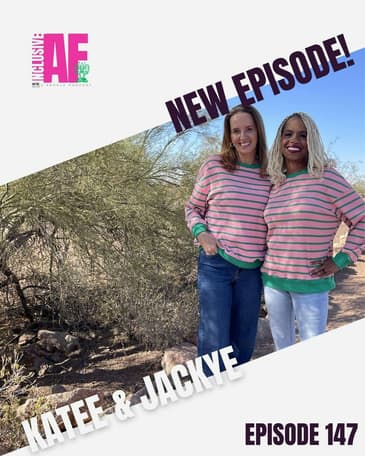
In this engaging episode of The Inclusive AF Podcast, hosts Katee Van Horn and Jackye Clayton delve into the significant impact of recent executive orders on Diversity, Equity, and Inclusion (DEI) across various sectors. Join them as they discuss the complexities and challenges surrounding these changes, including the effects on ERGs, the role of federal contracts, and the broader implications for organizations and employees alike. Tune in to hear their expert insights on how to navigate these turbulent times while maintaining a commitment to DEI values. Don't miss out on this important conversation!
#InclusiveAF #DEI #Diversity #Equity #Inclusion #ExecutiveOrders #Leadership #WorkplaceCulture #Podcast #HR
Be sure to leave your thoughts in the comments and subscribe for more insightful episodes!
If you like what you hear, we would like to encourage you to subscribe to our channel!
We would also appreciate it if you would rate this channel by going here: RateThisPodcast.com/inclusiveaf
We create this podcast as a labor of love. But if you would like to support this channel you can buy us a cup of coffee here: https://www.buymeacoffee.com/InclusiveAF
Powered by the WRKdefined Podcast Network.
[00:00:00] You're listening to Inclusive AF with Jackie Clayton and Katie Van Horn. Hello, hello, this is Katie Van Horn with the Inclusive AF Podcast. What's your name, Missy? My name is Jackie. Do you want to be friends? Let's.
[00:00:26] Yay! Because today, just to make it really friendly, we're going to talk about a fun pressing issue. The two recent executive orders from president, oh, we're not supposed to, we weren't going to do that, from today's administration that has significantly impacted diversity, equity and inclusion, commonly known as DEI initiatives across various sectors. This would include the two, namely, which ones are, what are they called? What numbers are they? And does it matter?
[00:00:56] They're crazy number one and crazy number two is what I would call them. No! Executive Order 14151 titled, Ending Radical and Wasteful Government DEI Programs and Preferencing. And Executive Order 14173 entitled, Ending Illegal Discrimination and Restoring Merit-Based Opportunity. Yep, merit-based opportunities, people. Meritocracy it is. That's a really good book. Is that a bad word, Katie?
[00:01:25] No, it's a great word if it's actually translated correctly. But alas, we know it's not so much done. You know, this is the thing. It's like these orders are obviously going to lead to some substantial changes and, you know, concern, confusion. Confusion, of course. That's, you know, we've talked about the confusion of all of the executive orders and even just talking about this. It's like, wait, how many executive orders are there focused on DEI? Okay, it's only two, but it feels like there's a hundred.
[00:01:55] It feels like a million. And because it is like one, four, one, seven, seven, eight, whatever. Polly Wally do all day. Yeah, there's, yeah, it's just making up numbers now. Yeah. And so what I would love to do, Jackie, today, if you're open to it, because I know you're open to a lot of things because you're a giver. But if you're open to it, we'd like to talk about what this means and what we can actually do about it, how we can, you know, help and support those folks that are directly impacted by these changes.
[00:02:25] And, you know, this, this wonderful, wonderful disruption in the work that so many of us have been doing. I think, I think part of it is that the whole time we were saying maybe this isn't going to be a great time because we've gone through this before. All presidents, once they take office, sign a bunch of executive orders, none so blatant and direct.
[00:02:53] Usually it's around, it's among party lines, things that they've campaigned against, things that we said. And I think part of the reason that this is so chaotic is because over and over we keep hearing people saying, I know that he said that, but I didn't believe he was really going to do it. And so just to let everybody know what we're talking about in a little bit more detail, I think we should briefly outline what these executive orders entail.
[00:03:19] So in January 2025, Trump issued orders aimed at terminating DEI programs within federal agencies, as well as influencing private sector practices. The administration's stated purpose is to end illegal discrimination, which is interesting because did you notice at all, like not to be crazy,
[00:03:43] but did you notice that especially the group that have been put into office doesn't look very diverse nor have the merit to be in the positions in the first place? Just saying. Wait, which one are you talking about? Are you talking about the guy that was our new like Homeland Security guy or whatever? I don't even know what his title is. It's like drinking on stage.
[00:04:13] Is that like what is that dude's Hagsworth? What is that guy's job even? I don't even know at this point because it's all just made up. It's all just made up jobs. It was I think it was the WWE founders wife who's never been in education. He's now responsible for the education that are looking to dismantle. Maybe that one. No. So this guy, Pete Hagseth, he's the United States Secretary.
[00:04:42] He's the United States Secretary of Defense who was drinking possibly a glass of something whiskey, bourbon, not sure what, while he was doing a press conference. The one whose mama wrote a letter. So this isn't a good idea? Yeah. If your mama says it's not good. If your mama's writing letters about you. Yeah. I mean, well, I actually I can't agree to that statement because, you know, sometimes my mom does something that I'm not sure about.
[00:05:13] Anyways. Okay. So here's the thing. These orders are really focusing on eliminating the DEI offices and all of the federal governments and positions, programs, all of the things that really we are. We have been focused on in the federal government to really focus about equity related programs, things like contracts. It repeals executive orders designed to ensure equal employment opportunities.
[00:05:41] It federal contractors are not required now to prevent discrimination and address employment barriers. And, you know, and what I'm seeing now, and it just happened here in Arizona with the city of Scottsdale, the cities and states are now following suit and dropping DEI offices and dropping DEI programs left and right. And so, you know, it's one of those like we know it's just going to continue and just get worse. So. I don't know.
[00:06:11] Well, you know, one of the things that they did talk about and those of our millions of fans that have been listening. One of the first things that they went after were ERGs. Oh, yeah. As they should, because that's always such a bad thing to have together. I don't want to say I told you so. But what was happening? The groups are offered shared centered around shared characteristics like race or gender. Right.
[00:06:41] Or your sexual orientation. It was like, you know, old women who like cats, ERGs or, you know, members of LGBTQ or the trans community at work or all of those things. That's been difficult. They've been limiting participation. Now they're saying that these are the things that are discriminatory. They're trying to disband these or restructure ERGs. And, you know, and I think this is the.
[00:07:10] Again, this is part of that. I now heard another tsunami of executive orders and changes and things that the government is doing to just keep us in a constant state of. I don't know if terror is the word. I was about to say just to make sure there's no safe place. No. Right. And no place where you can find like minded people to have a conversation with. No. Right. And I think that's the part that it's more of this like. There's no logic or rhyme or reason to.
[00:07:42] What they're saying, but yet people are like, yes, this totally makes sense. That's the part that I'm like, wait, what? I don't know. So, OK. So what does this mean for employees? What does this mean for organizations? You know, I think those companies that have federal contracts are probably the most impacted right off the bat because, you know, they have to follow some of these rules. And they're having to look at their DEI initiatives.
[00:08:08] But because they if they aren't compliant, they're going to lose government contracts. They're going to lose. Funding. They're going to lose all kinds of different things, which obviously causes concern amongst employees, because it's not just, hey, I value diversity and inclusion in my workplace. It's also people's jobs are going away or they will go away if this happens or that happens or if this doesn't happen.
[00:08:35] So it's also just a the terror that people are feeling around. What does this mean if we don't have this in our workplace? What does it mean if we do so? I mean, the thing that makes me. To be fair, you know, when people always say, oh, it's an equal opportunity offender, like to be fair, the National Park Service lost over a thousand workers.
[00:09:03] The IRS right before tax season is a season is supposed to be cut. The CDC, the NIH, the EPA gutted nurses, nurses, nurses, scientists, researchers all gone in the name of efficiency. It is about cutting protections, eliminating oversight and shifting the power away from public service.
[00:09:28] And on top of that, when you're looking, it is disproportionate on who would choose a life of public service within these roles. Who are taking care of our veterans? Where are the people that are going and making those making those arrangements?
[00:09:45] And again, I think what has been like, sorry, not sorry over the weekend or seeing all these people who did vote in that direction, who still lost their job asking for it to be come back. Yeah. Like, I don't. And this also talks to privilege because, sure, I don't.
[00:10:05] If people were doing it right, the way that it's supposed to be based, it's supposed to be based on your skill and make sure that we're not overlooking people based on, you know, all of these, you know, protected groups or things that we should consider. Right. And if people were doing it right, then it shouldn't have that big of an impact.
[00:10:25] But then when you're also firing, I'm sorry about the water, when you're also firing thousands of people on top of it, now you have all these spaces that are open that you are going to have to be hired or are you going to hire? I don't think we know. They fired a bunch of people and then asked for people to come back. Well, that's the thing. It's more of the, you know, I recently went through a reduction in force for one of my clients.
[00:10:52] So this was prior to me taking on my new role. Sure. The question was asked, like, well, who's going to do this work? And I'm like, that is the most basic question that I'm trying to figure out right now is, like, who's going to do this work? Because it's not, the work isn't going away. And, you know, it's how do we actually think about, you know, who do we engage? How do we think about this?
[00:11:15] And this whole cultural shift and political climate is actually just creating this emboldened state of, yeah, we can challenge everything around diversity, equity, and inclusion. And also, you know, I love that people are saying, don't say DEI. Say diversity, equity, and inclusion. Say exactly the words of what you are opposed to. And I think that's part of it, too. But this whole, again, you know, we got these stupid comments around, oh, it's reverse discrimination.
[00:11:44] And so we need to get rid of it. And it's this companies that are saying, no, we're not going to capitulate. We're not going to fold. It's now like, okay, do we have to worry about backlash from the public or from legal ramifications? And yes, I know other companies that have said, yes, we're going to do this and we're going to get rid of DEI are also getting the backlash.
[00:12:07] So it's just like, again, we're creating more drama, more uncertainty, more fear for all of our team members. And why? So I don't know. I feel like here's the thing that is very important for people to know that has been paying attention is that J.D. Vance is one of the ones that were against it.
[00:12:32] That he was our vice president was also benefited because he was admitted into Yale under a program that gave veterans and low income kids scholarships to go to school. Right. He is in the position. It wasn't it wasn't based on merit, Jackie. Everything is. I know wasn't based on merit. Right. It was because he's a poor kid who got there.
[00:13:02] And I always say the thing that's frustrating is like, where are the allies looking at the 90 percent white men saying, hmm, that doesn't look very fair and nobody's qualified. Like you literally have no doctor's degree and you're responsible for like the health of our nation. We have there. We've never done that. We've never done that as a country. We're doing that now from people from Venezuela.
[00:13:30] Like it is horrid. I feel like. What is difficult is when you're in these situations, they are going to have to hire people. Eventually, somebody is going to have to do this work. I know it is not going to be the high dollar, high educated. Nobody's going to want to touch it. He does that with a million foot pole. And the people that end up doing it will be people who are the most disenfranchised that have to. Right.
[00:13:59] And I think, you know, it goes back to our conversation that we had last week and, you know, the the episode that we recorded last week where, you know, it's really the OK, what does this actually mean when we talk about some of the legal ramifications? What does this mean when we talk about, you know, what this actually does? So, you know, Scott Curran was on and we talked about a lot of these topics.
[00:14:22] And and I think that's a piece that people need to understand is that a lot of these orders are now going to be challenged from a legal perspective. So reaching out to your internal and external counsel to say, how should we approach this? How should we think about this truly from a legal perspective? You know, just stay, you know, how do we comply with the law? But also, how do we do this in the right way that we're on the right side of history?
[00:14:50] You know, so, you know, your attorneys will say, here's what you need to do to comply. But then you can also kind of take that one step further and say, OK, but what does that mean then as well for a we want to be good corporate citizens, if you will? So, yeah, use an executive order with the law. No. Right. Right. Right. Right. Agree. Agree. You know, there's so many people that get those things.
[00:15:17] I think it's unfortunate for those of us that are in the people space because you can't really. You know, it's like, where do you go? Oh, are you supposed to go to SHRM? And we know you can't go to like the Society of Human Resources because they had all of these issues. They were going backwards against going against DEI and saying, oh, the civil is what was that civil conversations? Oh, my God. Yes.
[00:15:44] Or whatever it was trying to do that and taking equity out of it. Like. It is going to be difficult. I'm going to encourage that people think about like doing a survey and checking in with your employees, like figuring out what where where are your employees and trying to figure out how you can best support people within your four walls.
[00:16:08] Like start with the things that you can control and go back to refer to your organization's mission and vision statements to see. Make sure that there's still alignment there. Because I think that within a majority of organizations, I can't say all, but when things get a little bumpy, it's always a good or it's a good time to look back and see what we were rallying around in the first place.
[00:16:36] Whether it's, you know, feeding people in America or coming out with the fastest, best, most efficient flight, whatever it is. Find something to rally behind, because this is a really scary of trying to figure out what you can believe in or where you're supposed to go. Well, and I think, you know, you were mentioning ERGs earlier, and I think that's one of the pieces that, you know, ERGs are being dismantled or being questioned.
[00:17:02] So even being able to bring together groups in an informal setting and, you know, allowing folks to say, how can I just have a conversation and providing that, you know, sense of community and platform for sharing their experiences and resources. So, like you said, whether that's a survey or just having some informal conversations, I think that's always critical is letting folks talk about it.
[00:17:27] But also, you know, I'm on the both, you know, both sides of that, because I also worry that, like, if it's not monitored, if it's not facilitated the right way, it can go sideways. So, you know, giving people those spaces where they can share community and share, you know, just, hey, we're all in this together, I think is a huge piece. Right.
[00:17:49] I do think, you know, the thing that is really interesting, and why it's like, I don't know what the answer is. It's like, even when we looked back at affirmative action in the Supreme Court, when we're looking at schools, we already knew that the largest group that benefits from that were white women. And then it's like second or white men.
[00:18:16] And it's the same when you like the Pew Research Center did things looking at the DEI movement, and it was the same thing. Like, if we're looking at it from straight, let's look at our DEI policies and who it's benefiting and how there is, it's not reverse discrimination. It's still discrimination. It's still discrimination. Yeah. The problem.
[00:18:39] I just get worried if nobody's regulating on just what the overall impact is, and because it doesn't look like people are connecting those dots and trying to figure out how this is impacted. Because it's like they're, it's like Jenga. Like, they're just pulling out a block without any thought to how this is going to, just the whole thing's going to, like, tumble.
[00:19:07] I mean, folks, like right now we're in February. It's February. It's, and, and like, not even, like, we're not even a month in to this administration. And, and, and again, it's the chaos. So, you know, the other thing that I will say is, you know, reaching out to those policymakers, participating in any type of public forum that you can, reaching out and looking at the data that, like, the ACLU or the American Civil Liberties Union is putting out.
[00:19:37] On some of these executive orders. Reaching out to, you know, professionals. And again, you know, Jackie, I know you said already, you know, not SHRM. But there's a lot of good, you know, places that you can look. What is that, that, that newsletter that, that new Jackie Clayton just started putting out? Oh, I know. Right. Cute. It's called the People Puzzles Collective. Oh. Oh, hey. If you haven't signed up for that newsletter, that's a great place to get some good information.
[00:20:07] So, you know, soft blog. That was a soft blog for you. I did. That was good. That was good. And then also, you know, I think there are still a lot of DEI consultants out there that are, you know, right now trying to help. You know, like I said, you know, Scott was one of the folks that we spoke to just last week that, you know, will be on the episode prior to this one. And, you know, he has a lot of contacts. We have a lot of contacts. So if there is someone that you're just saying, I don't know what to do with this executive order.
[00:20:35] I don't know how to think about this for my organization. Reach out to us because we can definitely point you in the right direction if we can't help ourselves. You know, we can definitely get you to the right people. But it's also, you know, how do we continue to create, at the end of the day, places where people feel safe? It's just not going to be in the United States. For the next four years. I'm sorry. It's just not. I mean, you can't.
[00:21:02] When we have people that were not elected that are responsible and have their hands in so many different things, that's the big fear, right? Like, that's the thing that would never happen where previously you might say, oh, well, the people have spoken. Not exactly. Right. Right. I think in this case, even if you supported some of those, the core beliefs that you thought that were getting, you didn't realize everything that was going to be a part of.
[00:21:29] And we'll give people a little bit of grace. Very sliver, sliver hair fraction. Right. About the things that they make. But I think that's the part, too, is that it's this, yes, we'll give you a sliver of grace because you were bamboozled. Run amok. Led astray. Yeah. And you call it hook, line, and sinker. And now you're like, oh, wait, me too? I'm also going to be impacted by these crazy things that you talked about during the campaign.
[00:21:59] Yeah. I mean, but this is stuff that they've been, that's the part that is so painful to watch. Yeah. All these freaking videos of people saying, oh, that's not what I voted for. I voted for this. No, you did not. No, you did not. Gladys. Gladys. When you made that vote. You also said you didn't want a job, Gladys. Right.
[00:22:23] Well, there was a teacher and, you know, they're talking about, oh, well, you know, he's dismantling the Department of Education. And, you know, that means that my school won't get any federal funding anymore. And it was like, so when he said I'm going to dismantle the Department of Education, what part of that was unclear? Right. Did you think he was kidding? Did you think he was just making that up? Right. And I know that that's what we've heard for so long is that, oh, he just said stuff. He doesn't really mean it. That's not what he meant. That's not what he meant.
[00:22:53] Why would you vote for somebody that you don't think you can trust? Because he's great, Jackie. He's the best thing. No. That is not what great looks like. No, it isn't. It isn't at all. But I think, you know, the piece that it does give me hope is that at the end of the day, there are still a lot of people focused on this work and doing this work.
[00:23:16] And understanding that inclusion, diversity, equity, accessibility, these are all very, very critical things. And they're vital to every organization. And, you know, when we think about this and, you know, we've said this, I think, for the last I don't know how many episodes, but go out and read some of these executive orders. Go out and read what is happening with this dismantling with the doge and what they're doing and how they're thinking about things.
[00:23:45] Because it's going to get worse, people. Like, the part that scares me is, you know, or not, I won't say, there's so many things that scare me. But one that is, like, imminent to me is I'm waiting for cuts to, like, retirement programs for folks who have served in federal roles. Because he's already doing that and then he's going to buy out people. Well, sure. No, you're not. You're just going to say that and then not actually follow through.
[00:24:13] But it's also the what's going to happen to some of these folks that are now retired that have no income coming in or don't have a retirement anymore or don't have Social Security anymore or whatever that might be. So, but we remain hopeful. We're trying. Is that the word?
[00:24:35] I think we remain steadfast in our belief that there are going to be people doing the work. Because it shouldn't have made much of a difference to most people in theory. Yeah. It should not have done that. And I just want people to recognize that there are people who think that this somehow was about race and gender. But it wasn't.
[00:25:01] It was about safety and the freedom to be able to just do your job and not have this piece over. That's one fact. And so I would check into your, you know, teammates. I don't expect, you know, to ask. You don't have to ask people how they are feeling. But be supportive and be a light when there is that darkness.
[00:25:24] And while you're looking things up to try to educate yourself, also go backwards to see why these laws were put in place in the first place. Oh, one million. I mean, I think that's a huge one, Jackie. That, like, folks really do need to do that. I think that's one of the things that people are forgetting. I mean, when we talked about NOSHA, I think people have forgotten why did all this happen? Why did we start to unionize? Why did we start to do all these things? And why does it matter today in 2025?
[00:25:57] So, yeah, looking to each other, looking and doing our research, really making sure that we're also thinking about just our personal values and our personal ethics and how we're upholding that. And the workplace, I think, is also critical. So this is Katie Van Horn. And this is Jackie. Thank you for joining us today on the Inclusive AF Podcast. We hope that this helps give you a little bit of clarity. Maybe you feel a little bit more empowered through these challenging times.
[00:26:25] And remember, inclusivity starts with each of us. And together we can make a difference. Aw. A hundred percent. We're going to be all right. It's going to be all right. It's going to be all right. Bye.
Sponsors
