
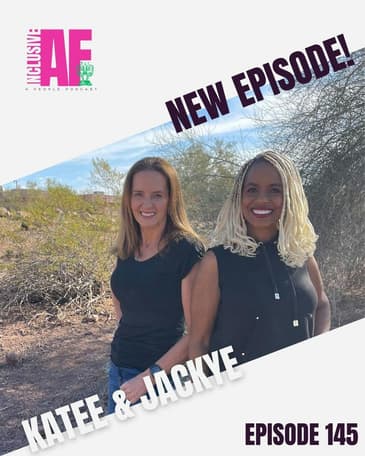
Join Jackye Clayton and Katee Van Horn in Episode 145 of The Inclusive AF Podcast as they dive deep into the implications of HR 899, a bill aimed at dismantling the Department of Education in the United States. In this enlightening episode, they discuss the wide-ranging effects it could have on workforce development, corporate training, and marginalized communities. If you're passionate about education, politics, and inclusivity, this episode is a must-listen. Understand how potential changes could impact public education and, ultimately, the American workforce. Stay informed, get involved, and make your voice heard.
Don't miss this crucial conversation!
#InclusiveAF #EducationReform #Podcast #HR899 #EducationPolicy #WorkforceDevelopment #InclusionMatters #JackyeClayton #KateeVanHorn
Subscribe for more insightful discussions on inclusivity and social justice!
If you like what you hear, we would like to encourage you to subscribe to our channel!
We would also appreciate it if you would rate this channel by going here: RateThisPodcast.com/inclusiveaf
We create this podcast as a labor of love. But if you would like to support this channel you can buy us a cup of coffee here: https://www.buymeacoffee.com/InclusiveAF
Powered by the WRKdefined Podcast Network.
[00:00:00] You're listening to Inclusive AF with Jackie Clayton and Katie Van Horn. Hello, hello, hello. I want a little, I need to try that again. One more time. Go. Hello, hello, hello. It's a little Tony. I know. I'm feeling, you know, it's very dry here in being. Yes, it is. It is. This is true. So hi Jack.
[00:00:30] Hey Katie, welcome back to the Inclusive AF Podcast. I'm really happy to be. And I want to just say I'm really happy you're here in Arizona, even though I think I'm sick now. So I think I'm going to get Jackie sick. So in advance, sorry and you're welcome. Yeah, that's all. So we're doing a deep dive again today.
[00:00:55] You know, I think we continue to talk about the fact that there's just been a barrage of executive orders, legislation, things being thrown out, things being talked about. The news is obviously not doing a good job of trying to pull apart or really share the things that I think are important to people or what will impact us the most.
[00:01:15] And so, you know, for me, there are quite a few that I am worried about from the HR side of things, but also just from a US citizen and and someone who has a lot of family members in education. So we're going to talk about the HR 899. So HR 899, Jackie, it's all about eliminating the Department of Education. And as a parent of an education major, real excited about that. Yeah, super neat.
[00:01:42] I'm sure that, you know, trying to educate this future is a, you know, It's not really that big of a deal. I mean, like all I keep thinking about is that book 1986 because like it is the how do we keep them dumb? I really think it's like that. I mean, I don't and I my joke. I used to think it was funny when I'd say I could have a public school education, like take it easy on me. But really, it's the foundation of the workforce.
[00:02:11] It's giving people access to education to know what skills people need in order to have this innovative economy. Right. So it's like if you start gutting federal oversight, you're deciding whose features matter and whose features don't matter. So today I'm glad that we're going to talk about HR 899. The. Like what's going on behind it, who's behind it, what dismantling the Department of Education would mean for hiring, corporate training, workplace pipelines.
[00:02:41] Ding, ding, ding. And a little bit more about how this impacts marginalized communities. Yet again, white people say, why do you always talk about race? Because it does affect these groups more than others. And why this matters to companies and business leaders, not just the schools. Yeah. And I think that's the piece, you know, taking out the moral and ethical pieces of this.
[00:03:01] It's also the as a HR person, as a recruiter, as anyone who's trying to build up the best and the brightest to do the roles that we need them to do for the future. Having less legislation on what goes on with the schools isn't ideal. So, you know, it's definitely something we need to think through. So, yeah, I mean, it's dumb.
[00:03:25] The thing that is painful when you put that together with what they were doing with Doge and then thinking about, oh, we're not going to have H1B visas and you're not going to be able to have like the citizenship visas. And we're restricting immigration and making it more difficult to come to the country. And we're not educating the people that are here. Mm hmm. And we're not paying people like the wages that we have for like Medicaid and Medicare or protecting people through Medicaid and Medicare. And they don't have money, but they can't go to work.
[00:03:55] I mean, there's like all of these things like trickle, you know, they have overlap. And I think that this isn't about, oh, which textbooks we should have. Right. It's ensuring that our workforce has the education, the skills and the productions to be able to thrive. Absolutely. And I think, you know, the there's so many pieces to it. So it is, you know, the I think what people always think about is like K through 12 funding. Right.
[00:04:20] So that is the. What actually keeps the lights on in schools and, you know, making sure that schools and low income communities, because, again, the idea is we're going to take away the federal bureaucracy of it and hand it to the states. And that's all well and good. But if you have low income or states that are not as wealthy, then this is what happens.
[00:04:46] You get an undereducated workforce, you get undereducated people, and that just exacerbates the problem. And of course, again, impacts people that are already underrepresented, already underserved already. And, you know, from a person who used FAFSA, you know, the federal student aid, Pell grants, all of these things, any access to higher education, any upward mobility help or support, any talent pipelines we're trying to develop.
[00:05:15] Those will all go away because you won't have those grants and that different, you know, the financial and student aid getting the workforce ready. You know, how many times have you sat with a business leader and they're like, what type of training do we need to have our high school or college students take and be ready for to come into the workforce correctly?
[00:05:38] Or, you know, from a tech side, what language, you know, developer language should we have them? Should it be PHP? Should it be JavaScript? Should it be whatever? All of those things, you won't have those extracurricular programs in more low income or low, you know, underrepresented again and marginalized communities.
[00:06:00] I want to throw something in there because, you know, Todd works at Guama, which is the Greater Waco Academy of something, math and science, regardless, whatever. It's one of those. Don't get mad at me, Todd, when you read this and see this and I didn't do it right. But what they do is like they do robotics, they do construction science, they do machinery and welding and all of these different things within that. You take that away like they make people workforce ready. And I don't think we think about it.
[00:06:30] I understand that we want people to go to college, but we know that more people are not. And so this might be the only education that they get. Absolutely. I mean, I think the federal funding that goes into some of these trade schools, it will go away. Right. So that's the same thing. So unless you are in a private school and they decide whatever they decide. But again, a private school gets no federal funding already, so they don't pay their teachers well. They don't have a lot of resources on hand.
[00:07:00] So you are trying to get donations and different things from the parents. And that, you know, that's OK in a private school where you have folks that maybe have a little bit more money coming in the door. But for the public schools where you are, again, underrepresented talent, underrepresented, underserved, it's going to be an issue. And, you know, the other thing is, you know, the DOE also really focuses on like Title IX and some of these other pieces.
[00:07:27] So making sure that we have protection against discrimination, against race, gender, disability. So, you know, all those special ed courses that different students need and just making sure that, again, we have that talent pool ready because, you know, let's just be completely self-serving and say, OK, let's say we don't care about the education system in the U.S., which I know neither of us do. But let's say that was the case. I still want to have people that are prepared.
[00:07:55] I can going back to what you just said on the if we aren't going to be able to pull in folks from other countries on H1Bs or whatever it might be. And then we also don't have an educated workforce here. It's going to put us in a very bad spot. What's left? Yeah.
[00:08:11] I don't understand what's going to be left. I mean, literally, if we look at the Department of Education, if that disappears, businesses are going to have to pick up the slack, you know, by investing in more training, trying to figure out these skill gaps, dealing with a workforce that lacks equal opportunity from the very beginning. It's automatically going to be unbalanced. And this has been the equalizer is making sure that we're providing this education.
[00:08:39] And to be clear, we've been hearing a lot, but we haven't heard. Any significant replacement. No, what's going to be happening and what this is going to look like. So. We're going to share with you all as much as we have researched, but and stay on it, because we want to talk about like what it is and what it is. So that people have a better. Right. So, again, it's about funding.
[00:09:05] So if you look at the federal funding that comes into classrooms, it comes into schools. You know, the the this isn't a work against big government and we want everything to be owned by the states. It's really it's what they're doing right now is going to exacerbate an issue that it says the kids that are already at a disadvantage will be more disadvantaged.
[00:09:28] So those students of color in school districts that are already underfunded, they're going to continue to deepen that racial inequality and disparities in education, which is not good. We're going to have, you know, we're going to have students that have disabilities, making sure that they get the education they need. And and again, this doesn't mean, oh, they go on to have a college education.
[00:09:51] It could just be trade schools, whatever, and and also skills to be able to live independently, things along those lines. And without that, there there's going to be accessibility gaps as well of like, how do we actually think about giving people with disabilities the option to work in a workforce if they haven't been taught some of those skills? Obviously, obviously, our LGBTQ students, that's a huge one.
[00:10:18] You know, we know that there's already discrimination, rampant discrimination against the LGBTQ community. And without any oversight, the states can completely get rid of any type of protection. And and I don't know if you know this, Jackie, but when we don't protect those marginalized kids. They die. And that's not a funny thing. That's not a it's not an exaggeration.
[00:10:46] No, we know that when you are in school districts or in places where you don't feel safe and supported, the choice you make is I'm going to exit this world and then we lose children. The federal aid that comes in, we know that like the federal aid that comes in really is a door opening for folks to higher education.
[00:11:08] And if you're unable to get those additional dollars from federal student aid, then how do you pay for that higher education? Again, especially for those of us, for those that are in a disadvantaged situation already where, you know, I think this goes back to you and I've talked about this before.
[00:11:28] Having internships that are unpaid, like theoretically great for the organization, but completely disadvantages kids that don't have a mom and dad who can put them in an apartment for 12 weeks while they over the summer do an internship. They don't have some of these other things. So turning on the payment for even just internships for college students was a huge change in kind of philosophy about five, 10 years ago.
[00:11:56] But again, this is where it falls back on the employer, not let's give them opportunities. Let's give them grants so that they can do some of these things to be ready for the workforce right away. And it's already behind. I mean, looking at like, we work in that space where we see the talent that's coming in, you know what people are, what, what they're getting within the education. There's stuff that isn't taught there in the first place. Yep. I think it was really funny.
[00:12:26] I was explaining to Clay the other day about taking a home ec. And how you, do you remember? I mean, in my, I don't know if you took home ec. I did. When I took a home ec, we learned how to like fix a sock, sew a button, make a full meal. Yeah. Like they don't teach that basic stuff. Right. Any more. Right. Right. Like you could learn to be relatively self-sufficient. So that's gone. We know music is gone.
[00:12:53] A lot of times some of the sciences are gone and it is really preventing people from growing. It's like systemic gatekeeping, right? Because if fewer people get an education, then we know that fewer are going in with these competitive skills. That means less diversity overall, less opportunity, access to power, less innovation, more economic inequality.
[00:13:20] And I, recognizing I'm a black woman with children, but I also, my biggest concern are those poor communities that are already disadvantaged, that can't have it. Like that are so dependent on this. There are there, like when my kids were in school, it was a hundred percent paid lunch. Right. Because of the income in Waco. Because we, we don't have all of those different, most of it is manufacturing. We don't have all of those businesses.
[00:13:50] What's going to happen to those kids? We know what happens when you don't get food or when you don't get access or if we know what happens when teachers aren't supported. Well, and we just talked about in the last episode, OSHA. Right.
[00:14:05] So what's going to happen is these kids are going to drop out of school and go work in minimum wage or less jobs just to get a job, just to get something, you know, have something to do to pay for the basics. You know, I think, you know, we, we talk about states having control and theoretically that's great. That's dumb. Yeah. Yeah. But, but. What do you mean?
[00:14:33] Well, they have a budget that they're trying to meet as well. And so, you know, when you don't have these federal funds and again, let's be clear, federal funds means higher taxes for all of us. Right. But, but the opposite is uneducated people that don't, that aren't able to actually be in the workforce and are just contributing to more wealth disparity, more income inequality, all of the things that we can talk about for all over the place.
[00:15:01] But it's also these, like these different zip codes, whatever you want to call it, it's going to become that lottery based plan where it's okay. Who gets the money? Okay. Well, it's whoever's the nicest or whoever's the whatever, whoever kisses the most, but of the legislators, the state, you know, controlled houses, et cetera.
[00:15:25] Um, and if they're already underfunded, then, you know, it's just going to be like that workforce shortage, skill gap shortage. We talk about, you know, how do you build those pools of talent? How do you think about, um, keeping the economy going even like if we don't have workers that can do the jobs for the U S for all of us, then guess what? The economy is not going to get better, right? That's not how it works.
[00:15:53] And it's already changed the way that we work. There is no more loyalty because there's no loyalty to the employees anymore. I don't think that people recognize like the rest of the full world does contracts when people go to work. Right. U S is one of the few places that don't have that. So there's no loyalty. There's no obligation. And so they're going to do it. Like, again, capitalism, we talked about this in the last episode.
[00:16:18] Like, it's not like once you give all of these things up and it does go back to the businesses, like they're going to take over and make it be a benefit to people. Right. That's not going to be standard. And when you look at this, I think some people are like, oh, I don't have children. You know, it doesn't matter about the Department of Education. It's not really as important to me or, you know, this will be better because whatever. And we don't think about the bigger picture because if you don't think this is going to affect hiring, you should think again.
[00:16:48] Right. Like we already struggled right now to recruit skilled, qualified talent. We know that we got rid of all the DEIB piece. We're looking at doing merit. Now we're going to be forcing people to not have that merit. And it's going to turn into some, you know, something that we're not even ready for. It's going to be forcing businesses to spend more on training when we have spent and we've seen a decline.
[00:17:11] In the last as many years as I can remember, I decline in actual training and focusing on learning and winging it. We can see the impact all over the place. Well, and I think it's also, you know, in the, I would say in the 80s, the idea was, oh, we're going to offshore jobs that are more manual labor type jobs, whatever it might be.
[00:17:33] But then we're going to educate the workforce so that they can transition into, you know, higher level jobs or whatever you would consider a higher level job. But that's not going to work out because they're not going to have that ability to get trained. And of course, that training never really happened for a lot of people or people when I don't want to learn something new because I'm afraid or I don't get it or whatever it might be.
[00:17:58] And then there's also the, we already see it now, like that privatization of education through charter schools, different things like that, where you do have like, oh, we're going to make this into a whole who could pay the most. And that's who gets educated. And that's it. And everyone else is sorry about your bad luck. Right. So, you know, I think thinking about how expensive college is today, you know, you were, you've been in the thick of it for a while now. Right.
[00:18:26] So what happens when there's no federal oversight of how much do they charge? How much do they think about this? Again, no more Pell grants or student loans. Or again, if they do put something in place, because the idea, you know, I think that they're trying to sell us on is don't worry, we're going to audit all of this and turn it all off. And we're going to come out with a bigger, better plan that never materializes. We believe this is that forever. I know.
[00:18:50] And just to be clear, like all of these things, like we, again, we talked about OSHA last episode. That was something that Reagan tried to do in the eighties. And I don't even know, like if someone's tried to get rid of the Department of Education before, I'm sure they have. But what happens? And then, you know, you have these predatory institutions also that fill in the market that go, oh, I'll get you a degree that's not accredited. There's no oversight by the Department of Education of what are they actually learning.
[00:19:19] And then you have these worthless degrees with a ton of debt. So then what? And, you know, all of these things are all adding up. But the one that also, you know, is I think near and dear to both your and my hearts is the Title IX protections. So those protections against handling sexual harassment or gender discrimination in the schools. How do we think about that? How do we think about the Title IX protections for folks that need it most?
[00:19:46] I just feel like I don't. This is something that has been we've talked about outside of this. And I don't feel like we're getting enough information. You know, we're not hearing of all the impact. It just is like, oh, they're going to get rid of the Department of Education. And again, like if fewer people are able to afford college, then there's fewer skilled workers in the pipeline. Like, what are we going to do?
[00:20:16] How are we going to get this training and get people ready to go to work? Right. And I think that's the part is I think you and I both are very much the student of this or the like all as we've been looking in the different topics. Mine is where is the money? Right. Following the money. And I think that's just a very good strategy for all these things. Like who benefits? Right. Who's actually going to be taking in more money? And, you know, it's the again, those charter schools that, you know, the private education companies.
[00:20:45] So not really schools, companies, money making companies, the, you know, loan providers that will have these predatory student loans. And, you know, we'll come up with some other way to trap students to we can get you money for education. But then you're on the hook for years and years. And here's the interest rate and all these crazy things. But then also. Who benefits from keeping wages low? The employers. Right.
[00:21:14] And if you make education inaccessible, you're just, again, exacerbating that. And and let me be clear, for those of you who are educators. Your increases in pay are going to be negligent. And if I would actually guess that most teachers will lose money. Right. With this because they are they're not going to be. Again, there's going to be no oversight. There's going to be no federal funding.
[00:21:40] And I will say, you know, as we were researching this, the National Education Association is very much opposed to this because they receive a lot of well, not the NEA, but the teachers receive a lot of their pay from federal funding. So it's a big deal. I also would like to say, like, it's really ridiculous that that seems to, like, fall across, like, party lines and how people make this make sense.
[00:22:09] Part of the reason that we wanted to change the format of Inclusive AF a bit is because there's so much to learn in this space. Another space that they don't teach us about how it actually works. Right. And and they get you get one sliver, the one that's going to make you tune in to all these, like, you know, news shows that seems to be the most important thing. But understand, this isn't about education reform.
[00:22:36] This is about transferring wealth upward to ensure that public education stays under effective and ineffective and underfunded. Yeah, absolutely. Yeah. And again, keeping people dumb. Yes. And and as if they're not dumb already. But that's how you control people. Absolutely. I mean, it goes back to all of that. Like we're getting lack of access to information.
[00:23:04] And and when they can trick you to think that it's just about, well, the education process is so broken, we should change it. Well, that's one thing. Yeah, absolutely. Can I take a 20 second on that? Sure. There's a lot of information. It's a lot of it's inaccurate. That's right. That's the issue. Is that like, again, that let me be a critical thinker and question, why is this happening or what is the advantage? Or again, where is the money going? Follow the money. And that's where you go.
[00:23:34] Yeah, this doesn't make any sense. And to your point, keeps people that are already in situations that are underfunded and ineffective makes it even worse and exacerbates the problem. I wanted to add something. It makes me mad. When you go into the bill. So we started looking at like congress.gov and just looking at the actual bills that are coming up. And what's frightening is that you have access to like a PDF on all of them. The majority of them just say, this is a bill to dismantle education. Full stop. That's it.
[00:24:04] Yeah. It's one page. It doesn't say how they're going to replace it, what parts that they want to dismantle, who's going to be responsible for it, if they're going to give anybody any money. There's nothing. And again, the other part is we know that there will be predatory practices. Yes. Predatory practices that would be willing to pay a lot of money to get these teachers because it doesn't take a lot for them to get more so that they can like, I just, it frightens me.
[00:24:33] Well, and I don't know if you experienced this, but I've had a few of my nieces and nephews that have started a school. And then their mail is flooded with credit cards. Oh, yes. And all these other things. And so if you think the same thing won't happen on campuses, like literally credit card companies go to campuses and hand out credit cards, like, oh, here's some free money for you. Not telling them. Actually, it's not. But this is what's going to happen to all of these things.
[00:25:00] It's going to be a, hey, here's the public education, you know, freebie that you get. And it's not going to be free. There's going to be no free. So what do we do to stop this? Like, I think that's a piece that, you know, my stomach hurts as, again, as I think about my nieces and nephews, the folks that are in this space of going to school, having to figure out what next, if this does, you know, happen.
[00:25:26] And making sure that we're looking at what organizations are fighting it and fighting for public education. I think that's the big piece. Calling out businesses that are funding anti-education policies. Because, again, that's they're literally saying we want to keep people down. Right. And then pushing corporate leaders to advocate for strong public policy, education policy, etc. And, you know, making sure that we're really being thoughtful about how are we advocating for this?
[00:25:56] How do we make sure we're really being thoughtful about what does this mean for us, for the future, for all of this? I'm sorry. Dogs want to play. Dogs want to be on the episode. So, yeah, you know, I just think there's just a lot to this that we need to be looking into and educating ourselves about. It's frightening. And to be clear, like, companies that don't invest in education advocacy and do something about this will ultimately pay the price.
[00:26:24] I really hope that we see people taking a stronger view. But right now, it just seems so weak. Like, I feel like, like, seeing people are like, oh, yeah, we don't want to do DEIB. We're like afraid of it. Or like, yeah, whatever you say. And all this money going into that went into, like, the inauguration and funding stuff for their own self-interest. Yes. Like, I don't see a lot of companies stepping up, speaking out, saying, no, you can't dismantle education. Like, let's give more money to teachers. Right.
[00:26:53] Like, I was thinking about this. I have a friend who is a molecular biologist looking for a cure for cancer. And we were talking, it's like science and research. It's all funded. And we were talking about salaries, of course, because, you know, I work on the people space. So we were talking about what people make in different things. And he was like, I'm looking for a cure for cancer. Right. And I only make this.
[00:27:23] And it's like, oh, yeah, that's research. That's not like working for, like, corporate entities. And we've gone. It makes me frustrated because it's the whole point of looking at taxes and trying to make sure, giving people incentives. And right now it's going to be a mess. We haven't even gotten to March. And it's chaos on the way.
[00:27:46] I don't, I can't see this working in a, I don't see the positive way that this is going to work. And I feel like, not only will it not work, we're going to be spending a lot of time, the resources and tax payers money that's going to even looking at this stupid idea without any, you know, people who are completely unqualified. Right. Right. To make this determination.
[00:28:12] The people that are doing it, these are not people that are educators that have decided to try to dismal education. No, of course not. And I think it's also like, at the end of the day, if the education system is already broken. Right. We all know that. But because of that, we're already seeing the impacts of how that translates to a broken labor market.
[00:28:36] And the fact that, you know, you have to go outside of the U.S. to find talented engineers and talented, you know, fill in the blank. Right. And so dismantling the entire system that's been set up. How does that make it better? Now, again, if there is a, we're going to dismantle it and replace it with X. And here's our plan. Thought through. Right. And come up with to make it better. But that's the piece that freaks me out. There is no then what?
[00:29:04] Because I don't think either one of us are saying it's so great. There's no problems with it. No, absolutely not. It's just saying you're going to have to give me a little bit more before I'm just going to support this that's going on. And why is this the best place for our resources? Because we haven't replaced it so that people are getting a better education or getting food or getting access. You know, like a lot of them, this is the place where they get those things.
[00:29:31] Whether it's like understanding about childbirth or sex education or like this is, it's huge. And again, it trickles the other part that terrifies me. This is like my own made up in my head. This isn't based on any fact. But we saw this when we look at privatizing like prisons and jails on what happened. All of a sudden, we didn't care about people anymore. We don't have colleges. We don't look at reform. We don't look at any of these things.
[00:30:01] And these corporations are making it bigger and bigger. And then it's like, but we're not getting better. And that's what I'm afraid of, of this going to corporations where they're getting bigger and more complex. But yet nobody's getting smarter. No, no, no one is getting smarter. I mean, and I wish that education shouldn't be a privilege like or of where you live or your parents are. Right.
[00:30:30] And I think getting that the DOE is a direct attack on our workforce development and also economic mobility. A hundred percent. And I think that's the thing is how do you also just stay informed? How do you start digging in on some of this stuff? How do you push your company to invest in what needs to happen next? Or how do we think about this?
[00:30:53] But also, I think the piece that we keep coming back to is the fact that your vote is your voice. Your vote determines your future. You have to vote like your future depends on it because it truly does. And not just your future, but your children's, your grandchildren's, your all these things.
[00:31:13] So I think all of these topics that we're covering and digging in on, I think we would all feel much more assured if it was, here's the plan. But we know there's not a plan. That's the issue. There is no, how do we solve this? It's just, let's just tear it apart and dismantle it. And I'll go back to, you know, the ACA. It's, hey, let's get rid of the ACA. But there's no, you know, in the years and years that he's been talking about how horrible Obamacare is.
[00:31:43] And by the way, again, for those of you who aren't paying attention, Obamacare and the ACA are the same thing. Right. But when you think about that, it's like, okay, they still don't have a plan of like how you replace that and make it better. But they just keep saying it's bad. Because they're only making themselves better. Right. And financially helping themselves. Right. So anyhow, please, please register to vote. Please vote. Pay attention.
[00:32:13] Please pay attention. Please go do your own research. Please trust people when they tell you. Yes. What they're doing. Yes. And I think, okay, you were doing the research and you, you know, said to me, he's been talking about dismantling the Department of Education for years. Like there are videos that you can look up right now where he talks about getting rid of the Department of Education. And again, not a, and here's what I'll do when I do that. It just is, I'm just going to get rid of it. And teachers were like, oh, I didn't think he was really going to do that.
[00:32:42] Or I didn't think that had anything to do like. With me. With my school. Right. Or feeding. I didn't know it had to do with federal funding. I didn't know that food impact was on that. Yeah. Or wage. Like, I don't know. Like. The disconnect. Do we need to have less education at this point? No. These are our educators. A lot, a lot, a lot more. A lot more. But again, you know, I think this is, this is why we're digging in on these topics.
[00:33:08] And this is why we're focusing on some of these topics is just to have these conversations. Because I think you and I feel the same way, not to put words in your mouth in any way, shape, or form. But it is really hard to like figure out who's talking about this. What are they talking about? What is right? What is true? What is, you know, what can I trust? And, you know, Jackie and I are not experts on these topics.
[00:33:35] But we want to have the conversation so we can at least have the conversation and say, here's what we found out when we're doing the research. Educate yourselves. Look into these topics that are important to people that are in workforce development, that are in HR, that are in leadership roles. All of this is going to matter to us. It might not matter right this minute, but it's going to matter very quickly.
[00:34:00] And we want to put it in the show notes and give people access and let people know where we're finding the information so that you have an opportunity to research on your own and not get the headlines. Right. Because there's so much like that you can go. You can actually, when you go in is sort by the subjects that are important to you and not just get fed by whatever is on. Whatever. Insert news channel here. Yeah. Or Reddit or whatever. Yeah, exactly. Exactly.
[00:34:31] So please educate yourselves as we talk about education. This is all I got. This is Katie Van Horn. And this is Jackie Clayton. Bye. Bye. Do you love news about LinkedIn, Indeed, Google, and just about every other recruitment tech company out there? Hell yeah. I'm Chad. I'm Cheese. We're the Chad and Cheese Podcast.
[00:34:59] All the latest recruiting news and insights are on our show. Dripping in snark and attitude. Subscribe today wherever you listen to your podcasts. We out.
Sponsors
