
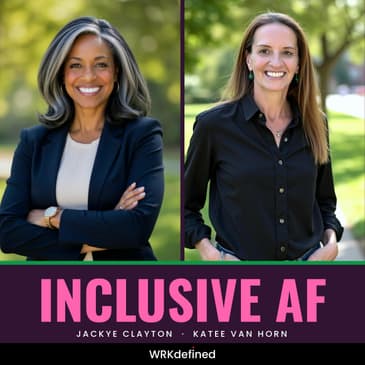
Dive into the world of inclusivity and social justice with Katee Van Horn and Jackye Clayton on the "Inclusive AF" podcast.
In this episode, Katee and Jackye shine a light on the challenges facing transgender individuals and the urgent need for support and protection of their rights. The hosts discuss the alarming introduction of over 300 bills targeting trans people by state lawmakers in 2022, with ongoing efforts in Arizona. They address the discrimination and harm faced by transgender individuals, especially transgender women of color, and the lack of understanding and resources in crucial systems such as law enforcement and education.
Katee and Jackye delve into the importance of diversity, equity, and inclusion (DEI) programs, emphasizing the significance of taking disciplinary action in cases of mistreatment irrespective of factors like sexual orientation, race, age, or disability. They express their concern about the safety and well-being of children in schools and the lack of protection in existing school policies. The hosts also touch on instances of injustices in the education system.
The conversation continues with a focus on the political efforts to restrict and harm transgender kids, in addition to the importance of workplace support and resources for individuals in the transgender community. The hosts advocate for the necessity of holding people accountable for their actions, particularly in cases of sexual assault and other violations against marginalized communities.
In addition to these important discussions, Katee and Jackye also share their weekend plans and engage in lighthearted banter about the weather in Arizona.
Tune in as Katee and Jackye lead a conversation filled with depth, insight, and the importance of creating greater understanding and support for marginalized communities. Whether you've been a long-time advocate or are new to these issues, this episode promises valuable insights into the world of inclusivity and social justice.
Powered by the WRKdefined Podcast Network.
[00:00:00] You're listening to Inclusive AF with Jackie Clayton and Katie Van Horn. Hello, hello,
[00:00:11] hello, this is Jackie Clayton and this is Katie Van Horn and this is the Inclusive AF Podcast.
[00:00:20] Yes, give her a beer.
[00:00:26] No, folks, I just put 11 head in my mouth and Jackie's trying to get me to spit it out on camera.
[00:00:33] You know, Katie, this I think when this comes out, it'll be episode number 125.
[00:00:40] What? What's the, do we have anything to discuss at this point that hasn't been said?
[00:00:45] Actually, wait it folks.
[00:00:47] Yeah, I was gonna say I would love to say the answer is no, we do not but alas, we live in the US.
[00:00:53] So there's always something about diversity, equity and inclusion.
[00:00:59] Okay, so Jackie, yes, rabbit behind you.
[00:01:07] It's a rabbit gnome.
[00:01:08] It's a gnome in a rabbit costume for Easter.
[00:01:11] Because Jesus, I don't think any of that makes sense.
[00:01:19] No, because white Jesus to be clear white Jesus is when he hit the bunnies.
[00:01:24] Yes, yes, and turn it to a gnome on the fifth day.
[00:01:28] Yes.
[00:01:31] Okay, so Jackie, this topic is one that I think is very critical and I as usual, I want to take it from the employment employer perspective.
[00:01:42] But I wanted to talk a little bit about the next, next Benedict murder.
[00:01:51] I don't know if it has not been determined cause of death has not yet been determined.
[00:01:54] Yes, it has not been determined and I know that the powers that be or maybe saying it's not because of the physical beating.
[00:02:05] But so for those of you who don't know non binary teen in Oklahoma, who is being bullied, actually died after an altercation in the bathroom at their school, where multiple teens.
[00:02:24] Sounds like did quite a number on them because they were using the women's bathroom and these folks did not like it.
[00:02:39] Obviously, this is heartbreaking and soul crushing that we are still teaching our kids that hate is okay.
[00:02:50] Right.
[00:02:52] But what are your thoughts, checkling?
[00:02:56] Well, the first thing that I first thing that hits me is like why D.I.B. programs are so important.
[00:03:09] Right.
[00:03:11] The majority, our biggest competition or the things when we were talking about D.I.B., the biggest adversary is doing nothing.
[00:03:20] And the other part, I don't think a lot of the pushback actually comes from hate. It comes from common sense, meaning be nice.
[00:03:31] Don't put your hands on people. Like why isn't that enough? Always seems to be the argument. Like why aren't you just treating people fairly and the reason that we have to explain to people that these people exist is because these things happen.
[00:03:48] And when it comes up, you have to be ready to know how to spring into action immediately to take charge because we don't have time for you to figure out.
[00:03:57] You're wherever you stand on how to treat people.
[00:04:01] Right.
[00:04:02] Like it's not about like there's no reason to let anybody put their hands on another person and I have disciplinary action period, period regardless of sexual orientation, race, age, disability, all of those things.
[00:04:17] And it's unfortunate.
[00:04:19] People think we've come so far and we are so not ready.
[00:04:25] No, that's the first thing that stands out. What do you think?
[00:04:28] Now I think for me, so I was just this past weekend, I was working with one of my groups that I work with one community and we are doing a training for a medical group that's here in Arizona.
[00:04:41] And I brought up this situation and one of the women in the room like gas, like she couldn't believe that this was that this happened.
[00:04:52] And earlier in the training, she had talked about her children and it was one of those like such a stark reality of what do you have to worry about with your kids, what you don't have to worry about your kids.
[00:05:04] And there's so many things that parents today have to worry about for their kids going to school of, you know, if they are transgender or you know if their gender identity is different.
[00:05:16] If whatever sexual orientation is different, if, um, whatever might be going on and then oh, they might be shot while they're at school.
[00:05:26] And you know that some teacher might farm them in some way like I don't know how people can be parents.
[00:05:35] And I want to say in this day and age, I think it's just generally it like how scary to send your children anywhere away from you and know that this type of stuff can happen and is happening all the time.
[00:05:52] I have no control over the situation because you think that as a parent, you have rights and you don't.
[00:06:01] Right because we can tell your child where they can go to the bathroom and where they're safe or how long their hair can be or what they can wear are all of these different things like.
[00:06:13] It is we have been just passing through children through this like archaic program.
[00:06:21] It is up to parents and for our community leaders to look at the rules that have passed within the school board, it is so unfortunate to know that it probably doesn't say anything in there that's protecting today's children in their policies I guarantee that's what we're going to find out when all the,
[00:06:39] that everything has been done.
[00:06:43] I just there was a case that was going on this week, it's not directly tied to it but there's a child who was set to graduate and they looked at his grades and he just he's only passed two classes and he is set to graduate from high school this year and then they put them back when they actually analyzed it the mom asked him to look at it and they decided to put them back into his freshman year.
[00:07:07] And it's like how is that possible right that these things happen and it's and it's we have trusted education program to make up with rules that make the most sense for our own child without looking at exactly what's going on with our schools.
[00:07:25] Yeah, and I would also say I think that the folks and charge the school boards are.
[00:07:33] Are also promoting some of these things to restrict to.
[00:07:39] To hit I don't know how else to say it like it's it is harming kids you know we have I don't know if you saw in the news there's also a.
[00:07:50] There's so it's in Western Virginia there is a lawmaker that is trying to ban or prevent transgender kids who are suicidal from getting any type of medical care or mental health care.
[00:08:07] And it is like they you know the American Medical Association and somebody different things have said you know a child knows by the age of three what their sexual identity is and what their gender identity is.
[00:08:25] And now they might not be able to articulate it or like they don't maybe understand it to be able to speak to it, but they know what it is and and so there is like a piece of this too that is the how can you as a human.
[00:08:44] Think that it's okay to.
[00:08:47] Carm a child in that way meaning like you're you're literally saying your suicidal we don't care you don't you don't get services oh but also at the same time if we have an embryo that's a child and we're going to protect it at all costs.
[00:09:02] I don't think I just did a full like I just pulled just trans kids and there are laws in Kentucky saying that your talk to be arrested for using the wrong bathroom that's going on right now about school boards outing trans kids in California about like.
[00:09:32] Man dating that you have to tell people's parents you can't hide that information that you have if you find out somebody's pronouns you have to tell their children or not have the.
[00:09:47] But schools being able to use their preferred name like this is going on and I don't know what benefit how are you what is beneficial but the child is is transgender.
[00:10:06] You're not preventing them to live their life you're I don't know what's the point of not allowing people to be within the identity because I mean are you you you're not preventing anything from happening this is happening with or without you.
[00:10:21] And by making these people less than a child in education and making them seem less than or not normal in some kind of way is where a lot of this hey I could treat you anyway I want to because no one thinks that you should exist right you see a lot of the hate comes out of this right.
[00:10:44] And you know I think you know to your point there are so this is from 22 22 and it was more than 300 bills targeting trans people were introduced by state lawmakers in 2022 I know it's much higher now in 2024 and Arizona alone I think there's five or six that are going on.
[00:11:08] That they're trying to get through the different parts of the government and it is like to your point like but why like what what are they doing to you.
[00:11:20] Because it's not that they're asking for something extraordinary it's not that any of these kids or anyone in the transgender community is saying I want more rights than you.
[00:11:33] I want the same rights and I wanted to be treated with respect and I don't want to be harmed.
[00:11:41] And that somehow is offensive to people.
[00:11:46] The other part next candidate was a member of the Choctaw Nation and we know that Indigenous people here in the United States
[00:12:00] have long helped in explaining like two-spirit and looking at multiple identities since the beginning of time.
[00:12:13] And I wonder how that is going to play a part when especially in Oklahoma when we know about we've studied and people who are listening will have to do a lot of their own research because this is not an episode.
[00:12:30] That's speaking just about two-spirit but when you look at people who identify of two-spirit and then not being able to protect those same people at school is just part of the conversation.
[00:12:46] Well, and I think there's also the piece and this is what I always come back to as well of every time we talk about any of these situations and you know any type of hate crimes.
[00:13:00] There are it is the like I always go back to it's not just one group that's being targeted. It's the whole human that's being targeted so it is a you are targeting what what piece of that human do you hate so much that you're going to harm them.
[00:13:20] You're going to murder them that you're going at whatever it might be and I think that's the piece as well. And again, we know that you know this is fact that black transgender women are the most targeted and the most harmed just based on all of the different statistics that are tracked around hate crimes and things along these lines but it is just a why do we keep trying to harm people that are different than us?
[00:13:47] Right. So what end?
[00:13:52] I mean, and you can't even stick up for yourself. I don't from what I can tell in this especially in the story from next when you're trying to prevent people from doing something and the police officers are like oh yeah we'll take care of it. They're not taking care of it.
[00:14:09] And it's also do they even know how to take care of it because right I go back to also like and this is not to defend law enforcement.
[00:14:19] I don't think I need to they can defend themselves. It's more of a we ask so much and I can be applied to educators as well.
[00:14:28] We ask so much of folks without giving the right resources without giving the right training.
[00:14:34] You know I have multiple siblings and my parents were both educators and my sister like it's almost a joke that she will go to these continuing education or whatever the heck they're called or you know like instruction days or whatever for teachers and in service. That's what is called in service days.
[00:14:56] And she will be like we have this person here doing this training and it's supposed to be about like how to identify if a child is suicidal.
[00:15:05] But the person is like doesn't know what they're talking about and has never had any experience and like and so they're also because they are so underfunded.
[00:15:14] There are three resources or people that aren't educated or don't know how to say no here are the things you need to look at. Here's how you can help prevent that.
[00:15:22] Here's if it does happen, how do you keep that that kid safe because I think that's the other part. It's the
[00:15:30] I will speak for my sister. She cares deeply for the kids that are in her classroom and in the school period.
[00:15:37] I mean she just the other day went to a wrestling match for some of the high school kids. She teaches junior high she hasn't had these kids as students.
[00:15:45] But she's like oh they asked me if I would come because they were all excited to be part of this wrestling tournament. That's awesome.
[00:15:54] But you have those types of teachers then you have other types of teachers that don't care and we are doing everything in our power to under fund under resource.
[00:16:03] Not give anything to these educators and the same thing applies to police officers it's how often are they getting de escalation training how often are they getting training on how to identify someone that's having a mental health crisis and what to do.
[00:16:19] Because what you see in these videos all the time is someone's having a mental health crisis and they come in and they come right to the first and versus giving them space versus like all right.
[00:16:29] You learn how to do when you're in these crisis environments.
[00:16:33] They either have been taught or they forget it or whatever and so it is the how often are they actually getting training reinforcement of the training.
[00:16:43] Whatever it might be to help them know this person isn't resisting arrest they don't understand what I'm saying they don't understand what's going on they are having a mental health.
[00:16:54] Whatever it might be don't shoot give them some space and call someone that can actually help them.
[00:17:01] What are the cops supposed to do like why are there cops in schools right like whose responsibility is it to de escalate when you have these situations there's there's a whole list of people that are there and it just feels like I mean like you're saying I don't know if the answer is like what the police person should do but it's like.
[00:17:23] Do you do the average parent know how things escalate on who is supposed to take what situation that it's going on something happens in the bathroom whose responsibility is it to deal with the children that are in there right well and also like.
[00:17:41] What is that punishment but not even what the punishment is but also how are you helping to educate those children so they don't do it again or so they can learn better or have more critical thinking skills to go.
[00:17:54] No because you know like you're not allowed to talk about it and they can't go to the library and learn about it because the books have been taken out of school yes and they don't talk about stone wall in American history so.
[00:18:08] Where are we supposed to what what.
[00:18:13] Tell me what tell me what to do i hear you i hear you.
[00:18:20] I think it's one of those things that it's an unfortunate situation where.
[00:18:27] There isn't a one and done and I mean it's like all things diversity there's not a one answer is going to solve it it's you need to do 17 things to actually.
[00:18:39] Make some change and get things to happen and get things to get better and that's a lot of heavy lifting and again it goes back to who's having to do the heavy lifting and it's usually the folks that are already in those marginalized groups and those communities that are like.
[00:18:55] How do I carry on and have to deal with one more thing so.
[00:19:03] I can't be just back to like why can't people just be kind.
[00:19:10] Because we're indoctrinating people to become members of the chance community.
[00:19:16] Right to become pedophiles first.
[00:19:20] Yeah yeah yeah that yeah.
[00:19:23] Let's make sure we're clear on what we're trying to say.
[00:19:28] Like even that like that whole storyline of.
[00:19:34] You know the use of bathroom that best suits your gender identity oh we're going to have pedophiles in there.
[00:19:42] There hasn't been a case of that anywhere in the US there have been people that have maybe.
[00:19:48] There have been cross dressers that are trying to pretend forced and they are.
[00:19:53] Absolutely predators but there's never been a case of a transgender person harming someone in a bathroom because guess what they just want to do their business and.
[00:20:06] And and I think that's also part of it is the.
[00:20:11] The assumption of like they're some sort of evil person when I mean you and I both know people who are part of the transgender community.
[00:20:21] They're actually pretty cool they're not really that evil in any way shape or form so I'm not really sure what the evil piece comes into play or the you know the way that people talk about it but.
[00:20:34] So in the workplace.
[00:20:39] What should we do in the workplace when it comes to these types of topics because the other piece is you know and it comes down to all of the different traumas.
[00:20:48] That occur constantly for different groups.
[00:20:54] People that are in the transgender community are having to process this go through this trauma and continue on their day without any resources as well to say I'm not okay.
[00:21:12] And what can employers do like how should employers react to that and how should employers help to.
[00:21:20] To keep people safe and also to keep people talking and using the resource they have getting the mental health resource that they have or whatever it might be.
[00:21:33] I just feel like there's not really a lot you can do but I would feel better if.
[00:21:41] Because a lot of what we're seeing the people that are coming out in like fighting these laws or presenting or trying to deal with these anti LGBTQ laws or these people that are preaching hate all seem to be of a certain age and it's like I really think that there are things that are coming
[00:22:02] out of the way that we're seeing the other just not was not what we saw when we were younger you know.
[00:22:10] And so I know that a lot of these concepts are brand new and they don't make a lot of sense to people but I would hope that you would have resources for education like just like we have about anything else.
[00:22:23] I hope that you can point to these if your child comes out as non binary or if you meet somebody that's trying to like what is all of this things mean you know next.
[00:22:33] They identified as non binary which is really a hard concept for people to wrap their head around and which I think causes some of the confusion and we will always say more exposure to these things when it helps.
[00:22:47] The fuse your like fear and hate and so I just wish people could educate themselves to know that these things really are happening without having to relive trauma in order to get bills passed like why can't you just understand these things are happening.
[00:23:04] And and hold people accountable to treat each other with dignity and respect at work maybe they wouldn't try to treat people in this way outside of work.
[00:23:14] Right. I mean, I don't know I'm just I'm just I feel like they're just resources to learn about this because it's definitely not from you know the dude yelling at your your student council meeting that people shouldn't be able to do these things or or some wacky do parent going in saying that you're going to turn everybody into pedophiles right.
[00:23:43] Well, and I think the other part that always comes out for me is when people are like I don't know any transgender people or I've never been exposed to it and I and it makes me kind of chuckle every time because I'm like.
[00:23:58] As far as you know I guess I mean, I think you and I both also know folks that are transgender that until they tell you you would not know you have no idea.
[00:24:11] And it's not even necessary for them to tell you has you know, it shouldn't change the way that you interact with them treat them anything along those lines but yes, I agree like go do your research and figure out if you are in a position to be able to help create environments where people.
[00:24:27] You know setting the policies of how do we handle people that are you know do we get a single.
[00:24:35] Single use restroom do we get you know signs that allow anyone that needs to use a restroom to use a restroom things like that.
[00:24:45] I just I think there's just so many things that can be done that are that seem simple but it is like just make people comfortable in the work environment make sure people are okay.
[00:24:59] Now but part of this is by not holding people accountable for their actions and this boys will be boys mentality is where all of this comes from right because we women are less than.
[00:25:15] So just start there right like you know we already know that like people aren't being held accountable just for what's going on when cisgender.
[00:25:27] cisgender straight people aren't being held accountable when you're looking at different things or violations against women are various genders or people that have disabled like we don't treat people as equal like that's the other part if you would start treating everyone more fairly and equitably.
[00:25:47] And that became the norm instead of the exception and that could trickle down right exactly because the stuff that they're that they talk about that they fear are also the things that they allow people to get away with and not hold people accountable in the first place.
[00:26:07] agree agree.
[00:26:10] You know like if you held people accountable for sexual assault minutes out of sexual assault or those types of things that you wouldn't work then you wouldn't worry about somebody trying to commit an offense if people were held accountable for the offenses that they're committing.
[00:26:25] Did you hear about that pastor that was on the pulpit that basically said if a woman is raped and she's wearing shorts it's around fault.
[00:26:35] No.
[00:26:38] Where do you I'll have to find the video but it is like completely disturbing because it's this you know just old.
[00:26:49] And you know just like you know he's a dirty dog and like he's on you know he's some sort of preacher telling people you know telling women that if you wear shorts you're asking for it.
[00:27:06] Go away sir to a dark whatever dark hole you crawled out of go ahead back in we don't want any.
[00:27:15] I was looking at there in the Mormon church woman in Utah was talking about when they divided up in a bishop came to the whip girl class and let them know that men if they are not being covering their bodies and they're not being modest because men will picture them.
[00:27:35] Make it all the time and she went on later and was talking about when she got married anytime her husband would look at somebody who had like short sleeves would get in a fight because he thought she that he was looking at them picturing them make it.
[00:27:52] And finally it wasn't until she was like five years married where she finally said something to her husband and he was like I don't picture people naked.
[00:28:00] Like why did you think that she was walking around her whole life.
[00:28:04] Yeah thinking that if our arms were showing that they would picture her naked and then every man you know that she saw any woman in short that she would get mad because you know he went through the grocery store line and the girl had on short sleeves and he was because he wanted to see your naked.
[00:28:21] Like every female in Arizona would be screwed because it's yeah it's forget hot.
[00:28:31] And it's like what I mean I just feel like that's just part of the narrative why these things happen.
[00:28:40] Yeah it's just the completely ignorant statements that stick with people forever and the complete lack of education or why do I feel that way.
[00:28:51] Why you don't even go to that school your child's fine.
[00:28:56] You don't go everything's fine.
[00:28:58] They're not bothering you.
[00:28:59] Right.
[00:29:01] It's it's just fascinating but anyways I have one last topic I want to talk about before we shut it down and it's more to make you laugh.
[00:29:09] Oh I like laughing.
[00:29:10] Yeah.
[00:29:12] So I was on a Zoom call earlier today and I hope you know this zoom has a new feature it's an AI feature that it will summarize your conversation for you that you're having and send you an email a written document of what you talked about in the call.
[00:29:35] So let me just explain to you.
[00:29:40] I was like no absolutely okay folks you cannot see this but Jackie's trying to enable us right now as we speak.
[00:29:49] Okay tell me about it I want to know what it does.
[00:29:51] I'm not knowing you right now okay not now we are not doing that absolutely not.
[00:29:56] But it's it's literally so I'm not you know as one might realize if you are in a char sometimes you have one on ones with managers and they're telling you about performance issues or about something that's going on that's very confidential.
[00:30:14] And then I get a written document to say and then Katie said this and then this person said that I literally looked at this thing and I was like oh my god all of this is now subpoenable does of course my first thought and there was nothing in there that was bad it was more just like what in the world.
[00:30:34] And I was like who wants this who would think this is a good idea and I'm sure someone was like it's great no taker it's great.
[00:30:44] I about came out of myself because I was like oh you know like immediately reached out to our IT folks like turn it off turn it off.
[00:30:54] Oh well so and so requested it I don't care turn it off turn it off we're not doing that absolutely not.
[00:31:00] I guess teams also has this AI function but yeah kind of scary folks so you know just be aware of your technology if you're in HR of you know they're always listening big brother is always listening.
[00:31:17] I don't like it at all I was for breached out as like oh my god what is happening right now because it was like one of those like I wasn't expecting it and it was like zoom you know whatever.
[00:31:29] AI transcription blah blah and I was like no turning down I want to know how no sir no but anyhow that was just my little makey chuckle today.
[00:31:46] Little fun.
[00:31:49] All right Jackie it's Thursday obviously folks won't get this till next Wednesday but what you got going on this weekend anything fun.
[00:32:00] I'm going to Santa Rosa and as it as a note folks she is going to Santa Rosa and she did not invite me.
[00:32:13] You're so busy Katie changing the world very mean very mean I'm going to get a lunch on Saturday which would be fun yeah so I'm just do that because it's still legal in Arizona good thing and.
[00:32:29] And yeah so I'm going to do that on Saturday and then on Sunday I'm going to melt into my couch or maybe melt into one of my chairs out back one of the two.
[00:32:37] Because we're getting into that springtime all my allergies are kicking in but I don't care because it's beautiful out that's all.
[00:32:46] Is that one month.
[00:32:49] Period right.
[00:32:51] Oh bullshit okay.
[00:32:53] It is it is beautiful from now until May it's gorgeous in Arizona and then end of May it's when you're like.
[00:33:03] Yeah it's a little warm and then you're like August September you're like I want to die and I just want to sit my wall all day.
[00:33:11] You fried eggs on the sidewalk exactly but other than that I don't have to shovel anything snow wise I don't.
[00:33:23] You got all kinds of things going on our zoom today that's great.
[00:33:27] I don't have to shovel it I don't have to drive in something that's going to make me slide all over the road so I'm safe so good.
[00:33:37] All right folks thanks for listening.
[00:33:41] Really hope that you would just like everybody be nice everybody be nice now I don't want people to be nice I want people to be kind.
[00:33:49] Be kind.
[00:33:50] It's nice it's super official I feel like.
[00:33:52] Be intentional intentional in your nice city how about that?
[00:33:58] Is that a word yes nice it is yes absolutely um okay thanks to you all thanks to you off for listening this is Katie van Horn and this is Jackie Clayton.
[00:34:10] Hi.
[00:34:11] Hi.
[00:34:12] Hi.
[00:34:13] Hi.
[00:34:14] Hi.
[00:34:16] My name is Sara and I want to tell you about my podcast called can I offer you some feedback I'm a business consultant and executive coach with over 20 years experience in change management leadership development and naturally providing feedback to high performers.
[00:34:30] My podcast is for those of you who have a complicated relationship with feedback whether giving receiving avoiding or seeking feedback is essential for our development.
[00:34:39] In each episode you'll hear from real people across industries with their ideas perspectives and best practices on feedback.
[00:34:47] I'll also be sharing business fights with you simple explanations of organizational tools management techniques and leadership philosophies that will help you and your businesses thrive.
[00:34:57] You can listen to can I offer you some feedback on your favorite podcast app or learn more at evergreenpodcasts.com.
Sponsors
