
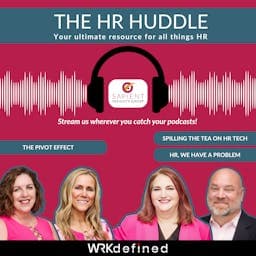
In this episode, Stacey Harris and Cliff Stevenson discuss the latest announcements and partnerships impacting payroll, leave, and compensation, including those from Workday, Tilt, and Salary.com. Stacey and Cliff also talk about a proposed CA law mandating AI oversight and an interesting study on how cultural and other differences impact the expectations of HR across the globe. The hosts also remember Google exec Susan Wojcicki and her significant contributions to the tech industry.
Key points covered include:
↪️ Workday reports strong Q2 financial results and announces new strategic partnerships, including a significant collaboration with Equifax.
↪️ More news from Tilt, Salary.com and other HR tech vendors.
↪️ “Table stakes” functions such as leave management, payroll, and compensation management remain critically important, as evidenced by Sapient’s research and VC investments.
↪️ A LinkedIn post by Johannes Sundlo informs discussion about the differences in HR roles in the U.S. and Europe and the importance of aligning HR strategies with specific regional cultures.
A rundown of Sapient Insights’ presentations at HR Tech, including the big reveal of Voice of the Customer research.
Special announcement! As a leader, fostering a more inclusive and positive culture in a workplace of constant change is hard and messy but not impossible. In our in-depth, interactive learning program, we help you break it down. Join Navigating Change with Confidence, a cohort-based immersive program launching soon. Click here to learn more.
Don’t miss this exciting thought leader conversation! Follow the hosts and companies mentioned below:
Sapient Insights Group
Download the 2023-24 HR Systems Survey White Paper
Instagram | Twitter | LinkedIn
Stacey Harris
Instagram | Twitter | LinkedIn
Cliff Stevenson
Powered by the WRKdefined Podcast Network.
[00:00:00] So the idea of basically just doing some oversight, understandably, there's some pushback, not just from big businesses, but sometimes we're seeing some from sort of watch all groups that worry about what we were talking about earlier, which is that sometimes by focusing too much on security, you give up privacy, right?
[00:00:18] This is true of in a broad sense, we think about something like facial recognition.
[00:00:21] But this happens even with AI because we're saying, all right, our only way of knowing what's happening with all of this data that you're gathering is for us to look at all that data you're gathering and you're going, I don't think I see a problem here, right?
[00:00:35] Welcome to the HR Huddle podcast presented by Sapient Insights Group, the ultimate resource for all things HR. It's time to get in the huddle.
[00:00:55] Welcome everyone to Still in the TNHR Tech, where we focus on the honest HR tech news everyone needs to know. We break down the news the week and help you make sense of what it means for our industry and how it can impact your organization.
[00:01:08] We're recording today on August 28, 2024, almost to September cliff and so many things going on with back to school and Labor Day here in the United States and just travel season from an events perspective.
[00:01:24] So we're really excited to get into the topics this week. I'm your most AC Harris, Chief Research Officer and Managing Partner for Sapient Insights Group.
[00:01:31] We're a research and advisory firm if you didn't know. And joining me today for the conversation is our co-host with Stevenson, Director of Research and Brith Lans for Sapient Insights Group. Cliff, welcome back to the show again this week.
[00:01:43] We're doing our matching colors again. So I think we're coordinated fairly well. But I mean, we were in the green room for almost 40 minutes talking about all the stuff going on.
[00:01:52] So it's busy, busy week. What are we going to be talking about this week forever?
[00:01:55] A lot. And I was remembering another thing that's coming up in September, a little event HR Tech is that I think I just I knew there was something happening. I was just trying to move.
[00:02:05] Well, a little sort of sort of behind the curtain for those of you listening and watching, you know, throughout the two week period before we do one of these recordings, we'll both find things and send them, you know, together and sort of consolidate and then make decisions on what, what kind of goes in and what doesn't.
[00:02:25] And that's why often I'll say, you know, any stories didn't get covered, you can find them in the comments or show notes or in the YouTube comments underneath.
[00:02:32] Well, to give you an idea of just how and you know how these have been getting longer, right listeners? Well, just to give you an idea, there is I think eight different ones that are in the only if we have time and usually there's one or two.
[00:02:46] So think about how long these usually go and then goes like that.
[00:02:49] So I just gives you an idea of just how interesting, how exciting, how much neat stuff's been going on because of all the things Stacy said.
[00:02:57] So I thought we'd start off by talking about just some direct news from, you know, the biggest companies that's out there, Workday, who, you know, announced some great financial results and some new partnerships, some new stuff coming out their model.
[00:03:11] We're going to talk about a company tilt that you may not have heard of, but that's why we're here. Spill the tea on that.
[00:03:18] Sour.com some exciting news from them as well as with smart recruiters.
[00:03:22] Some of the laws around AI.
[00:03:24] There it is first mentioned early on and some really interesting sort of thought leadership and questions have been brought up.
[00:03:31] We're going to talk a little bit for international listeners, a very interesting story that was put out there about each of our business partners now that works in different countries.
[00:03:41] And we'll talk about, you know, we have our own best of best lists, meaning, you know, the best of those lists, but other people are doing this well too.
[00:03:51] And we're going to talk about some of those that are out there.
[00:03:53] Some specific news for you, Jen Axers if we have time and some sad news passing from a titan of the industry that we'll get to without a doubt.
[00:04:01] And like I said, if we have time, there's some fun stuff too involving Waffle House.
[00:04:07] So, you know, something to stick around for if we have time, but let's start with that Workday.
[00:04:11] Here's a book.
[00:04:13] You're laughing about the Waffle House.
[00:04:14] Now I have to get into it.
[00:04:17] It's like when we brought up Elmo people like well now you have to book.
[00:04:19] Yeah, you have to talk about it.
[00:04:20] Yeah. Well, before we dive into that, but we want to let people know where we're going to be at because we are we're literally heading into event season this week.
[00:04:27] So a couple quick things.
[00:04:28] You're going to be at the Oracle Cloud World event September 9 through 11.
[00:04:32] So if anybody wants to get a chance to talk to Clay or have some conversations, please let us know.
[00:04:37] He'll be there representing the voice of the customer taking notes, asking questions, doing all the things that we need to do.
[00:04:43] Also, as many of you know the survey is closed.
[00:04:45] We're crunching data.
[00:04:47] We're going to be starting to roll out some of the information.
[00:04:50] The very first place where you're going to see us rolling out information will be at the HR Technology Conference in Las Vegas.
[00:04:56] And that event is definitely going to be the place where you'll see most probably of our time spent over the next couple of months.
[00:05:03] We will be at the Workday Rising event as well.
[00:05:06] Our founder Susan Richards is going to be there.
[00:05:08] So if you'd like to talk with her while we're there, that would be great.
[00:05:10] And at the HR Technology Conference, you'll be able to catch us in a couple different places.
[00:05:16] So just a couple of updates on what you want to plan your calendar.
[00:05:19] One is the Tuesday morning Women in HR Tech panel on creating a culture of data and transparency with our CEO, Terry Zipper and Danielle Bichon.
[00:05:27] That's going to be really good because Danielle is working with a great company on Sonosi and the global head of people in data governance and stewardship.
[00:05:34] If you've ever wanted to think about how you manage data, Danielle and Terry are going to talk through those conversations and how it matters to women.
[00:05:41] Then if you want to drop by for the keynote mega session on our Voice the Customer research, that's going to be at 1 o'clock on Wednesday.
[00:05:49] Voice the Customer Highlights, Thief and Insights Group 27th annual HR System Survey and the Mandalay Bayroom.
[00:05:55] Please be sure to put on your calendar, sign up early and we don't know how many people are going to be shown up in that room.
[00:06:00] And then finally, there will be an opportunity also to do some Ask the Experts on Thursday.
[00:06:05] You'll have a 9 a.m. 1, 9.45 a.m. with myself, there will be one with Susan Richards around 1 o'clock on Change Leadership.
[00:06:12] And then we're also doing a second session this time and Cliff's going to get up on stage here.
[00:06:17] So we're going to be doing a technology-agnostic approach to skills management with Cliff and I.
[00:06:21] We'll be talking about the vendors and what is showing up, what organizations are using, what they're not using, how they're doing HR,
[00:06:28] skills management in between all the different vendors. It's going to be a good session.
[00:06:32] We'll also be after the HR Technology Conference jumping right in in October to the I-Solved event.
[00:06:38] That's the I-Solved Connect in Orlando, Florida. So we'll be doing lots of interviews there and presentations.
[00:06:45] So please connect up there. We'll be at the Unit 4 event in Boston.
[00:06:49] That is going to be an analyst event on that November 6th and 7th.
[00:06:52] We'll be at the UKG Aspire event November 12th and 13th.
[00:06:57] And then we'll be at the Workday European Event November 12th through 14th as well.
[00:07:01] So you can catch us in all those places if you'd like to debrief with us or if you'd like to just have an opportunity to talk with us, please let us know.
[00:07:08] Email us and we'll get you on the calendar.
[00:07:11] So now we can get back to talking about working and all the other things.
[00:07:14] No, that's great.
[00:07:15] I'm going to plug where we're going to be at.
[00:07:16] No, that's great.
[00:07:18] And I'm really glad you mentioned signing in early because I think every single year for your four hour voice of the customer keynote, it's been SRO if not people not even be able to get in the door.
[00:07:31] So you definitely want to get in early for that.
[00:07:33] You don't want to be the person going, ah, I didn't really think he meant it.
[00:07:37] What do you mean?
[00:07:38] So speaking of very popular things, Workday had extremely good second quarter results.
[00:07:44] So a number of different things, total revenues up to billion and change.
[00:07:51] Of course, when you're talking about change, you talk $885 million there.
[00:07:57] 16.7, that's a 16.7 increase year over year.
[00:08:01] So, you know, all these stories you might be hearing about, you know, things not going well, not for everyone.
[00:08:07] Things are doing just well, just great.
[00:08:09] There's a lot of new additions too.
[00:08:11] There's some cool stuff around AI.
[00:08:13] They've actually released two other sort of partnerships and expansions.
[00:08:18] I can tell you about Stacy, if you want to get into some of the more specifics, you know, one is a Workday payroll, provided by Strata and that's going to be sort of more of the AI focus, right?
[00:08:30] So allowing you to sort of use AI to check really large data sets and check for compliance.
[00:08:36] And on that sort of international and global scene, they also have announced global payroll connect.
[00:08:43] So really looking to be a single source of truth for these really large global payrolls, which is oftentimes to be very difficult.
[00:08:52] You know, it's one thing to even get all of the different integrations and compliance things in mind to do a single source of truth is pretty amazing.
[00:09:00] But there's a lot here to talk about.
[00:09:03] So why don't you, I know you had definitely picked up on some of the cool connections and partnerships.
[00:09:08] Yeah, I mean, the workday has, we don't always do sort of quarterly announcements for all of the vendors, but I think there's a couple here that caught our attention.
[00:09:15] One is all of this payroll focus that they've got.
[00:09:18] I think, you know, we're definitely seeing that global payroll has become a bigger conversation for everybody.
[00:09:22] But Workday has definitely jumped into this and said, we're going to partner with the lot of organization and we're going to connect what we're doing with a lot of organization.
[00:09:28] And so I think those two things are going to be really powerful.
[00:09:31] And that's a bit of where you're getting the payroll connect tool and some of the relationships.
[00:09:35] The one caught my eye though, which I think was a little bit more interesting to me was the strategic partnership with Equifax.
[00:09:41] Now that I think a lot of people are kind of like credit unions, where does that sort of fit in the whole longer picture, right?
[00:09:47] Of everything.
[00:09:48] But most everyone who uses Equifax or is another one that does this right, they spend a lot of time knowing that they do a lot of background checks.
[00:09:55] They do a lot of data analysis.
[00:09:57] They do a lot of onboarding work for organizations in many cases.
[00:10:01] And so this is a pretty big relationship, I think, to just call out.
[00:10:05] It's a new integration sign to help that make the employment and income verification for Workday customers easier and faster.
[00:10:12] And they're also going to be able to provide Workday payroll and the work number combination data.
[00:10:17] And that's really interesting, right?
[00:10:20] Because Workday has now payroll or at least some level of insight to payroll to most of the Fortune 500 and 1000 organizations.
[00:10:29] Like they're over 50%, I think, in most of those areas.
[00:10:32] And if they're not doing the payroll, they're at least getting it brought into their system in a data center.
[00:10:37] The work number, which is it's an income verification service, is a really good tool for a lot of organizations to just make sure that they are sort of managing that
[00:10:47] understanding of sort of what we brought people in for versus what they're making and how all that data is playing out in the market.
[00:10:53] It's also giving the market a better view of income verification across.
[00:10:58] So if you want to buy a house, it's important to get your income verified.
[00:11:01] And so those things are important from an employee perspective that some of that stuff is seamlessly done and done in a way that is up front and transparent as well.
[00:11:08] Because that's the other part of that that's really important.
[00:11:10] So I'm interested to see more about what they're going to do with this.
[00:11:13] And I think, you know, we'll definitely see a lot more customers probably take advantage of something like this if they're doing the payroll conversation with it.
[00:11:21] So yeah.
[00:11:22] Yeah.
[00:11:22] And that work number point is interesting.
[00:11:25] That was something that they rolled out a while back.
[00:11:28] And one of the kind of neat cool things about it that they were looking to do is not be using our social security numbers so much.
[00:11:36] Because that is not the original idea of a social security number.
[00:11:40] It's not supposed to be an ID verification.
[00:11:43] And, you know, we hear about these big data breaches and things to happen.
[00:11:46] Well, one of the reasons they're so dangerous is because having your social security number get out there, of course, isn't great, right?
[00:11:52] So if you can use something else for the same purpose that isn't so dangerous to individual privacy, it really helps mitigate the damage that can be done in these sort of, you know, rare but still important events.
[00:12:05] And it's a really US centric conversation, but we know there's the same issue in global at each country as well.
[00:12:11] So I think they ended up getting to a standard models part of what we're seeing in the market trying to get to, right?
[00:12:15] Yeah.
[00:12:16] Exactly it.
[00:12:17] And speaking of expansions, we see one from Tilt, their lead management solution, Series B funding for 15 million.
[00:12:24] And what's really cool about this, I think first of all, as we always talk about when we see this amount of money put into what could be called niche solutions or maybe ones that aren't thought of as much as payroll, for instance, it just shows the market confidence and the importance of things like lead management.
[00:12:44] And specifically what's interesting is this is going to go towards strengthening partnerships, specifically with Rippling that has been a very strong partnership for Tilt, although they also have a 2A API integration with Workday and with Paycore.
[00:13:02] So again, it's when Workday, you know, we mentioned that sort of single source of truth, this whole idea of being able to combine all of these elements of work into a single unit seamlessly.
[00:13:17] And with, again, that 2A communication so there's no issues here of when you pull the info or if anything doesn't fit within one field or the other.
[00:13:27] This really shows that there's an importance here and that lead management is often sort of forgotten, but there's a number of things that I think we talked about that are considered the tactical side, but you can make them strategic by thinking about how they fit into the sort of holistic grouping of your HR tech.
[00:13:47] We can't forget, Cliff, that when you look at our data and we've done this analysis for two years in a row now, and we'll probably run it again this year.
[00:13:56] Well, we took like the top five things that are more highly correlated to organizations who are viewed as strategic HR, strategic business partners in their organization.
[00:14:06] One of those top five things is your leave and absence process, right?
[00:14:10] Like I think that is something we hear all the time like, well, that's just table stakes to do that well.
[00:14:15] And it is doing it poorly is not something you want in your organization.
[00:14:20] But how do you treat people when they have a need for leave or for absence in your organization?
[00:14:25] And how do you think about that on a cultural level is really important and it plays a big role.
[00:14:30] And a lot of it has to do with whether or not you can get the data where you need it to be so you can handle it appropriately in the organization.
[00:14:36] And so I think these are kind of exciting topics.
[00:14:39] I know a lot of people think that, you know, leave and absence is just the basics.
[00:14:43] But I'm like, look, the basics make a difference.
[00:14:46] It's where everybody gets their relationship with HR started, right?
[00:14:49] That's right. People say, oh, it's table stakes.
[00:14:51] Yeah, well, if you don't pay the table stakes, you don't get to play.
[00:14:54] So why they're called that?
[00:14:57] You know, that's what lets you get involved.
[00:14:58] So yeah, and then, you know, going from leave management to another one that we have really seen a lot more data from this year in our report.
[00:15:08] A lot more interest is compensation management.
[00:15:10] And obviously the market is seeing the same because sorry.com made the Inc. 5000 moving up nearly 500 spots 453 spots just from last year.
[00:15:22] And sorry.com is not a brand new company.
[00:15:24] So this isn't a case of, oh, they're here because, you know, they're new.
[00:15:29] They're clearly making moves.
[00:15:31] We've seen it ourselves.
[00:15:32] We see them show up in our research.
[00:15:34] We know that people do like, they have a good user experience, good vendor satisfaction.
[00:15:40] You know, I'm not giving away any winners this year, but I will say that they've shown up in the past.
[00:15:45] So, you know, really showing again the importance of how this all fits into a whole, especially, you know, for something we've talked about in past, you know, things like that.
[00:15:54] Things like pay equity and, you know, finding specific skills and all that, you know, compensation management starts to really become a bigger picture issue.
[00:16:05] Yeah.
[00:16:06] I think, you know, when we think about the growth of the compensation market, so it's interesting to note that Compa was one of the big winners last year in additional funding for organizations.
[00:16:16] And they're a compensation sort of sales relationship tool.
[00:16:19] And we've seen the constant acquisition and sort of development of what pay factors is doing, right?
[00:16:26] Which is they sort of pulled in a lot of various vendors to sort of create what is the broader pay scale conversation.
[00:16:33] I think Salad.com has always stood out to me as an organization that has kind of stood the test of time after a lot of sort of early days of doubt of whether or not there was really a business in this space, right?
[00:16:44] I think today, anybody who's here knows yet there's a business and there is a lot of work that needs to be done here.
[00:16:50] I always like how they're kind of a little behind the scenes and, you know, sometimes then all of a sudden you're like, oh, all this data is coming from the work that they're doing, right?
[00:16:59] And most people know them just for their internet tool and the Salad.com back and they kind of check my salary.
[00:17:04] I think now what you're seeing is that, you know, the growth is coming from their investment in research and their investment in sort of the tools to help manage the compensation conversation, not just the benchmarking process that goes through compensation.
[00:17:19] And most people think of compensation as a benchmarking conversation.
[00:17:22] There are tools that manage it.
[00:17:24] And I'm excited to see where this faith goes.
[00:17:26] I think we're going to hear a lot more about compensation the next year or two.
[00:17:28] And on with the, I guess in the sort of talent management space, looking for sort of the connective thread.
[00:17:35] But another thing that is a connective thread is that we're seeing more women in leadership.
[00:17:40] So Smart Reporters points Rebecca Carr as the chief product officer.
[00:17:45] Wonderful to see for lots of reasons, but also because she was a checker before speaking up.
[00:17:51] Yeah, we had a presentation with Checker, not so long ago with their advisory group.
[00:17:56] But it's important to note that she moved from chief product officer that she's held for the last couple months to their new CEO.
[00:18:03] She was interim CEO for a little while.
[00:18:05] And I think that's the part for me that I was really excited about.
[00:18:08] I've known Rebecca for quite some time.
[00:18:11] She started out, for those of you who kind of know the history of this space with the job,
[00:18:15] I've been a couple of others, even smaller organizations like Branch Out and stuff before that.
[00:18:19] She was with Smart Recruiters for many of their early years in growth.
[00:18:24] And then she left for a few years at Checker and then came back to Smart Recruiters with some breaks in between.
[00:18:29] And it's always a thing for me, it's interesting to see that when organizations are able to realize that sometimes talent may need to leave the organization,
[00:18:39] get some additional capabilities and sort of come back to the organization.
[00:18:42] We see that happen a lot of times, a lot of places, right?
[00:18:44] And this is one of those.
[00:18:46] And I'm excited to see where Rebecca Carr will take the organization.
[00:18:49] She brings a lot of depth in the recruiting space, but I think she also brings a lot of depth in just understanding the technology market, right?
[00:18:57] And what buyers are looking for.
[00:19:00] And so I think that's going to lend well for Smart Recruiters.
[00:19:03] Smart Recruiters always ends up in our research at a small level, but we know that a lot of organizations are using them.
[00:19:08] It'll be interesting to see if she can sort of grow that brand at a level that will start to show up in a lot more places.
[00:19:15] I think people all know it.
[00:19:16] I often times get questions about what do they do?
[00:19:18] How big is the platform?
[00:19:19] Where is it at?
[00:19:20] So I think there's an opportunity there for them to sort of expand that awareness of all that they're capable of.
[00:19:25] But it's exciting time to see more women take leadership role.
[00:19:29] We're seeing it at organizations like we just saw up at UKG.
[00:19:34] We were definitely seeing it in organizations around the globe in a lot of large tech firms.
[00:19:40] And this is just another thing, example of some of the things that we're seeing in the market.
[00:19:43] As them taking CEO leadership roles, I applaud it not just because we need more women in this market,
[00:19:49] but also because they're women with really deep experience who are going to be great for what these companies are trying to achieve, right?
[00:19:57] Absolutely.
[00:19:57] And for there, we're going to talk a little bit.
[00:20:00] You know, as we always say, as is our mandate, we must talk about AI.
[00:20:04] And it's been interesting.
[00:20:06] So specifically, we're looking at a California law.
[00:20:09] And for our listeners outside the US or for those of you who are new within the US,
[00:20:14] often as California law goes and sometimes New York, so goes the rest of the nation.
[00:20:20] It's a huge state geographically and population wise.
[00:20:25] It has a huge financial push and pull on the rest of our nation.
[00:20:30] And also it's where most of our tech industry is located.
[00:20:32] So, you know, you'll see these sort of newer laws coming up around this space, usually for those reasons,
[00:20:37] just as a quick refresher for anyone outside wondering why we're talking about just one state.
[00:20:42] But this would be an AI law basically putting some oversight onto any really large,
[00:20:49] what they're calling frontier models, which they've sort of defined,
[00:20:53] because you can just say large, even though they are using the term, you know,
[00:20:57] mass computing power or 100 million in training costs.
[00:20:59] They've tried to put a dollar sign to this.
[00:21:01] And also it would create what they're calling the frontier model division.
[00:21:05] So the idea of basically just doing some oversight, understandably,
[00:21:08] there's some pushback not just from big businesses,
[00:21:11] but sometimes we're seeing some from sort of watch all groups that worry about
[00:21:16] what we were talking about earlier, which is that sometimes by focusing too much on security,
[00:21:22] you give up privacy, right? This is true of in a broad sense,
[00:21:25] we think about something like facial recognition.
[00:21:27] But this happens even with AI because we're saying, all right,
[00:21:30] our only way of knowing what's happening with all of this data that you're gathering
[00:21:34] is for us to look at all that data you're gathering and you're going,
[00:21:37] I don't think I see a problem here, right?
[00:21:40] So what usually happens is, you know, best intentions, etc., etc.
[00:21:43] So we'll see how this goes through, you know, it's sort of process of
[00:21:48] what do we need to change to make sure that both sides are taken care of, right?
[00:21:52] The security is important.
[00:21:54] Oversight's important, especially for something that can be so damaging environmentally
[00:21:58] and to people's privacy.
[00:22:00] So like I said, it's a nice sort of bellwether for what we might see from future U.S. laws.
[00:22:05] Yeah, and I think the interesting thing about this is at one time
[00:22:09] we see regulations come out that are more sort of like about the data,
[00:22:13] like the employee data or the business data or the cat,
[00:22:17] and because that affects everybody who sort of works in
[00:22:22] or sort of deals with those companies because it's from all over the world or all over the globe.
[00:22:26] The interesting thing about this kind of flipped this conversation a little bit,
[00:22:30] and it's like we want to understand the model that you're building,
[00:22:33] which means talking about actual IP inside that company.
[00:22:37] And so I think that's where we're getting a lot of pushback
[00:22:39] from a lot of those organizations is sharing that information with state agencies.
[00:22:44] There is the concern that there will be some challenges
[00:22:47] with sort of keeping that IP private, right?
[00:22:50] Or keeping the understanding whether IP is doing specially for organizations
[00:22:52] who are just getting started in this market compared to those
[00:22:55] who have been able to sort of run free for the last several years without any oversight, right?
[00:23:00] And so I think these are all well-intentioned conversations.
[00:23:03] I think where this is going to have an impact on the HR space and the IT space is that,
[00:23:10] one, if you are one of those organizations and there are a number of them
[00:23:14] who are developing your own artificial intelligence model inside your company
[00:23:19] and many times inside an individual company has more data sets
[00:23:22] and more sort of capabilities than any one sort of large SaaS solution
[00:23:27] because you're dealing with very large numbers for very large companies
[00:23:30] like Walmart or something, right?
[00:23:31] Then you've got to... Am I stepping over these bounds?
[00:23:35] You're held just as accountable as any other, right?
[00:23:38] So if you're not in the tech industry but you're still doing your own AI models
[00:23:42] and you're putting your employee data in them from a training perspective,
[00:23:45] which is a large data set, then you've got to kind of think about
[00:23:48] does this fit into that picture.
[00:23:50] So I think there's really have to understand how this fits for you
[00:23:54] if you have any sort of a location in that California region
[00:23:57] but it could become across the country as well, right?
[00:23:59] Yeah, definitely. That's kind of the way to look at it.
[00:24:02] And that's one of the reasons I think why in our data sets we can help.
[00:24:07] We've started looking more at what are you doing with the AI?
[00:24:10] How are you finding use in it?
[00:24:13] And so that way we're saying, okay, it's not just AI is like a blanket thing
[00:24:17] but where are you finding value because maybe you don't need to take part in these huge data sets.
[00:24:23] Maybe that's just not necessary.
[00:24:24] There's plenty of value to be found in something else.
[00:24:26] In fact, here's a good segue.
[00:24:29] I do say so myself.
[00:24:30] The next article is almost a courtesy of Johann Sundlo through LinkedIn
[00:24:35] and it's a summary of a really wonderful study.
[00:24:40] And he mentions or they mentioned sorry that within the post that they use
[00:24:44] the Anthropics AI for the summarization of the study
[00:24:48] all that they do you should read it yourself, which is interesting.
[00:24:51] But you know again may that's a good use, you know,
[00:24:53] it's a very long study kind of want to get point of it.
[00:24:56] And it goes to something that we always find these themes, don't we in these recordings?
[00:25:02] And this one really has been a lot about the difference between European specifically
[00:25:07] but really we could say global and US markets, especially for HR
[00:25:13] and what they're looking at within the study and again I'll have the links
[00:25:17] both whether you're on YouTube or in the show notes.
[00:25:20] So on LinkedIn is usually the best way to find it is looking at HR as a whole
[00:25:24] and especially HR business partner role has really been defined by
[00:25:28] United States and you know North American views of how it should be done.
[00:25:34] And in summary of an academic study, they're really finding is that
[00:25:39] we focus so much on strategy and that the HR business partners role
[00:25:44] is to be more of a strategic thinker and to sort of take that sort of
[00:25:50] almost leadership role and in Scandinavian and Nordic countries
[00:25:54] that's not what they're being asked to do nor does that fit in with the organizational culture so to speak.
[00:26:02] So we really have to think about how do we best serve our organizations
[00:26:06] with a larger cultural context?
[00:26:09] You know is this what we're being asked to always think of
[00:26:12] and I was really studying a lot in performance management
[00:26:15] and there was such a big movement of getting rid of it and we found that
[00:26:19] and many stratified cultures and Indian cultures and some South Asian cultures where
[00:26:24] this was the one opportunity to meet someone from sort of a higher group
[00:26:29] you know higher class whatever the term would be used in those countries
[00:26:33] then they didn't want that taken away. There was no sense doing it flat structure
[00:26:38] because that's not how everything worked and it would have worked well for that company right
[00:26:41] so just saying oh get rid of performance management is a very sort of
[00:26:45] North American centric way of looking. This is sort of taking an academic view to that same thing
[00:26:50] and I really find it fascinating because while they're not saying there's anything
[00:26:53] necessarily wrong with taking a strategic view, it's really thinking about
[00:26:57] what are you being asked from your managers? You know how do you operationally support them
[00:27:02] as an HR business partner and are you hearing it or are you just doing
[00:27:06] kind of what you've been taught in books and as we know there's a lot of younger people
[00:27:10] getting into HR and you know to be fair we talk about quite a bit about being strategic
[00:27:14] but you know those are in opposition as we kind of talked about before
[00:27:18] being tactical or doing the day-to-day work for the table stakes is not
[00:27:22] in opposition to being strategic. We're all doing it, we all have done it right yeah
[00:27:27] and there are a lot of times when you're asked to do with the tangible stuff
[00:27:30] plus the strategic at the same time you gotta kind of do both right
[00:27:34] I was glad you actually pulled this one out because I know it wasn't
[00:27:37] one of the most sort of techy news this week
[00:27:40] but I once want to call out Yohan Zanthal. I don't actually
[00:27:45] believe I've had the opportunity to speak with him. I start following him a little about a year and a half ago
[00:27:49] when he first started talking about AI because he was one of the few people who was actually going in
[00:27:53] and testing a lot of the tools and using them in different ways and he's kind of built a brand
[00:27:57] and a name around sort of that AI and artificial intelligence market but what
[00:28:01] I really like is that he brings his experience from his work into this conversation
[00:28:05] so up until just up until 2019 he was the global
[00:28:09] HR business partner at Spotify there in Stockholm, Sweden
[00:28:12] and so that you know he really I think this article really
[00:28:17] fell into this conversation he's been having with the market which is let's stop
[00:28:21] talking about AI and technology and even the business models that we
[00:28:25] have in sort of a broadly US-centric
[00:28:29] model right let's think about this within international focus
[00:28:32] and so I really liked sort of how he approached it knowing that a lot
[00:28:36] of the emerging tech sometimes comes out of
[00:28:40] funding comes out of right and so I think this is an opportunity to really
[00:28:44] talk a little bit about like you know the funding models and where that comes for all of this
[00:28:48] HR technology and the AI technology right and where all
[00:28:52] those sort of universities are teaching the models all that kind of stuff plays into this
[00:28:57] conversation he's well worth following I think we should we'll link him to
[00:29:00] the site and you know maybe at some point in time I can get him on the podcast to have a
[00:29:04] conversation but I just think it's always good to hear from those different
[00:29:08] perspectives right you know I remember when I was in the HR space
[00:29:12] sort of having conversations with HR business clients and I can remember the idea that
[00:29:16] you know they would you know a lot of times they were sort of putting this generalist role versus sort of
[00:29:20] a business partner role right and those are real conversations and that's
[00:29:24] the thing we have to have and it changes by culture and
[00:29:28] region and company environment as to how
[00:29:32] is all this work get broken up we got a little bit of that in the report this year we're going to be talking about
[00:29:36] which is we're seeing a shift in that market we've been talking about it for a while
[00:29:40] but the HR function itself is having to change to address all of this right yeah
[00:29:44] absolutely and you know that's even one of the things that they recommend is that
[00:29:48] you recommend in the in the study a more support and training to develop
[00:29:52] those sort of business and strategic competencies that may not have been part
[00:29:56] of their own training so you know speaking up to people doing things
[00:30:00] very well you know obviously we're going to be unveiling
[00:30:04] the voice of the customer awards mention that your thunder behind
[00:30:08] you as oh you can hear that I was wondering I was wondering if the mic was good
[00:30:12] no sound effects to go with all yeah this is good ASMR for those of you
[00:30:16] have better into that you know you can fall asleep to this once I'm finished talking
[00:30:20] that is we've got that I was wondering this is all the danger of having really good mics
[00:30:24] right yeah so yeah I should be more energetic
[00:30:28] though I would hope because these are these are good things we're going to be as I said
[00:30:32] mentioning our own voice to the customer winners but others are coming out
[00:30:36] you know also talking about some of the top tech products this one
[00:30:40] is from HR executive our good friends over there this is
[00:30:44] a sort of more broadly based view of it and you know rather than you know
[00:30:48] taking the sure just voice of the customer as it you know says on the
[00:30:52] they're kind of looking at what they've seen and taking that you know they're
[00:30:56] their sort of opinion on it but still pretty interesting a lot of the ones
[00:31:00] we're seeing as well while vizier v for analytics
[00:31:04] benefits salt labs Chinese company there
[00:31:07] and also paychecks flex perks and you know we've
[00:31:11] that's pretty interesting some of the new stuff that we've seen yeah
[00:31:15] it's a very interesting by the thunder there
[00:31:18] core HR paycom time off request another point there
[00:31:22] for the management and time right and then employ
[00:31:27] engagements perceptics and culture x voice
[00:31:29] pay force crew explorer and then town acquisition we get higher view find my
[00:31:34] phenoms automation engine and clara which clara which we
[00:31:39] mentioned on this podcast I want to say back in February
[00:31:42] so that was that's pretty neat that clara went from
[00:31:46] being brand new all the way to being named one of the top ones right there
[00:31:50] and then town management beemery experience with some
[00:31:54] of the employer services I think you mentioned them earlier better works
[00:31:58] the town profiles so and I want to highlight here because I
[00:32:02] think this one is an interesting one it once Steve Boas has done this
[00:32:06] for the last many many years and I don't know how many years and
[00:32:10] this is very focused on emerging technologies to some extent
[00:32:14] what are what's new what's going on and he's got a panel that sort of
[00:32:18] review this and they go through all the product the pretty extensive process that HR executive
[00:32:22] bank think put the market through and what I think
[00:32:26] there's a couple of really big call call outs in this one is
[00:32:29] one we're seeing a couple of organizations that have mentioned that are
[00:32:34] a little bit bigger than that and then there's a lot of really small ones in this and I think
[00:32:38] that's always an interesting conversation to have in this which is
[00:32:42] can you how do you get attention if you're a small organization versus how do
[00:32:46] you sort of also look innovative when you're an organization and spin in a market for a long
[00:32:50] time like this year right and so we're seeing a bit of that in this
[00:32:54] data this year I do I call salt labs
[00:32:56] this is a company that actually was bought by Chime Company
[00:33:02] they were very just starting fresh last year and we
[00:33:06] had mentioned them in one of our emerging tech notifications in my presentation
[00:33:10] will be doing that again this year calling out some of the emerging tech groups we think that you should
[00:33:14] be paying attention to hard to show up on our data with emerging tech because
[00:33:17] as a voice the customer you have to have at least a certain number of responses to our research so we do
[00:33:22] a little bit of that in our presentation I also think calling out a little bit
[00:33:26] of what we're seeing here in the sort of culture space
[00:33:29] that's kind of a category they don't know that we talk a lot about because it
[00:33:34] shows up in different places but it is interesting to see
[00:33:38] and at day force in this one right because day force I don't know would always
[00:33:42] been thought of as a culture based platform and so it's good to see that we're seeing again
[00:33:45] a smaller newer company with one of those organizations have been around for a long time
[00:33:50] and how they're competing in this place plays a big role right
[00:33:53] what you're going to see this year on the floor of the HR Technology
[00:33:57] Expo Hall in Las Vegas if you're going is a really
[00:34:01] wide mix of both longstanding HR
[00:34:05] organization tech organizations and smaller HR tech organization
[00:34:08] really battling it out because the tools are sort of
[00:34:13] balancing out right AI is allowing some of these organizations to
[00:34:17] grow more quickly get their systems up and running more
[00:34:20] in advance but they were also seeing that this market is
[00:34:25] there's room and breath now because of so many acquisitions over the last year to start
[00:34:29] to see some new ones come up out of the woodwork so I'm excited to see where all
[00:34:33] this goes right well if Stacy's predicted you can take it to the bank
[00:34:37] so I don't know if there's a way to there's a way to put money on that but
[00:34:41] it is in Vegas so we'll find out now one that you kind of send
[00:34:45] you know sort of just for fun and I just had to I have to call it out just because we're both Gen Xers
[00:34:49] is one that was Gen Xers
[00:34:52] re-voted the best managers among their colleagues
[00:34:55] and they're bound out
[00:34:57] yeah that was from benefit news yeah that's right
[00:35:00] so as Stacy said you got to go to this
[00:35:03] as I always say we'll put the link in the comments
[00:35:08] but Stacy you pointed out you got to read the comments
[00:35:10] and so I loved it because
[00:35:13] this is my favorite phenomenon now I can say this
[00:35:17] because I'm a Gen Xer there's nothing Gen Xers like more than talking about themselves
[00:35:20] ensuring everyone told you I totally agree
[00:35:23] this is why we're so great one person who specifically called out
[00:35:26] because BratPunkEDM and GoGo and DC shout out to the GoGo fans
[00:35:31] I just love this anytime you bring your Gen Xers they're like
[00:35:34] somehow we're gonna work punk into this conversation it's gonna happen
[00:35:39] that's why we're good managers
[00:35:40] cause I'm gauzing I'm sure
[00:35:43] so I love to see it it was a delight
[00:35:46] yeah and just to add to this picture
[00:35:48] so Cliff comes back from Comic Con this week
[00:35:51] a picture for me of all these plaid shirts
[00:35:55] with all these great pictures of amazing movies
[00:35:58] and I'm like there's nothing more Gen X
[00:36:00] than the plaid shirt with movie themes and quotes
[00:36:03] because this is how Cliff and I engage because we both like movies
[00:36:07] and I will wear my plaid when I'm off season
[00:36:09] and not in presentations and so we had a good laugh about that
[00:36:13] I'm just thinking this is okay now we're really getting into
[00:36:16] the whole Gen X theme up there
[00:36:18] now we have to find some pink colored plaid shirts
[00:36:21] that's my next search for the...
[00:36:23] Go back
[00:36:24] so now the last story could be seen as a little sad
[00:36:28] but I think we'd like to treat it as a sort of celebration of life
[00:36:30] and that was that the former YouTube COC
[00:36:33] Susan Wachiski died at 56
[00:36:36] lung cancer very early
[00:36:38] and I want to say a little
[00:36:42] and again a thank you to Shimane Berry who put this post up
[00:36:46] who just who I didn't realize until she put the post up
[00:36:49] just how extraordinary Susan's life was
[00:36:52] as we talked about women and leadership
[00:36:53] there's a ton of highlights here
[00:36:56] and actually Stacy if you want to pick any of sort of your favorites
[00:36:59] the just whole you know
[00:37:01] didn't realize like how much she was involved in
[00:37:03] Google's beginnings it was literally her garage
[00:37:06] when they talk about oh started in garage
[00:37:09] that's hers
[00:37:10] the Google garage is famous then it was her garage
[00:37:13] is not probably always as mentioned as well right
[00:37:15] she rented her garage out for
[00:37:16] the startup of Golda Sergey and Larry
[00:37:19] you know I think the thing that caught my eye on this
[00:37:22] and you and I talked a little bit about this is that
[00:37:24] in many cases that the people behind the scenes
[00:37:27] in some of these organizations
[00:37:29] that's names you wouldn't know all the time right
[00:37:31] you know Apple's Wozniak right
[00:37:34] you know and you know unless you're into tech space
[00:37:36] you probably wouldn't know that as well right like
[00:37:39] understanding those who stood behind
[00:37:42] the big name and really help them see
[00:37:44] you know not just channel the
[00:37:47] capabilities that a lot of entrepreneurs have
[00:37:51] which is and if I'm here are really tough I know
[00:37:53] I'm one of them now sort of
[00:37:55] focus and get you know narrowed in on an area
[00:37:57] that's gonna not only sustain the organization
[00:37:59] but focus on sort of what can actually
[00:38:01] you know be of value to the market down the road
[00:38:04] is hard and Susan's really
[00:38:07] I remember seeing hearing her talk at an event
[00:38:09] probably I don't know maybe maybe ten years ago or something
[00:38:13] it's been a long time and I was always just
[00:38:16] at that point in time I thought wow she's
[00:38:18] she's in there really working with this technology
[00:38:22] and the marketing of it and the messaging of it
[00:38:24] in a way that made me rethink a little bit
[00:38:26] of my perspectives on because when I first got into
[00:38:29] tech business I was very much oh don't market to me
[00:38:32] don't sell to me I just I just want to you know
[00:38:35] go demo my stuff even as an analyst I was always
[00:38:38] a little bit less interested in the marketing side of thing
[00:38:42] a big part of her background was all of the
[00:38:44] marketing and understanding the value of the perception
[00:38:47] of Google right in the space and I really came
[00:38:51] to understand over time that perception is
[00:38:54] reality for a lot of people right like you have to
[00:38:57] make sure your brand has a message your brand
[00:39:00] is seen as standing not just for
[00:39:03] something but but that you know what it stands
[00:39:05] for in general right and I think she was a big part
[00:39:07] of that for Google the other thing I thought
[00:39:09] that was powerful is that she saw the power
[00:39:12] of YouTube yeah a little bit earlier than
[00:39:14] probably some others in an organization in 2006
[00:39:16] YouTube was bought by Google and it was
[00:39:20] recommended by her and it was after Google
[00:39:23] tried to their own video platform and didn't quite
[00:39:25] make it right and she eventually became the CEO
[00:39:27] I mean Cliff you you could you should probably
[00:39:30] more than I do but it yeah it really has
[00:39:32] become a stable in the market that I don't
[00:39:34] think we ever realized what's going to happen back then right
[00:39:36] here we are recording on YouTube you know we
[00:39:39] mentioned I am one of those people that has
[00:39:42] switched to listening to most of my podcast ones
[00:39:45] I already existed on to Google strange enough
[00:39:48] sometimes even there's not pictures just because
[00:39:51] I don't know I just find it easy to scan and
[00:39:52] put everything together and really there's so
[00:39:55] many of us and we've seen our own data
[00:39:57] that that has become our sort of preferred
[00:40:01] information gathering entertainment
[00:40:03] whatever you want to call it thing that's
[00:40:05] taken the place of a whole lot of different
[00:40:08] aspects of our lives so and what's amazing
[00:40:12] is that yeah she was her recommendation
[00:40:14] she oversaw that and at the time there
[00:40:17] were multiple platforms just as there were
[00:40:19] multiple search engines for Google and so
[00:40:22] it seemed it seemed like a lot of money
[00:40:24] I mean 1.65 billion seems like a lot of
[00:40:27] money period but I mean especially then
[00:40:29] and to have that vision of you know taking
[00:40:34] that on when it really wasn't part of
[00:40:37] their core brand and then making it
[00:40:39] part of what they do it really is amazing
[00:40:43] to have had that vision I also want to point
[00:40:45] out that you know you've talked about
[00:40:48] work-life balance five children so in
[00:40:51] that time period and just amazing so really
[00:40:54] you know our thoughts prayers condolences
[00:40:56] go out to the family at this time because
[00:40:58] how young it was but I really do want to
[00:41:01] celebrate everything she's done because
[00:41:02] is now part of strangely enough the HR
[00:41:06] tech fabric it's part of what we use it's
[00:41:09] part of communication it's we see it in
[00:41:12] emerging tech as one of the premier ways
[00:41:14] that people are gathering information and
[00:41:16] and learning about things we're seeing
[00:41:18] ads for all these companies we talked
[00:41:20] about being on YouTube depending on what
[00:41:23] you watch of course you know they have
[00:41:24] targeted advertising they make their money
[00:41:26] same as anyone else in 2018 YouTube
[00:41:28] generated more than twice the revenue of
[00:41:31] any major TV network again the vision
[00:41:33] for understanding that back in the day
[00:41:36] when you know the three major channels
[00:41:39] for major channels depending on what
[00:41:41] you're watching like was was how you did
[00:41:43] advertisement yeah like I said I think
[00:41:45] leadership being a female side and
[00:41:48] having five children all of those things
[00:41:50] which I think again is is a balanced
[00:41:52] conversation and we've seen a lot of
[00:41:53] there are others who have achieved that
[00:41:56] but I think for me it was her vision
[00:41:58] and understanding of that brand
[00:42:01] relationship that really made a
[00:42:03] difference and I think it and help us
[00:42:05] start to understand this concept of brand
[00:42:08] in the market right Google is one of the
[00:42:09] first forefronts to understand that brand
[00:42:12] was as powerful from a tech
[00:42:14] company perspective as anything else
[00:42:15] right yeah well I think we've run out
[00:42:19] of time I know we promise to talk
[00:42:21] about some other stuff but I really do
[00:42:22] want to sort of leave everyone with
[00:42:24] that strong leadership you know vision
[00:42:26] but you know there are a number of other
[00:42:28] ones as always I'll put them in the
[00:42:30] in the comments in the YouTube and the
[00:42:32] LinkedIn but you can also reach out to
[00:42:34] me or to Stacy directly there's
[00:42:36] always as we say stories that are
[00:42:38] and you know if we have time there was
[00:42:40] a great one this was from a Gardner HR
[00:42:42] survey that found Australian
[00:42:44] organization lacking place-centered innovation
[00:42:46] really looking at the employee
[00:42:48] sentiment in Australia specifically
[00:42:50] and seeing some really big drops
[00:42:52] declined nearly 10%
[00:42:54] in the feeling of how
[00:42:56] innovative employees felt their organization
[00:42:59] was going from 24.5
[00:43:01] all the way down to 14
[00:43:02] and as I mentioned there was
[00:43:05] a story about chatter
[00:43:06] that's two T's and no vowels
[00:43:09] because how everything has to be so now
[00:43:10] and that particular tool
[00:43:12] being used for Waffle House
[00:43:15] so a lot of you know that's
[00:43:16] for our Southern listeners they'll all know
[00:43:18] what's up with that chatter themselves is
[00:43:20] from Tampa, Florida very close to my
[00:43:23] location so we can
[00:43:24] you can learn all about that if you're interested
[00:43:26] in those sort of more regional things
[00:43:28] but you know always like to give a shout out
[00:43:30] to our Southern and Australian
[00:43:32] listeners and viewers. Yeah
[00:43:34] there's a lot of good links there this year that
[00:43:36] we didn't get to say but it is important
[00:43:38] for us at least keep this in somewhat
[00:43:40] of a length time that our marketing team
[00:43:42] can manage so we're going to have to sort of
[00:43:44] wrap it up say Cliff so I appreciate that
[00:43:46] just as we're wrapping up today
[00:43:48] just a couple of big reminders is again
[00:43:50] if you are interested in buying
[00:43:52] next year's annual HR system survey
[00:43:54] White Caper it is available right now
[00:43:56] not for download but you can buy
[00:43:58] and buy one get one for free kind of a
[00:44:00] combo what we call the bundle which is
[00:44:02] if you could buy last year's report you'll
[00:44:04] get next year's report for free when it comes out
[00:44:06] so it's kind of that model also
[00:44:08] just to understand and that you
[00:44:10] can find on our website as well is that
[00:44:12] if you're interested in hearing about all the details about
[00:44:14] the research where it's coming out all the stuff also anything
[00:44:16] about what we're doing where we'll be at
[00:44:18] be sure to sign up for our newsletter which is
[00:44:20] and all of our ongoing updates on our research
[00:44:22] and launches there that can get on our website
[00:44:24] as well and then be sure to listen
[00:44:26] to our sister HR Huddle podcast HR
[00:44:28] we have a problem hosted by our CEO Terry
[00:44:30] Dipper there's a really good one
[00:44:32] out right now by the time you're in this
[00:44:34] will be about a week behind what Jason
[00:44:36] saying it is good it is talking about
[00:44:38] grief and how we handle that in
[00:44:40] our organization so I think
[00:44:42] you should take some time to listen to that
[00:44:44] it's important and I think it really kind of
[00:44:46] poems in on some of the things a lot of people
[00:44:48] have been dealing with since the COVID
[00:44:50] crisis also if you'd like
[00:44:52] to help support this podcast please subscribe
[00:44:54] and leave a rating and a review that
[00:44:56] is really really helpful for us and
[00:44:58] to stay up to date with immediate breaking HR
[00:45:00] tech news and get all the behind the scenes content
[00:45:02] as we're doing all of our traveling please make sure
[00:45:04] that you're following us on Sapeon Insights on LinkedIn
[00:45:06] on X and Instagram as
[00:45:08] well as Cliff and myself
[00:45:09] and Cliff thanks again for pulling all this
[00:45:12] together thanks to our brand media method group
[00:45:13] who helps us produce our podcast and run by
[00:45:16] their amazing founder Kelly Kelly and to
[00:45:18] our marketing team Summer Releno
[00:45:19] and all of those who support her because
[00:45:22] we couldn't get this out without that support
[00:45:24] and thanks to our listeners in our community
[00:45:25] we couldn't do this without you we do want to hear
[00:45:27] from you if there's other things you want us to be talking about
[00:45:30] we keep adding to this list of topics
[00:45:32] but we you know we definitely hear from
[00:45:33] you guys that you're enjoying the podcast so where
[00:45:35] we'll keep kind of doing what we're doing that's it for this episode
[00:45:38] with Spill Latte on HR tech
[00:45:39] Cliff just in time for your
[00:45:41] storm to be bypassing I think we can hear it
[00:45:43] going off into the background we hope it's been
[00:45:45] just the brew you needed to start the engines
[00:45:47] running this week and we'll be back in two weeks
[00:45:49] with another pot of boiling hot HR
[00:45:51] tech updates and insight thanks everyone
[00:45:53] bye
Sponsors
