
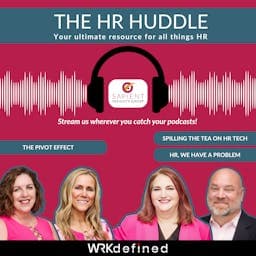
In this episode of Spilling the Tea on HR Tech, Stacey Harris and Cliff Stevenson pick up where they left off, working through a long list of market announcements that includes UKG's partnership with Google Gemini, Amazon's entry into agentic hiring with Connect Talent, and SAP's data acquisition strategy as a direct counter to Workday's consolidation play. They discuss leadership changes at isolved, ICIMS, Cornerstone, and NOVAworks. The duo also talk about how people moves at Anthropic and FICO point to the blurring of consumer and business worlds.
The hosts get into harder conversations, such as AI model rollout risks, the security vulnerabilities surfacing in vibe coding platforms, and why relying primarily on historical data without an overarching, carefully considered data theory will likely result in faulty predictions.
Key points covered include:
↪️ Private equity companies are moving fast on workforce management systems, and the hosts make the case that the real assets being purchased are not the software systems but the continuous, real-time data generated from time and attendance and other similar applications.
↪️ AI model updates carry a risk that traditional software updates do not: when an underlying AI model changes, everything built on it can behave differently and potentially unpredictably. The hosts break down why this is a problem the HR tech market is not yet prepared for.
↪️ The hosts discuss Phenom’s acquisition of Plum, described as “a pioneer in psychometric-based talent assessments that validate the durable skills AI cannot manufacture and resumes cannot verify.” As AI makes it easy for job seekers to fabricate resumes and interview responses, organizations increasingly need behavioral science tools that measure attributes AI cannot fake — such as empathy, judgment, adaptability, resilience.
↪️AI diagnostic tools used in medicine are producing significantly higher error rates for women than for men. These are traced directly to decades of underrepresentation of women in medical research. The hosts point out that similar data insufficiencies and bias can also cause harm when using AI tools for HR purposes.
The 29th annual HR Systems Survey is now open through June 24th. Add your organization's voice to the largest HR tech survey in the industry at the link below.
Don’t miss this exciting thought leader conversation! Follow the hosts and companies mentioned below:
Sapient Insights Group
Instagram | Twitter | LinkedIn
Stacey Harris
Instagram | Twitter | LinkedIn
Cliff Stevenson
The HR Channel
Powered by the WRKdefined Podcast Network.
[00:00:00] But they're saying they're gonna go the other direction. We got the data. How do we use this? How do we expand? So there's a few different things that came out. They have a few different ones. Quick, I think is one. A health one. But I think the one we want to talk about is Amazon Connect Talent. So it's gonna be called Amazon Amazon Connect Talent. It will be an agentic model. It will be hiring. So again, it's scaled hiring. So you can use this for sort of your larger acquisitions.
[00:00:27] I would assume, although it's not directly stated in the article, that this is something Amazon has used internally for doing some of their hiring. They basically said it's built on Amazon's experience hiring 250,000 seasonal employees annually. It's worth noting that Guna, who is the head of strategy, product strategy over at Cornerstone, came from Amazon and was one of the people who helped build some of their internal. They built their own internal systems, right, for many years. And so I don't know if he was involved in this particular one, but it's worth noting that connective tissue there, right?
[00:00:58] Welcome to the HR Huddle Podcast presented by Sapient Insights Group, the ultimate resource for all things HR. It's time to get in the huddle. We'll see you next time. Derailment on what's going to already be our longest episode of all time.
[00:01:22] But one of the things I mentioned in a Workday post from the Workday Innovation Summit is that is a concern of theirs is that people are building what they're calling a shadow ERP, right? We've given them the tools. Now look what they've done. They've built something else now. You know, they don't have the knowledge of how to build a house. We've given them the hammer and the nails. But we've got to prove it. Building it isn't the issue. Building it's not the hard part. Maintaining, connecting your data, security, paying the people who are going to maintain it. All of that, right? Yes, yes.
[00:01:50] Just remember, it feels good to be able to build exactly what you want. It's horrible to maintain it, right? Ask the 15% of the people who are stuck on-premise who can't get off of it. There you go. So then UKG, kind of sticking with this AI theme, they are now going and they're partnering with Google through their Gemini platform for their enterprise agent gallery.
[00:02:14] So basically, kind of again, taking all of the sort of agentic ecosystem that they have through the Gemini platform and bringing that into UKG's ecosystem as well. So, Stacey, I think what was interesting here, that's kind of, we're starting to see some of the, I guess we'll call it the major players in HCM, kind of take a side. Who's going to be their partner? Workday with Claude, things like that. Anthropic, I should say.
[00:02:44] No, I think this is actually a really big, like, and it's not just the side, but then it's the model. Like, how am I going to keep up to date that model? Like, do I change the model out every time? Do I change the model out every time to, if it's working for some of the things? And we've had that conversation with quite a few of the vendors about how do I maintain model management along with the best option across. But all these, all the A&Ms are kind of trying to reach parity, right? I mean, we just got the, the chat GPT just came out with its visual that sort of matches what we're seeing with Gemini, those kind of things, right?
[00:03:13] We know Claude is probably one of the number one adopted business tools right now on the market, just based off of what we're seeing pretty rapidly. What I, what I will say is I think, you know, the Oracle conversation was interesting because they were basically saying that they, now they, they may have built it on top of something. So again, I'm not the technical person, but they're, one of the benefits they said they were adding to what they were doing is they were shipping their own LLM for you to start with for free. So that didn't have the added cost of what, of basically using one of the other models.
[00:03:42] And then what you were just paying for was the, was the, was the outcomes over time. I do think that everybody's going to have to make some judgment calls about this. And, and we're, this conversation, it, it's not, what I think right now it feels like is what's the best tool for what I'm doing. I know I'm already finding that I'm shifting a lot over to Claude, even though sometimes chat GPT might be a little bit better at something else. It's just easier to have it all in one, in one environment, right? Just like with anything else, right? Yeah.
[00:04:07] There was a post we were going to get to later, but it seems like this is a good time to just jump right into it, which was this post from Nicholas Thompson from the Atlantic talking about the idea of model rollouts.
[00:04:23] What's going on with AI that makes it a little different again from what we've seen in the past in SAS with the idea being, you know, when new AI models are put out there, they are often drastically different and can affect everything down your workflow. And that's not something you normally see. You know, we've seen in the past where someone, you know, there's a patch or, or there's some sort of mistake that's in there, but then that gets fixed. This is totally different.
[00:04:49] We've seen when most people are familiar with the chat GPTs going from like three to four, whatever the case may be. And some people going, well, the old one was actually better, or this one makes these sort of mistake over and over and over again. When that's your underlying model and when that kind of gets rolled out, does it break everything sort of downstream of it? That is something that's specific to AI that now everyone's having to deal with it when so much of it is based on that. That is another reason why the model that you're based on could be important.
[00:05:18] Well, and he was flagging this with the Anthropic, with the model that they did not release because it found so many security risks with all the applications of the market. Right? Like they literally, and now they're doing a deal with the government to basically have them have access to it, but not everybody has access. Like, and there's a group of seven, I want to say, who are now like getting together and saying, okay, we're going to fix our problems before you release it. But what happens when one of the actors doesn't do that?
[00:05:44] That kind of a conversation is like not only which model, which is sort of like the worst case scenario of an update to a software, which it was, was the outcome isn't the same. It breaks a link or two, right? Like models do different things. It's like having a new person who can, yes, they're kind of trained on the same thing, but there's a new person for the most part, right? There's new ways of behaving, right?
[00:06:04] And then on top of it, this idea that is what, if the models get so fast at doing things that the humans can't keep up with the maintenance of the other applications that it's pulling the data from or accessing, at what point do we just break the whole system? And that's been the fear of the conversation, right? It isn't that it will do better than the human being to some extent. It's faster. It's bringing data better.
[00:06:29] But when it breaks the system, we as humans built a system and a structure that works for us on the internet, on the environments and our infrastructures. And that is the thing that I think could really break, right? Yeah, absolutely. Again, you know, we really don't know always that these sort of recurring things sort of come up. But once again, it gets back to this idea of, okay, it works great, but what does it break like? How does it break? You know what happens when things go wrong? And how prepared are you for that?
[00:06:56] Something that is going right, we see some more investment. But when we talk about all these acquisitions, these really are positive stories. I know that things have been a little up and down lately in the sort of general economy and everything else going on. But as we've seen with those acquisitions- I'm getting pictures from my friends in Ohio for guests at $4.99. They're all freaking out on that. So yes, there's some tough times going on right now, right? Yeah, tough times. But this particular area of the market, we're still seeing quite a bit of investment in.
[00:07:25] 14O Capital, for instance, we don't have the exact amount. This comes directly from them. But they are now the majority shareholder in ShiftBase, which was one of the larger workforce management systems in Europe, specifically for those that work on what we probably call hourly but shift-based work, right? So as someone who has worked multiple shifts and knows the sort of scheduling nightmares that can arise from those sort of different ways,
[00:07:51] and of course, Europe generally being more heavily regulated than we see here, that is an extremely important aspect, especially as not just the United States, but really around globally as we move more towards the frontline workers and however you want to think of that. But clearly, it's seen as a large area of interest if we're seeing that sort of investment from 14O Capital. And what I would say is that if you want to watch, private equity is an interesting thing to watch
[00:08:21] because private equity does a lot of research and they're very much focused on what can they get out of things long term. And we are seeing private equity pick up time management systems pretty rapidly right now. Tom Abrova with Dayforce. We've seen a couple of other acquisitions like this. This is another one. They know where the data is at. That's all I'm going to say. And they know where the data is at. We have for a long time ignored the workforce management system. This is my current paper I'm working on right now, so you guys are getting the benefit of that. And other people are not because they're realizing where the data is at.
[00:08:49] So watch where that dollar falls, right? Yeah. I mean, we're literally seeing acquisitions. I think we talked about it in the show before last, seeing some acquisitions happening specifically for data. Yes. Whereas we used to see it buying people or buying tech. We're seeing purchasing data. It's pretty interesting. A company that certainly has no... It's how am I continuously getting the data? Remember that... That's a good point. Right. The data goes stale so fast right now. It is that process. And that's the thing that workforce management gives.
[00:09:17] It's the continuous feeding of the data, right? 100%. And I was just about to say a company that doesn't need to worry about data, probably the biggest data collector right here, Amazon. But they're saying they're going to go the other direction. We got the data. How do we use this? How do we expand? So there's a few different things that came out. They have a few different ones. A quick, I think, is one. A health one. But I think the one we want to talk about is Connect Talent. So it's going to be called Amazon Connect Talent. It will be an agentic model. It will be hiring.
[00:09:47] So, again, it's scaled hiring. So, you know, you can use this for sort of your larger acquisitions. I would assume, although it's not directly stated in the article, that this is something Amazon has used internally for doing some of their hiring. Oh, it is actually stated. They basically said it's built on Amazon's experience hiring 250,000 seasonal employees annually.
[00:10:08] It's worth noting that Guna, who is the head of strategy, product strategy over at Cornerstone, came from Amazon and was one of the people who helped build some of their internal systems. They built their own internal systems, right, for many years. And so I don't know if he was involved in this particular one, but it's worth noting that connective tissue there, right? Yeah, no, they're saying basically we know how to hire people because we've done it, right? Which we see a lot from these big companies, right? Yeah. I do know that they were using a different tech solution.
[00:10:37] So I don't know, you know, where, you know, how much they learned from that tech. But certainly no one's hiring more than that pretty much. So pretty interesting. It is also interesting that they are focusing on reducing bias. Explicitly, that's one of they say is one of the major features. It's not just the speed. It's being able to strip demographic information that still allow people to pick based on merit. Promise we talk about SAP and data acquisition.
[00:11:06] So why not? From one extremely large company at Amazon to another. I'm going to be going out to hear SAP in just, I think, about a month. So we'll get a little more information on this. But I, so basically there was a whole write-up about SAP's entire data acquisition strategy.
[00:11:28] And Stacey, I think you and a few other people all sort of thought this might be a counter to Workday's acquisition of Sauna and their ability to sort of consolidate all of that data and how it moves around in an organization. Right? Because ultimately, as we just said, the real differentiator in the next few years is going to be in data. And as you said, you're right. It can't just be a purchasing of data as a package off the shelf.
[00:11:54] It's got to be an ongoing data collection input layer. And how does, what is the highest qualities that you can get? Yeah. Both this acquisition and the move by Amazon is it should be viewed not just as data and software, but as infrastructure. They're building to access more data on a regular basis. Right?
[00:12:15] Amazon is not really probably interested in being near ATS, but they are interested in getting as much data as possible to continue their buying signals and continue to sort of manage their whole model around that infrastructure that they're building from a hyperscaler model. Right? On the flip side, SAP is really doubling down with the idea that they have to create an environment where they are the process workflow model. Right? Like that's sort of their bread and butter. And I think this feeds into that, this acquisition.
[00:12:45] What I do think, though, is that each company is doing this a little differently. Some are, like you said, using their sort of consumer model to start the conversation. Some, like Workday, are really focusing on we're going to own the agents and we're going to own the management of how compliance around your AI sort of works inside the organization through our human-based conversations. Right? And then, you know, SAP here is kind of saying, I need to own that data layer. Right?
[00:13:14] That data management model that you and I have talked about. And that feels like where they're heading with this. Which, again, fits their purview with their structure and their expectation that you have a table and a data set for everything. Right? Yeah. It should be noted, too, because I think we're going to end up using the term hyperscaler quite a bit in the next few months. It's definitely been a big part of this idea of the pricing models. Right?
[00:13:39] Because that is a bit of, if not a bottleneck, it's an area that every single one has to go through. So, that's basically where is the physical hardware more or less stored? Who controls the cloud computing that is required to do all of your inference? Because that's, you know, these models that your clods and your open AIs bring out. They still need all of these systems to actually do the compute, the inference. Right?
[00:14:06] So, those are basically, although there are other hyperscalers out there, we're really talking about your Amazons, as you just mentioned, as a hyperscaler. Google, Microsoft, and Oracle. Yeah, Oracle's got the OCI environment. And that's one of the things that they're saying that makes them uniquely positioned to do something different around all this.
[00:14:24] But on the flip side, what we're seeing, like a workday, and you can hear with what SAP is doing, is the idea now I'm creating sort of these virtual data set environments with snowflakes, the kind of data lakes, that allow you to sort of commingle data and think differently about data. So, I think it's going to come down to, is it where physically my data is at? Is it how I'm categorizing my data? Is it how I'm accessing my data? And what do I pay for all of that? Right? Yes. Absolutely.
[00:14:49] You know, we've talked a few about, in a few of these stories, about where people are at, you know, where people have come from. And that's why I think it's, you know, it's always kind of my favorite part of these episodes is seeing this movement. Because I think that more than anything else, this is really where you can start to see where things are headed and where the future is.
[00:15:10] I mean, of course, it's great celebrating people's movements and where they're going, but it also is probably a leading indicator of what we're going to see down the road and where things kind of come from. It all sort of stems from, at the end of the day, it is still people that are the most important here. They'll still make the big decisions right now. That's right. So, one of the companies that we haven't talked about a lot that we used to mention all the time is iSolve. It's great to see them back in the news.
[00:15:36] Michael Hask is going to be the new CEO over at iSolve. So, that means Mark Duffel is going to be retiring. He has been, I mean, really great, I think, at iSolve overseeing a period of extremely high growth for them. I'm talking, of course, about Mark Duffel. But I kind of mentioned they hadn't been in the news as much lately. I would say they're kind of going through a period of change there. We've seen them, at least in terms of personnel.
[00:16:05] And this may be part of that sort of final piece. We should note that Mark was, but Todd Lefevre, who is their founder and president, is still there and continues to be there. And if you kind of go to the iSolve page, you see Michael and Hask and Todd Lefevre now sort of jointly. Part of what I, my, my, my, we, I have not had a chance to talk to Lindsay, who is their analyst relations person. We're going to try and catch up this week, so we'll get more details on this.
[00:16:31] But I think, you know, Michael Hask has a background, comes from Paylosti, a lot of other AI-based organizations. iSolve does very well in our research. It's one of those companies that kind of came out of the blue, and part of it is because of their customer service. That's right. And part of it is because Todd had a vision of what he could do and how he could help people. And, you know, founder-led businesses are always really, you know, we knew when Anil came back to Workday. Not to say that you have to have founder-led. There's a lot of other businesses that run well. But it is nice to see founders still in organizations and still involved.
[00:16:59] And you can definitely see Todd's sort of handle on a lot of stuff. So I think Michael's, I'm excited to see what Michael brings to maybe scale up some of what I've done inside of organizations. But Amy Mosher, who's their chief people officer, she just recently rolled out their new India offices that they've got. She's been doing amazing work sort of recreating a very – it's hard to imagine. They have 160,000 customers, right? And, you know, that company has grown rapidly in just the last five years from, you know, a couple thousand to multiple thousands of employees.
[00:17:28] And Amy Mosher's really done an amazing job bringing that and her background. And so they're really, I think, rounding out the senior leadership for what is needed for sort of the next level of where they're at, right? Pragya's their new COO. We love Pragya Gupta. She came from the product development side. Kelly Rico's now their new chief product officer. They've just sort of – they really, I think, are getting to a point where they're getting ready to figure out what's our next step, right?
[00:17:54] Yeah, that's – and I mean, most of their success, let's be honest, is because of their color choices. We all know that. They are a pig company. I'm being silly here. But Stacey's like, no, yeah. But also, it's funny you mentioned to Neil because when he was at the Innovation Summit, he had mentioned that when he was originally there, he was kind of more on the tech side, you know, and doing the innovation. He says, but now it's about philosophy. It's making sure that I'm the sort of guiding light here and that we've got the right philosophy.
[00:18:24] And I think you've hit the nail on the head when you compared him to Todd because I think that's what Todd does is keep that people first focus even as they do realize as they grow that they need to move into some of these other spaces that are in high-growth areas. In Workday, Peter Bayliss has gone from Workday CTO and joins Anthropic as a member of their technical staff. Will not be the last time we talk about Anthropic.
[00:18:50] Those are the – that is the parent company for Claude if you use their AI product. So pretty interesting. And he's replaced as CTO by Gabe Monroy coming from Google, amongst other ones. And Gabe, I did get a lot of chance to talk to. You know, really, really both, you know, very obviously good at their jobs. You don't get that space. What I found fascinating with my conversations with Gabe is the sort of openness and transparency.
[00:19:17] Something that I didn't used to see in sort of AI a couple years ago. I felt like people kind of felt you had to be an evangelist or nothing. I think after a few years of seeing practical uses and having a better idea of the future, because before it was unwritten, right? It was like, oh, anything could happen. It could be anything. And so we'd hear these crazy ideas of what AI might be able to do.
[00:19:41] And now this sort of new guard of like, for instance, Gabe, who did come from, you know, like I said, from Google and, you know, really saw that growth. He takes a much more grounded approach than you might expect. And he is thinking a lot about what do we do in the sort of other aspects. You know, great. There's all this cool new stuff that's coming up. But what if there is a problem at one of the hyperscalers? What is our backup plan?
[00:20:07] How can we help reduce the amount of compute that's used so that prices aren't high? What do we do to help customers solve problems and not have them rely on AI necessarily? Pretty interesting things to think about. And I just had some of the great conversations with him about, you know, what do we do in these sort of failed states?
[00:20:28] You know, I think, you know, and if you look at Gabe's background, you know, as a, you know, he's an early co-founder of Dias, which is an early Kubernetes startup that was acquired by Microsoft. Right. Like that. I think the thing that Neil's always done a nice job of is finding people who have a startup mentality who are willing to work in an enterprise level. Right. And in this market, you sort of need that. So it's good to sort of see sort of big company consumer plus.
[00:20:54] But you and I both know we've seen a lot of people who have consumer background don't do so well at enterprise because they don't understand sort of the scale and the complexity of it. I am hoping that Gabe brings some of that scale and complexity because he's worked with some of these technologies behind the scenes on infrastructure sites. I like you had some good conversations with him. So we will watch. But it is a real opportunity, I think, to almost rethink and re-engineer the idea of the infrastructure. Right. Also a snappy dresser.
[00:21:21] Well, what people wear is a window into their heart is what they say. As I enjoyed my Met Gala. Yeah. And connections as well. You're a video gamer. So whenever I saw anything from the Met Gala, I was like, I'm sorry, am I supposed to be holding a PlayStation controller while watching this? It was pretty wild. But that's what people want to hear in an hour. I'm sorry. So let's move on.
[00:21:44] So Luke Hicks from Cornerstone On Demand has moved over to Malt, a contingent workforce management company that does also freelance workers out there.
[00:21:57] So another area that we've expanded our view as well into, I think, just starting last year, the year before, we started looking at contingent workforce management platforms, including Malt, and seeing, again, another area of expansion, especially if we're talking about frontline workers, but also another area for data to be coming in. Right. That's still a very important group that we need to understand and work with. Yeah.
[00:22:25] Meg Bear probably needs no introduction, I would hope. The world of RHR knows Meg Bear. She's been at many, many of the biggest firms in the market, right? Yeah, absolutely. Obviously, you know, I think we've mentioned most of them here, right? SAP and Oracle. But she is now going to be on the NovaWorks board. So this is interesting, mostly because it's such a big name. I, to be moving into a sort of, you know, not quite a startup. Early startup. Yeah, very early. Okay.
[00:22:56] I didn't want to sort of disparage. Yeah, I know. No, we talked about them after my Transform event. So, so first of all, I think, you know, it's a board position, right? You know, board positions are, are, are much more guidance and advisory. What is interesting is, is NovaWorks was started up by Kelly Stephen Wass, who sold her original company to ServiceNow. And I had a great opportunity to, to sit with Kelly and her organization. And Melanie Luget, who is now their chief product officer, which we all know and love.
[00:23:25] Melanie has been part of the analyst community. And then she was worked at Workday for many, many years on their strategy side. So what Kelly and Melanie are doing and the whole group over there, along with Ezra Avandipo, who is a co-founder, is they're creating an agentic HR mess to some extent, right? Like they just launched sort of components of that and went a little bit more public about what they're doing. They're rapidly getting interest in what they're doing. They've got investors already, I think, who are, who are talking to them. I think Meg coming on board just adds to that notoriety.
[00:23:54] They're building it on the ServiceNow platform, but with an AI architecture. So if they want to, they can move that to other platforms over time, right? And it's, it's a very interesting sort of workflow model, agentic HR mess. I think they, they're really thinking they can sort of rethink the idea of what HR and, and you and I have been talking to quite a few other organizations. I think we've got a couple of briefings this week with organizations that call themselves the new form of an HR mess. So, you know, we're, this is one of the reasons I want to talk, wanted to talk to the
[00:24:22] cornerstone customers, because I don't think anybody thinks of cornerstone all the time as an HR mess, right? But our data shows that a large number, particularly European customers use them and feel they're part of their HR mess ecosystem, right? It's not just a learning tool. It's a, a, a workforce and a workflow tool and a tool that manages their, their employees on, on multiple levels beyond just talent. And so we're going to see more of this. And I think you're going to see more of the Nova work. So I would watch them grow.
[00:24:48] If I'm, you know, you know me, I don't say often what's going to take off, but I think that's one that's definitely going to take off. And cornerstone, we, yeah. Okay. So I'm still on people, Nicole Petra Williams, new chief of staff to the CEO, to a Manchu at cornerstone. So I worked there previously and, and sort of strategy and revenue. So it was just to kind of see her coming back. I didn't know her directly when, when she was there, but she was there in like 2019, 2020 before COVID made a big announcement about coming back.
[00:25:18] This is actually good. A lot of people, part of what I wanted to mention, a lot of people do not understand the value of a chief of staff at those senior levels. This is not, uh, this is a true strategic role for a lot of organizations. And it is good to see someone who's got that experience coming back to that. And in that role for a Manchu, um, chiefs of staff get the work done. So I tell people, right. You want to, you want to see where the real power as an organization, look at your chief of staffs, right? Yeah. And it's something, yeah, you're right.
[00:25:45] We don't kind of talk about enough, but you know, it's an, another good one that, uh, sort of, you can sort of read between the lines, right. You know, good, good sort of movement in there. And then Ben Weber joining, uh, Reveglio Labs. Uh, this is pretty interesting also just because of the title, Workforce Intelligence Research Lead. So pretty exciting to see that. Yeah. I think Ben Weber is well-known in the people analytics space. He's a good friend of some of our friends in the space.
[00:26:12] I don't know him personally as well, but I think his background with MIT Media Labs, those, you know, some interesting things that he's going to be bringing to the table there, right? And then, uh, at iSIMS, new CEO, although this was brand new and wasn't talked about, uh, at the event, uh, other than just, uh, that something was coming. And, uh, and that is Mark Thompson, uh, will be the new iSIMS CEO. Oh, uh, pretty interesting, uh, to see that.
[00:26:39] I will say overall, uh, at iSIMS, I, I mentioned them kind of at the top of the event and they have really, or sorry, at the top of this show. So, and they are another one that is, you know, they are really focused on how do we get to the correct outcomes. And I think that that's going to be something, let's see their new chief AI officer, the one I was mentioning earlier, Daniel Joplin. He came in last August. What is that?
[00:27:08] Like 10 months ago. So, you know, they are clearly, uh, setting their stake down that we are going to be technology forward while not losing sight of that, that, you know, founding philosophy of providing the best possible talent acquisition experience for sort of both sides, right? For the candidate and for the organization doing the hiring. So it comes from internal, right? Like he, I think I want to say he was financed, uh, but I could be wrong on that from his background.
[00:27:35] So they're, they're really doubling down on knowing, knowing their own DNA, right? Yeah. I really, you know, just sort of a side note, but I really enjoyed, uh, at iSIMS that we actually got to talk and have a presentation from their chief legal officer. I love legal officers. My favorite people. Yeah, I agreed. Oftentimes they're in the background or, you know, you'll, you'll hear something, oh, this can't be done or whatever, or they're just mentioned, but to actually have them front
[00:28:02] and center and talk about, uh, the things that are going on fast, especially in a place like hiring where it's really important to know they need to know it internally, but they need to know it externally as well. So pretty cool. You know, this one, this one I'm just super excited about. This is a personal one for us. Uh, but want to say congratulations to Kate or Katie. She says she, either one is fine with her. Katie Achille is taking leadership at the Devon Group.
[00:28:27] Devon Group kind of acts as a PR AR firm between some of the biggest players in this HR tech space and companies like ours. So we've known them for a long time and they're also just wonderful people. So. Gina Kille, who, um, uh, who she's taking over the role from, and we should note there is a little connection there. Yes, they do have the same last name, but, uh, Kate has been amazing at taking in the reins and Jean is moving into, um, I think, um, uh, a strategy role, right?
[00:28:56] Like more, uh, innovation role, which is what I think everyone's do. And my hope will be for Jean that she's also slowing down a little bit. She's one of the hardest working women in the HR tech space. And she just knows her shit, right? Like she's got it down, but so does Katie. And I think, you know, what's going to be really fun is Katie brings a really fresh perspective to all of us, right? Like she, she really thinks differently about the market. She understands, I think a very market, uh, a very sort of, um, new generation that sounds
[00:29:25] very sort of pandemic, but, but it really understands, I think the shifting space we're seeing around sort of what's happening on how we reach people, um, in a different way. And so I'm excited for her. I'm just, you know, big, big, big celebration and, and very proud of all the work that she's done. Cause we've, we've known her from the early days of when we first got a chance to meet her. I think I've been at, at HR tech for over 15 years. That is scary cliff. But that was when I first got to meet Kate.
[00:29:51] She was at that desk in the analyst room and I was a lost little analyst going, I don't know where to go. I don't know what I'm doing. And she was like pointing us in the right directions. So it's, it's lovely to see her, her sort of, uh, take the reins here. They're both very no nonsense people in the best possible way. I realized that could, that could sound harsh, but I mean, in that they are not going to be confused or befuddled by, you know, like, oh, you're a big name or that you have, you
[00:30:18] say all the big words, they'll figure out what organizations do, how to match them up. And that's an extremely good skill. It's like, no, this is exactly what you need. Even if you don't know it and I'm going to set you up with these people and here's what's important. So yeah, having that perspective is important. And then, Ben, there was a pretty funny one too. This one, speaking of anthropic, I know we haven't even hit our speed around yet, Cliff, and we're already an hour and a half in. So if you're still listening, thank you. Yeah. If you know what, what I might, you know what I'm going to do is something that we haven't done.
[00:30:47] I might see if we can work with our group, uh, to put timestamps on it. This probably really will matter more for our YouTube watchers, but we'll say, look, if you just want to hear the people moves, go to this time and go to this time. So, you know, because we understand we've been gone a while and it's so exciting to us. Not all this will be that interesting to you, but it should be. This one is a bit of levity. This one is a funny one that came from Lars Schmidt, uh, who's taking a new role over at HR. It is their, I had recruiting as the ambassador, as he put it.
[00:31:17] And he got, he got really funny. I think I called him ambassador. Oh yeah. I think he called himself something else, but it's really funny. We'll put the link in. Um, but it's just one of those things that if you started a company at the right place at the right time, you know, you could imagine being at Google, uh, 30 years ago or something and everyone going, can you fix my computer? Yeah. So for those who don't know Lars, I mean, I, I know Lars, he's been on the sort of the speaking circuit for a long time on the recruiting space, but he's been, you know, a writer for fast company.
[00:31:47] I think I got to know him when he was the director of talent acquisition at NPR or now at that point in time. Right. Um, so it's, which is back in 2011. That's when I first got a chance to meet him back in my Burson days. He's just someone that you run into a lot and he's just a really nice guy. Right. Is a good way to put it. Right. He just, he's always willing to have a conversation, always willing to have a talk and he's been out in the market for a while. And so, and he actually think, uh, said, thank you for helping him get the job to a couple of people that we know in the industry, which was, which was really powerful,
[00:32:16] but he's, he's now, you know, in recruiting and, and head of talent over at Anthropic and the internet just exploded. And he became like the ambassador to the HR community for Anthropic and, and his post, first of all, he said, thank you to so many people that he probably didn't have time to say thank you to because we all said congratulations to him. We were all excited for him. Right. But then he kind of came back a week later and said, okay, all of you 500 new people who are now connected with me and all of you who are trying to reach out
[00:32:46] to me, I can't handle the amount of interest in knowing me now, all of a sudden, not that people didn't love him beforehand. Right. And so he put this hysterical commentary out about the five things he's answering that everybody's asking about. And the first one was, you know, basically, you know, he's so new. He can't, you know, can't talk to all of us and do an interview with all of us. He just needs some time to understand what his new role is. Right.
[00:33:16] We had a similar, most recently, someone who was, who was briefing us and they came up and started talking about their new application on doing, I want to say it was, it was, it was, it was a great new application, but it was about like, about picking up the right outfit. Oh yeah. Which was, which was, I was like, oh, that's really cool. But I'm like, we're demoing these other things inside of your company. It was, it was one of those moments where I found myself going, oh, wow, this is the world that just keeps like weirdly changing. Um, and he's definitely hearing that. The other thing that he said was that, no, we can't get you a job. Right.
[00:33:46] Right. Um, but, but if he knows you personally and it met you, he may, may say a word or two. It was just, and he did it in the nicest and the kindest way that you could possibly imagine for someone who's probably overwhelmed with everybody. He's like, oh my God, I know somebody who's not anthropic. Right. So just a commentary on it. So it's worth reading and you just got to love Lars for it. Right. Another last sort of shout out here in love is to Aaron Murr's previous at Expedia, Experian, sorry. Equifax. Equifax.
[00:34:16] Don't get him confused. Yeah, I know. Equifax. She was at Equifax, right? Right. There is, there is the other version. Yes, that's right. But not Expedia. I do have friends there too. Hello, I'm Ruth Thomas, host of Comp and Coffee, where we break down what's next in the world of compensation management. From pay transparency to performance alignment, we explore how businesses are rethinking compensation to drive impact, equity, and growth.
[00:34:41] So if you're shaping the future of pay at your organization, grab a cup and tune in. Listen on the Work Defined Podcast Network. Yeah. But she's got a new role at FICO, which is the company that manages the credit. Yeah, it is. I think they're actually, are they a government agency? Government agency or NGO is the, oh boy, federal credit organization. Now you're asking me something.
[00:35:08] But she's going to be the senior manager of product marketing at FICO. Federal insurance and credit. No, that can't be it. Anyway. Now you're going to have to look. Everyone's screaming at their radios. But what I really liked of risk and customer life cycle, I mean, it puts her in a whole and I, my conversation on this was, one, we love Aaron. It's great to see her go into a new role and get an opportunity to do product marketing in that area. But the other thing is this consumer world and business world, we've seen it merge before.
[00:35:37] Definitely during the internet days, we saw a lot of it merge. I think we're getting ready to have another one of those sort of really interesting, weird overlaps. Data is data. And when you start connecting consumer data with work data, what does that look like? The background checking and the credit checking companies are all in this mix, right? And so there's going to be more conversations here. And it is the Fair Isaac and Company and it is just a public company. So I was not going to get it by trying to work through the acronyms. But yeah, it is.
[00:36:05] It is who basically controls your credit score in the United States. You use the United States based credit card. You will hear your FICO score. That's what they mean. So that's pretty cool. Pretty neat. Another kind of big name. So I'd love to see it. But so one thing you don't want to see with your credit score or any of your credit is to have your data breached. But that is something that we saw with a company called Lovable, which is a, or I should say alleged data breach from Lovable.
[00:36:34] They're a vibe coding platform, another term that's become quite popular in the last year. And there was some research out that basically you could get a free account and get access to sensitive data. But I, you know, they disputed it. The person who leaked it said, you know, they put screenshots in, they reported a bug, all the above. But what it really shows too is something that we're starting to see is I mentioned it was a popular term vibe coding, but we're starting to see some of the issues with it.
[00:37:02] It's not just that the coding itself can be a problem, but the sort of access to that data to do the coding leads to yet another security possible vulnerability. I don't know if we were able to verify it, but it was a Mercer data leak, right? Like that's a big name. You don't want, right? So, you know, vibe coding an HR platform is not a good thing. That's all I'm going to say. It's fun. It's good to, it's great, I think, to get your ideas out.
[00:37:30] I think then you have to turn it over to the professionals who know what the hell they're doing. And that's all I'm going to say. Absolutely. Now, this one is something I'm jumping around a little bit on you, Stacey, but I did want to talk about this one about, it was a story from Betsy Summers on Atlassian's. Forrester, we should note, right? Yep. Very good friends. We've mentioned her on the show a number of times, brought in articles, and had an interesting one in it, the title of the article, and again, we'll put it in, that Atlassian's Chief
[00:38:00] People Officer Departure and What It Signals About AI Era People Strategy. So pretty, pretty interesting. You know, this whole, just basically this whole idea of what is going on in this sort of, I don't want to call it a battle between AI. I think we used to say IT and HR were having a battle. It's really, how does HR approach the AI world? And what are the sort of resources that we have? And what is the role of HR?
[00:38:27] I think we've gotten into it pretty deep, I think around last year, talking about HR's role overall. It just got me sparking, thinking about the ideas of, you know, who should be in charge of this AI? Because it does have some aspects of it being in the tech space. Some aspects, it works a lot like people. And whose purview does that fall on? And I said for, you and I both talked about, I think IT wants HR to be more involved because it's the first time they're dealing with a solution that doesn't do what you tell it
[00:38:57] to do all the time, that has a behavior that you've got to manage performance for. Atlassian's Chief People Officer taking on the AI enablement officer role, you know, it's shifting the other way from, I think, what people thought with the Moderna conversation, right? And I do think that this is, it's a powerful conversation that human and technology need to work side by side. It is interesting that Atlassian, of all the companies, which is very tech forward, is making that move, right? And that was kind of the conversation, I think, that Betsy was trying to have. Now, you mentioned the speed round.
[00:39:25] How do you feel about starting the speed round a little earlier? What, two hours in, Cliff? Yeah, well, the reason why is because there were a few different stories. I know that you had said that I'm definitely interested in. I don't know if you can boil this down in just a few. There was a story, I saw this as well, though, about how some of the AI tools were scraping now webinar transcripts.
[00:39:53] And, you know, what does that mean for AI SEO? What does that mean for privacy? As people who live very much in this world of webinars as being part of our content, right? As part of what makes us valuable to the market. This one hit a little more home than some of the other ones, even though they're all very important. Where this data is coming from, I guess that's been another thing we've been talking about. Yeah, I think I sent this article to you as my team in that we were, we do, here are
[00:40:22] the transcripts that we have from the podcast, the transcripts that we have in our webinars. What he was basically saying is don't throw away the baby with the bathwater thinking that you have to reimagine your entire model for SEO with AI SEO, right? What he was basically saying is that, you know, converting webinar transcripts into content, that's what AI is looking for. It's looking for knowledge. It's looking for information. That's a great way to get AI to pay more attention to what you're doing is by not ignoring
[00:40:51] the wealth of information you have sometimes inside of these things that we're doing on a regular basis. It's a good article. I think we're going to link it out here. It's well worth looking at it. But I do think this conversation about AI search SEO has to be had, not just from a marketing perspective, but from an HR perspective, because people are going to start to see things in their AI that are promoted, that are marketed, that are gamed, right?
[00:41:18] And you're going to have to, just like we did with social media, get to some extent of how do you manage the flow of information and the communications that's happening through AI that normally you would have handled by understanding what was on your website, understanding internal communications, making sure your employees. So a really good example of this is, you know, AI now can have a perspective about your company. Is that the same message you want all of your employees following? Do you want your employees sort of looking at what they're saying?
[00:41:46] Or do you want to make sure that AI is saying what you are saying about your company, right? I know that sounds very kinetic, but it is a really important thing. You don't want AI with a different perception than what you're trying to do from your own culture inside the company, right? So those are things that are really happening, right? Yeah. Yeah. Now this next one, this one definitely sparked my interest. I like this. This one was a post from Teppo Felin, or it might be Felin, because I believe he is Finnish. He has a book called Theory First.
[00:42:14] And it's very interesting because it's talking about the need to, it's not enough to just, and this has been, I think, something he's talked about a lot, which is not enough to just have the data, right? And then say, okay, here's an anomaly in the data. This is sort of the big data approach. If you just have enough data, then you're good to go. You need to have a sort of framework around it, right? You know, the post was called Why Business Strategy Needs Theory Over Data Alone, right? With the idea being, you know, the data is not going to solve your problems.
[00:42:42] Even if you have unlimited data, even if you have the best data sources, if you don't really understand what it is you're even looking for, right? If you don't have sort of a classical model of a hypothesis, especially in business, then you're sunk, right? This has been a lot of, I think, and this is something I've talked about before, a lot of where we get our analytics in business from comes from, you know, big data models that really get into a black box.
[00:43:12] As you were just talking about how HR works with, or HR could work with AI, is understanding that there's an unknown thing that's happening in people's brains, sort of. So we can't just look at some examples I remember from the book, Big Data, where they just looked at thousands of lines and they could see, you know, this is the age of certain lines. And then I could see, oh, this is where the sparks are happening. They were creating fires in New York, right? With people, even if you have tons of data, you're not going to say they're going to leave here in two weeks. It just doesn't work. There's a black box.
[00:43:40] That's the flight risk thing that everybody came out with five years ago, right? And they were like, because you live two hours away, you're a flight risk. Well, that's kind of common sense on one level. But on the other level, two hours in Atlanta is very different than two hours in San Francisco because your house prices make a big difference and your experience you want in your town makes a big difference. So you have to have some underlying understanding of what the human behavior is too, right? Not just looking, because it is the same thing, you know, you know, ice cream sales go up
[00:44:10] when, you know, there's a tsunami. They're not correlations. It's not causation. It's just these two things go up because there are other factors going on at the same time. That'll happen in the summer. Yes. What I, what I, I do, I'm, I'm, I get where you're at. I get where the business model in the conversation is that I am pushing back a little bit on this concept because he's very much saying what we consider just what we do here, which is that sort of, we call it, our research is very much kind of wide and broad and we don't go out with a theory.
[00:44:38] We go and see what's happening and then we kind of bring that back. But it gets back to that thing you and I talk about all the time, which is just looking at what everybody's doing is not an answer to how you should do it. You really have to look at those outcomes. So you have to be able to tie your data back to something. If you are not, we, our assumptions or our theories are based on the fact that we are building in other questions that go to outcomes, other questions that go to, and we're assuming there's an outcome, but you have to be also willing to say that your theory is wrong too, which is the other side of that. Right? Yeah.
[00:45:07] In fact, you wrote it to me in your article, you had a very, you say very well, so there's a difference between past data over what are future plans. Right? Because those can be unrelated, but, but by connecting the two, then you can start to see a story, right? The data is nothing without the story behind it. So I, yeah, I guess it, it sort of all ties together there, but it's interesting too, because, or even earlier on this episode, you had mentioned, it's not enough just to have the data.
[00:45:34] You can't just buy data because it's no good if you don't know the future state. You don't know where, who it is and what their background is and the context around context is everything in this current day and age, right? Yeah. And that's definitely what he was saying. Yeah. Now, a couple of stories that are tied together pretty well. One was from Jerry Stengel. You mentioned her earlier, and I'd like to get back to that because this was very specific and it goes back to your women at work too, which was AI training bias in women's health.
[00:46:02] Something I think you've probably got some personal stories to as well. So you want to talk a little about this? This is definitely an article we're going to be sharing because I do think it's worth reading what Jerry had to say about this. But I, I know that this, this is really important. So you want to take us home with this one and the next one, maybe? Yeah, no, this one to me. So, so, um, and we'll, we'll probably talk more about this in our next podcast when, when I've got some updates, but you know, I think one of the things that we found and what Jerry
[00:46:29] found in, in, in the data was that, um, when they started using AI to, to do some of the health assessments that we've been seeing, it was some, one of the greatest opportunities to do health assessments in, in the market and things we're hoping will save people's lives is that it was missing really big things, misdiagnosing heart conditions, inappropriate drug doses, particularly around women and particularly differently in, in women than men. So like the, the percentage of wrongs for women was, I want to say 30 or 40% higher than for
[00:46:59] men when it came to, to AI diagnosing things and missing things. And we're almost, because we do so little research for women's health and because we do so little investment in women's health, that's what's only 1% of investment in the healthcare space goes towards women's specific things, right? We are really depending a little bit on AI to maybe help us here. And basically what it was saying is that because of the biases that we have had for many years in the data around how medical fields work.
[00:47:27] So for example, that women don't feel pain as, as, as heavily as, as, as men do, right? There's that perspective, or it's, it's not, um, it's not as big a deal for them as it might be for a man, right? Those kinds of sort of assumptions that got built into years and years of history of, of sort of not having female doctors and not having females who are, who are able to have a voice in those days are now getting rolled into AI and AI is repeating that kind of crazy crap. Right. And, um, and, and it's not seeing things that it should be seeing.
[00:47:56] And so there's a real big push from Jerry and the team and the markets who work on this to get not just more women led data inside of the AI environment, but to acknowledge that AI is using bad data to start with when it was making these decisions. And so you should not assume that it is right. Right. Particularly in this space, because it is going to, it's going to cause deaths, right? Things will not be caught. We're not doing the kind of screening that we need to do and it's causing real issues.
[00:48:23] So that it's scary because it's not just, oh, AI got my stock wrong or AI got, AI let loose some information about what I'm buying. This is people's health, right? And, and, and this is people's lives, right? Yeah. There was a Stanford report around the same time. If I remember, I'll put that in that was finding completely made up results as well. But this is another story about women's health in a way, women's issues. That's a feel good story, but it also does kind of relate to, it's one thing to have the
[00:48:51] data, but it's another thing to understand the story behind it, right? Bring it all together. And this was a really good story. You did get permission from Caitlin Akins to share this. I mean, she had put it up on LinkedIn, but it was really interesting. And I think a lot about it, I think you had even mentioned, you know, it's a good thing to think about when we're writing the paper and talking about benefits because it's like you can just list them. Caitlin was talking about going to an ADP event.
[00:49:17] And when she, she is a nursing mother. Works for IMA, which is a broker. And so that, so that the ADP was a partner of theirs. We should mention that. And Caitlin, you know, going to that, it was a big part of her career move, right? Yep. And she's a nursing mother and needed to be able to keep milk in the hotel, right? But the hotel said, no, you can't do that. You can't use a mini fridge for that purpose. She'll be charged for it. And so she almost didn't go. And then she, she realized, no, no, that's not acceptable.
[00:49:47] We're going to make this work. And she did. And she even makes a point that I'm going to read her line verbatim. Supporting working parents isn't just about policies. It's about the small practical details that make participation possible. And she goes and lists, you know, you know, industry colleagues, like from the advisor collective. Shout out to her partner, Chad, you know, to ADP for, you know, helping out with some of this, all sorts.
[00:50:10] But it makes you realize that, you know, you can have the dating, like a percent of people offer this, you know, and we'll lose 6% of our workers if we don't have this particular benefit. You know, going back to like the flight risk sort of stuff, right? Those just become numbers on paper. So you start realizing that, you know, it's more than that, right? It is these individual stories. And it is sometimes, it does require a lot beyond just having a policy. But it's also something where, how's AI solving this problem? Yeah, it required, it was the community of FAA.
[00:50:41] And so what she had done, so one of the things to note is that I may offer what they call the Maven Milk Program, which is the idea that you can pump your milk and you can have it available, but you have to have a place to store it so that they will ship it back for you, basically. Which is a really amazing thing so that basically you can make sure that you're, you know, you're getting all the things that you need to have done as a working mother and still being able to attend things. And, you know, she wasn't sure she was going to want to go in first. And then she thought, well, this is a roadblock. It's going to be too complicated. She talked to her colleague about this and he said, nope, that's bull.
[00:51:11] We're going to make this work. Her team went into action and figured out how to, I don't know if they bought a refrigerator or they rented a refrigerator to have in the room to make available that she had it so that she could use the Maven. Because, you know, they offered the benefit, but if I can't keep it, then I can't use the benefit, right? So they really went as a team figuring out how to make this work, right? And that was what she was really, really proud of. And then, you know, at home she had her family taking care of the childcare duties and those kind of things.
[00:51:37] She said it was, you know, it was a lot of additional workload on her to get ready to going that other people may not have had to go through. So she said we've got to remember that too when we're thinking about, you know, and she did, I think, say that, you know, she had, you know, to get the ideas of how could I get this done, she had done some searches. You know, those are the kind of things that AI might be able to help us through, maybe think a little bit, but they don't, can't, can't it do the work? Maybe. I mean, that's the workflow conversation we're having.
[00:52:04] Maybe it can say, here's the environment where in which we're going to make this happen so it helps you get it figured out. I don't know. But it took the community and I thought, you know, it was a good place for us maybe to land tonight on, on this is the human side that we've got to keep working on, right? It is a powerful story about how you help employees do the best job by making sure the things that are friction for them, that is not just bad systems, but friction in their lives because they're trying to do the right thing at home and trying to do the right thing at work. And you've created an environment where they can do both.
[00:52:34] Yeah, it really, it's interesting because despite not being a nursing mother, I did hit home to me. You know why? Because she talked about how important it was just to actually be at the event. And I was thinking about that a lot because especially when we are in the depths of all that travel that we started off this show talking about. And she talked about how the conversation were meaningful and the connections were energizing and it was all worth it.
[00:52:58] And I was like, yeah, I've been feeling that a lot lately too about how these conversations really do matter. It really is important for us to be there, take our headphones off and make these events when we can. Sometimes it does take a whole lot of work. And there's going to be some events we're going to be at, in fact. To wrap that up. Transition that you can get into, Cliff, in our second hour in the call today. If you are still listening, we just love you. Let's just say that. Yes, absolutely.
[00:53:28] Some sort of badge, some achievement should pop up for you right now. But, you know, that was the major part of our travel. We're going to, you know, hopefully, you know, be able to get back on a regular schedule because we won't be as busy and keep all of this together. But, you know, let us know too if you would prefer to have these broken up into smaller segments. If you don't mind the long one and timestamps work for you. Or you're just like, hey, look, I've got a three and a half hour long commute.
[00:53:58] Go for it. I find people say, I read the whole 380 page report. I'm just, okay. It makes me realize how important it is for us to still stay on it, even at this late hours. If you would like to see us in person or virtual, Stacey mentioned, she will have recorded the ADP Women at Work Summit that you can go find from ADP. Again, all these links will be in there. By the time this comes out, I will both, Stacey and I, well, I'll be at Cornerstone.
[00:54:27] You're at Cornerstone? Yep. Yeah. And Jerry Zipper will be actually doing for me the salary.com roadshow tour with Andrea Derler from Vizier and Sean Luentes. We are very excited about that. Talking about compensation both in the Raleigh and in the Charlotte area over the next two weeks on the 17th and 19th. Just a thank you to my team because they jumped in. And I will talk a little bit more on the next. I had to take some immediate time off due to some things that I've got going on on the health side.
[00:54:57] And my team sprinted into action. Cliff made the decision to jump up to Cornerstone and support their event. And Terry came down to support the events in Charlotte and Raleigh. And then also, Cliff, I think you're going to be doing the first week of June. You'll be going to SAP's event, as we talked about, right? Yeah, in San Francisco, right under the Golden Gate Bridge there. And then later on in June, on the 24th, Stacey Yule, full recovery, 110% health.
[00:55:27] I know it's tough to think about at 830 at night as we're recording this. But June 24th, UKG down in Sunrise, Florida near their lesson offices. Yep, I'm very excited to do that. We'll be talking payroll. And then I will actually maybe the first week in June, all things going well. I'll be heading up to Day Force, I think, in Dallas as well. So we are, you know, we're going to be on the road. We'll be out there getting things done. Thank you for staying with us tonight. Cliff, this has been fun. You and I haven't had a chance to catch up in a while.
[00:55:55] So it was good for us to get a chance to catch up. Thank you for joining us on all of our road shows. Do we have anything else before we wrap up the show, Cliff? No, I know. We did. I did have to do a quick wardrobe change because I was in Orange is the New Black sort of prison jumpsuit. They said, oh, no. Orange isn't his color. It's just not his color. No, no, no. It definitely isn't. Orange is one of the same pink colors, but he should stick with the pink. Pink is the best one. Anyone that's seen me out, thank you so much.
[00:56:24] We love getting all the comments about what we're wearing. Of course, we love hearing that you enjoy our report and our data and the podcast as well. All those of you that have been coming up and talking to us in person, we love talking to all of you. And take it away, Stacy. All right. Well, just a reminder, the survey is out and open. If you have not taken it, please be sure to take it. And if you do not know how to access it, go to our website or download our sign up to be in our newsletter, which will give you all that information.
[00:56:53] We just talked about where we're at, what you can do and how to access the research. Be sure to listen to our sister HR Huddle podcast, HR We Have a Problem, now hosted by our very own Cliff. So he's doing an amazing job on that. We're going to do a little bit more of that, some on-site conversations. We'll see that might be something that's upcoming. So watch for that. And if you'd like to help support the podcast, please subscribe and leave a rating and review where you grab our podcast. Oh, also noting that we have a new podcast by Terry and Susan. Pivot Effect. Members called Pivot Effect, right?
[00:57:23] Yes. Yeah. That's right. Which is talking about personal growth and change inside of organizations. Stay up to date with immediate breaking HR tech news and get all behind the scenes content. You can follow us at Sapien Insights on LinkedIn and Instagram and Facebook as well. Cliff, thank you as always for pulling all this together. It is an immense amount this week because we had not gotten together for over two weeks. Also, thank you to Brand Method Media Group who helps us produce our podcast, run their amazing founder by their founder, Kelly Kelly. Also, thank you to Work Defined, which is the entity that hosts our podcast.
[00:57:51] And now we have a group of wonderful people that we share that with on the Work Defined Network. To our marketing team, Summer Olano, Cole Harris, Linda Galloway, Caitlin Diamond, and the whole team who helps make sure that this gets loaded up into the platforms it needs to get loaded to. And thank you to our listeners in our community. We couldn't do this without you. We know you hang in there with us. We appreciate that. I know I listen to my podcast when I'm cleaning. Hopefully you're listening to it when you're doing something more fun than that. But that's it for the episode of Spilling the Tea on HR Tech.
[00:58:20] We hope it's been just the brew you needed to start the engines running this week. And we'll be back in two weeks with another pot of boiling hot HR tech updates and insights. Thanks, Cliff.
Sponsors
