
Have you ever wondered why so many hiring processes fall short of finding the best talent?
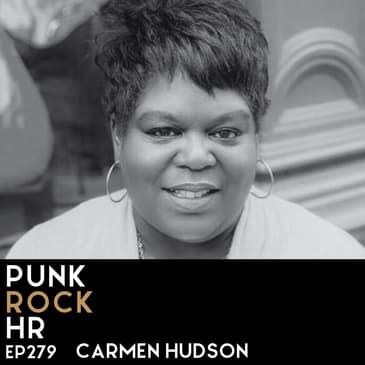
On this episode of Punk Rock HR, Laurie welcomes recruiter Carmen Hudson, author of The Corporate Recruiter’s Playbook, who shares the secrets behind effective hiring strategies. She challenges the outdated reliance on question banks, highlighting understanding core skills and behaviors needed for a role before crafting interview questions. It is a must-listen for recruiters, leaders, and HR professionals eager to attract and assess top candidates with a balanced approach that integrates both professional and personal insights.
Carmen Hudson shares her career path, from executive search to launching her own startup, reflecting on recruiting challenges. With market variability and economic shifts constantly altering the playing field, Carmen offers an optimistic perspective on the future. She discusses the impact of AI on job availability and provides foundational principles and best practices from her book to help recruiters and leaders navigate these changes successfully.
Laurie and Carmen’s conversation covers effective recruiting techniques and the complexities of diversity hiring. Carmen provides practical strategies for developing clear, jargon-free job descriptions and moving beyond superficial diversity measures to promote genuine inclusivity at all organizational levels. We explore how recruiters and hiring managers can reshape their approach to create a more inclusive and effective hiring environment in 2024.
Don't miss this discussion with one of the industry's leading voices.
In this episode, you will hear:
- Crafting interview questions based on core skills and behaviors and challenging conventional recruitment practices
- Carmen’s career journey from executive search to entrepreneurship
- The impact of AI and market changes on recruiting
- Clear communication with hiring managers
- Moving beyond outdated interview methods
- Focusing on essential candidate qualities
- Going beyond superficial measures and promoting genuine inclusivity at all organizational levels
- The importance of understanding the recruitment process
- Integrating technology with human elements
- Aligning recruitment strategies with organizational goals
- Carmen’s perspective on question banks
- The role of AI in job availability
- The importance of candidate experience in the recruitment process
- Misconceptions around meritocracy in diversity hiring
- Practical strategies for fostering a more inclusive hiring environment
Resources from this Episode
- Visit Carmen Hudson’s website: carmenhudson.com
- Connect with Carmen on LinkedIn: www.linkedin.com/in/carmenhudson
- Get The Corporate Recruiting Playbook book: amzn.to/3V3xKOr
Follow and Review:
We’d love for you to follow us if you haven’t yet. Click that purple '+' in the top right corner of your Apple Podcasts app. We’d love it even more if you could drop a review or 5-star rating over on Apple Podcasts. Simply select “Ratings and Reviews” and “Write a Review” then a quick line with your favorite part of the episode. It only takes a second and it helps spread the word about the podcast.
Episode Credits
If you like this podcast and are thinking of creating your own, consider talking to my producer, Emerald City Productions. They helped me grow and produce the podcast you are listening to right now. Find out more at https://emeraldcitypro.com Let them know we sent you.
Powered by the WRKdefined Podcast Network.
[00:00:00] The classic way to interview people is to a stop before you interview them and understand what you're looking for
[00:00:06] so people spend so much time thinking about the questions and developing questions, and they have question banks and
[00:00:14] that's the first kind of
[00:00:17] Work that we get asked to do at recruiting toolbox. Can you work on our question banking my
[00:00:23] Answer is no a I hate that work and be that's not what you need
[00:00:29] What you need is a better understanding of what it is that you're looking for
[00:00:32] You're looking for all these questions because you haven't sat down and said
[00:00:35] These are the five skills that are most important to me. And these are the behaviors that are important to me
[00:00:40] These are things that I want. This is the way that I need someone to work on my team in my company
[00:00:46] Hey everybody, I'm Laurie Ruettimann and this is Punk Rock HR in each episode
[00:00:52] We take a realistic but slightly cynical approach to fix and work
[00:00:57] Bringing you raw and honest conversations with
[00:01:00] Disruptors innovators and even random working people like you and me with one goal to reshape the workplace as you know it
[00:01:08] But sometimes we take a break from all that and talk about real life like relationships and well-being and kids and animals
[00:01:15] And along the way we drop a few f-bombs, too
[00:01:18] whether you're an HR professional trying to do the right thing a leader looking to connect with their people or just
[00:01:25] Fascinated by workplace dynamics. This is your destination to fix work once and for all on this episode
[00:01:33] I'm chatting with Carmen Hudson
[00:01:36] She's an acclaimed recruiter has worked with leading brands on the West Coast and is the author of the corporate recruiting playbook
[00:01:44] strategies for hiring top talent
[00:01:47] she's on the show today to share what she's learned how recruiters leaders HR hiring managers and
[00:01:54] Everybody at work can work together to attract find assess and hire top talent
[00:02:01] So if you're curious about hiring and want to learn how to do it from a pro
[00:02:07] Sit back and enjoy this chat with my good friend
[00:02:10] Carmen Hudson
[00:02:12] Hey Carmen, welcome to the show. Hey Laurie. Thank you for having me. My goodness. It's a long time coming
[00:02:21] I'm trying to think about when I first met you and it must have been like 2008
[00:02:24] Oh, I remember exactly when I first met you you do. What was it? It was about 2008 2008 2007 and
[00:02:31] I wrote you a you said something online about I'm thinking about going back into corporate
[00:02:38] This is hard and I wrote you a long email had never spoken to you before
[00:02:42] I don't think I'd ever tweeted to you and nothing about how you shouldn't do that
[00:02:47] And I gave you all kinds of unasked for advice
[00:02:52] You know what a blessing and I have to say I've had those panicked moments since then
[00:02:58] but
[00:02:59] Wow, that is an amazing way for the two of us connect. You know the minute I met you in real life
[00:03:04] I knew we were kindred spirits. I've just fallen deeply in love with you with your husband William
[00:03:10] You're someone who influences me not only in the world of like recruitment and hiring but just how to live a good life
[00:03:16] That's balanced that's principled and also how to bring art into my life
[00:03:20] So before we get started talking about all the good stuff
[00:03:23] Why don't you tell everybody who you are and what you're all about sure thing
[00:03:25] So my name is Carmen Hudson, and I have been I will call myself just a recruiter
[00:03:32] since the mid 90s, so I started off in executive search just doing research and
[00:03:39] That it eventually launched a career in
[00:03:41] Sourcing and moved out to Seattle and
[00:03:45] Spent some time a little bit of time in Florida, and I found myself working for
[00:03:51] really super large
[00:03:53] Corporations with great reputations and huge hiring engines and so I got to in many cases
[00:04:00] experiment and build and
[00:04:03] Improve and so I really have enjoyed my
[00:04:06] Career inside of companies and then I switched you may remember
[00:04:10] I think we met around the time that I launched my own startup that lovely experiment that died a couple of years
[00:04:17] Wait, but the party was memorable the party is
[00:04:23] I learned so much. It was the most failure of biggest failures, but I learned so much
[00:04:29] so I would never ever ever regret doing one one moment of that and
[00:04:33] Consulting and training and so consulted and trained for many many years and
[00:04:39] Went back into a corporate role for a very short term and left that and wrote a book
[00:04:46] Well, I'm excited to talk about you as an author. I mean true and true. You are a recruiter
[00:04:51] I mean this is in your bones. It's in your DNA. You've been recruiting since the last century
[00:04:55] So like you've been doing it for a minute
[00:04:57] What is it that you're doing that you're so passionate about?
[00:05:00] What is it about recruiting that was true done and is true today
[00:05:04] It's true that it's difficult and it's difficult because there are so many
[00:05:11] There are so many variables
[00:05:13] So you could have the same role the same role could be open and you could go out to the market
[00:05:18] The markets different it may be that these people were very highly and steadily employed
[00:05:23] And so it's a competitive event or it could be that many people are on the market as maybe the same
[00:05:28] People are on the market as maybe the case with recruiters right now. And so it is not as competitive
[00:05:34] It may be that the role that you're hiring for may look different than it looked last year
[00:05:39] It could be just that the people that you are meeting meet your needs don't meet your needs you like them
[00:05:44] You don't like them. They like you don't like you all of these factors
[00:05:49] Actually influence how and when and and who we hire and so that just will never change
[00:05:56] Well, you know there are consistencies within recruiting even when there are a lot of variables and one of the things that struck me in
[00:06:03] My career is that back in the late 90s?
[00:06:05] We were talking about like how hard it is to hire people and we're talking about that today, right?
[00:06:10] And then we talk about oh the economy is terrible in the late 90s
[00:06:14] Right and the economy in some sectors of our country is terrible today, right?
[00:06:18] But it's always true that people are hiring isn't it? It's always true. I'm a little bit cautious
[00:06:25] Because I see AI creeping into what we do and I think that's going to mean
[00:06:31] Quite a few job losses now. It will mean that other
[00:06:35] professions will rise and we'll see increases but the truth of the matter is a
[00:06:41] Lot of the work that in in the same way that some work has gone away in our in the last decade or so
[00:06:47] If you go into your local Target or convenience store these days, you don't see as many
[00:06:53] Cashiers and that's not going to change they will improve that until there are no cashiers
[00:07:00] Yeah, they can't make it any worse. That's for sure. They can't make it any worse
[00:07:03] I do my I I do my bet my part by
[00:07:06] When I go to the Safeway, I go to the line with the person in it and my husband doesn't understand
[00:07:12] It takes so much longer. It's a long line. It's like it's the one thing I can do, you know
[00:07:17] To save someone's job at least for a little while. So that's right. That's right
[00:07:21] So are you noticing that there are fewer jobs just generally because of AI or even fewer jobs within the world of recruiting? I
[00:07:29] Think there will be multiple attempts to get rid of what is a an expensive cost center
[00:07:35] Over time and so I think here locally in Seattle. We have a large employer and they are quite
[00:07:42] vocal about they are not
[00:07:45] trying to hire back as many recruiters as they once had and
[00:07:49] We are going to continue to experience experiences
[00:07:54] I think what will happen is, you know, we get rid of everyone then we go
[00:07:57] Oh, we need people we need them back, but they need fewer and fewer
[00:08:00] They start to introduce more solutions and suddenly we find ourselves with way fewer than we had
[00:08:06] So it's not that it's immediate. I think we're experiencing
[00:08:10] More of a financial market for most companies
[00:08:13] But eventually we will experience what happens when the knowledge market changes
[00:08:20] Wow, all right. Well, you know pivots in the economy pivots in the way that we're hiring and yet you wrote a really
[00:08:28] optimistic
[00:08:30] Really important book on the world of recruiting. Tell us about your book. So it's it really is I
[00:08:37] someone said I wish there was a place I could go to to
[00:08:41] Understand this and to to talk about this and there are places that we have online but it is
[00:08:48] The moment in time right when I go to that website when I visit that particular tool or what-have-you
[00:08:55] I'm going to get the information that's now but I wanted to share the things that at least I thought
[00:09:02] Were consistent across the board. I don't mention technology
[00:09:05] I think I mentioned LinkedIn a couple of times but that I don't really go into
[00:09:11] what tools that were that are
[00:09:14] important to use I really talk about what
[00:09:18] We need to do as recruiters and as recruiting leaders to set this thing up so that it works well
[00:09:24] So that if you've got five recruiters or you've got 500 or if you've got 2,500, how do you make sure this is?
[00:09:32] Running well that you're doing the right things that you're doing the right things by candidates that you're doing that you're partnering with your hiring managers
[00:09:38] Well, it's all those those basics that I learned as a junior recruiter and there was no
[00:09:45] There's no source for me like every single thing was a lesson
[00:09:48] I bumped my head on the wall so many times and I was very fortunate to work with
[00:09:54] Great people who knew like oh, she's trying. She's an idiot, but she's trying so and
[00:10:00] Over the years I figured it out and I captured at least what I could
[00:10:06] Remember to capture as that and so I say early on in the book if you find my book insufficient or you've got additional ideas
[00:10:14] Write it down share it. It was a
[00:10:17] little bit frustrating and time-consuming to write this but not so much that I
[00:10:24] Wouldn't do it again, and it was pretty easy to publish it. So
[00:10:28] If you've got some thoughts there share it I just want people to
[00:10:35] Really start to focus on what's the the entire process?
[00:10:39] There are sorcerers out there who are great at thinking about sourcing
[00:10:43] There are folks out there who are great at thinking about the candidate side of things
[00:10:46] We need all of it written down in one place so that people can start this profession
[00:10:50] With a little bit of knowledge because there's there's so little out there to teach people
[00:10:55] Carmen when people normally come on the show and present their book they tell stories, right?
[00:11:00] And they have all these like sound bites, right? Yeah. Yeah. So tell us in your book
[00:11:05] How did you decide how to structure it because you've really written what is like the Wikipedia of recruiting, right?
[00:11:11] So tell us tell us a little bit about how you built the book
[00:11:14] All right, so I wrote the corporate recruiting playbook strategies for hiring top talent
[00:11:20] You will find that on Amazon. I structured the book and
[00:11:24] The way that I that recruiting is structured
[00:11:26] So I start with a chapter that talks about the candidate experience, which it's not always the most exciting topic
[00:11:33] but at the root of what we do are the folks that we are
[00:11:38] Serving at the folks that we are trying to bring into our organizations and if we don't do that
[00:11:42] Well, we have very little chance of getting the high caliber candidates that we want. So wait
[00:11:48] wait, I want to interrupt because you start with candidate experience and not with
[00:11:51] shareholder experience or
[00:11:54] Leadership experience or hiring manager experience. You think the candidates are the people that recruiters serve?
[00:11:59] That's it
[00:12:00] If we don't find if we don't find the right candidates if we don't get the right candidates to the right manager for the right
[00:12:06] job, we're never gonna be successful. And so that's where I've always placed my emphasis and
[00:12:12] Probably because I think you're right. I think there are different ways of looking at this
[00:12:16] I think it probably
[00:12:19] impacted how my career flowed
[00:12:22] because I didn't think in the way that HR leaders thought for me if I had a
[00:12:28] An issue it was going to that manager
[00:12:32] That hiring manager and really working out. How do we solve this issue?
[00:12:37] Well, how do we solve this so that we're getting you the right person?
[00:12:40] So yeah, there are probably different ways of thinking about it, but that's where I started. Yeah. All right. So start with candidate experience
[00:12:45] What's next and then from there? I just dive right into how to do this. And so you get a rec it lands on your
[00:12:51] desk, what do you do next and
[00:12:54] I talked very deeply about what you do next really does
[00:12:59] Impact how you're viewed as a recruiter how your career will go
[00:13:02] And again, it took me a long time to figure this out and I'll tell you I didn't tell the story in the book
[00:13:07] But I'll tell you the story
[00:13:08] So I was at Microsoft and so by that time I've been into my recruiting career for quite some time
[00:13:14] and
[00:13:15] I had an open rec and I was excited about this rec showed up to the hiring manager
[00:13:22] with a blank notebook and
[00:13:25] ready to have a discussion and talk about things and
[00:13:29] Get this rec going. I thought we had a great meeting
[00:13:31] But later on I got I got copied on an email and I'm nosy
[00:13:37] So I read every email all the way down to the chorus
[00:13:39] And there was an email where this manager was complaining to my manager about my
[00:13:45] Ability to support her position because she wasn't certain because I showed up with a blank piece of paper and pretty general questions
[00:13:54] So, yeah that just struck I was a recruiters recruiter I loved what I did people told me I was good and
[00:14:00] Turns out oh I sucked. So from that moment on I was like, okay, how do I get better at this and
[00:14:07] What do I need to do to prepare for one of these meetings and so that became a
[00:14:12] Big deal and the difference between a great recruiter
[00:14:15] Yes, any hiring manager and an okay recruiter and an okay recruiter you need them
[00:14:20] So you're gonna smile at them in the hallway and you're gonna be nice to them
[00:14:24] But you know that they're they're kind of sucking and so you're not gonna say that to them
[00:14:28] You may say that to their manager and in this case I was
[00:14:32] Fortunate enough took me a couple days to get over it
[00:14:35] But I was fortunate enough to get the message that I wasn't that great
[00:14:37] And so that could have you know, I could have said oh, no, I'm really good or I could have said. Mm-hmm
[00:14:43] No, I'm not so great
[00:14:44] So let me figure this out
[00:14:46] And so I learned that you have to prepare for your open position before you meet with your manager
[00:14:52] you've got to learn as much as you can learn fill in as much as you can fill in and
[00:14:57] Show up in that meeting with some intelligence
[00:15:00] It could be all wrong, but yeah managers gonna appreciate the work that you put into it. No, I like it
[00:15:05] I mean, you don't want to walk into a meeting and say tell me everything right?
[00:15:19] But I didn't I didn't instill any confidence in her
[00:15:25] For her to have for me. So I didn't bring that
[00:15:28] It also reminds me that recruiting is really just relationships, right?
[00:15:32] It's both relationships with your organization and your hiring manager
[00:15:35] But also with the candidates and then bringing two people who don't know one another together to form a new relationship
[00:15:41] So in that if you're not building a relationship with your hiring manager, how can you then do that with candidates?
[00:15:48] Right. It doesn't it doesn't logically flow. That's it. I think I think that's that's the core of
[00:15:53] Of doing this well, but it's not only
[00:15:58] developing a great relationship with your candidates but developing a great relationship with your hiring managers and
[00:16:04] Asking your hiring managers to bring someone along in the process
[00:16:07] so
[00:16:09] One of the things that I advise is that you're hiring
[00:16:12] You don't work just with your hiring manager get your hiring managers a sex to like someone senior on their team someone who may be
[00:16:17] Hiring more often in the future so that they are learning as well
[00:16:21] So we're we're all three working well together and that works because then you have a backup person to when things aren't going well
[00:16:27] So but when someone to email and say where where is that feedback, right?
[00:16:33] That for me is that was the key lesson it changed the way that I recruit and it changed the way that
[00:16:42] That I think managers view and work with me
[00:16:44] All right
[00:16:45] So be prepared when you meet the hiring manager after you get the rec on your desk
[00:16:50] Like I got it totally makes sense
[00:16:52] But then what next because you don't talk about technology in the book, which I appreciate because technology comes and goes right?
[00:17:00] But how do we know that what we're doing in recruiting is effective?
[00:17:05] How do we know that the next steps were taking set us up to close the rec?
[00:17:09] Within you know six months or a year right some of these recs stay open forever
[00:17:13] Some of them stay open forever. So that we know we're doing good work
[00:17:16] That takes me to a couple of the next couple principles. I talked about the first is you have to know what you're looking for
[00:17:22] and
[00:17:23] In recruiting I have had recruiters who have never had a conversation with the hiring manager go
[00:17:28] Oh, I know what they're looking for
[00:17:29] They look for this last month and they don't have this discussion and their understanding of the rec is minimal at best
[00:17:36] So I suggest in the book how to actually figure out what it is that you're looking for
[00:17:41] you have to be very articulate about what it is that you're looking for and most recruiters are not especially in the world that I
[00:17:48] lived in in tech recruiting and
[00:17:50] You need that for several reasons you need that so that you can know when you find someone
[00:17:54] But you also need to have a great way of describing the position to the candidate
[00:18:00] And so, you know
[00:18:01] We use job titles and we use jargon throw all that out the door and talk to me about what exactly you're hiring for
[00:18:09] You know
[00:18:09] I like the fact that we're talking about
[00:18:11] Speaking in a jargon free way because one of the things that comes to mind is all of the biases we bring
[00:18:18] To the hiring process in and of itself and sometimes it manifests in that jargon, right?
[00:18:23] You we don't have to have a conversation that's long and detailed about the many ways that words
[00:18:28] include and exclude people but talk to me a little bit about the importance of actually being more thoughtful in the way we
[00:18:35] Describe jobs in the way we go out to the market and describing jobs because I know we don't call people ninjas and gurus anymore
[00:18:43] But there are other versions of that other iterations that are out there. So why is monitoring our language so important?
[00:18:49] I think it's important because when we find ourselves doing that when we're using ninja and guru and I
[00:18:55] Want at someone who does Java blah blah blah
[00:18:58] It's masking what we don't know
[00:19:01] That hurts us in our ability to recruit and if we don't know
[00:19:06] If we haven't had that deep conversation with the manager you say that you need someone with five years of this
[00:19:12] What if they have four years? Well, they have four and a half years, right? Oh, that's okay
[00:19:16] Well, what if they have three years, but they still know this?
[00:19:19] How do you know that they know it?
[00:19:21] That's what's more important than the number of years. So let's talk about that
[00:19:25] So getting your hiring managers to think about roles beyond years beyond specific skills
[00:19:31] what do you want them to do and then we can figure out in
[00:19:35] whatever kind of interview style that you want have they done this in the past and
[00:19:40] If we were to give them something that they haven't faced before would they be able to meet that challenge?
[00:19:45] Are you wedded to a particular style of interview?
[00:19:49] I'm so glad you brought that up because I was brought up in the late 90s
[00:19:52] All right, so we did the star based method of interviewing even for technical jobs
[00:19:56] It's like give me an example of a tub blah blah blah and it was a stupid forced practice conversation
[00:20:04] So like what's cool? What's hip or just like what's a classic way to interview people?
[00:20:09] The classic way to interview people is to a stop before you interview them and understand what you're looking for
[00:20:15] so people spend so much time thinking about the questions and developing questions and they have question banks and
[00:20:23] that's the the first kind of
[00:20:25] Work that we get asked to do at recruiting toolbox. Can you work on our question bank? And my
[00:20:31] Answer is no a I hate that work and be that's not what you need
[00:20:37] What you need is a better understanding of what it is that you're looking for
[00:20:40] You're looking for all these questions because you haven't sat down and said
[00:20:43] These are the five skills that are most important to me. And these are the behaviors that are important to me
[00:20:49] These are the things that I want
[00:20:50] This is the way that I need someone to work on my team in my company and we don't do that
[00:20:55] So we don't think about the answers. We're just thinking very deeply about all these great questions
[00:20:59] I don't care how you ask the question if you're looking for five skills and you're talking about
[00:21:04] Whether or not they've used those skills or how they might use those skills of the situation presented itself
[00:21:09] Then you're going to know whether or not they are appropriate for the role
[00:21:14] It doesn't matter how you ask the question to be honest. I don't talk about that much at all
[00:21:19] I love that. I love that. Can I tell you my least favorite way my least favorite interview style is role-playing?
[00:21:25] Oh my god, Carmen one time
[00:21:27] I was interviewing for a job at a shampoo company by the way
[00:21:30] I got that job and they said okay
[00:21:32] We're gonna give you a resume and we want you to pretend
[00:21:35] Like you're in an interview and you're interviewing me and you're looking at the resume and doing the interview live, right?
[00:21:40] You're the recruiter and I said, I'm not gonna do this and she said well
[00:21:45] How will I know if you know how to recruit I said call my references or ask me some other questions, right?
[00:21:49] I don't know what to tell you but I'm not role-playing and she said okay. I hear you. You know like moved on
[00:21:56] It gives me the opportunity to go go completely silly and off the course and just share with someone how ridiculous
[00:22:03] What's interesting to me?
[00:22:05] And I think this was when I was at Amazon
[00:22:08] We got into this big debate about
[00:22:10] The kinds of questions that we asked some of our technical people and whether or not they asked all of those crazy questions about
[00:22:16] You know, how many boats are there? How many windows are there in Seattle? Yeah, the Google questions
[00:22:21] Yeah, exactly. And I think those are ridiculous
[00:22:24] I think that what many of those
[00:22:27] Engineers were trying to get to was whether or not someone had the kinds of skills that would be necessary to break down a problem
[00:22:33] So what would be better is to actually present a problem and watch how they break it down
[00:22:38] And if even better that's good and even better or best is actually to take a look at some problem that you have around
[00:22:46] Amazon something for which you actually have an anchor
[00:22:50] And you can learn about how that person breaks down a problem whether or not they know the number of windows
[00:22:57] there are in Seattle is is
[00:22:59] Ridiculous and anyone can ask that question and I'm sure they could find it these days on any website
[00:23:05] So it's really about how do they solve this kind of problem? What tools like do they use what approach might they use?
[00:23:10] How many people will they talk to and know that?
[00:23:14] Oh, this person is gonna sit at their desk and they're gonna fiddle with it and research it until they figure it out
[00:23:19] If that's the kind of environment you work in great
[00:23:23] Or this person is going to first call someone ask someone get their their network of people involved in this problem
[00:23:31] That's the kind of
[00:23:34] That's great, but you gotta figure it out I like that example one of the things I hear from
[00:23:40] Technical job seekers, you know people with actual really great skills that we're gonna need in the future who are young
[00:23:46] They hate being asked to do free work
[00:23:49] And so they'll go on these interviews and they're given a problem to solve and they're like well pay me and then I'll solve that
[00:23:55] Problem for you, right?
[00:23:56] And so there's this disconnect with the candidate experience because it almost seems like some employers are looking for free
[00:24:03] Work early. That's how it feels to some job seekers. So do you push back on that?
[00:24:09] Do you think that's overstated like what's your reaction to here?
[00:24:12] And have you heard that before I have I have and that's where you can be really helpful as a recruiter and tell them look
[00:24:18] We're not gonna put any problem in front of you. That is proprietary
[00:24:22] You're not gonna be solving anything that we haven't already solved so assure them of that and that should be true, right you don't want
[00:24:29] People unknown to your company going out solving your problems
[00:24:33] Otherwise, you're gonna have a startup that pops up suddenly that does something that you are asking about so you don't do it
[00:24:39] Very well
[00:24:39] So you want to make sure that they understand why and so that's the job of the recruiter to explain
[00:24:46] Here's our process and here's what we're looking for how you problem-solve the problem itself doesn't matter
[00:24:52] And if we don't have this conversation, we don't have any idea of how you might go about
[00:24:57] Solving a problem. We're not gonna ask you anything proprietary
[00:25:00] You're not gonna ask you to come up with you know
[00:25:02] A new way to get to the moon we're going to ask you about something that we've already done
[00:25:06] Something about which I'm pretty sure of the answers
[00:25:10] Carmen I know you have a lot of points of view and they're all informed
[00:25:15] But I know you're passionate about talking about people versus operations versus process. Tell me about that
[00:25:21] So in order what I learned after all these years in recruiting that you need all three
[00:25:26] That as a leader if you are building out your recruiting organization
[00:25:32] You need great people
[00:25:34] You need great managers that are trained on the process who understand it you need the tools
[00:25:40] So your operations need to be aligned and they should be accurate and easy. It should be easy to
[00:25:48] For example, Oh start a wreck open a wreck
[00:25:51] And I have worked in organizations where that was just the most difficult thing in the world. So fix that
[00:25:58] That's what you need
[00:25:59] And then you need a process you need a process that works well for every single team and
[00:26:05] You can't do it all as the leader. So you're going to have to get your teams worked on that working on that
[00:26:10] but it's important to
[00:26:12] Make sure that you have all of these elements aligned if you don't you're going to find yourself always
[00:26:19] Under the gun always feeling less successful than you really think you should be
[00:26:24] And so that's what you've got to get everybody aligned on
[00:26:26] Do I am I bringing the right candidates in and I approaching my hiring managers in the right way?
[00:26:31] Do I have the right team of recruiters great?
[00:26:35] Then it is and are we leveraging the right tools?
[00:26:38] Are we getting things done in an efficient way and the last piece is how are we doing that?
[00:26:44] And what does that look like for each team?
[00:26:46] How do we make sure that every team is successful in the process that they leverage?
[00:26:50] The process might look a little bit different depending on the level and the kinds of goals
[00:26:55] But generally you should have an idea of how the process works for your organization
[00:27:00] Yeah, I mean I like that. I set the question up like a versus problem and it's really more of an integration
[00:27:06] It's more of a Venn diagram
[00:27:07] And I think the reason why so many of us see this as like an antagonistic
[00:27:12] process is because many companies these days want to over index on technology and
[00:27:17] Cut back on the recruiters or believe that if they have a process the process should dictate everything and just step in line
[00:27:24] Get on, you know get on the bus and then we'll fill this wreck
[00:27:27] And so I just yeah, so I just wonder who's doing it, right? Who's got all these things aligned
[00:27:33] There are there are teams that are doing I don't know that there are organizations that are doing it all correctly
[00:27:38] But there are teams that are doing it. Well, and
[00:27:40] When I was at recruiting toolbox, we'd have very in-depth conversations and we'd always come back to
[00:27:47] Okay, I get it
[00:27:48] I don't have the right people or I haven't trained my people where my managers don't understand this or they come back to I
[00:27:55] Need to invest and I need to buy that tool or it could be you know
[00:27:59] What we have to stop and we have to redesign or it could be all three
[00:28:02] so that's how I would filter what was coming in to me and
[00:28:08] Then we would decide where they wanted to you know, spend their money and place your emphasis makes sense makes sense
[00:28:14] well, there's one thing I want to talk about because
[00:28:17] It's something I know that you're passionate about discussing in a very frustrated way
[00:28:23] And that is the back-and-forth swinging pendulum around
[00:28:27] diversity recruiting and diversity hires
[00:28:30] And I think one of the things you're really passionate about is explaining what diversity hiring
[00:28:35] Means and then also what it is and what it isn't
[00:28:38] So you've written some really great articles on LinkedIn that as you said tend to come up every year on Black History Month
[00:28:45] Right, you know so we can also talk about that and why people only read them then but can we talk a little bit about?
[00:28:51] Your perspective on diversity recruiting diversity hiring and what recruiters need to know in 2024. So my first
[00:28:59] Comment when someone comes to me and says we need to
[00:29:03] Do diversity hiring is
[00:29:06] Okay
[00:29:07] let's take a look at your organization and see where diversity sits and
[00:29:12] Often that conversation sits with oh, we're a technology organization
[00:29:17] And we go here and go here and go here and at the very lowest level. There's tons of diversity and
[00:29:23] So for me diverse your first
[00:29:27] Question about diversity
[00:29:29] means that you need to look at who is diverse in your organization and figure out how to get them in other parts of
[00:29:36] The company and I don't think that's changed much
[00:29:40] I think it is the case and I think many companies rely on those numbers to say hey we have diversity
[00:29:46] But as you look at different levels within your organization, do you really have diversity? And if you don't why are
[00:29:56] Certain people sitting at the lowest
[00:29:59] Rungs of your organization without ever moving without having the opportunity to move a lot of it is they don't know how
[00:30:06] a lot of it is a bit a bridge needs to be built and
[00:30:09] You can't blame an entry-level person for not understanding how things work
[00:30:14] So that's that is the biggest I think fallacy is that we have no diversity
[00:30:20] There's often diversity in organizations
[00:30:22] But it's often that sitting at the very lowest levels and there hasn't been much effort into moving people into other roles other levels
[00:30:29] I think that's charitable
[00:30:32] And I mean, I
[00:30:34] Mean you're a you're a supremely charitable human being. I also think that sometimes
[00:30:40] There's this idea of a meritocracy and that I'm all for diversity hiring if they're good
[00:30:47] Oh that oh that
[00:30:49] You still hear it today in 2024. I still hear it and I hate the word meritocracy
[00:30:54] Yeah, yeah, so tell me about that. So I think that
[00:30:58] So I'll give you an example
[00:31:01] when I was at a certain
[00:31:04] company I
[00:31:05] Decided that there was no gender diversity in a team. And so I started just to
[00:31:12] to only
[00:31:14] send
[00:31:15] candidates of a certain gender to
[00:31:17] certain areas and
[00:31:19] hiring decisions were made and
[00:31:22] There was very little even recognition of what I was doing a couple managers said a how come I haven't seen any men
[00:31:31] Just because you haven't right and so then I tried the the same experience the experience racially and
[00:31:39] I did that I happened it happened to coincide with
[00:31:43] There was a layoff at a very big company. It's a very different industry
[00:31:47] So there was probably some work that I should have done to prepare these people to move into a different industry
[00:31:53] That did not work as well
[00:31:56] That was a little bit that became
[00:31:59] Noted a little bit more
[00:32:02] And I was not as successful
[00:32:04] in that approach, so I think that this idea that there's meritocracy I think
[00:32:12] The way that you pull that apart is just what we talked about
[00:32:15] I'd go right back to standing at the very beginning of the rec and let's talk about what you need and
[00:32:22] Doing being able to have that conversation really well
[00:32:25] and then there are skills or words or phrases or behaviors that knock people out and they do so
[00:32:32] without
[00:32:34] this kind of
[00:32:36] Knockout process can hurt people who are diverse often
[00:32:41] And so you have to knock that out early on
[00:32:43] Or you have to be able to say that doesn't meet the profile that we originally
[00:32:48] Developed are you telling me that it's changed and if it's changed
[00:32:52] then we've got to go back and start over because we haven't interviewed any of these candidates in the right way and that usually
[00:32:59] Gets managers to sit back and go. Okay. I'm talking about something. That's not
[00:33:04] Relevant. I'm talking about I'm demanding a skill from one person that I'm not demanding from the other person. So
[00:33:11] Getting managers to really just go back fall back on their own word. It's the only way that I've been able to do it
[00:33:18] I like it sometimes it works and sometimes it doesn't
[00:33:21] Well, and I like your punk rock subversive approach there. I mean when it works it works and when it doesn't it doesn't but
[00:33:30] You're only you're only one person
[00:33:32] Only one person. I am NOT gonna walk into any company and change their numbers if they're not willing to do it
[00:33:40] And I have worked with many managers who were willing who were willing to say, okay. I'm not doing this, right?
[00:33:47] I am putting barriers around getting roles on my teams. And so let me take some of those barriers away
[00:33:53] Well Carmen as we start to wrap up the conversation you've written this really amazing book
[00:33:58] What do you what do you want people to know about the book?
[00:34:00] What do you think is really important for them when they're trying to figure out am I gonna plunk money down, right?
[00:34:05] Am I gonna buy this book about recruiting?
[00:34:07] What's in it for them what's in it for them is I think for those who have been recruiting for a long time
[00:34:14] It's just a checklist. Am I doing this? Well, am I doing this?
[00:34:17] Well, could I be doing more here and for those who are newer to recruiting? It's an approach. It's my approach
[00:34:24] It's what's worked for me. It's worked what's worked for people on my team. It's what I've learned over the years
[00:34:29] I haven't always done all of this at at any one time
[00:34:31] So hopefully it gives you a little bit of a head start if you're newer in your career
[00:34:36] So that's that's that's all I want to do. That's what I want to do. I love it
[00:34:41] It's like an act of giving back to the recruiting community because you yourself had to learn these lessons the hard way, correct?
[00:34:47] That's it. That's it. Yeah
[00:34:50] Carmen one of the things I really want to know is who inspires you in the world of recruiting right now
[00:34:56] I mean you inspire so many people but who do you look to who is doing it?
[00:35:00] Right or makes you feel hopeful like what's what's good? Who's good? What do you like?
[00:35:05] I had the
[00:35:09] The just the pleasure of working with some really great leaders in recruiting in my career and
[00:35:15] So and many of them I mentioned in the thank yous and then some of them I wake up in the middle of night
[00:35:20] And I think oh my god, I left them out but
[00:35:23] Just throughout my career. I have worked with people who
[00:35:28] have said
[00:35:29] when I said I raised my hand and I want to do this and I want to do a good job or
[00:35:34] When something went wrong, I'm here in front of you to say I did it did it wrong. So sorry
[00:35:41] They were quite willing to lean into it and say here. I got you. I'm going to help you
[00:35:47] I'm going to point you in this direction
[00:35:49] I'm going to give you praise when I think you need it
[00:35:51] I'm gonna tell you stop doing that when I need you to stop doing that and I
[00:35:56] I don't want to start to name them because I'll forget someone
[00:36:00] I get it. It's like an Oscar speech. Yeah, I'm with you
[00:36:03] But the one thing we can say is that our dear friend Jerry Crispin wrote the forward to the book
[00:36:07] So tell us a little bit about Jerry and why you picked him to write the introduction to the book
[00:36:12] I appreciate the fact that that Jerry thinks about
[00:36:16] recruiting as a profession that
[00:36:18] It is really the backbone of almost any organization are the people that are there and out of the people who get there get there
[00:36:26] How are they formed? How is it shaped and he values the importance of that and I value the importance of that
[00:36:33] Well, I value both of you and I can't wait for you to get out there and teach people how to recruit
[00:36:39] With your wonderful new book. So first of all, can you tell us again the name of the book title and where to buy it?
[00:36:45] And also are you available to do webinars and workshops? Like what are you doing with the book? So awesome
[00:36:51] so the corporate recruiting playbook
[00:36:53] Strategies for hiring top talent. It's available on Amazon and
[00:36:57] My next so I'm going to spend the next
[00:37:01] Probably two or three months really figuring out what I want to do next, but I think what I want to do is
[00:37:07] coach
[00:37:09] Recruiters recruiters who are moving into recruiting leadership roles
[00:37:13] And so I'm coming up with an approach to doing that and I haven't really shared that with people
[00:37:18] That should be breaking news here breaking news breaking news, but looking at those people who are
[00:37:25] Managers new managers or recruiters who want to move into leadership really helping them get there. So I
[00:37:35] Am super stoked to hear about this and I just have a question
[00:37:38] What's the differentiator because we know there are certain skills and attributes between like a regular contributor like in a manager or a director
[00:37:46] Right, but what's the difference between a recruiter and a recruiting manager or recruiting manager and recruiting director?
[00:37:53] Is it the technical knowledge of recruiting or is it something else?
[00:37:56] I think the technical knowledge of recruiting is critically important, but it's also that
[00:38:03] Recognition that desire that this could be done better and I want to work on doing it better
[00:38:09] And I had no idea. I literally Scott Patosky at at Amazon
[00:38:15] Literally stopped me in the hall and said hey, you know what you're a manager and I had never even thought like I
[00:38:22] Thought that was years away and I'm like me a manager and he's like, yeah
[00:38:26] You're a manager and go solve these problems and you know, some I did some I didn't some are probably still sitting around there
[00:38:33] Waiting to be solved. But I
[00:38:36] Sound has moved on with their problems
[00:38:39] But what an example of a leader in and of itself like Scott Patosky understanding that
[00:38:44] It's not just about recruiting externally
[00:38:46] But also looking at your team and motivating your team and seeing the best in them and trying to develop talent internally, right?
[00:38:52] Most people are playing checkers. He was playing chess. He's playing chess and he's up. That's just the way that he's always operated
[00:38:59] it's it's interesting because
[00:39:02] At some point in recruiting you realize either you love it or you hate it and you can't wait to get out of it
[00:39:08] so
[00:39:10] Understand that as quickly as you can and then lean into that. But yeah, I'm excited
[00:39:15] I'm excited about this coaching idea. You got I think there's a lot of legs on it
[00:39:19] So yeah, listen when that is fully baked and you're ready to talk about it. Will you come back on punk rock HR?
[00:39:25] Absolutely, and I'll share more on Carmen Hudson calm. I finally got my own name is my website. Oh my god your own
[00:39:32] Girl now, well listen Carmen. It was really amazing to have you on the program
[00:39:36] We'll put all of that good stuff in the show notes. And once again, I just want to say thanks for coming up
[00:39:40] Well, thank you for offering to talk to me about this. I'm really getting into how I market this book
[00:39:46] So I really appreciate really appreciate you Laurie just for many many years
[00:39:52] How'd to know you I'm so proud to watch your good work and you know
[00:39:57] Whether you're taking fiction writing classes or just, you know reading Jane Austen
[00:40:01] Thanks again for being a guest. Absolutely. Thank you Laurie. Thanks. Hey everybody
[00:40:06] I hope you enjoyed this episode of punk rock HR show notes and more can be found on punk rock
[00:40:13] Hr-com this episode was expertly produced by Emerald City Productions and we would all appreciate it
[00:40:20] If you left us a five-star review
[00:40:23] so go to wherever you stream your podcast like Apple or Spotify or iHeart Radio and
[00:40:29] Leave that five-star review and your thoughts on the episodes themselves
[00:40:34] Now that's all for today, and I really hope you enjoyed it. We will catch you next time on punk rock HR
Sponsors
