
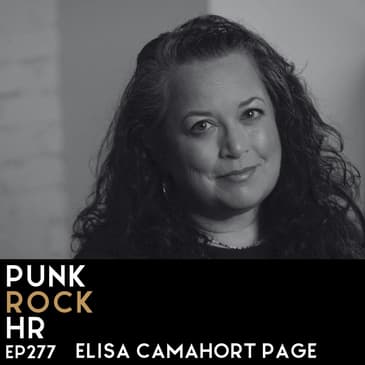
On this episode of Punk Rock HR, discover the secrets to aligning your career with your personal values as Laurie chats with BlogHer co-founder Elisa Camahort Page.
We walk down memory lane, reminiscing about the early internet days that revolutionized communication and fostered female empowerment through blogging. Elisa and Laurie’s conversation is a goldmine for understanding the delicate balance between nurturing a company's growth and adhering to your original mission—even when boardroom battles and investor pressures loom large. Plus, we get the inside scoop on Optionality, Elisa's latest venture with Jory Des Jardines, which reimagines professional communities for those who want to weave their values seamlessly into their work lives.
Prepare to explore the evolution of workplace culture, where the gig economy and the Great Resignation have reshaped our expectations for flexibility and meaningful work. Through the lens of Elisa's extensive experience, we discuss the transformation from online arenas full of bots and trolls to intimate sanctuaries crafted within platforms like Substack and Slack. Learn how these digital spaces nurture a new breed of online communities—private, controlled, and rich with engagement.
Whether you're a corporate veteran, an HR aficionado, or a solopreneur, this episode is your gateway to understanding and shaping the digital workplace of tomorrow.
In this episode, you will hear:
- Elisa Camahort Page’s reflections on the early internet's role in female empowerment and community building through blogging
- The balance between company growth and staying true to original missions, even under investor pressures
- An introduction to Optionality, a venture aimed at redefining work-life integration and aligning careers with personal values
- Evolving workplace culture and the impact of the gig economy and the Great Resignation on expectations for work flexibility.
- The transition from public online platforms to private, controlled digital spaces like Substack and Slack
- The shift towards intimate, engagement-rich communities
- Elisa's path from corporate tech to media and her desire to build a product with intrinsic value
- Optionality and its aim to be a community-driven platform that fosters collaboration between workers seeking flexibility and companies adapting to the future of work
Resources from this Episode
- Visit the Optionality website: optionality.life
- Elisa Camahort Page’s website: elisacp.com
- Connect with Elisa on LinkedIn:linkedin.com/in/elisacamahortpage
Follow and Review:
We’d love for you to follow us if you haven’t yet. Click that purple '+' in the top right corner of your Apple Podcasts app. We’d love it even more if you could drop a review or 5-star rating over on Apple Podcasts. Simply select “Ratings and Reviews” and “Write a Review” then a quick line with your favorite part of the episode. It only takes a second and it helps spread the word about the podcast.
Episode Credits
If you like this podcast and are thinking of creating your own, consider talking to my producer, Emerald City Productions. They helped me grow and produce the podcast you are listening to right now. Find out more at https://emeraldcitypro.com Let them know we sent you.
Powered by the WRKdefined Podcast Network.
[00:00:00] But also, I wanted to not go down the path again of having decisions dictated by short-term
[00:00:07] objectives of external people.
[00:00:10] And what I mean by that is that as soon as you take funding, you are driven by what's
[00:00:14] happening at your next board meeting.
[00:00:16] The same is true for public companies, by the way.
[00:00:18] They're totally driven by what did they say at the last investor call?
[00:00:22] How does it look for the next investor call?
[00:00:24] What do you got to do to look good for the last investor call? How does it look for the next investor call? What do you gotta do to look good
[00:00:25] for the next investor call?
[00:00:27] Our whole culture, our whole business culture
[00:00:29] is really distorted and I think not helpful
[00:00:33] to be thinking about short term,
[00:00:36] how they look for external people.
[00:00:39] And I just didn't wanna be in that position again.
[00:00:41] I wanted to just focus on organic growth
[00:00:44] and doing what we thought was right
[00:00:47] and see where it goes and be able to be in collaboration
[00:00:51] with the community then because they're the ones,
[00:00:54] they're the ones who butter our bread.
[00:00:57] Hey everybody, I'm Lori Bruteman
[00:00:59] and this is Punk Rock HR.
[00:01:02] In each episode, we take a realistic
[00:01:04] but slightly cynical approach to fix and work, bringing
[00:01:08] you raw and honest conversations with disruptors, innovators, and even random working people
[00:01:13] like you and me with one goal, to reshape the workplace as you know it.
[00:01:19] But sometimes we take a break from all that and talk about real life like relationships
[00:01:23] and well-being in kids and animals.
[00:01:26] And along the way we drop a few F-bombs too.
[00:01:29] Whether you're an HR professional trying to do the right thing, a leader looking to connect
[00:01:34] with their people, or just fascinated by workplace dynamics, this is your destination to fix work
[00:01:42] once and for all.
[00:01:44] On this episode I'm speaking with Alisa Camajor page,
[00:01:47] co-founder of the legendary blog, Her Empire.
[00:01:51] Together with Jory Desjardins,
[00:01:52] they've now launched Optionality.
[00:01:55] Optionality is a community that's redefining work
[00:01:58] for people like you who are eager to mix their passions
[00:02:01] with professions in a supportive space.
[00:02:04] It's all about crafting careers that fit our lives and goals.
[00:02:08] So if you're curious about working differently, please sit back and enjoy
[00:02:12] this chat with Alisa on this week's Pump Rock H-R.
[00:02:23] Hi Alisa, welcome back to the podcast.
[00:02:25] Hi, Laurie. Thank you so much for having me back. I've been looking forward to this.
[00:02:29] Oh, it's my pleasure. Listen, you're such a good sport to always indulge me when I have
[00:02:33] crazy ideas or I'm doing things in the world. So I'm super stoked to have you back. And
[00:02:39] before we get started talking about the good stuff, why don't you just remind everybody
[00:02:43] who you are and what you're all about?
[00:02:46] Well, my name is Elisa Camohart Page. About 19 years ago, I co-founded, can't believe
[00:02:52] that, co-founded a company called Blog Her with two other women, Joy Desjardins and
[00:02:56] Lisa Stone. And that was a women's media company that created the business model for women
[00:03:03] who were at the beginning, just bloggers, and then
[00:03:05] over time, social media entrepreneurs and influencers.
[00:03:09] And really, I think that's where influencer marketing started.
[00:03:13] And either you're welcome or I'm sorry.
[00:03:16] Well, a veteran of that community and someone who just watched it grow in awe, I would say
[00:03:22] that you're either to blame or to praise for mommy bloggers.
[00:03:27] And I know there's been a lot written about that.
[00:03:29] But can we just start right there?
[00:03:30] Because I think that's interesting.
[00:03:31] What were those early days of the internet like for you, the social web, as we know it?
[00:03:37] Well, the early days of the social web were, I was a digital utopian.
[00:03:43] Now, to be clear, I wasn't surprised when things started
[00:03:45] going awry. My first experience with online community were tracking the stock, the Yahoo
[00:03:52] groups around stocks when I worked for public tech companies. And there was some absolutely
[00:03:57] vicious conversations happening, all arguing over stocks. It was crazy to me. And so I
[00:04:02] can't say I was surprised when things went a little awry in the social web.
[00:04:07] But in those early days, it was extremely heady to realize that you could speak to anyone
[00:04:12] anywhere and you could get a bird's eye view, a feed on the street, firsthand perspective
[00:04:18] from people who were living through world events, not just the homogenous and kind of
[00:04:24] singular point of view that you
[00:04:26] might get from traditional media. And also, you could find people could relate to one
[00:04:31] another around shared interests or life stage, and it wasn't so segmented by class and race
[00:04:39] and geography as this country and really the world tends to be.
[00:04:45] I really felt there was so much promise to knock down barriers and to create, democratize
[00:04:50] this kind of one word, but it was even beyond something small D democracy.
[00:04:54] It was more about knocking down the barriers between people where we saw that what we had
[00:05:00] in common could be a unifying factor.
[00:05:04] So that was really exciting.
[00:05:06] And at the very first blog her in 2005, one of the attendees stood up and said, mommy
[00:05:12] blogging is a radical act because it wasn't the fact that they were blogging about parenting,
[00:05:18] but they were doing it in a style that they were centered.
[00:05:21] The mom themselves was centered and her experiences and her feelings
[00:05:26] and her ups and downs and being honest about that.
[00:05:30] And I know a lot of people talk about the mommy wars,
[00:05:32] but really there was so much support
[00:05:35] that flowed through the mommy blogging group as well.
[00:05:38] And for a lot of folks, especially those who were stay at home
[00:05:41] and maybe more isolated in other ways,
[00:05:43] either geography or because of that, staying at home, it was a lifeline.
[00:05:47] Yeah.
[00:05:48] And that was really beautiful.
[00:05:49] Yeah.
[00:05:50] You know, I think back on that time, and I first started blogging in 2004,
[00:05:54] and I felt like I was playing catch-up, right?
[00:05:57] During that time, we, my friends, my peers, my community felt like we were doing something
[00:06:02] new and something different. And I am amazed at how people today don't appreciate how old this form of communication is.
[00:06:11] I'm not just talking about writing and communicating, but actually going on the
[00:06:15] internet and sharing your opinion, it predates me in 2004.
[00:06:19] It was, you know, on boards and communities and back in the day, So can you talk to me a little bit truly about how old it is
[00:06:27] to use the internet to connect, to communicate,
[00:06:30] and even to look for jobs?
[00:06:32] This was happening in my first position in 1997 at Monsanto.
[00:06:37] Yes, for sure.
[00:06:39] So the 90s were sort of the breakthrough decade
[00:06:41] for using the internet for all the things you said.
[00:06:46] So a lot of it early, early, there were of course IRC like chat groups, and there were
[00:06:52] chat groups through AOL.
[00:06:54] Remember getting all those little disks in the mail.
[00:06:56] There were lots of chat groups.
[00:06:58] And it was definitely a way to connect with people hampered by really slow internet and
[00:07:04] also by some technical, even
[00:07:05] like the early days of blogging before the first whizzy wig, what you see is what you get interface
[00:07:11] came along. You know, I taught myself to code HTML so that I could do things with my blog.
[00:07:17] And you know, Friendster was in the 90s, MySpace. So there was a whole world of that. And so it really dated far back and Yahoo
[00:07:27] groups. I think of that as my first real experience of online community. I had a cat who had kidney
[00:07:33] disease and I went and found Yahoo groups full of people. And there was a crowdsourcing of
[00:07:39] information and resources that really made a difference. Made a huge difference from my comfort
[00:07:44] level at dealing with this.
[00:07:45] And I think it made a huge, my cat lived till she was 20,
[00:07:47] even with four years of chronic renal failure.
[00:07:50] And I solely credit that I knew what to ask the vet.
[00:07:54] And I knew how I could give her subcutaneous fluids
[00:07:57] because this group gave me confidence that I could.
[00:08:00] And that kind of resource and support and confidence really just kept traveling through
[00:08:07] as there were more tools, more communities, and more ways to connect with people.
[00:08:12] When I look at Discord, I don't see how that is all that different from the chats that
[00:08:16] were happening in the 90s.
[00:08:19] Yeah, that's a great parallel.
[00:08:21] And I love that you bring this knowledge, this wisdom, this history to this
[00:08:25] conversation because you've done something really cool. You've got a new project called
[00:08:30] Optionality. So can you break it down for us? What is it and who's it for?
[00:08:35] So Optionality is a community and collaborative conversation that is for people who want to
[00:08:41] make the now of work better. I see so much conversation about the future of work,
[00:08:46] but this stuff's all happening now.
[00:08:48] And I feel like sometimes we kick the can,
[00:08:51] but people right now are struggling.
[00:08:54] And they are struggling on the management side
[00:08:56] and they are struggling on the worker side.
[00:08:58] And as you get further in your career,
[00:09:01] you also get further in life stage
[00:09:04] where other stuff starts to happen that really is a drain on your career, you also get further in life stage where other stuff starts to happen
[00:09:06] that really is a drain on your energy, that takes your bandwidth, that takes your mind space.
[00:09:12] You need some optionality to deal with that. But the other thing optionality is about is that
[00:09:17] people have, when we grew up, I think we had an idea about how work looked. That was pretty
[00:09:22] linear, hierarchical, up and to the right.
[00:09:25] This is what ambition looks like. People don't feel that way anymore. And the reason they don't is
[00:09:31] there has been disruption after disruption to the workplace. I dated back 20 years, 9-11,
[00:09:37] then the dot-com bust, which I lived through, then the Great Recession, then coming back from the
[00:09:43] Great Recession and all of a sudden all these big companies going, you know, trying to take advantage of the
[00:09:48] gig economy. Then you have the lockdown, the great resignation, now the great, you know,
[00:09:54] return to office debates. That is a lot of disruption. That is a lot of not centering
[00:09:59] of the human who works for you and trying to figure out models. And I think people can, it can be well understood
[00:10:06] why people are saying, how do I keep my options open? How do I find multiple things I want
[00:10:10] to do? How do I put many irons in many fires? And how do I get more support for that? And
[00:10:16] so, Jory and I, Jory Desjardins from Blog Herd decided to do this together. And we see
[00:10:22] it as very similar to what we did with BlogHer because people know that we built a community of bloggers, but they don't realize sometimes
[00:10:30] that we integrated into the community, the brands and the marketers that made that business
[00:10:34] model work, that we had to be in community together because there was a barrier of trust.
[00:10:39] Brands thought blogging was the wild west, bloggers thought brands were going to ask
[00:10:43] them to sell their soul.
[00:10:44] We needed to bring them together in human conversation to find ways to work together.
[00:10:49] And we needed to create standards of practice that helped bloggers not sell their soul and
[00:10:54] that helped brands not get caught up in some really negative Wild West situation.
[00:10:58] And I kind of feel like I see a bifurcation right now of communities cropping up for workers
[00:11:06] who want optionality and consultancies cropping up
[00:11:09] to help companies that want to somehow figure out
[00:11:12] how work looks in 2024.
[00:11:14] But are we building this collaboration together
[00:11:16] and are we wanting everybody to play
[00:11:20] and to take advantage of everybody's expertise
[00:11:22] and experience?
[00:11:23] And so we just thought maybe we could be helpful in that regard.
[00:11:26] Well, I think you're certainly helpful, no matter what you do in this world,
[00:11:29] but especially around the world of work.
[00:11:32] Can we take a step back and talk about actually how optionality is built
[00:11:35] and what the experience is like when you sign up?
[00:11:38] Because it is built in conjunction with something called sub stack.
[00:11:41] And I think there are a lot of people out there who are like, what now?
[00:11:44] What is substack?
[00:11:45] So can we talk a little bit about
[00:11:47] if you go to Optionality's website,
[00:11:49] what's the experience like
[00:11:50] and what are they gonna find?
[00:11:52] Yes, so one of the,
[00:11:53] because we are building this purposefully
[00:11:56] as a lifestyle business,
[00:11:58] which I don't think sometimes in Silicon Valley
[00:12:00] that gets mentioned with sort of a little bit of disdain
[00:12:04] but I'm all about
[00:12:05] it.
[00:12:06] I didn't want to try and drive people to a new destination that I didn't want to try
[00:12:10] and create a standalone thing.
[00:12:12] So we're leveraging a couple of existing platforms that both help with the network effect.
[00:12:18] Substack, if you don't know, is part of this content evolution where people or content creators are focusing on newsletters
[00:12:27] instead of, say, blogs. And it's growing its community. There are thousands of people now
[00:12:33] writing newsletters, and it makes it very, very easy to make text content, audio content. It helps
[00:12:39] you distribute them. It helps you create layers of membership, which is what we are doing. And so Substack is
[00:12:45] really the content hub for optionality. And that's where we have our weekly newsletter and our audio,
[00:12:51] our podcast and our open threads for community discussion. And you just go sign up on Substack.
[00:12:57] And then if you are not already a member of Substack, once you do, you may get sucked into the world
[00:13:02] of Substack where there are people writing.
[00:13:05] It very much is like Google Reader in that, you know, they're sort of aggregating all these
[00:13:13] individual creators, individual writers who are talking about everything you could think of,
[00:13:18] every topic under the sun. You can find, like I subscribed to, I looked at it the other day,
[00:13:22] and I'm subscribed to like 80 newsletters, which is just, okay, I mean, that's too much.
[00:13:27] But it's like the Google reader, just like Google reader, you can go look at your inbox
[00:13:31] on an app and see what are the new posts from all the people you follow.
[00:13:34] So that's the content hub.
[00:13:36] But we also have for premium membership includes a community on Slack.
[00:13:40] And the reason we're starting with Slack is because lots of people use Slack every day for
[00:13:46] their various, even if you're a consultant, so many of your clients get you into their Slack,
[00:13:51] so many companies use Slack. So we're using Slack for a community piece. And then we're going to do
[00:13:56] convening monthly virtual webinars, quarterly in real life events, and those will be through other
[00:14:02] tools that people already use and are
[00:14:05] kind of familiar with. So we wanted to take away sort of, I know it's friction, the sub-stack
[00:14:10] thing is friction if you haven't yet gotten sucked into their world. But at least you're
[00:14:14] starting from a place where there are, they have millions of people who have been sucked
[00:14:18] into that world. So I think of Discord probably the way you think of sub-stack, which is every
[00:14:23] time I get asked to join a Discord, I'm like, what is this? Okay. And I get a little bit, I mean, I have a Discord
[00:14:30] account and I'm in some Discords, but I find it, but some, you know, I think if our target was more
[00:14:36] Gen Z, then older, I think probably Discord would have been a really good solution because I think they're more using that platform. But
[00:14:46] I am not there yet. Join the club. Well, I'm really interested in exploring the idea of the
[00:14:52] conversations that you're having on optionality. So if we sign up for optionality, we're interested,
[00:14:57] we're curious about this world, what can we expect as a member of this growing community?
[00:15:03] expect as a member of this growing community? Well, I think what you can expect is that, first of all, we are proactively building
[00:15:09] a community that includes people who are in leadership, people who come from a corporate
[00:15:15] point of view, people who are consulting or fractional.
[00:15:19] That mixing it up is part of our purpose, is to hear other people's point of views and
[00:15:24] to find empathy. fixing it up is part of our purpose is to hear other people's point of views and to
[00:15:25] find empathy for, you know, I talked to some of my friends who manage teams and they're
[00:15:30] like, okay, but can you, well, you're having all this, I love remote work and I'm all for
[00:15:34] it, but can you, can you please acknowledge this issue? And I'm like, we're going to acknowledge
[00:15:37] the issues for sure. Like, and so there's, there's many opportunities to do that both
[00:15:42] on sub stack in the comment threads, in the
[00:15:45] open threads.
[00:15:47] And in Slack, Slack has, we have a lot of set aside topics that we're trying to build
[00:15:52] conversations around.
[00:15:53] Some of them very tactical, like here's where you come if you want to ask a question about
[00:15:57] how to write a contract or how to price a package or an offering.
[00:16:01] But also we have our food for thought and links to read and let's have open
[00:16:05] discussion because there's a lot of conversation going on around this.
[00:16:08] And I think it's very helpful to have a place where you can feel that you're in a community
[00:16:14] that's consistent and not the future of the social web is private.
[00:16:19] That's what I really, I really believe.
[00:16:22] And the open web has become fraught,
[00:16:25] has become overrun with bots,
[00:16:27] and disinformation has become the trolls are kind of winning.
[00:16:33] Well, when I think of, I was like user 10,000 of Twitter,
[00:16:36] which sounds like a lot, but it was actually,
[00:16:38] you know, I was in there very early
[00:16:39] and what became of that platform.
[00:16:41] And by the way, it predated who I like to call Melon Husk,
[00:16:45] that's my nickname for Elon,
[00:16:47] but because I don't like,
[00:16:50] I won't even use his name when I'm writing on the internet
[00:16:53] because I don't wanna be found by the army of trolls
[00:16:56] who won't like what I have to say.
[00:16:58] So that's what the open web has become
[00:17:00] a whole bunch of negotiation of,
[00:17:02] how do I say what I want
[00:17:04] without getting found
[00:17:05] by armies of trolls?
[00:17:06] And why is that fun?
[00:17:08] So it started with Facebook groups, actually.
[00:17:10] Facebook groups, people started moving their stuff off of public walls and putting it into
[00:17:15] Facebook groups.
[00:17:16] That's why Mighty Networks exists.
[00:17:18] That's why Substack exists because you have a subscriber base and you can control who
[00:17:22] sees what.
[00:17:23] And that's why Slack is being used
[00:17:25] for more and more communities I see. I think that's an interesting observation about the future
[00:17:29] being more private and more controlled and more personalized, right? You see that in the
[00:17:35] advertising campaigns for Snapchat now, you know, the $7 million ad that they ran at the Superbowl
[00:17:41] after a round of layoffs, right? But there is this drive to make sure that you are connecting with people you like,
[00:17:47] know, and trust versus the general consensus.
[00:17:50] And I think that's actually more and more important for women on the internet,
[00:17:54] children, right?
[00:17:55] We still have these issues around children and their exposure on the web.
[00:17:58] And I just, I just wonder though, when the world is driven by likes and retweets and comments, how do
[00:18:07] we square that circle with the drive for privacy, but the need for demonstrated shows of success?
[00:18:14] Does that make sense what I'm asking?
[00:18:17] Well, I think that it's very fraught for people who do want to make their living as a creator
[00:18:22] or influencer today. That is not, that is not the
[00:18:27] goal of optionality. You know, so for us, it's really about we're going to curate connection and
[00:18:34] conversation and convening together and a lot of it in this private space. And we're going to be happy
[00:18:41] to have it remain a fairly manageable number of people to do
[00:18:45] that with to grow, but we're not trying to scale to have millions of people in there
[00:18:50] doing that.
[00:18:51] That's not our interest.
[00:18:52] And there was always, here's the thing, it was always, I gave a presentation for years
[00:18:57] about how to make money with your blog.
[00:18:59] And I always said, there's two ways to make money.
[00:19:02] You can make money with your blog, and that's a numbers game. That's advertising, that's affiliate links, that's two ways to make money. You can make money with your blog and that's a numbers game.
[00:19:05] That's advertising, that's affiliate links, that's sponsorship and yeah, you got to show numbers.
[00:19:10] You got to show scale numbers because the bigger you get, the smaller percentage of your followers
[00:19:16] will actually take action. So people who have millions of followers actually have a lower
[00:19:21] percentage rate of action takers than people who are
[00:19:25] smaller influencers.
[00:19:26] So you need the numbers to make more and more and more.
[00:19:29] But you can also make money because of your blog or to this point because of your platform.
[00:19:35] And that means that you're establishing the right connections with the right people who
[00:19:40] see your value.
[00:19:42] And for them, it's not so much you can get gigs,
[00:19:45] you can get all sorts of opportunities
[00:19:47] because of who you are, how you express yourself,
[00:19:51] what you have to say, what credibility you have.
[00:19:54] And your audience may be smaller,
[00:19:56] but it's very passionate and or super focused.
[00:20:01] And either of those ways are fine,
[00:20:04] but yes, I think if you want to make money because
[00:20:07] of your platform, you got to do a lot to grow it. And you don't control it because these companies
[00:20:13] can change their algorithm. And you can not just lose followers, but you can lose visibility.
[00:20:18] So it's a very, very challenging way, but it always was. I mean, like I'm not sure it's more or less challenging.
[00:20:25] It always has been a challenging thing
[00:20:28] that belongs to the few.
[00:20:30] The other thing I always say is that
[00:20:31] if you think about authors, singers, actors,
[00:20:35] any creative pursuit is a very small percentage
[00:20:39] who are actually the top earners.
[00:20:41] I still belong to Actors Equity,
[00:20:42] which is the stage actors union.
[00:20:44] I haven't done a show in 20 years, but I like pay my dues because I worked hard to get that. Yeah. You're
[00:20:49] proud of that. I love it. Yeah. And there's like, it's like the top 1% who make what you might
[00:20:56] consider a real substantial upper middle class or rich living out of it. And most members, and we
[00:21:04] learned this during the SAG
[00:21:05] after strike, most members don't make enough to qualify for health benefits. So it's no different
[00:21:12] in this creative pursuit of content creation on the web. You know, one of the really beautiful
[00:21:17] things about your career arc is that you've got a lot of different stories. You've done a lot of
[00:21:22] different things. You've been creative, you've been analytical. You've been inside in corporations. You've advised big
[00:21:29] corporations. You've advised startups. You have this really great palette that is just so fascinating.
[00:21:37] And here you are actually launching something of your own. So can you talk to me about why you
[00:21:43] felt like now at this stage of your life,
[00:21:46] even though this is a leisure business, it's still a business,
[00:21:49] it still has to succeed and take a lot of your attention.
[00:21:53] Why now and why did you think optionality was the thing you were going to bet on?
[00:21:58] What a great question.
[00:21:59] So something I really missed from my days in corporate tech when I ran
[00:22:03] product management teams was I worked for hardware companies and you know, you built a thing, you made
[00:22:09] a thing, you told people what the benefits were, they needed the thing and you know what?
[00:22:13] They paid money for the thing because they needed it.
[00:22:16] And then I went and spent more than a decade in the media business where nobody wants to
[00:22:19] pay for anything.
[00:22:20] And I'm like, I just missed the days of building a thing and the proof is
[00:22:25] in the pudding. Will people buy this? And if they won't, what do you need to do to make
[00:22:30] it better? That is an interesting problem to solve. What makes this worth our current
[00:22:36] early adopter price for premium membership is $2.99. What for a year? What is going to
[00:22:40] make it worth that to them? And if it's not right now, what would? And how do we want to, that to me
[00:22:46] is just a more interesting problem to solve.
[00:22:49] So part of it is I just wanted to build something
[00:22:52] where I was making something I thought was valuable
[00:22:55] enough to pay for.
[00:22:56] And I just wanted to test that theory, you know?
[00:23:00] But also I wanted to not go down the path again
[00:23:04] of having decisions dictated by short-term
[00:23:07] objectives of external people. And what I mean by that is that as soon as you take funding,
[00:23:12] you are driven by what's happening at your next board meeting. The same is true for public
[00:23:16] companies, by the way. They're totally driven by what did they say at the last investor call,
[00:23:21] how does it look for the next investor call? What do you got to do to look good for the next investor call?
[00:23:25] Our whole culture, our whole business culture is really distorted.
[00:23:29] And I think not in a, not helpful to, to be thinking about short term,
[00:23:34] how they look for external people.
[00:23:36] And I just didn't want to be in that position again.
[00:23:39] I wanted to just focus on organic growth and doing what we thought was right.
[00:23:44] And see and see where
[00:23:46] it goes and be able to be in collaboration with the community then because they're the
[00:23:50] ones who butter our bread.
[00:23:53] So we have to care most about them.
[00:23:55] And I always really did care most about the community even when I was working where we
[00:24:00] had millions of dollars in investment and we had to deliver.
[00:24:03] Once you take that money, you have to deliver for those investors.
[00:24:06] That's your responsibility, that's your duty.
[00:24:08] And, but I always secretly really just did,
[00:24:11] did want to do more just what the community wanted.
[00:24:13] Well, I'm like-
[00:24:14] Of course you can't make everybody happy, so.
[00:24:16] Well, I like that you're focused on community
[00:24:18] as a product that has deliverables,
[00:24:21] that has an experience.
[00:24:22] I think that's really beautiful.
[00:24:23] You know, there's a lot of communities out there right now, a lot of people talking about work,
[00:24:28] a lot of people talking about put the humanity back in the workplace, right? Oftentimes driven by
[00:24:33] tech companies that are not putting humanity back in their own workplace. So can you talk to me about
[00:24:38] what differentiates optionality? If I only have a limited amount of time during the day,
[00:24:43] and I need to be discerning, why optionality? Why now?
[00:24:48] Well, I think there's a couple of things and I think the first thing is
[00:24:52] I'm just gonna say it's the track record Jory and I have for building things that are valuable for
[00:24:58] multiple viewpoints, multiple players in a space and
[00:25:03] so yeah, I'm gonna say me, Jory, us, we are differentiator
[00:25:07] number one. And what we've done to help build a business to make a new model for people
[00:25:14] who are looking for a new way of working. Well, today we're looking for a new way of
[00:25:17] working, a way of working with more optionality. And we do want to build this ecosystem that
[00:25:23] brings everybody to the table and doesn't
[00:25:25] try to break that barrier of lack of trust.
[00:25:30] And we would just like to have, part of what we did with BlogHer was build standards, standards
[00:25:34] for the bloggers and standards for the marketers on how to work together.
[00:25:39] There is no standard right now.
[00:25:40] There's no boilerplate fractional leader contract.
[00:25:43] There's no boilerplate fractional leader contract. There's no boilerplate of how it works. And there's a lot of, you know, a lot of people on the working side
[00:25:49] need protection and a lot of people on the management side need support. And we feel
[00:25:53] like we've been there and know how to do that and know how to connect the right people together
[00:25:59] to maybe make a difference.
[00:26:00] Well, I'm a big believer. I believe so much that I paid and joined.
[00:26:06] I am on the ground floor of something really important,
[00:26:08] loving the conversations that are happening over there,
[00:26:11] love the community.
[00:26:12] And if people wanna learn more about optionality,
[00:26:15] where should they go and what should the next step be?
[00:26:19] Great, well, thank you so much
[00:26:20] and thank you for joining, Lori.
[00:26:21] That means so much to me, just personally.
[00:26:25] So optionality.life is our URL and that will right now take you to the sub-staff because
[00:26:30] that's where our content hub is.
[00:26:32] And when you're there, you can see our member tiers.
[00:26:34] There's a tab for the member tiers so you can see what's in the public membership versus
[00:26:38] the premium membership.
[00:26:40] You can look at our about page to our origin story, so you can learn a little bit more about us.
[00:26:45] And once you join as a premium member,
[00:26:48] you'll get the link to start playing in the Slack.
[00:26:52] And another great thing to do, I mean,
[00:26:54] you can go to Substack and find us at Optionality right now,
[00:26:58] and you can read the public content.
[00:26:59] It is available.
[00:27:01] And another thing is we're going to have a monthly webinar
[00:27:03] series that is, again, available
[00:27:05] to all to sign up.
[00:27:07] And to give you an example of how we think about programming, and I did programming for
[00:27:12] the blog, her conferences for a decade more.
[00:27:15] So I've done a lot of programming in my life.
[00:27:18] The first webinar we hosted, which was in February, was about the ins and outs and ups
[00:27:22] and downs of the fractional lifestyle. And we have someone,
[00:27:26] we have the CEO of Harris Poll participating to talk about big picture trends. We have Sheila Dowd,
[00:27:32] who's a hiring manager at ServiceNow, a very large company, to talk about what she likes about the
[00:27:37] idea, but how she thinks about socializing the idea in a big company. So it's a point of view we
[00:27:43] all need to understand. And then we have two different
[00:27:45] people talking about preparing to be fractional from a logistical, administrative, financial,
[00:27:50] and emotional point of view. So this is the kind of viewpoint we like to bring, which is holistic
[00:27:57] and which brings everybody to the table. I love it. I love it. Well, I'm so excited to watch the
[00:28:02] journey continue to be a part of it.
[00:28:05] And again, I just wanted to say thanks again for being a guest on Pump Rock HR.
[00:28:08] You're welcome to come anytime.
[00:28:10] Hey everybody, I hope you enjoyed this episode of Pump Rock HR.
[00:28:15] Show notes and more can be found on punkrockhr.com.
[00:28:20] This episode was expertly produced by Emerald City Productions and we would all appreciate it if you left us a five star review.
[00:28:28] So go to wherever you stream your podcasts like Apple or Spotify or iHeartRadio and leave that five star review and your thoughts on the episodes themselves.
[00:28:39] Now, that's all for today, and I really hope you enjoyed it.
[00:28:43] We will catch you next time on Pump Rock H.R.
Sponsors
