
Manufacturing jobs are back on American soil. The factories are running. The roles are open.
But the workers? They're missing.
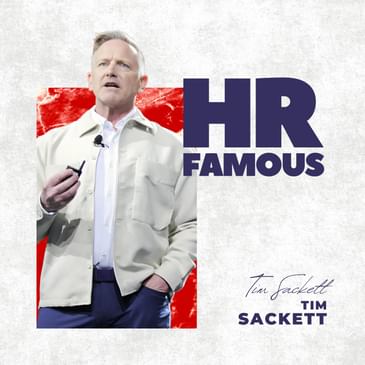
In this solo episode, Tim Sackett unpacks the growing gap between opportunity and desire in today’s labor market. Why did generations of proud factory families embrace these jobs - and why do today’s young workers turn away?
From cultural shifts and education gaps to lifestyle choices and societal stigma, Tim explores the uncomfortable reasons behind this silent rejection.
Is it a temporary hesitation... or a permanent shift?
And if manufacturing jobs no longer inspire the next workforce, what does that mean for America's future?
Connect with Us:
Tim Sackett
Follow Tim on LinkedIn: linkedin.com/in/timsackett
Visit Tim’s Website: hrutech.com
Read Tim’s Blog: https://timsackett.com/
Powered by the WRKdefined Podcast Network.
[00:00:14] Hey everybody, it's another edition of HR Famous. I'm your hostess with the mostest, Tim Sackett. Going solo today. Not that I couldn't find somebody and a guest. I have no friends. There were some things I wanted to talk about and I think some people, they probably don't want to talk about or maybe it was going to be an argument. I don't know.
[00:00:38] There was some data that came out. I can't remember who put it out there. It doesn't really matter because I think everyone's seen it in the HR space around the manufacturing side. This was around the tariffs and bringing jobs, manufacturing back into the US. The data is basically this. It was 80% of people, Americans, were like, yeah, bring those jobs back. Bring manufacturing back. This is really important.
[00:01:06] But then the other side of it was only 20% of people said they wanted to work one of those factory jobs. And so for a couple of weeks, like back and forth, everybody's losing their minds and going like, you know, this is so dumb and it becomes an anti-Trump thing, whatever. To me, this isn't political at all.
[00:01:24] And I'll kind of walk through kind of like where we are with this. One is our manufacturing jobs in the US important. Is it important for us as a society? Is it as important for us as a country? I believe they are. Now, historically, let me kind of give you the context of where I'm at because I grew up in a family that primarily worked. I'm in Michigan.
[00:01:48] So, Russ Belt, you know, manufacturing, automotive, blah, blah, blah. I grew up in a family that for the most part, almost every one of my relatives worked in some kind of manufacturing environment their entire life. Many of them, many of them union jobs. And so what we saw was, or what I saw growing up was they, we had this very kind of classic middle-class Midwestern lifestyle.
[00:02:15] Lived in a good house, lived in a decent neighborhood. Was it something super fancy? Did we call ourselves rich? Like, no, no, no. There was none of that. But also, usually two or three, four people in the family had some cabin like up north on a lake. Again, was it fancy? No, it wasn't fancy at all.
[00:02:35] But it was an amazing place to go in the summer and jump in the water and go fishing and have family around and fires and all this stuff. Like, quality of life was pretty good. They made a decent living. And again, we can get into the whole arguments of you can't have that job now and buy a house. Like, immediately, everybody loses their mind. I'm just telling you, historically, right, these were well-paying union jobs.
[00:03:00] And what I still believe, because my company works in a lot of manufacturing settings, is these jobs are still well-paid and have really, really good benefits. And people can make a really good living doing this. Now, are they going to be a 1% or are they going to be rich? Nope. Are they going to be rich?
[00:03:50] Are they going to be like, we have a pretty good job. I want this job. Okay. So let's set that aside. Because, again, there's going to be debate on all of this. Like, well, you can't make a life now, today. Like, okay, all right. The other piece of this is American pride. American pride in building things that not only do we want, but the rest of the world wants, right? So there's like this pride in like, hey, I built this car.
[00:04:20] Like, I had relatives where they would actually order their vehicle and then they would follow it down the line at a GM manufacturing facility. Like, and everybody on that line had pride that they're like, hey, we're building Tim's car today. Like, this is amazing.
[00:04:38] And like, that actually happens. Like, people think like somehow that doesn't happen. Like, that really happened. And it really happened in my life. And so, but it's not just like General Motors. You have like Harley Davidson. Like, a worldwide brand within motorcycles that people love that brand. Like, New Balance.
[00:04:59] Like, I don't know. It's not even getting into the textile clothing, shoes and like, oh, all these Nikes are built by or made by five-year-old kids in China. Like, I don't know the truth of any of that. What I know is we have a really great brand that's an American brand called New Balance that people love and people take great pride that work there. Tesla. Oh, God. Oh, don't get me started on Tesla.
[00:05:22] An American company building American vehicles that are electric and good for the environment. And oh my gosh, every Democrat friend I had for the last decade couldn't wait to get their hands on a Tesla. And now they still can't wait to get their hands on a Tesla, but this, now they want to key it. Like, I, like the whole world has, uh, I don't know. I understand. Coca-Cola. Like there's food brands, right? That, that are again, worldwide brands that we love.
[00:05:49] Now, do, do, is there an 18-year-old kid getting ready to graduate high school in the next month here thinking, I can't wait to go work in a Levi factory and sew jeans? I don't know. I'm guessing probably not a lot. And we'll talk about why that is as well. So I'm not saying like, hey, do we think we can't have a worldwide supply chain and have other countries make products that we buy and blah, blah, blah. No, of course.
[00:06:19] I think we should be doing that. I think we should be doing that and having that. Are there certain supply chains that we definitely need to have onshored and make sure that we can control the vast majority of that supply chain that's critical for us as Americans, as a country? I do. Like we think about like chips for AI and for, you know, all the computing power that we need. You think about defense, you think about things like drones. Like right now we cannot build our own chips and we cannot build our own drones.
[00:06:47] If you think about vehicles, not just cars, I'm talking about military type vehicles, planes, tanks, blah, blah, blah. If you think about energy, like we need to be energy independent because if we relied on most of our energy coming from somebody who potentially could shut that off to us and, you know, obviously critically like harm us, like that becomes problematic. And then pharmaceuticals.
[00:07:10] So I think when we talk about like onshore and am I looking at going out and saying, we need to manufacture every single thing in the U S like, no, I don't think so. Right. I, because I don't like, like, like, I don't need like some, like, do I want to buy an American made like sweatshirt or t-shirt? Yeah, of course I would. I love to support that kind of stuff in jobs within our country.
[00:07:33] But is it critical that every piece of like every t-shirt and every piece of pants and shoes come only from American companies? No, I don't think so. Like, you know, is every piece of food that we get everything like, no, I think there's not like, do I need TVs made in America? No, if I don't have a TV, my life's going to be fine. Right. So I, so I think there's, there's a, there's a give and take here on the supply chain thing of what manufacturing needs to come back and what, you know, and all of this that we have.
[00:08:03] What I, what I think though, is that it really comes back to this question. Do you think Americans really want these factory jobs? And you're like, well, the data says to him only 20%. Like, you know, and, and I'm like, yeah, I understand today. It says that.
[00:08:19] When I was in high school a thousand years ago, like I had kids, like I literally had to walk by a General Motors plant on my way to high school. That's so, you know, now, you know, like that was my life. Right. I literally walk in front of a General Motors plant to my high school. I can see from my high school. I could see the General Motors plant.
[00:08:37] And I had kids who's like their mom and dad, their grandparents or aunts and uncles were on the line. And they would go like, Hey, my, my dad's getting me a job at the plant. Like I'm going to graduate. And then a week later, I'm going to start at the plant. And they were like, they, you could, they were the happiest thing ever. Like, this is amazing. The money I'm going to have, what I'm going to be able to do. And at 18, they were starting their career working as a UAW employee on the line at GM.
[00:09:08] And then today people are going, Oh, well, you don't hear that today. And again, union jobs are a tiny part of the jobs that we have. Like again, but like, it doesn't mean that it's always been that way.
[00:09:20] And it doesn't mean that we failed at manufacturing. And that's why we don't have these jobs anymore. Our jobs got offshore because we became addicted to these really low cost kind of products. And we opened up our, our trade, you know, kind of routes in a way that other countries took advantage of us and are still taking advantage of us.
[00:09:39] And you can't, the facts are the facts in terms of dumping of products and, you know, state run manufacturing facilities in other countries being able to be more competitive than us because of the, you know, labor laws and everything else. But it goes back to why don't Americans want these jobs? And I truly believe and think that there's, it's three prongs. First is public education. You're like, Oh my, Oh, here goes Tim. He's going to rip on.
[00:10:09] Our heroes. The teachers. I'm not, I think there's amazing people. I myself was an undergrad elementary ed was in the profession. I think that field of work are called to it. And are there bad people in the field? Yep. Are there amazing people in the field? Yep. That's like, that's every industry.
[00:10:30] I'm talking about the overall concept of public education and what we've done over time. And that's just, it's one person. So that's one segment. And we'll talk about that. The other one is parents. And then the other one is society in general government, all of these pieces. Right.
[00:10:46] And so when we think about public education, now, if you're a kid going to school and your kid going to high school and you're going to graduate a month from now, you basically have like three avenues. And I've said this for a decade because I've truly believed this is that you primarily number one avenue is you go to college. That's really the only thing they're telling you to do. You go to college.
[00:11:08] And if you don't go to college, then you should probably look at the military because we obviously already discredit you from an academic perspective. And we probably think you're low life. And so we're going to throw you into the military. And again, that's not to disparage the military. 25% of the workforce I hire annually are vets. I am pro vets, pro military. But it sounds terrible when you're saying this out loud.
[00:11:34] And then the other part of this is really government support in terms of like what we've done to our manufacturing center and the Rust Belt and how we've really destroyed that level of job within the country.
[00:11:47] And it's society in general also believing that every generation should be better, quote unquote, better than the generation before them, which leads us to this concept of, well, if I worked on the factory floor, I want my kid to be better than me and work as management or work in the offices or get a college degree and not even work in manufacturing or be a doctor.
[00:12:14] And then, you know, and I've literally talked about this. Like I know families where their oldest child is going to school to be a doctor and the youngest or, you know, the next one's going to be a PA. And then all of a sudden one goes, oh, I want to be an electrician. And the family is literally destroyed by that. And I'm like, what is going on in the world where this kid can't go be an electrician, be an amazing person doing all these great things with her hands and helping build America better, blah, blah, blah.
[00:12:44] And like somehow they're looked down upon because of that. We've done that as a society. So the whole public education thing is, so you're either going to go to college, you're either going to go to the military or you're going to go to prison because that's really what they make you feel is that like if you don't go to college or you don't go to the military, you're going to get some low life job working at a coffee shop or working in a manufacturing facility.
[00:13:09] Your life will never go anywhere. And it's so awful that we are letting kids even believe this. Now, I'll go back to also on the public education side is that everything we do behaviorally, all the classes we make them take behaviorally, it leads them to this belief as well as children all the way at K through 12.
[00:13:33] When I was in school, I was forced and I say forced like you had to take like a metal shop class, a woodworking shop and automotive mechanics like you had to. There was electives and you go, Tim, you could have chose just to take computer electives like no, no, no. In our school, you were forced to take a certain kind of elective and then you could also take like other like computer electives or whatever. But you had to take some of these blue collar kind of skilled, semi-skilled kind of trade electives within the high school.
[00:14:02] Nowadays, people are like, oh, there's all kinds of programs like that. You know, no, no, no. You send them to the alternative school. You send them to the kid that got busted for drugs and the pregnant girl. So and then you go, oh, by the way, if you want to be a skilled trade person, if you want to be a plumber, a carpenter, electrician, pipe fitter, welder, you have to go to that school. And immediately the perception is I'm less than because of that. Like, why are you sending me to an alternative? I just I want to be an electrician. Math is important to an electrician. Like science is important to an electrician.
[00:14:33] And yet we've done this right for these. So we've killed the kids options of jobs. Now, parents, again, we've talked about this in terms of like we believe our children should be better than us every generation. But again, it's a never ending. It's not a never. There's a limit, right? There's a ceiling to what is that. So like if every gender like within a really small period of time, like three or four generations, what's the job I have left as a kid now?
[00:15:01] I can be either run a billion dollar company or I can be president. Like I don't like there's no other options if we keep leveling up. Like and so here's the funny part to me. So when you take again, go back to 20 percent of people want these factory jobs. See, this is wrong. I love like doing the voice in my head of somebody who disagrees with me. The problem we have with that is that.
[00:15:32] These kids today and I and I'm saying this as a father of three Gen Z kids and also really trying to dig in and understand and talk to other Gen Z is they actually. And again, broad strokes about, you know, generations. We do this all the time. But one of the broad strokes is, hey, these kids just want to work 40 hours and they want to leave work and they want to go enjoy their life. They don't want this hustle culture. They don't want to be, you know, like, oh, I'm going to work 80 hours and I'm going to be rich.
[00:16:01] And they do they they do want to be rich, but they want to work 40 hours and then they want to go enjoy their life and do what they want to enjoy and kind of have this really great sense of balance. And they're not necessarily into the hustle culture thing that you would say is like Gen X, maybe, you know, older millennial, where we were brought up with this belief that, you know, you have to be grinding 24 seven. And the one with the most money at the end wins. There's a lot of this generation that doesn't believe that.
[00:16:32] Which I'm like, well, then these jobs would be amazing. Right. Being a plumber, being an electrician, being a pipe fitter, being a welder, being a, you know, working on the line and moving your way up right into other technical roles like those jobs are jobs. Like I actually had a friend of mine who actually had a Ph.D. that worked on the line at GM. He's retired now, retired young because he put like he, you know, got this, got the job. And he was one of the smartest dudes I've ever met.
[00:16:58] But like, and I would ask him like, dude, how can you even live? And the line, he's like, like, I get paid really well. I have good benefits. And I literally, there's not one thing for my job that I take home with me. So I put in my seven to three shift. And at 3.15, I'm home. And for the rest of the day and night, I can do whatever I want to do that makes me excited about the world. And I can do that on the weekends.
[00:17:27] And if I want a little bit extra money, I can decide and I can opt in. Do I want to work some overtime? And he's like, this life works for me because my life isn't my job. And yet so many of us over the last two, three, four decades have turned our life into our jobs. So many of us had fathers, grandparents, mothers, like family members. We were like their entire world is their job. That's how they define themselves.
[00:17:54] And so my hope is that we have this younger generation coming up that is like, hey, my life isn't my job. I can do many other things. I just want to work a job that I can make a decent pay and good benefits and, you know, live my life. And again, I know the other side of this, right, is to say, well, wait a minute. Those jobs don't pay a living wage and they don't give good benefits and blah, blah, blah. Fair enough.
[00:18:22] But that's not all because I know people right now in my life that live in the neighborhood I live in that are on the line working job. And so you can't say that. Now, do we have manufacturing facilities out there that are taking advantage of people? Yep. Is there IT firms out there taking advantage of Indians and paying them less than wages? Yep. I can give you an example in every single industry where we're taking advantage of somebody.
[00:18:52] And again, that's why we have labor laws and in things that we do. So it doesn't mean that all of these jobs are terrible, awful jobs. It means that the jobs that left America and went overseas became terrible, awful jobs because usually they're working for countries that don't have the protections and laws and unions that we have. And so while those jobs were really good when they were here. And again, for those who are on the coast, you don't understand this at all.
[00:19:19] If you're in the Midwest and you drive through the countryside, you see ghost towns where there was a major manufacturing facility that supported that town. And you had this vibrant town and community and schools. And then, hey, we left and we went to China. We went to Mexico. We went to Taiwan. We went to wherever. And that city was crushed. That town is literally a shadow of what it once is.
[00:19:48] And I can literally, I can drive an hour from my house in any direction and find those towns that were destroyed by manufacturing leaving the U.S. So do people want these jobs? They don't know these jobs. These jobs have been gone for so long. They have no idea what these jobs really are. They have no idea the life they could have if they really work these jobs. So should we be bringing manufacturing back in the U.S.? I do believe we should.
[00:20:18] In specific strategic circumstances, I believe we should onshore that entire supply chain or the vast majority of that supply chain. Should we do it for every supply chain in the U.S., manufacturing, blah, blah, blah? No. It's ridiculous. It's a global economy. But there are certain things we have that we need to protect ourselves. Do people want these jobs? Not today.
[00:20:41] But my hope is, is that the collective we as a society can show people that these jobs actually are really valuable. And that they can live a good life. And they can have a really great balance to their life. And they don't carry around in a backpack a constant stress of a job. They can actually go to a job, get paid a good wage, have some good benefits, and then go home and live their life the way they want to live.
[00:21:10] So few of us do that nowadays. So I wanted to talk about that. I did. Hey, it's Bob Pulver, host Q Podcast. Human-centric AI, AI-driven transformation, hiring for skills and potential, dynamic workforce ecosystems, responsible innovation. These are some of the themes my expert guests and I chat about, and we certainly geek out on the details. Nothing too technical. I hope you check it out.
[00:21:37] The other thing I want to talk about was, and this is a little bit shorter, I had somebody come to me this week that was outside of the HR technology industry, outside of the recruiting industry altogether. They were technologists, VCs. We see these people all the time come in. And they all think they can solve the problem of hiring immediately. But this person was truly introspective of like, hey, I've been in this now, trying to run this now. And I'm like, this is really hard.
[00:22:05] I don't understand, like, why? And his thing was, why does every technology in our space start to become an all-in-one technology? Why can't you have a technology that just solves one problem really, really good? And that's all they do. And we love that product. And we just, that's what we, you know, keep buying, right? And like, if you think about like products like we hold in our hands, like an axe. An axe cuts down and chops wood really, really well.
[00:22:34] It's been doing it since the beginning of time. And then someone goes, you know what would be better? An axe with a phone on it. You're like, what? Like, I don't, like, why? Well, because sometimes when you're chopping wood and let's say you cut yourself, you would have to call emergency. So you should have a phone on your axe. And you're just like, I, I get, I, I, okay. I guess I can see that. And like, we start adding things on and these features are like, and they become like this, like, you just use us. And that's all you use.
[00:23:01] And it's an all-in-one kind of Swiss army knife for technology. And he was really like truly perplexed by all of this. And it was regarding like hiring. And, and I see this like, cause I see the confusion in the marketplace right now when someone goes, well, wait a minute, what do they do? Is it an ATS? Honestly, I don't think there's any ATSs left in the world. I don't think anybody who started out as an ATS and there's, and there's great products in our space that they still call themselves an ATS and there's, and they do what they actually are still really good at helping us hire better.
[00:23:30] Talk about the greenhouses, the smart recruiters, the iSIMs, the levers, the, you know, all the big HCM recruiting products. Like they're all designed with that traditionally we call them an ATS, but they've added so many things that they've added, you know, marketing automation and CRM and interviewing and, you know, assessment and matching and AI community, you know, blah, blah, blah. Like it's like all this. So like the buyer doesn't, no longer understands what any of these really are. And you're like, oh, well, they're just recruiting platforms.
[00:23:58] And you pick out the one that has all the features and little bells and whistles that you like, blah, blah, blah. And then I go, well, who's been really successful over the last five, eight years in our space? Who's growing like crazy? Well, I mean, obviously Workday has been phenomenal. That's different because again, it's an all-in-one for a lot of reasons, ERP, supply chain, HR, recruiting, training, blah, blah, blah. But that's also, to me, that's a CFO kind of driven thing where they, you know, the CFOs
[00:24:28] found a really good product for them. And then they kind of like, like said, hey, this would be great if we had all this data from all the other functions and let's just, you know, kind of build this out. So like, that's understandable, especially at enterprise, you know, really big, you know, companies like, you know, the Workday's, the Oracle's, the SAP's. When I think about like, but wait a minute, like let's get into just recruiting, like recruiting software who has really grown like a weed. Like the easy one that comes to play, and I talk about them a lot because I think, again,
[00:24:58] they're doing this the right way is Paradox. And because they have kept on, they're, they're not really an all-in-one, but they are. But what they've said is like, look, here's the problem we have that we solve for you. You have high volume. You're trying to hire 10,000, 100,000, a million people in a low-skill, no-skill environment. We found a better way to do this. We found a widget and this is how we're going to help you. And this is what we're going to solve.
[00:25:25] It doesn't mean they haven't added on other features where you can now, you know, hire, you know, skilled people and white collar and blah, blah, blah. You can do all of that, but primarily people buy them because of this one problem. And they've kept it like that so that people really understand who they are and what they are. Because I'll tell you right now, I mean, I can, I can put a hundred logos. This all came out because Gartner did their magic quadrant and they actually did it under
[00:25:55] recruiting platforms. I said ATS. They said, nope, it has to be ATS and CRM combined. It has to be global, blah, blah, blah. And they had 11 logos on the quadrant, which is a joke. I mean, it's a flat out joke. They missed 25 to 30 other products that really, if you were really trying to educate the buyer, you would have put other stuff on there and said, hey, by the way, here's what this is. Now, again, they're going to come back and go, Tim, you don't get it.
[00:26:23] This is really global and this is big enterprise. But they had logos on there that weren't, that weren't that. But that's what they're going to claim. Whatever. If they're really trying to help, you would go and say, hey, here's all of these. Now, again, so it's a recruiting platform and there's so many that are out there, but the buyer is completely confused. Are you matching? Are you AI? Are you an ATS? Are you a CRM? Are you sourcing? Are you interview?
[00:26:50] And so I go back to the guy that asked me the question and he said, Tim, basically, we're being forced to build out every feature for every person because at the end of the day, you have to go back to the one pain point is like, look, recruiting is a lot of recruiting across every industry. I know you think it's different and that you're a unique butterfly, blah, blah, blah, whatever. You're not. Recruiting is recruiting. I have a job. I need to go find talent to fill that job. It's not rocket science.
[00:27:17] And so that's why every one of these products that gets built becomes the all-in-one product because it's all a race to the same thing. How do I help somebody fill this job as quickly as we can with the best possible talent that we can? That's the problem. And again, Paradox, from a segment of your population, high volume, figured out we actually think we have a widget that does that better than anybody else.
[00:27:43] And so far, everybody that I know that uses them was like, pretty good. They actually did it. Um, and other ones are trying now to get in that space and do the same thing. And we have people on the blue, on the white collar side as well, doing the same thing of like, Hey, here's how I think we can do it. But it's all a race to the same, which is why we see every one of these products kind of being built out as an all-in-one. It's because we're all racing to same, the basic same thing instead of just going, Oh,
[00:28:11] maybe there's a piece of this that I can just do really well. And that's what we're going to do. And we're going to do it better than everybody else. And we're going to go very deep. It's hard to find really good point solutions anymore. So I don't know. I don't have the answer for that. Just, it was something that came up that I thought was interesting because it's somebody outside the industry that it was looking at this with a fresh set of eyes and just really couldn't understand why does everything become an all-in-one. So hit me in the comments. Let me know what you think. Like, and subscribe.
[00:28:40] That's the episode this week. Truly let me know if I'm way off base on the American manufacturing jobs thing. I would love to hear multiple voices on this. So that's HR Famous for today. I'm out. We'll try better next time. Thanks, everybody. Bye. Bye.
Sponsors
