
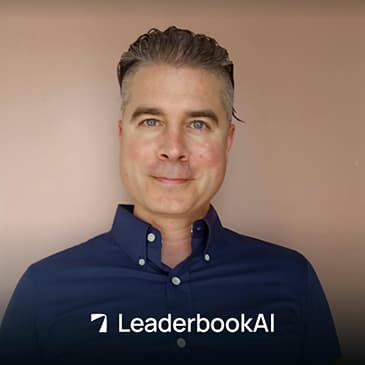
Why do well-supported people decisions still meet resistance? Todd Carlisle, Partner and Chief People Officer at Bessemer Venture Partners, joins Felicia Shakiba to discuss how leaders can make data useful in real conversations and evaluate where AI belongs in HR.
Todd explains how he prepares stakeholders before a meeting, combines employee stories with engagement data, and considers the personal peer groups that shape expectations about pay. He also shares four practical criteria for evaluating AI and the moments when human judgment still matters.
In this episode
- Prepare stakeholders before presenting a decision, and pair the numbers with employee stories.
- Understand why employees’ chosen compensation peers may differ from your formal benchmarks.
- Assess AI through time saved, money saved, employee experience and the HR team’s experience.
Thank you to our sponsors Ikon Analytics at the People Analytics World Conference for hosting.
Chapters
00:00:00 Teaser and introduction
00:01:35 Building people analytics at Google
00:03:01 Why correct analysis can fail to persuade
00:06:59 When data meets human assumptions
00:08:00 Preparing stakeholders before decisions
00:11:42 Making compensation data land
00:14:12 Persuading the head and the heart
00:17:12 Pairing employee stories with data
00:19:37 Benchmarking and employees’ chosen peers
00:21:24 Compensation transparency and fairness
00:23:16 Variable pay and performance
00:26:02 Measuring AI’s return on investment
00:31:14 Human judgment and empathy in HR
00:33:42 Learning development and mentorship
00:36:01 Leadership advice for investment firms
About the hostFelicia Shakiba is the founder and CEO of LeaderbookAI and an industrial-organizational psychologist. She advises capital-backed companies on leadership, execution and AI transformation.
About LeaderbookAI
LeaderbookAI offers consulting and AI-powered diagnostics for private equity and portfolio companies.
Explore how LeaderbookAI can support your team.
Follow the LeaderbookAI podcast in your listening app for more conversations with leaders.
More episodes: The LeaderbookAI Podcast : AI in Business
Powered by the WRKdefined Podcast Network.
[00:00:00] I think we have 26 internal HR tools we use right now. And that's from our HRAS to our ATS to our LMS to little custom tools that we use. And so I actually think AI could get rid of 90% of them. I'm Felicia Shakiba, and this is Leaderbook AI, where we solve a business challenge in every episode.
[00:00:29] Todd Carlisle, welcome to Leaderbook AI Podcast. We're here at People Analytics World Conference in San Francisco. We are sponsored by Icona Analytics, and we are excited to have you here today. Welcome. Thanks. It's great to be here. It's very kind of surreal seeing all these people in People Analytics when we started doing a long time ago. I know there weren't so many of us, and now there's a whole conference. Very fun.
[00:00:56] Yeah, I think it's a growing sector for sure. So I wanted to kind of start out by just talking about you and your role. You are the Chief People Officer for Bessemer Venture Partners. You helped build Google's people analytics in the very beginning, which we'd love to talk more about. And you've led recruiting and HR across technology companies of all sizes. And today I want to talk about work that begins after the analysis.
[00:01:25] So we'll get into the storytelling of the data. But if you could share maybe a little bit about your start at Google and the People Analytics team there. Yeah, I'm happy to. So this was back in 2004 and Google was pre-IPO about 5,000 people at the company.
[00:01:44] There were maybe 50 people in HR and our head of HR at the time had kind of a background in biology and didn't really speak the language of numbers and metrics and analytics, which the founders wanted to hear about. So the company was poised for and continued to double in size and growth for seven years in a row, just doubled in size for seven years. And just wanted to be able to see like, how are we going to do this? How's it going?
[00:02:13] And have somebody in HR help translate all the work that the team was doing into numbers that made sense to the executives to figure out, like, are we on track for that explosive growth? Yeah. And how big was your team back then? My team was me. So it was just you. Yeah. I mean, I was hired with kind of a weird remit, not really a clear job title of kind of help us help HR figure out how to talk to the execs.
[00:02:41] So I got dragged along to a lot of meetings where it was like, do we have enough recruiters? Are we looking in the right places? Are we offering our benefits? Are we paying enough? And I could go kind of talk to the data and figure in the rest of the HR team and then figure out what is the data saying and then bring that with the HR team to the founders.
[00:03:00] Yeah. Wow. Well, when did you realize that the best, most correct analysis wasn't always going to sway in the right direction or like move the decision along? Yeah. So there was a study I did. I was super proud of called Cerebro, which we were trying to figure out, like, what are the predictors of performance of somebody at the company? And if we could figure out what those predictors were, we could hire for them and get the best people.
[00:03:28] And so I spent like probably a year delving into all these different variables that we could measure. Like, where did you go to school? Was your GPA? What age were you when you got into computers? Personality variables? All these different things. And then I fed it into different performance variables. We had twenty five different performance variables of how you perform once you got there. And I got some analysis out of it. I thought I was like, this is cool. Everyone's going to love this.
[00:03:55] And I did a tech talk at the company about it and sort of shared. This is what I think all the things that predict were. And it predicted maybe, I don't know, thirty percent of the variance of someone's performance, which in social science is like a huge thing. It is a huge thing. Yeah. Yeah. I mean, if you can predict thirty percent, you're you're getting published. But I what I forgot at the time was I was presenting to computer scientists who would build models that had millions of variables, billions of data points.
[00:04:21] And they wanted their models to account for like ninety nine percent of the variance and they could. And so as I was doing my study, the engineers quickly did their own study. And they said that, well, they with three variables, they could predict like ninety percent of the variance. But those three variables were like a degree from Stanford, a four point oh GPA and like some other thing that a small amount of people got.
[00:04:47] But as much as I argued kind of with them, they weren't convinced because their model predicted ninety nine percent of mine. So you're saying that being able to so back then your variables were like went to Stanford four point oh GPA and then something else. And those were like the best predictors for performance at the company. Yes, but it was massive range restriction. So like only a tiny percentage of the population has those things. And we needed to hire way, way more people.
[00:05:17] So even if we hired every single person that graduated from Stanford computer science with a four point oh and met the third criteria, it would be like four percent of our hiring. But that those things they weren't convinced because kind of they could predict more of the area under curve. Yeah. And that was like the language they were speaking. And I was speaking social scientist language. Yeah. And it wasn't compelling. So that study didn't work as much as I wanted it to.
[00:05:42] Do you feel like that type of data was by like any bias was there, considering that maybe you pulled from a pool of people that you had to do analytics on and maybe could be most of those people had like Stanford degrees that had a four point oh GPA. I'm just curious, like, was the data bias at all?
[00:06:05] That's I wouldn't say was biased, but I would say they were looking at a small percentage of of the data to show if someone met those three criteria, you're guaranteed to have success. I see. But at the time, like we needed a massive sales force. And I tried to say, for example, like the number one school Google recruited from was San Jose, San Jose State, which is actually because it graduates a shit ton of people. Yeah.
[00:06:31] And when they needed a lot of people and you don't need your massage therapist or your entry level salesperson to have a CS degree with a four point oh yeah, and they could still be very successful. But I still couldn't predict the amount of variance they could. Yeah. Yeah. Well, I mean, I think it helps when you have like more collaborative skill set to figure out those particular analytics. I mean, it's good to have different perspective. You've said that the data eventually runs into humans. I love this quote from you.
[00:07:01] What does that collision actually look like? Yeah. So I think when executives sit down to look at whatever you want to talk about, like how are we doing on hiring? What's happening with attrition? What are our best benefits? They come with, you said bias for sometimes bias, sometimes it's a hypothesis or preconceived notion or their own experience. And so they start with that.
[00:07:27] You, you, I wish they would start with a blank slate and open mind like, all right, what's the state of the world, but they don't. And they start with those kinds of things along with maybe their own agenda. So what if they want to expand their own organization or shrink it or pay more, they kind of come with those. And so if you're not careful, you walk in with, hey, I just measured the state of the world. This is what it looks like.
[00:07:50] And if you haven't kind of checked what some of those assumptions are from them, they don't, they immediately are on the defensive for what you're bringing to them. Yeah. And what's an example? What have you heard from them as, as stakeholders? Yeah. So, I mean, a good example I had at one company I worked with was the, the head of product at the time basically said, you have to convince all my direct reports.
[00:08:17] And if you convinced each of my direct reports, by the time you get to me, I'll know they've vetted it and they've asked all the hard questions and I trust them. So don't show up to here until you've done it with all of that. And I learned that the hard way when I first tried to present to him without, and there were doubts in the room and I could see him looking around, looking at all the people doubts. And so I never did that again. And then I would have to meet one on one with kind of each of them.
[00:08:41] And then another example I've had in my past was trying to talk to the board around comp plan design, when the board members themselves have very varying backgrounds and come and often set on other boards. And so they may want to do something that makes sense at one of their other companies that doesn't make sense at yours. And you have to kind of meet with them one on one to figure out what are you looking for when we sit down to talk.
[00:09:10] Yeah. And being able to kind of cater to someone, someone's needs and what they really want in order to move the needle around performance. And it's not what is going to work in one company isn't always going to work in the next, depending on leadership and culture and, and the size of the business, et cetera. Yeah, totally. I had one company where I was trying to talk to, we were trying to figure out how to refresh the stock pool. And the board members that I was working with, one was from a large Canadian telecom company.
[00:09:40] Another sat on the board of Uber. Another one did set on smaller startups and they all just had very different ideas of like what the stock pool should look like and how we should refresh. And so it's really, you know, it's important to get all those triangulated before you sit down with your recommendation. Do they feel like they know the answer because they've been there and done that?
[00:10:02] And then when you bring up, you know, your response or your suggestion, it kind of, you feel like you lose like the credibility because they feel like, oh, I've done this before. Is that a tricky situation to be in? One of the things that really helped save me in that situation was finding a comp consultant who had worked for both for our current company, but also for other companies in different stages and could talk to, yes, I understand your experience in Canada.
[00:10:29] This is what I found with my Canadian people. I understand your experience with a small tech company. This is what I've done there. And that person and that he didn't really care what the stock for fresh was. I was just like drafting off of his expertise. And I spent a lot of time with him, I understand showing him like this is the state of our stock pool. This is what I think we could do. So we had those parameters. Yeah. But having an amazing comp consultant, I cannot recommend highly enough. Yeah. Yeah.
[00:10:59] I think having a third party is really important to kind of mediate and help tell the story of why certain decisions are being made. A lot of times consultants have like that expertise to kind of bring into that conversation. And I think it's really important to know when to bring a comp consultant in and when to leave them out. Right. Yeah. So having like the decision to actually bring someone is actually really important to the story. Yeah.
[00:11:27] Especially in this case, like you only refresh the pool every couple of years. Yeah. And so you might not get that many bites out of that apple. So and I might not have that many times to do it myself, but the comp consultants done it dozens of times across multiple companies. So again, draft on that experience. Yeah. I mean, I want to maybe dive a little bit deeper into compensation. I think it's an important topic. Take us into like a high stakes compensation decision. What has to happen before the meeting for the data to actually land properly?
[00:11:57] Yeah, I think it's important to kind of break down like what are the data? What are the types of data that are there? So in this case, you want to get what's the benchmarking data from peer relevant firms. And so you might go outside and get something from Aon or one of the other large benchmarking companies. That's one set. I also try to grab things that are a little more qualitative. Yeah.
[00:12:23] So like I do all the exit interviews and I ask in the exit interviews, why did you leave? And then I always ask, was compensation a factor? And if so, what part? And where are you going next? What's the comp look like there? And then I summarize that. And then I also have their anecdote about like, what are they actually saying about it? So they might be going, it's one thing to just hear we're paying less cash. But if I have an anecdote that says when I go to my next place, I'm doubling my cash then.
[00:12:53] And it's a lot safer because of this, that and the other thing. And I have that quote. That's a data point that goes into the same study. Same with, I'm always talking to my recruiting team to figure out like what's happening with offers. Because offers are the leading edge of like what's happening. Whereas comp data is always, is usually the lagging edge because it's been collected six months or 12 months ago. Yeah. But the recruiters will tell you, hey, I've extended 10 offers. Six have been declined because we pay too low.
[00:13:23] So if you bring that sense of urgency and that kind of tip of the data spear to the executives and going like, I know you're desperate to fill role X. We've extended six offers and five have been declined because of comp, like they will sit up and pay more attention. Yeah. So that's like kind of different parts of the data. Not, for some people it's just what is benchmarking pay. Um, a lot, last one I'll say is like a sort of critical incident person.
[00:13:50] So, so and so who you really cared about, that's an executive or a product manager, they just left. Mm hmm. And you weren't expecting it and they left because of comp. And that is like a very acute painful thing. That's like a single data point that might trump all the other things. Right. Yeah. And, and so I kind of keep track of those kinds of things that have at the ready as well.
[00:14:12] Which actually brings me to my next question, which is how do you know how to persuade each decision maker without reducing the work to politics? Yeah. So I, I had a mentor once who said, you should always ask the, you should always figure out if the person you're presenting to leads with their head or their heart. And so like, what's going to convince them? And is it their head and the data and what does the deck say?
[00:14:38] Or is it their heart and, and they care about an individual person. So with each of the people that I think are going to be in the room, I try to kind of figure that out. So, you know, I've had executives in the past kind of tell me like, I know the data say X, but it just doesn't feel right to me. Or my gut says something else. And so I just want to, with those kinds of people, I want to make sure I'm having regular one-on-one. So I have a gut check of what is their gut saying.
[00:15:06] So I know going into it, they're always going to be grumpy that we're not paying enough or that we're not hiring enough. Or even if I have all the data that says the opposite, I just want to know kind of where their gut is. And then I think I pay attention to kind of how they react to the slides. And so one thing is like, do they read the footnotes? Do they read in the appendix? Do they, do I need to pre-meet with them? Because they're not going to read anything. Right, right.
[00:15:35] But I want to like be with them so they can do that. So I've even had people where, can I walk to the meeting with you and give you a heads up when we're walking five minutes to the meeting? Yeah. Like, so you're not surprised. Yeah. You're getting to know like who are the humans and what resonates with them on the way to that. And really the meeting should be, you should know how it's going to go down because you've pre-talked to as many people as you can.
[00:16:00] I think that is such a key piece of information because I don't think people think enough about kind of prepping the call, you know, prepping the meeting with a one-on-one. And I feel like having those one-on-ones are golden moments where you can truly get to know and anticipate what's going to be said in the room. Yep. Instead of just blasting, you know, our cold turkey on what the data says and here are the decisions we should be making.
[00:16:30] So I think that's really smart and it does take more time, but I think it's more, it's definitely worth it. I also feel like what you had said around, is this person a decision maker with logic or with their emotion? And that's a consistent personality trait or the way that people make decisions, that people are either mostly in one bucket or the other.
[00:16:54] But I've also felt like if you cater to people's decision making in both ways, you're kind of covered in the meeting, right? So bringing both the logic and the storytelling to make sure that you're covering all your bases. Yeah, I'll give you a good example of that.
[00:17:14] It's like I learned when doing employee engagement slides, I have the slide be 50-50 data and sort of testimonials or quotes from people. And so it's like, do you think that you're growing at the company? You might say this many people rated this a four out of five or this is a percentage, how it grew over year over year. But the little anecdote on the side that said, oh, I've never grown anywhere better in my life and I'm getting this and I'll never leave.
[00:17:41] Like I even watch when people, I present the slides, where do their eyes go to? And half the people start, ignore the data and start reading the quotes. And, you know, we want a story. We want to connect with a person. So I totally get that. And they'll remember the quotes more if you get a really good juicy quote. So I think in my earlier career, I'd have like 80% data and a couple quotes at the bottom or like you can read it.
[00:18:06] But now I put those more front and center and let the head or heart pick the thing that resonates. Yeah. Yeah. I think that I've had similar instances where I've shared raw data, but then nobody believes the data. And then I said, don't believe me, but just let's see what people are saying. And then once you bring the quotes there, I mean, I think that people really start to reflect on what's going on in the business.
[00:18:32] But without that, I think it's really tough to just provide the data points. A hundred percent. And they're more memorable. You remember a really juicy quote more than you remember we scored 76% on metric four. Have you ever flipped it and started with the quotes and then supported it with the data? I'm just curious if that's ever happened.
[00:18:52] I think the times I've had the most successful that is when you want to represent employee voice. So if I've had, if an employee comes to my office and they have a concern and they say, I'm really concerned about X. And then they give me a good example and I want to get someone's attention. I might lead with, you know, Bob was in my office and he said these things, which were fairly alarming.
[00:19:21] And so I looked into it and now these are what the data say. And this is actually so like we should address Bob. Here's a larger story. And so for somebody who like really cares what is Bob thinking that like it's Bob unhappy in what they say that will get their attention. Yeah, that makes sense. Yeah. You combine benchmarking with conversations across the market. What do those conversations reveal that maybe a survey never will?
[00:19:48] Yeah, I think I might take it back to kind of comp benchmarking. I think it's tricky. Like I'm doing this right now where I'm looking at how we pay a lot of the people in our firm. And the data is kind of dry in that you can get a list of like these are 100 firms that are in the benchmarking study. And I can look at the min, the median, the mode. Yeah. Yeah. All the percentile.
[00:20:15] And then I will hear from somebody. Two of my friends just got an offer from a peer comparison firm. This is what their offer is. And we are different than that. And why are we different than that? And people will often kind of cherry pick their own data points that they go, which as a statistician, I'm like, well, you went, your friends went to the highest paid firm in the industry. And so good for them. And I'm like super happy for them.
[00:20:44] But not everybody can pay that way. But I know what I've kind of learned is people will pick their peer comparison group themselves. So even if I say, hey, hey, I benchmarked against the top 50 companies. It's like, who do they think are their individual peers? My friends, these five people. Yeah. What are they paid? And I've kind of learned that the hard way is like people will pick. You can't tell them who their peer group is. They will know. Yeah. And I get it. I'm the same way.
[00:21:14] Like I have five friends do my same job. And if I ask them, like, what are you making? And they say this and that. Then like, that's my friends. Those are my peer groups. Those are, I trust them more. Yeah. Yeah. And I think that it's safe to assume that people do talk about comp outside of work. Yeah. More so than ever. And I think it's a mistake for leaders to think that that doesn't happen or that you can keep it closed. And so is there like transparency at your firm or even in like the portfolio companies?
[00:21:43] Like what is your advice to transparency around compensation? One of the things that we do that I think I like is that for our investors, whenever they move up to the next level, a comp at the next level is the same regardless of who the person is. So if you move from an associate to a senior associate, your comp moves from X to X plus whatever it is, $30,000 more. And no matter how much you pull on my heartstrings or argue or you think you're better, like everybody moves at the same level.
[00:22:11] Because what I feel about that is like you're all starting at that same job at the same time. You're doing the same job. And I don't want there to be any perception of inequality based on favoritism or other things. Like you moved up at the same time. You got it. And also the comp is predictable. Go ahead and talk to your friends. You know what you're going to get when you get there. And I think people like for it to be predictable.
[00:22:36] They might argue that I wish the step up was higher, but they're not going to be mad that she got a little more. Why did she get more than I? And it keeps me from having to have a million little conversations negotiating that. Right, right. And so I've sort of learned this from a peer of mine like a decade ago that she would just say when engineers come in, all engineers, doesn't matter what you were making, doesn't matter what you think you make, we pay this. And if you want to get more, you have to get promoted. So focus on doing better and getting promoted.
[00:23:07] I don't want to pay people based on how well their negotiating skills are. So I think, and it just seems more fair. What's the cost of not doing it that way? That's a good question. So the thing that I'm always thinking about in my head is how you look at variable pay.
[00:23:29] And so like right now at Bessemer, most of the people for the bonus, it's 99% of the time you'll get the bonus at the target that you think you're going to get. And it's more like delayed compensation. You have to wait to get it, but there's not a lot of movement of what you get. But that's very different from pay for performance, which has been big for a while and people still like the concept of. So two people doing the same thing.
[00:23:57] If you work, if you do five times better, shouldn't you get a 5x bonus? Yeah. And so I'm always trying to think about, well, that requires, can you measure that? Are you really five times better? How do you measure that? And there's a lot of discussions behind the scene. And how big is the bonus pool? And I was at one place where the CEO loved this concept.
[00:24:20] But when I modeled out like what percentage of people we could give a 5x bonus to, it has to come out of the bonus pool. So the variance you'd give to the other people, everyone else is getting 1.1x, 1.2x. If you want to have someone get 5x, that just sucks up a lot of the bonus pool. So it's just that to me is still unsolved in HR. Yeah, I agree. I think comp is tricky. Yeah. But it has a lot to do with your performance strategy. Yes.
[00:24:48] And the kind of culture you want to have. Exactly. The culture and how you retain people. And it's a whole other conversation. I mean, you know, I had a fantastic guest and who I would say is also a mentor of mine. John Radford was on the show, the creator of Radford. Amazing. Yeah. And he's a fantastic, I love him. He's a great human.
[00:25:14] He had a fantastic episode and I could learn so much from him. It doesn't matter how many times I meet with him for lunch, but it's just a fascinating, it's a fascinating way of looking at performance and pay and how people like live their lives and what strategy companies are taking on and how AI is being implemented into your new skill set and how you pay for AI skill sets, right?
[00:25:43] So if we were to dig into that piece of the puzzle and we think about how we actually find the return on investment for not just leveraging AI, but the skill sets that you build for AI, like, well, where are your thoughts on that type of conversation? Yeah. So I think we're at an interesting point now where for the past year, it's been measuring people on, do you have the tools? Do you have literacy? Can you do it?
[00:26:13] And really encourage people to learn on their own. I think we're at what I've been talking to my team about is, you know, we, I think we have 26 internal HR tools we use right now. And that's from our HRAS to our ATS to our LMS, to little custom tools that we use. And so I actually think AI could get rid of 90% of them.
[00:26:38] So I would love one of the ways I think of ROI is if we can reduce spend in both time and cost, cost for all these other tools that are about to have their lunch eaten by them and time for our team. And I'll give you kind of one small example of like, we've had to use vendors for anti-harassment training. And, um, I just think like Claude could probably design a really good anti-harassment
[00:27:05] training and make sure it's, it's leveraging like, what are the cases that have come out recently that we should do there? We could feed the slides in and go make this more entertaining. Yeah. Um, and so if I can get rid of a vendor that we've used for that and save that and redeploy it, like I will, that's an ROI right there. Yeah. And there's just, no, it can be taken too far. I talked to one, one of my friends who said they are getting rid of their HRS and they're going to vibe code in HRS. Oh boy. And I was like that.
[00:27:35] I'm sure you're going to save a ton. I'm super terrified for when you get audited and you're like Claude hallucinates your data from 10 years ago. Oh boy. But like, I applaud them from, I think everybody needs to keep looking. Do we need all this stuff we've had as a legacy? And so I'm talking to my team about, does it save time, save money, make the employee experience better, um, or make our internal HR team's job easier?
[00:28:02] Those are kind of the four AI ROI criteria. Yeah. I like that you are not going all over the place. Like you have some core pieces that, you know, you want a return on investment for a lot of people here at the conference are asking about how do we measure those things and what does that look like? And how do we have, you know, the clean data enough to, to actually make that work? And, you know, what are maybe some of the sweet spots or the measurements that you would
[00:28:32] make sure that to include when you think about return on investment, like, is it hours spent or dollars spent? Yeah. Yeah. I mean, an easy one is just budget. Like this is top of mind for me because I'm in the process of doing my budget for next year. And so if you can drop that, that's an obvious one. One I was just talking to one of my team members about is reducing the amount of touch points somebody has to have before the thing happens. So in the example I gave to her was onboarding.
[00:28:58] Like I'd love to know how many emails are sent back and forth, how many, uh, how many actions it takes to upload the stuff to HRS, how long, how many classes they're in. And if we can reduce that and get them onboarded even faster with AI, then that'll be a huge win from both sides. And in this case, like she herself was a new person to the team. So I'm like, you're going to be the guinea pig. We're going to pilot. Yeah. We're going to pilot too.
[00:29:25] And we're going to try and have Claude, like help onboard you. And then you get to compare that to the old onboarding way and see how many, like, I think most people are excited to join, but they don't want 15 emails back and forth. And how long are they spending going into the HRS entering their stuff? Yeah. The faster that can be, I think the better. And then, and then a lot of the old metrics, like, can you reduce time to hire and cost for
[00:29:52] hire and all those things like we implemented fill in the blank LLM and that stuff went down. I think the metrics we still use to measure HR are still the right ones. It's just with the insertion of AI, can those things go down? Yeah. Yeah. And what are the asks today from your stakeholders, not just about Bessemer, but maybe the portfolio companies and how they measure return on investment for AI? Yeah.
[00:30:22] I mean, a lot of our portfolio companies are, are, are still new and small and they are not really thinking about HR, AI for HR yet. Yeah. They're, they're more on product and we're paying more attention to how they're using that on product. So, um, I don't know that they even think about it, but I also think that they would be, they would be surprised if they, uh, I would be surprised if they like are excited about
[00:30:50] work day or excited about an HRS or excited about an LMS. Like, I think all those things are, um, they're going to second guess before they sign up to any of that and go like, why can't we just build an agent that is our HR person? Yeah. And I think for, um, it's up to us to show like what the value the humans have beyond how much stuff you can do with Claude. What do you think the skills are that are going to be needed for a people's function moving forward? Yeah.
[00:31:21] I mean, I've been thinking about this a lot. I think a couple I keep coming back to one is just judgment. So, um, there are lots of moments in the employee life cycle where I wouldn't want to pass over judgment to Claude, uh, or not just Claude, to LLM, LLM. Um, and second is kind of related around humans have a lot of things that help that they want to talk to another human about. So it might be mental health issues.
[00:31:49] It might be, you know, we've had people get in terrible accidents and really struggle with the, um, getting into, uh, talking with an insurance company and they just want to be helped out or on a more positive way. Like people are on a fertility journey and they're excited about a baby is coming and they're stuck in bureaucracy and stuck chatting with agents and they just want to talk to a human and like that very vulnerable part. Yeah.
[00:32:16] Um, or, and so just the humans being there to go, I've seen this, I understand. Let me help you with it. Let me reach out. Let me take this off your plate. I still think people want to talk to a human that does that more than an agent. I mean, it sounds like empathy is an important trait to be able to tap into those more sensitive conversations. Yes. Uh, which I think is interesting because most people are saying, oh, we need somebody that like knows how to use an AI agent or build an AI agent.
[00:32:45] But I think that it also speaks to, well, but you also need to, you know, do your human part really well, have like that communication and those feelings and understanding and have tricky conversations better. Yeah. And I think there's the hybrid world is there too. Like we encourage people when they get to their end of year reviews to like run yourself review by your in AI and see and get it to make it better. Yeah.
[00:33:11] And then also prep for your one-on-one by like, you can role play with an AI about like how you have this conversation. Yeah. But then the rubber hits the road about you meet with your manager, you hear something you don't want to hear. You're really upset about it. You want to process it with someone like we want to be there to like come talk to us and let's, how did that feel? And want to be there for you? Like maybe, I think some people will still want to go back and chat with their agent to go, this is what happened. Yeah.
[00:33:38] But we want to make sure we're a human that goes, be a listening presence. Yeah. Well, I want to zoom out a minute and just talk about like the leadership team. And what's on top of like your mind as a team in regards to leadership or culture or performance or analytics? I mean, it really could be anything at this point, but, but I'm curious to just try and understand what is the top of mind when they're thinking about going into this next generation
[00:34:07] or this current generation of AI? Yeah. What's important to them?
[00:34:39] Yeah. International trainings with slides. Yeah. And so, um, how do we help them? Maybe they need to listen to a podcast. They do like the podcast, right? They do like the podcast for sure. But, uh, even things like our, at Bessemer, we have an emphasis on the mentorship model where we grow more of our investors than we, than we go out and get. And so, and that human back and forth with the mentorship with the one-on-one, it's a
[00:35:08] lot of one-on-one is like super critical and people love that. Yeah. But people want even more than that. So I've, I've heard people kind of talk about like they're building agents to offset some of the knowledge that even their mentor doesn't have because their mentor didn't grow up in AI world. And so, um, that's kind of fascinating to me is if like we have amazing investors who've
[00:35:31] been around for 20 or 30 years and we have young, uh, more junior investors that are want to know the cutting edge of every single thing coming out of the Neo labs. Yeah. And so like, what do they do for that? And how do you pair like the old school knowledge of the human? That's like an amazing investor with the absolute most cutting edge frontier stuff that's coming out. I think that's what people want for L and D, but, um, it's an interesting time for it right now.
[00:36:01] Yeah, definitely. Well, what, what would you say, uh, if you were to be speaking to any of the leaders of investment venture firms like yours, what, what would be your advice around leadership and moving the firm into in the next few years? That's a tough one. I ask really hard questions. That is a good question.
[00:36:25] I mean, I think it's more important than ever to understand who are the humans you're bringing in and to assess them and figure out like we've traditionally had to rely on humans for the knowledge base. But if you're not relying on them on the knowledge base, like that they're a good cultural addition that they're going to fit in that, like, how do they make decisions? I like to ask people about that in interviews, like tell me about a really decision, difficult
[00:36:52] decision you had to make and like take me through your thought process. Yeah. So I do think choosing the right humans, um, and understanding who they are as people is going to be more and more important. Yeah. Well, Todd, thank you so much for being here at PA world with me and having this wonderful conversation. We're excited to have you and, uh, we're, we're excited to learn more from you as we go along. Awesome. Thanks for having me. Yeah.
Sponsors
