
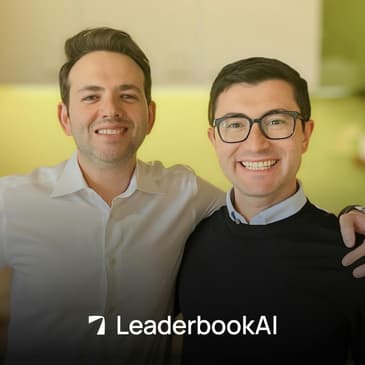
What drives startup success from idea to exit?
Stan Garber and Alex Yakubovich share how solving real customer pain unlocked scalable growth. This episode blends leadership, value creation, and executive insights—revealing how disciplined decision making, digital transformation, and business process automation support sustainable exits.
—
Subscribe to the LeaderbookAI Podcast (formerly CPO PLAYBOOK): https://leaderbook.ai/podcast
Want to create 10x the value of your business or investments? Let’s talk: https://leaderbook.ai/contact
Powered by the WRKdefined Podcast Network.
[00:00:00] I'm Felicia Shakiba, and this is CPO PLAYBOOK, where we solve a business challenge in every episode. Today, I'm thrilled to welcome two visionary founders, Stan Garber and Alex Yakupovich, co-founders of Levelpath.
[00:00:30] Between them, Stan and Alex have built and scaled four companies together, including Scout, RFP, which they sold to Workday for $540 million. Now, with their latest venture-level path, they're on a mission to transform supplier relationship management space.
[00:00:49] In this episode, we're revealing the secret of how they repeatedly scaled businesses, overcome the challenges of starting over, and built teams capable of tackling complex problems, all while staying true to their vision. Alex and Stan, it is incredible to have you on the show. Thank you so much for being here today. Excited to be here. Just thank you for having us on the show. Love the content. Excited to have the conversation today.
[00:01:18] Stan and Alex, you've built four companies together, a rare accomplishment. So let's start with your origin story. How did the two of you meet? And what was the first moment you knew you could build something great together? We've been at it for 20 years. My turn, your turn today? You go for it. All right. All right. A little bit of origin story. So Alex and I, we actually met in high school, if you believe in that. So we've been working together for over 20 years. I guess background, both Russian Jewish immigrants came to America in 91.
[00:01:48] I landed in Cleveland. Alex landed in Cincinnati. And then a little bit later on, he ended up moving up to Cleveland and we went to the same high school. And we had a few overlapping classes, but not many at that time. And Alex and I were kind of very business oriented young students, if you call it, in high school, which is kind of weird to say.
[00:02:13] And we would trade. We became good friends, started with like we basically traded stocks. That was kind of our bonding moment. And in high school, we started a club, Future Business Leaders of America, a chapter of it in our organization, the business. We had a business office. They would give us the keys during lunch to go up. We opened up scout trade accounts. We literally traded stocks during lunch. You can imagine we were a real popular back then. So our Friday nights gave us plenty of time to do some research and things.
[00:02:42] And, you know, Alex and I, as we were finishing up high school, Alex actually tapped me on the shoulder and he's like, hey, do you want to start a company? And I was like, what are we going to start? What are you talking about? And he's like, let's just start a company and do what we like. And we kind of looked at a bunch of ideas. And one of the ones we almost we were starting to build a website and we wanted this was 2000 and 2003. Alex and I were started and he was like, hey, let's build. My dad was in a poster, a furniture builder.
[00:03:11] Like, let's do an online furniture store. 2003. Let me just tell you, like pretty ahead of time. But and so we started building this website board and we're like, you know, this idea probably is not the best as like 17, 18 year olds shipping couches across the country. But what was a good idea is building a website. So we recruited another friend over and then we started, which became Oweb Technologies. We all went to college at Case Western Reserve out of Cleveland and we started a web design company, which made a lot of sense from 2000.
[00:03:40] And when we were in college from 2003 to 2007, we had built a small company that by the time we graduated college, we were doing like $50,000 websites for local businesses in the area, which is which is pretty cool. And, you know, that kind of kept going from from that to here we are, you know, four companies later and just still still loving what we're doing and a lot of passion around it. And a lot of it just comes to business problem solving, which, you know, when we got to it, we were like we were using the web every single day at that point.
[00:04:08] So when we were like, hey, there's a local pizza chain or a local ice cream parlor or even a business for like, do they have a website? And you go to it and you're like, there's no content on it or they didn't have a website or wasn't very good. So like this is a business problem that will need to get solved. And we know this industry produced some of the biggest companies that exist, you know, being able to manage content for them on the web. And that was the simple idea behind Oweb Technologies. And we sort of kept that approach for every company we've ever done together.
[00:04:34] Oh, the only thing I would add to that is, you know, since you talked about origin story, the one thing that was very clear from the very beginning and why we've been such good partners over the years is because we have the same values. And the most important one of which is just like really focusing on the customer, like really obsessing over the customer.
[00:04:59] I think you may have picked some of that up from your dad who owns his own business and has always done a great job taking care of customers and has built a really successful business as a result. So both of us focused on that from the beginning. And so as we, you know, have having that foundation, you know, even as kids, I think people gave us an opportunity and a chance because they saw that like maybe maybe they're not like going to be the most senior website consultants on day one.
[00:05:25] But there was never a question around our commitment. Yeah. I mean, we put on some really, really nice white shirts with some oversized ties and khakis. And it wasn't our fashion sense or our looks that we're getting. You know, there was a photo. I actually pulled up an old photo. I sent it to you over Thanksgiving when I was back home at Cleveland. And I mean, like those are baggy, baggy shirts like that. In the other part of Alex and I sort of we both bonded naturally over part of the origin story is like, you know, not to get like cheesy, but it's kind of true.
[00:05:55] I mean, our parents did come. We're first generation, like like the American dream of like we brought you to America for an opportunity. Like, like here's your platform. Like, go give it a go. And like you were sort of taught that early on and go work hard. Go take risks. You know, like this is the world. This is this is the only and I still believe this with everybody. It's like United States is one of the most amazing places. You have an idea. You have a vision. You want to go get something done. Like from a barrier standpoint, an opportunity.
[00:06:24] There's no better place in the world to go out there and do something. Yeah. And I like that you start the company because you want to solve real problems. So I love for you to share a specific moment when you identified a problem that really became the inspiration for one of your companies. How did you go from realization to building a solution? Yeah.
[00:06:45] And I mean, I think that that's been a one of the through lines for all of our companies is looking at those instances where a customer is struggling with something. Maybe we see it directly and have some deep understanding of it. And then we go and build a solution for it.
[00:07:07] One of the most pronounced parts of this is where in our company building the online ordering system for restaurant chains, you know, that was acquired and it was a really great journey. But we in building that company, that was that company was called Honestive. But in building that company, we had to answer all of these requests for proposals. And we hated that process. And then we talked to our customers and they were like, we hate it, too. Like you you're doing an RFP. You only have to work with one procurement person.
[00:07:37] Think about us. Like we have to work with 20 different vendors on this, 20 different spreadsheets, 20 different email streams, 20 different, you know. And sometimes there was even more. My job is just managing the process. Right. Not doing the job. Yeah. And then all the stakeholders and everything like that. And I'm doing this all manually. And so, you know, we we thought it stands.
[00:07:58] Point of view on that was when it came up as an idea of like, maybe this is something that we should solve, given that nobody likes this process is that we and we felt it viscerally. It stands perspective was go and let's talk to at least 200 people in procurement. Like, let's really understand the world. Let's understand whether, you know, why they don't have software that helped them with this before we go and build anything.
[00:08:22] And that was the origin of Scout RFP, which led us down the path of procurement and, you know, what we're building up level path as well. But that was that was how we originally got into it is we really felt it. There's a pain point. No one. Everybody kind of like was like no one loves doing them, but you kind of it's a necessary evil. And they do. They have a purpose in the process. So, like, how do you make it better?
[00:08:47] And, you know, as we think about it, it's kind of funny because they've gotten the evolution has gotten bigger to that point. So, you know, when we were doing Onasis, the first company or like in college, we did the online ordering for restaurants. And like we were going back, we were just like, hey, we kind of want to don't want to talk to people at 12 in the morning when we're ordering food. Like, I want to just be able to do it on, you know, a desktop or a laptop and just do it. Like, I want to interact with anybody and it's easier. And we're like, this is a pain point.
[00:09:16] And then you go around, talk to a bunch of friends and students and they're like, yeah, this would be awesome. So and we were building websites for them. So we were like, what would like so what we did is we built the first batch of it. We put it out there. People were like, this is great. The restaurants were like, this is amazing. I'm getting orders. I know what like what's on them. I'm not screwing them up. Like I can upsell like I can do all these things. And they're like, let's do more of it. And you kind of iterate from that. And that's kind of how we've always felt when we've done these companies. It's like that little nugget.
[00:09:43] And with Levelpath, what we're our current company, what we're working on is we got to see a piece of the procurement puzzle, which we were talking about the RFP for Alex and Alex mentioned. And then for us, when we got into we got into work day, we got a chance to work with so many large organizations globally. And we got to be part of the procurement process and just started seeing them when we're like, this could be a lot smoother. Like we experience the pains ourselves as stakeholders.
[00:10:09] And ultimately, it's like there's a lot of there's a lot from from, hey, I need to buy something in a big company to actually getting it. There's so many steps that need to they need to happen. And can you can you just make it more delightful? And the mission of the new company is delightful procurement. And our past company was painless RFPs. They're aspirational, right? You're looking to solve a problem. And that's really at the core, because if you're just building cool stuff and don't get me wrong, there's companies that have struck gold with that. So that's just not how we operate.
[00:10:39] We kind of think about it very much. So like, what's the business? What is the business value? And let's go build it, solve it. And then there's then there's there's ability to monetize it. We'll be right back. Have you ever wondered what really makes a generation tick? Who gets to pick the name and why the slang keeps changing? Don't worry. I can help. My name is Dr. Megan Grace on Hashtag Gen Z.
[00:11:02] I share the voices and experiences of Generation Z, how they're different from other generations, what moves them and why they do what they do. In each episode, we go beyond the buzzwords and the stereotypes to dive into real conversations and the insights that matter to making intergenerational collaboration a reality. You can catch Hashtag Gen Z on the Work Defined podcast network and wherever you listen to podcasts. Back to the show.
[00:11:29] When it comes to scaling, you know, every founder hits roadblock. So can you share a time when growth wasn't going as planned? How did you navigate that? You know, what are the challenges and how did you really turn it around? One thing, the first thing that came to mind when as you were asking that question is. There was a period at our last company, Scout, where we didn't know, you know, the product was constrained to RFPs.
[00:11:59] And so we had this like one solution for one group of customers that had this like one group of problems. And so, you know, and we weren't growing. We weren't growing quickly and it was hard to, we were talking about a lot of customers and it was hard to figure out like the customers that had this. And at the same time, they were telling us all of the other problems that they had around sourcing, around RFPs and bids and things like that.
[00:12:22] And so then we really struggle to figure out like what to build next as part of that or whether we should double down and just like focus more on procurement and sourcing. And the, I mean, the answers are often the same to a lot of the questions and it is just listening deeply to customers. One of our customers came to us and they said, here's our spreadsheet for how we manage our procurement work.
[00:12:52] And we would love for that to be built into your product. And, and Stan said, well, are you willing to spend, you know, no much amount? Because we will build that. And because something like this does not exist. Can you see who does what in the company product go to market?
[00:13:16] And so, and the customer was like, oh, that would, I would gladly spend that amount of money to solve this particular problem for us. And, you know, for us, it was less about, you know, the, the money at that point and more about this, like the fact that this customer was suffering so much from this problem, this like broader problem that they were having around load balancing the work around their team and, you know, really aligning stakeholders. And so that was, that was a way that we were able to like build a broader product.
[00:13:45] And lo and behold, you know, the first thing that we did, of course, is we went and talked to other customers and they all have the same problem. And so once we built that product, which worked very complimentary with the rest of the suite, we had that. We have taken the same template over at Levelpath to do that. We, we, if anything, we've really grown that program of talking deeply to our customers, really learning from them, going on site, understanding their issues. One could say that's our number one value.
[00:14:15] That's our number one value, yeah. And, and building. So that's over the customer, yeah. Yeah. And then the other piece that, you know, it's a general, more of a general, but a statement, but at every company that we've done, there's like, there's a moment where, you know, you, you, you kind of experiment, lay that and then, then you need to grow. And you can try to force it and do it all yourself. Or you kind of have to look and say, hey, it's time to bring in a person that's seen this, this show before.
[00:14:40] And I think at, at both at Onesis and at Scout and now at Levelpath, we're, we're bringing in the right talent because half of, like a majority of our job right now is also just bringing in the great talent to help us move forward faster. And you get in a world where you're like, I can't grow. That's because you don't have the right leader in place or you don't have the right team members in place to be able to allow you to grow. And I think that's something that a lot of early founders kind of are afraid to do that or hesitant to pull the trigger on this.
[00:15:07] But, and for a lot of reasons, certain folks don't work out, but having like, it's a force multiplier. Having amazing individuals over time created a very different dynamic and speed of the company. And, and you need that outside talent to bring in versus just thinking you can do everything yourself always. I think at both companies we felt that. Yeah. Yeah. I, I, I'm so glad you said that because, you know, a lot of the work, a lot of the work that, that we do at CPO.
[00:15:37] Playbook, which is about leadership and making sure you have the right, you know, people in the right seats and they're growing at the right pace. So I think one of what I'm hearing from you is that one of your, I guess, success factors has been having, obviously you guys as a team, you are a great leadership pair. And then bringing in people from past ventures to really help scale level paths.
[00:16:03] Yeah. So can you tell us about a specific hire who made a big difference or an impact and why you chose to bring them into the new journey? It does. It really takes a team to make any company work. We, we always laugh a little bit when we see like, you know, an article in one of the business magazines. It's like, do these three things and your business will flourish. And it's more like, no, like do these 500 things or, or everything is going to go to crap.
[00:16:30] Yeah. And so, but you know, I'm sure we could come up with like a, well, I would say like there, there's a few buckets in the, you know, like when we, I can tell you, so it's doubt like our engineering team is a great example, right. Where we had a, what we brought as part of our, we have a part of our teams in Latvia and we had a person at, at scout that joined us early. And we were, we, we, we, even Alex and I would be, and we were the first ones, he knows this. Like we were like, we really want to bring a part of the team in Latvia. We weren't sure.
[00:16:58] We brought this, the, this, he became the leader of, of, of, of that group out there. And he scaled it at, at scout. And, you know, day one, when we started to work on level path, Alex and I, we gave Raymond's a call. And we're like, Raymond's, what are you, are you interested? He's like, I'm doing this. Let's do this guys. Like, I love this. I love working with you. And very quickly, there's so much trust built into the equation. And that, that's where, you know, anytime you meet a brand new person, you go through this phase, right.
[00:17:25] Whether it's a few months or even a year where you're establishing trust report versus we were able to go from zero to 30 plus engineers in a very short amount of time. Because he knows how we work. He knows the process around it. And it just, it took us much longer to do that at, at scout versus level path because we do that. And I would also say the same thing. You and I are talking because of our CMO, our former CMO, right? Yeah. Michaela joined us at scout and, you know, she pushed us outside our comfort zone very quickly.
[00:17:54] Even doing chats like this, we haven't typically done as many of those. Right. I heard Michaela first for this particular episode. So Michaela. Yeah. Great. Thank you, Michaela. But it's, it's because of her, we kind of pushed forward. And when she joined and even she joined when we didn't even probably truly, and she knows this, like before we even needed a CMO, but I'm like, let's put the right person in the seat right now. Cause she's going to lay the foundation to really let us scale when time comes for it. And, and that could be applied to so many different individuals.
[00:18:21] And it's also testament to like folks know how we operate. They like it. They like the pace. We are building our formulas to build a championship organization. Like, and, and that means like, you're going to push yourselves across the board and folks kind of do their best work at that moment in life versus one they can reference as like, you know, just a happy family. It's like, no, no, no. We're here to win as a group of people and everybody that's, that wants to do that. And a lot of folks reach out to us after, when we started Levelpath, they're like, let me know like when it's time. And then we called them. We're like, it's time.
[00:18:51] They're like, all right, can I have two months to get my stuff in order? I'm like, done. Let's do this. I love it. It sounds like the business, the success has really been built. I mean, you've been through several different companies, but the team is like, what's been really consistent. It sounds like to me and, and the kind of part of the success is that's what you're saying.
[00:19:12] So there's definitely a lot of the team that is the same, but, and, and, you know, obviously we've been working together for 20 years and there's some, some, you know, a lot of consistency there as well. But I think that the most important thing is the consistency of values and just making sure that those are consistent across time and across the team. And you're talking about culture, which plays a huge role in doing any business.
[00:19:37] And so was there a moment early on at any of your companies where you had taken deliberate action to establish or protect your culture? Like what did you learn from that experience? Yeah. I mean, I think, well, we can talk about scout days, but I think like we, I think the scout day culture, we also learned a lot from Levelpath and how we've taken it. Like, you know, we, you know, we went to my, was it like end values at scout? We went down to like simple four values and like by design and how we want to tighten it up and like really bring a map.
[00:20:06] I don't know if you want to talk through that history because I know you're the big driver around that. I just felt like that was pretty impactful. Yeah, Alex, come on, bring it. All right. So our first company, we did not have values that we posted on the wall, right? I mean, we were just doing stuff. Early founders, we were like, we don't have time for culture, values, soft stuff, forget it. And I mean, the truth is whether you post your values on the wall or not, you have values as a company.
[00:20:33] And so the, and we, and you have a culture for sure. And so the, you know, even if we weren't thoughtful about clarifying it, we were, you know, still consistent and, and live certain values. It's just that our employees had to kind of like figure out, navigate on their own. And so as we, we learned a lot through that first journey and in our second company, we understood how important culture and values were.
[00:21:01] And as a result, we went ahead and we laid out as a leadership team, what we wanted our values and culture to be. And maybe we over indexed on it a little bit. We had 10 different values. It's a lot to remember, but we laid out those values. They're important to us and we really like reinforce them all the time, you know, as in, in as many interactions as we could throughout the company.
[00:21:28] And what it led to was this just alignment of values across the company and alignment of expectations and how everybody acts, regardless of who's in the room and how we treat customers and how we build product and how we promote employees. And how we earn the trust of each other and our customers and our investors. And so all of that has been really important.
[00:21:54] Now, the, the hard part about that, that once you lay your values out, your team is always going to be looking to see whether you're living those values. And how consistent are you? And do you do what you say you're going to do? And because it doesn't matter what the things are on the wall, they're going to be looking at the leadership team to talk to Luca, like, what are the real values here?
[00:22:21] And, and, and, and so we try to clarify the values and then make sure that we're consistent every day in earning the trust of everybody. And we'll put you on the spot, Alex. Like now we've, we got from town. What are the four values here at Levelpath? Yeah. That, that we live and breathe. And I want to talk about one of them for just a second. Yeah. Easy to remember. So number one, obsess over the customer. And that's the most important one. That's why it's our number one value.
[00:22:47] You know, we live, you can breathe with like everything around our customers. Super important. Number two, eight players only. And we really lay out what that means in terms of like culture and, and performance. And we really, you know, work to clarify that. And then we have mechanisms placed around that. Number three is elevate our employees. So we really, you know, we want this to be a place where everybody grows and has the ability to grow more than anywhere else in their career.
[00:23:15] We want this to be the best place for eight players to really flourish. And the last one is earn the trust of others. And we love that one because it, it also is very clear too. Integrity we think is like, can really vary quite a bit based on individuals on like what everybody thinks integrity means. But trust is one of those things like, do I trust this person to do what, you know, they say they're going to do to, to be, you know, aligned with the values. And, and that, that one is really clear as well.
[00:23:44] It's like, do we trust this individual? And earning trust is something you do every single day, whether it's customers, employees, investors, et cetera. Yep. And it goes across the board. And, you know, for, for between, you know, scout here and as we codify the values, like the, the customer, the customer though was, it's been number one on both companies. And it's kind of how I feel. And one of the things we did to, to, to really help set the tone and, and I can't tell you how many comments I get over this by doing this. Cause I brought this right with that. We're doing this level path.
[00:24:14] So when you walked into the office at scout and we do this exact same thing at level path, you know, there's a big hallway and you got to walk to sort of, to get to, you know, to, to, to the team, see the team. One of the things that like, when, as soon as we moved in the office space, I basically looked at this wall and I was like, yeah, I'm not going to put up like a bunch of like logo. Like, I'm not going to put our big logo up or anything. No, we are getting, and at that time we source like wood blocks, all engraved, every single customer that, that assigned an agreement with us is up on that wall.
[00:24:42] And it forces every employee that walks in to your office to look at that every single day, forces every customer to walk in or prospect to see them, to see either themselves. And then prospects can see the great brands on there. Every candidate that comes in here for an interview, every investor. So we got to see it. And then we took it a step further because folks came in, they saw their logo and they were like, oh, that's really cool. And I'm like, you know what would be even cooler? Sign it. Here's a Sharpie. Let's have you sign this tile.
[00:25:12] This is your tile to represent. Let's take a photo of it. Let's share it with everybody. We'll send it to you. We'll send it to the team. Like you, you are part of our family here. Like the reason why we are here to support you. So we did the exact same experience, elevated it slightly here at Levelpath. But the exact same, it creates this where everybody in the company, like if a customer is here for some reason and they're about to walk out the door, literally Alex and I don't even have to be in the room. And they're like, you got to sign your tile. Like you got to do this experiment. Like it's part of this. And they want to take a photo together.
[00:25:42] And like that's just one example how we live. There's so many more on that. And every single one of these values, you can tell a story to it on how you can really elevate something, something very small and an action that can have just such a rippling effect. Because, you know, a few years later, it's like I remember those tiles. Like I remember signing it with you guys. Like I can't wait to be a customer again to do it all over. Oh, my gosh. I want to sign a tile. Can I sign with it? We can talk about it. I don't know if you could use our film for it, but we could definitely do it.
[00:26:09] Well, I just feel like I'm I'm I mean, listening to you speak and listening to the values and the kinds of people, you know, that you bring into the company. I mean, I think that also what you're doing, which is something that's a little bit unsaid and like unspoken, is that you're creating this sense of belonging, not just with your or not just the people who work with you, but also your customers. And, you know, that is a big piece of the culture. I feel like I mean, I could be wrong. You tell me, but that's what it sounds like. We're all in.
[00:26:37] Like that's the philosophy and whether it's a customer, whether it's an oh, it's it's a we call them ourselves pathfinders that join the company's level path. Like we were all in to make you like the two values right in the middle. It's like a player's only success. Elevate them. Right. That's that. Like we're in it or in the trust of others or obsessive of your customer. Like those are outwardly facing, especially as you think about customer relations. Like we are here to make every single person successful. They took a chance to sign up on our journey and Alex and I's vision. Let's do this. Like we're here.
[00:27:07] We're all in. We'll be right back. Back to the show. I think that having you guys on and with your experience and kind of going from each stage of growth from seed to series A and beyond, you've had to really adjust your approach each stage. So can you share how you broke down the steps to scale level path from an idea to a company generating millions in revenue?
[00:27:35] I think the key is just making sure that you have the fundamentals in place before you scale. And so those are things that we've always focused on quite a bit. So just like making sure that the product is. The product works. The product works. And I don't just mean like foundation, you know, that doesn't do what it's supposed to do, but like doesn't make customers happy. So that's the first thing.
[00:28:01] Because if you don't have a product that really works, meets the needs of the customers and makes them happy, then, you know, if you scale sales, then you're just going to have a lot of unhappy customers. And we've seen what that looks like, you know, with other businesses too. Like we've all been, you know, part of customers where it's like, we're not just a little faster. They scaled a little faster than the product was ready. Yeah, exactly. So, you know, making sure that that's fun foundationally there.
[00:28:28] And then as you're scaling, just like focusing on the fundamentals as well so that you don't lose the things that make you great as you get bigger. And so, you know, we focus a lot on that and just being operationally excellent as we scale. That is a move from scale. Statiously. Yeah. And that's a term we use a lot, operational excellence. Like everybody kind of looks at themselves and it's like, did I do this? And like, that's the one thing you control. There's a lot of outside conditions. Are there deals going to close? Are there employees?
[00:28:57] Like, but were you operational excellent in the process itself? And for us, when we started it, you know, with Levelpath, Alex and I fundamentally were like, we've done this a few times now. So we're like, all right, we know we want to bring a product to market, like in the next period of time. So let's start with where we want to go. And we have an idea. And we kind of said, like, what's a 10-year vision? And then we started mapping it backwards a little bit. Now, did we do that at 10 years ago in our building company? Absolutely not. We were like, let's just get something out the door. Let's see if people like it.
[00:29:25] So we kind of earned the right to be able to say, okay, what does a 10-year vision look like? And with Levelpath, we kind of stepped back. It's like, okay, we know where we need to get to. So now let's lay out a few functional ideas. One, platform. If we're going to develop the foundation of a product, can this model work for 10 years? Are we going to have to throw something away after six months? So we started thinking through that. Like, how do we build the foundation of a product set? And then we also went and said, okay, who are the first batch of customers that are going to be crazy enough to do this with us?
[00:29:54] And folks that we know in the network. So we went out to a small group of some individuals. We set expectation of like, by being in the small group, these are the benefits you're going to get out of it. And then this is what you're going to get from us. And we're not signing for a 10-year contract. Just a little while. Let us show you what we can do. We call those design customers. We started working with them for X period of time. Get the product out the door. They basically have to go back to us to be like, hey, am I loving this to Alex's point? Or like, guys, not so good right now. Go back.
[00:30:23] And we go through a phase of that a little bit. Luckily, we didn't have to go through so many cycles of that. But we did. And it's important. And then you go through, okay, let me open up the next batch. And then you feel comfortable. And everything gets a little quicker, right? The first client took X number of months to implement. The next one takes number less. And you get into a quick pattern where you're like, okay, we can now create a formula around that. So now if I bring in the salesperson or if I bring in a customer support person, I can scale to this. And then you start bringing formulas into that. And then the next phase is scale and growth.
[00:30:53] Then at some point we're going to hit a follow. You're like, okay, we need the next bigger product. So I think that the hard part about that is the intellectual honesty required to say at each stage, hey, this isn't working. Because at every stage, things are going to break. And as a team and as leaders, it's easy to be like, whatever, we're going.
[00:31:17] But when things are broken, it's so important to stop and say, okay, let's understand the root cause of this. Let's go ahead and take the time to fix it to make sure that the foundation continues to stay steady because we're going to be in the next stage building on top of this. It needs to be solid. And so I think that's the hard part. It's just like pausing and working on that foundation when it's not working. Yeah.
[00:31:45] And I think that is a really big, still a very big part of culture. I mean, you know, I've always looked at cultures like what are your values, which is also obviously the biggest piece of culture, the values and how they show up in the business and how they're viewed and respected by leadership. But in addition to that, there's this like unspoken part of culture, which is like it sounds like for you is like a culture of resilience and adaptability.
[00:32:12] And so I want to really understand, you know, especially in times of uncertainty, can you share something that illustrates like this mindset in action? And I know you kind of share a little bit already, which is like stopping and and really understanding what the root cause is. But adapting and being resilient, you know, what else can you share that illustrates those those pieces? I have a story where Stan and I, you know, we've we've spent time at a lot of companies.
[00:32:40] Well, there's a story from one company where there was a when everything was up into the right. Yeah, there were big, big screen TVs and and they had these big screen TVs all throughout their offices. And and, you know, it was big and green and up into the right and, you know, all the metrics and everything like that.
[00:32:59] And then when the business had a downturn, as all businesses do, they like they turn the screens off because they went from green to red. And they were like, you know what, we we need to turn this off because it's not something that, you know, we want to talk about. We don't want to like we don't want to scare the employees, like let the grownups take care of the business.
[00:33:23] And so what we just learned from that and look, you know, watching that as bystanders was like in our business, it's so important to always be talking about the things that are broken as well as the things that are going well throughout. And so I would say that there isn't there wasn't ever there isn't one thing that's ever like going incredibly well or, you know, not going great.
[00:33:51] It's always some mixture of the two and just being very open with the team about like here are challenges that we have. Here's our plan for fixing it. Maybe we know what needs to happen. Maybe we don't. We're trying a couple of different things to figure out what to get there. I mean, we're and I would say we take that value because we're incredibly transparent. Like we talk about every week to the whole company, how much cash we have in the bank, what sales looking like, what product features were released.
[00:34:17] Like literally every single Wednesday, every morning for an hour, every team goes through it and we put it all out there. And I meet so many executives at fairly decent sized companies that are like that are public, but just, you know, and they're like, I actually don't know how much cash we have in the bank. Right. Don't know how we closed up the books. And you're like, that's kind of weird that that level is everybody's a shareholder. Everybody is like pushing the company forward. And like, and I get it. Like you should have an honest conversation and folks are like, what's our plan to raise? It's like, well, here's the feedback.
[00:34:47] What's our plan to go to market? Here's the having that level of transparency. It could be it could be uncomfortable. Yeah. But if you if our other value is a players only and a player is going to want to know. Yeah, I've I worked with a client once and the leader was always in the bath during an all hands or like wouldn't answer questions, you know, at the end of an all hands. It all had to be like filtered through like prior to the meeting.
[00:35:15] And I'm like, this is not working. I'm like people know people can trust at that point. The trust is so eroded at that point. You know, I think that you're not just smart, but brave to be able to stand up in front of the company and say, oh, you know, by the way, our runway is, you know, shrinking, you know. But why is that important? Because it creates a sense of urgency for the entire company to be like, OK, we need to pay attention.
[00:35:45] We need to do X, Y and Z. And it really allows like, at least in my point of view, where everyone kind of comes together to solve the problem versus not knowing anything what's going on and not being able to understand how their role really relates to the big picture. And that is the disconnect. Right. So that's been my experience with with other clients. But I don't it sounds like you've been doing this for a long time.
[00:36:08] And that transparency has really been a really key piece in making sure that everybody's on the same page so they actually know how to work together and what those next priorities are. 100 percent. And to us, it is second nature. It's like folks ask us about something about the company outside of like truly like private information that like about individual others. Like, like, what do you want to know? Like, I'll tell you anything you want to know. And can you help? And I'm like, here's my challenge. Do you have ideas on how to help? Like, I'm happy to listen. Yeah. And as a result, there's a lot of trust that's built. 100 percent.
[00:36:38] Over the years. Yes. People, which is why I think part of the folks of appeal of to your point that we talked about earlier of like working with people you trust and folks are like, hey, we know what we're going to get here. There's going to be a lot of hard work. It's it's going to be grueling. But I also know that, you know, it's there's a there's a mission and a vision around it. And I want to be part of that journey. And I think purpose is so important because if you lose some of that, it's just a job. You clock in, you clock out. Like, what have you accomplished when you look back on your career? You spend so much. I spend more time.
[00:37:07] I hate to say it, but I spend at the end of the day, hour wise, more time with this group of individuals than I do some of my kids, my family throughout the week. So it's like, I better have a reason why I'm doing this and can't answer that question. Why am I here? Yeah, I 100 percent agree. It's like if you're going to be away from your family and your kids and your person, you better be doing something great. Right. I mean, that's the idea.
[00:37:28] But I do want to I do want to ask this one final question, which is, you know, for our listeners who might be aspiring founders or really building their own growth stage company or a pre IPO. What's a piece of advice that you think could really make the biggest difference in their journey? I have one. Go for it. And I'll probably modify mine based on the fact that if you'll use the what I'm Alex and I are two and a half the time. Yeah. And we're almost aligned is what we say at this point. So go for it.
[00:37:57] Well, I mean, you've already heard our customer orientation on that. And I think that's a pretty well. It's a great one. I think it's also pretty well known. You know, there's a lot of folks that talk about it. But as an aspiring founder or aspiring leader, the best piece of not the best. One of the best pieces of advice that I've read, but like that really helped me is reading Ben Borowitz's book.
[00:38:24] But one of the things in there, if you're struggling as a manager, the a lot of times what you're you're in your head and you're. You're like, I'm not good at this or I failed at this or I made this product direction, which was the wrong call. And what is my team going to think? What are people going to think? What are my investors going to think? What are my employees going to think? What are my customers going to think? Like, is this going to be on the news? Like, what's going to happen?
[00:38:54] And what he wrote in there is and he has a whole section in there called Nobody Cares. And is this great coach that like gave that that advice and Ben Borowitz writes about it. But his point is like we're all so worried about like what other people are going to be thinking about us if we, you know, change direction or admit we're wrong or admit we're vulnerable. Or that something's not going well. And his advice is like nobody cares. Run your business.
[00:39:24] And it's such a good one because it kind of gives you the license to say, OK, like. Everybody has problems. Is a dumpster fire at every corner at any given time? Nobody cares. Do the right thing. Do the right thing. And don't worry about what, you know, other people. Well, you know, may or may not think, because at the end of the day, nobody cares. That's great advice. I do. I really think so. I just got off.
[00:39:52] And and and and Stan, I want you to share, too. But I just got off another recording of an episode with a leader who did, you know, a study between men and women and how much self-awareness women have more than more than men, actually. And I was realizing that, wow, I actually probably have way too much in the sense that I'm, you know, very much like, what about this? What about that?
[00:40:19] Everything needs to be a little bit perfect here and there before I start X, Y and Z. And so I like I definitely had a moment where I was like, I should just not care. Move on to the next thing, because there are a list of things that I want to do. And I think it's very limiting, you know, to think that way when when really it's just about kind of getting over that that hump and saying, you know what, I am someone that's doing the right thing.
[00:40:47] I think I'm, you know, adding value and contributing to the world. And I think this is for really any, you know, founder or leader and just being able to say this is the intention. And if I mess up, you know, that's then it's really about the intention and how I approach, you know, what I'm trying to accomplish. So I think that's great advice. And and I was very, you know, I think like what you said, it's something that has really gotten you through this incredible journey.
[00:41:16] So, Alex, thank you, Stan. I don't want to I don't want to leave you out. What's what is your one thing? Yeah. You know, for me and and I spend a lot of my day just outwardly facing with customers, prospects, potential like candidates, et cetera. And one of the things for me that I, you know, and I talked to a lot of younger entrepreneurs and Alex and I and I think Alex is the one that introduced me to this. But early on, we read How to Win Friends and Influence People by Dale Carnegie.
[00:41:44] Just it's a fundamental, especially when you're dealing with like a lot of engineering and others. The amount of time you'll be put in spots where you'll let ego or other things kind of like trip you up very much throughout the day. And when you like really break it down, like there's few individuals that can say, you know, to the point of screw it. But like like I don't you know, you do have to work with with with with groups. So when you think about sales, when you think about candidates, like you just putting yourself out there and how to act around them.
[00:42:13] There's so many simple human cues that we can just after reading that book, like I was like, oh, yeah, I could have handled that a million times better. Yeah. Like the outcome, like my outcome was the same. But the way I approached it and positioned myself and how I have this conversation, because you're going to get so many no's. You're going to get you're going to get it's you're going to get a lot more no's and negative data points. And you're going to get positive over the course of building a company. Those positive outweigh the negatives by a wide margin. We just got to get to that.
[00:42:39] And to do that, I think you got to when you center yourself around individuals and how you interact with people. I think there's a lot of fundamental human principles that we just forget. And Dale Tarnay is just I mean, I think that book has sold 50 million copies at this point. Like it's just a classic where I would say every entrepreneur should read that book at least once and once every few years just as a refresher. Yeah. Yeah. Well, thank you both so much for joining me today and sharing your incredible journey through all of your successes,
[00:43:07] your stories about scaling the businesses and building resilient teams and solving real problems. I think all of these pieces really offer such valuable insights for leaders and for our listeners. So thanks for being here. Thank you for having us. Thank you for listening. If today's episode captured your interest, please consider sharing it with a friend and leaving a review.
[00:43:32] To learn more about how CPO Playbook can support you or a leader you know with executive coaching or organizational transformation, visit us at cpoplaybook.com. Your support as a subscriber means the world to us. So thank you for tuning in. I'm Felicia Shakiba. Let's connect on LinkedIn. See you next Wednesday.
Sponsors
