
What’s holding women back in engineering—and how do we fix it?
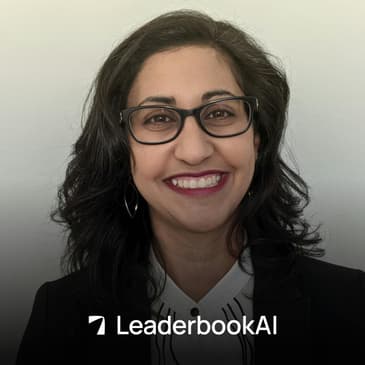
Jennie Ibrahim, Engineering Manager at Google, unpacks the barriers women face in tech, from hostile environments to impostor syndrome, and explains why sponsorship—not just mentorship—is key to driving real inclusion and career growth. Addressing these issues is a key leadership challenge for maximizing value creation and ensuring that AI automation and business process automation teams are diverse, providing essential executive insights.
—
Subscribe to the LeaderbookAI Podcast (formerly CPO PLAYBOOK): https://leaderbook.ai/podcast.
Want to create 10x the value of your business or investments? Let’s talk: https://leaderbook.ai/contact
Powered by the WRKdefined Podcast Network.
[00:00:00] I'm Felicia Shakiba and this is CPO PLAYBOOK, where we solve a business challenge in every episode.
[00:00:08] According to the Society of Women Engineers, only 26.8% of women engineers continue in engineering jobs
[00:00:22] compared to 41% of male engineers.
[00:00:25] Retention of female engineers poses a challenge due to various factors including hostile work environments,
[00:00:33] work-life balance struggles, inadequate support policies, pay in equity and feelings of isolation.
[00:00:39] Women might encounter sexism and exclusion in male-dominated workplaces, hindering their comfort and advancement.
[00:00:47] The absence of female leaders and mentors, coupled with societal expectations and caregiving responsibilities,
[00:00:54] can impede career growth.
[00:00:55] Unconscious biases and stereotypes may result in overlooked opportunities and unequal compensation.
[00:01:02] Exacerbating feelings of undervaluation and frustration.
[00:01:06] Today, I'm excited to interview Jenny Ibrahim, Software Engineering Manager at Google
[00:01:12] to tell her experiences on what managers can do to keep women in engineering.
[00:01:18] Jenny, thanks for being with us today.
[00:01:21] Thank you so much for having me.
[00:01:23] I'm very excited to be here today.
[00:01:25] I'm so excited to chat.
[00:01:27] Reflecting on your extensive 14-year tenure at Google,
[00:01:32] could you share where your journey began and what factors have contributed to your decision
[00:01:38] to stay with the company for such a significant duration?
[00:01:43] Yeah, I actually applied to Google two times.
[00:01:46] First time, I did not get in.
[00:01:48] And then second time, I got in.
[00:01:50] The first time, I had been very rusty on my coding
[00:01:54] and I had been doing more of the TL role.
[00:01:58] I was out of practice and rusty with all my coding
[00:02:02] and that's the primary thing that Google wanted in the interview.
[00:02:05] Two years later, I had all of that and I applied for the right position too.
[00:02:11] And so once I got in, I have stayed because of so many factors.
[00:02:16] I love the people that I work with.
[00:02:18] My coworkers are smart and googly as we like to call it.
[00:02:22] And I've been challenged by all of the projects I've worked on
[00:02:27] and I've had great managers for the most part who've supported me
[00:02:31] and helped me to get to where I want to be.
[00:02:35] And in the hard times, I have had hard times at Google.
[00:02:39] I feel like for me it was migrant and not wanting to give up.
[00:02:44] That's what pushed me to keep saying.
[00:02:46] But right now I'm super happy where I am.
[00:02:48] So I think I'll be there for a while.
[00:02:52] And based on your observations, what qualities or behaviors have you noticed
[00:02:58] in effective leaders and managers that could potentially support women
[00:03:03] in their careers and especially in the engineering role?
[00:03:06] From what I've noticed a lot of women and even minorities
[00:03:10] feel like they're insecure or have imposter syndrome.
[00:03:14] And having a manager that can see beyond that,
[00:03:17] that can see that somebody could have these insecurities
[00:03:21] but really looking at the data of what they have provided, what they do
[00:03:25] and helping the person even see that data.
[00:03:29] And that's usually the best way that I've seen somebody supporting the people.
[00:03:36] The data.
[00:03:36] Yeah, letting the manager help the person see that data,
[00:03:40] see the reality of things.
[00:03:42] If the person has been able to do such amazing work
[00:03:47] and there's a new project, if the person is insecure about,
[00:03:50] oh no, maybe you don't want to give me this project,
[00:03:53] the manager should see beyond that.
[00:03:55] And actually with the data that they know of how the person has done,
[00:04:00] be able to give them that project anyways
[00:04:03] and help them see that they can actually do it.
[00:04:05] Look at all of what you've done.
[00:04:07] I think you can do it.
[00:04:08] That's why I'm trying to give you this project.
[00:04:10] Understood.
[00:04:11] So having some clarity around really actually the actions that you've done
[00:04:17] or the impact that you've had in order to support you and grow
[00:04:21] and kind of play in the great area and stretch yourself.
[00:04:24] Yep, exactly.
[00:04:25] And how do you think managers can really cultivate an environment
[00:04:29] where women feel psychologically safe,
[00:04:33] especially in teams where they are outnumbered by men?
[00:04:37] And I see this a lot in engineering, also in biotech
[00:04:43] and obviously in more places.
[00:04:45] But where do you think managers really play that role in psychological safety?
[00:04:51] Maybe 10 years ago I wouldn't have known how to answer this question.
[00:04:55] But I've seen such amazing leaders
[00:04:58] and so I'll give you some examples of what they've done.
[00:05:01] One is I was in a meeting room with about 20 people,
[00:05:06] maybe 15 people and five people on the call.
[00:05:09] So around 20 people in the call.
[00:05:11] And we were in a heated discussion.
[00:05:13] Everybody was trying to say something.
[00:05:15] And I had something important to say
[00:05:17] that would have answered a lot of the question
[00:05:19] and nobody was hearing me at all.
[00:05:22] And so this manager who was on the video call
[00:05:26] was trying to say something.
[00:05:28] Nobody could hear him.
[00:05:29] The volume was low in the meeting room.
[00:05:31] Eventually when we heard him, he said,
[00:05:34] Guys, I want to hear what Jenny has to say.
[00:05:37] And it was nice that I had something important to say,
[00:05:40] but that made me feel supported.
[00:05:43] And after the fact he asked me, how did that go?
[00:05:46] Did I do that right?
[00:05:47] Should I have done something different?
[00:05:49] That I feel was one great way of explaining it.
[00:05:52] He also has in other times asked me before something
[00:05:56] to see if that email that he was going to send
[00:05:59] in support of women made sense.
[00:06:02] Another time I kept noticing that I was
[00:06:05] the technical lead of the team.
[00:06:06] I kept noticing that people on my team,
[00:06:09] after I would give an answer to a question they had,
[00:06:12] they would go and talk to my boss for a second opinion.
[00:06:16] And I brought this to my manager's attention
[00:06:19] and he's like, oh, okay, I got this.
[00:06:22] Is it okay if when they ask me that I say,
[00:06:25] if Jenny said it, let's go with that.
[00:06:27] And I loved it.
[00:06:29] I was like, yes, that sounds great.
[00:06:31] So I loved that he asked beforehand
[00:06:34] and he had a plan that he wanted to execute
[00:06:37] to make it right.
[00:06:38] And after a while, people stopped asking him
[00:06:40] because they knew that he would just point them back to me.
[00:06:44] That was one manager, another manager.
[00:06:48] He was my advocate.
[00:06:50] He was my sponsor.
[00:06:52] Anytime in the rooms where all those things happen
[00:06:56] where my promotions were discussed,
[00:06:58] where I wasn't there, he would advocate for me.
[00:07:02] And that just supporting me in all of that
[00:07:05] has been incredible.
[00:07:07] It almost sounds like the mom and dad issue
[00:07:11] where it's like, if mom said it, go with mom
[00:07:15] or vice versa, right?
[00:07:17] And I can't tell you how important that is
[00:07:20] to just what I know about raising kids.
[00:07:24] I think it's so important to see
[00:07:28] where leadership is aligned and supported.
[00:07:33] If my director part goes above me and asks my manager,
[00:07:37] I would feel like my word wasn't good enough
[00:07:41] for my director part.
[00:07:42] And sometimes it's not.
[00:07:43] And I'm good with getting challenged
[00:07:45] and I think you are too,
[00:07:47] but that challenge and those diverse perspectives
[00:07:51] should be heard with you,
[00:07:53] not necessarily with the person managing you.
[00:07:57] And I think that does play a critical piece
[00:07:59] to psychological safety.
[00:08:01] I see where you're coming from that.
[00:08:02] And I think that was a great example.
[00:08:05] You talked about or you mentioned mentorship.
[00:08:08] Many people lean into mentorship
[00:08:11] as the answer for retaining women.
[00:08:15] What's your perspective on this?
[00:08:18] Mentorship is great.
[00:08:19] It will help somebody feel camaraderie,
[00:08:22] feel like they're understood, that kind of thing.
[00:08:24] But that's not what's gonna move people forward
[00:08:27] in their careers.
[00:08:29] I feel like sponsorship is the way
[00:08:31] to help somebody get to that next level.
[00:08:33] Sponsorship is when somebody advocates for you
[00:08:36] in that room where decisions are made about your career.
[00:08:39] And that's what actually drives women
[00:08:42] to higher and higher places,
[00:08:44] not getting somebody to say,
[00:08:46] I understand how you're doing
[00:08:48] or give that which is important.
[00:08:50] But sponsorship I think is what needs to happen.
[00:08:54] And I think the way to start that organically
[00:08:58] is to have people being mentored by somebody who's higher.
[00:09:01] And once that person sees what they can do,
[00:09:04] that could be a way of moving that relationship
[00:09:07] from being a mentor to somebody who can advocate for you
[00:09:10] and say, no, no, no, it's not just
[00:09:13] that she's doing a great job and that's it.
[00:09:15] But no, she should get something
[00:09:18] and a new role or a new project
[00:09:21] or advance and get promoted.
[00:09:24] So somebody to speak up
[00:09:26] because they know what the person's doing,
[00:09:28] I think is how you get that sponsorship relationship.
[00:09:31] It's interesting because I think
[00:09:33] that many organizations don't know the difference
[00:09:36] between mentorship and sponsorship.
[00:09:38] It sounds like sponsorship is really
[00:09:40] around the succession planning process,
[00:09:43] looking at who might be the successors in the business
[00:09:48] and being able to advocate for those individuals.
[00:09:52] And that piece is really critical and important.
[00:09:55] Mentorship sounds making sure that you're feeling good,
[00:09:58] you're feeling confident, you have some growing to do,
[00:10:01] and here's a mentor that can help you get
[00:10:04] to where you want to be.
[00:10:06] There is a very key difference there.
[00:10:08] And I think both have served its own purpose,
[00:10:12] but sponsorship is what companies
[00:10:15] should really lean into more
[00:10:17] if they're looking to diversify their leaders
[00:10:21] in the business.
[00:10:22] Yeah, it's like, yep.
[00:10:23] And the way that somebody gets a sponsor,
[00:10:26] like you can't just assign people sponsors.
[00:10:29] That's not how it works
[00:10:30] because the person needs to believe in you
[00:10:33] and needs to advocate for you.
[00:10:36] So you can't just advocate for somebody
[00:10:38] because you are assigned that person,
[00:10:41] but there needs to be a way that a relationship is formed
[00:10:45] and the person gets to see what the sponsor gets
[00:10:48] to see what the person can do.
[00:10:50] And so can you tell me a little bit more
[00:10:52] about that relationship?
[00:10:53] Like, do you meet with your sponsor?
[00:10:55] How long is that person your sponsor for?
[00:10:58] Do sponsors sometimes come and go?
[00:11:01] What does that look like?
[00:11:02] Let's say my manager has five other people
[00:11:06] that are their peers.
[00:11:08] And those are all the people that go into that room
[00:11:11] and decide on who gets promoted.
[00:11:13] It would be great if it's not just your manager
[00:11:16] who says, oh, she's doing a great job.
[00:11:18] It would be great if two, three other people
[00:11:21] know what you're working on
[00:11:23] and can say, oh yeah, she worked with my team on that
[00:11:26] and she did an incredible job.
[00:11:28] If they don't know what you're working on,
[00:11:30] they can't say that.
[00:11:32] So whether you're meeting with those people
[00:11:35] to let them know whether they somehow know
[00:11:38] from their reports what you're doing,
[00:11:40] it depends on how you want that to happen.
[00:11:44] I prefer that I meet with the person
[00:11:47] that they understand how I'm doing,
[00:11:49] understand what I'm doing and what I'm working on,
[00:11:52] what I'm trying to achieve,
[00:11:54] get advice from them about how life is,
[00:11:58] like what I can do at work to get better.
[00:12:00] All of that stuff are ways to build that relationship.
[00:12:04] They're not necessarily gonna advocate for you
[00:12:06] just because I met with somebody
[00:12:08] doesn't mean that they're gonna advocate for me.
[00:12:10] But you have to build that relationship
[00:12:12] enough that they can do it.
[00:12:14] So they need to have the information
[00:12:16] about what you're doing.
[00:12:17] They need to know what you're doing
[00:12:19] and they need to believe in what you're doing.
[00:12:22] Got it, and that's a very different relationship.
[00:12:24] In your opinion, what steps could managers take
[00:12:28] to ensure that all voices, particularly those of women
[00:12:32] are heard and valued in workplace meetings?
[00:12:36] So in meetings, I notice a few things.
[00:12:39] One is women are interrupted more often.
[00:12:42] And so if you notice interruptions,
[00:12:45] that would be good to notice.
[00:12:48] Let's say one of the people, a meeting is interrupted.
[00:12:51] Easiest way is to say, hey, I wanted to hear
[00:12:54] what Jenny had to say, like the example you gave earlier.
[00:12:58] Yep, got it. Exactly.
[00:12:59] Yeah, it doesn't have to be like some big thing
[00:13:03] like it happened in that meeting,
[00:13:05] but it would be good to ask, hey, Jenny,
[00:13:08] what were you saying?
[00:13:09] Just to redirect the conversation back
[00:13:11] to that person who was trying to say this.
[00:13:13] And after a while of doing this a few times,
[00:13:16] people will notice.
[00:13:17] Another thing to notice is your bias.
[00:13:21] I teach Sunday school and I had put two groups together
[00:13:25] and I said, go pick your name.
[00:13:27] So it was supposed to be a two minute thing.
[00:13:29] They went off, they tried to find something
[00:13:33] and I turned to one of the teams,
[00:13:36] looked at the tallest boy and I said,
[00:13:38] so what did you guys decide?
[00:13:40] And I knew like I had gotten trainings
[00:13:43] and all of that about it.
[00:13:45] And it didn't hit me that I picked,
[00:13:47] and he had no clue.
[00:13:48] He looked at me like, why are you asking me?
[00:13:50] Ask somebody else who might have had more of a voice
[00:13:53] in the meeting or in that group.
[00:13:55] Knowing all of this stuff,
[00:13:56] I still pick the tallest kid
[00:13:58] because I felt like he would know,
[00:14:01] like people would look up to him.
[00:14:02] I don't know what my bias was,
[00:14:05] but I need to check my bias.
[00:14:06] And so think of those things.
[00:14:09] Are you biasing towards somebody or not?
[00:14:12] What are you doing?
[00:14:13] The other thing that I learned more recently
[00:14:17] is people from different cultures
[00:14:19] tend to interrupt or be interrupted more often.
[00:14:22] So Asian cultures predominantly,
[00:14:25] and this is all very generic,
[00:14:27] but they're more comfortable with more silent.
[00:14:30] Middle Eastern countries like where I'm from
[00:14:33] people interrupt because they're so excited
[00:14:35] and they're showing you their excitement
[00:14:37] and all of this by interrupting.
[00:14:39] Americans, there's usually one person finishes the speaking,
[00:14:42] then the next person speaks.
[00:14:44] So you have to notice all of that.
[00:14:46] Some people that report to me,
[00:14:48] I've asked them specifically,
[00:14:50] do you want me to call on you in a meeting?
[00:14:52] Because I noticed you're not saying anything,
[00:14:54] but I know you have a ton of information.
[00:14:57] Would you like me to ask you
[00:14:58] what you're thinking in a meeting?
[00:15:00] And then kind of do what my manager did for me.
[00:15:04] Ask ahead of time and then try something out
[00:15:07] and then after the meeting,
[00:15:09] check with them, see if that was okay or not.
[00:15:12] So culture plays a lot in it
[00:15:15] and your bias plays a lot in it
[00:15:18] and making sure that everybody is actually heard
[00:15:21] is another thing.
[00:15:22] And I don't think that should just go for women,
[00:15:24] but it goes for anybody.
[00:15:27] Make sure that everybody speaks
[00:15:29] is not interrupted, all of that.
[00:15:31] Absolutely.
[00:15:32] And there was one other thing that you made me think of.
[00:15:34] I did an episode with Todd Cashden on diversity
[00:15:39] and diversity of thought.
[00:15:40] And he was talking about this in meetings
[00:15:42] that leaders should always speak last.
[00:15:45] And I thought it was such a minor change,
[00:15:48] yet so impactful to reduce bias in a meeting.
[00:15:54] I think that there's a lot of different ways,
[00:15:55] but examples that you shared are fantastic.
[00:15:59] I'm loving what you've shared thus far
[00:16:02] and it makes a lot of sense.
[00:16:04] And I'm glad that you've actually gone through it
[00:16:06] to tell that story.
[00:16:07] So thank you for that.
[00:16:09] I'm wondering, have you ever encountered situations
[00:16:13] where women in technical roles seem to be undervalued
[00:16:17] or under-recognized?
[00:16:19] Yes, a lot of times.
[00:16:22] I've felt it and I've seen it.
[00:16:24] Some of the things that I've seen happen over and over
[00:16:28] is that they are asked to prove it again.
[00:16:33] So somebody comes in at a certain level
[00:16:37] and then you ask them to see if they need to,
[00:16:41] do you really know your stuff?
[00:16:43] Like double check and then ask them to prove it again
[00:16:47] to you.
[00:16:48] And then once they've done that,
[00:16:51] they now have to do it again the next person they meet
[00:16:54] or the next role that they take.
[00:16:57] And it gets annoying after a while
[00:16:59] that you have to keep proving, yes, I'm technical enough.
[00:17:02] Yes, I've got my leadership.
[00:17:04] Yes, I understand this or I understand that.
[00:17:07] I understand the business.
[00:17:09] Interesting.
[00:17:10] The other thing that I've seen as people post changes
[00:17:15] in one of the managers that I've had,
[00:17:18] he said, other people have told me
[00:17:20] that you've got great leadership.
[00:17:21] So now what I wanna see,
[00:17:23] this is as a new person reporting to him.
[00:17:26] So he asked me to prove that I had good technical ability.
[00:17:31] I did that at the end of it,
[00:17:33] he said, oh, I gave you the hardest project
[00:17:36] from the whole team, you did an incredible job with it.
[00:17:39] And then I told him, okay,
[00:17:41] do you think that I could be a technical lead?
[00:17:44] And he said, well,
[00:17:45] I'm not sure about your leadership ability,
[00:17:48] which he said he understood.
[00:17:50] So every time I would do something,
[00:17:53] he needed me to prove something else.
[00:17:56] So changing what you need the person to prove is not good.
[00:18:01] So have certain standards that you apply across the board.
[00:18:05] And then I prefer having a sheet
[00:18:08] that I share with my reports,
[00:18:10] where we say, okay, these are the things
[00:18:12] that I'm measuring you on.
[00:18:15] You've got that rubric and you're talking
[00:18:18] to every project that the person does,
[00:18:21] what they're doing,
[00:18:22] fulfilling those rubric that you said.
[00:18:24] I think that's a classic case.
[00:18:28] It's so interesting that you share that
[00:18:30] because from the HR function,
[00:18:33] from like the people functions perspective,
[00:18:37] these are the reasons why we put leveling guides in place
[00:18:42] and competencies and behaviors
[00:18:44] that are needed at each level, right?
[00:18:46] And then competencies or specific skills
[00:18:51] and abilities by function, right?
[00:18:54] And so those create those standards.
[00:18:57] I do feel like we might do all of this work,
[00:19:01] but when a manager doesn't share this with their team,
[00:19:05] doesn't pinpoint or point to it in behavioral expectations,
[00:19:10] at least maybe only around performance time
[00:19:13] or succession planning,
[00:19:16] I think it's a missed opportunity.
[00:19:18] And the way that you've shared it and explained it,
[00:19:22] it's the fact that you're leveraging the work
[00:19:25] that we're supporting you with from an HR's perspective
[00:19:29] and integrating it into your business and your team
[00:19:34] to help them keep in the back of their mind
[00:19:38] or top of mind that these are the expectations
[00:19:42] and they are given to everyone by standard.
[00:19:45] And so that does in turn decrease bias in the workplace,
[00:19:50] which is a great example.
[00:19:51] I think that you've shared.
[00:19:52] I didn't know that you did that.
[00:19:54] I think that's such an aha moment for people in my function
[00:19:59] that allows us to think how else can we better support
[00:20:03] the business rather than just giving you a blank sheet
[00:20:07] to managers of this is what we're looking for,
[00:20:09] but actually going a step further
[00:20:11] and having the managers really drive these behaviors
[00:20:14] with their team.
[00:20:15] So it's a wonderful example of thank you for sharing that.
[00:20:17] From your perspective,
[00:20:20] what advice would you offer to women
[00:20:23] who find themselves in environments
[00:20:25] where they are the minority on their team?
[00:20:29] I think a lot of the times,
[00:20:30] and I think this is just at least the technical arena.
[00:20:35] I feel like when we come into work,
[00:20:39] we're a little bit intimidated
[00:20:40] or at least I felt intimidated a lot of the years
[00:20:44] because they all look very confident
[00:20:47] in what they're talking about.
[00:20:48] So they must be right.
[00:20:51] And I've had to learn over the years
[00:20:53] that I need to look at data
[00:20:55] and look at data of what I've done
[00:20:58] and does this match up with what other people have done?
[00:21:01] Benchmarking yourself, yes.
[00:21:04] Because a lot of times we look at the confidence level
[00:21:08] and if somebody looks so confident,
[00:21:10] I'll just take that they know way more than I do.
[00:21:14] That's one of the ways
[00:21:15] I don't actually think it's a good idea
[00:21:18] to compare yourself to somebody else,
[00:21:20] but at least looking at that data of how you're doing.
[00:21:24] And if you looked at that
[00:21:27] as somebody else's accomplishments,
[00:21:30] what would you say to them?
[00:21:32] Do you think that they've done a good job?
[00:21:34] Do you feel like they need to be worried
[00:21:36] about that next project that they're given?
[00:21:39] Probably not because they've done such an amazing job.
[00:21:42] This was advice that was given to me
[00:21:44] when I was in my co-op program at Northeastern.
[00:21:48] They told us, don't apply to a job
[00:21:51] where you're fully qualified
[00:21:52] because you're gonna be bored.
[00:21:54] So it'll be bad for you because you're bored
[00:21:56] and you won't be happy.
[00:21:58] And it would be bad for the company
[00:22:00] because they don't want somebody who is bored in the job.
[00:22:03] So go for a job when you're applying
[00:22:06] if you're fulfilling everything in that role,
[00:22:08] don't take it.
[00:22:10] But there is a Hewlett Packard internal report
[00:22:13] that says that men applied to a job
[00:22:15] when they meet only 60% of the qualification.
[00:22:19] But women apply only when they meet 100% of them.
[00:22:22] Oh, wow, interesting.
[00:22:23] They never gave me that statistic.
[00:22:25] It might not have even happened.
[00:22:27] That report might not have been done
[00:22:29] when I went to school.
[00:22:30] But what they told me set the bar
[00:22:34] for the expectation of what everybody does.
[00:22:37] So to me, it's important to understand
[00:22:41] how men react to different situations
[00:22:45] and how women react to those same situations,
[00:22:48] to know kind of level set
[00:22:51] so that you're not going in very shy
[00:22:55] where they're all going very confident.
[00:22:57] The same thing with even European and American,
[00:23:01] the ways that Europeans and Americans do things,
[00:23:04] Europeans don't brag about themselves.
[00:23:06] They let the data speak for themselves.
[00:23:10] If you're European and you're gonna apply in America,
[00:23:13] that's not gonna work very well for you.
[00:23:15] You need to understand how everybody else is doing things
[00:23:18] and kind of work to be looked at the same way.
[00:23:23] And so I think the same thing works for women.
[00:23:26] I need to understand how men go into a situation.
[00:23:30] If they're gonna be very confident
[00:23:31] about what they're saying,
[00:23:33] even if they don't know what they're talking about,
[00:23:35] I need to understand that,
[00:23:37] I need to understand how I'm being perceived
[00:23:39] in that same situation.
[00:23:41] What strategies do you think companies could explore
[00:23:44] to attract a more diverse range of candidates
[00:23:47] for technical roles?
[00:23:49] I think setting good expectations and job descriptions,
[00:23:53] so they're not asking for 110 things.
[00:23:57] If you're asking for the very specific things
[00:24:00] that you need, that's good.
[00:24:02] Don't make it such a long list.
[00:24:04] Another thing is if you've got great teams
[00:24:07] that are psychologically safe,
[00:24:09] that are welcoming for the women that you do have,
[00:24:12] that by itself attracts people because people talk.
[00:24:16] And so they're gonna say, look at what I've done,
[00:24:19] like what my company does.
[00:24:20] I just told you about all of the amazing managers
[00:24:23] that I've had.
[00:24:25] If I'm telling these stories just to anybody,
[00:24:28] like that tells people this is a great place to work.
[00:24:33] That manager is a great person to work for.
[00:24:35] That attracts people already.
[00:24:38] So if you're looking in the right places,
[00:24:41] if you're looking where women will go,
[00:24:43] do women usually go to hackathons?
[00:24:46] If they do, then great.
[00:24:48] If you're looking for women and they don't go to hackathons,
[00:24:51] look for where they would go.
[00:24:53] And then the same thing with just making sure
[00:24:55] that your groups are psychologically safe
[00:24:59] and welcoming for the people that are there.
[00:25:02] If they're not, work on that.
[00:25:04] Make that better before trying to get more people in.
[00:25:07] And I think to your point,
[00:25:09] if there are companies having events like a hackathon
[00:25:15] and there aren't very many women going,
[00:25:18] they need to probably think about why they're not going.
[00:25:22] What is it about the event
[00:25:23] that is making women question whether or not
[00:25:28] they should participate?
[00:25:29] Is that fair to say?
[00:25:31] Exactly.
[00:25:32] Maybe ask for some feedback
[00:25:34] from the women in your organization
[00:25:37] that probably might help.
[00:25:38] Yes, yep, yep.
[00:25:40] And Jenny, my last question is,
[00:25:43] if you were to suggest first steps,
[00:25:45] what could managers do to get started
[00:25:48] in retaining women in the workplace?
[00:25:50] Make sure that you're an advocate
[00:25:52] for the women in your area.
[00:25:53] Notice when their ideas aren't being heard
[00:25:57] and amplify them so that they feel heard
[00:26:00] even if it's not possible
[00:26:05] and build good psychologically safe teams.
[00:26:09] Don't let bad behaviors just go by
[00:26:12] or little microaggressions go by and slide.
[00:26:16] Make sure that the women actually feel supported
[00:26:20] and heard and welcomed.
[00:26:24] And I know that we've been talking about women,
[00:26:25] but I think everything that we've shared
[00:26:28] and talked about here today
[00:26:29] really applies to any minority.
[00:26:32] And that includes white men
[00:26:34] that might be a minority in their teams, right?
[00:26:38] It could be any of those minority classes, et cetera.
[00:26:43] So Jenny, thank you so much for your time today
[00:26:47] and your insights and sharing your experience.
[00:26:50] Thank you so much for being here.
[00:26:52] It's been such a pleasure.
[00:26:53] Thank you so much Felicia.
[00:26:55] This has been so fun for me
[00:26:57] and it's always fun to talk to you.
[00:27:00] Thank you.
[00:27:02] That's Jenny Ibrahim,
[00:27:06] Software Engineering Manager at Google.
[00:27:08] If today's episode captured your interest,
[00:27:11] please consider sharing it with a friend
[00:27:14] or visit cpoplaybook.com to read the episode
[00:27:18] or learn more about leadership and talent management.
[00:27:21] We greatly appreciate your rating, review
[00:27:23] and support as a subscriber.
[00:27:26] I'm Felicia Shakiba.
[00:27:28] See you next Wednesday and thanks for listening.
Sponsors
