
What makes an executive team truly high-performing?
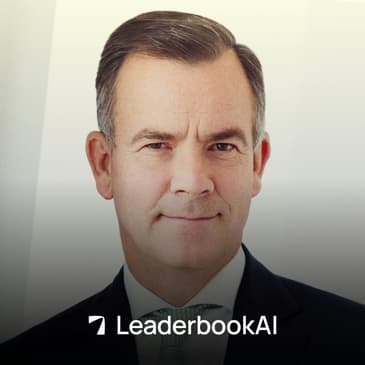
Duncan O’Rourke, CEO of Accor, shares how results-driven leadership, values alignment, and strategic expertise shape executive teams that drive lasting organizational success. Building a high-performing team is paramount to effective C-suite strategy, providing critical executive insights for all areas, including AI automation implementation and complex business process automation efforts.
—
Subscribe to the LeaderbookAI Podcast (formerly CPO PLAYBOOK): https://leaderbook.ai/podcast.
Want to create 10x the value of your business or investments? Let’s talk: https://leaderbook.ai/contact
Powered by the WRKdefined Podcast Network.
[00:00:00] I'm Felicia Shakiba and this is CPO PLAYBOOK, where we solve a business challenge in every
[00:00:07] episode.
[00:00:12] Korn Ferry states that the CEO's most important asset is a high performing executive team.
[00:00:19] When focusing on organizational enhancement, our attention typically gravitates towards
[00:00:24] refining our products, bolstering customer satisfaction and streamlining internal processes
[00:00:30] as key avenues for performance optimization.
[00:00:33] Yet, amidst these priorities lies a profound opportunity often overlooked, nurturing the
[00:00:39] effectiveness and performance of this CEO's most prized asset, the executive team.
[00:00:45] By channeling our efforts into empowering this pivotal group, we unlock a cascade
[00:00:50] of benefits that address myriad challenges concurrently.
[00:00:54] It's a strategic move that not only fortifies leadership, but also catalyzes improvements
[00:01:00] across various facets of the organization.
[00:01:02] It is my privilege today to introduce a distinguished guest who will offer valuable insights on
[00:01:08] crafting successful leadership teams.
[00:01:11] Joining us is Duncan O'Rourke, the CEO overseeing operations in the Middle East,
[00:01:16] Africa, Turkey and Asia-Pacific regions for Accor's premium mid-scale and economy
[00:01:23] sectors.
[00:01:54] We are operating over 5,200 hotels.
[00:01:59] We are really concerned with excelling in customer service and providing our guests
[00:02:03] with the best possible stay that they can have.
[00:02:07] I have the privilege of leading the Middle East, Africa, Asia-Pacific region, that's
[00:02:12] around 40 countries covering probably two thirds of the world's population where we
[00:02:17] operate an incredible portfolio of over 1,000 hotels.
[00:02:22] In this region, in my region, we have around 89 or 90,000 team members working for our
[00:02:30] impressive brands such as the Pullman, Novatel, Ibis, Movenpick, Swiss Hotels, many,
[00:02:36] many brands there.
[00:02:37] Accor actually has 46 brands.
[00:02:40] My executive team, Felicity, comprises of an agile focus team of just seven experts
[00:02:47] who lead these operations, talent in culture and these commercial objectives that we have
[00:02:53] for the region.
[00:02:55] That sounds like an incredible feat to take on that much responsibility.
[00:03:01] How do you assess and measure the effectiveness of your executive team?
[00:03:08] Very good question.
[00:03:09] It's actually a simple answer.
[00:03:10] We are very results focused, making sure we deliver the best results for our stakeholders,
[00:03:17] our owners, the communities, our employees.
[00:03:21] And so it's really a results driven objective, but of course, embracing all our
[00:03:27] values that are so important to Accor.
[00:03:31] Results focused.
[00:03:33] That I've heard of that competency a lot.
[00:03:36] Can you share what does that mean to you and your team?
[00:03:40] We have targets that are pertained to what we're trying to achieve.
[00:03:44] Targets are not only financial targets in terms of growth, growing the portfolio.
[00:03:50] Our targets also include talent and culture, embracing new talent into teams, in hotels,
[00:03:57] making sure that we have the right people in the right place at the right time, making
[00:04:03] sure that the high talent doesn't leave us and that we'll be able to recruit new
[00:04:07] talent into the organization.
[00:04:09] So there's many specific targets in there.
[00:04:13] Again, not all results driven, but always extremely important for what we try to achieve.
[00:04:21] When you are thinking about assembling or bringing together your executive team,
[00:04:27] what are those specific qualities or competencies that you prioritize?
[00:04:32] And I know you alluded to it earlier around managing or creating great teams,
[00:04:39] but what are those specific qualities and competencies that you would factor in?
[00:04:47] People's values play a very important part in my decision making process.
[00:04:51] It's really important that the values that my team have are aligned with mine,
[00:04:56] with the groups and what we try to achieve.
[00:04:59] I also really look for subject matter experts who are the best at what they do.
[00:05:04] And so there's a level of specialization in terms of that.
[00:05:08] And I make sure that I really have the best out there when I'm assembling these teams
[00:05:12] and when I'm creating these teams.
[00:05:15] The leaders, the people on my team should inspire confidence and believe in their
[00:05:20] own teams.
[00:05:21] And that's also extremely important for me that they believe in their own teams.
[00:05:25] I also value people who have the ability to really lead from above, a good strategic
[00:05:31] mindset, be able to see the big picture.
[00:05:33] I actually call it and liken it to looking from a balcony down rather than on the dance
[00:05:40] floor. And so that's also important for me.
[00:05:42] But also when I create these teams, I ask myself, do they recognize the improvement
[00:05:48] opportunities when they come in?
[00:05:50] Do they see what I see that there's a huge improvement opportunity?
[00:05:54] Do they feel accountable for not just their success or their own business area,
[00:06:01] but the entire company's success?
[00:06:03] And do they really have the energy?
[00:06:06] And that's super important for me specifically in the region I'm in.
[00:06:10] Do they have the energy to preserve if it's going to get tough and it always gets
[00:06:15] tough and it will always get tough?
[00:06:17] And so do they have that energy?
[00:06:19] And as I mentioned right when I started there, are they really good role models?
[00:06:25] And it's a challenging thing because when you start to do this composition of the
[00:06:29] team, I like to keep a team small, but not too small.
[00:06:33] It's important that the structure and the organization doesn't really dictate the
[00:06:39] team's membership.
[00:06:40] And so I've worked before with a small team, fewer than six, and that actually
[00:06:45] was detrimental.
[00:06:46] It created poor decision making because there was a lack of diversity.
[00:06:51] There was slower decision making because of a lack of bandwidth, bandwidth as
[00:06:55] well.
[00:06:56] And so the team's effectiveness started to diminish a little bit there.
[00:07:01] And the opposite as well, I've worked in teams and been part of teams where
[00:07:04] there were more than 10 or 12 people.
[00:07:06] And that's also really not the optimal way because it undermines ownership of
[00:07:11] group decisions just merely a lot of time because there isn't time to be
[00:07:15] heard. So getting that sweet spot exactly right is very, very important in
[00:07:20] what you're trying to do and what you're trying to achieve.
[00:07:24] I heard so many incredible competencies there.
[00:07:28] So I heard values based ownership, resiliency, role modeling, diversity.
[00:07:34] These are the focus areas, would you say?
[00:07:38] Correct. Absolutely correct.
[00:07:41] In leading a global team, how do you ensure that there is open communication
[00:07:47] and alignment with the company culture across multiple regions, functions, and
[00:07:52] even subcultures?
[00:07:55] I have a very, very clear framework where we regularly communicate.
[00:07:59] I encourage an open and very transparent culture of communication.
[00:08:04] My executive team, so I have actually eight.
[00:08:07] My executive and I speak weekly.
[00:08:09] It's a short call.
[00:08:10] It's 40 minutes every week, but it's really in terms of alignment and
[00:08:15] airing out any issues or latest news that we need to tackle there.
[00:08:19] I don't have a team sitting in one office here in Dubai with me due to the
[00:08:24] geographic theater where I'm playing.
[00:08:26] I prefer to have it spread out in different offices around the region.
[00:08:30] So we have team members in Singapore, team members in Sydney, team
[00:08:34] members in Bangkok here in Dubai as well.
[00:08:37] So that's a challenge in itself, but this communication or the short
[00:08:42] communication keeps everybody aligned.
[00:08:44] And it's one thing to get the right team composition, but only when the
[00:08:48] people start working together, does the real character of that team
[00:08:53] begin to reveal itself.
[00:08:55] And once that happens, then you are able to achieve really substantial goals.
[00:09:01] And so what I do is no decision of consequence is taken alone.
[00:09:07] It is done with my team.
[00:09:08] Every decision of consequence will be taken with my team.
[00:09:13] And so to be able to do that, you have to have high interaction, a
[00:09:17] lot of trust, open communication, and then that team willing to embrace
[00:09:22] conflict and challenges.
[00:09:24] That's important as well.
[00:09:26] I also let the team work in an environment where they are energized
[00:09:30] because they feel they can take those risks.
[00:09:33] They can innovate and they can learn from outside matters as well.
[00:09:36] So that's probably how I would sum up that topic in question.
[00:09:41] I love that you talked about the character of the team.
[00:09:44] I've never heard it in that phrase before, but I feel like it's so clear
[00:09:50] because it's not just about the individuals that come to the table.
[00:09:57] It's about how they work together.
[00:10:00] And so I think the character of the team, I think is, was really
[00:10:03] important piece to that decisions of consequence.
[00:10:07] I liked that you talked about having those one-on-ones because I think
[00:10:12] a lot of leaders or even executives at your level, at the CEO level, they
[00:10:17] don't always take that one-on-one too seriously, right?
[00:10:21] They're very busy.
[00:10:23] There's a lot of fires they need to put out.
[00:10:25] How do you ensure that one-on-one stays consistent and how important is
[00:10:30] it to you and your team to have it?
[00:10:33] It's very important because you have the team dynamics and you have those
[00:10:37] group meetings as well, but the one-on-ones are imperative in my opinion,
[00:10:42] because it gives each of your team members an ability to go more granular,
[00:10:46] not just in terms of operations or work, but also on a personal level
[00:10:52] of challenges that they're facing within the team.
[00:10:55] And so we spend a lot of time talking about the team that they have,
[00:10:58] the challenges that they are facing.
[00:11:00] And that's very, very important to be able to do that.
[00:11:03] So I think that when we meet together, that balcony view is very, very important.
[00:11:08] And the big picture as we drive forward talking about strategy and goals
[00:11:13] and where we're trying to meet, but that one-on-one is in my opinion,
[00:11:16] just as important where you give.
[00:11:18] And that's why I said, you can't really have that with 13,
[00:11:21] 14 or 15 people just don't have the time to do it.
[00:11:25] And so having the right number of reports to you gives you that
[00:11:29] opportunity to spend time with that one-on-one.
[00:11:32] Just speaking about the teams and the individual one-on-ones,
[00:11:35] when you talk about their teams.
[00:11:37] And so, like I said, I have eight people reporting to me.
[00:11:40] And I actually insisted that those eight executives report to me.
[00:11:44] They only allow to have eight people report to them.
[00:11:48] I've pushed that down.
[00:11:50] And three times a year, what I do is I bring everybody together.
[00:11:55] So I bring all the eight that report to me,
[00:11:57] plus the eight reports of each of theirs.
[00:12:01] And so we meet three times a year.
[00:12:03] And that's a very powerful meeting as well, because you have
[00:12:06] all those executives or the N minus twos coming in, eight from each of them.
[00:12:11] And that also brings a tremendous amount of teamwork, alignment and focus.
[00:12:19] These are skip level meetings that you're talking about?
[00:12:22] Correct, correct.
[00:12:24] I know that you talked a little bit about diversity and how important that was.
[00:12:28] Tell me, what does having that diverse team mean to you?
[00:12:33] What is that difference that it makes at your level?
[00:12:37] I think it's super important.
[00:12:38] Many years ago, I read that all male teams make better decisions
[00:12:44] 58% of the time and gender diverse teams do it 75% of the time.
[00:12:51] And that really struck me.
[00:12:52] And I never forgot that it's so important.
[00:12:55] And our core's values, it's one of our core's major values
[00:12:58] is to have and encourage diversity through the organization.
[00:13:02] We have a target of 49% coming up to 50% of all the teams
[00:13:07] in our core with diversity.
[00:13:09] So that's really important as well in doing that.
[00:13:12] Human resources or talent and cultures, we talk about it
[00:13:15] plays an integral part there as well.
[00:13:17] In fact, my talent and culture, who's on my executive,
[00:13:21] sits on every single meeting, including approvals on hotels
[00:13:25] that we're going to sign or financial plans,
[00:13:28] because there's always a talent behind this financial decision
[00:13:33] or this operational decision.
[00:13:34] And so we encourage all of that.
[00:13:38] That's so refreshing to hear.
[00:13:40] I think that there are many teams and executives as they grow.
[00:13:46] Right?
[00:13:48] You have a tremendous amount of talent
[00:13:50] that you're working with.
[00:13:52] But as teams grow, a lot of times
[00:13:56] where I've seen executives actually
[00:13:59] exclude their people leader from these decision
[00:14:04] making conversations or even from board meetings,
[00:14:08] which quite frankly boggles me because I'm not
[00:14:12] sure how they make decisions without that talent
[00:14:14] perspective.
[00:14:15] But from what I'm hearing from you is that it's imperative
[00:14:18] to have that person in the room because they're
[00:14:20] looking at talent from all angles of the business
[00:14:24] impact.
[00:14:26] That's absolutely correct.
[00:14:27] I encourage talent and culture.
[00:14:29] Our head of talent and culture for the region
[00:14:31] sits in every single strategic decision.
[00:14:34] Any growth that we do in any opportunities,
[00:14:38] any acquisition is around every single decision.
[00:14:41] Just exactly what she said, just
[00:14:43] because the repercussion of that decision
[00:14:46] means that you'll be hiring, talking, growing with talent.
[00:14:50] And so the more they're there, the better
[00:14:52] right at the beginning and part of that process.
[00:14:56] In thinking about those strategic decision
[00:14:59] making processes within your executive team,
[00:15:03] how do you involve the various departments?
[00:15:06] We talked a little bit about your talent and culture
[00:15:09] executive.
[00:15:10] And then how do you bring the team together
[00:15:13] to make decisions?
[00:15:14] Do you parse the team in accordance
[00:15:17] with something that might be specifically going on
[00:15:19] with their functions?
[00:15:21] Do you have a quarterly or weekly meeting with the team?
[00:15:25] How does that decision making process play out?
[00:15:29] I've always said that people learn
[00:15:31] when they're empowered and provided
[00:15:32] with the opportunity.
[00:15:33] So I really invest in my team.
[00:15:36] I spend a lot of time with them,
[00:15:37] and I encourage them to flourish.
[00:15:39] Talking about decision making process,
[00:15:41] we discuss mistakes as a source of feedback and improvement
[00:15:44] as much as we discuss success as well.
[00:15:48] I think it's very important to provide teams with resources,
[00:15:51] with tools to support their interests.
[00:15:54] And really what I do a lot is I don't manage.
[00:15:57] There's no one on my team that I manage.
[00:15:59] But what I really do is I stretch their skills
[00:16:02] and their gifts.
[00:16:03] I stretch them as much as possible
[00:16:06] to really make them better leaders
[00:16:08] and take on new projects.
[00:16:09] What I also have always done this in my career
[00:16:12] is when I've moved up, I've always pulled up.
[00:16:14] And what I mean by that,
[00:16:15] I've always promoted as I've been promoted,
[00:16:18] I've always then pulled people up with me
[00:16:21] and promoted them as well.
[00:16:22] I think that's very, very important to do that.
[00:16:24] So that trust is really important
[00:16:27] in my leadership style.
[00:16:28] I make goals very, very clear.
[00:16:31] I make the goal line very clear.
[00:16:33] And then generally in good plain English,
[00:16:35] get out of the way because the team is dynamic
[00:16:38] and they will get across to the goal line themselves.
[00:16:42] Something I've always struggled with
[00:16:44] is understanding how you address the challenge
[00:16:48] of exceptionally talented executives
[00:16:51] who may struggle with teamwork.
[00:16:54] That's a good question.
[00:16:55] Like I said, I don't hire anybody in the team
[00:16:58] that needs to be managed.
[00:17:00] I do stretch them as well.
[00:17:01] I empower them tremendously.
[00:17:04] I encourage them to take risks
[00:17:06] and I provide them with as much resources
[00:17:08] as I can to be successful.
[00:17:10] There's always in any team,
[00:17:11] there's always healthy competition between the members.
[00:17:14] And that's why you bring everybody together regularly.
[00:17:17] Even if it's a half an hour,
[00:17:18] 14 minute phone call once a week,
[00:17:21] just a quick, a two page PowerPoint, that's it.
[00:17:23] Nothing more, no more than two page PowerPoint,
[00:17:26] just highlighting what's going on.
[00:17:28] What are the challenges?
[00:17:29] What happened?
[00:17:30] And how are we tackling these challenges?
[00:17:32] There's a total alignment in there.
[00:17:34] My team, I'm very proud of that.
[00:17:36] The team that I assembled here
[00:17:38] is so aligned in helping each other.
[00:17:40] And when one is struggling,
[00:17:42] the others are picking them up
[00:17:43] and driving them forward and providing resources.
[00:17:46] And so it's really moving in the right direction there.
[00:17:50] It takes time.
[00:17:51] It doesn't happen overnight.
[00:17:52] It's not in one month that happens.
[00:17:54] You form that team
[00:17:55] and when you form that team,
[00:17:57] there's a little bit of conflict in the beginning
[00:17:59] and a little bit of elbow pushing.
[00:18:02] And that's powerful, the course as well,
[00:18:04] because people are finding their place
[00:18:06] and each member is so different.
[00:18:09] Each talent on that team,
[00:18:10] its character and goals and objectives
[00:18:13] and vision is so different.
[00:18:14] So you encourage that you let that first,
[00:18:17] but not too much
[00:18:18] and you make sure it doesn't get out of hand,
[00:18:20] but that's part of the course.
[00:18:21] And then after that, the team starts to norm
[00:18:24] and you start to really then get that good momentum
[00:18:26] going and the goals and alignment.
[00:18:29] And then later you start to see that probably
[00:18:32] it took me with this particular one here,
[00:18:34] it took me about a year I would say,
[00:18:37] until you really start to see a high performing,
[00:18:41] really dedicated, efficient team.
[00:18:44] And that's a lovely thing to see
[00:18:45] because when you reach that level,
[00:18:47] you can then in my position,
[00:18:49] you can then add more,
[00:18:50] you can add more goals,
[00:18:52] you can add more projects,
[00:18:53] you can add more,
[00:18:54] you can stretch even more,
[00:18:55] you can grow even more.
[00:18:57] And when I say it's,
[00:18:58] I'm not just talking about my team
[00:19:00] of that high performing,
[00:19:01] it's the team below them,
[00:19:03] that N2 team below them
[00:19:05] that is also at a high performing team.
[00:19:07] And it's a lovely thing to see.
[00:19:10] For executives tuning in,
[00:19:12] where should they begin
[00:19:14] to enhance their team's effectiveness or performance?
[00:19:19] I think the most important thing
[00:19:20] is to really have a clear view
[00:19:23] on what you want to achieve
[00:19:25] for your business at that particular time.
[00:19:28] And so be very, very clear on where you want to go.
[00:19:31] And then really spend time
[00:19:33] and a lot of time getting to know
[00:19:35] your team's strengths and weakness.
[00:19:37] That takes a lot of work and a lot of time.
[00:19:39] And then obviously you're gonna highlight
[00:19:41] and optimize the strengths
[00:19:43] and make sure that the places
[00:19:44] where there needs improvement
[00:19:45] are not exposed that much.
[00:19:47] And so that's a dynamic in itself.
[00:19:49] And of course,
[00:19:50] you have to work very, very closely
[00:19:52] with talent and culture
[00:19:53] to really develop programs
[00:19:55] tailored into creating high performance teams.
[00:19:58] And so the first person I hire always
[00:20:01] is talent and culture.
[00:20:03] It's the very first position I hire
[00:20:05] in forming a team,
[00:20:06] because once you align there,
[00:20:07] that trust between you
[00:20:09] and the head of talent and culture
[00:20:11] in being able to create this team
[00:20:13] and drive this team,
[00:20:15] it's so, so important.
[00:20:17] I think as well,
[00:20:18] don't be afraid to use expertise
[00:20:21] from outside your organization
[00:20:23] in terms of team building,
[00:20:25] in terms of motivation,
[00:20:27] in terms of encouragement.
[00:20:30] It's always good to do that
[00:20:31] and to expose your team
[00:20:33] continuously to outside practices,
[00:20:36] even if it's not in your industry,
[00:20:38] just in terms of team
[00:20:39] and what teams are doing.
[00:20:41] I really spend a lot of time
[00:20:42] doing that as well.
[00:20:44] And then again, monitoring
[00:20:46] and having very transparent
[00:20:48] open conversations with your team
[00:20:51] at six months or yearly reviews.
[00:20:54] Be very transparent in what has happened,
[00:20:57] what your expectations are,
[00:20:59] where you are going.
[00:21:00] Don't be afraid to make changes to the team.
[00:21:02] What you thought was a great team
[00:21:04] right at the beginning.
[00:21:05] Maybe you need to make one change
[00:21:07] and tweak in terms of creating
[00:21:09] the best performance for that structure.
[00:21:11] Don't be afraid to do that as well.
[00:21:13] It's never good for the talent on the team
[00:21:16] or the organization
[00:21:18] if there's a misalignment or a mix.
[00:21:19] And don't be afraid to do that,
[00:21:21] but really invest in the team,
[00:21:23] get to know the team
[00:21:25] and have a very, very clear target
[00:21:27] of where you want to go.
[00:21:29] Short term, medium term,
[00:21:31] but most importantly, long term
[00:21:33] and make sure there's a total alignment
[00:21:35] on that as well.
[00:21:37] I think alignment is so critical.
[00:21:39] It's so important.
[00:21:40] I always say that a shake in the leader
[00:21:43] is a shake in the organization.
[00:21:45] I'm sure you know why,
[00:21:46] but from an employee's perspective,
[00:21:49] and I've spent a lot of time
[00:21:51] diving into insights and surveys
[00:21:53] of employee engagement and so forth,
[00:21:55] leadership is such a huge factor of engagement
[00:21:59] all the way down to entry level position.
[00:22:02] And regardless of however many employees you have,
[00:22:05] because leadership is always in the spotlight
[00:22:07] and it is the one major consistency
[00:22:10] that everyone sees in the entire organization.
[00:22:13] And so if you are taking the most common denominator
[00:22:17] and looking at the behavior
[00:22:19] and the messaging and the communication,
[00:22:22] it really, like I said,
[00:22:23] shakes the entire organization.
[00:22:26] And so I think that alignment across the functions,
[00:22:30] especially at the top and what you were talking about,
[00:22:34] I see very clearly is so critical
[00:22:36] because very often cross-functionally teams go silo
[00:22:41] and there is a huge opportunity, I think,
[00:22:45] for a lot of executives to bring those functions together.
[00:22:49] And if they do it at the top,
[00:22:50] it's much easier to do it throughout the organization.
[00:22:54] But I also feel like some of those silos functionally
[00:22:58] are due to how executive leaders at the top
[00:23:02] are working independently versus together.
[00:23:06] Is that be fair to say?
[00:23:08] No, absolutely.
[00:23:09] It's when you look at that, when you form in these teams,
[00:23:11] just thinking back as you were asking the question in passing,
[00:23:15] so you have highly, highly intellectual,
[00:23:17] highly talented individuals on a team,
[00:23:21] but maybe not the best fit for the structure
[00:23:23] and the organization.
[00:23:25] And because they're so talented,
[00:23:28] they're so well-read in intellectual
[00:23:29] in terms of what they can do,
[00:23:31] you make a lot of compromises
[00:23:33] and keep them on the team
[00:23:35] and give them what they want and do what they want.
[00:23:37] But in the end, that's not good.
[00:23:39] It's detrimental to the team.
[00:23:41] And in the long term, it doesn't really pay out.
[00:23:44] And so when you have individuals,
[00:23:46] these highly talented but more lonely,
[00:23:48] you have to really encourage them and embrace them
[00:23:51] and work with them to really be part of the team.
[00:23:54] And that takes a lot of work and a lot of time.
[00:23:56] And so you have to have that talent on your team,
[00:23:58] but you have to spend more time with them
[00:24:00] than to make sure that there is that total alignment.
[00:24:03] I don't just spend time with my executive team.
[00:24:07] When I'm in the offices,
[00:24:08] I walk around the offices continuously.
[00:24:11] I thank people on all different levels in the structure,
[00:24:14] in the organization for what they do.
[00:24:17] And it's not uncommon for me just to walk in.
[00:24:20] I walk past a meeting room and see meetings going on
[00:24:22] just to walk in and sit down
[00:24:24] and listen to what's been discussed
[00:24:26] because you learn a lot in this structure
[00:24:28] where it encourages people at all levels
[00:24:31] to speak their mind and to speak about their concerns
[00:24:34] and what they feel.
[00:24:35] And my team embraces that as well.
[00:24:37] And you get a tremendous amount of information as well,
[00:24:41] different information when you spend time with everyone.
[00:24:44] And so it's difficult because you have so much
[00:24:46] on your plate and you're traveling.
[00:24:47] But my recommendation, do once in a while,
[00:24:50] spend time with the rest of the organization
[00:24:53] as much as you can
[00:24:54] because there's a tremendous amount of talent there.
[00:24:57] There's a tremendous amount of wealth there as well.
[00:25:01] And it's so important you get to know
[00:25:03] future succession planning as well.
[00:25:06] And that's important because you understand,
[00:25:08] you talk, you feel, and you learn.
[00:25:11] And you can start to put your eyes around
[00:25:13] how the succession planning looks in your structure.
[00:25:15] And that's one of the key responsibilities of a CSO.
[00:25:19] I totally agree with what you said there
[00:25:21] and embrace that tremendously.
[00:25:23] Well, Duncan, you've definitely provided
[00:25:26] an incredible amount of insight.
[00:25:28] Thank you so much for being here
[00:25:31] and sharing your story and your journey.
[00:25:35] And it's been a pleasure.
[00:25:37] Thank you so much for having me.
[00:25:39] I really enjoyed speaking with you.
[00:25:41] It's really nice.
[00:25:42] And obviously, I have listened to your other podcasts
[00:25:45] and that and so it's inspiration
[00:25:47] and I'm very proud to be able to contribute to this.
[00:25:50] That's Duncan O'Rourke,
[00:25:53] CEO of the Middle East, Africa, Turkey,
[00:25:55] and Asia Pacific at Accor.
[00:25:58] If today's episode captured your interest,
[00:26:01] please consider sharing it with a friend
[00:26:04] or visit CPOPlaybook.com to read the episode
[00:26:08] or learn more about leadership and talent management.
[00:26:11] We greatly appreciate your rating, review,
[00:26:13] and support as a subscriber.
[00:26:16] I'm Felicia Shakiba.
[00:26:18] See you next Wednesday and thanks for listening.
Sponsors
