
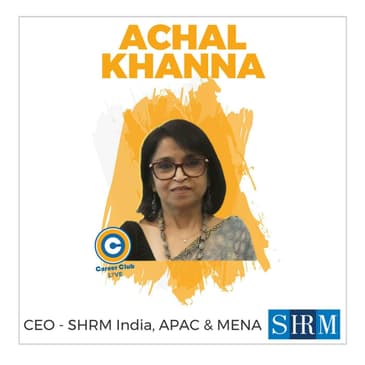
Discover the fascinating world of SHRM's impact on global workforces as we're joined by Achal Kanna, the transformative CEO steering SHRM's course across India, Asia Pacific, the Middle East, and North Africa. Achal's expertise sheds light on the art of creating synergy between academia and industry, and the essential role of purpose-driven work in fostering deep engagement from aspiring students to seasoned boardroom veterans. As your host, Bob Goodwin, I'll share my own odyssey through the corporate realm, offering a unique lens on the strategic integration of HR within the core of business decision-making.
Tune in for an enlightening exploration of India's youthful demographics and its magnetic pull for multinational companies seeking to harness the potential of a dynamic English-speaking workforce. We dissect the allure of India's burgeoning market and its pivotal position in narrating the global economic story. The episode traverses the digital landscape and startup boom of the subcontinent, revealing how a digitally savvy India is paving the way for a revolution in job creation and innovation.
Harness the promise of professional growth with SHRM India as we conclude with a candid discussion on the power of shared knowledge and the cultivation of leadership and teamwork in HR. Learn how Achal Kanna's leadership at SHRM emphasizes cultural fit and shared values, and how confidence, when paired with humility, can transform workplace dynamics. This episode is an invitation to connect with a community poised to shape the future of the workforce and to gain insights into India's exciting digital and economic transformation.
Powered by the WRKdefined Podcast Network.
[00:00:00] Hello everybody, this is Bob Goodwin and welcome to another episode of Career Club Live. We're so glad that you've joined us today. Before we begin, I wanted to just let folks know a couple resources that are available on our website at career.club.
[00:00:24] If you're a job seeker, we are making some free resources available to you including a free coaching call every Thursday that we do at 1 o'clock Eastern Time. No cost, no expectations. We just want you to bring your questions about your job search and we will help you in
[00:00:40] any way that we can. If you are an employer, we would encourage you to go to the employer section on our website where we are offering free candidate resources. So in disposition letters, you've got the ability to provide free resources to build
[00:00:55] your brand and develop a superior candidate experience. So with that let's kick off our episode today. I am over the moon to welcome our guest today. Achal Khanna is a CEO of SHRM in India. Asia Pacific, the Middle East, in North Africa. And with that, welcome! Hi!
[00:01:16] Thanks for calling me to your wonderful platform. Thank you so much for gracing me with your presence I think is the right thing but it's a really generally a pleasure to have you. Thank you. I am most humbled.
[00:01:33] Alright, so we both obviously have connected through Johnny and through Sharm globally but you look after a very, very important piece of the world. Do you mind just sharing, I kind of tick off some geographic regions but would you just
[00:01:49] sort of quickly explain the people what you do at Sharm kind of the geographic responsibility that you've got? As you mentioned, I look after the entire Asia Pacific and Mina and in Asia Pacific the largest territory is India with 1.4 billion people and Asia Pacific is Singapore,
[00:02:14] Malaysia, Ghuam, Philippines and Japan Australia. So that is all the Asia Pacific. Mina is of course North Africa. Mina is also Dubai, Saudi, Oma and Musket. So all Arabic countries. Yes. So it is a big territory and it is one of the most challenging job I am doing.
[00:02:44] And I always say that I am proud in India but I am more proud Sharmite. I love my job every day, I get up with the challenge that what next to do. So it is a great company to work for, organization to work for.
[00:03:04] The reason being that there is a purpose and when you have a job with purpose, you always enjoy. But yeah, I appreciate you bringing that up and just you know in all seriousness talking about
[00:03:17] the geography it is you know the most dynamic vibrant growing part of the world. Obviously we are going to dive into some more specifics about India in particular. But just more broadly like your your remit is really important and as you deliver as you say on
[00:03:38] Sharms purpose you are around work workers the workplace and making it better for everyone. Your your ability to have really meaningful impact is not to be underestimated. Absolutely and when I say that we are a purpose driven organization and I just give you an
[00:04:01] example we influence in this part of the flow the academia. The earlier we are a traditional academia we start with student. We work with them, we give them the right curriculum, we give their right facilitation slides because only right curriculum does not make any sense.
[00:04:23] It need to be taught with the right facilitation slides. We work with the students with practitioners going to the students to teach them and tell them what is the industry need because that is that covers the skills cap. What industry needs so we try to cover that. Yes.
[00:04:40] We work with the early practitioner, we work with the mid level practitioner, we also work with the government, we also work with the public sector enterprise, we also work with the senior CHROs, business leaders and CEOs. So we work with the entire spectrum of the workforce.
[00:05:05] So that is how we are influencing the work the worker the workplace. Which is why again I'm so pleased to have you on because again your finger prints are all
[00:05:15] over all that. So before we dive into the topic do you mind just giving people just a little bit of your career history and how I've been at Charmond kind of wetled up to that? Okay, well I mean I have a more than 25, 20, 80 years of work experience
[00:05:36] and I started my career with selling cigarettes which is IDC which is a bad subsidiary, British tobacco company subsidiary in India which is the largest multinational Indian multinational in India. From cigarettes I moved to DuPont and I launched Lycara and Teflon in India.
[00:05:58] I have a very vast career from there. I moved to Polaroid, you know, instant cameras gratification but as you know people think more about Polaroid is instant gratification but Polaroid is more known for tamper proof IDs, you know the driver license and in India also we want
[00:06:25] the best means we're for one of the states. The Tampa Club ID and the Prime Minister's IDs were also won by us so I work for Polaroid and that is where I started the first software development center
[00:06:40] for Polaroid. That was declared a chapter 11 company so I was hired by GE. I worked there for around four and a half years managing the I would say back office operations for NBC Universal as
[00:06:58] well as GE consumer and industrial then I started my HR journey started when I started working for Kelly services, Kelly girls and I we have some similarity because for Kelly I started a
[00:07:14] senior search wing you know because the temp didn't interest me and I said no no I should do something different so for Kelly I started globally a senior search practice and we're still
[00:07:31] existing and which is one of the most profitable business for Kelly and at that time in the year had some entrepreneurial you know a lot of startup entrepreneurial things were coming in India and I did lot of search for Carlyle which had just started their operations in India
[00:07:52] and I did some good searches for them and the CEO of Carlyle said that why don't you start your own company because the best of the search firms I'll not take their names were not able to
[00:08:03] supply the good candidates which you are able to give me and I said I will not do a moment pop shop unless and I'm like at an angel funding so I got angel funding I started my own company
[00:08:16] I sold it off and you know how it is and I was bought by a venture capitalist I was the I was the bonded labor of the venture capitalist and I did that work for five years I was burnt out
[00:08:32] and I wanted a very cushy job and he told me that this is a not for profit cushy job this would be a very good job join as a CEO I joined chairman 2000 11 July as a CEO
[00:08:53] and I was told so many I mean this is what it is and this is the target this is what you are supposed to achieve so many members so many this thing I said oh my god I thought this was a
[00:09:06] cushy job but it was very interesting journey which I started and I am in show for 12 years I was promoted as a CEO for India and then my territory was increased so this is my journey
[00:09:21] and I just love my work every day you exited your passion for your job which is which is awesome but just one thing on your background and then I promised to dive into the topic itself
[00:09:33] but what I really like until I said you've got industry experience right I mean you've been entrepreneur company you've been it fortunate tin with GE and you're kind of everything in between
[00:09:47] and I just think that it's great that you you you understand the the business side of all of this right so that you bring those business sensibilities and acumen to the things that because
[00:10:02] as a business operator it's one thing to have these policy super seniors and mandates and whatever it's a completely different thing to actually build them into the business and the business
[00:10:12] is be successful so that practicality I think is part of what makes you so good at your job yeah absolutely understanding business is extremely important and that is why one of our program which sells beautifully is HR business partner because it is very important for HR
[00:10:33] practitioners to understand business and also we have curated a program finance for HR people because they need to understand the balance sheet very very well unless and until they understand balance sheets or business they would never be able to get the seat on the table so
[00:10:53] they now do get the respect and seat on the table because more and more HR people realize it that they need to understand business exactly exactly all right so what's moving to our topic
[00:11:06] which is India I come into this you know with with some ideas and notions about India and particularly with the workforce the demographics but I'm really looking forward you know maybe
[00:11:20] we can start with this can you just sort of lay some general ground work where I said 1.4 billion people which is an amazing number it's funny obviously even looking at up earlier and you know it said 1.324 billion and like okay 1.3 1.4 billion that point one is 100 million people
[00:11:41] absolutely we just just sort of got the demographics and and just maybe start to get us level set with the population of India yes we produce one not really or like every year if I'm not wrong
[00:11:58] to understand the you know population but the beauty about India is that we are the youngest country in the world with the largest buying power and that is why it is attracting the world vibrant young pop buying power which is 600 million young people and India's dependency ratio
[00:12:24] is declining which means that there are fewer dependence to support you know that is what is attracting India to the world and our average age is 28 years so this means that our buying power is enormous the 600 million people are English speaking and they have the buying power
[00:12:52] so every multinational across the globe want to come and invest in India they want to leverage this manpower for their workforce they want to sell to this manpower their products and services so that is the beauty of India and that is the right that is what is attracting
[00:13:17] everybody to India so so you spoke earlier in terms of just sort of your mandate at Sherman working with academia policy makers and companies themselves how do you guys you know it's one thing to have
[00:13:33] a very youthful population I'm American so you say it's English speaking I'm like yay that's good but what about how do you actually get the skills development kind of alluded to that to make sure that the workforce is actually being trained in the things that there's demand for
[00:13:54] so skills gap is a global challenge I would say what is coming out of academia is not what industry need they would still need on the job training which is a global reality now artificial intelligence
[00:14:14] throws another global reality in my last conference I was interviewing too you know a CEOs of big companies and they were from like Ivy League in C3 and you know what did they say
[00:14:29] and that was the biggest tweet across in India oh degrees are useless skills are important no need for degrees and I said but then why did you get the degrees and why your kids are going to
[00:14:43] the Ivy League colleges so degrees are important but skills are also very very important so in India I would say and so in term in collaboration with the industry as well as there are industry bodies
[00:14:59] like CII, Confederation of Indian industry like NASCOM like US India Strategic Partnership Forum there are a lot of industry representation we have developed courses to reduce the scale gap which industry needs and that is and we are developing those courses and government is also
[00:15:23] doing lot of investments and engaging organizations like Sharm and many other organizations it's not only Sharm but many other organizations and like we are also part of capacity building in India means Prime Minister invited us to be part of capacity building and developing
[00:15:46] curriculum which is more skill focused so that we are able to fulfill the industry need so it is not only the industry need but Prime Minister has also created a capacity building to train
[00:16:04] 22 million bureaucrats because he is conscious of the fact which is reality he says that even the bureaucrats their training is also more I would not say outdated but their curriculum also need to be revised they need to know more corporate governance they need to know more digitization
[00:16:31] they need to have more financial acumen they need to have more latest HR policy so in fact on Prime Minister's mission on mission Karam Yogi which is hard work and sincerity and English I'm
[00:16:47] translating because mission Karam Yogi is that Johnny was part of that and we developed that specifically the HR curriculum was developed Sharm was part of that so it is across in India we are working with the government as well as industry through various bodies not
[00:17:07] alone Sharm but through various industry bodies whether it is NASCOM which is related to IT skills whether it is CI which is a confederation of Indian industries on reducing the skill cap have we
[00:17:23] achieved the goal no because it is every time there is new challenge which comes up as I said artificial intelligence we don't know what new thing will come now there is jack jipity then
[00:17:36] there is fraud jipity so we need to learn how to overcome all these you know I would say a new challenge which are thrown on us yeah so in terms of the skills I you you fascinating me on the
[00:17:50] skills part of this and it's very interesting to hear CEOs of big companies say degrees or I don't use less I agree with you I don't know they're useless but you know there's certainly not the
[00:18:02] be all in-dall that they they have been traditionally I think of India is being very strong and STEM right you know very strong and math very strong and engineering very strong and technology
[00:18:17] site like like for me you guys the institutions that you guys have over there are world class and are producing you world class talent you're where's where's because I feel like you guys
[00:18:31] already have a lot of this in place what's shifting what what do you guys doubling down on that that are you're preparing these 600 million folks for you know the future of work is it more technology
[00:18:47] okay so I would say you know in IT we have proven our track record and that industry is growing by 10% year on year it's I don't know how many billion dollar industry but it is really growing
[00:19:01] and it is on track and it is improving but India is also have of medical ideas in genaring instructional design any kind of research all big force have their research center in India so
[00:19:17] all high end research is happening here and I would say Jack Welch had that vision way back 20 years back because the GE's biggest research center which is Jack Welch technology center where aircraft engine research or any medical research was being done in India it's still continues to
[00:19:42] invest in India you know those GE's now a very small company where it used to be 130 billion or company when I was working in that so it was a huge center and we always used to be proud
[00:19:54] of that research center similarly you know means the extent you are the Microsoft Googles the all these companies not only that all the manufacturing companies are investing in India for their ancillary manufacturing in India because Prime Minister has also started
[00:20:21] American India initiative which is a big initiative to leverage the engineering base in India you know because there is a big engineering talent pool in India now when Johnny was here when he was co-chair for skilling and mobility and he was here at G20 summit
[00:20:47] he got to interview the IT and skilling minister Rajiv Krishna so when he was interviewing him and one of the questions on leveraging the engineering talent pool and making us initiate what is the value proposition we are doing we say that okay we accept that India's productivity
[00:21:15] of an employee is low so what we have told to car manufacturers in Japan we will give you a talent pool of engineers you take them to Japan they're very shortage of manpower all you need
[00:21:33] take this talent pool train them on your shop floor you give them a stipend you give them three meals a day and you give them a place to sleep or rest train them for two years in the mean
[00:21:47] time you have a manufacturing plant in India which would be a world class manufacturing plant this talent pool is now trained by you once they are trained bring them back here because your
[00:22:02] cost up production will go down because you're not paying them any salary you are just paying them stipend and three meals a day you these trained people now you can't say because they are trained by
[00:22:13] you they would be productive because they are trained by you bring them back in the meantime your plant is ready start manufacturing this is make in India initiative which is a big initiative prime and under the leadership of Prime Minister Modi similarly you know I mean there was
[00:22:29] big article in New York Times similarly the next iPhones which you will buy would be make in India so similar kind of deals have been signed by Tim Cook with many manufacturers even in US and Europe and Germany on various manufacturing initiatives to use the engineering pool
[00:22:57] pharmaceutical pool and many other pools so that is how we are working no it's brilliant so make in India and I that's just such an interesting concept and you take a country like Japan that is aging it's super expensive right and you know they can
[00:23:19] kind of see not a good light at the end of a tunnel and it's like well how do we solve for this and then for you guys it's like well we can go get best in class training right from these
[00:23:31] world-class manufacturers and provide an incentive for them to relocate some of their manufacturing capacity as you said earlier in the world's fastest growing consumer market so it's a win-win for them exactly and same way we are working on the hospitality industry same way we are working you know
[00:23:55] because specifically the housekeeping staff because India the biggest advantage of India 600 million professionals is they are all English speaking because our work language is English so even if you look at it housekeeping staff is in shortage across the globe yes and India can you know
[00:24:16] means all the hotel chains India tourism industry is like really doing exceedingly well so all these trained people can even means a firm does Jay one visa as they can go for training come back
[00:24:32] and work back in India so it is a win-win situation and that is what we work on skilling and mobility that is that is the need of the R I would say to serve and make it one world
[00:24:49] work together and everybody can thrive and every company is it will benefit everybody one of things they did in one of our earlier conversations you had shared with me that I think is really interesting is going from tier one to tier two cities and kind of
[00:25:08] diversifying where the labor pool is so that it's not just concentrated in mega cities but there that you know the economic benefit is touching more people can you kind of describe a little bit about tier one and tier two cities absolutely you know first the concentration was in
[00:25:31] Bombay which is now called Mumbai Delhi which is national capital region Bangalore Delhi is like a Washington DC Mumbai is the financial capital like New York Bangalore is the Bay Area where all the IT companies stays so the concentration was all in these
[00:25:50] cities and they were like crowded like and over Capast thanks to COVID everybody started working from home and also India had a little bit of a bad infrastructure in the tier two and tier three cities
[00:26:07] good thing is that India invested a lot on infrastructure in tier two to tier three cities and also now we have got and when the COVID hit everybody started working from home and they went
[00:26:22] to their two tier two tier three cities government was forced to invest a lot on the infrastructure specifically on digitization so I'm proud to say that India is one of the most digitally
[00:26:36] savvy country in the world so when they moved to two and three cities they were as efficient and simultaneously the infrastructure also moved in tier two and tier three cities and now also what happened was there is when the infrastructure moved they were not required the companies also
[00:27:00] invested in those tier two and tier three cities they opened offices there was manufacturing plants which opened they were more wealth created they were more jobs created and which was win-win situation for everybody and to also answer to that also is earlier the foreign direct investment
[00:27:21] was always in these three concentrated people these three cities but I would say now it will look at the statistics in every state in India there is foreign direct investment it is not restricted
[00:27:39] to this couple of states like earlier it used to be now it is in smaller states also there is foreign direct investment because there is an opportunity there is more wealth creation there is
[00:27:53] more job creation and it is a happy situation in tier and tier two three cities and you can attract better talent there too because they don't want to leave their homes they don't want to
[00:28:05] India is very family-oriented company sorry country where people don't want to leave their parents and go to bigger cities and work so it is not still a nuclear family kind of a situation here
[00:28:21] they love even their parents no it's which is where I think one of the the needest things about the Indian culture so we we've talked about like a lot of big companies and stuff but there's a
[00:28:34] lot of entrepreneur ship happening and startups can you talk a little bit about that piece of the economy So India has always been an entrepreneurial driven country but because of the lack of funds and
[00:28:54] lack of infrastructure, lack of policy that was the reason entrepreneurs were not able to survive or thrive but when Prime Minister Modi in 2016 put the thirst to start up India campaign believe it or not we have 81,000 startups which are thriving now there were many more
[00:29:24] but 81,000 startups are thriving and doing exceedingly well and they say that through these startups there would be around 100 million jobs which will be created by 2025 so that is a nutshell about the startup India campaign and they are in various areas and this is mainly because of
[00:29:53] investment until to a dear three cities. Well that's it's funny I appreciate you seeing that because that's exactly where my mind was going as the infrastructure the talent is kind of gone
[00:30:06] back home as you say kind of due to COVID and then the funding of course it all comes down to money at some point that you've got smart people with the right tools, with money, with ideas and now they
[00:30:22] put the opportunity and then I'm sure you know this in the US you have the vast majority of employers in the US or small businesses it's not the big companies and so that's what creates a very
[00:30:34] diverse thriving economy that you're not just dependent on one thing or another but it's spread out and it seems to benefit everyone. Yeah and they are focused on specific sectors like infrastructure, skill development you know and but foreign direct investments so it is
[00:30:56] it is an all way it is a good good situation. So so as the CEO of Shirm in the A pack, Mina what's keeping you up at night that we've talked about a lot of tailwinds what are the things that
[00:31:16] keep our job in night a little bit. You know what actually it is nothing worries me to be very honest with you there's nothing to worry about because we are really doing very well
[00:31:33] and means we have a very happy cultured here in Shirm India and we have a Mina office as well as we have this year open Saudi office so it is really a good good position to be in in all respect
[00:31:55] what keeps me up in night is what next big thing I can do for Shirm. Yeah you know because I'm per se a nice way aggressive person and very competitive so these two things and I
[00:32:13] I compete I'm like a game of golf you know you're competing against yourself what best thing you can do for Shirm and for your country. So these are the two things which keeps me up at night
[00:32:28] you know what is the thing which we can do next big challenge which will be a really big one. So that is what you know when it's like I would love to do a big bigger conference
[00:32:45] it's it's a big dream but it is our one of our guiding principle is bold purpose so unless and until you have a bold purpose and big dream you will never be able to achieve it and so
[00:32:58] biggest dream is and there is no other country which can do it is why not have a like Shirm and will conference why not have that kind of a conference in India. I mean like I want to go. Last thing this is not you know a discussion guy
[00:33:19] but given your background and your exposure to so much talent when you're hiring people when you're promoting people what are the talent attributes what are the qualities that you look for?
[00:33:38] Actually you know what I look for is I look at a person I don't go for a job description I mean of course you look at her I look for more for a fitment cultural fitment that is more
[00:33:55] important he can or she can be a highest achiever he or she can be have a greatest of qualification but he or she does not fit in Shirm culture he's not the right person because
[00:34:16] one person who does not fit in the culture would be a disaster that is why we make sure that there are multiple rounds of interview and I will try an interview each and every candidate.
[00:34:32] But besides there's an intuitive feeling are there questions that you like to ask to kind of tease out the cultural fit. One is like intuition you come to know how the person talks and you know
[00:34:47] how comfortable he or she is and now that I have interviewed so many people in my life and I'm a totally people managers but people manager and I do my business from heart so you come to know
[00:35:01] I work on my intuition and my HR is my right and left hand. So I work very closely with my HR person. So as I said that we get two multiple rounds of interview and normally we are
[00:35:18] right in our hiring the person but the right question we I would say there is no such right or wrong questions but it is more intuition I would say which works in our case. One of the things that we teach our clients is we say people hire people.
[00:35:44] And your resume might get you the interview but ultimately people hire people and the double click on that is what I've kind of distilled down into three P's which is proficiency you have to be
[00:35:58] good at the job like I mean you have to know how to do if you're a digital market or you need to know how to do digital marketing. So it's sort of take that as just table stakes.
[00:36:08] The second P is passion and you talk about the purpose of Schermer earlier and it's like you need to have passion for what is this company about what are they doing, who are the
[00:36:20] customers if they serve like and you need to be able to exude that in a very authentic way and then the third P is personality which is kind of part of what you're saying which is are you a good fit here
[00:36:35] like can I see you can I see working with you do can I see you working with our colleagues here do you look like somebody that you know shares the same values that we do right without being a
[00:36:47] clone of everybody else. So proficiency passion and personality does that resonate with you? Absolutely and I call it ABC a person who looks to be aspiring for something high be perfect in everything you know try to be perfect perfectionist and see confidence.
[00:37:15] So if he or she walks in with confidence he has aspire and agility you know means if a person and flexible so that you continue and be is so I follow the ABC rule. So it is somewhere similar and when I was hearing your
[00:37:41] introduction I would definitely like to join if you will permit me your coaching class for I'm not looking for a job but certainly as a candidate you know how do you coach the candidate because it is always good to learn. So I found that very very interesting.
[00:38:04] Well I was sending the invite you you have a forever invite to that. Yeah I want to pick up we're going like in a little bit of a different direction for men up at that school on this confidence piece. This actually came up when our coaching colleague
[00:38:17] you and I are recording this one a Friday I mentioned we do these calls on Thursday so we just had one yesterday and a woman said basically like I hear you on the confidence piece Bob
[00:38:33] but as a woman sometimes that's misinterpreted and that she has struggled to if she's interviewing with a man to find this balance like if a man is confident that's good you know
[00:38:48] he's strong and if a woman exudes confidence that it can be misinterpreted and taken as a negative. What would you have said to her on that call? I would say no not at all it is never misinterpreted as that it is I'm a woman and I
[00:39:07] never ever felt like this because I'm always been very confident and I would say confidence with humility and grace is always respected for women. So that one should never forget but confidence
[00:39:27] is part of a leadership scale or even if you're not a leader you should always have confidence in whatever you are doing. Yes yes I mean what we teach is you need to know your convictions
[00:39:40] what's true for you that you generally believe is true for you when you have your convictions that brings clarity which is I know what to say yes too and I know what to say no too. Clarity leads to
[00:39:51] confidence and then I always say confidence is not cackiness that's different confidence is not arrogance that's different but when we are confident it is contagious. When you believe you make me believe and when we're confidently set up straighter we smile more right and we lean into the conversation
[00:40:13] because you know we're feeling it and it's interesting teaching introverts how to be appropriately confident and I love what you said I'm going to steal this from you the grace and humility piece. I think that applies across the board that when you can be confident but that's tempered
[00:40:32] with grace and humility that's really really good advice. Thank you you know and I mean you know as a woman leader I would always say because there's no shame in accepting that it is man's
[00:40:46] world so you have to be little over confident I would say to get your voice heard but with humility and grace. You know he's don't be boisterous to show that or you are a woman and you know
[00:41:01] don't do that. The woman and let your voice heard. Yes okay so bring it back on to theme for second and bring this to a little bit of a close I have enjoyed so much I've learned a ton about
[00:41:16] the demographics of India I've learned a ton about you know what Prime Minister Modi is doing being very strategic in terms of infrastructure attracting capital developing talent which you know is amazing you know obviously sure it has a very strong presence in India and is able to influence
[00:41:39] you know academia policy makers and the commercial side of it which is awesome. Is there anything that we haven't covered as we kind of bring this to a close or how you might want to just summarize
[00:41:54] everything? I should say you know Asham is playing a critical role in this part of the globe and I feel very proud not alone I have done it it is with my team and my team is each and
[00:42:17] every member of my team is very very proud in whatever work they are doing. I'm happy to share that last year we trained around 10,000 individuals. We were every week we were doing workshops
[00:42:39] in various cities or various organizations so you know we concluded I would say six conferences last year in the region. So which is a great achievement for what we have done with a small team in this part of
[00:43:00] the globe so we feel as I said it is not only me I would say each one of us we are just a team member team and each one of us is very very proud show might that is how I would like to
[00:43:20] say conclude this and we want to grow much faster than we can and I will say is that we all work as one team and we believe in one thing is flock of birds can reach the destination much faster
[00:43:40] than bird alone so we work as one team not only in India but we collaborate with our US team also together because we really believe in collaboration and we thrive with the
[00:43:54] term guiding principles if you are aware of if you're not I can repeat it for you which is you are please please repeat them okay so board purpose excellence and accountability flexibility and agility smart and curious collaborative and openness challenge to sight and
[00:44:16] so we live by these guiding principles I can hear Johnny's voice and oh that's awesome and I'm sorry I'm sorry you ask no please please go another thing what another thing is I believe
[00:44:32] personally in what Lord would thus said is you can light one you can light one candle sorry one candle can light thousand candles but the life of one candle cannot be shortened by lighting thousand candles similarly knowledge sharing knowledge and happiness if you share it it will not
[00:45:00] reduce your knowledge and happiness so we happily share knowledge and happiness and distributed it doesn't shorten our happiness and knowledge and that is what makes us thrive and live more happy and build on your point and not only does it not shorten your life it enhances your life
[00:45:23] and it that's right so that is that is what we all believe and we thrive on I love that okay if I think one of the things that I'd like to make sure that we close on to is
[00:45:36] if people are inspired to learn more about Sharma in your part of the world and how you guys can help their business grow or help them grow in their own professional development what's the best
[00:45:48] way for them to do that? How do you do that? How do we reach out to you guys in Sharma India if they want to learn more about what you're doing and how Sharma can help them grow their business
[00:46:00] or grow their career? Okay they can just reach out to Sharm.org and it will come to us we are all available through our conferences and events so it is very easy to reach us
[00:46:16] because we are very well known brand in this part of the globe. So we'll put Sharm.org on the video portion of this so people you know it but it's pretty easy SHRM.org and there's another piece of paper here. Absolutely not in
[00:46:35] would be better because then it will come to India. So say again Sharm.org.org.org actually there would be a drop down menu which will come down when you go to Sharm.org
[00:46:51] there would be drop down iron and then it comes to us but Sharm.org is what it is. Perfect that's really awesome. I think you do a lovely job of representing both your country and your
[00:47:05] organization. I've learned a ton today I'm sure that people who are watching and listening to this did as well. I just want to give you a very sincere thank you for your time today. Thank you so much.
[00:47:17] Thank you everybody for taking a few minutes out of your day. I hope that you were inspired and educated on the things that I just had to share with us today. I know that I was and we appreciate it.
[00:47:27] If you are listening to Sunni-favor podcast platform a little bit of a rating and review always helps if you are watching Sunni YouTube subscribe like comment we always appreciate that but
[00:47:38] mostly we just thank you for spending a few minutes with us today and hope you enjoyed the rest of your day. With that, I'll talk thank you so much. Thank you so much.
Sponsors
