
Powered by the WRKdefined Podcast Network.
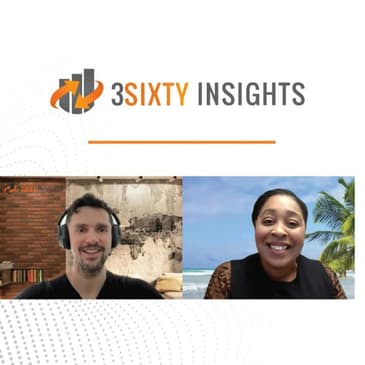
[00:00:00] Hey everyone this is Dylan Taggart here. I'm here with Tiffany Gray for 3Sixty Insights latest HRTechChat. Tiffany has 20 years of experience in the payroll industry, including 11 with the state of Virginia currently. She's working at Riverside Health Systems as a payroll manager and she's also an active member of Peo and currently is the director of memberships at the Hampton Roads chapter of Peo and has also done the
[00:00:30] the most important work on the Virginia State White Payroll Conference Board and currently sits at the secretary. There's so many things to mention about Tiffany, but I'm going to let it turn over to her and have her tell you guys a bit about herself, but I'm very excited to have her here today.
[00:00:45] Hi Dylan good to see you this morning. Yes, I'm very active in the Payroll community. I sit on the educational advisory committee as well as the certification item development task force which actually actively creates the questions for our CPP and our PC exam.
[00:01:05] I also part of the National Speakers Bureau as well as a contributing writer to PayTech Magazine. So you know, I think I can set her five least aim a bit of a work of a wallet when it comes through payroll.
[00:01:18] Very excited about this chat with you today and I'm glad to be here.
[00:01:24] Yeah, pleasure to have you here and I can't wait to get into some of the topics we're going to talk about. The first being.
[00:01:32] How was it working at the state level? I know that you spent a lot of time there and.
[00:01:38] What is one of the biggest takeaways you've had from that time?
[00:01:44] One of the biggest takeaways that I had was working with in the commonwealth of Virginia is.
[00:01:51] The necessity of strong internal controls and strong policies and procedures.
[00:01:58] The best thing about being a centralized state agency or even a decentralized state agency is that the policies and the procedures that.
[00:02:07] And so we're going to be working on our follow by human resources as well as payroll are standard across the state and so it's really easy to stand on policy or to have policy be your active backup for how you want to.
[00:02:23] you want to navigate processes and changes.
[00:02:25] So that's the one thing that I take away from state service.
[00:02:28] It's really helped me to streamline my processing
[00:02:32] in the private sector, because the public sector,
[00:02:37] procedures and policies are so strong and centralized.
[00:02:41] Yeah, do you feel like decentralization
[00:02:44] of some of those policies makes it harder
[00:02:47] to implement new ideas in that,
[00:02:51] and does it kind of create a bit of a slow down
[00:02:54] with, or is it a good thing where it is
[00:02:56] a bit of a slower move to change?
[00:02:59] It is a slower move to change.
[00:03:00] It really just depends on how your agency.
[00:03:04] So if you're a centralized agency, then you're absolutely right.
[00:03:07] You are mainly stuck within the parameters
[00:03:12] of what this policy is.
[00:03:13] If you're a decentralized agency, then generally
[00:03:16] you have a bit more freedom to rework policies
[00:03:20] as your agency's fit, as long as the outcome
[00:03:24] is virtually the same.
[00:03:27] But when it comes to certain things
[00:03:29] like software implementation or reviewing internal controls
[00:03:34] or just some of the reactive type of processes
[00:03:37] that we have as we're implementing new software,
[00:03:41] new technologies and things,
[00:03:43] that usually gives more to opening up the conversation
[00:03:48] to looking back at some of these procedures.
[00:03:50] But when it comes to customer service
[00:03:53] or when it comes to certain things as far as
[00:03:55] what my office is able to do and not do,
[00:03:58] then that's really where having strong internal controls
[00:04:02] and policy to back that up makes it much easier
[00:04:06] for my staff to say, this is what we can do
[00:04:08] or what we can't do.
[00:04:09] Or this is how we can partner and not partner.
[00:04:14] Interesting.
[00:04:15] And I know now that you're working at a recital health system
[00:04:19] which is a huge organization,
[00:04:22] we talked previously I was like dumbfounded
[00:04:24] with how you managed that number of people.
[00:04:29] So I know it's around 11,000 people's that correct?
[00:04:32] Little under 11,000 employees,
[00:04:36] we have multiple facilities.
[00:04:38] And we also have multi state remote workers
[00:04:41] which always adds a layer of complexity
[00:04:44] on both the HR and payroll side.
[00:04:48] But it's not the biggest organization,
[00:04:52] however, in comparison to my team size
[00:04:56] which I have a small team of four,
[00:04:59] it is a lot to,
[00:05:01] and we do process payroll internally.
[00:05:04] What that means is we do not outsource
[00:05:05] to a third party vendor
[00:05:07] or we do all of our processing on site.
[00:05:11] So for a team of my size,
[00:05:13] that can be very involved.
[00:05:16] Yeah, it's the ratio of your team
[00:05:20] to the number of people working there is crazy.
[00:05:24] For sure, but it sounds like you're doing a great job.
[00:05:26] But I know you do one of the ways you go about
[00:05:30] redoing this by having a collaborative team.
[00:05:33] Yes.
[00:05:34] What does that kind of look like in the structure
[00:05:37] and how do you feel like that's added value
[00:05:40] to how you lead that team?
[00:05:43] Or, and has it affected how you run payroll, etc.?
[00:05:49] Yes, absolutely.
[00:05:50] So even though I have over 23 years
[00:05:53] of payroll experience to have a collaborative team
[00:05:57] is incredibly important to me,
[00:05:59] oftentimes as one thing that we're seeing
[00:06:02] in our space is more millennials, more generations
[00:06:06] in the workplace.
[00:06:07] And so now where we were talking pre-COVID
[00:06:12] about managing a multi-generational team,
[00:06:15] currently my team is all under 27.
[00:06:19] So I have a very green team, okay?
[00:06:21] And so they thrive in a more collaborative environment.
[00:06:25] So my leadership style, generally as I'm working with my team,
[00:06:29] is to work collaboratively, collaborative,
[00:06:34] collaboratively with, I can't get that word today,
[00:06:37] Dylan, I am having a hard time,
[00:06:38] but to work with them in a collaborative environment.
[00:06:41] And what that means is it trying to empower them
[00:06:44] to bring their experience, little as that maybe,
[00:06:48] or even as much as it may be, to our team.
[00:06:52] And so currently I have someone on my staff
[00:06:54] that when we hired her, she fluently speaks French.
[00:06:58] And she had previous work day experience,
[00:07:01] we're currently on work day.
[00:07:03] And she had run Canadian payroll.
[00:07:05] And so one of my incentives in bringing her on in my team
[00:07:09] is to see what were some things that she had been exposed
[00:07:12] so even though we're not operating a payroll out of Canada
[00:07:15] just yet to see what her ideas were,
[00:07:18] how does she navigate that processing in work day
[00:07:20] and then use her knowledge as well as prepare her
[00:07:25] for getting her Canadian payroll certification,
[00:07:29] which she could use later on in her career,
[00:07:31] even though she's very early on to it.
[00:07:33] So collaboratively, I'm looking for my team to say,
[00:07:38] this is not to just accept,
[00:07:40] this is what we've always done, right?
[00:07:42] Or this is the way it's always been,
[00:07:44] but to come to the table and say,
[00:07:45] you know, this process is really manual.
[00:07:48] And it's really kind of tedious,
[00:07:50] and I don't feel like it's the best use of my time,
[00:07:53] is there a way for us to improve that absolutely?
[00:07:56] And so I give them, you know, the full access
[00:08:01] to our tenants and things like that to see how we can
[00:08:05] collaboratively improve our processes.
[00:08:08] And not only that not only challenges my team
[00:08:13] to not just do their tasks or day-to-day tasks,
[00:08:15] right in just process payroll,
[00:08:17] but it makes them feel like they're actively improving
[00:08:19] their own duties.
[00:08:22] And they are gonna control of their own day,
[00:08:24] they're in control of their tasks.
[00:08:27] And for the employees that want me to work with them closely,
[00:08:31] and I do have a few employees like that.
[00:08:32] They want that constant feedback,
[00:08:35] if I do want to, you know,
[00:08:36] if I do want to grade, was that great?
[00:08:38] You know, and I'm here to give that consistent feedback,
[00:08:41] and then I have other employees where more,
[00:08:43] they're kind of like, you know, if no news is good news, right?
[00:08:47] So I just work with them that way,
[00:08:50] and it has really made us a strong team.
[00:08:53] And it also gives us an opportunity
[00:08:55] as I was talking a little bit earlier
[00:08:56] about being a part of state service
[00:08:59] to make their audit eyes stronger.
[00:09:01] So they already know,
[00:09:03] because that's the one thing
[00:09:04] about working with the state is that my audit eyes
[00:09:07] had to get very strong.
[00:09:09] And so what makes, they know what my expectation is,
[00:09:12] and then as we start to implement things on the team
[00:09:15] like peer review, meaning that they're reviewing certain things
[00:09:19] before it even gets to my review,
[00:09:21] it really helps them to know what my expectation is
[00:09:26] and also to be able to communicate.
[00:09:28] Okay, this is what I did in this audit,
[00:09:29] this is how I change it, and this is how I feel,
[00:09:32] it's more, it's in a more efficient way,
[00:09:35] giving us the outcome with less time.
[00:09:37] I love outcomes like that.
[00:09:40] And so I give a lot of care,
[00:09:41] what we call care, coins or recognition,
[00:09:44] coins to my team when they do things like that,
[00:09:46] as well as when they provide customer service
[00:09:49] and when they go above and beyond.
[00:09:51] So it's really, really good strategy.
[00:09:53] Yeah, sounds like it's working really well.
[00:09:56] And I think we had talked about how communication silos
[00:10:03] can be an issue, and especially within large organizations
[00:10:07] where a different department can see miles away,
[00:10:10] even if they're in the same building.
[00:10:12] And it sounds like that's a major,
[00:10:15] how you're doing it within your team
[00:10:17] as a major way to overcome that.
[00:10:18] But how do you then interact with a larger organization
[00:10:23] that may have that issue as a team?
[00:10:26] And how do you get your message across?
[00:10:29] That's a great question, Dylan.
[00:10:31] And we do have a lot of communication silos
[00:10:33] in an organization one because we are 60% clinical, right?
[00:10:39] And so we have so in our 60% of our work of population
[00:10:43] are not even on the HCM system,
[00:10:47] because they have so many other systems
[00:10:49] that they have to manage at vacant eye care
[00:10:52] and so many other systems just to get there daily tasks done.
[00:10:57] And so a lot of times with onboarding or recruiting,
[00:11:02] that certain communicative communication
[00:11:06] has not come down to my team.
[00:11:08] And then one thing I talked about is,
[00:11:12] how do we create?
[00:11:13] I create a proactive environment among my team,
[00:11:17] even though I'm a part of a very reactive establishment
[00:11:20] in one way that we try to break down
[00:11:22] those communication silos and spark new conversation
[00:11:27] is that I have a standard for my team
[00:11:29] that we all say the exact same thing.
[00:11:31] And there's a reason why we do that.
[00:11:33] One, it's really hard to get in between a team
[00:11:37] that are all saying the exact same thing.
[00:11:40] And not only that, Dylan, you know,
[00:11:42] one voice screaming on the side of the road
[00:11:45] is often disregarded, right?
[00:11:48] But once you start to add the more voices
[00:11:50] saying the exact same thing in the same volume,
[00:11:54] you start to become recognized and your message
[00:11:57] becomes starts to be noticed, right?
[00:11:59] And so that's the strategy that I use
[00:12:02] to break down communication silos here in the organization.
[00:12:05] And it's been strategic and it wasn't well received
[00:12:09] at first because there was no way to kind of get around us
[00:12:12] all saying the same thing.
[00:12:14] But once some of our partners, you know,
[00:12:17] because to manage its,
[00:12:19] and a payroll, this size,
[00:12:21] there are a lot of external data streams, right?
[00:12:24] Data streams from the timekeeping system,
[00:12:26] data streams from our retirement,
[00:12:27] data streams from our benefit is just so many external data streams
[00:12:31] and what we needed was for internal review
[00:12:34] of all of those data streams prior to them,
[00:12:38] attaching to the payrolls all.
[00:12:39] And so the one way that we could do that
[00:12:41] was by communicating this is how we're auditing,
[00:12:44] this is how we like you to partner as you're auditing
[00:12:47] and keep the communication going.
[00:12:49] And they knew we were gonna ask the same questions
[00:12:51] every single time.
[00:12:53] And so just that,
[00:12:55] that just that consistency where it could be potentially irritating,
[00:12:59] started to become more of a proactive approach
[00:13:02] to ensuring that our employees pay,
[00:13:05] remained accurate and remained timely.
[00:13:09] So,
[00:13:10] as you said, they did the same thing.
[00:13:13] You know, like no one is in the name.
[00:13:15] Yeah, I always remember that I heard someone say
[00:13:18] when someone say one time is that,
[00:13:22] you know, if ever think about what you said
[00:13:24] if you're not telling a lie,
[00:13:27] right.
[00:13:28] And then it's kind of the same,
[00:13:29] it's like, well, if you have a unified message
[00:13:30] and that's the policy, no one can ever be like,
[00:13:33] well, so and so said, well, it's like,
[00:13:35] it's not really the way we work.
[00:13:37] Right.
[00:13:38] It's hard to get between the psyched and toddler
[00:13:40] that asks why, right?
[00:13:43] So it's like, well, you know, why is a sky blue?
[00:13:45] Oh, the sky is blue because at the spirit goes through
[00:13:47] the, you know, the rain drops, okay, but why?
[00:13:50] And then, you know, what does that pair do
[00:13:52] after the fifth why?
[00:13:54] You're like, well, gosh, I have to either make these
[00:13:56] answers more intelligent or I have to shut it down.
[00:13:59] And we never would have shut down our toddler, right?
[00:14:02] So this is the exact same strategy for every,
[00:14:05] why or for every layer of information
[00:14:09] we're giving the same answer.
[00:14:11] And we're trying to keep our tone up beat
[00:14:14] and we're trying to remain with, you know,
[00:14:17] a positive interaction and positive engagement
[00:14:19] and has really helped us to gain more partnership
[00:14:24] and more accountability and break down
[00:14:26] some of these communication silos
[00:14:28] and create more of a proactive environment
[00:14:32] even though we're used to being reacted.
[00:14:37] Yeah, for sure.
[00:14:38] And we know payroll is so, we guys,
[00:14:43] we is a messaging before in our previous conversation
[00:14:47] that payrolls fine and no one really thinks about it
[00:14:51] until it goes wrong.
[00:14:52] It's one of those things, it's like,
[00:14:54] when the traffic like stop working here like,
[00:14:56] you know, it's not, you don't think about it until
[00:14:59] you don't think about how traffic lights work
[00:15:00] until they're not working.
[00:15:02] Absolutely.
[00:15:03] And it payrolls kind of the same
[00:15:05] because when it goes wrong,
[00:15:07] it does have a massive, like, domino effect in people's lives
[00:15:10] and it's very individual, it's very personal,
[00:15:13] which I've heard you say before.
[00:15:15] And, you know, it trickles into people's personal lives
[00:15:20] and a payroll problem becomes
[00:15:22] in like a employee experience,
[00:15:24] probably workforce management,
[00:15:26] problem, a retention problem, you know,
[00:15:29] it just bleeds into everything
[00:15:31] because it is so personal
[00:15:32] and it feels almost, when it goes wrong
[00:15:34] it feels like you were singled out for something.
[00:15:37] I think you've all met experience like that.
[00:15:39] Whether or not that's true or not,
[00:15:41] you know, it does feel like,
[00:15:45] you feel offended for some reason
[00:15:46] if your baby doesn't go right.
[00:15:48] But, um, how do you kind of deal with that
[00:15:52] in such a large organization where you have,
[00:15:55] you know, there's good to be errors,
[00:15:56] even if it's one in a thousand or one in 10,000
[00:15:59] that's still in an organization,
[00:16:00] your size, one or a couple people.
[00:16:03] So, how do you go about doing that
[00:16:05] and how do you make it seem like you're addressing it
[00:16:08] in a personal way that doesn't just feel like
[00:16:11] you're some part of a big organization.
[00:16:15] Yes.
[00:16:16] Organsization.
[00:16:17] Faceless, exactly.
[00:16:18] Well, even though we have a very large employee population,
[00:16:23] my team works really hard.
[00:16:26] One to just try to avoid as many errors as we possibly can.
[00:16:30] So, my standard for all today payroll process
[00:16:35] and is very high.
[00:16:35] And I'm just going to be here to admit that,
[00:16:38] you know, as an accountant
[00:16:41] as someone who is very,
[00:16:43] very committed to accuracy,
[00:16:47] I do require that of my team.
[00:16:50] So, you know, just some of the old school checks and balances
[00:16:53] if there, you know, payroll is a highly transactional,
[00:16:57] highly, highly data entry driven industry, okay?
[00:17:01] Even on the most automated level.
[00:17:05] So even if we're talking about, you know,
[00:17:06] APIs, integrations, interfaces and things like that,
[00:17:10] sometimes those things don't attach,
[00:17:12] sometimes don't think, you know, technology works
[00:17:15] until it doesn't work, right?
[00:17:16] It's just like we have an app that we've used a million times
[00:17:19] and we're finally in the store.
[00:17:21] And as soon as we open it up,
[00:17:22] that's the time it needs to upgrade, right?
[00:17:24] So it's like, oh, I need this to work in the moment.
[00:17:27] And that's kind of how we process.
[00:17:28] So I do have a very high standard for accuracy.
[00:17:32] But the other thing that we do,
[00:17:33] again, other than saying the same thing,
[00:17:35] sticking to our policies and procedures,
[00:17:37] is kind of what we talked about earlier.
[00:17:39] We worked really hard to build our chatbots
[00:17:43] and our virtual assistants to more of a conversational AI tool, okay?
[00:17:50] And so the biggest challenge to that was really trying
[00:17:56] to drill down into our employees' cadence.
[00:17:58] And so I took my staff in our ticketing system.
[00:18:01] These are all of the types of questions
[00:18:03] that we get generally after payroll.
[00:18:06] This is kind of, you know, me kind of
[00:18:08] formalizing a standardization of how they're asking
[00:18:12] those questions and then making the generative dialogue
[00:18:19] smarter.
[00:18:20] And that has really helped us a lot.
[00:18:22] But also my employees, we are committed to ensuring
[00:18:27] that we're responding to our employees within the 24 to 48
[00:18:30] turnaround time.
[00:18:31] They know that they're going to get a response
[00:18:34] that's going to be comprehensive.
[00:18:36] We've worked on job aids and things like that.
[00:18:38] But one thing that we're finding is people don't have time
[00:18:42] to even read the aids that you created
[00:18:44] to help them with their issue.
[00:18:46] And so taking that aid and breaking it down
[00:18:49] into more of a dialogue as they're asking their questions,
[00:18:53] helps employees to feel like they're
[00:18:55] quite that they're able to get to a certain response.
[00:18:59] And then we're able when we're building some of that
[00:19:03] a dialogue to kind of project comprehensively what
[00:19:08] are an acceptable response would be.
[00:19:13] And so working with that interaction,
[00:19:15] working with our HR support team,
[00:19:17] so that employees feel like there is just
[00:19:21] a database of their questions and responses.
[00:19:24] And then also if needed, they can pick up the phone
[00:19:27] and we will call them back timely.
[00:19:31] So all of that has helped to establish a strong relationship
[00:19:34] with our employees.
[00:19:35] But as I always say, our first client is the organization.
[00:19:41] The organization, keeping it compliant, making sure
[00:19:43] we are avoiding tax penalties and just labor discrepancies
[00:19:48] and things like that.
[00:19:48] That's our first obligation.
[00:19:51] But as far as the employee, how do we navigate the employee
[00:19:54] experience and keep it positive?
[00:19:56] Even if we have to tell them information,
[00:19:58] they don't want to hear Dylan, one, we try to remain consistent,
[00:20:01] we try to promptly respond.
[00:20:04] I always talk about not customer service.
[00:20:06] We use our heart, we are here to hear,
[00:20:08] be empathetic, apologize, respond timely
[00:20:12] and then thank them for their time.
[00:20:14] And that's a strategy that has really helped my team.
[00:20:17] And then even when we're having to give them information
[00:20:20] like we're legally required to comply with this garnish
[00:20:23] meant, I understand it is an inconvenience.
[00:20:26] And so I just train my team to understand
[00:20:28] just like you said, hey, it's very personal to employees.
[00:20:33] Their frustration really isn't with us as individuals,
[00:20:37] but more with the fact that this is a situation
[00:20:39] that is kind of out of our control.
[00:20:42] And you know how hard it is to deal with situations
[00:20:45] that are out of our control and just follow
[00:20:48] a certain steps in outcomes.
[00:20:50] So that's kind of how we navigate that.
[00:20:53] We're constantly working on that to improve that
[00:20:56] and to improve the employee experience.
[00:20:58] And oftentimes we find employees, if you speak to them respectfully,
[00:21:03] if you are empathetic and if you try to remain upbeat,
[00:21:06] they will generally give you the grace
[00:21:09] to help resolve the issue and keep it out of that negative frame.
[00:21:16] Yeah, I think that's really important
[00:21:17] because I think talking to someone
[00:21:22] just makes it seem like, yeah, listen, it wasn't an issue,
[00:21:25] but it's not a big deal.
[00:21:28] I think especially someone like yourself,
[00:21:31] I feel like you'd be good at quailing someone's fears
[00:21:33] about her apprehensions about it
[00:21:35] and ensuring that it's going to be made better
[00:21:38] or whatever way it can.
[00:21:40] But I do know you mentioned you use a chatbot
[00:21:43] with the system that people can interact with.
[00:21:46] Yes.
[00:21:47] What is that?
[00:21:48] And what is the reception been like?
[00:21:50] We're working within the help bot within Workday.
[00:21:55] And I've been working with the HR support team
[00:21:57] to like I said, build more of a generative dialogue
[00:22:02] within that space.
[00:22:03] And it's been for those who it's so funny
[00:22:07] because we're trying to get more
[00:22:10] of our clinical population to engage with us in workday.
[00:22:14] You can engage with your HR support person.
[00:22:17] You can engage with your HR business partner.
[00:22:19] You can change your payment elections.
[00:22:21] You can, there's so many things you can do these days
[00:22:25] in the self-service environment.
[00:22:28] But employees don't necessarily have a need to do that
[00:22:32] until something's wrong.
[00:22:34] And then there's an urgency for them
[00:22:36] to kind of learn and navigate all those things
[00:22:39] and get an answer to their question.
[00:22:41] And so what we've been trying to do
[00:22:44] is encourage them to, hey, you know,
[00:22:46] you don't have to wait, you know,
[00:22:47] putting our, like for example,
[00:22:50] putting their W2 document within Workday
[00:22:54] so that they can access it anytime they need.
[00:22:58] Because most people wait until the last
[00:23:00] and then it's report their taxes.
[00:23:02] And if you have separated from your employer a year ago,
[00:23:06] you're not thinking about meeting access to that, right?
[00:23:09] And so let's do it.
[00:23:11] So what we usually do is we're trying to,
[00:23:13] like I said, just kind of project comprehensively,
[00:23:17] what their anticipated response is going to be.
[00:23:19] So right around April or March, we know there's going
[00:23:23] to be a lot of traction for requests for W2 information
[00:23:27] or I need this to be changed.
[00:23:29] I'm looking at this.
[00:23:30] I didn't have enough taxes come out.
[00:23:32] That's a huge question that we get around that time.
[00:23:35] And so building the responses and making it more
[00:23:38] and dialogue.
[00:23:38] So okay, my, well, so something we make it
[00:23:42] is my federal taxes are not correct.
[00:23:43] I did not have enough withheld.
[00:23:46] I need help.
[00:23:47] And so our janitor of AI dialogue would say something like,
[00:23:54] okay, we can help you with that.
[00:23:56] Well, were you given instructions by your tax accountants
[00:24:01] as far as how you would like to change your elections
[00:24:03] for the current year?
[00:24:05] And then they would say yes or no.
[00:24:07] And so then their bot would take them to,
[00:24:09] this is how you change your elections was this helpful.
[00:24:12] No, is this dissolution that you need?
[00:24:14] No, okay, not a problem.
[00:24:16] Just different things like that have really helped us.
[00:24:19] And then there's a point where they can all often
[00:24:22] just request to speak to one of my staff
[00:24:24] or request an appointment or something like that.
[00:24:27] And so we're kind of finding that people want that option
[00:24:31] right away, but what we're trying to do
[00:24:34] is educate them to the point where you have fully,
[00:24:38] you have full control over your tax elections,
[00:24:40] you have full control over your direct deposit elections,
[00:24:43] go ahead and make that stay in the driver's seat
[00:24:47] and make those changes.
[00:24:48] So we kind of had to move that,
[00:24:51] I want to talk to someone right now,
[00:24:53] down a little bit to see,
[00:24:55] and then I also give my staff the data
[00:24:57] to understand really how they can help them.
[00:25:00] You know?
[00:25:01] For sure, yeah, I feel like I am kind of one of those people
[00:25:04] and so I was like, I just want to talk to someone.
[00:25:06] I'm pressing the operator button 3000 times.
[00:25:09] Talk to someone on phone.
[00:25:11] But I think it's a really interesting point, Dylan.
[00:25:15] I think our workers can get a little bit tired
[00:25:19] of automated responses.
[00:25:21] You know what I mean?
[00:25:22] Automated responses that are banking, automated responses
[00:25:25] and every aspect of our lives, even something as simple
[00:25:28] as Instacart, you know?
[00:25:30] Or if you're doing something door-dash,
[00:25:32] you have to talk to automated system before you get a person.
[00:25:37] And so I think sometimes there's some fatigue with that,
[00:25:40] and we try to stay sensitive to that.
[00:25:42] Absolutely, no, it's a really good point.
[00:25:46] And I think a lot of that has to kind of
[00:25:48] goes back to your point of having an empathetic kind
[00:25:51] of reaction to these things where a lot of times,
[00:25:56] I think even if it's not even marited,
[00:26:00] yes, to have the attention,
[00:26:02] I think sometimes people just want
[00:26:03] to feel seen and heard about these things.
[00:26:05] And when the first thing is a chatbot or an AI,
[00:26:11] feels a bit dystopian for that moment where you're just like,
[00:26:14] I can't even talk to a person, why is this happening?
[00:26:17] Right.
[00:26:18] But whether or not that's a valid way
[00:26:23] to look at the situation, I think having someone's ear,
[00:26:28] you know, is vital, I feel like it gives
[00:26:33] immediately give someone reassurance.
[00:26:35] It does.
[00:26:36] And obviously that can go wrong, but it does help.
[00:26:39] Yes, you know, in the payroll environment,
[00:26:42] you have 80% of a chance of this interaction
[00:26:46] starting off on a negative connotation already.
[00:26:49] And so the first thing and this takes some time with my staff
[00:26:54] because when someone is being I rate with you,
[00:26:56] when someone has a tone,
[00:26:58] where they're not even really,
[00:26:59] they don't even really want to hear what you have to say
[00:27:01] because they're already upset that this has happened.
[00:27:04] It takes a lot of de-escalation and patience
[00:27:09] in an individual to get them to the place
[00:27:11] where they are able to hear.
[00:27:13] And there oftentimes where I even as the payroll manager
[00:27:16] for my team, I've done everything I possibly can
[00:27:21] to appease this person.
[00:27:22] And I still have to escalate it, you know?
[00:27:26] And so just, but as you said, just a reassurance
[00:27:30] of having someone else on the other line
[00:27:33] gives that individual a couple things
[00:27:35] and understanding that their pay is just as important
[00:27:38] to us as it is to them
[00:27:40] that we're actively working towards some type of resolution,
[00:27:44] you know?
[00:27:45] And so that's just something we were not able
[00:27:47] to duplicate with that chatbot, right?
[00:27:50] But there were also people who were like,
[00:27:52] well if I could have just found this online,
[00:27:54] I wouldn't have even had to call.
[00:27:56] You got a lot of that type of feedback as well.
[00:27:58] So we just want employees to have all resources, right?
[00:28:02] All access to all information whether that's in an online
[00:28:07] reservoir database or a knowledge base
[00:28:10] or if it is talking to somebody individually
[00:28:14] or in person.
[00:28:16] All right.
[00:28:17] And just to clarify,
[00:28:19] workday is your HM system overall?
[00:28:22] Yes, yes.
[00:28:23] HM system.
[00:28:24] They are HCM system.
[00:28:25] We do use UKG Chronos for our timekeeping.
[00:28:29] OK.
[00:28:30] And for workday have they been,
[00:28:33] have you had a dialogue with them at all about kind of environment?
[00:28:38] You know, well,
[00:28:39] you want to create in your workplace
[00:28:42] that they've been receptive to kind of
[00:28:44] to a two-week system in order to better serve
[00:28:47] by guest your employees.
[00:28:49] Yes, absolutely.
[00:28:50] You know, I had the pleasure of attending workday rising
[00:28:53] for the first time back in 2023 in San Francisco.
[00:28:56] And one thing that I really love about this conference
[00:29:00] is that it's highly driven for the users,
[00:29:03] and not only that potential users,
[00:29:05] I can't tell you how many people were there
[00:29:07] and they were like, oh yeah, we're not even on workday.
[00:29:09] But we come every year.
[00:29:10] It's just like that.
[00:29:11] What does that say about your influence in this space?
[00:29:16] But you are able to schedule brain dates
[00:29:20] and work on specific work on work with experts,
[00:29:24] on-site during the conference
[00:29:25] with some of the solutions that you need.
[00:29:27] And so, and coming back from that conference,
[00:29:30] I was able to deploy certain solutions
[00:29:32] with our HCM internal support team
[00:29:35] that really enhanced our employee experience.
[00:29:39] Like I was saying, bringing, you know,
[00:29:41] we do use a third party for our W2 distribution,
[00:29:45] but also having that secondary distribution within Workday
[00:29:49] was incredibly helpful to the employee,
[00:29:52] because they didn't feel like they had to follow 15 steps
[00:29:55] to get to their document just a few.
[00:29:58] Right?
[00:29:58] And I didn't realize how important clicks were
[00:30:02] to get to, and you don't even think about it, Dylan.
[00:30:07] Like even with something as simple as paying your bills,
[00:30:10] we don't even realize how much the one click technology
[00:30:15] has spoiled us until you have to do more than one click.
[00:30:19] To get to your expected outcome.
[00:30:23] And so yes, I do think they work actively.
[00:30:25] And in there's a lot of, you have some other third party
[00:30:28] vendors that work in collaboration with Workday
[00:30:31] that also do deliver things like tax compliance,
[00:30:34] I and I compliance, and things like that.
[00:30:37] So I hadn't worked prior to this position in Workday,
[00:30:43] but I am very pleased.
[00:30:44] And I am actively looking to make it a better experience.
[00:30:50] I don't only for just my staff before the employees as well.
[00:30:55] Nice.
[00:30:55] Yeah, it sounds like it's working pretty well
[00:30:59] and it sounds like you're making it work better.
[00:31:01] I think just by the way you talk about it.
[00:31:03] And I think your approach is,
[00:31:06] it sounds like it has not a lot of potential
[00:31:11] because I feel like it's already hitting that potential,
[00:31:13] but it has a lot of overall,
[00:31:15] I think the overall way you approach it
[00:31:18] is just very important.
[00:31:19] I think if more people took on a approach,
[00:31:23] I think there'd be a lot of potential
[00:31:24] for just a better interaction
[00:31:27] because it seems like you're really trying to focus
[00:31:31] on the person, even though it's maybe an organizational problem.
[00:31:34] Yes.
[00:31:35] And I think the potential for that at a broader scale
[00:31:39] is huge and I'm sure within your position,
[00:31:41] too, I'm sure there's new areas they haven't discovered,
[00:31:44] but I think you've really hit on a couple things
[00:31:47] that are really important.
[00:31:48] And not everyone really gets, you know?
[00:31:52] Well, you know, Dylan, payroll doesn't often
[00:31:54] get an opportunity to sit at the table.
[00:31:56] Okay, specifically,
[00:31:57] I think we talked about this in our previous conversation.
[00:32:00] Seasuite makes a lot of decisions.
[00:32:02] And so one thing that I do encourage
[00:32:04] when I'm speaking and chapters in different things
[00:32:07] is it payroll gets an opportunity at the table.
[00:32:10] We really want you to take it
[00:32:12] because it really takes about three to four years
[00:32:14] to normal see after you've implemented a timekeeping system
[00:32:17] or even an AC in system, okay?
[00:32:20] Because that first year, you're just trying to parallel
[00:32:23] which you did previously in the other system.
[00:32:25] That next year, you're really starting to see
[00:32:28] some of the outliers that you weren't able to duplicate
[00:32:31] in testing scenarios and so you're really starting
[00:32:34] to get to know that system.
[00:32:35] And then in that third year is really where you're starting
[00:32:38] to understand what the upgrades, how they apply,
[00:32:42] how to improve your system utilization
[00:32:45] among your team and among the various areas.
[00:32:47] And so it's not until like that three or four year
[00:32:50] post-implementation that you really start to create a plan
[00:32:56] to access and utilize that system
[00:32:58] and not just work for the system, right?
[00:33:01] And I think a lot of times in our industry,
[00:33:03] we really get stuck in year one and year two,
[00:33:05] just trying to duplicate what we've always done
[00:33:09] and just make sure the numbers work, right?
[00:33:12] And so me as more of an innovative leader,
[00:33:16] I'm looking to know what the system is gonna do
[00:33:19] and to dissipate the outcome but also improve
[00:33:23] the experience for my staff, right?
[00:33:25] And so when everyone started to talk about generative,
[00:33:29] I mean, I'm sorry, machine learning and AI
[00:33:31] and conversational AI and things like that,
[00:33:34] we in the parallel industry didn't quite understand
[00:33:37] what that impact was gonna be to us and to our teams
[00:33:40] but early being able to embrace it,
[00:33:43] early on, it really gave me an advantage
[00:33:46] to work with the ACM, workday support team
[00:33:50] and then put us at the table to say,
[00:33:52] these are some of our compliance concerns
[00:33:56] that should overall be the organizations concerns
[00:34:00] how can we leverage this technology
[00:34:02] to create a more proactive approach?
[00:34:06] And that was, I mean,
[00:34:08] because really it's all about the bottom line, right?
[00:34:10] It's not necessarily about my team working of thousand hours
[00:34:13] and in fact, that I have a small team really
[00:34:14] it's about the overall impact to the organization
[00:34:17] and so that's really been very helpful
[00:34:21] to put paper on the table.
[00:34:23] Yeah, definitely makes a big difference
[00:34:25] when you have a voice.
[00:34:26] Right.
[00:34:27] Yeah.
[00:34:28] But I just wrap up because it's been a great chat.
[00:34:33] And if there's anywhere people can find you
[00:34:36] is there certain outlets that they should reach out to you on
[00:34:39] or I know you have some articles coming out?
[00:34:41] Absolutely, reach out to me.
[00:34:44] VIA LinkedIn, very exciting.
[00:34:46] You'll find me at tipnale, Gracie P.P.
[00:34:48] And of course, theHRPio.com is my local chapter,
[00:34:54] Hampton Roads, payroll, association,
[00:34:57] a payroll org, chapter, excuse me.
[00:34:59] We're still transitioning, Dylan.
[00:35:01] And then yes, I have a couple articles linked
[00:35:04] in Paytech at Magazine.
[00:35:07] I talk about management compliance.
[00:35:09] My latest article was in the April issue
[00:35:11] that talks about how to implement a pay card program
[00:35:14] at your organization.
[00:35:16] I'm currently working with the DAPA Ryan Yonetta
[00:35:21] at a firm and CPP.
[00:35:22] We're going to be coming out with an article
[00:35:25] later this year about social media
[00:35:27] and building your brand and things.
[00:35:29] So, but Dylan, thank you so much for inviting me home.
[00:35:32] And it's been a great chat.
[00:35:33] I love it.
[00:35:34] All right, pleasure.
[00:35:34] It's been great to be here, Brian.
[00:35:36] And, yeah, I feel like there's a lot more to talk about
[00:35:38] but maybe we'll have a little bit back on another time.
[00:35:40] Yes, absolutely.
[00:35:42] All right.
[00:35:43] Thanks everyone for tuning in.
[00:35:44] And thank you, Tiffany, for joining us.
Sponsors
