
Powered by the WRKdefined Podcast Network.
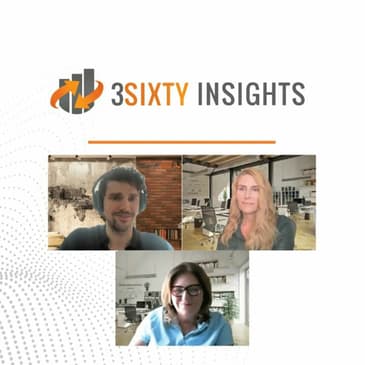
[00:00:00] Hi everyone, this is Dylan Taggart. I'm here for the latest edition of 3Sixty Insights HRTechChat.
[00:00:06] Today I have two special guests. I have Christine Nicholas, the founder and CEO of People Science
[00:00:11] and Jessica Burdo, the director of process engineering at People Science. For those of
[00:00:17] you who don't know, People Science is a talent acquisition and recruitment process,
[00:00:21] process sourcing company based in New Jersey, not too far from me, who I'm in New York.
[00:00:25] And they recently unveiled Hiregate, a technology that completes the recruitment cycle.
[00:00:32] Hi Christine, hi Jessica. Hi Dylan. Hi Dylan, thanks for having us.
[00:00:37] My pleasure and for people that don't know anything about People Science, could you
[00:00:43] give them a brief overview of the company and just tell them a little bit about what you do?
[00:00:48] Sure. So I founded the company in 1997 and the premise then for us really was to help companies
[00:00:57] figure out how to acquire talent. So our foundation is in the advisory side
[00:01:02] and we've got a good legacy there. Shortly after we started the practice, after I opened the
[00:01:07] company, we were asked by one of our clients, listen technologies actually to not only give
[00:01:13] them a schematic on how they could acquire 360 switch technicians at the time these are
[00:01:18] guys with climb poles. So and the reason I'm telling you that is almost an impossible feat, right?
[00:01:25] So we gave them a schematic and they quickly came back and said, look can you put
[00:01:28] a team together to execute that? And that's what fast forward to 2005, the term RPO was coined.
[00:01:37] So we are a advisory service and a recruitment process outsourcing company.
[00:01:41] We also offer a staff log particularly recruitment contractors as it's segue into
[00:01:46] longer term partnerships. And as a result of that, we have had to have our own technology
[00:01:53] to augment applicant tracking systems to capture all the data. So about I'm going to say
[00:02:00] five or six years ago, three of our largest clients said, hey, you know, you're doing
[00:02:05] 5,000 of our hires, we're doing 15,000 total. Why do you have reporting? We don't. And they
[00:02:11] were interested in our technology and asked us to bring it to market. So that's how we
[00:02:15] end up in the tech business. But I think what you'll see, we do a webinar once a month reimagining
[00:02:22] talent and talent acquisition evolved is the name that that's moving to now. So much of the
[00:02:27] data that we've accumulated and that we're able to manage our RPO partnerships with
[00:02:32] and our advisory services come from higher gate. And I think today of all times,
[00:02:38] the world that we're living in and recruiting is finally, in my opinion, coming of age.
[00:02:42] And you can't come of age and you can't really accomplish a well oiled talent machine or prepare
[00:02:49] for the future and hire and retain the right people unless you'll have the data. And the
[00:02:53] technology platforms that are out there now, ATSs are great, but they pick up at the ATS when
[00:02:59] the applicant applies. Today, recruiting is much more sophisticated. It starts well before
[00:03:05] the applicant applies. So being able to capture all the data, where are you going?
[00:03:10] What are the results of your advertising? What kind of sourcing are you doing? Who's
[00:03:14] doing the sourcing? A lot of information that really boils down to tiny metrics.
[00:03:21] Long winded answer before sectors. So advisory, RPO, our technology and staff.
[00:03:29] And it sounds like, you know, well, it sounds like, you know, higher gate and people's
[00:03:37] science were kind of created to meet these like kind of holes in the market.
[00:03:43] As of right now as of 2024, obviously a lot has kind of changed in the last couple since,
[00:03:47] you know, the pandemic. What are some of the trends that you both are seeing in the market?
[00:03:54] And are there any trends that people aren't really talking about the field they should and
[00:04:00] where do you fit into all of that? Yeah, so I think that the C-suite for many years when you
[00:04:08] will get results from the conference board and all kinds of services have had, you know,
[00:04:12] it's always in top three, top five talent. What kind of talent are we going to get?
[00:04:17] I think the pandemic urged an awakening that wasn't there before. So for example,
[00:04:24] we were recently at a conference and there were two different discussions,
[00:04:29] CEOs on the stage with their CRO or CPOs, chief people officers. And the CEOs are actually saying,
[00:04:36] wait a minute, we pushed you to hire like crazy. These are both tech companies, by the way,
[00:04:42] pushed in the tech sector to make all these hires. Then we wound up laying all these people off.
[00:04:45] And the whole time the CHROs are saying, no, you know, that's not what we need to do.
[00:04:51] But without metrics, it's really hard to build that case. So I think that this day and age that
[00:04:58] we're in where we're starting to say, wait a minute, recruiting is not just buy me more people,
[00:05:03] work harder, work faster. It's just not a solution. And you know, the irony is there,
[00:05:08] you would never build any organization. Let's say you're going to start to manufacture
[00:05:13] microchips. You would never say let's just build them faster and harder
[00:05:17] and budget them when things go up and take their budget away and lay them off when they go down.
[00:05:21] You would come in with a well thought out, executed plan based on metrics and your objectives.
[00:05:27] That's not what's happened in talent acquisition. Until recently, we're seeing some big strides
[00:05:32] and we're seeing some interest. We're seeing concerns about budgets. I'm not going to say
[00:05:37] that we're seeing budgets increase because we're not seeing the money put on the pavement yet,
[00:05:42] not to the degree that we'd like to see it be. And we're still saying this,
[00:05:45] things are slowing down. Let me let go of my recruiters. I don't think we're going to see
[00:05:49] a solve for that in this upcoming year, maybe three years, five years, just maybe you have a
[00:05:53] voicemail too. But I think we're starting to see the importance of having
[00:06:00] a talent acquisition strategy and having it execute it well.
[00:06:05] Yeah, I agree with that.
[00:06:07] Yeah. For me, what I've seen since the pandemic is that I think we've been hearing so much about AI
[00:06:16] and what its effect on recruiting will be. And with that, I think the expectation for talent
[00:06:21] acquisition and recruiters particularly is to really elevate themselves. And I think the way
[00:06:27] to do that is to show talent acquisition not so much as a cost center is what it's been seen,
[00:06:33] but really as a strategic business partner. So how do you do that? Right? I think first,
[00:06:38] talent acquisition and recruiters in the seat need to be able to understand the business.
[00:06:43] And then with that, aligning your talent acquisition leads and your recruiters with
[00:06:47] the business's goals. And finally, having talent acquisition be able to speak the language
[00:06:53] with data driven decision making, which is essentially metrics, right? So being able
[00:06:58] to communicate with the business on that level, but they understand really showing the importance
[00:07:04] of metrics there. That's what I've seen so far. And I think when it comes to AI,
[00:07:12] when it comes to technology in every sector, I would imagine, but we live and breathe in TA.
[00:07:18] So what I will say is there's kind of this misnomer AI's going to change everything. It's
[00:07:23] going to read my mind and solve my issue because chat GPT kind of threw everybody for a curve.
[00:07:30] Right? Wait, wait, we can do this. You know, we were on the phone with one of the top three ATFs
[00:07:35] the other day that we're going to a partnership agreement with them. One of the things that they
[00:07:39] were saying is that their CTO made the statement that we fully endorse AI as technology.
[00:07:46] That's what it is. It's advanced technology, but it is technology. And I think that this
[00:07:52] thought that I need to learn besides what my needs are, what is the technology I don't know about
[00:08:04] that can change the game for me. And most of the newer technologies coming out have AI embedded
[00:08:10] in them. So we're seeing enhancements, but I think this kind of deer in the headlights that
[00:08:16] happened when AI, when people started to fully grasp what AI's capabilities are, it's not
[00:08:21] something to fear. It is technology and making smart decisions around that means you really have
[00:08:28] to know your current state. You have to know where you are and what your objectives are and
[00:08:33] understand talent acquisition. I think one of the biggest downfalls that we've seen and Jess,
[00:08:39] you might have some opinions on this too. There are tons, I mean the HR technology
[00:08:44] field is easily a $24 billion industry and it's targeted at continued growth
[00:08:50] that's astronomical. Some of the funds that are going into these technologies, and I can say this
[00:08:56] with confidence because every two weeks, only Tuesday, I sit with our head of IT and we go
[00:09:01] through the new technologies that are out there. As an RPO, we pilot them and we have found
[00:09:07] technology to the same millions of dollars. But for the time and the effort that we've put
[00:09:11] in, I bet we probably investigated at least a million dollars worth of tech that does
[00:09:18] not work or isn't ready yet. Yet we see prospective clients and clients signing on to these,
[00:09:25] I'll call them point systems. If your ATS is managing, or your HRIS is managing, that's your
[00:09:31] base platform. Now here's an assessment that looks really cool that works for maybe one section
[00:09:37] of your organization. We call those point systems. There's a lot of point systems coming out.
[00:09:44] And I think being careful and understanding what your roadmap is, what your objectives are first,
[00:09:48] what your roadmap is, and then investigating what's out there is a better trajectory than saying,
[00:09:55] well that looks good. Let's use it, let's buy it.
[00:09:59] Yeah, I think that's well said because I think a lot of people invest in seeing kind of
[00:10:03] the shiny object that AI is and they're like, oh, it's going to make, it's going to change
[00:10:08] my company. I'm going to be rich because of it somehow. Like as if it's going to be like,
[00:10:14] it's co-CEO in a way. It seems that's the way some people seem to talk about it, but I think
[00:10:19] like you're saying people need to be a bit more realistic and ask themselves, okay, what is
[00:10:24] the, what value is this really going to bring? It's kind of like hiring a new person or like
[00:10:29] a new team. You kind of need to place the value in it and place it on your roadmap
[00:10:33] and make sure it all makes sense because it is just going to do whatever you tell it to do
[00:10:37] ultimately. It's not a, you know, it learns from us and with that being said, I feel like in terms of
[00:10:45] recruitment because it does learn, you know, AI does learn from the people it's recruiting from,
[00:10:51] there have been some talks that it does result and sometimes it can result in a bit of a
[00:10:55] homogenous workforce being selected because the AI is just picking what we like over and
[00:11:02] over again and maybe not noticing the gaps that humans would notice in your workforce.
[00:11:07] Has that been something that you've come across? And if that is a real issue,
[00:11:13] how can it be dealt with and where does kind of the human technology
[00:11:19] line start to blur or where should there be some sort of harmony between the two?
[00:11:25] Well, it definitely starts where you said, in fact we did, I think in November we did a
[00:11:31] presentation in tandem with HR.com about the ecosystem and AI and the ecosystem.
[00:11:38] And, you know, the first thing that came up was exactly what you're talking about,
[00:11:43] you know, like how do I understand what it is it does? And there were some, actually
[00:11:51] I think I pulled some things from ABC, American Broadcasting about how AI only picks up what's on
[00:12:02] the internet really. So they ran a bias test and you can see this on one of our webinars and we
[00:12:08] showed the example of, you know, if you ask AI, I'll give you the fast food side, show me a fast
[00:12:13] food worker, it showed you people of nationalities that would definitely be stereotypical
[00:12:21] and it said, now show me a CO and it showed an older white man. AI is going to reflect what you tell
[00:12:29] it and as far as the ML side, the machine learning side, it's going to do what you do.
[00:12:34] The challenge with TA, let's just take AI out of the equation, let's take technology out of
[00:12:39] the equation because the larger issue with talent acquisition is that you don't understand
[00:12:45] that there's factors you can control. I think when we go, what is the root,
[00:12:50] what is the systemic thing evolving from? Like why is it that talent acquisition is kind of this
[00:12:56] just fine them and we can't do it. It's because people are involved and it's very difficult when
[00:13:00] you make one bad hire to live with that hire right and everybody thinks they can interview.
[00:13:05] So in a business perspective, right from a process side, you would never not have a really,
[00:13:13] focused intention there. So when you have a really, really good strategy, then you're able to say,
[00:13:19] this is what we need and then you collect that data. What we're not doing is collecting enough
[00:13:24] data in talent acquisition and everything that we're getting is after the fact, we're getting it
[00:13:28] after the applicant applies, after they go through the interview process and after they're hired.
[00:13:34] But so much happens in the planning phase and these days in the sourcing phase, I mean
[00:13:40] 10 years ago, I would say the same company that had maybe 80% of their candidates and their
[00:13:46] hires were coming from incoming are inverted. That 20% are coming from incoming and 80%
[00:13:52] are coming from who they have to source and reach out to and engage. It's a whole different talent
[00:13:57] world. The candidate's expectations are different. And if you don't have your finger on that
[00:14:01] pulse, you're already behind. So jumping into a technology or expecting it to solve
[00:14:07] it without the data that it needs, that's your biggest issue.
[00:14:15] And speaking of kind of putting your finger on the pulse of what the candidate wants,
[00:14:23] when you're looking at the market and the hiring market,
[00:14:29] what are some of the key metrics you're looking at to figure that out?
[00:14:33] Because every person is
[00:14:36] beyond everything. I was doing a webinar about this next week, but this is just laughing because
[00:14:41] it's where she was just heads up the advisory. But yeah, you want to talk about EVP for us, Jess?
[00:14:47] Sure. So, you know, EVP your employee value proposition, being able to pull metrics,
[00:14:55] you know, I recently did a presentation on this, especially when you're looking at quality
[00:15:00] metrics. So, you know, the types of people you're hiring into these positions, what's their turnover
[00:15:07] rate? How are they performing? Does this job meet their expectations? And a good way to measure
[00:15:13] that is going back to the EVP. And it's so important to have your employee value proposition
[00:15:19] agreed upon and in place before recruitment even starts because this is the standing point
[00:15:24] for your recruiter to engage candidates, to introduce them to your company if they haven't
[00:15:30] heard of you before. And a good EVP is aligned with recruiting, with the hiring managers when
[00:15:37] they're interviewing your candidates, when they come in and do their training and onboarding,
[00:15:42] and then when they're actually in the state working. So, was everything they were told before
[00:15:47] their start date or six months into their position actually what it is when they're
[00:15:51] in the seat? And you can measure that through your retention rates and your employee satisfaction
[00:15:56] rates. So, I like Christine mentioned EVP is so important in attracting, retaining, and engaging
[00:16:03] your talent. So, it's a good heavy metric to go by. Yeah, if you go back to like the turn of
[00:16:10] the century when I'm going to say white collar workers really started, so we're coming out
[00:16:16] of the industrial revolution, G was a big hire, right? So, if we look at that model, what
[00:16:21] they did is they said, what kind of talent are we looking for and who do we want to attract and
[00:16:25] how do we want to do that? And then, you know, they actually understood and you understood when
[00:16:30] they said GE what that organization was, right? Not that we're trying to replicate that. But as
[00:16:34] we move forward with technology, what's happened it's been like, okay this person's applying,
[00:16:39] let me take a look and see where I am. So, technology has kind of forced us into this
[00:16:43] reactive mode and propagated that even further, right? Today, as organizations sit back and they
[00:16:51] look at the landscape, you need to know who you are as an employer and that's where your EVP comes
[00:16:56] from. If you think of it in this context, if you've ever dated or whatever the case is,
[00:17:01] you need to know who you are before you're engaged with someone, right? And I think
[00:17:07] the companies that are winning at this, they understand their employee value proposition
[00:17:11] because they understand who they are. The challenges that we do see with that is that
[00:17:16] oftentimes, especially in larger organizations, the C-suite will say, well, we're an up and coming
[00:17:23] tech company, true story, and they weren't. They are a legacy organization that's moving
[00:17:30] into the tech field. So, they spent like six years around this value statement hiring
[00:17:34] people from the valley and from all over the, and the turnover was crazy because they weren't
[00:17:39] able to move this large organization into a tech company overnight, right? So, that's an example
[00:17:45] of where an EVP fails. But if you know who you are, if you know what your company's values are
[00:17:50] and what you bring to the table, no matter what they are, right? I think there's this rush to
[00:17:56] we've got to become cooler, we've got to be hipper, we've got to meet Gen Z, we've got to make
[00:18:01] sure we're doing it, and you're not that. And you try to hire to that, it's going to boom
[00:18:05] right. It's a bad situation. So, the idea is to really do the diligence up front and know who you
[00:18:11] are, build your EVP for the organization, tell that disseminate into the departments,
[00:18:16] all the way down to the job function. Make sense? Yeah. And in terms of, you know, if you're
[00:18:24] going back to just like hard data on that, because there is a cultural aspect, of course,
[00:18:29] which is kind of, you can't really put numbers to it all the time. But I know you've
[00:18:36] talked a bit about tangible business metrics and kind of, you know, the metrics that kind of
[00:18:42] move the needle for a business. Do you happen to have, you know, you gave the example of a tech
[00:18:46] company, but do you happen to have real world examples that deal with blue collar and white
[00:18:52] collar jobs as well? Absolutely. And what I'm talking about is kind of agnostic, right? Structures
[00:19:00] across all industries and we do both high volume and higher level lower skilled positions. So, I think
[00:19:08] we have a lot of data. We have a lot of data. But when it comes to measuring things like the EVP,
[00:19:14] I think again, people call it soft skills, you think it's not measurable, yeah it is.
[00:19:18] You can tell by the results from your advertising and when you're sourcing,
[00:19:23] whether it be candidates that are applying your referral candidate base, you know,
[00:19:28] you're looking at your internal base and are you looking at sourcing. So,
[00:19:32] your hire is going to come from one of those avenues, right? They're going to come from
[00:19:35] candidates that you source, those that have applied a referral or an internal that you're
[00:19:40] going to move. So, while your recruiters are engaged with them, they can ask them specific
[00:19:45] questions around the EVP and they can see kind of an, we call it AB testing. Is this the message
[00:19:53] you're getting or is this the message you're getting? What are you hearing and what are
[00:19:56] you not hearing? And then you can trace that using various methods. I know we've used the
[00:20:01] Looad, the method with one particular client to go back and trace that to production and say,
[00:20:06] is this EVP true to what we need and is this an issue that we need to challenge ourselves
[00:20:14] internally? We don't understand our EVP or do we want to change our EVP based on newer generations
[00:20:20] and their values. But the first point is, A, making definitive decisions then A,
[00:20:25] B testing it and measuring those results. It's a lot simpler than you think.
[00:20:29] Recruiters are collecting this data, right? So, if I'm a recruiter and I'm trying to recruit
[00:20:33] Jeff, I can ask her these questions. I probably am. The challenge is where is this data going?
[00:20:39] Am I recording it on a spreadsheet? Am I recording it in a notebook? And I, you know,
[00:20:45] or is it in my mind? So, if I can just record this data and then run a report on it, now I'm
[00:20:52] working with facts as compared to emotions. You know, we have a saying at people's
[00:20:57] science and hire gain that is emotions line numbers don't. It's very difficult to be a
[00:21:02] recruiter. If you've reached out to, think of it this way, you've reached out to five
[00:21:06] people and they all said, no. You feeling good at that point? No. It's kind of like,
[00:21:10] it's very easy to go to nobody wants this job or crappy company. There's not enough people
[00:21:15] have, and all these things happen. But if the recruiter in fact knows, I have to talk to 20
[00:21:21] people to engage one, they're not disappointed at five. Right? So having this kind of data
[00:21:27] is so powerful, not only are you learning your market, you're able to empower your
[00:21:32] recruiters instead of getting annoyed because they didn't fill the job, understanding what's
[00:21:36] going on in the market. We have a case study that we can send you to call it, is it me,
[00:21:41] my market or my recruiters? Yeah, I feel like that could be, you know, it's a common issue,
[00:21:47] I'm sure. And I guess one thing with all this data of one is collecting and I've
[00:21:53] had a talk with someone in IT who's doing IT at a company. And he was running into
[00:22:00] the issue of, okay, we have this massive mountain of data that we're collecting, but no one knows
[00:22:04] really what to do with it. And it's kind of just piling up. So how like, while I do, I completely
[00:22:10] agree that it's good to collect all the data you can, do you tend to recommend that someone has
[00:22:17] a dedicated person or a dedicated person and software, let's say to disseminate the good
[00:22:23] from the bad because I feel like you can, you kind of need to know what to do with it
[00:22:27] in the first place and maybe not everyone has those skills right away. What would you kind of
[00:22:31] advise to someone who's in that position who has been collecting this data but doesn't really
[00:22:36] quite know what to do with it or what's good, what's bad? I don't think there's good or bad data,
[00:22:41] I think there's data. The same data that may not be useful to you, may be useful to somebody
[00:22:46] else. So I think categorizing it, and this is where AI can come in and there's some very
[00:22:50] sophisticated, I know if you're a large organization or you have a lot of data,
[00:22:57] I would look at some of the products that are out there. I know Savvy is one of the ones that
[00:23:01] we've looked at that have worked with the FinTech and the insurance industries because if you look
[00:23:07] at what they've done with AI, I think they're way ahead of the game and no coincidence, they're
[00:23:13] ahead of the game because of the amount of data that they have right? Insurance companies and
[00:23:18] banking organizations have a huge amount of data, whether it's categorized or organized
[00:23:23] well, but you see a lot of startups started even 15 years ago with basic algorithms that switched
[00:23:28] to AI early on. So understanding the data means knowing what data you're collecting and then
[00:23:36] looking at that data and then there are so many good tools that can be used. If you don't have
[00:23:41] that ability internally, maybe you need a product that already has, can collect that data and
[00:23:46] it's embedded for you. Am I answering the question for you? Are you saying what
[00:23:50] technology is really bad? Yeah, I think you are for sure and I like the way you said there's no good
[00:23:58] or bad data. It's just useful or not useful. Then I think that makes sense. I guess for some people
[00:24:09] in my other conversations with other interviews like this, it's just
[00:24:13] some people don't know what to do with it and they're kind of just at
[00:24:17] almost like a fork in the road of screw it. I can't do this anymore. It's just too much to
[00:24:23] handle or they need a solution. I do think finding someone that is process driven and has a mind
[00:24:30] like that to manage your data is important and really just if it's overwhelming and you don't
[00:24:36] know what to do, just audit what you have and get that like Christine said, have a clear line
[00:24:42] of sight of the data that you have and then go back and benchmark those metrics and data against
[00:24:48] industry standards so you know what realistic goals are, you know where you should be. Then
[00:24:54] having a team that is interested in this, research and adopt new technologies that can
[00:25:00] pull this data for you but then as you're growing this data program out within your
[00:25:06] organization, have an iterative approach to really optimize the recruiting metrics. So
[00:25:12] set a regular calendar when reporting will go out, review it and adjust it as needed.
[00:25:18] But most importantly with the data is the communication. So between talent acquisition,
[00:25:24] recruiters, hiring managers and any other stakeholders in hiring, get feedbacks from
[00:25:30] what they need, what is important to them, what are their questions just to make sure that
[00:25:35] the data and reporting you're giving out is useful. Yeah, that makes a lot of sense.
[00:25:41] And one final kind of broad question before we start to wrap things up is
[00:25:49] you've I've heard you talk a bit about it about how having positions sit empty can be
[00:25:55] you know obviously very detrimental to a company and this kind of leads into like what
[00:26:00] to do with all this data is that you know sometimes you do have this position sitting
[00:26:05] empty you don't know why it's sitting empty you're not finding the right people like maybe
[00:26:09] everyone who's applying is good but not quite right. And there's a cost to that ultimately
[00:26:15] and there's a cost to kind of not doing anything or not changing your strategy or
[00:26:20] not even realizing that there's a problem. So how does that get resolved and what would
[00:26:27] you recommend people to kind of do that introspection to maybe you know solve this
[00:26:33] problem that they maybe they don't realize they're having. And how does that kind of tie into
[00:26:39] your concept of completing the recruitment cycle to kind of finally make that you know last dash
[00:26:46] into finally onboarding someone and finishing that off? Well the first thing that I do want
[00:26:54] to mention is that I don't know anybody who's collecting tons and tons of data so I'm interested
[00:27:01] and we should talk about that but on the flip side of that the first place to start with some of the
[00:27:07] points that's just making okay so how do I get started with that cost of vacancy which is so
[00:27:14] worse your attention. So determining think of cost of vacancy as a profit and loss statement for a
[00:27:20] position. So if you've you know everybody has limited resources yeah we all need more budget
[00:27:27] but which position should be worked on which should become a priority because that becomes a
[00:27:32] really big entanglement internally right and what typically happens is the HN that
[00:27:39] yells the loudest or is like the most gets the most attention right but truth out if you step back
[00:27:44] and you say what is the cost of this position every day that it's open to the organization
[00:27:50] that changes the way everybody looks at it and it allows TA to take the lead and say
[00:27:55] this is why these are our first five priorities and this is why maybe we should outsource this
[00:28:00] position I've seen the cost of vacancy is so powerful that I've seen entire departments
[00:28:06] outsourced I've seen product lines dismissed it really makes a big difference so you need
[00:28:13] to be careful with it but it also is a very strategic way that talent acquisition can align
[00:28:19] with finance and with the CEOs to get it to the top of the funnel and then you know based on that
[00:28:25] information can start to do the good work that just was talking about you know where to start.
[00:28:34] Well thank you both so much it's been a really insightful discussion before we completely
[00:28:41] wrap up do you mind just telling the people out there what you're up to and where they can find
[00:28:49] Sure people-science.com what we're up to now is really
[00:28:56] we've actually inherited quite a few RPOs and interest enough for RPOs I think because
[00:29:02] organizations are understanding that they need more than what they currently have
[00:29:08] we are not for everybody in the respect that we do find the root challenges and fix them so
[00:29:12] we truly are an organization in the RPO sense that and in the advisory services where we're
[00:29:20] fixing the wheels on the bus as we're driving it so as we're filling positions we're constantly
[00:29:24] looking for those root causes like what is it today for this one position and what is that
[00:29:29] going to mean for this position in the next four to five years so positioning our clients
[00:29:34] so that they are really becoming proactive as compared to reactive when it comes to talent
[00:29:39] acquisition probably I think the biggest offering that we can bring to the talent community is
[00:29:45] higher gate it was a big decision to bring it to market it is our secret sauce but the results
[00:29:51] that you'll get when you collect this data and the way you'll be able to manage uplift your own
[00:29:55] recruiters build your own cases all these really sore spots that have really held talent
[00:30:01] acquisition back from advancing the way it needs to this data and this tool is going to help
[00:30:06] you get there so I encourage you hire hyphen gate com hired gate com and you can get to us through the
[00:30:13] to hire gate through the people science website as well we're also on linkedin as people science
[00:30:19] and hire gate definitely encourage listeners to follow us there you can see our current
[00:30:25] webinar invites and announcements and any other thought leadership that we share
[00:30:29] and do you offer any sort of a test or consultation for your software at the moment
[00:30:35] absolutely we'd like to do a pilot with everything yeah yeah but we also I'm sorry just
[00:30:42] go I was just saying anyone can go to our website and contact us on either hire
[00:30:48] dash gate com or people science dot com and you can contact us and we can do a 30 minute
[00:30:55] consult to speak to you nice well I think that's a great place to wrap it up thank you both for
[00:31:04] joining me today and everyone please check out people science and hire gate again everyone
[00:31:09] thank you for listening and I've been speaking to pristine and Jessica from people science
[00:31:14] thank you Dylan thank you for your work
Sponsors
