
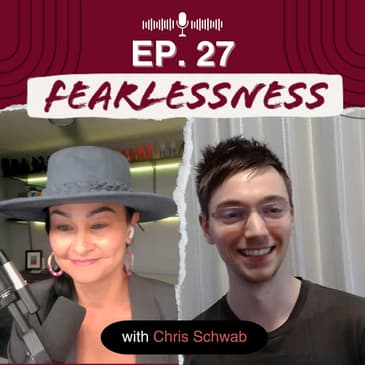
🎙️ Welcome to today's episode of the Fearlessness Podcast with your host, Libby DeLucien!
Libby dives into the world of remote work with guest Christopher Schwab. Discover how to transition from traditional business models to thriving remote operations.
Learn about the importance of SOPs, fostering independence, and building trust within your team. Whether you're new to remote work or looking to refine your processes, this conversation offers invaluable insights.
Don't miss out on strategies that can transform your business and empower your employees!
Elevate your recruiting game with WootRecruit 📈
➡️ https://wootrecruit.com/
Comment 💬
Got any questions? Write a comment below to chat.
Stream now on:
➡️ Spotify: https://open.spotify.com/show/42nQV6HEAFByk4dPjDlIZl?si=ae6da9cf524c457c
➡️ Apple Podcast: https://podcasts.apple.com/us/podcast/fearlessness/id1692617883
Let's connect! 👋
➡️ Instagram: https://www.instagram.com/libbydelucien/
➡️ Facebook: https://web.facebook.com/LibbyDeLucien
➡️ Twitter: https://twitter.com/libbydelucien
Follow Chris on:
➡️ Facebook: https://www.facebook.com/schwaaab
➡️ LinkedIn: https://www.linkedin.com/in/cschwab1/
Powered by the WRKdefined Podcast Network.
[00:00:00] Hey everybody, it's Libby again with Fearlessness. What is Fearlessness? It's that underlying grit that empowers us as entrepreneurs to forede head.
[00:00:07] Even when Hope seems distant, it's the courage to walk through the fires of Hell, knowing that we're going to come out better and stronger on the other side.
[00:00:15] Stay tuned and learn how to get Fearlessness. I'm your host, Libby DeLucien, and today we have a guest that's very far away. Do you go by Chris or Christopher? Chris? Chris? Chris? Chris? Chris? Chris?
[00:00:27] Chris? Okay, that's easy to remember because my husband's name is Chris. So Chris, why don't you introduce yourself?
[00:00:32] Sure, I'm Chris Schwab. I am a clean business owner. We are based in DC but I live over in Japan, in Oklahoma, which if you ever heard of Yoko Hama Tires, that's the only famous thing about our city.
[00:00:46] That's where we're based. And I also run a VA company, a novel local provides VA's for cleaning the dishonors. So what I do is very focused on the cleaning industry as cleaning business owner, but also is a provider for owners. So that's the very quick 30 second business file.
[00:01:04] Awesome. I love that. I have so many questions. I'm a huge fan of remote, like with Woot Recruit and my cleaning company organized it, and then we have service car.
[00:01:15] I probably have about 22 remote employees that are just remote. Not to mention our field staff, so love remote and so I want to dive into that. And then love that you're like managing it. I company and DC from Japan.
[00:01:33] Like, let's just talk about that. We'll talk about the remote like VA's over on the Woot Recruit YouTube channel. We'll get deeper over there, but I want to talk about like the entrepreneur struggle running every mode. First, why did you do that?
[00:01:50] Yeah, sure. So it was it was out of necessity rather than any sort of innovation back in 2016 when I started my cleaning company.
[00:02:02] I started out of the need to find a way to be with my wife. My wife, girlfriend at the time, of course, was over in Japan and I was over in DC in university.
[00:02:14] At that time, there were remote jobs, but they were the typical travel blogger or SEO writer or web developer type jobs. And I didn't have any of those skills. So basically, the remote job just wasn't an option for me.
[00:02:31] So I figured there was a way to do this, to have this relationship and move to Japan, but maybe it was an unconventional path.
[00:02:39] And so like many of my kind of generation of cleaning business owners, kind of 2016 to 2020, I found a case study on Reddit that was very famous at the time for how to start a cleaning company.
[00:02:51] I thought screw it, I'm going to try it over summer and just see what it works. Right? And you guys have read it.
[00:02:58] Yeah, yeah. So there's a case study. If you search local case study Reddit, it'll come up. It's a little older now. So you would want to find updated versions. But that was the inspiration for me and some other cleaning business owners to get into the industry.
[00:03:14] It was to see that this sort of thing was possible. But that was very focused on just building it locally in your area. There was nothing kind of remote about it.
[00:03:22] But anyway, built the cleaning company and I got it to a stage where it was uncomfortably busy a little bit too quickly. And I was just kind of overwhelmed. So I wasn't even moving yet.
[00:03:33] I was just like, oh my god, I need help in the office. But I can't afford office help because I don't make it a profit to pay something totally been there. Yeah, that's a fun stage to be at.
[00:03:45] The Derek Christian another great. I always mentioned this is a great guy and our industry. He calls it the value of despair. And I love many values of despair. I feel like that's only one of the values of despair.
[00:03:56] Oh, there's always surprises when you get to the next stage. And yeah, so I was kind of at that stage and I just thought, I need help. I can't afford help. I got to find some other way to do this at the time.
[00:04:08] Tim Ferriss is broke before our work week was very big. And he talked a lot about VAs. And I just thought, okay, maybe he talks about it for e-commerce and fulfillment and so on.
[00:04:19] But there's no reason I can't find an amazing office manager who's willing to work remotely for my clean company too. There's no reason that that wouldn't work, right?
[00:04:28] And so I found two really great VAs actually who had never done that for a cleaning company but we're willing to try it with me and it worked really well. So a week after I onboarded them which in hindsight, I don't recommend anyone.
[00:04:42] A week after I onboarded them, I took like a week long trip to Japan and ignored my business. And when I came back, it was fine. So it's surprisingly fine.
[00:04:50] They took great care of it. And so I decided after that week test that, you know, of March the next year that was this was in November. So four months later, I was going to fully move just move full time.
[00:05:06] I'm full time in March 2017 and I haven't been back to DC a single time since 2017. So that's kind of the. And you said, you started your cleaning company in 2006. Yeah, that's right. You don't look old enough to have. Sorry, I can't tell you 16. Sorry.
[00:05:26] I would assume you're like my husband. He is younger than me, but he looks so young. I'm taking a camera. People mistake him as my child sometimes.
[00:05:40] So it's the ongoing joke with our friends when they introduce us in a group of people, they're like, oh, this is Libby and this is her son Chris and then he's like, oh no, her husband. Like, it's one of our friends. He does it on purpose to people.
[00:05:52] And it's so confusing. Like, people that we meet because they're like, it could be, but maybe because you know, I do have a 26 year old son as well. But you know, you guys have great jeans, right? It's in your jeans.
[00:06:05] But, you know, I husband contributes to not he doesn't smoke. He doesn't drink. He's very fit. So that's what he says. He's doing good. Yeah. So I love that story and, you know, of starting those. So starting the business and then leaning into remote.
[00:06:25] That was very early. Like, that was pre-COVID. So that was kind of not heard of. Yeah. We were, we were the second, I was the second person doing that that he know about.
[00:06:36] You may have heard of him. I'm not sure if he's not too active in our groups, but there's a really great guy called Neil Park. You owns a cleaning company in California called Made This.
[00:06:48] And when I was just starting, I was on a podcast called Girl My Clean and Company by Mike Campy and who's another kind of, he's a big name in our industry. And after I talked to him about my plan to move to Japan,
[00:06:59] I didn't do it yet. I didn't know how I was going to do it. But I talked him about that on the call. He mentioned this guy. He did from California who was living abroad in Africa or something at the time and he'd traveling all around.
[00:07:12] And he has a clean company. And I thought, I thought, how was that possible? How could he do that? You know? And so Mike connected me with this guy. Neil was gracious enough to get up at like a really awkward time for him
[00:07:25] and talk to this new cleaning business owner and walk and through how he did that. And so he was kind of the first one I really want to give credit to him because he unintentionally, I think started somewhat of a movement indirectly of remote cleaning businesses.
[00:07:41] So he was kind of the first. Sorry. That's okay. You know, we just launched a location that's 100% remote. So I have my, my cleaning company in four miars, but we just launched a 100% remote location and in Texas we're launching another one in Oklahoma next month.
[00:08:06] And then I'm in a launch at third one in Georgia at the end of the summer. Wow, you're busy. Yes, it's easy. So I love the idea of remote. So let's talk about challenges.
[00:08:21] Like what were some of the challenges that you ran into versus traditional like offsetting management of staff, entrepreneurs issues like struggles where we have those traditional struggle struggles. Well, we're some of the other struggles that you faced doing it the non-traditional way, like doing it different.
[00:08:41] And did you have any nice sayers also? I would love to know, did you have any people saying like you're crazy? You can't do this. Many, many, I had a call yesterday. I thought it was better. They will get better in a second.
[00:08:55] There's a lot to say there, I think. So I didn't have nice sayers per se because I didn't tell anyone I was building a cleaning company at first. I kept it a secret for six months.
[00:09:06] I'm very much in advocate for building quietly and then building something and then sharing. I know there's a lot of people who are very big on kind of public accountability, but I really like the quiet hard working building something type of thing and then showcasing it.
[00:09:21] So that was kind of the approach I took. That was not intentional at that time. That's just way it happened. But I didn't have any nice sayers for it. I think people were interested.
[00:09:32] I did periodically share kind of updates in my cleaning company and some of the online communities that were members of. And so people were kind of interested more than anything, but they weren't like you can't do that or it was mostly kind of like how would that work.
[00:09:48] I've never thought about that. It was kind of curiosity, I think, for most people. It was just okay. Well, you probably failed, but tell me how you do it if you succeed, right?
[00:09:57] So I would say not too many nice ares, but there is a lot of differences between this and the traditional model that. Back in 2016 we're very obvious, but I would say or less obvious in 2024 because of the tools and softwares that we all have access to.
[00:10:14] The lines are kind of blurring between physical and digital cleaning businesses. So I would say the big one is how you manage your team. That's probably the biggest different single difference. I would say in a remote versus a physical cleaning company with an office, right?
[00:10:29] With an office, everyone's going into an office to get supplies to check in for the day before they head out to their jobs usually, right? So there's... Do you actually have an office or no? No. Although people have thought I did so.
[00:10:44] So some owners who were in DC at the time went to our address listed in our Google My Business, which was just my residential flat. But they thought it was our office. So they said they dropped into the office and there's no office to drop into.
[00:11:00] So so no, that the big difference really is how you manage the team's number one. I would say in a how you manage difficult situations like emergencies. With a team that's on site, there is a central location that everyone's meeting and discussing.
[00:11:18] And there's an opportunity for there to be a team culture. In my cleaning company because we don't have an office and because we're primarily contractors, they typically go from their house straight to the customers home. And then they go back at the end of day to their house.
[00:11:36] The cleaners don't typically meet each other. So there's not much of a company culture in that sense. They have great relationships with the office staff and with me, but they don't know each other that well.
[00:11:48] So I'd say that's one big difference is having a company culture versus everyone doing their own thing. I think in remote companies, everyone tends to do their own thing because it's easier.
[00:11:59] We're all just, well, give us the job, we'll go do it and then we'll let you know how it went. Right? That it's very simple in that sense, I think. But the other big one really is around how you handle emergencies.
[00:12:12] Again, so if you're an owner with an office manager and an office on site, people would call into your business line or they would visit you. To resolve any issues. And that's fine.
[00:12:26] But if you're like me living in Japan and there's a 13 hour time zone difference between your cleaning company and you. If there's an emergency at 2 p.m. EST, that's 3 a.m. my time. So you have to be asleep.
[00:12:40] Right. And my phone is on do not disturb all the time even when I'm awake. So I'm not going to hear it. So you have to develop a certain set of very ironclad protocols. What I call up though protocols for how you actually handle any situation or emergencies.
[00:12:55] So you need to foster a sense of great independence with your team and your office manager. Far more than you would have to with the traditional cleaning company. So there's a lot to say in every different area from marketing to sales operations.
[00:13:08] But I think those are two very big ones that I might want to highlight for today. Yeah, that is great feedback. I've learned a lot. What we're crude is 100% remote. There is no office. We call it our virtual office. And we have a decent amount of employees here.
[00:13:28] I think we have about 20 people or no 19. And so I over the last three years, mainly just the last two because the first year of all three years, which was the year we were founded, it was just me and Paul trying to figure out stuff.
[00:13:46] We had like one person helping us and then we added my husband. But over that we've grown so much, you know, over the last two years really. I've had to do a lot of growing and learning about remote.
[00:13:59] Right? Because it's not like we work at Chick-fil-A and we can just say, Hey, how's your day next to the water cooler or when we're clocking in. You know, we come to work and culture is the byproduct of work in a remote setting because we come to work.
[00:14:14] Where in in in settings, you know, culture could happen first. Culture happens at the water cooler. It happens naturally. Where in a remote setting to me, it doesn't necessarily happen naturally. It's intentional. It's planned. It's it's the extra things. There's a great book called Running Remote.
[00:14:35] I'm not sure if you've read it. Have a heard of it. It's a really good book. He talks about levels of remote teams. He's very into remote. And then as I learned and I adapted the way I thought in the out of the traditional sense,
[00:14:53] what I found was one of the reasons I was failing in some certain aspects of the cleaning company is because I was trying to run it like a traditional company. And in reality, our technicians were remote employees because they don't come to the office.
[00:15:09] We don't come in the morning. We barely see them. So when I started to think about it like that, like I started to run my cleaning company like a remote company, even though we have an office that nobody comes to. We are culture started to get better.
[00:15:25] And it was so weird for a little bit. I had better culture, stronger culture and wooer crew, which is 100% remote with no office. And the culture was better there than in my actual home service company with an office. You know what? It was intentional.
[00:15:39] That makes perfect sense to me. It's the same for my VA company, Nova local. Because we started it remotely, the team grew that way. So Nova locals, a fully remote company just like root-group and we have a great company culture.
[00:15:53] So I know exactly what you're saying. It can be industry dependent a little bit, right? Yeah. And I was trying to over here taking advice from my cleaning company.
[00:16:02] It was more traditional sense. It was coming from advice that like where the cleaners came in every day, came back every night. And I'm kind of like, quite a minute, their remote. Like we could go two weeks without seeing anybody sometimes.
[00:16:19] And so when we started to make that shift and have more intentionality about like one-to-one and communication and how we interacted, it changed a lot of stuff for us.
[00:16:30] And we actually just downsize our office because I had this big office with six rooms, a conference room and a lobby. And there was one person sitting in that office.
[00:16:41] I like I had to put my ego aside and say I don't need a big office to validate my worth as a business owner. And it was 100% ego driven. Yeah, that's the big one. What do you really need? You know, you can run it much more leaner.
[00:16:58] And that's one of the beautiful advantages of this model. So save the money and take the advantage. Yeah, that's how I'd be built.
[00:17:05] Yeah, I set aside my ego and I told my husband I said, man, I feel like I'm tying myself worth as a business owner to this office.
[00:17:12] And it had the core values on the wall and all the plants and all that pretty stuff that looked good in pictures. But I'm like, I don't need this. I'm wasting a substantial amount of money when we could do other things with this money.
[00:17:27] Like we could do more things with the technicians. We could do we have more better benefits. We could do so much more than just have a office for nothing and the one person that was sitting in there is more than happy to work from home.
[00:17:41] And I think it's a better benefit anyways. She just wasn't taking advantage of it. And so now pretty much we just have a storage room. It's a glorified storage room. It's a shared office space one room. That's kind of holding supplies.
[00:17:56] Yeah, that's all you really need it for and that's fine. That's the way to go. I think if because you're an employee model, right? Not a conference. Yes, we're an employee model. Yeah, so you do need to as early storage for this twice. That's fine.
[00:18:11] So it's been great as me as the owner. Like I'm like, whoa, I could out like three or four bills. I think I could about $2,500 a month out of my expenses.
[00:18:20] A couple bills that I didn't have to even pay attention to anymore by just downsizing the office space. And it's funny because when we went to remote. My manager is doing more one to ones now remotely than she was doing when we were in person.
[00:18:37] Because she was waiting for someone to show up to see how they were doing, right? By chance. But with remote it's intentional. She's planned them. They're on the calendar so she's doing more of them.
[00:18:48] That's a good point. Yes, you're yes. You're more intentional and you're more in control of the schedule. I like that. I think that's true. And I think what's interesting to you put.
[00:19:01] And I'm curious if you find this too in a leadership position with remote companies. So for me, I have a set of core values that I find very important in life. You know, whether that's around work life balance or integrity or whatever.
[00:19:14] And we all have core values that we really attach a lot of meaning to. And we can put them on the walls. But if we can internalize them and display them in a leadership role, I think that's where a lot of the magic starts to happen.
[00:19:28] And I think I think remote teams are very interesting from a leadership perspective because your time.
[00:19:34] Your face time is limited with each team member. You only have a small window to really be an impactful leader for that person and to foster accountability to foster independence to foster the values that you want in your company.
[00:19:48] I'm curious in your companies. Do you feel like your leadership style has had to change in any way 100% Where you're remote to now that you are. Yeah, 100%. It's made me a better leader.
[00:20:01] Because it's maybe a better leader. I feel like when I had an office, it was kind of like a little bit lazy kind of like, oh, I don't want to drive to the office today or I'm not going to go to my office today. So I was missing some stuff here and there.
[00:20:13] Or I'd go on my office and close the door, right? And then the doors close so you don't see people you don't interact. Well, in a remote room. So we use Slack and WooRcrew and WhatsApp in my cleaning company. You can't the doors always open.
[00:20:31] So I feel like it's changed me as a leader. It's maybe a better communicator because there's no sometimes if you're communicating in email or text, there's no expression, there's no tone.
[00:20:44] You have to be more thorough in your words. So it has 100% made me a better leader, a better listener. And to make me, it's I'm like more aware with what's going on.
[00:21:05] And also I feel like it's I'm more structured, right? And it is hard. Like sometimes I've had to fire people over Zoom and people are like, how do you do that? I'm like, well, you do it the same way you do in person.
[00:21:20] But I think it's also forced me as a leader to be more intentional and more organized. Like I'm scheduling one to one with every single employee. I was doing them monthly and now we scale back to buy. We're going to do quarterly.
[00:21:36] And those direct reports are going to do them monthly. But just the fact that you can pick up the phone and have a conversation it's intentional, it's planned. It's really upleveled me with having a connection with every single person in the company.
[00:21:53] And it's almost like I'm a mini coach during many Zoom coaching calls with my own staff. And I'm sorry, go for it. No, it's just changed a lot for us and the other challenge though is getting your current office staff to realize that.
[00:22:14] So in what recruit everybody's remote, they've come from remote but with organize it, they weren't my office staff wasn't remote. And so to say, hey, you can work from home for them. They had to learn that I have to over communicate now.
[00:22:34] Like I can't assume something. I can't wait for them to show up or reach out to me because I'm never going to see them.
[00:22:41] And so they didn't get that at first. They and I kind of had to say like, hey, this was the deal if we're going to go remote you have to do this and that it's different. It's not harder. It's different managing the cleaning staff.
[00:22:57] You gave me a lot to say there. Oh, man, we're diving into the weeds now for remote management. One thing I would say just to what you said I think is really interesting to return to your earlier question about the difference between traditional and remote models.
[00:23:11] I think there's one more I'd like to highlight for everyone. You really, you said this, you stated this in a different way. But the team and your managers have to learn a higher degree of independence too because you're not there sitting next to them.
[00:23:27] They can't by design they can't defer to you every time there's a small issue. So you have to be able to foster a greater sense of independence with the people who are on your team who report to you.
[00:23:43] Where they can actually do mistakes. They can make mistakes and you won't punish them for them because you understand that they're taking that lead role onto themselves and they're not going to be perfect.
[00:23:55] So you have to you have to be able to change the level of control that you're comfortable with in your company and with the people below you so that it's a really, really big one that I see a lot of the members who are struggling with this topic.
[00:24:11] There you go. That's where I was, I love this topic so everybody's everybody asked me all the time because again I have. So the least let's see at least Jennifer. Really, Johnette a five remote employees with organized it.
[00:24:31] And so they always ask me like other cleaning business owners, how do you do it? Like how how do you know they're working all day I'm like I don't.
[00:24:40] It's called a trust like it's trust there's a level of control I have to give up right there's a level of trust though that they can handle it and if they can't then we're going to see it.
[00:24:54] But like giving up that control when so many people have come from like I can look over your shoulder and see what you're doing.
[00:25:03] Don't do it like that or I can hear you on the phone next time do it like this, you don't get that benefit right but you get the benefit of freedom I love like I am such a remote advocate.
[00:25:16] Because I can work from here or my other house in Georgia or wherever I want so can all of our employees they can work from wherever they want like that now they have to work at a desk if they can't work on the beach they can go to the beach when they're done.
[00:25:31] But we won't tell them that I'm at the beach I just don't.
[00:25:39] So but it's the control factor that's so many business owners struggle with so what is your tip on that I mean I have my own view but I want to hear your tip on that trust and control that people want to go remote but.
[00:25:53] They always say oh it didn't work for me. So I will give a very general answer I typically when I talk with owners it's one on one so I tailor it to their their unique cleaning company but.
[00:26:06] On a very general level when you're trying to transition to remote cleaning business. One of the major things you're going to have to do is a preproachory phase for your cleaning company.
[00:26:19] But before you go remote you can't just hire an office manager and write like a couple SOPs and then and then do it that really would be.
[00:26:29] Not ideal and I'm telling you from experience in my own cleaning company I went through a tough phase of figuring this out and I don't want people to go through the same phase and so generally there's kind of a five or six step process that you can go through.
[00:26:44] Before you really ready to make that transition if you're starting from day one remote it's a little different but most of us already have a cleaning company that's somewhat traditional so I'm going to answer from the perspective of someone who wants to turn their company from non remote to.
[00:26:58] So if you really want to do that transition.
[00:27:02] The first thing you're going to want to do is kind of a brain dump what I call it's not pretty name for it, but essentially it's a brain dump of all the different tasks that use the owner and if you have an office manager that your office manager does you don't need to.
[00:27:17] You don't need to it doesn't need to be fully exhausted if you don't need to write every tiny little thing they do out.
[00:27:23] But you really want to write out categories of tasks that you and the office team are doing marketing sales operational tasks tasks related to managing your teams tasks related to customer service to your website.
[00:27:36] The big areas that you're doing every day, you want to just get all those tasks out into on to piece of paper into a word doc it doesn't really matter but but you want to get them out of your head and you want to start organizing them into workflows so you want to have.
[00:27:52] Many workflows for each area of the company that can that you can run an instance of and get the same result relatively they same each time.
[00:28:02] So there's a program that I recommend people use it there beginner to this called process dot street that's the website URL process dot ST and what it is is it allows you to create repeatable checklists for each task that you need to accomplish in your business.
[00:28:18] So for example, in wood recruit you have different stages of the hiring process that you can move people through right.
[00:28:26] So process dot street would turn that into a checklist and you'd be able to tick off the checklist at each point of that process and so when you tick off the final checklist the person is hired an onboard right so you can do this.
[00:28:41] For any task that you want to do in your company this is a painful boring stage to get through. This is my favorite part of business so this is the organizer side of me right right.
[00:28:53] But the good thing is it only have to do it once you can do you might update it by bit now and then but you have to get the initial.
[00:29:03] The initial junk out an organized so we have so much information that we carry around in our heads just like in our homes we have 80% of the stuff we don't really need.
[00:29:13] But we have to actually organize it to find out what we do and even what we can get rid of but it's the same for our companies and the same for our our tasks and our processes.
[00:29:21] So you want to get the information out you want to get it organized and you want to start organizing them into repeatable checklists this is the kind of SOP creation phase for your business once you've done that.
[00:29:32] Then you're able to start finding the weak links that are going to appear in your company because you'll have organized all of these things and then when you go to run them and use these checklist and reality you're going to find that reality and your checklist don't actually agree.
[00:29:49] going to be a gap between what is actually happening and what should be happening on that checklist that you've just created.
[00:29:56] And this is a really important part that you need to resolve before you go remote because if you resolve all of these gaps that you identify and you're clean company before you go remote you're going to save yourself a lot of headache a lot of emergencies a lot of late nights later on.
[00:30:13] There's this kind of intermediary step you're going to go through where you're going to create all your SOPs.
[00:30:19] Then you're going to test them out you're not going to go remote you're going to test them out for maybe a month or three months it really depends on you how long you feel comfortable with I'd recommend at least a month though.
[00:30:29] Where you actually try and run everything in your company based off of those checklists and then you identify where things are not working and you update those checklists and once they're updated and they're pretty smooth and they're kind of 85% accurate.
[00:30:44] That's when you want to introduce them to your office manager or your VA and you have them use those checklists to while you're still there actually in the company in the same time you haven't left yet.
[00:30:57] Right and you want to actually have them do it as if you're remote and you're not available and see where they mess up.
[00:31:05] And then correct that with them live at the time so you guys want to do what's kind of a call the dry test run where you're you're actually still with them there fixing the issues and it's not an emergency.
[00:31:18] And once you've kind of done that test run together for a week or a month and they start to feel confident because you're working with them closely on it. Then you can do.
[00:31:28] A real test run where you might go away for a weekend or you might go away for a week or two weeks and you actually let your office manager do it without you.
[00:31:38] You're very available if they need you because there's a confidence building stage that they're going to have to go through to actually feel confident and independent enough to do it without you.
[00:31:47] But you're going to let them actually do it for a few days by themselves without you there and see how they do and get together. And and the understanding of all the mistakes that are made because in this initial phase the mistakes that they made are your mistakes.
[00:32:03] They're oversight or gaps that you haven't identified yet as the owner and you haven't sufficiently prepared them for. So you're going to do this real life dry test run for a few days.
[00:32:15] And the last big step I would say is one that's really about fostering independence is how you handle mistakes and how you handle emergency situations. So we have a set of protocols we call the uh oh protocols for when something. Yeah, you know the feeling.
[00:32:35] And and this is this is two things it's one it's how we communicate during the emergencies you want to get very clear in how how you want them to communicate and what an emergency is so if a cleaner.
[00:32:47] Really for something whatever reason really messes something up in a client's home that's frustrating and we need to correct that for them but it's not an emergency.
[00:32:56] So please don't wake me up at 3 a.m. you know, you can put it in the slack chat and let me know what happened and I can tackle that the next day but that's not an emergency and you should not be coming to me with that at a strange time of day.
[00:33:08] So you actually have to define what an emergency really is and what an emergency is not so that's a very important one and the second component of that is. What's called is this a PG show or we. Oh, no.
[00:33:24] Good. Okay good. What's called the fuck up bond and a fuck up fund is a fund that we give all our all. Awesome. Yeah, I just wanted to check first.
[00:33:33] It's a it's a fuck up fund that we give each of our managers and they have a fund that they can dip into to correct any mistakes every week without even notifying me at all.
[00:33:44] I don't want to know. And so, so whatever your company's budget is you would decide how big your fuck up fund is it might be 200 bucks a week.
[00:33:52] It might be 300 bucks a week or whatever but give your VA or office manager a fund that they can dip into to refund a customer or to pay a team of little extra or to try new software out for hiring.
[00:34:05] And so, you know, if you have a kind of a and what you want to do with that and you want to do with good content, content.
[00:34:08] Right or whatever they wanted use it for give them that fund separately for business expenses that they can tap into and use.
[00:34:15] And they don't need to tell you about it at all and what this does is it lets them know their in charge of the day to day and they don't have to come to you like a school the child every time there's a mistake.
[00:34:26] They could just correct it and move on with their day. important because it really lets them step up into a leadership role and let's you step back to manage the managers rather than having to step in every time
[00:34:38] this problem. So once you've done these these steps, you're ready to really go remote. There's a lot more I can talk about from system systems optimization to remote hiring, to marketing and all the stuff but at a very general level
[00:34:54] you're going to want to create your SOPs, you're going to want to test them out so you're going to want to do several rounds of dry runs and you're going to want to foster independence with your team. If you can do those four things I
[00:35:05] think you'll do very well when you find the transition remote. There's still going to be stuff that's going to happen that you're not aware of but you'll be 80% of the way there. So you are totally talking my love language which is
[00:35:20] organizing an SOPs and playbooks. I exactly tell people that's why they failed the first time. Is it running remote, having remote staff or VAs or employees whatever you want to call them takes another level of organization that most business owners do not have. And it was exactly what
[00:35:46] you just described you just did a way better job of describing it. And you don't have to use them forever too. My office managers have worked with me for years so we have those checklists, those SOPs. But now they've memorized them right? So
[00:36:00] they don't have to use them for everything anymore but having the initial creation phase is so important for you and them. So just oh you see how we planned and organized everything because I hired two assistants at the same day
[00:36:13] because I interviewed two people for my personal assistant, my executive assistant that were so great that I wanted both of them. And but I had prepped weeks in advance to kind of help with that process. And I feel like that's why
[00:36:29] people struggle or doesn't work because when we hire remote, there's just we're going to come fix everything. Like that doesn't even exist in a real in person employee. So they're not going to just come fix everything and create all
[00:36:41] your SOPs and know what to do if there's any downtime. So it takes another level of organization that takes effort but we should be doing that anyways as a business owner whether our team is in personal remote. It's just with
[00:36:54] remote it requires this for success. Right, of course, as you to show up those weaknesses in a way that being on site wouldn't. And I think I think a big part of that that's such a good point you mentioned there. So so when you're
[00:37:08] on site, when you're the owner, you can you can just jump in and fix stuff on the spot. And you might not even realize how much you're having to jump and fix stuff because that's your normal mode that you're in as business owner.
[00:37:20] Right? And you have to learn to step out of that mode when you go remote and actually start to find a little more balance in your life and create a clear division between your business and the rest of your life. And I think
[00:37:31] as business local business owners, especially when we're on site, there really isn't a division. Like our kids might be coming into the office or you know, like there's just the division kind of exists but not really. And
[00:37:44] you have to really firmly create that when you actually do make that transition to a real model. So yeah, I love this. And I think one of the probably the one key factor why I was even remotely successful in doing remote was
[00:38:00] because of the level of documentation I have for our processes and our systems or playbooks. I was doing this years ago. I mean, our technicians or cleaning takes I have a whole app built out of how they handle anything like what I'm
[00:38:17] driving to the customer's house and I get a flat tire. I break down like I've created those SOPs over years and I did the same thing for the office. So when we didn't go remote, it wasn't hard for me to scale or wrap my brain around
[00:38:31] how organized I needed to be as the owner when it came to documenting and capturing those processes because it was just it's my jam. What I love to do. So go ahead. I might be misremembering but you have the Mary condo certification
[00:38:51] don't you? Yeah, so my cleaning company we're known as the most organized cleaning company in the world. I love it. That's our tagline and the name of my company is called Organize It. And so I'm Mary condo certified. I hold the second highest status
[00:39:06] of her certification. I can't remember what it's platinum, I think. So I'm a big Mary condo fan. So I love that style of organizing and the mindset and the approach of like if it doesn't serve you, let it go. And I could get into a whole
[00:39:22] organizing like where the most consumption-based country in the world. And like when you said we only use 80% of the stuff we have like yeah, no we don't. I have a whole YouTube channel on organizing over on organizing the YouTube channel.
[00:39:36] So I love this and it's really helped me to grow and scale. So it's helped me grow in scale my business but until I could learn how to control my organizing and micromanaging, it actually enabled me in business. It's what slowed me down.
[00:39:54] It was my bottleneck because I needed everything perfect and I was the only one that could do it. And I wanted all the binders to be the same color, facing the same direction. It was a little neurotic. And until I could learn that it didn't have to
[00:40:11] be perfect but I needed to have it documented no matter how good or bad it was. The organizing side of me is what's been able to grow multiple businesses and scale them because I'm good at organizing and capturing stuff. But until I could learn to harness
[00:40:29] it was actually what was depilitating me. That's so interesting, you know. I see a lot of similar things with the minimalist trend on YouTube and Pinterest and so on where minimalism as a philosophy is about finding
[00:40:44] what's important to you but the way people express that on social media is a form of control. They're trying to control everything. They're trying to have a minimalist aesthetic. They're trying to have the perfect minimalist backpack or whatever. They're actually using it
[00:40:58] to control everything rather than to let go and find out what's important. It's really interesting, right? I was really thinking about that as you were explaining how you were using that as a way to micro-manage in your company and make everything perfect. I was like, wow, this is
[00:41:11] an inch now we're getting philosophical here but yeah, I mean it's what kept me from growing. I mean I was my problem which we were always our problem but business is messy and so sometimes
[00:41:22] we just have to do it messy and I needed it perfect. I was the term helicopter moms. I call it like are you a helicopter owner? Are you hovering around the people and so with the
[00:41:37] remote you can't do that. You could but you would drive yourself crazy and you're always going to think they're not working so you can't do it. And until you can get over that control factor
[00:41:49] and let go and know that yes I have to be organized. I have to have the things ready but at the same time it doesn't have to be perfect and I can't micro-manage. You can't be free like you can't even
[00:42:03] grow. You're going to stop your own growth. One more thought I wanted to share quickly on that that might be helpful to some. This is a little bit unconventional I know but
[00:42:13] a lot unconventional kind of person. Good. Maybe you'll get me on this one so for me is an owner but this is a question I get a lot in my view company when clients sign up as it. How do I
[00:42:26] know my ideas doing work at? We keep time logs and everything so we can verify it but but they get that question a lot is like how do I know people are doing the work and my personal
[00:42:35] approaches I don't care if someone's working exactly eight hours a day. I actually don't care what I care about is the work that comes in has done to a high standard and they step up
[00:42:46] and take care of things that need to be taken care of. If they do that I don't need them to sit down on at a desk staring at a screen for eight hours. It doesn't matter to me. I care about the
[00:42:57] result that I'm trying to achieve. I don't care about that specific hourly rate in their efficiency for each hour that they work. Did they do what they do to a high standard and make everyone happy
[00:43:08] if they did that's great. You don't need that extra accountability. It's every thing. And I 100% agree because I mean I don't I encourage all of our remote to get up and go take a walk
[00:43:21] like right now we're doing a challenge inside of a new recruit and health challenge and where it's 30 minutes of exercise a day and I don't even care if they do it on company time.
[00:43:30] I'm like do it on company time. I don't care because you're just going to be better like to sit in this chair for eight hours exhaust me. So please take a break work at a high capacity when you're
[00:43:42] working and all we measure is output. That's it. I don't care how you do it. We run asynchronous so I could talk about this topic all day long. I love asynchronous and I say the word asynchronous
[00:43:53] and that people will run away from me. They're like, that's actually how I lost my partner Paul who was the other owner of Woodward and I bought him out. I wanted an asynchronous work style
[00:44:08] and he he was not comfortable with that and I that's why I love remote because I love asynchronous like in organized it they just they're supposed to work you know nine to five eight to five
[00:44:19] whatever they're scheduled but I'll see Gabby working on till seven o'clock at night because she just wanted to like oh thanks Gabby she's like yeah I saw some emails come in I was just going to check
[00:44:29] I was like all right well like I don't ask her what she's doing during the daytime but like she was working on Saturday I saw her talking to one of the technicians it asked question
[00:44:38] and we don't ask them for that but we give them the freedom and flexibility in the trust yep I know you're going to do your job. I trusted you to do your job and if you don't I will see
[00:44:48] it and I will we will take care of that but like you get so much in return um if you give that freedom in that trust so we have been on for 45 minutes and I have dying to ask you about
[00:45:03] culture and remote settings but we're going to go over to the Woodward YouTube channel and talk about like the specifics of hiring a VA and how do you build culture when it comes
[00:45:14] to remote so we're going to wrap this up because I could go on all day with you on remote setting but let's wrap it up we'll make sure to put all of Chris's information in our show notes
[00:45:26] so that you can find him on social media and his website but guys that's a wrap into the heart of Fearlessness remember every step we take to every step we take is a move towards our own
[00:45:36] strength and courage remember to keep walking through those fires because on the other side lies a version of yourself that's unstoppable I'm Libby reminding you to embrace your Fearlessness until next time stay brave, stable and keep pushing forward thank you so much it's a real pleasure thank you
Sponsors
