
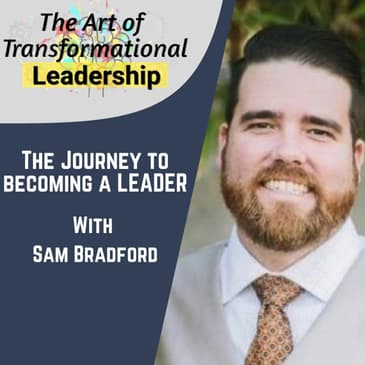
Welcome to our very first episode on the Art of Transformational Leadership podcast with Sam Bradford.
He's the Director of People Development for Dutch Bros Coffee Arizona and join us through his journey of becoming the leader he is now
You'll be sure to pick up a few tips on how to lead with confidence.
Let's connect! 👋
➡️ Instagram: https://www.instagram.com/libbydelucien/
➡️ Facebook: https://web.facebook.com/LibbyDeLucien
➡️ Twitter: https://twitter.com/libbydelucien
Follow Sam Bradford on:
➡️ LinkedIn: https://www.linkedin.com/in/sam-bradford-3a8356130/
Powered by the WRKdefined Podcast Network.
[00:00:00] Welcome to the art of Transformation or Leadership. This podcast is where we talk about leaders from all walks of life, from entrepreneurs to educators. We discuss their journeys and strategies they used to become successful. Stay tuned to learn how to lead with confidence.
[00:00:15] I'm your host, Libby DeLucien, and our guest today is Sam Bradford. Sam is based out of Arizona and is currently the director of people development at Dutch Bros. Coffee in Arizona.
[00:00:29] He has spoken at multiple leadership in entrepreneur events, and you could say that his true passion is coaching and leading people, which makes him a perfect guest for our podcast. So Sam, welcome to the show. I'm so excited to be here.
[00:00:49] Awesome, so you know this podcast is really just to get to know Sam on a deeper level. I had the opportunity of meeting Sam at an event, a mastermind group, and he was a speaker there.
[00:01:03] And he just absolutely blew me away with his passion for leadership and how you talked about your journey, and from getting to where you're at, and then also the journey of where you're at right now.
[00:01:18] And so when I was looking for a guest for the podcast right in leadership, I was thinking to myself, I made a list and I'm like, who are the most influential leaders that I have come across?
[00:01:29] And Sam was believe it or not, Sam you're the first on my list. That's how powerful it was when I heard you speak. I just got the chills.
[00:01:39] So we're going to just jump into some questions and we're going to get to know Sam on another level and see, you know, what he's doing now and what the future holds for him. So people usually have, you know, they usually have passion for what they're doing.
[00:01:57] And so we know we follow our these leaders on this journey. And so Sam, when did you realize that you had a passion for this thing we call leadership?
[00:02:09] Yeah. It's really interesting and I'll give you a little bit of background because it's helpful of like grew up in a really tough home environment, how to an abusive stepfather,
[00:02:21] struggled all the way through school and found out like in middle school or probably even elementary school that I had a learning disability, and just felt really dumb and I just kind of was like, I'll never do anything great.
[00:02:35] You can't really tell, if you're listening to the podcast, you can't see me, but if you can see me, you can't tell that I'm six foot five, 250 pounds, like I'm a huge person.
[00:02:45] And so I just was assuming like, I don't have a brain. So I'll just use my body and I went into all kinds of manual labor and all kinds of just jobs that were really tough.
[00:02:55] And I struggled. I struggled because they were all a lot of the construction stuff involved math and I was terrible at math.
[00:03:03] And I was terrible at math. And so I just kind of stumbled through my life not knowing what I was good at, not knowing what I was supposed to be doing with my life.
[00:03:11] But I always just had this crazy passion for young people and I was like, how do I connect with young people and how do I help them?
[00:03:19] And so I was a youth pastor and I would volunteer as a youth pastor and I would just kind of hang out with young people.
[00:03:25] And that was even tough. Like I, like you said so graciously, I am very gifted at speaking and I love speaking and I love sharing my passion and connecting with people.
[00:03:37] When I was working as a youth minister, I was like, okay, I get to do this full time, not realizing that the majority of my job wasn't going to be speaking it was going to be doing all these other tasks that I'm not very, that very gifted at.
[00:03:51] And so all of this, all of this hard stuff, all of this like not knowing it led me to this place of just feeling really, really stuck in life.
[00:04:01] And like I mean like really stuck like I have no idea what I'm doing. I have no idea, I thought this, this like youth minister job was going to be it for me.
[00:04:11] I thought I was going to this was my whole life goal and then I got here and it wasn't it, and I didn't know what to do.
[00:04:17] And I was very disillusioned and I accidentally stumbled upon a leadership podcast and I say it with intentionality of accidentally because I wasn't looking for it.
[00:04:29] Like I had literally just like opened up a podcast app and I was looking for this one podcast, but this other one showed up and I was like, what's that? And I downloaded it and Libby, I remember listening to it. I was cleaning the youth building.
[00:04:45] It's one of those like vivid memories and I remember it getting done and I was just shaking. I was physically shaking, I was so excited. I was just like, I can't believe that this stuff existed and nobody's ever showed me it.
[00:05:01] I can't believe that at this point I was like 29 years old and I'm like, how is nobody ever showed me this stuff? Like why? And it was so funny because the podcast I can still remember what it was.
[00:05:13] They interviewed this guy who was trading on Wall Street. He had like a chair on Wall Street and he was making a crazy amount of money. He just woke up one day and he said, I'm not satisfied. I'm not like, I don't have purpose with this stuff.
[00:05:29] And so he said, I'm going to quit my job and I'm going to go teach at college. I'm going to go be a professor
[00:05:35] and all of his friends were like, you are so dumb. You're leaving so much money to go do something that's not going to pay you very well.
[00:05:44] And what he said was, and I still get the chills when I think about it. He said purpose over money every day. And I was like, man, that's so powerful that some people chase money. They chase a dollar sign and they don't ever feel fulfilled.
[00:06:02] And so like I made this point in my life of like, I'm going to pursue things that matter to me and not worry about the money. And so it was in that moment that I heard that podcast that and I'm going to be vulnerable and honest.
[00:06:17] I mean, I didn't have a college education. I've worked manual labor in my whole life. I finally got a job as a youth pastor. And I was literally in this moment going, I'm going to spend the rest of my life doing this stuff.
[00:06:28] And I have no experience in it. I have no idea what I have no connections. I'm literally just a person that's like in the middle of nowhere. Just going to be like, I'm going to make this stuff work. And that was the beginning of my journey.
[00:06:45] Awesome. So I love your story. I was fortunate enough to get to hear it in person and I could connect with your story about I don't have a form. I as well have I have a high school degree.
[00:06:59] I don't have a college education. All I knew how to do was work with my hands. Because that's what my dad taught me, right? My dad is manual labor. It worked hard. He still works hard.
[00:07:10] And then you having mentors in that access to things where I have to work. I have to learn how to work with my mind and not with my hands. And the power that we can change in people and the opportunities that we can give people.
[00:07:26] For me, as kind of that same journey for you is like I could change so many lives doing that. And so I feel very fortunate to have that opportunity and to connect with you on that level when you're when you're sharing that story.
[00:07:41] So thank you for being vulnerable. I want to get to what you're doing right now. So when your current position at Dutch Brothers, Bros. What does that look like? So you're in charge of your director of people development at Dutch Bros. Coffee.
[00:08:01] And so tell us exactly what that looks like. How did you first, how did you land the gig? Yeah, yeah. This is a really cool story. So that podcast I mentioned earlier was on trade leadership.
[00:08:17] And I was just addicted to it. I would listen to it as much as it would come out like I think it was an infancy of their podcast and they were only dropping one once a month. But I would be waiting for that podcast to drop.
[00:08:30] And as soon as it did, I would listen to it. I would tell anybody who I could talk to you to listen to it. And I, and through that I started buying leadership books and started reading and started growing myself.
[00:08:41] And like I just became a student of leadership because I knew I was terrible at it. And I knew I wanted to get better. And through that I started a small leadership team at the church of my youth ministry.
[00:08:53] And I thought, oh, they're going to love me. They're going to just follow me. They're going to think I'm amazing. And they didn't. And it was hard. And they were all kinds of little bickering and arguing.
[00:09:06] And so through all of it, I was like, man, I need to work on culture. And on on trade leadership podcasts, they spent a whole month focusing on culture. And one of the people that they interviewed was Dan Kathy from Chick-fil-A.
[00:09:20] And when they heard that interview, I was like, man, that's incredible. And then shortly after that, they interviewed Travis Borsma, the co-founder of Dutch Bros. Coffee. And Libby, it blew my mind. I was like, who is this guy?
[00:09:36] And how do I engage with these people? I had the same feeling with Chick-fil-A. And so I lived in an area where there was a Chick-fil-A and I didn't know there was a Dutch Bros. But I looked it up and I found them.
[00:09:47] And so I drove to the nearest Chick-fil-A and I said, hey, would you guys come speak to my leadership team about culture? And the franchise, he said, yes. And I was like, oh, that's so incredible.
[00:09:59] And then I drove to the nearest Dutch Bros. And I was like, hey, would you guys come talk to my leadership team? And the manager said yes. And then she brought her the CEO.
[00:10:10] And man, I just want to shout out Chick-fil-A and Jason Purvis. He was incredible. Chick-fil-A is phenomenal. I was just so blessed that he would come out and share with my team. And it was amazing.
[00:10:22] And then Dutch Bros came out. And Jasmine, Everston, and Josh Hayes spoke to my people. And Libby, I did not know who they were. I did not know who they were. And when they came in, I was absolutely blown away by them.
[00:10:36] And blown away by how much they cared about my leadership team, how vulnerable they were with them. It was just like mind blowing. At the end of the meeting, Jasmine literally gave herself a number out to all my leaders.
[00:10:51] And said, if you ever want to connect about leadership or if you're ever feeling discouraged, please call me and let's go get a cup of coffee.
[00:10:58] And I just remember walking out of that room and getting home and saying, so telling my wife saying, hey, I think I'm going to quit my job and I think I'm going to work at Dutch Bros.
[00:11:09] But I have no idea what that's going to look like. It's so funny. I had zero idea. And there was iterations of it over time. It was like, okay, I'm going to go to school part-time.
[00:11:20] And I'm going to work at Dutch Bros part-time and I'll be a youth pastor part-time. And I'll kind of make it all work together. And over time, I just connected with a lot of trusted people.
[00:11:29] I actually sat down with a CEO of Dutch Bros and said, hey, do you think I could work here? Like, and wanted to connect with him about it of Dutch Bros Arizona, Josh. And it was just so interesting. He said, yeah, I think you could do this.
[00:11:44] And he thought originally that I was going to franchise, that something that was interested in, and I was like, no, I don't have any desire to franchise. And he was like, what do you want to do? And I was like, I want to help you guys with leadership.
[00:11:57] Because I love leadership. And I know you guys love leadership. And so it was so neat because at Dutch Bros, this is, I mean, it's still true of our franchise today,
[00:12:07] that if you want to move into like a higher level position, you have to start at the, at the, at the broiste level. Because we just want you to know what it's like. And we want you to experience shop life.
[00:12:18] And, and so there was no direct position to move into. It was like my, my, the CEO just said, hey, why don't you put your application in?
[00:12:26] And I did. I went to that same shop and I put my application in and I got hired at 30 as a broista. And it was, it was wild. I, I left my full time job at the church to work part time as a broista.
[00:12:42] And I made minimum wage. And I got to work around young people. And, and I, I just, how did I land the gig? Is the question? I just kept knocking on that door of my CEO and just being like, hey, can we talk about me teaching some classes?
[00:12:58] I would love to teach classes. And, and he would just say, well, what do you want to talk about? And I'd be like, well, I don't know. Like, whatever, there's a hundred different topics. And I just kept showing him that I was hungry and that I was interested.
[00:13:11] And then one of the really cool moments we had was he said, okay, cool. Well, how much would you charge me to teach these classes? And I got to give credit to John Maxwell and his team of people.
[00:13:24] Because they said, there was somebody on their team that said, you can either pay to play or you can seek to serve. And like, I knew that I was in a spot in my life where I didn't have enough money to pay for these big leadership development events.
[00:13:39] I didn't have, and so I was willing to seek to serve. I was willing to go, and I remember telling him, when he asked me how much I'd pay him, I said, I'll do it for free.
[00:13:49] If you let me teach classes, I'll do it for free because I just want to connect with young people, And I just think I can make a difference.
[00:13:57] And it was later on that he told me, man, there was another guy that was so similar to you, years ago, that wanted to teach classes, that had all this stuff laid out. And when I asked him how much he would charge me, he said, 300 bucks.
[00:14:10] And so, but my boss was so savvy and he would always be like, well, where else could you go to charge somebody?
[00:14:16] You know, it was just in a way, it was just that it was a test to say, are you humble or are you only looking for a paycheck? And I was just like at this point, I'm like, man, I'll do whatever.
[00:14:27] So it was seven months into my time as a broyster that he called me up and he said, hey, we're going to create this position called the director of people development. And I think you should go out for it and I never interviewed.
[00:14:42] I literally, they like, we talked about a few things and they're like, Sam, it's yours. And yeah, it's been a such a crazy journey. I've gotten to set up like leadership development events. I've gotten to create a curriculum where I teach our young people, goal setting,
[00:15:02] self leadership and personal finance. I've gotten to really just do all these things. We created masterminds within our own company so that we could like help our leaders feel supported. So those are just a couple of things.
[00:15:17] Awesome, I like that idea of masterminds within your company to help them feel supported because sometimes depending on your position, it can be really lonely or you see not so much advice but affirmation or just brainstorming.
[00:15:37] So I love that idea of mastermind groups within the company, so that's a great story. So my next question is, most of us stray away from challenges, right? I think it's normal, it's the fear thing.
[00:15:53] I just left the EOS conference and they thought us like fear, the opposite of fear is trust, right? And so most of us stray away from challenges but as a leader we're expected to face them, right? As a leader in a mentor.
[00:16:10] So what do you think was the hardest challenge that you faced that you had to overcome as a leader? Yeah, this one's super vulnerable and I'm going to share it because it's beautiful. But again, I'm going to call John Maxwell.
[00:16:29] Leaders know the way they go the way and they show the way. And so I think the leadership journey for myself is to go first and then to like experience that and then to invite others to come with me, right?
[00:16:45] Like that for me is so beautiful and so like you said, I don't think we can help people with leadership stuff unless we've gone on that journey. Like how do we how do we experience it ourselves first?
[00:16:56] So the most difficult thing that I've ever faced was was literally talking to my stepdad about about the abuse that happened in our family. Like we had a family that abuse would take place, verbal abuse.
[00:17:13] My mom and stepdad would get into these huge arguments revolving around me and then they would fight and then it would just escalate so bad And then I would get discipline and it just never ever got talked about.
[00:17:26] There's a lot of gaslighting involved which kind of made me just question my own thoughts, my own feelings. Is there any of it true? Is it right? And so I have always had this feeling of like, I need to address this with my stepdad.
[00:17:41] I need to talk to him about what happened and he's still involved in my life. He's still married to my mom. We still hang out at holidays.
[00:17:50] And so I think the hardest journey that I've ever had was finding the courage to talk to him about all that stuff. And it took me I was 35. I invited my stepbrother, sorry, my brother and my sister to come with me because they were part of it.
[00:18:10] And it was so hard and it was so scary and I was so petrified. But what I've realized and working with people is that most everybody is afraid of a hard conversation. Most everybody and how many times do we have something go on between us and our boss?
[00:18:29] And we want to say something but we don't know how. And so we just stuff it and we just kind of go, you know what it's not a big deal. I'm doesn't matter. I'm not going to talk about it. But it doesn't go away.
[00:18:41] It's kind of stews and it gets bigger and bigger. And then this happened to me at the church when I was frustrated with my boss at the church, I started complaining about him to other co-workers. And you know what happens when we do that,
[00:18:54] maybe as we find other co-workers that are frustrated. And then we just started getting together and complaining about our boss and how awfully he was. And none of us had the courage to sit down with him and say, hey, we're really struggling.
[00:19:08] We need to talk to you about some things that aren't working. So this thing with my stepdad, this hard conversation that took me 35 years to have, it just I use it all the time in my leadership journey because one,
[00:19:22] I still have hard conversations with my bosses and I still have moments when that little boy is still afraid to address this issue that's happening. I still have it in my marriage. There's still moments in my marriage where I'm afraid to address things that are happening.
[00:19:37] And it's like, how do I find the courage to sit down and to face the face, have a hard conversation? And so I think that's probably the biggest one that's happened in my life. Awesome. So I've been on this leadership journey for a while.
[00:19:53] For the last probably like year, it's been this obsession because I've two companies growing at a pretty fast pace and I have a mentor. It was actually Dan Ralph. We know Dan, right? That's how we met Dan.
[00:20:05] He told me he goes, Libby, there's one problem here and I'm like, what? And he said, it's you. And I was like, what? He's kind of like, what did I do? He's like, you're going to be the problem. He's like, they're going to outgrow you.
[00:20:25] The pace that they're growing. They're going to outgrow you. And you have to work on your self personally. Like, this has nothing to do with KPIs and nothing to do with marketing.
[00:20:39] He's like, you have to work on yourself personally to keep up with the growth that's needed for the leadership level that you need to be at. Yeah.
[00:20:50] And so I love the fact that you used a personal reference because so many people think that being a great leader is like, being really good at day to day stuff or being really good at answering emails or phone call or being really good at certain things.
[00:21:04] But to me, being a leader is knowing and having the strength and ability to first address our personal issues. Yeah. And then it's almost like we're exercising our brain and our abilities. And then when we get good at that, we've addressed it.
[00:21:21] We kind of cleared that plate mentally from our self. And then we can now be an even better leader in our own company. I have another mentor, his name is Dan Martell and he said the way we react to current situations is based off past trauma or experiences.
[00:21:44] And until we can learn from those and we can say that happened, you know, that was something it didn't happen to me. It was something that I had to learn from. We can't grow as leaders. Yeah.
[00:22:01] So I love the fact that you, you know, you use that personal reference because I 100% believe it. You know, that being said, what do you think is a good tip you could give someone who's struggling to make that jump to a difficult conversation.
[00:22:16] Whether it's a personal or professional one. What's a tip that you have that you've used or that you know that you use personally to help get over that fear. That fear factor there. Yeah, yeah, absolutely.
[00:22:34] I read a lot of books and this one I hold up for those of you guys who can't see it. If you're not watching the video, it's called Crucial Conversations. It's a phenomenal workbook. I mean, I call it like a handbook of how to have a hard conversation.
[00:22:51] I also read another book by Henry Cloud and John Townsend called How to Have That Difficult Conversation You've Been Avoiding. I read a handful of books on assertiveness. Leaders are readers. And I, one of my favorite quotes is five years from now.
[00:23:10] You're going to be the exact same person except for the content that you connect with. And the people you surround yourself with. And so I tweak it a little bit because it used to just say books, but now we're in a world where podcasts exist.
[00:23:23] And so I want to say what content am I engaging with and who am I surrounding myself with? We'll be twice you've already mentioned mentors and I love that. I love that.
[00:23:34] I want to surround myself with people that are better than me that are further along than me. And I want to, I want to connect with information that's not in my brain. So everything that's currently in my brain is trauma, fear, anxiety.
[00:23:49] I need to go connect with things that are going to give me truth that can combat some of that and help me realize like, hey, okay. Yeah, I'm scared, but I need to work through it and what would it look like and man, crucial conversations is a handbook.
[00:24:04] And it's helped me over and over and over, of sitting down and actually writing out what I want to say before I even say it. And thinking through it all and one of the beautiful things with crucial conversations is the first one is start with heart.
[00:24:18] And you kind of ask yourself like, what do I want out of this conversation? And so with the whole conversation with my stepdad, I want to like resolve some of this conflict.
[00:24:29] I want to heal some of these hurts and I want to have a deeper relationship with this person. That's a beautiful place if I sit down with him and say, these are all the things that I hope to get out of this conversation today.
[00:24:42] But if I don't do that, what might happen is that he might feel shame.
[00:24:47] He might feel guilt. He might feel like I'm trying to punish him for things that he did in the past and that I just want to kind of put my thumb down on him and make him feel horrible.
[00:24:56] Because some of the things that I'm going to share are going to be really hard for him to hear. And so if I can start with heart and kind of give him what I'm hoping,
[00:25:04] and honestly starting with heart helps me kind of process maybe there are painful things that I want him to feel bad about. And maybe I need to walk through that and go, say, I'm that's something that you need to resolve.
[00:25:16] Like that hurt and that was bad but coming to him with things like, without heart is not going to get you where you want to go. And so how do I kind of navigate through some of those feelings?
[00:25:31] Awesome. Thank you. You know, on that topic of addressing the difficult conversations and leadership, what would you say would separate a good leader from a bad leader? Man, I think there's probably a ton of things.
[00:25:52] But from my perspective, my biggest one is that a good leader cares and a bad leader doesn't. Like I think a good leader cares about the people they're leading and a bad leader cares about themselves.
[00:26:07] There's a phenomenal quote that says, people don't care how much you know until they know how much you care. And I, I've just seen in my life like people can tell when you're faking it.
[00:26:23] People can tell when you only want what's best for you or you only want what's best for the company. But when you can say, I want what's best for all of us and I want all of us to win.
[00:26:35] And I want you to know that if I win and the company wins, that we're bringing you with us.
[00:26:41] And that this is all, we're on this journey together as a team because some people, some leaders can be so like direct and just tell people, hey, do this, do that.
[00:26:51] And it's like, okay, I get that like an, and I get that you could, you could get results. But in the end, I don't want to get results. I want to win people's hearts.
[00:27:02] And I know that like when I win their hearts, that they'll go so much further beyond and give so much more. And it's all for the cause that we want to, we want to like accomplish together.
[00:27:14] But I think that like people that are just results focused, it gets a little like transactional. And so I think what sets a great leaders apart from good leaders is if they care deeply about the people that they're leading.
[00:27:29] Yes, there's a phrase right, are you a transactional leader or transformational leader? Woo. Right. And so that's pretty impactful because sometimes we can get a little bit to numbers driven.
[00:27:44] And I'll say in full transparency and when I, you know, my, my systems are helping in the background, Maryland and Miguel or HEP, helping in the background and they're on here with us.
[00:27:56] So, you know, that was something that I warned them of me just to be fully transparent. It's not that I don't care. It's just that like I find myself my brain starts to move so fast or ideas will come and go.
[00:28:12] And it can be perceived that I don't care. Like I had one time someone on in my service company, we were, we were plus minusing each other.
[00:28:23] And I got I got a minus in caring. And as far as it goes though, we're out of, you know, we have a facilitator doing the meeting and I got a minus and you can't say anything like you just have to take it because it's a time where they can be open and honest and not be scared of any repercussion.
[00:28:48] And that was the time that I like had learned right then that moment that they gave me a minus and he was new. He was very new to the company. This was my, in my field service company.
[00:28:59] And it's, it hurt my feelings. I wanted to cry that he gave me a minus in caring. And he explained it why and then I understood right and I couldn't say anything. I had to let him explain it.
[00:29:12] I respect the process because if it wasn't facilitated, I probably would have of course been the owner or leader and just, but why? Like why did you give me a minus? Like I would probably jump right over it. But because we had someone facilitating it.
[00:29:29] We, I had to follow the rules like everybody else and it was in, it was very enlightening to like see that how someone else saw me. And it had to be something that I keep front of my now that my personality because I'm not transactional.
[00:29:44] I just, I'm doing so many things. My brain is like going to the next thing and like the next thing and what I have to care of, it can come off as not caring.
[00:29:54] And then once, so we finished that meeting and it made me really reflect on myself like as a leader. I'm like what am I doing? That I'm making this person think that I don't care about them.
[00:30:04] You know, later we did it again and he gave me a plus and he said it just took time for me to get to know you.
[00:30:13] And, but it's something that I have to change. Like I have to change my work style when I'm around people because I can come off as like not caring or to direct because I'm too like what's the next thing.
[00:30:27] And it's just funny because Marilyn and Miguel and that was part of like their interview or onboarding process that I can be guilty of this and just, you know, bring me back and say like, hold me accountable and when I start to act that way.
[00:30:43] Because we can get caught up in the, in the checklist and the to-dos and the tactical stuff. But that was great. So have you heard of the quote or the phrase right leaders are not born? Right there made kind of like salesmen are not born there made.
[00:31:03] What do you like what do you think that you think that a leader's just born that way to be a leader or do you think that they're made? So I got to share actually one time when I was speaking totally took it from Maxwell again.
[00:31:17] There he told a short story about this gentleman that was traveling in Europe and he went to the, one of these old towns.
[00:31:24] It was super historic and, and he was walking through the town and there was an older gentleman sitting on the side of the road and he walked up to him and he said, hey, were there any great leaders born in this town?
[00:31:36] And the old guy just looked at him and he said, nope, just babies. And it's kind of this idea that like great leaders aren't born that they're built. I think that yes, some people have leadership tendencies.
[00:31:52] There's another phenomenal. I'm going to plug Maxwell so much. He just has written so much. He wrote a book called Talent is Not Enough and it was really cool because he showcases a lot of these people who are super talented but they stop working on their craft.
[00:32:09] And then there's people that are just like somewhat talented but they're hungry and they don't ever stop working on their craft and they outpace the talented people.
[00:32:17] Every time. And so I think that yes, I'm a firm believer if I would go back to Sam in junior high or Sam early on and go you're going to be speaking and you're going to be leading people and you're going to be coaching and I would have been like, yeah right dude my brain's broken like this isn't this isn't who I am.
[00:32:39] I can remember like thinking like leaders of the kids that are on the honor roll. Leaders of the kids that are summa cum laude and like that like they're on their they're in the honor society or they're in student government.
[00:32:53] I'm not a leader, I'm just this kid that doesn't know what he's doing and so.
[00:32:57] I think leadership is absolutely a learned skill and so I think that that gives me so much hope and that's why I want to do what I want to do so badly is I want to help people get better at it.
[00:33:07] And I truly can truly believe in my own journey that people can and they can improve. Awesome, so you know continuing with the conversation of leadership. What is the most rewarding part for you, you know being a leader in your space.
[00:33:28] Yeah, man the most rewarding part is making a lasting impact in people's lives. I think I said it when I was speaking with you with your guys' teams.
[00:33:41] There's so many people that want to make a living. There's so many people that hope that they can like you know make enough money to own the house that they want or own the cars that they want.
[00:33:50] And I'm just a firm believer that all those things are great, but they're not going to satisfy me. They're not going to like fill this hole in my life. And so I don't want to make a living, I want to make an impact.
[00:34:02] I want to leave people better than I found them and the most rewarding thing for me is when I get to sit down and people just like you did earlier when people share things that I've said or that I've done that have impacted them in a positive way.
[00:34:17] I just want to cry. I just want to be like, wow it really works. I can't believe that all that hard stuff, like you said it earlier, the things that happened in my life didn't happen to me, they happened for me.
[00:34:30] And I take that from Tony Robbins of like those things that were such a curse for so long that I hated it. I was so mad about now I get to turn all of it around and get to share it with the world and help people overcome trauma, help people overcome pain.
[00:34:46] Help people overcome, I mean half the reason that I care about leadership so much is because I had so many terrible bosses that treated me terribly and yelled at me and custed me and threw things at me and just made me feel like an idiot.
[00:35:00] And so I'm like, how do I take all those negative experiences and turn it around to make something beautiful? So I think the biggest thing is leaving a lasting impact. Awesome. I love that. I had the opportunity to teach a senior class.
[00:35:21] They invited me to come teach business. How can they start? The ones who are interested in starting a business. So I taught the whole senior class.
[00:35:30] How to start a business and I got picked. It was here locally in four mires and it was a great experience, but it was funny because when I was making the content.
[00:35:40] The last I only gave them five tips and I gave them a business plan. But my tip number five was you have to be open to learning so that you can become the best leader that you can be.
[00:35:52] That's my last tip because I said to them, how many here have a job? And like three quarters of the room raise their hand.
[00:36:00] And I said, how does it feel when your boss doesn't listen to you? How does it feel when your boss disrespects you or they're not open to learning what you want to share or new idea.
[00:36:11] And they all like had feedback on if feels horrible, like I quit, I walk out or have walked out or have had disrespectful bosses.
[00:36:21] And so that right there is so powerful because young people are experiencing that now with people that are not degrees greatest leaders put in that position.
[00:36:30] I did a training, we're doing a 40 day challenge in my Facebook group and it was the truth behind titles and it was a title does not give you respect all it does is buy you time to earn it.
[00:36:50] And it's like, you know how many people get a title but they don't take the time to learn it to earn their respect. They just think they assume it. Yeah. That's a whole other topic we could go into titles.
[00:37:03] So as far as being a leader right in a mentor, what is so that was your favorite thing? What's your least favorite thing to do as far as leadership? Like when do you get discouraged or frustrated?
[00:37:15] I think, well I'll be honest again hard conversations are tough for me. I'm super empathetic. Like empathy is so high in my level that like when I have to talk to people about they're not doing things well or not doing right,
[00:37:34] I get super worried them and hurt their feelings and I'm like, oh man how do I say this without being mean or rude? That's something that's really difficult for me.
[00:37:44] I have to really work through my own feelings and worry about how it's going to be received and there's another phenomenal quote that says, like to be unclear is to be unkind or to be unclear is, oh my goodness, to be clear is to be kind right?
[00:38:04] And so if I care about the person, I need to be honest about what's going on and I need to try to give them and just believe that they have the ability to grow into succeed.
[00:38:15] And so how do I present them with this thing of like, this is what's happening but I believe you can grow and be better.
[00:38:22] The other thing is I think when it's happened, I've done it like you said earlier, I've done it where I don't give the people that are leading me, the benefit of the doubt.
[00:38:32] I kind of assume that they're just doing things for the wrong reasons or they're doing things.
[00:38:36] So I think when that happens in my leadership journey, when somebody that I'm leading thinks that I'm a jerk or doing something for the wrong reasons and they don't have to encourage to approach me.
[00:38:47] It makes me feel so terrible because I'm like man, I wish I could just have this moment to talk through this with you and show you where I'm coming from.
[00:38:56] So it's just, it's a healthy reminder to always assume positive intent of our leaders and when we approach them with that heart of like I don't think that you meant it to be this way but this is kind of how I'm feeling.
[00:39:11] It just gives them room to process what happened. I think those two things are the hardest thing for me is really just addressing people when they're not meeting the standard and then really just like having those moments where people misunderstand what I'm trying to do.
[00:39:28] Yeah, I can totally sympathize and I think that's honestly the probably the number one thing that we dislike so much about being a leader is the avoiding it's avoidance, right?
[00:39:44] We don't like to do something, we don't want to have that difficult conversation because right now I'm going to tell you right now to anyone who's listening. None of us like to have that difficult conversation if you do there's probably something wrong with you.
[00:39:56] You know but we none of us like to have it but I think one of the biggest differences in what elevates a leader to the next level is their ability to whether we like it or not is to have it.
[00:40:10] And knowing like Sam just said that on the other end it will benefit them more than it will hurt them that difficult conversation.
[00:40:20] It may feel horrible in the moment but at the end it will benefit them and you know after the fact, but it's just taking that first step that makes it really really hard.
[00:40:34] So you know aside from all the stuff that we're hearing now right from being a leader to a mentor, right? You know I know that you've spoken right at TED Talk the Arizona Diamondbacks leadership intensive which sounds awesome which a TED Talk as well is congratulations awesome.
[00:40:55] And that's just a name of few. So how did you get started or how did you get the courage right to know that you wanted to do the speaking part of this gig right because that's how I met Sam was he was speaking.
[00:41:10] He came on behalf of Dutch Bros. Coffee to meet a group of business owners who wanted to learn more. So like how did you land the speaking gig and how did you know that that was something that you like to do?
[00:41:22] Yeah it's super interesting because people assume that I'm like just like just hungry to speak all the time and like wanting to like knock on everybody's door and.
[00:41:34] Man, I think it first started being involved in church and getting to share a few times but it's crazy liby like I can remember being in college and I was in a class where they were like hey if somebody wants to share a little piece of their story.
[00:41:49] We just want to open it up and this class had oh my gosh maybe 25 people and I wanted to say something and my heart was beating so hard.
[00:42:00] My brain was saying hey you should say something and I was like okay and then my body started just like my heart was pounding so hard that when I started to talk it sounded like I was crying. I was like.
[00:42:12] And I think everybody just thought I was like emotional but I was so nervous to talk in front of 25 people.
[00:42:21] And and then as a youth pastor I would get to share with the youth group and I would share my story and I would teach and I would do these things and I loved it.
[00:42:30] I didn't love talking all the time I just love the connection and I love that I could like I could make their life better by sharing some of my own personal things.
[00:42:39] And so honestly I can remember and that's just kind of how the beginning started I got invited to speak at a church they were like man you really connect with people when you share and I don't I honestly don't know how I do it like some people will be like oh you speak really well did you go to all these things I'm like no.
[00:42:56] I just have a really big heart to connect and so it just kind of comes out and my vulnerability comes out.
[00:43:02] But I can honestly remember how the TED Talk got set up one of our managers came to me and he was like hey I'm a part of this cohort of ASU West and we're the communications department and we're going to host a TEDx talk and you should speak.
[00:43:18] And the very first thing out of my mouth was like no that's a terrible idea I was like what would I talk on and you know it's funny because some people just see that and they go oh you must have wanted.
[00:43:30] I've had people tell me oh I just want to do a TED Talk and I was like I didn't want to do one I was like no it's a terrible.
[00:43:37] And then I remember going and be like okay I think I can do this and I remember like oh I could tell you so many stories of like so I was like having panic attacks before I was getting on stage.
[00:43:49] And I drank like 40 water bottles and it was like five minutes before I was supposed to go and they were like Sam I'm like I have to go to the bathroom and they're like okay but no more.
[00:44:00] And I'm like no but for real like I and every time I would finish a water bottle my mouth would get so dry that I'd be like I can't talk. It's just interesting it's not something that I've always just like dreamed of.
[00:44:16] What I dream of is the impact and the hard thing is I have to talk to do it and so I have to get over that year and even when I spoke with you guys at at simple growth.
[00:44:27] I was scared like you probably couldn't tell but I was panicking and like it's just funny because most of the time and you probably know this too when as a speaker when you speak people listen with such interesting faces.
[00:44:42] Sometimes they kind of scowl and they're just kind of they're trying to focus and I'm just like oh my god they hate it oh my god oh my nobody nobody likes this.
[00:44:52] Everyone's like you get somebody that falls asleep and you're like oh man I'm really unbombin right now you know and so.
[00:45:00] I don't know it's just such a beautiful journey I think I actually texted somebody this morning this quote everything that you want that's incredible is just on the other side of fear.
[00:45:12] And it's like I want to do all these amazing things but I'm so afraid and so how do I just lean into that fear and maybe I mess up a few times maybe I maybe I oh gosh.
[00:45:26] There've been so many times in speaking where I misspoke and people laughed and it's just part of the journey but like those aren't the moments that I want to hold on to I want to hold on to the impact so. It's been a journey for sure.
[00:45:40] Awesome I love the fear of messing up.
[00:45:43] I heard someone say the other day when I was at the conference that mistakes right when we messed up or failures are nothing but R&D right R&D is research and development so mistakes are nothing but R&D right research it develop it so I was like oh my god I love that.
[00:46:04] I will say like a part of me. I'm very when she gets to know me I'm very impulsive and I make a lot of mistakes. But I have a good time doing it.
[00:46:20] So I think that's what keeps it pretty lively if you work in organized it or we recruit you guys know how I'm pulse of I am or I make a lot of mistakes.
[00:46:29] So you know for the people that may be listening whether you are a business owner you're thinking about starting in business or maybe you've been offered a position in a leadership position right or leadership role.
[00:46:44] What would you say to anyone who is you know who's having doubts or second guessing their abilities in this role that we call leadership. Yeah man you're in good company. I have fear and I'm struggling as well.
[00:47:08] What I would encourage them is to say just like what Dan told you from this perspective of just keep growing yourself. There's never a moment in my life that I'm going to be that I arrive right the people that get in trouble in life.
[00:47:27] And honestly successful people is when they think they arrive. They're like I made it. I'm gonna let off the gas. I've got it all figured out everything's going to coast from here on out. That's not true.
[00:47:39] Another Maxwell quote he said there's no such thing as a full grown tree as soon as this tree stops growing it's dead and I'm like oh man get the chills again.
[00:47:52] I'm like I want to pursue growth for the rest of my life and another aspect that you touched on earlier. I don't want to just think that I can only learn from people that are successful.
[00:48:04] I don't want to just think that I can learn from people they're older than me. I don't want to think I want to be available and open to learn from anybody at any moment.
[00:48:14] And I just took a two-day backpacking trip into the mountains and I learned things on that trip. And I just want to be a sponge. And so I want to encourage your listeners to listen to any leadership things they can get their hands on,
[00:48:32] to read leadership books, to connect with good people that are leading because you're not alone in struggling. You're not alone in being afraid. You're not alone in all these things. But if you can keep growing, you're going to find that it's such an incredible journey.
[00:48:50] I agree. I just so happen to be on Twitter. It's like my new fun place to be a lot of tech leaders there. I was like where I get my news and where I engage with the software industry. Someone had posted a quote there or not a quote.
[00:49:09] It was just like the post and I shared it on my personal social media page, but it was so insightful. It goes with what you just said. The most dangerous book we can read in our 20s is the four hour work week.
[00:49:23] Because you had said if a tree stops growing, it starts dying. But sometimes we get into this like to me, we get into this like weird where we saw people like saying, oh, I only work four hours this week.
[00:49:38] Whoa, you know that's great and all like the book the four hour work week. I've read it. But it's we have to continue to grow because if we're not we're dying, right? Like the tree. But it depends on where you read this in life,
[00:49:57] because the four hour work week would impact someone who is own their company for multiple years has been successful and maybe only needs to work four hours in the business because they need to spend the rest of the time being a visionary to grow the business. Sure.
[00:50:13] So that's the thing they don't explain when you read some, maybe it wasn't relevant at the time. But as you grow, great and you change the content hits you in a different way because it's now relevant when it wasn't relevant before.
[00:50:30] Because at 20 and 30 we should not be doing four hour work weeks because we have to grow. We have to grow every day if not we're dying. And he said stop worrying about making money online and go out and do something epic. Right? Go hitchhiking a third world country,
[00:50:47] join an infantry, be a ski bomb, work 100 hours a week. Because at the end of the day your grandkids don't want to hear a story about how your dad's crazy dropshipping days. So I just found it so funny because the whole thing we're not growing
[00:51:08] right? We're going for dying. We've hit the there's nowhere else to go. You're going to go backwards. And so at there are certain phases of our life where we have to keep going and growing and growing. And then we will hit a phase where you know what?
[00:51:22] I don't need to work four hours a week now. But I need to rest of the time to innovate and change and have big ideas. Yeah. And that's a different kind of work. But we're always, always still growing.
[00:51:36] I loved going to the conference I was at this week because I loved seeing the diversity in age. I was sitting next to like this little old man and I'm like, and he's here to learn. He had to be like 90 years old.
[00:51:49] And I'm like, oh my gosh, I want to be him. Yes. And he's like, yeah, I just bought a bar in a restaurant. I was like, oh you're so much fun. But we just have to keep that growing or we're going to go backwards.
[00:52:03] And my experience from leadership is I sucked at the beginning. I was horrible. I thought I knew and I would over manage and under lead people. Right. Which is probably the biggest mistake. I was a helicopter. You know, we've heard of helicopter moms. I was a helicopter.
[00:52:22] I call these helicopter owners. I just hover over everybody because I didn't trust them and they had to do it my way and had to be perfect. And it was horrible. I was overmanaging and under leading. And for me, like I saw that as a kid,
[00:52:39] I grew up in a family business. You know, I saw some of these mistakes being made by my own family. And I remember saying like, I don't ever want to be that. I don't ever want to do that. I don't ever want to treat people that way.
[00:52:52] And so, you know, it's something that I knew I didn't want to do that but when I got handed that raw, it's what I did. Because I hadn't learned, right? I hadn't grown myself. So, you know, my advice to go along with sands is if you're down
[00:53:08] yourself, I still have doubt myself every day. Like, I have that little person on my shoulder saying, yeah, Libby, you don't know what you're doing. And luckily, I surround myself with some very, very great friends and mentors that always bring me up.
[00:53:23] They always bring me up but I'm down. And that is kind of how you get out of that rut when that imposter syndrome takes over. And you don't know what you're doing earlier. You're like, oh my gosh, I'm not supposed to be here.
[00:53:36] I don't have no idea what I'm doing. None of us do. And so, just keep a positive outlook and continue to grow personally when it comes to your mind, your body, right? You know, you guys may not know this much about me but I'm very big
[00:53:55] into exercising and eating right because it helps me cleap a clear mind because that's what I need to be the leader that I have to grow into. So Sam, as we get to wrap up, what are some, just some last words or some important messages
[00:54:14] or thoughts that you would like to leave our listeners with to really help them achieve that next level of leadership where it could be taking on a new role or growing your company to get from one million to two million, right?
[00:54:28] Or it's just taking on from a day-to-day role to a leadership role. What's something you really want to leave our listeners with that would help them get to the next level of leadership? Yeah, I want to encourage them. I want to tell them that Maxwell again said,
[00:54:47] we don't want to be microwave leaders. Microwave leaders, if you think about like hop-hoc, it's right, they're the best ones where you microwave it for like five minutes and you pull it out and it burns you in one part
[00:54:58] and it's frozen in the middle still and you're like, what is happening here? He said we want to be crock pot leaders. We want to steep ourselves in leadership and steep ourselves in these good relationships and this good content that like,
[00:55:15] man, when you come home after putting the food in the crock pot and you open that lid, the aroma of that food just comes out and it's just permeating the room. And so we just want to be the type of people
[00:55:27] that just surround ourselves with all this stuff. And I just want to encourage them that these things don't happen overnight. You don't read one book and go, oh, crucial conversations. Now I know how to have good conversations. It's something that's a process
[00:55:43] and it's something that takes so much time. And I want to leave you guys with this story, this true story that my friend told me and I use it every time I teach permission to dream which is the classes but my buddy's brother-in-law was an organic blueberry farmer
[00:55:59] in Northern California and he walked him through the process of transplanting an organic blueberry bush and it's so cool. So when they take a organic blueberry bush and they take it out of the ground and they replant it,
[00:56:13] the first thing that they do is they cut that bush all the way back till there's just this little little teeny stick sticking out of the ground. And he said the reason that they do that is because they don't want this new bush to try to grow out,
[00:56:27] they wanted to put all of its energy into its roots and so they water it and they fertilize it for a whole year and they come back and that little stick is trying to grow buds. It's trying to produce fruit
[00:56:39] and he says, but we pull all the buds off of it because we don't want it to produce fruit we want it to grow deep and then they water it and they fertilize it for a second year and they come back
[00:56:52] and that little stick is trying to grow branches and he said, and we pull all the little branches off of it because we don't want it to grow out we want it to grow deep and then they water it and they fertilize it after a third year
[00:57:07] and they come back and he said that little stick has wood growth so the actual stick or the tree grew and this is the line and this is the takeaway anything that grows overnight is synthetic real growth takes time I'll say it one more time
[00:57:27] anything that grows overnight is synthetic real growth takes time and I just want to encourage all of you that you're a real person and the people that you're leading are real people and they're going to take time and they're going to take effort
[00:57:41] and they're going to take grace and love and patience those things are all going to help us grow and help us become better and it's not going to happen overnight it's going to be a journey but I connected with my brother about this on our hike
[00:57:56] and it was so beautiful that when you fall in love with the destination you're just constantly looking for this thing and you'll mistake the fact that you'll use people and you're going to take advantage of them but when you fall in love with the journey
[00:58:15] and you just go, hey, how do I get better today? How do I improve myself? How do I make others around me better? Man, the destination doesn't even matter anymore and I'm eventually going to get to where I need to be
[00:58:28] but like man, I'm so stoked about just getting better and so I just want to encourage them get better every day and then you're going to buy proxy you're going to help everyone else around you get better Wow, I love that story That was very good
[00:58:47] especially your line there Can you say it one more time for me? Yeah, anything that grows overnight is synthetic real growth takes time And for me that's 100% true So I love that, that's very, very impactful Sam, I want to thank you for being our very first guests
[00:59:09] on the art of transformational leadership So what's next for you and working our viewers or listeners? Find you at. Yeah, so I'm starting. I'm leaving Dutch Bros on Friday of this week April 28th and I am starting my own business to work with individuals, to work with companies
[00:59:32] and I want to help them focus on culture I want to help them focus on growing their people I'm going to take the classes that I built for Dutch Bros and teach them to individuals, teach them to companies but you can find me on Instagram
[00:59:47] My handle is big, beautiful, dadford and you can find me on LinkedIn Yeah, yeah, you can find me on LinkedIn I Sam Bradford, Sam. Bradford7 at gmail.com There's a lot of different places to find me on
[01:00:05] on social channels but I just would love to connect with your listeners Anybody who's interested, I'm always down to connect to hear about your journey and if there's business owners that think, man, I really I'm struggling with culture and I'd like to have Sam come present
[01:00:20] like please reach out. It's something that I'm very passionate about and that I really love doing. Awesome. So thank you so much for sharing and we'll share Sam's contact information in the description. If you're watching this on YouTube, we'll put it in the comments or in the description
[01:00:39] as well on our social media channels as well. So speaking of social media, so if you're listening you can find more information out about the art of transformational leadership on my personal social media channels. Again, it's Libby delusion. I am the only Libby delusion
[01:01:01] in the world, so it's very easy to find me if you can spell my last name. So that's where if you want to find out more about the podcast or any upcoming sessions, you can find out about them on my personal
[01:01:14] Libby delusion channels across every social media platform. They are the same. It's at Libby delusion. So if you enjoyed today's show, please share with a friend, a colleague, a business owner, that way we can just help spread the word.
[01:01:29] So I want to thank you for joining us on the journey towards becoming a transformational leader. Keep inspiring positive change in the world. Thank you everyone.
Sponsors
