
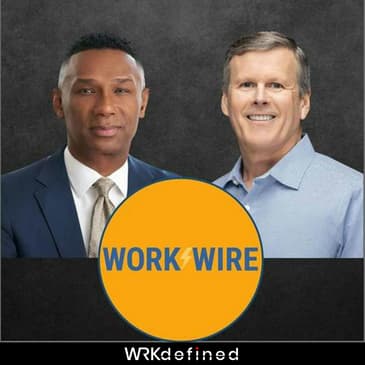
Unlock the secrets to fostering civility and respect in the workplace amidst post-election tensions with insights from Johnny C. Taylor Jr., the President and CEO of SHRM, and your host, Bob Goodwin. We tackle the thorny issue of post-election workplace dynamics, sharing strategies to cultivate a culture that values diverse perspectives—even when political views clash. Learn how HR professionals can lead the charge, ensuring productive and respectful conversations while advocating for policies that transcend political divides.
In this episode, we also explore the future of workplace policy amid an AI-driven economy. From innovative strategies for skills development and workplace immigration to managing healthcare costs, we uncover the crucial role of HR in guiding companies through these challenges. Hear our thoughts on balancing leadership instincts with strategic oversight, and join us in a hopeful discussion about job growth and workforce development. Together, we envision a thriving workforce ready to embrace future opportunities, where trades are respected alongside college degrees, and every employee feels seen and heard.
Powered by the WRKdefined Podcast Network.
[00:00:00] You're listening to Work Wire, sponsored by CareerClub and SHRM. CareerClub has a range of services aimed at job seekers with an empathetic approach. Whether you are a job seeker yourself, know someone who is in job search, or an HR professional looking to bring a more empathetic approach to transitioning employees, check out Career.Club. If you are an HR professional seeking to enhance your skills, subscribe to SHRM and explore their extensive resources. Visit SHRM.org. That's SHRM.org.
[00:00:31] Hey everybody, this is Bob Goodwin, President of CareerClub, joined by my good friend, the President and CEO of SHRM, Johnny C. Taylor, Jr. And welcome to another special episode of The Work Wire. Johnny, so good to see you.
[00:00:45] Good to be seen, my friend, and it's really good to see you. As the Southerners would say, good to be seen.
[00:00:50] Good to be seen, y'all. Come on now. Do you know the plural of y'all? All y'all.
[00:01:00] Yeah. Good. And I'm a Southern. I'm as Southern as you can be. I'm from South Florida, when it was the South, by the way.
[00:01:07] That's the southernmost tip of the country, but had not heard all y'all.
[00:01:10] All y'all. My mother's from Birmingham, so yeah. We can do all y'all. Anyway, so one of the things that we like to do on The Work Wire is address very current things that are happening that affect work, the workplace, workers, right?
[00:01:25] Right. And so we had something that happened recently that you may have heard about, which maybe is the presidential election that was in the United States last week.
[00:01:36] And it's going to be two weeks ago.
[00:01:39] It's been two weeks already. Right.
[00:01:41] Wow. So what clearly has happened is it was very emotional, very polarizing, the election.
[00:01:50] And people have come out of that with different feelings.
[00:01:55] And what I'm hoping that we could do is a couple of things, Johnny.
[00:01:58] One is, you know, talk about civility and how to have productive interactions with our colleagues who may not have felt the way that we felt about the election, irrespective of who you were for.
[00:02:12] And so just how to have healthy conversations with colleagues, what companies can do to set the right tone.
[00:02:19] Some people are over the moon and feel vindicated.
[00:02:22] Other people are depressed and you're just feeling horrible about what's going on.
[00:02:28] And they're coming to work with all those emotions.
[00:02:32] And so I was wondering if we could talk a little bit about that and then move on to talking about some of the things that you, SHRM, you know, might see from a second Trump administration as it impacts the role of work.
[00:02:45] So, yeah, first of all, this is great timing.
[00:02:49] It's really interesting.
[00:02:50] We tried to get in the front of this.
[00:02:51] We had SHRM, if you recall, when we started our civility campaign and we started much early in the year.
[00:02:57] We knew that as divided as the electorate was, that to your point, you're going to wake up the next morning and 51% of the population was going to feel vindicated, excited, et cetera.
[00:03:09] And 49%, and I'm using rough numbers, was not.
[00:03:12] And we knew that.
[00:03:13] And so the question was, what can workplaces, employers, HR professionals do to facilitate a softer lander?
[00:03:21] We thought that by emphasizing the importance of civility, tying this all to a culture of respect and diversity.
[00:03:30] Yes.
[00:03:31] Because diversity, as you know, is not just race and gender national origin.
[00:03:34] It includes political affiliation and belief systems and perspectives, right?
[00:03:39] Viewpoint.
[00:03:39] So we tried to set people up with it.
[00:03:43] And I believe that we brought the temperature down a little bit.
[00:03:47] It's not going to go away, but I do think that people who may have otherwise responded in a really, really negative way didn't because of, I'd like for HR professionals around the globe to take some credit for bringing the temperature down.
[00:04:00] We made it clear to employers, employees rather, what was civil behavior that would be tolerated and uncivil work behavior would not be tolerated.
[00:04:09] Like we were really clear.
[00:04:10] So where are we now?
[00:04:11] We are a couple of weeks now past the election.
[00:04:14] Wounds are people, some are still licking their wounds.
[00:04:17] In fact, in some ways, Bob, it's worse because now all of the pundits, all of the folks are now taking shots.
[00:04:24] The president elect is beginning to name some of his nominees for cabinet positions.
[00:04:28] And that creates yet another, you know, strong emotions about it, depending upon how you felt about the issues.
[00:04:35] And we are just going to be in a constant state of turmoil is not the right word, but tension.
[00:04:43] That's the right tension up to and through and including the inauguration.
[00:04:50] So that's what we're now all focused on.
[00:04:52] And SHRM wants to just remind people about civility.
[00:04:56] And really, I don't mean to be cute about it, but this is essentially a diversity issue.
[00:05:01] Like you can't say to people, we welcome diversity when what you really mean is diversity as long as I agree with it.
[00:05:08] You know, it just doesn't work that way.
[00:05:11] By definition, if you're a Republican, you should want some Democrats around to make better decisions and see different perspectives and angles.
[00:05:19] And vice versa, if you're a Democrat and your candidate didn't win, you should also be embracing this diversity.
[00:05:26] But we don't. We've sort of gone back in to our tribalism and you're either blue or red.
[00:05:32] And if you your team won and you're now blue, you're poking fun at, upset, et cetera.
[00:05:38] So it's we at SHRM, as you know, our position is policy, not politics.
[00:05:43] So I'd love to talk with you at some point about what we're going to do, what we are advocating for with this new administration as it comes in.
[00:05:52] And frankly, what we want to say to the outgoing administration, because there's still things they can do and focus on in these last several weeks.
[00:06:00] Yeah. So so we'll get on to the policy.
[00:06:02] But by the way, ever since I heard you say it for the first time, you know, policy, not politics, that is just such a helpful line.
[00:06:09] It's not a line. It's a it's a philosophy. I love it.
[00:06:13] But but let's just kind of get down to to.
[00:06:18] First of all, I want to reiterate what you're saying in terms of what SHRM has tried to do to just set a foundation for, you know, civility, respect, empathy.
[00:06:30] I think you like to talk about extreme listening.
[00:06:33] That's right. And so, you know, this was this was very proactive on SHRM's part.
[00:06:40] Like, let's get out in front. You guys have TV spots on this stuff.
[00:06:43] I mean, this isn't just, you know, in the SHRM newsletter.
[00:06:46] This is like to the electorate at large, like millions of dollars of expense, you know, investment.
[00:06:53] Yeah. So I mean, so, you know, kudos to you all. And as you say, you know, taking the temperature down.
[00:06:59] But at the same time, not the same time, but and people are going to work and they're feeling what they're feeling as maybe an HR person,
[00:07:10] maybe just as a leader at my company and maybe just as a rank and file worker.
[00:07:14] How do we just because there are so many emotions tied into this?
[00:07:21] How do you separate like I feel really strongly about that?
[00:07:25] I mean, this is something that I think is extremely important.
[00:07:29] And either it fell my way and like I'm talking about it because I can't help myself or I massively disagree.
[00:07:37] And to sit back and just say nothing or to be quiet about it is disrespectful to the issue, the consequences.
[00:07:45] So I must be loud. I must be, you know, animated to to really kind of reflect the seriousness.
[00:07:53] I believe these issues, you know, are grounded in.
[00:07:59] Yeah. See, I have the one thing that we when I talk to employees in our organization, for example, is, OK, so the next day I was a Trump supporter and we come in and I won.
[00:08:13] Hypothetically. Hypothetically, I'm saying it's not hypothetical that they won.
[00:08:18] And we have employees who walked in the next day and they're like my candidate won.
[00:08:23] You could come in tastefully and respectfully.
[00:08:27] Yes, you can say I'm very happy with the outcome of the the election results.
[00:08:32] Or you could say you all got trashed. You got dogs.
[00:08:36] You lost the popular vote. And that this you could go on and on and on.
[00:08:39] And all that can do is trigger people.
[00:08:44] And you have to ask yourselves, why am I doing that?
[00:08:47] This is a conversation that I had with someone. I said, you won at this point, rubbing it in.
[00:08:52] This is not like a Super Bowl match where the next day your team didn't win.
[00:08:56] But this is far more emotional and personal.
[00:08:59] So what we've been advising people to do is have a level.
[00:09:02] This is where civility and respect and dignity comes in.
[00:09:06] Appreciate that your colleague is right now wounded.
[00:09:09] And this is not the time to put salt in the wound.
[00:09:12] It's time to say the decision has been made unless you're living, you know, your head is in the same way.
[00:09:17] And so you're in the sand. You know what happened, what the results were.
[00:09:20] And it's time that we get back to it was your candidate the day before.
[00:09:27] And it's now your president the day afterwards.
[00:09:28] And it's all of our president elect. And so you just have to do that.
[00:09:32] But it's how we manage the communication, how we manage our relationships that will matter.
[00:09:38] Now, the flip side of that is if your candidate lost and you are coming in the next day and you're pissed.
[00:09:45] So your anger is bubbling over.
[00:09:48] You also have to stop and ask yourselves, how appropriate is that for the workplace?
[00:09:54] If you go in and attack someone who's candidate one, you should expect them to return the attack.
[00:10:00] And so this is very much incumbent upon all of us not to not talk about the biggest issue in the United States and arguably the world the day after the election.
[00:10:10] Of course, you can't like pretend that that didn't happen.
[00:10:13] But how we talk about it, how we show up is what we have been really trying to emphasize.
[00:10:20] You know what I mean? That's just what it is.
[00:10:21] And what's happening is both sides are now lobbying, you know, weapons at each other.
[00:10:28] And it's not cool.
[00:10:30] Verbalist weapons.
[00:10:31] So that's what we're trying to do is just to say, I got it.
[00:10:33] You're upset your candidate won't win.
[00:10:34] Here's news alert.
[00:10:36] Two people compete.
[00:10:37] One's going to win.
[00:10:38] One isn't.
[00:10:39] That's the way it works, you know.
[00:10:42] But, you know, the just because the election's over.
[00:10:47] And OK, so we let the dust settle on my person won or didn't win.
[00:10:53] Now, to your earlier point, people are being nominated.
[00:10:57] Policies are going to start being formed.
[00:10:59] Policies are going to start being implemented.
[00:11:01] That again, I have very strong emotions about these issues.
[00:11:07] And now things are going in a way I'm happy about.
[00:11:10] Things are going away I'm not happy about.
[00:11:12] So this isn't going away.
[00:11:14] This isn't like, OK, you know, wake up from the nightmare and now we can kind of get on with our life again.
[00:11:19] It's not a nightmare.
[00:11:21] It's just that things will be a fair point.
[00:11:25] But things will continue to be this way.
[00:11:27] So, you know, if you were speaking and if I'm just making you repeat yourself, stop me.
[00:11:33] But like.
[00:11:35] Talking to the H.R. professional who's there trying to keep the thing together here, you know, and to keep everybody, you know, being respectful, try to understand.
[00:11:47] Everybody sees the world the way that you do.
[00:11:49] Are there specific things that you would be advising an H.R. professional to be doing outside of what we've already spoken about to to foster that culture of of tolerance, diversity, inclusion?
[00:12:08] Yes.
[00:12:09] It's interesting that you use the word that I was going to use, which is culture.
[00:12:12] And as we know, culture starts from the top.
[00:12:15] H.R. is the keeper of the culture.
[00:12:17] But your CEO, president, managing director, whatever you call the person who leads the organization has to set the tone.
[00:12:24] And that's something we did right after the election.
[00:12:27] We sent a note out to our employees.
[00:12:30] Frankly, we send to all of our members congratulating the president elect.
[00:12:33] And you might imagine we had a version with President elect Harris.
[00:12:36] We had a president elect Trump.
[00:12:38] And then the next day we sent the appropriate one.
[00:12:41] And we even then it's really interesting story.
[00:12:45] So we were ready since the races were called early, early five o'clock that morning.
[00:12:50] We were ready and new.
[00:12:51] And so, you know, my team said, why don't we send out our note to everyone nine o'clock in the morning?
[00:12:58] And I said, but we haven't yet had a concession speech.
[00:13:01] So out of respect, we know what the results are.
[00:13:05] So let's wait until the news dribbled out.
[00:13:08] It was like, well, the vice president will concede at noontime that it was sometime this afternoon.
[00:13:13] It was six o'clock. Long story short, about four o'clock.
[00:13:17] And she was supposed to do it.
[00:13:18] I guess she was a few minutes late.
[00:13:19] So 430 is she actually did it.
[00:13:21] We were intentional about how we were going to operate.
[00:13:25] We waited until she had the opportunity to properly concede.
[00:13:30] Some said you should do it right now.
[00:13:32] She should have done it last night.
[00:13:33] It didn't matter what someone else does doesn't dictate how you carry yourself.
[00:13:38] Dignity and respect is something that you and how you show up is something you have the ability to do.
[00:13:43] And that's what HR folks have to do.
[00:13:45] I'm not going to let someone else take me down or act in a way that's inappropriate with who I am and the sort of culture that we want to be a part of.
[00:13:53] That's what comes from the top is I was literally talking with my comms people saying, I know you want to do it, but no, we're not going to do it.
[00:14:01] And that's what we've got to do is our leaders have to set the tone as the head person.
[00:14:06] HR has to make sure that it's facilitated through the organization.
[00:14:09] The second thing we need to do, and there was an interesting exercise where I've heard of and I don't know how this worked, but bringing employees together to actually talk about.
[00:14:20] You know, you go back to post George Floyd.
[00:14:23] We convened members of the community who we thought might have some pent up feelings of fear of anger of whatever.
[00:14:32] Similarly, after October 7th, we did some employers pull.
[00:14:36] So maybe there was literally an opportunity that I've seen companies advocate for this, bring the employees together who took it personally.
[00:14:44] So you've got to people, one, that's one group is the people don't really care.
[00:14:48] But then there are people who are really, really upset about the result.
[00:14:51] Give them a place to come talk about it, not to defend it, not to, you know, you got to.
[00:14:58] But they brought together people who are like minded and and basically had a session to help them move on.
[00:15:04] Hmm. I've actually heard of companies doing it quite successfully.
[00:15:08] Now, to be fair, these are smaller, medium sized businesses.
[00:15:10] So it's not as if Microsoft could do it at one spot, like, you know, but maybe they could break it up in Microsoft into departments and do it.
[00:15:18] But it's a really interesting tool so that people are seen, they're heard, they're, you know, all of those things that matter.
[00:15:26] And then you move on. You also have the unique opportunity.
[00:15:31] I asked the CEO who did that, why did you do it? And he said, it's also to reinforce.
[00:15:35] This is a place for you to get it out. But let's reinforce that when you go back out there, what won't be tolerated?
[00:15:41] So you're actually doing, you know, you're making very clear what the types of behavior you're going to accept and that won't be accepted.
[00:15:51] So those are the two things that I've seen occur in organizations as of late.
[00:15:55] And I actually think they're pretty smart.
[00:15:57] Yeah, no, they're super smart. And, you know, from the first point that you made about, you know, culture starts with the leadership.
[00:16:03] I can also see where an HR professional as a trusted strategic business partner may keep a CEO from his or her less good instincts to just go, go, go.
[00:16:18] And maybe, you know, service a little bit of a governor of maybe maybe we should slow down, Johnny, before we go do that.
[00:16:27] You know, because it's one of the consequences, just some consequences might be hadn't thought about that.
[00:16:33] And so I can see the HR person, you know, for someone who's overly wound up in either direction, serving as a bit of a buffer and dialing back down a little bit.
[00:16:47] And then to your kind of company, let's debrief on this.
[00:16:52] Let's kind of just like come together like a family and kind of just talk a little bit.
[00:16:57] And again, to your point, not to defend or berate or whatever, but just kind of get it out.
[00:17:02] What a great forum for a senior HR person to be facilitating that conversation.
[00:17:11] Assuming he or she, the HR senior, HR professional has the ability to do it themselves.
[00:17:19] You know, too often we expect HR people to engage when they're not yet over it themselves.
[00:17:24] And I've seen, Bob, sadly, the some of the vitriol on even LinkedIn this morning with people, HR professionals.
[00:17:33] I'm not so sure that I would agree that they're a professional who attacks the other side, that they're so angry that their candidate didn't win, that they themselves are publicly online engaging in uncivil behavior.
[00:17:48] If that's the HR person you are, then you absolutely should not be the person to convene that setting because you could simply fan the fire, put gasoline on the fire.
[00:17:58] And so I'm hoping that as you're listening here, just because you're in the role, you should be really careful about engaging in that particular exercise because maybe you're not the right person to do it.
[00:18:11] Now, hopefully you have a team of people and you can pull someone who can.
[00:18:14] But this is really a test of our our status as a profession.
[00:18:19] I remember being a lawyer. I can despise what I think the person accused of a crime has done, but I have an obligation to advocate for them that it's not you know, you don't throw your professional standards to the side because you don't like something.
[00:18:35] The real professional says I wanted X person to win. They didn't.
[00:18:40] But guys, we all have to get together. We have to work for the good of the company, for the good of society.
[00:18:45] If you can't do that, then, you know, a whole bunch of ifs that flow from that.
[00:18:50] But for sure, you should not be convening employees because that could turn really, really.
[00:18:54] Yep. Well, yes. So very good caveat to use the forum properly.
[00:19:03] And again, I think it speaks to your higher calling isn't to advocate for your personal position, but what's in the best interest of the company.
[00:19:10] That's your remit not to advance your personal agenda.
[00:19:14] Let's use maybe, you know, the remaining 10 minutes or so, Johnny.
[00:19:18] What are some of the policy things that you guys are either going to be advocating for hope to see coming in this new administration?
[00:19:27] So top of mind, there are several. So this is a no order, no prioritization.
[00:19:33] But top of mind for me is skills development.
[00:19:37] We have a real looming issue, as you know, because of the demographic of American everything and AI has exacerbated it where people literally may want to work.
[00:19:47] But they won't have the skills to do the jobs to do that we have in the future.
[00:19:52] And I'm not talking 20 years in the future. I'm talking three, five years in the future.
[00:19:56] So how are we going to ensure that the American workforce is prepared to take the new jobs in an AI powered economy?
[00:20:06] For example, none of us can afford the United States of America to have experienced what, for example, Virginia, West Virginia did after the coal mining business kind of fell apart, where you have a number of people who know how to do one thing.
[00:20:19] Those jobs go away and then they have nothing that they can do.
[00:20:23] We've got to bridge people. So very much focused on skills building and workforce development.
[00:20:29] We also believe, secondly, that we're going to focus on workplace immigration.
[00:20:34] Distinct from the politicized issue of border security and immigration, that's not what we're talking about.
[00:20:41] We're talking about the fact that we still have seven million plus open jobs in America.
[00:20:46] We understand that we need to fill those jobs. That's how we drive innovation.
[00:20:50] That's how we get work done is we need people.
[00:20:53] So economic growth is incredibly important.
[00:20:56] The same time, we need to have a fair and effective legal immigration system, and it needs to work that way.
[00:21:02] So we're talking about from a workplace standpoint only, how can we work with the administration not to group this broad, broad conversation around immigration and do things that will impact employers' ability to get the talent they need.
[00:21:17] And for people to work the jobs that they want to work in our country.
[00:21:20] Last couple of things are flexibility and leave. Like we really want to, listen, you know how we felt about pure remote work, but we believe the answer is not about remote versus non-remote anymore.
[00:21:34] And it's more about flexibility. How do we do it so that the employee gets what they need, the employer gets what they need, and companies can remain true to their culture.
[00:21:42] The biggest one in terms of financial impact, of course, is workplace health care.
[00:21:47] We know that the cost of health care is continuing to spiral, outpacing almost every other economic indicator.
[00:21:56] Like things are getting expensive and employers, even if you have the traditional 70-30, 80-20 split, that 20% cost an employee a lot more when the entire cost goes up monthly.
[00:22:09] So we are, or annually. So we're working to figure out how can we work with the administration to identify and promote effective health care solutions that are affordable for both sides.
[00:22:20] Because our fear is it will become so cost prohibitive that employers will cease to offer the benefits, and then employees and the country are really in trouble.
[00:22:30] You know that half of Americans are covered by employer-sponsored health programs.
[00:22:35] So this is not something that we can just ignore. It's not just a government problem.
[00:22:39] Everyone can't leave their employer's offering and then go into the Affordable Health Care Act.
[00:22:46] It was intended to supplement the employer-provided insurance thing, not replace it.
[00:22:51] Right. Okay. So if I could go back to point number one, if I remember correctly, which was skills-based hiring.
[00:23:00] Just an add on to that, because you talked about AI and stuff, is just the trades in blue collar jobs.
[00:23:09] It's just such a, I mean, between retiring boomers, right? And then, you know, the only acceptable road after high school is college, maybe the military.
[00:23:23] You know, it's like, oh my goodness, there are so many great jobs that need to be done that AI is never going to take over doing.
[00:23:32] AI is not going to come fix my toilet, period.
[00:23:34] AI is not going to fix the roof of my, you know, my roof that's leaking.
[00:23:38] You know, my broken car. Like, you just, you need people who know how to do stuff.
[00:23:43] Yep. And so, you know, I hope that, you know, that there's continued and maybe more emphasis on that is noble, important, valued work that needs to be done.
[00:24:02] So, for sure. Health care is really interesting because to your point, you know, with it becoming cost prohibitive, it also starts to push out to the margins other benefits that people need for a modern workforce.
[00:24:16] That's right. And it's like, yeah, but like if, you know, health care is eating up, you know, I don't know what the right number is, 80 cents on the dollar of all benefits that we can offer our employees.
[00:24:28] Yes.
[00:24:29] Again, partially to be competitive, but partially because it's the right thing to do. It's what they need, whatever.
[00:24:36] And, you know, so it's very encouraging to hear you talk about that. And the model is going to break if.
[00:24:45] Oh, not only is it going to break. I was with at KKR's offices in New York, Henry Kravis convened a group of CEOs.
[00:24:54] And it was a really interesting conversation where these CEOs were honest, like I can't keep giving you four or five percent of your increases merit plus seeing insurance benefits go up and pharma in particular going up double digit.
[00:25:10] Like, where do I get the money from, particularly when the customers are now saying I'm unwilling to pay eight dollars for a cup of coffee?
[00:25:17] Like there's nowhere to push it off to. So what we went through is a phase where we could actually pass the cost on the consumer would pay for these things.
[00:25:27] If it costs me more because of benefits, I could pass the cost on. And now we're seeing serious pushback from the consumer.
[00:25:34] And so the CEOs are stuck. And I've talked about this before where I want to provide great benefits.
[00:25:38] They are very expensive, but the consumer is unwilling to pay me to pay you. It's interesting situation.
[00:26:13] And it's interesting.
[00:26:14] I think, if we can get into the business, how do you invest in a company that's going to pay for the investment in a company?
[00:26:15] opportunities for companies. But on the other hand, it also potentially introduces what are
[00:26:20] perceived as redundancies. Do you have any take on just a more relaxed regulatory environment as
[00:26:27] it relates to M&A activity? So listen, it's a careful, you have to strike a balance.
[00:26:34] When people say we shouldn't have any regulations, I think they miss the point. This is why our
[00:26:39] country is the safe space for investors around the globe, because people know that it's not a
[00:26:46] wow, wow, west. Literally, you do whatever you want to do. We have rules in place. We do have to
[00:26:51] protect and ensure that there's the appropriate level of protection so that our industry and our
[00:26:59] marketplace works well. So I got that. I think few of us would disagree when we say maybe they've
[00:27:07] gone too far in some areas. So I'm hoping that the new administration will find ways for business
[00:27:13] to do what it does. I mean, for example, I don't have an opinion. I just know that the big debate
[00:27:19] does Kroger and Albertsons. That's been held up. They've been unable to merge, although I think
[00:27:25] they've made a pretty strong case that this is very good and they've sold off some areas where
[00:27:30] they had too much penetration, da-da-da-da-da. I'm hoping that in the new administration, we'll look at
[00:27:35] this and say this company, the combined company, will be much stronger and will provide more
[00:27:42] certainty for its employees and protection a long time for them. You know, there's strength in
[00:27:47] numbers, right? So while at the same time, I get we've got to protect small businesses as well in
[00:27:53] those markets and they're not. So you just got to do it right. That's what we use as much regulation
[00:27:59] as we need and not one bit more. Maybe that's, and I'm hoping and I believe if the Trump administration
[00:28:06] does what it said it would do during its campaign, so the Trump campaign, the administration does what
[00:28:13] the Trump campaign does, then I think we could be in for a good little run on that front.
[00:28:17] Yeah. So I believe one is just getting the uncertainty out of the way with the election because it was so
[00:28:26] close. It could just have fallen off of a nice edge either way. And so you've got businesses that have
[00:28:34] been fairly frozen in their decision making because like, you have two different, fairly significant,
[00:28:40] different worldviews. And so that could lead to all kinds of, you know, policies and regulations and
[00:28:47] whatever. It's fallen in what I think would generally be considered a pro-business kind of a way.
[00:28:53] Yes. I mean, that's important, but just the fact that there has been a decision and you can start to
[00:28:58] navigate. I believe the labor market is going to open up. I think that, you know, companies are going to,
[00:29:08] okay, now I know what I'm, yeah, I've got some sense of which way the wind is blowing,
[00:29:13] right? It's going to be a new year. You know, the interest rates are falling. I'm fairly sanguine
[00:29:19] that the labor market is going to open up. People that have been struggling to find jobs
[00:29:24] will find it a bit easier and it's going to be, we're going to get some momentum back on hiring,
[00:29:30] but that's what Bob thinks. What's Johnny think?
[00:29:33] I hope you're right. I, and I believe that on balance, you're going to be right, but listen,
[00:29:39] we have to give credit to the current administration. We've had a good run. I mean, if the markets are
[00:29:44] any indication, things are good. 4% unemployment is very healthy. You know, you can be too low.
[00:29:51] And we know a couple of years ago we were in that situation and that was, that was tough on,
[00:29:55] on HR professionals and talent acquisition professionals is really tough. So I think we're in a
[00:30:00] good place. We just need to, you know, on the edges, we need to make sure that people can get
[00:30:06] jobs who want to work. There's nothing more frustrating than I want to work, but I can't,
[00:30:11] which is why that focus on skills is so important in workforce development. We can't have a whole
[00:30:16] generation of people be left out, you know, 40 and 50 year olds who were not digital natives,
[00:30:23] be unable to compete in the 21st century. You just can't do that. You also can't, to your point,
[00:30:28] have everyone wanting to have college degrees and no one wants to do the jobs, the trades job,
[00:30:34] because we need those as well. So if we get this right, if labor under the Trump administration gets
[00:30:40] this right, working with business, I think you're right. We can unleash a beautiful workforce for the
[00:30:48] next four years. I hope so. I hope so. Any, any parting thoughts, Johnny, kind of post-election thoughts?
[00:30:53] Yeah. The, the, the, one of the issues that we have got to do right now is work on bringing us back
[00:30:59] together. So we talk about civility. Civility means, you know, I can still hate you, but I can be civil.
[00:31:07] There is spoken like a true southerner. Right. You know, but, but I think we've now got to work
[00:31:14] on unifying the country because it was, I mean, listen, at the end of the day, even though it was
[00:31:20] an electoral college win, a popular vote win, a house and Senate sweep, at the end of the day,
[00:31:26] we do need everyone to come back together. And I was, I felt good to see even Chuck Schumer's comments
[00:31:32] that got it. They won. And we've got to figure out how to work together. I think the rest of us have
[00:31:37] got to do that. Digging in and being angry for four years. I saw something the other day, there's a
[00:31:42] cruise ship that's advertising. You can go away for four years. Insane. No, we need to come together,
[00:31:50] acknowledge that elections happen and someone's going to lose. Someone's going to win. But more
[00:31:54] importantly, elections have consequences. And so anyone who believes that the Trump administration
[00:32:01] is going to do what the Harris administration would have done on every front is naive. That's not how it
[00:32:07] works. He, you know, he's going to do what he does and we've got to bring that to the workplace
[00:32:11] and bring our employees together. So unification is what I'm talking about a lot now.
[00:32:15] Yeah. So I think that's a nice bow on, you know, that's inclusion. That's bringing us back together,
[00:32:22] right? So we've had the diversity part. Now it's time to come together and get focused at your
[00:32:28] company, you know, in your social circles, wherever, to come together because at the end of the day,
[00:32:33] we're Americans. Yes. So, you know, that's, I share that hope with you. So I appreciate you ending
[00:32:40] on that note. So, uh, workwire listeners, thank you guys so much. You know, the feedback that we get
[00:32:45] is tremendous. Uh, if this is a podcast that you enjoy, please share it with your friends, but,
[00:32:50] you know, as we've gotten traction over the last year, it's been really nice to get comments,
[00:32:55] suggestions for topics. If there's something you would like to hear Johnny and I talk about,
[00:32:58] that would be amazing. But in the meantime, we just thank you for taking a few minutes out of
[00:33:02] your day to listen and encourage you to go back to your company, whether you're a leader or worker,
[00:33:08] anything in between to, to foster that culture of civility, of inclusion, of belonging, of unity
[00:33:14] that Johnny was talking about. Your company will be better. Our country will be better. Yep.
[00:33:20] Yes. Thank you.
[00:33:20] Yes. Come on.
[00:33:22] Workwire.
[00:33:24] Thanks, Johnny. Talk soon.
[00:33:26] Bye-bye.
[00:33:27] Check out career.club for personalized help with your job search.
[00:33:31] Visit shrm.org to become part of the largest human resources organization worldwide.
Sponsors
