
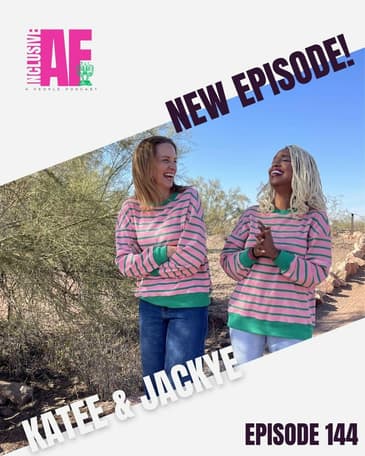
Join hosts Katee Van Horn and Jackye Clayton on this enlightening episode of The Inclusive AF Podcast as they dive into the intricate world of workplace safety and the potential impacts of the controversial NOOSHA Act. Discover why the Occupational Safety and Health Act (OSHA) is crucial for protecting vulnerable workers and how its removal could disproportionately affect marginalized communities. Explore real stories, historical insights, and the ongoing battle between state and federal regulations. Whether you're a business leader, HR professional, or just curious about labor rights, this episode sheds light on the profound importance of employee protections. Don't miss out on this crucial discussion!
#InclusiveAF #WorkplaceSafety #OSHA #LaborRights #DiversityEquityInclusion #Podcast #NOOSHAAct #WorkplaceRegulations #EmployeeProtections #HumanRights #Advocacy
Tune in now and empower yourself with knowledge about workers' rights and safety in the ever-evolving landscape of employment!
If you like what you hear, we would like to encourage you to subscribe to our channel!
We would also appreciate it if you would rate this channel by going here: RateThisPodcast.com/inclusiveaf
We create this podcast as a labor of love. But if you would like to support this channel you can buy us a cup of coffee here: https://www.buymeacoffee.com/InclusiveA
Powered by the WRKdefined Podcast Network.
[00:00:00] You're listening to Inclusive AF with Jackie Clayton and Katie Van Horn. Hola tutti! Is that my nickname? That's your new nickname. Are you ready for it? Oh, hi, muñequita. Yeah, let's just make up names for each other today. That'll be the episode. It's just like what nicknames we have for each other. Hi. Hi. What you got?
[00:00:28] Well, I'm very excited because if you can see us, you know that we are in the same place. We are not like... This is not virtual reality. Yeah. So that's fun. So welcome back to the Inclusive AF Podcast where we decided we were going to break down stuff this year. Yeah. And be more specific so that we can learn about what's going on in the government because, what is the term you said? We're getting absolutely flooded. Blooded. Yeah.
[00:00:55] I mean, you're seeing all kinds of different things across the board where we are just getting inundated with information and the overload, but it's a ploy. Like it's the blitz of information where like there was a word that I thought of just the other day and then I was like, nope, that's the wrong word. So I'm not going to say it. Right. But it's very reminiscent of like some things that go on in propaganda filled governments. Right. We're going to hit so much information that no one will be able to keep up with everything going on. Right.
[00:01:25] We're going to start breaking things down, things that I think matter to both you and I and to folks out there who are part of workplaces. So let's talk about it. So we're going to really talking about workplaces and things that could definitely impact the folks that listen to this show. So there's a new bill in Congress called the NOSHA Act or HR 86. And that's really so rude. Just the name. Yeah. No show.
[00:01:55] We're going to 86 OSHA. Right. So for those of you who have worked in the restaurant or service industry, you know that when you 86 something out of restaurant, it's gone. And so that's what we're going to do with OSHA is just NOSHA it and it's going to work out perfectly. I'm sure it is. So it's isn't just about workplace safety. Yes, it's funny because in restaurants, you also see that big OSHA sign.
[00:02:18] It tells you what's going to happen if you fall or whatever, but it really is about like who benefits from worker protections because we don't talk about we hear about these things, but then who does it really affect? Right. Like who suffers if we took away OSHA because when it isn't handled properly properly and we're not looking at it as something that's really important. Unfortunately, we figure out that executives like seem to get away with more and more like we you have to force people. Mm hmm.
[00:02:48] To do these things in order to keep people safe. And of course, it disproportionately affects black and brown workers, immigrants, you know, women and people that are in low wage. Well, yeah, absolutely. And I think that's the piece. So I don't know if I've ever shared this with you, but one of my great grandfathers was in Maryland and worked in the coal mines in Maryland.
[00:03:13] And so there is like we'll talk about kind of the worker protection for folks that are working in the mines. But, you know, it's really about this. Let's just explain the entire what is OSHA? What happens to those those workers when inclusion, diversity, equity, accessibility are gone and those worker protections are gone. And it's really about, hey, OSHA is no longer there. D.E.B. D.E.I.B. is no longer there. All of these things.
[00:03:43] What now? So let's talk about it. Let's talk about it. Do do do do do do do do do do. That was our transition. I did. I liked it. Yeah, I like it. So to understand why OSHA exists, we need to talk about the history workplace history, because I was shocked. So this actually first came out in 1970.
[00:04:05] And before OSHA, they they had 14000 workers died like every year. So that's thirty eight deaths a day at work like that sign that said, when was the last death? We're like, oh, actually, it was yesterday. Yeah. There was literally morning. Yeah. Literally so many.
[00:04:29] And so they were so common that they had to have the legal protections because they didn't have legal protections for people that are actually suffered. So companies really didn't have to protect the workers there. So it really, again, affected the most vulnerable. And that's why all of that came in place. Absolutely. And I think it's also there are a lot of movies that cover some of the the implications of OSHA. And we can share some of those, I think, in the show notes.
[00:04:58] But I'm remembering one that was basically about these mill workers and it was all women that were like sewing and doing these different this different mill work. I'm sorry. Maybe it's not called mill work when they're like actually doing the sewing, whatever that's called. Oh, yeah. What is that? Like that? Anyways, they may call it. So let's call it sewing.
[00:05:19] But it was basically they were being working, you know, nine zillion hours at zero dollars and children were working and all kinds of other things. And then there was also some essay involved, of course, of the women, because, you know. All of it goes together in one way or another, by the way, Penny and Sarah and are part of this. And so if you see Jackie and I moving about, it's because we have dogs circling our feet at all times. But anyways.
[00:05:49] OK, so let's talk about it. Every time I get distracted by the cubits of my babies. But so we know that even just like in the fields, we have a lot of undocumented workers, a lot of Latino workers that still have high fatality rates. Women in health care, domestic workers. So folks who are working in hotels, things like this service industries.
[00:06:18] There's unique risks that go beyond just like, oh, I might get injured at work. As I mentioned, you know, harassment, violence, exposure to infectious diseases, exposure to infectious chemicals, period. And so, you know, this is what it's all about. The fact that somebody actually said we should get rid of it is just dumb. Like, it doesn't make any sense. Like, anyway. So OSHA actually was came out to fix that.
[00:06:47] And it's actually stands for Occupational Safety and Health Act. That's what OSHA stands for. And it wasn't just about compliance. It was really about human rights. You know, it said for the first time that no worker should have to choose between a paycheck and safety. Right. And I think, you know, what that actually does, how that actually translates is basically safety standards. And, you know, like you said, that board that's how many days since the last fatality.
[00:07:13] Now you still see in some warehouses, things like that, you know, X amount of days since the last injury. But it also talks about just that accountability that employers have to their employees to say, what do I actually need to do? So, you know, it's what equipment do they need to wear? You know, are there chemicals that they might be exposed to? A lot of us have seen, you know, the eye washing stations.
[00:07:38] If you are, you know, exposed to their, if there are chemicals around, if you fall off of a ladder or are you wearing the right equipment while you're on the ladder, things like this, or who is allowed to be on the ladder or not. It's also about training and education. So, you know, folks that are in some of these environments, they have specific training they are required to do. And that's so that they can eliminate some of those injury rates, etc.
[00:08:04] The one, and you know, we've had a couple folks on that have actually been a part of this whistleblower environment. So OSHA also enforces those whistleblower protections. So if someone reports something, they can't be fired, there is no retaliation for them speaking up and speaking out, which is a huge thing when you are in environments where someone can get hurt. Right, because that last part, like, I feel like it's important as we talk and just share real talk with our audience.
[00:08:33] Like, it's never what you think that it is. Like, it sounds like, oh, we should probably maybe we're efficient and organization should be able to do all of these things. I understand that. But we also have to recognize that who's at most at risk for retaliation, right? It's marginalized workers. It's women who are saying that they're getting violated. It's undocumented workers. It's low income employees or, you know, people that are in those unsafe conditions that they're they are afraid of losing their job.
[00:09:02] It is afraid of being kicked out, not being able to take care of your family because you said you bring to light something that's happened. Absolutely. And I think, you know, the the piece that is really important to remember is just that without OSHA there's there's no oversight. There's no protections for these folks. You lose your voice completely. And I think that's the part that scares the bejesus out of me. I don't know.
[00:09:28] That's the part that I worry most about. But well, I mean, but it just is frustrating on when you add this with people taking away diversity, equity, inclusion and belonging as something that's important. It scares me. So like who's going to oversee that piece? Right. Like, you know, I think it's ridiculous. But when you look at like why and it's just unironically here in Arizona.
[00:09:57] Yeah, here's some here's some fun news about Arizona. So the guy who wants to do this is from Arizona. He's the representative. He's the same as Andy Biggs. And he introduced the OSHA Act, arguing that workplace safety should be left to the states. If one more person says left to the states, I'm really going to blow somebody up. Yeah. So don't tell anybody that's not a good way to have an alibi. Not really blow them up. Yeah. But he says OSHA is government overreach.
[00:10:23] He's opposed to COVID-19 vaccine mandates that keep people safe. He believes that businesses should have more flexibility to define safety standards. And I think there's also one piece in Arizona. So I want to remind folks, Arizona, where it gets to one hundred and twenty plus degrees in the summertime. One of the other things that he is opposed to is heat safety regulations.
[00:10:48] So in other states, it's cold safety regulations where if the weather is so cold, you have to make sure people have a heater or whatever. Here it's are there air conditionings or some sort of cooling situation. If folks are working in a warehouse, if they're working, you know, wherever they might be working, that there are regulations on brakes, regulations on water, regulations on these different things. Let's get rid of them because that seems like the right thing to do.
[00:11:15] And the issue, you know, this whole the state should own it. I this always sends me over the edge because, you know, that was it's gone so well already with the abortion banning. So, you know, it's working out well that the states should own these things. But only twenty two states right now actually have like OSHA approved plans or policies.
[00:11:36] And so without that federal oversight or here's what we're doing as an organization, you don't know what standards would be set in each state or if they have any at all. So, you know, the this, you know, came up during the election cycle about how old should a child be before they are allowed to work? And, you know, should we make sure that children are able to work whenever they want to? And this is one of those things.
[00:12:04] It's like another group of vulnerable people that, you know, you have these right to work states, you have all these things. And so there's much weaker labor protections if no show goes away. I I'm going to start calling it no shit, even though it's called OSHA. Now I'm saying if we're going to call it, if no shot goes into place. Right. And OSHA is gone. That's what I should say. Yeah, right. I just think it's dumb to think about when you're like, oh, we're going to let organizations decide what safety regulation is.
[00:12:33] And I'm sure because capitalism isn't a thing. No, that they're going to make what's best for the employees, regardless of the cost. Right. Not what's best for the organization. Right. Like, I'm sure they're not going to cut anything back because, I mean. That never happens. No. And I think it's also interesting because, you know, I think some of the factories and some of you know I'm from Ohio.
[00:12:57] Some of the factories in Ohio, I think they actually are one of the states that has some of these worker mandates, the OSHA mandates, because there were so many different folks are being killed in unsafe elevators. So having the ability to walk down a stairwell or not having a way to get out of the building, all of these things are part of this. So, you know, they would have these fires in these mills and instead of a few people dying, everyone would die.
[00:13:27] And, you know, we saw this a lot of times again before the 1970s where you had all kinds of different non regulations that existed. And what did you see? As you mentioned earlier, like 38 plus people per day dying. So, you know, it's when we think about the states owning it, it's really about that. Hey, we might care about this. We might protect workers. Others might not. Some of them, it might go, oh, we're going to revise what we do have in place.
[00:13:55] So it's more employer friendly, not employee friendly. And, you know, I know all of us know there's a lot of states that the employees have a lot more rights than others. However, when you have again, as you say, like the state representatives that are funded by the lay, the, the. I'm sorry. That's okay.
[00:14:17] If we have situations where, you know, you have people funding these state representatives or whatever it might be, they're going to go, oh, I should side with the big worker that's giving me a big old fat check. Or employer that's giving me this big old fat check, not with the employer or the employee. Sorry.
[00:14:41] So, you know, again, if this disappears where we're not in a good spot and we need to just be thoughtful about that. But right now we're going to take a quick break for commercial. Maybe. We're going to take a quick break to go talk to Clay Clayton. Back from break and go. So there is a precedent for this.
[00:15:07] Just to be clear, industries that lack oversight, like I don't know, Uber. Oh. Like gig work, like Amazon workers. Yeah. Like those kinds of things, healthcare workers. Right. We know that this is all happened before. This isn't new, but now they're changing it so that no one has to, or I guess the states will have to figure it out. The states will figure it out. They do so well when they are left to their own devices. Mm hmm. So many states.
[00:15:34] I am not like, actually, it's funny because you know, I have Andy Biggs who's pushing this, but I also have a Democrat governor and a Democrat mayor. So Kate and Katie will handle everything. So it's going to be fine. Sure. Because they have good names. But right now workers under like that obviously are protected by OSHA. So everyone that works in the U.S., you know that you have the right to report unsafe conditions.
[00:16:00] You can report if you've been illegally fired for reporting safety conditions that are not good, things like that. And then you also have, you're able to ask for injury records. So this is something that, you know, we don't talk about as much in, you know, when you're in an office environment. This is usually stuff that's talked about in trainings for more warehouse or manufacturing type roles.
[00:16:25] But it is something that, you know, you can say what other reports have been made about unsafe working conditions, whatever it might be. So I think people know that. That's the thing. Like, I don't think people understand what their rights are. Right. In the first place. And now they're potentially going to have less rights because like, if there is no OSHA, then it's going to be on HR or DEIB people or worker advocates to be able to fill the gap. Yeah.
[00:16:55] And they don't have anything to do. So. No, they're just hanging out on the, you know, chilling. So. Even though like, so this guy's brought Andy Bix has brought this forward multiple times now, but even if it doesn't pass, there's going to be more work that they will be doing, I think, to just weekend worker protections. They're also, you know, looking at the NLR right and LRB.
[00:17:22] So the National Labor Relations Board, that's another place where they're looking and that's where, you know, union environments, that type of thing. And so, you know, when you don't have whistleblower protections, we don't have HR folks are overworked or DEIB leaders are gone from an organization. How do you think about worker safety? How do you think about, you know, can an advocacy group play a part? Yeah.
[00:17:48] And so for those of you who have not watched Norma Ray, I encourage you to watch Norma Ray because that will help you with why unions are important for workers and why they were, you know, first put into place. And that's also where a lot of this OSHA work came into play was in the 1970s when you had these, 1960s and 70s, I should say. And when it was about workplace safety, how do we create environments where people physically feel safe, mentally feel safe, all of these things?
[00:18:18] I think what the other part that we don't talk a lot about is we do earlier, we were talking about how it's like manufacturing or warehouse environments, but we're asking people to come back to work. And I imagine that we're going to see an increase in injuries just from basic things because nobody had like an industrial sized printer at home. Right. Right.
[00:18:40] Like, or if you have stairs or just various things that are happening just within the office, they're, you know, understanding people's comfort or their ability, what's happening at work. Are they using the right equipment just for day to day within the cubes or whatever? I mean, I know it sounds lame.
[00:18:58] It's just that I think it's we've never seen this huge of a return back to work where people were used to making themselves comfortable with what they had and what they needed and things that they purchased, hopefully with the thought of their own comfort in mind. Yeah. I don't know. I feel like it could have a big impact on these various environments because it seems like it's happened very quickly. And I don't feel like it's been like, oh, we're here to make you comfortable.
[00:19:27] It's not even like it was before where it was like we have ping pong tables and free lunch. Like this is just get your ass back and work. We're not hearing about what people are doing in order to make people feel safe because it is. And we've been saying this about the return back to work that like we know that that isn't an issue because they that people feel like people need to be empowered. It seems to be like this control issue.
[00:19:55] And I feel like this is also not just a compliance issue. It is a power issue. And it is about racial justice. And it's about gender equality. It's about disability rights. And when you force somebody back to work and then you don't have them being protected once they get there, you're not protecting, especially the least of these. Right. That's what makes me so angry.
[00:20:22] And that's what when we said a couple of segments ago, like we need to talk about what's really happening and what's really going on. Absolutely. And I think, you know, this is the piece where when we talk about worker safety, when we talk about just all of these things going on in the workplace right now, we are at such a point in time that all of this is kind of coalescing to, as you just said, like this could be a real issue. And I also you said the word comfort.
[00:20:51] I want to also just be clear, this is not even just about comfort. This is about, again, basic human rights. Right. Having the ability as a woman who is nursing to have a space that they can go nurse. That's a basic human right. Like having a place where people, oh, we have break time so people can get water. They can take a bathroom break, whatever it might be.
[00:21:10] So all of the things that OSHA entails from a safety perspective, it's not like it's like over and above, like, oh, my God, this is the be all end all. It's certainly the basics of how you make sure you keep people safe in a workplace. That's right. So, yeah, I just, you know, I would love for folks, if you have an OSHA impacted story, if you have something that you'd like to share with us where maybe you, you know, reported an unsafe condition. We want to hear them.
[00:21:40] We want to hear those stories. So share them with us on social media. We're on, you know, Insta. We're on all of the things. I don't even know all the things we're on. I don't think at this point, but we're on all of the things. We are on all of the things. Yes. Yeah. So thanks all for listening. And I want you to know what we're going to be doing is like looking at like congress.gov, looking at what's the most popular stories or bills or whatever is going on within Congress and talking about that to bring it to your attention.
[00:22:06] Because we're not getting we're not getting all of this from news. We're getting flooded, like Katie said. And so we really want to invite you to come to Inclusive AF and we're going to be spending more time trying to figure out the truth and things that we should consider it and make sure that we give you that information. That was a mouthful. So thank you all for joining us on Inclusive AF. I'm Jackie Clayton. And this is Katie Van Horn. Bye. Bye.
[00:22:35] Do you love news about LinkedIn, Indeed, Google and just about every other recruitment tech company out there? Hell yeah. I'm Chad. I'm Cheese. We're the Chad and Cheese podcast. All the latest recruiting news and insights are on our show. Dripping in snark and attitude. Subscribe today wherever you listen to your podcasts. We out.
Sponsors
