
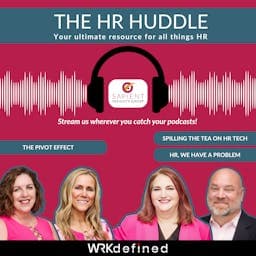
In this episode of Spilling the Tea on HR Tech, Sapient Insights Group Chief Research Officer and Managing Partner, Stacey Harris, and Sapients Insights Group Director of Research, Cliff Stevenson, sit down with special guest Dr. Jarik Conrad, Vice President of Human Insights and Executive Director of Workforce Institute at UKG, to discuss his role and new initiatives. This thought-provoking conversation also covers the importance of understanding the complexities of the employee-employer relationship and predictions for 2024.
Key points covered include:
↪️ Evolving dynamics of the employer-employee relationship and the risk of a one-size-fits-all approach.
↪️ The strategic HR professional and leveraging AI’s automation of mundane tasks.
↪️ Challenges and opportunities HR faces in the age of AI, highlighting HR's pivotal role in voicing ethical considerations.
↪️ Exciting opportunities at UKG, including hiring a lead economist to enhance their understanding of the labor market and its potential impact.
↪️ 2024 is crucial for organizations to differentiate themselves and the importance of translating promises into actions.
Don’t miss this exciting thought leader conversation! Follow the hosts and companies mentioned below:
Sapient Insights Group
Download the 2023-24 HR Systems Survey White Paper
Instagram | Twitter | LinkedIn
Stacey Harris
Instagram | Twitter | LinkedIn
Cliff Stevenson
Dr. Jarik Conrad
Instagram | Twitter | LinkedIn
Dive deeper into the insights discussed in this episode by exploring Dr. Jarik Conrad's thought-provoking book, "In Search of Humanity: Why We Fight, How to Stop, and the Role Business Must Play," available now wherever fine books are sold.
Powered by the WRKdefined Podcast Network.
[00:00:00] Welcome to the HR Huddle podcast presented by Sapient Insights Group, the ultimate resource for all things HR. It's time to get in the huddle. Welcome everyone to Spilling the Tea on HR Tech where we focus on the hottest HR tech news
[00:00:24] everyone needs to know to be in the know. We break down the news of the week and help you make sense of what it means for our industry and how it can impact your organization.
[00:00:33] We're recording today on January 9th, 2024. We're into the new year bringing you all the news you can use both this week and going forward. I'm your host, Stacey Harris, Teacher Research Officer and Managing Partner for Sapient Insights Group, a research and advisory
[00:00:49] firm. And joining me today is actually a couple of special guests. So first off is Cliff Stevenson, who's our Director of Research and Principal Analyst for Sapient Insights Group and who's joined us on a regular basis. Cliff, do you want to say hi to everyone?
[00:01:00] Hi everyone. And then most importantly, we have a special guest today. We have Dr. Jared Conrad who's VP of Human Insights and Executive Director of Workforce Institute at UKG. Jared, do you want to say hello to everyone out there? Hello everybody. I'm excited about our conversation
[00:01:17] here. Yeah, this is going to be a great one. Normally we don't have guests at our session, but we actually started this conversation October, was it 10th, 11th of 2023, right? Yeah. I think it was back to that. Yeah, we... Like time ago.
[00:01:32] It does. Things changed so fast. So we actually did a live recording not too long ago at the HR Tech Conference and as all things go, technology doesn't always work as well. So we're re-recording today because we thought the conversation was amazing and we wanted to
[00:01:46] make sure that we got some of this really cool nuggets to the audience. And we also have a little bit of tea that we're going to be spilling today on some new things that
[00:01:54] you're doing, Jared, and some of the makeup trends you have. So we were excited that we were able to actually get some additional time with you to actually redo the interview and have a
[00:02:02] conversation. Cliff, I know you and I have been talking about how excited we are about getting chance to talk with Jared. Is there anything else going on right now that we want to make
[00:02:10] sure that we sort of tell the audience about the conversation and where they can get maybe some information on Jared after the call? Yeah, we should mention there'll be notes in the link in description, but you can do easily to search because Dr. Jared Conrad
[00:02:26] has quite a presence out there. That's J-A-R-I-K, I think that's probably the easiest way. And especially if you look for the mega trends, you'll be hearing that term used a lot, but it's a very specific group of predictions and sort of the insights that he's been
[00:02:43] bringing and he's going to be talking through some of those as we go through today. I have a prediction of my own that will probably end up mentioning AI at some point. I don't think one can have an interview these days without mentioning it.
[00:03:03] Oh yeah, yeah, take the box. We should also note that Dr. Jared is an author and so maybe we can start off with a conversation a little bit about just a little bit about your background
[00:03:14] and how you got into heading up the Workforce Institute at UKG. Could you maybe give us a little bit about the work that went into your new book and what's your role in the Institute? That's an interesting job role inside of any organization, right?
[00:03:27] Yeah, man, that could take all our time. I guess the short version of it is I spent almost 25 years now in and around human resources. I say in and around because I went to graduate school
[00:03:39] to study human resources before I later got a doctorate degree. It's always been a focus I've worked in public sector, in private sector, in the nonprofit sector, in various HR roles.
[00:03:51] And then I went out on my own but I was doing HR related consulting and executive coaching. So still around the world of HR. And today while I don't do HR on a day-to-day basis for our company,
[00:04:04] we are customers of early HR people within our organization. So these are my people, HR folks. The Workforce Institute one is just really unique is one of those things where I have this unique background and interest and we happen to have a company where this fits. We consider
[00:04:23] ourselves a think and do tank with the Workforce Institute. So certainly we focus on research studies and either sponsoring studies or conducting our own research. But also we want to figure out how do we translate that information into something actionable? So yeah, this is
[00:04:40] good information but the average person is out there like, well what do I do with that? And so we really have a heavy focus on that. We have somewhere around 20 thought leaders and experts from various industries on our advisory board. Many of those people are actually
[00:04:58] practitioners as well to keep us honest and whether or not this research is relevant and realistic. And again, we do anything from sponsoring research to putting together quizzes and assessments and guides and playbooks and things to help organizations. So that's one of the hats where at UKG,
[00:05:17] another hat that I wear is very interesting as well. I lead this group called Human Insights and people are like, well what is that? What does that mean? I use the term thought leadership loosely because a lot of people have ideas about what that means but that's...
[00:05:31] Yeah, we're doing TED Talks right? That's what the leadership is. Exactly. We do have a formal mission and it is creating and delivering thought-provoking actionable content and resources that positively impact work and the people who do it.
[00:05:46] So we're very focused on the people and organizations. How do we understand what makes people tick and how do we help them tick in a way that's more beneficial for themselves and more beneficial for the organization? So that's the whole human insights piece.
[00:06:03] Cliff, I know you have the psychology background so much of what we do delves into psychology and which I think by the way it would be a terrific skill for HR people to have if they
[00:06:15] go back, dig out those psychology books, if you've taken those courses almost everything you deal with every day you can go back and find out kind of a roadmap to handling that stuff
[00:06:26] in those books. The more things change the more they stay the same as a relation to who we are and how we operate. So that's kind of a long and short it's really a unique opportunity inside
[00:06:37] our organization because we get to not only understand what's going on today but to in some ways predict or anticipate what's going on in the future world of work so that we can
[00:06:49] help inform our product team to be thinking about those things and that we can better equip our customers to be ready to be proactive and not just reactive when these things come to pass.
[00:07:01] Yeah I love the idea that you guys have this kind of institute inside of the organization right? I mean every I think tech firm tends to have some group that's doing thought leadership
[00:07:12] or strategy at some level right but I think the nice thing about and this started I think back in the day when it was Kronos there was a workforce institute before Kronos and then
[00:07:20] Ultimate had a version of their own I think when the organization sort of merged it became the workforce institute and HR insights and what I love about it is that this organization is one
[00:07:31] of the largest HR tech firms in the market arguably depending on sort of the when you look at the numbers as far as time and attendance goes you guys probably have one of the largest
[00:07:39] audiences for actually helping people sort of get into work and sign in and all the time in attendance work which is a really important component for that. Cliff and I have had this
[00:07:48] conversation for quite some time about the fact that you can change when you go into an organization and you do a consulting project or you do an opportunity where you go in and do a little
[00:07:56] coaching and mentoring it's great you can change the life of that one person in the company as a whole but when you change something inside of a system or a process that is
[00:08:03] being used by thousands of companies you can really have a huge impact. I mean Jerick have you seen that kind of transition because you were working inside of individual companies
[00:08:12] and kind of individual systems do you think this kind of impact that you're able to have now is really more sort of has more scale on scope because of the idea the fact that you're working with technology
[00:08:24] now. Yeah I'll answer there two ways I am that just deeply gratified but when I am at a conference or at an airport or somewhere and people walk up and say hey I saw you speak in so-and-so city
[00:08:38] and I still remember when you said XY and I took that to my organization and we've been doing this ever since so when you hear anecdotally the impact that you've get that my team has made I'm proud
[00:08:49] of that and certainly from an organizational standpoint I mean we you know we are not shy about the fact that it's more than just about technology for us. We realize that technology is the tool but we're trying to get into again the psychology understanding the workplace
[00:09:04] understanding people in the workplace and helping our customers deal with these challenges that sometimes don't even involve our technology. So it's a personal thing for me to Stacy to be honest with you because so many of the topics that I talk about I think they're just so important
[00:09:22] for society so everybody on my team has two or three areas of focus that we are we've been doing a long time so we've developed a level of expertise. My areas are emotional intelligence
[00:09:35] health and wellness and DEIMB and these are things that I would be talking about even if I weren't at UKG. So there's only so much I would have been able to do with these things as Jared Conrad
[00:09:48] you know out there on my own there's only so much but when I come in an organization like this and those things that are important to me line up with the purpose and the vision of our
[00:10:00] organization and our important for our organization and we get to use our resources to try and help change the work not just tell you what's going on with the workplace but influence how work is done
[00:10:13] that is I mean it's deeply gratifying. Yeah it's really powerful right when you think about the number of people that that we're impacting whenever you're doing anything that has to with HR I think right like it's people's lives their work and the topics that you talked
[00:10:27] about are really positive. I know Cliff you had a chance to read through some of Jared's book and I know you and him have talked a lot about sort of how some of this ties together with some of the trends
[00:10:37] we got out of the annual HR system survey. You may want to talk a little bit about what we saw in the survey and ask Jared a little bit about some of the trends we're seeing in the market as well.
[00:10:47] Yeah and for David I also want to point out that you'd mentioned at the beginning Jared that you would when you really trained you as effect lives in a positive way and I
[00:10:55] think that is so interesting because in the work that we do we're looking at data and we're just looking at change right when you talk a lot about here's an organization is doing this now they're
[00:11:05] doing this right but not talking about is it is this positive is this good because that is a subjective feeling but that doesn't make it any less real or any less important in fact
[00:11:15] it's more important I would argue. So I find that sort of stuff fascinating as we've seen for instance this is a stat that we have talked quite a bit about and I promise we talk about AI
[00:11:27] so now we have to is that a vast majority of organizations don't have a plan in place or don't know which to me is the same as not having one whether they have a plan in place for using
[00:11:39] AI ethically which is amazing because we've all seen the stats on the amount of organizations are using it but that goes right back. We can see okay here's some data some people are using
[00:11:50] it but are they thinking about humans are they using it ethically and what even that means to them could be different but those are the sort of conversations and one of the things that I'm
[00:12:00] guessing you're probably running into is one of the sort of newer challenges that organizations are facing is how is AI not just being used to increase productivity but how's it making people feel how is it affecting their day-to-day lives is that something that you're starting
[00:12:18] to hear more and more of of the match? Absolutely I think at UKG I'm happy that we start with the ethical considerations but again we're an organization whose tagline our purpose is people
[00:12:29] and so you would kind of expect that from us but that's kind of how we start this idea that just because you can do something that doesn't mean that you should do it so that's baked in
[00:12:38] I think it's so important to start there because it's hard to unring the bell on some of this stuff if you get too far down the road without you know without considering that one thing that I've
[00:12:48] been kind of saying and this is a Jared Conrad thing I've been kind of saying is that so much focus on tech and AI specifically has been used to how do we make things better for people
[00:13:00] I hope that we can start to use this technology to make people better because people are struggling in so many ways I mean it gets into my health and wellness talk where I think about
[00:13:11] these broad dimensions of health and whether it's mental health or physical health emotional health family health workplace health I call it professional health I mean all these different dimensions of what could be described as wellness people are struggling we're not doing better in
[00:13:29] any of those categories if you compare us to 10 years ago or 20 years ago I hope that we can start to use a to better understand why that is how that is and and how we can change the story
[00:13:43] because ultimately when you think about our day-to-day interactions with people in our organizations we bring all that stuff to bear and if we're struggling in all those dimensions we can create the best technology in the world and we're not going to be able to overcome
[00:14:00] that unless we take that stuff into account so so Cliff that's from my perspective I hope we're starting to think about it's got to be productivity can't be the only measure what's one of them efficiency is it's one of them it's important but there's a whole host
[00:14:17] of other measures that that we have to take into account if we're thinking about long-term success in our organizations absolutely I know both in one of the highlighted megatrends we saw
[00:14:29] was in this sort of undercurrent this chronic anxiety that's going to be this part of the workforce and I'm highly paraphrasing here but there was a quote that you'd use that when you're talking about
[00:14:41] mindfulness yoga is all well and great if your organization's giving you that but more importantly is having a living wage where someone can meet the needs of just having enough food but I've taken this kind of to an extreme example when I tell people about this quote it's
[00:14:55] like one of my favorites is yeah yoga is great but food is better which is really going far down the line but again I think it does speak to this idea of the stresses that had come to the forefront during
[00:15:09] especially the pandemic years it's almost like we said okay we're past that but I don't know if we are what are your thoughts on how we're going forward I know that you've certainly written
[00:15:18] about this and when your books I believe is search of in search for humanity right so in search of really this is in search of humanity in fact I'll give that everyone the full title
[00:15:27] so they can find it their store why we fight how to stop and the role businesses must play but I think this speaks to that right when we're talking about wellness we're talking about the
[00:15:35] full you and how you are as a human so how does this play out in our offices and the people listening what does this mean for them as they're going forward in 2024 yeah I mean this is I
[00:15:48] think just a really important conversation every year we we develop this set of megatrends and our first megatrend number one megatrend for 24 is redefining the employer-employee relationship and that's not new right we've been talking about that for about as long as I've been in
[00:16:04] HR but it's the tagline associated with this that there is no one size fits all so when you think about employees and this may be the biggest promise of AI that allows us to do this a
[00:16:16] little bit better but I think we fall into this question what do employees want and what do they want and we try to get this bucket or that it's across the board it depends on the
[00:16:26] employee and then we create these subcategories to try to better understand people so we did generations well Jen wires want this baby boomers want this Jen's years want they never talk about x's by the way I'm a never they started all that
[00:16:50] we just we're used to this stuck in the middle but so we we try to come up with these shortcuts to understand people and we know that we're not we can't just be separated by generations I mean
[00:17:01] if you look at I'm holding my phone right now if you go into my music on my phone you would be sure I was a baby boomer in the music that I listened to so
[00:17:12] yeah we got to think about the fact okay generations there may be something we can pull out of that but we can make a whole lot of decisions based on that what about personality style I remember the big five personality styles extra version introversion all that stuff
[00:17:29] well those things still apply if we still have different personality styles you put that together what about life stage if I'm in your organization and I am recently married I'm just
[00:17:41] to have a baby I have a young family the way I think about comp and benefits and work hours and all that it may be very different than someone who is nearing retirement and whose life is in a different
[00:17:53] place so we got to take that into account and then another thing that you add to all that is this these elements of diversity if I'm a woman if I'm a person of color if I'm my life
[00:18:03] experiences have been shaped by that as well I see everything through a lens of a person that might fit in one of these underrepresented groups so you put all these things together now you're closer at trying to understand what makes this person tick we don't have mechanisms
[00:18:21] to do that very well now as people number one we're dealing with our own stuff number two we just we don't have ways to figure all that out and again I hope this is a promise
[00:18:31] of AI maybe we can use it to to provide some more customization so it's not that you're saying this or you're feeling this way because you're black it's not that you're saying or feeling this way because you are a millennial but maybe it's because you are black millennial
[00:18:48] that is an introvert that has blah blah blah I might be able to help us do that in the step of a thing and jerk I love how you're looking at this from the individuality
[00:18:58] perspective I think that's been a thing I've said about technology for quite some time but I think AI might give us the the closest we've ever been able to get to the reality of that conversation
[00:19:11] I've had a couple conversations recently with a couple of HR leaders and business leaders on this point before we get into that stage though I think AI is going to make it really tough
[00:19:22] for HR they're on the front lines of this constant push for innovation right now and constant push through innovation through employees we just saw some pretty big things happen I mean Accenture just
[00:19:33] laid off 18,000 employees and noted that a big portion of that was because of the fact that they were replacing some of those roles with AI automated processes or expected them to be
[00:19:42] replaced we saw that across the tech space right and yet on the flip side we have a large part of our market and our industries where there's not enough people to do jobs skilled labor work in
[00:19:54] the healthcare space in frontline services in spaces where you know things like data scientists right like there's just not enough people to do that work and so there is this a bit I think
[00:20:06] of a quandary where HR I laugh about being Gen X being the kid in the middle but I think more than I've ever seen previously HR is going to be the kid in the middle for the next
[00:20:17] couple of years because previously I think HR wasn't actually we didn't hear that at the dinner table the conversations about labor and we didn't hear the conversations about compensation and conversations about diversity of inclusion inside your company at the dinner table that's now a
[00:20:31] dinner table conversation with CEOs have these expectations about what HR is going to do for them can HR do that work and here is this mega trends and in the things that you've been
[00:20:41] seeing how do you think HR can get through these next couple of years and really take advantage of that opportunity that I could actually make the people part of the business more accessible to organizations yeah it's interesting I mean it's a tough spot to be in
[00:20:58] I mean HR it's a tough role when you do it right when you do it right it's a tough role but it's I mean the opportunity is such a unique spot I always say if employees are if employees
[00:21:09] are going to be the lifeblood of an organization which so many organizations tell then HR has to be the heartbeat we have to make that happen so it's just a unique place to be positioned
[00:21:19] within an organization and you're right with still so much unknown about AI and what it's going to mean and with this fervor around it and this race to get to these solutions sometimes you take shortcuts and on shortcuts impact people and oftentimes it impacts the most vulnerable of
[00:21:38] people who tend to lose out whenever something big wave sweeps an organization so in some places HR that might be the only people to throw up the stop sign say hold on we got to consider the maybe the unintended consequences of the things that you're trying to propose
[00:21:55] but in order to throw up that stop sign you got to be seen as a respected credible of voice in those conversations because if you don't if they don't respect you then they're
[00:22:05] going to look right past that maybe even to their own detriment I think one of the areas that HR probably can take a more leadership role in this is modeling the right behaviors there are
[00:22:17] many opportunities to bring HR to bring AI into HR into our processes and the truth is most of the stuff that AI can help us with is the stuff that we didn't like doing anyway
[00:22:32] so it's not a threat I mean we keep saying we want to be more strategic for 20 something years HR we want to be more strategic a business partner we want to be credible blah blah blah blah blah
[00:22:43] well let's use AI to get rid of some of this mundane tactical stuff that's really important it's got to get done but let AI do it it can do it faster than probably can do it much more
[00:22:55] accurately than we can so that we can spend some time on the people sciences as I call it really understanding the people in organizations so I think we can lead the way by by figuring out
[00:23:09] what the applications of HR of AI can be in our own organizations and I don't like to think about it as workers going away as much as I like to think about it as work going away I mean
[00:23:22] there's certain aspects of HR just man would give me headaches and now we have a way to do this we can automate this without any of us getting involved in that to the degree we were most of
[00:23:33] us would probably be happy with that as long as we feel like there's other work that I can do that's value added and I'm probably gonna be happy you're doing yeah I think that's a great
[00:23:46] I think you know there's a couple of things that people could take those quotes and take them out and use them a little bit right because it is I always tell people I'm like you've got to
[00:23:53] be cautious but you can't be afraid of it right you've got it you've got to use common sense but you can't not do it right even on the research side we're looking at where and how we can invest in
[00:24:03] it I think every organization is looking at that and I do think that your point about the level of visibility of being a strategic HR function means that you do have the opportunity
[00:24:13] to at least voice the unintended consequences and make sure that people are aware of it I always tell people that HR can be the mirror to the organization right they may decide that
[00:24:22] they're going to go a direction but at least they see it when they're doing it right you got to have interesting confidence and and probably have to have a good track record have the credibility to be able to do that Cliff you're about to say something
[00:24:36] oh no just remind me one of the things that we see with the strategic HR function in our survey year over year is that it's those that have that strategic HR function they're highly correlated with having more innovation in the organization and some of the other
[00:24:50] stats people get okay either more productive or they have better employment engagement but innovation and I think it touched on what you just said right when you kind of don't have to worry about those little things you can start thinking bigger picture
[00:25:02] you you feel less fear and that allows you to take more chances and that's where innovation and creativity often come from right so you started to see oh okay that connects the dots again
[00:25:12] going back to as you said the human psychology behind it all yeah this is fascinating well this has been a great conversation we've already run through our time like I like you said Derek earlier
[00:25:22] we're like we could spend the whole time just talking about some of these concepts just one of them and we've gone through quite a bit today before we wrap up today is there anything else
[00:25:30] you'd like to maybe share the audience this is spilling the tea on HR tech I know you got some new roles you guys are hiring for some new things you're doing over there at you
[00:25:38] could you anything you're willing to share with our audience to say hey this is something that they should be keeping in a way or ever on their minds yeah absolutely I'll do that I I'll mention real
[00:25:47] quickly the other megatrons I talked about the first one the other one is from buying and borrowing to building and mining so it's really about introducing this fourth option into the traditional skills acquisition matrix mining your organization for talent deep down within
[00:26:02] and the other one is about the impending ESG gut checks so receipts are coming due on some of these areas around ESG DEI and BEI and all that and it's putting C-suite in a spotlight
[00:26:15] in terms of what's coming down the pike we we are about to put a posting out for lead economists that are reporting up through the workforce institute we're really excited about this
[00:26:27] potential role again we we write a lot about the the labor market we do a workforce activity report and we want to lean a little bit more into making sure that we understand and our customers
[00:26:39] understand more than just the headlines but you know more the details around the economy and how it might affect them we people probably have heard of if you've heard of UKG you've probably heard about this great place the work hub that that we're excited about we
[00:26:54] just introduced it's just really exciting opportunities for organizations to really make progress and especially a DEI and BEI number so you mirror the data that we have at UKG with the best practices and the data in the background that great place to work has you put
[00:27:12] it all together and and we hope we can have leaders and organizations that don't know necessarily how to make decisions because they don't either have enough information or don't quite know what
[00:27:23] to do with the information they have we want to give them a little nudges to say based on 30 years of research 100 million data point here are some things that are be successful if you do it
[00:27:35] here's some things that you probably want to you don't want to do it this way so we're excited about that we think that's going to be a big boost to help organizations create a better
[00:27:44] experience for their employees I love the great places to work on the DEI ve conversation because I think a lot of times it's a very US centric conversation right especially in sort of our
[00:27:54] technology and our data and the one thing about great places to work and then bringing their database to what you guys are doing is it's a multinational international association you know the the group itself has lots of arms and legs across the the globe and that
[00:28:09] benchmarking data gives you a visual into DIB in different countries which is actually it's unique every country has its own DEI be challenges and ways of looking at diversity equity and inclusion some more rigorously than others and some with different views on it but
[00:28:24] I think having a more global view versus a US centric view is going to be really good for any organizations are looking at so that's I think a call out for what you guys are doing
[00:28:32] with that group the other thing I was really excited to hear you mention on your mega trends is this idea of mining we know we've been talking a lot about skills and skills
[00:28:42] management we're actually seeing a bit of a decline in investments in it this year and that's okay because I think what we saw is that people needed to step back and clear out their data
[00:28:51] and make sure they actually knew how to do this and so I think we're going to see a lot of people sort of really taking stock of how the technology can help them this year
[00:28:59] and so I think that's going to be exciting and the ESG conversation that one goes up and down I'm glad to hear you guys are seeing some of that too because we're we definitely saw it
[00:29:09] in our conversations but it was much more of a cautious step but definitely the European market they have high expectations for how that's going to play across the market
[00:29:18] and the globe and so I think if you're a multinational company you really can't shy too far away from it yeah now it's fascinating there's a lot of push-pull going on and we just think 2024 is going to be an opportunity for organizations to separate themselves from their peers
[00:29:34] we call it the walkers separating the walkers from the talkers because it's great to say all this stuff but now that we're past the worst of the pandemic and all that we're not in crisis mode anymore
[00:29:45] we it's time to start actually following through on some of these promises or you may lose it for a long time if you don't do it in 2024 you're going to lose a lot of credibility and
[00:29:56] it may take a long time to recover yeah definitely. Cliff any questions on your side before we wrap up today? No I just want to more of a comment I really like how big you think Dr. Conron
[00:30:07] because when you look at what you've written and what you've done you're thinking about how these sort of things that work can transform America as you said in one of your books or just transform
[00:30:16] the world and how we do and I think it's very important it's very easy especially for me when I'm looking at kind of little pieces of data and going okay this is this is important for this
[00:30:26] space but then as you kind of get bigger and as Stacy was saying in the beginning when you start to really think about all those effects piling up like when you work at huge companies
[00:30:35] like UKG and start thinking about all the different ways that these sort of tiny what seem like small just a little way of life improvements just little things that are part of your work and it
[00:30:48] goes into that whole life work thing that's been going on at UKG too think about how this affects just your world and it starts to be a bigger conversation than you just love to hear
[00:30:59] yeah well I appreciate that man and I mean we I have kids and open my book with the whole book is dedicated to them and hoping that they inherit a world that's better than the one that I had and
[00:31:10] I'm hoping that my role my team's role our company our unique approach is positively impacting that I think that I think we all have a responsibility to do what we can in that
[00:31:23] area and I'm definitely I'm trying to take advantage of that the window that I have the stage that I have to say what I think is important in what's more than about just about selling a
[00:31:34] a piece of technology these are bigger picture questions that I'm glad I'm at an organization that allows me to do that yeah where's your gen X cynicism yeah I get my promise you
[00:31:48] remove your gen X your gen X card there huh now I think that's the fun thing about gen X if you know us right we're cynical but we have a positive view to the cynicism that's right that's right
[00:32:03] yeah on that note put it was all in categories thank you Derek and we really appreciate this conversation I think this is even better than what we ended up having at the HR Tech
[00:32:12] conference so I'm going to say this is a win for all of us and really this has been a a pleasure I think as Cliff said I think what you're doing and the work that you're doing at
[00:32:21] the Institute and the work that you're doing it with your sort of broader thought leadership is really making a difference right and I think that's the power of all of this right the opportunity to sort of elevate the thinking and help everyone sort of figure out what more
[00:32:34] can they be doing right so hopefully this will give everybody who's listening to a little bit of a few ideas a couple of quotes couple of comments you can take back to your office
[00:32:43] to apply and put into practice if you do want to get a chance to connect up with Dr. Derek Conrad they can find you both I think on the UKG website on LinkedIn or through the workforce Institute
[00:32:54] website there's a web today as long as the mega trends can be downloaded there so please make sure you avail yourself of that also if you had any comments or questions about the data points that Cliff was mentioning on the annual HR system survey is if you listen
[00:33:06] to us on a regular basis you can find that on the safety insights website and as we're wrapping up today I just want to say thank you to everyone who is out there supporting
[00:33:14] our annual podcast to Cliff for as usual pulling all the questions and all the material together for our program to Dr. Derek Conrad for being our guest host this week with us also for anyone
[00:33:27] else who's interested in learning a little bit more about where we'll be at what we'll be doing please be sure to go to our website and sign up for our newsletter to get ongoing updates on
[00:33:35] the research launches one will be speaking or visiting and when you can participate the annual survey which is opening May 1st so put that on your calendar be sure to listen to our sister
[00:33:45] HR Huddle podcast HR we have a problem hosted by our CEO Terry Zipper the HR Huddle episodes like comment those are really important to making sure that we continue to have opportunities to do these podcasts and share them with everyone to stay up to date with immediate breaking
[00:34:00] HR tech news and get all the behind the scenes content you can follow us at safety insights on linkedin it's x now I think not twitter any longer and instagram thank you to our production
[00:34:11] team including brand method media group who helps us produce our podcast run by amazing founder Kelly our marketing team Lisa Renko and Summer Orilano who make sure all this gets out and accessible right everyone and most importantly thanks to our listeners and community we
[00:34:24] couldn't do this without you and this is it for the episode of stirring the TNHR tech we hope it's been just the brew you needed to start the engines running this week we'll be back
[00:34:33] why don't it over two weeks but we'll be back in a few weeks with another pot of boiling hot hr tech updates and insights for everyone so thanks everyone bye thank you all take care
Sponsors
