
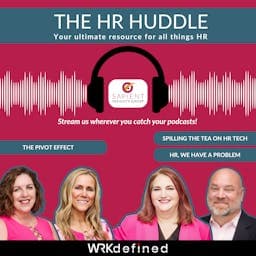
Happy 4th! In case you missed the great conversation, we’re bringing back one of the highest-downloaded episodes in 2024 for our HR, We Have a Problem show. Teri Zipper, CEO and Managing Partner for Sapient Insights Group, joined by her colleague, Chief Research Officer & Managing Partner, Stacey Harris, Stacey Harris and special guest Malika Jacobs, Founder and Chief Executive Officer at Myriad, got into a few hot topics on HR leadership alignment and C-suite conversations, and innovative tech solutions to foster trust in dynamic and pressured work environments.
Key points they discuss:
↪️ Increasing demands on HR leaders to navigate crisis situations and support remote workforce engagement.
↪️ Lack of alignment and trust between HR and the C-suite underscores the need for strategies to bridge this gap and enhance collaboration.
↪️ Importance of fostering curiosity and innovation within HR, advocating for solutions that simplify complex processes and support the evolving needs of an organization.
↪️ Addressing pain points such as disparate systems and lack of standardization allows HR leaders to drive meaningful change and elevate the strategic impact of their function.
↪️ The necessity for HR to align its initiatives with broader business objectives, emphasizing the importance of adopting a strategic mindset and facilitating meaningful discussions around organizational goals.
Special announcement! As a leader, fostering more inclusive cultures in a workplace of constant change is complex but not impossible. Let us help you break it down. Join us for an exclusive, hands-on, in-depth, collaborative learning experience: Navigating Change with Confidence - a 90-day cohort-based immersive program launching in August. Click here to learn more.
Don’t miss this exciting thought leader conversation! Follow the hosts and companies mentioned below:
Sapient Insights Group
Download the 2023-24 HR Systems Survey White Paper
Instagram | Twitter | LinkedIn
Teri Zipper
Instagram | Twitter | LinkedIn
Stacey Harris
Instagram | Twitter | LinkedIn
Malika Jacobs
Myriad
Powered by the WRKdefined Podcast Network.
[00:00:00] Welcome to the HR Huddle Podcast, presented by Sapient Insights Group, the ultimate resource for all things HR. It's time to get in the huddle. Hello everyone and welcome back to the HR Huddle. I'm your host, Terry Zipper, CEO and managing partner at Sapient Insights Group, and I'm
[00:00:28] back for another exciting episode of HR, We Have a Problem. This is the show where we break down the big and most relevant HR issues of the day. We help you make sense of what they mean for you, and we talk about what you might do about them.
[00:00:45] Joining me today is Malika Jacobs, CEO and founder of Marriott and our own chief research officer, Stacey Harris. Welcome ladies, great to catch up with you. Hey everyone, it's great to see everyone. Nice to be here. Thank you Terry. Hi Stacey.
[00:01:03] Yeah, it's something that we've been trying to do for a while is get this group of three, this triad together to have some conversations about HR for HR. And I'm glad we were finally able to do it.
[00:01:17] It's been kind of a crazy winter with just everything that's going on in the wintertime and now we're getting ready for some exciting new things this summer which we'll talk a little bit about some of those things as well.
[00:01:28] But I'm just glad that the three of us could finally get on the same call at the same time and talk about some fun stuff. I'm looking forward to it, yes. Same, thank you Terry.
[00:01:40] Yeah, I mean we, the three of us have talked off and on for some time about just this whole idea of HR for HR. I thought that would be a great topic for our listeners.
[00:01:52] I want to approach it a couple different ways but if that sounds like a good plan to you, I think we will get into the huddle. Let's do it. All right. So Malika, before we dive in too deep, can you just tell us a little bit about your
[00:02:10] background as an entrepreneur? I think people would be really interested to hear about what you've been doing and sort of what moved you to the business of HR. Yeah, thanks Terry. I think like most entrepreneurs it probably wasn't planned how I ended up here, right?
[00:02:27] It's been a winding road, a cool road but just kind of following the next thing that presented itself as an opportunity and I think when you're an entrepreneur you're always sort of saying why does it work that way?
[00:02:40] Why are things set up this way and could it be done better? And that's kind of the spirit that sort of motivates you. So with that, I got my start about 10 years ago in a very different space and the board game bar space.
[00:02:54] The path I took, I'd spent the past decade of my life kind of in the service sector in various front of house positions, coffee shop bars, restaurants, sort of as a side gig up until that point and I was really curious to start my own venture.
[00:03:10] I just came out of Ohio State's business school and I was curious about entrepreneurship. I kind of caught that bug when I was studying for my MBA. I've always been really curious about teams and how they operate and how to
[00:03:21] create experiences that motivate and drive people to their best professional output. So I was kind of curious if I could change like a long-held myth or sort of belief in the restaurant and sort of service sector that people are always turning over in their positions, right?
[00:03:39] I was kind of curious if there would be a way to create a team culture that was long-lasting and held up for support of a mission and a bigger cause than just I'm going to take this as a gig.
[00:03:50] And I had worked for a couple of restaurant tours that did create experiences like that, so I was curious how to model that. And I was passing through Toronto at some point in 2012, saw the model and thought, oh, I could bring that to Columbus, Ohio where I'm from.
[00:04:05] And again, like most entrepreneurs probably didn't realize the project I had signed up for and it took me a couple years to actually figure that out. We opened to the public in 2014 and as soon as we opened,
[00:04:16] somebody asked me if they could bring in their team for a private team bonding session and that was really the first time that I didn't know what they meant. And that was the first time that we created a service that could be in
[00:04:28] today's environment understood as a team engagement business or offering, right? So that was my first hint at it. We opened a second location in Indianapolis and that also happened there and we started working with corporate clients in Indianapolis as well
[00:04:41] on private facilitated team bonding events during the afternoons before opening to the public. And it was quickly becoming something that I realized was sort of overtaking even the public facing business. And I sat down with my team and proud to say that we did sort of create
[00:04:56] a culture where people were there for a long time. So people are really curious about what the next step was or the strategy ahead. And we thought about kind of making that more the primary focus of the business.
[00:05:06] And then COVID came around in March of 2020 and solved that for us. Yeah, that was not the plan. But funny that, I mean, in some ways you were kind of in the business of HR already.
[00:05:19] I mean, when you think about that sort of team dynamics and what you were doing to support people trying to build teams and just how critical of an aspect that is of the organization came out of from a different direction.
[00:05:35] But it's, you know, sending up there, but we did. Yeah, I think it's I was I love that backstory. And I don't know that I've actually heard you give the whole story. The whole story. So it was like, right? Oh, that's really cool, right?
[00:05:50] Like with the fact that they came to you asking for team bonding. Yeah, we know as HR professionals, that's always one of the hardest things to do is get a team to function effectively, right?
[00:06:01] And to know that I love gaming bars and events and things like that, right? Like it's a big part of I think where the market's at these days. But the idea of using that for a team development, I think is really powerful, Monica.
[00:06:11] So kudos to you for seeing and taking advantage of something that was much, I think, before it's time to be honest in this world. Great. I do think the idea of play and using play for teams and corporate environments has now taken off more fully.
[00:06:26] But your rights, Stacy, and actually at that time, I mean, if you thought it was hard to build team culture and connection in an in-person environment, right? It was people, a lot of our clients, especially here being in the Midwest, just hadn't encountered longstanding remote environments.
[00:06:42] And so they were sort of thrown into it with us and we all kind of learned together. So we threw a bunch of different things at the wall, but the thing that stuck was taking our service to Zoom and offering facilitated board game
[00:06:53] play for companies in these remote work environments. And so that was sort of, again, like just kind of grew into it. And that was the offering that we had for a year and a half. But as a result, we were working exclusively with people leaders
[00:07:08] and HR departments that were in a real crisis, right? They were trying to solve this in so many... They were trying to solve a lot of problems in so many different across the spectrum of their jobs.
[00:07:19] And that was how we again kind of fell into just curiosity around the way that HR as a function was operating and how we were coming into contact with that as vendors who were trying to sell a service. That's kind of a moment of friction, right?
[00:07:36] Where the way that HR is kind of functioning internally, then comes up against how a vendor is trying to sell and put a service that they're offering into their business. And then you come up into the conversation of budgets and who approves
[00:07:51] those budgets and how do you sell the impact of what you're buying to the stakeholders that are then having to approve those budgets and how do you measure that impact? And that's kind of how we got really curious about how does HR do that?
[00:08:05] Right. And so that's how we've fallen into the current product that we're working on with Myriad is how could we support or guide those types of decisions that are happening at NHR functions? Yeah. So you were kind of outside looking in view of HR.
[00:08:23] Were there some specific pain points that you identified that you thought, wow, I think that's something we could really do something about or fix or think about. Yeah, that's a great question. I think the one that probably stuck out to us the most as we continue
[00:08:41] to have these consults before we sold in a service is the stakeholder piece. So HR obviously has numerous stakeholders, including, of course, employees who are a huge part of that. But what we saw wasn't that there was it wasn't so much
[00:09:00] there was lack there was a lack of innovation or motivation to support necessarily that stakeholder group. It was that the sort of challenge between HR and the executive leadership team, like the C-suite team, right? That state those stakeholder relationships, that dynamic
[00:09:20] and that relationship and that trust was sort of fundamentally not there. And when that when those relationships don't work, then anything that you're sort of putting out to other stakeholder relationships don't really get they can't really function, right?
[00:09:37] So it's sort of like, how do we go back to the root cause and try to support how HR is engaged with the C-suite, how they are talking and communicating with the C-suite? How can we get these two entities on the same page?
[00:09:51] And then some of those other stakeholder relationships are going to naturally get more productive and more fruitful and more open and transparent, right? So that's kind of the one that we were that we really kind of honed in on
[00:10:05] is how is that kind of that stakeholder piece there? And that relates to budget impact, metrics, communication. All of those things are rolled into that. But it was really how to just sort of support that relationship. It's intriguing to me, Malika, as you're going through
[00:10:20] your thought process, as you were seeing that because the same thing Terry and I see too when we're talking to a lot of HR leaders is that the process of the work oftentimes overwhelms the conversation. Did you find oftentimes that in the conversations
[00:10:34] that you were able to provide HR with some of the language and that helped? Or do you think this is more also of an issue of we oftentimes don't know what's having an impact on HR? It's not as clear cut as like a marketing tool or a marketing
[00:10:49] or a finance model, right? Is it would that be a bigger situation? You think is that is the challenge of not knowing? I really think so, Stacy. And honestly, I mean, do I think that we're going to solve it or like we're
[00:11:02] going to have an answer? It's like such a I mean, I don't I truly don't think so. But where I always go back to is like, let's start somewhere. Right? Let's start with some sort of let's put a stake in the ground
[00:11:12] somewhere that we can sort of say, hey, we all agree that this HR action or initiative or spend drives is allocated or is related or aligned to this sort of outcome for business. Right? So I totally agree with you, Stacy.
[00:11:28] I don't know that we were having any real insights or impact except that obviously people want to know when they purchase something and invest in something that there is some return on that. Right? And sometimes there's a maybe a moment where you can get away
[00:11:46] with maybe it's such a hot topic or a trend or such an immediate need that people aren't really questioning the dollars spent or the time invested. Right? And that might have been what was happening in the immediate
[00:11:57] aftermath of sort of the pandemic and what we were all facing with our service. But eventually at renewal or re-engagement or something, people are going to question what came of this spend, right? What came of the time that we invested here, the resources that I put here.
[00:12:13] And so I think that it is really challenging to connect that. I think that you all have made that step in your taking that step with your survey, right? To say like we have an opinion out. We're going to start with something, right?
[00:12:28] It's better to let's just put something out there and see if this tracks or if we need to change it or if this is actually measurable or quantifiable in the way that we thought it was. But I agree with you that it's a very large and squishy topic
[00:12:42] and we can just take some steps towards progress and kind of moving that question. Away towards HR driving value for the business versus the narrative that's kind of been in the past of now. You know, it's interesting how you started that conversation with sort of
[00:13:00] we didn't know which direction we were going to go. And Stacy and I had the pleasure of meeting you guys a few years ago and actually getting to participate in the whole Kingmakers remote, which was quite fun. But when I you started off with a different idea,
[00:13:19] you started off with this idea of a marketplace and how to build HR, how to help HR with particularly smaller organizations or figure out how to navigate all of the solutions. I was just on a call this morning where we were listing off names
[00:13:34] of solutions for some game that we're doing. And the list was endless, right? I mean, there's just so many technologies and you kind of started off thinking that's the direction you were going to go. And then you talk a little bit about that because you spent some time
[00:13:51] then a year at least figuring this out and came out with a slightly different perspective and a different approach to what you wanted to focus on. Yeah, absolutely. No, thank you. OK, that is actually it's so true.
[00:14:05] And so the marketplace or sort of idea that kind of that thing I was talking about, right, that when you're looking externally to source and that a resource or a tool to support your internal function, that is a very it's a process that currently is really painful
[00:14:25] and terrible for probably both parties. Right? It's not like a it's in any sense. And you all know that your work, right, as advisors as well. And when you talk to companies that a big part of HR is the external vendors, right?
[00:14:41] The solutions, the consultants, the advisors, the benefits providers. Like there is a whole ecosystem of folks that support every internal HR function. And so that is a big part of your job as an HR leader is to analyze and vet and choose the best fit
[00:15:00] product or service for your company and one that aligns with your culture and your budget and who is actually going to use it. And how can we have the most impact out of this thing that we're probably spending a good amount of money on?
[00:15:12] And we have to convince people to to use it and spend time and resources communicating value and all of that. So I still think there is a huge opportunity to make that a better experience for both parties, because the worst thing that happens for both parties, right,
[00:15:29] as you sell something again, like you maybe get that one sale, right? It goes in, but then it's not utilized. It's not optimized. Like people are excited about it. They're not engaged on it. And then what's the point of that? That just creates like a really then painful
[00:15:42] resale or reengagement process, renewal process. But I do think, Terry, what happened is that at the end of the day, I think folks don't really want to feel like they're being sold to, right? So the idea of coming into a marketplace and just kind of going
[00:15:57] through the motions of what a typical marketplace looks like at the end of the day, that experience on as a on behalf of our HR leader users just wasn't an exciting product experience for us to create. Like I think we were we ultimately came away with
[00:16:13] we're more interested in really supporting the daily work and sort of being thinking of the short term and long term planning that HR leaders are doing. And if part of that is to then recommend a best fit tool, that can happen in a better process.
[00:16:31] Once we actually know how folks are working, what their company values are, what their business goals are, like those are actually the things that really create an environment where then someone can access or find a best fit tool or service.
[00:16:47] Right. So it felt if we go down this route, it's maybe a business model that makes more sense, but it's not going to feel like a great experience. It's not going to feel it's not going to it's not going to feel
[00:16:59] like something that we were excited about building, like we wanted to be a bit more in the day to day curious about making the life, the work life of the HR leader more enjoyable and really celebrate how they're working today and just make that a bit easier.
[00:17:16] So I mean, Terry, a lot of you and I see this, but I also it's we see it in the survey on a regular basis on the research side is that the current HR leaders and their supporting functions,
[00:17:28] whether that's HR IT or its talent or learning, they're burnt out. That's the language we hear over and over again. Not that it isn't across the board in every organization, some level of overwork, but I think HR came right out of
[00:17:41] COVID and right into the next sort of the skill gap issue and then right into now an economy issue. So they're dealing with the like there hasn't been a moment to breathe is what I've heard. And so when they when you ask them, I think it's very telling
[00:17:56] that you said that point at which I'm making decision is painful. Malega, that nothing you do in work should be painful, right? It's not that painful, especially when you're selecting technology. And so to me, that I think is kind of interesting that
[00:18:09] that's and that's the language we use. I think it's everybody that I talk to uses that language, right? Yeah, absolutely. And you're right, Stacey, it's it's one thing after another, right? There will always be sort of a trend or a topic or something
[00:18:23] that is the thing that sort of it's like, hey, focus here. No, now we want you to focus here. Now we want you to focus here. And so that the way that we're all kind of operating or the expectations we have on HR today are also exacerbating
[00:18:38] this idea of like the feeling of burnout, right? And this and so that it makes total sense because then it's like, oh, we invested in this set of tools because we thought this was what we were working on, right?
[00:18:49] We were we thought we were focused here, but then we're now slingshotting over here. And so I think that is something that we're curious in understanding as well through our product is just a bit more a slightly longer term and more less kind of reactive
[00:19:07] approach to things that I think should also, like you said, translate to that buying process when everyone is kind of on the same page and there's been discussions about it and you built that business case and the buy-in is there, the budget's there, it's allocated.
[00:19:22] There's agreement and understanding and alignment on kind of why we're spending versus, oh, I heard skills are the next best thing. Let's find the thing that's going to AI our skills, right? So we can move on. It's just like those magic pills aren't really out there, right?
[00:19:37] And then they create more chaos, more systems, more exhaustion and on the part of everybody involved in those decisions. Yeah. I love the word that you that keeps coming up, curious or curiosity. I think that's so key in what we do and it leads us to do things
[00:19:55] that we might not have done otherwise. Otherwise, we just kind of follow the status quo. And I know when we met, it's been 18 months ago, I don't know, a little bit longer. I know Stacy and I were pleasantly surprised when we came back
[00:20:11] together and found out where you had kind of gotten to. Like just it was, wow, this is the kind of thing that we've been thinking about and not knowing exactly how to make it happen. And I know what was important, I think, is that whole curiosity piece, right?
[00:20:31] You went out and you asked the questions and you met with vendors. I think you also met with a lot of practitioners, which to me is key. What do people want? What do they need? Like what's the real need out there?
[00:20:44] What was it that you think you learned or heard from practitioners that like, was there an aha moment for you that you said, how I think we're working on the wrong thing? Like let's go work on this other thing.
[00:20:58] Yeah, I think that it is the benefit of being an outsider, right? And having kind of a window in because I and we, our team, also come with all the stereotypes or narratives or conversations that have swirled around HR for a long time, right?
[00:21:16] We all know that, right? And so you come in and people have ideas or interactions or experiences, maybe a handful or positive. But I think for the most part, people that are outside of the industry carry a certain narrative, right?
[00:21:31] And I think that what didn't really track for us are kind of as we talk to more and more people, especially in the midst of what we can all look back on right now was a serious crisis at that time, right? It wasn't like it.
[00:21:45] We just found the individuals that we were speaking with were so they were so hardworking. They were so sincere. They were so genuinely trying to take care of their employees and their companies and their culture and their business. Like I think we just didn't buy the narrative that
[00:22:04] and then like that it felt like there was something bigger happening here, that there was sort of a structural or systematic way that the function had been set up. And now that we've done a bit more research
[00:22:17] or kind of thought historically about how HR has grown up in the corporation, right? I think there is some really interesting some interesting takeaways there of how we got here, right? But I think that we just kind of realized that the expectations are have been a bit unfair.
[00:22:37] And actually, the folks that are in the seats doing the work are working doubly hard to overcome that work. And that isn't really fair either. And that it wouldn't be an expectation that we have on a different function of the business.
[00:22:53] And to be honest, I mean, you look at it, I think it's what 76 percent 80 upwards of 75 percent women in the industry, right? And I think as a women led team that was very striking to us. You know, why why why was it that this function
[00:23:11] that is overwhelmingly filled all the ranks from the CHRO, CPO on down to a business partner on down to a man. Like why is it that this role that is overwhelmingly women? Why do they why are they working like this? Right. And is it actually being held up
[00:23:27] because these women are working really hard and really diligently and they're actually really able to overcome a lot of the structural barriers that have been put in front of them, right? That maybe it's almost the opposite of the narrative
[00:23:39] that's been kind of floated out there for so long. Yeah, I that I think the comment you made like that just struck me that is so is that the narrative was driving maybe some of the challenges like that it created maybe an environment
[00:23:57] that is harder to work in than we expected, right? So that's something I think we've seen that in the data in the sense that you would not expect the same level of sort of maybe business case values or the amount of financial sort of hoops
[00:24:15] you have to jump through sometimes for a finance system or marketing system. We hear that all the time, right? Because it's just expected that's going to give you outcomes, right? It's an interesting perspective that you saw that standing from the outside because I think we sometimes feel it.
[00:24:28] But as an insider, it's oftentimes like, well, maybe it's just me. I just feel like it's really hard. Absolutely. And Stacy, you know this from your experience that there's a plethora of HR solutions and HR technology. But when it comes to the people in HR,
[00:24:48] yeah, they've got an admin feature in this tool. But there's a whole lot of other work that HR does that's not done in these tools. And so Excel becomes the de facto solution for pretty much everything.
[00:25:05] And it's hard for HR to, in my view, get money to spend on HR specific tools. Having been someone who used to market technology for comp, I know it was very hard because they didn't want to spend money on a tool
[00:25:21] that comp professionals were the only ones we're going to use. So there's this desire to have more capability and to elevate the capability and the knowledge and the data. But there's sort of a gap there with getting the right solutions to support.
[00:25:41] Gary, I have nothing to add. Couldn't have said it better. I'm sorry. That's exactly it. And think about that's for folks that, I mean, we're all in it. We're thinking about this all the time.
[00:25:54] When I go talk to folks that are outside of the space and say what we're building, it's either just either disbelief. That is actually what's happening. Yeah, it's mostly just disbelief for sort of how could it... There's not a lack of tools like you said, right?
[00:26:13] The HR tech industry and the benefit space and all... There's so many choices. So I think that is hard for people to understand. The thing that we're talking about is actually how to manage that work, how to manage those decisions, how to manage that planning,
[00:26:32] how to manage that those stakeholder relationships, the communication around that. That is different than the point solution that executes something or the benefit that supports this or the people analytics tool or the data tool that gives you the insight. That is a different thing and you're right.
[00:26:53] I mean, I think that Excel becomes the default. Or folks again, because they're savvy and intelligent and scrappy, they hack together a number of other tools that aren't made for them.
[00:27:04] That then they sort of layer on top of each other and kind of make it work for them. I mean, we've heard so many wild stories. I also think that HR leaders, they share a lot. They help each other. They're constantly learning.
[00:27:18] So when someone has hacked together an Excel spreadsheet with 20 tabs that does the thing that they needed to do, then they're willing to share that with somebody else in their peer group. So it's just like this... They're creating it. And I think that what's unfortunate about it,
[00:27:35] what we want to solve around that is how can it be caught up to how fast the technology and the decisions that need to be made are moving today. We want to be able to support the pace of the work and the pace of keeping up with business
[00:27:50] that HR really has to have access to in order to be that real partner for the business. It would help to have a tool that was on par with the other functions of the business. Malika, in all your conversations with the other HR practitioners,
[00:28:06] and we hear this on the survey side, I'd be interested in what you're hearing too, is that the other part about HR is again, because it's so many systems and so many integrations and so many different audiences that those systems are serving is that whole conversation about
[00:28:21] if the person who bought it all or the person who started it leaves, how do I know what is being used and where it's at and when it was purchased and outside of the procurement tool sometimes,
[00:28:33] if you're lucky. That is one of the reasons we hear people a year and year again say, I'm going to take your survey because I put it in a binder in a PDF that gets put in my desk and if I ever leave or if something happens,
[00:28:46] that's the only history we have of why and we bought the systems we bought. Do you hear that conversation at all for people? Over and over again, Stacy, in a binder. I just heard it this morning. I was speaking with somebody today and she said that
[00:29:03] she's supporting the HR work of a company that's getting ready to sell and now they're like, shoot, well, what have we done here? So they're trying to take everything that exists in people's heads and start to document it and where does that go?
[00:29:18] It goes into spreadsheets or Word docs or slide decks or I mean it is, we hear that all the time. Yeah, the only reason, like the moment where I think about it is when I
[00:29:29] have to actually transfer that to somebody else. And it's a real challenge, especially given what we've seen through the survey in terms of the institutional knowledge, if I can get that word out, people that have left the organization, some of that data doesn't exist or nobody knows
[00:29:47] where it is, right? Absolutely. Yeah, that becomes the you're kind of piecing it together Yeah, and another thing, and this is something that again, we haven't really talked about, but I'd be curious what you all think about this is that there isn't really because of this ad hoc
[00:30:04] nature of sort of folks building their own systems or ways to work individually or kind of within every company, there hasn't really, there isn't really a standard language or sort
[00:30:17] of a standard way to think about when we look as outsiders on it, let's say there's like eight to 12 maybe like big buckets of functional areas of HR, right? And of course, there's more complexity
[00:30:32] below all those headers and headcount matters and industry matters and things like that matter, but the functional things that you're executing are all pretty standard yet there hasn't really been a standardization of when I say X at this company, I mean the same thing,
[00:30:55] like that means the same thing across industry, across functional air, across like it means the same thing, right? And I think so that has also created a feeling, I think of maybe more chaos than is even happening with it. I think everyone generally knows what things mean and
[00:31:14] I'm going to align themselves, but there isn't sort of a standard language in the way that a P&L statement or a cash flow statement or balance sheet, like all of those terms are understood
[00:31:25] to mean what the same thing no matter what company you're at. And yes, there's nuance around it, but we're speaking a common language, right? And it's not to say that there isn't like an academic language around HR, there is, but just how that gets fluctuated in execution
[00:31:41] at companies just looks different. Yeah, there's fewer standardizations, right? Yeah, I mean, I always like to tell you all that in 1976, I think 1976, I could be wrong, but I'm pretty sure it's in 1976 or 1973, there was literally a global wide standard put in place
[00:31:58] for finance. Like there was a thing that we actually did that was done across the set, all the banks said we can't function without this. Right. And we and the marketing does the same thing because they have to go from environment to environment and speak to the
[00:32:14] whole consumer market as a whole, right? HR, because it's such an employee focused, your company focusing. We have, I think, Terry, you and I still get into conversations with people about what is an actual employee, full-time employee, part-time employee, does it include
[00:32:28] the contingents? Probably not, but depends on which country you're in, right? So yeah. Yeah. And back in the day when I was doing comp surveys, we tried several times to get a advisory committee together across organizations to just standardize
[00:32:48] the data around comp. And that was a challenge when you start looking at any piece of data in HR. And a lot of this drives the culture in the organization. So anything we do from a technology
[00:33:03] perspective, especially now with the hybrid workforce being so prevalent, we've just got a kind of a different set of issues to deal with. We're not seeing people every day. We're not talking to them every day. We're not having that sort of common communication. So
[00:33:21] sometimes it feels like there's a lot of re-explaining what we mean. Absolutely. Yeah. Yeah. No, that's, I think that's a big part of what we're curious about as well. I use the word again. Just what that would look like to have folks using a standardized sort of
[00:33:39] place that speaks their language and that they're able to inform it. It's a conversation, but it's happening in a space where lots of folks are participating, but kind of utilizing that similar language, just seeing if we can kind of get on the same page about some things
[00:33:56] here. Like we said, Stacy, right? It's such a big undertaking, but could we start somewhere like a common language or we're talking about? It's what caught my eye when you guys first
[00:34:05] walked us through the tool that we're talking about, Married, right? I think what caught my eye most was you were attacking it again from an outsourced perspective, which sometimes is very helpful. And you didn't go with the direct let's catalog everything, right? Which I think is what most
[00:34:19] of the world sort of does in this kind of case. I think your approach was to let's talk about the business and the mission and the goals, and it will lead us to this conversation.
[00:34:30] And I think that was when it struck me and said, oh, we've been talking about being more strategic, but maybe part of the conversation is we need to change what everyone else is expecting as well,
[00:34:40] right? Like how that conversation takes place and when it takes place, because if all the business keeps doing is coming to us and asking us for a tool and you keep trying to talk about
[00:34:49] strategy and you don't have a way to talk about strategy, they're not listening. And it's like to talk in two languages. And so I really liked how you were doing that. And I think for HR,
[00:34:58] because there's so many, the HR professionals, they know their business and they know their company's business and they're bright and they've got the data. But if they keep being asked for the wrong thing, it's really hard to overcome, right? Absolutely. Yeah, absolutely love that.
[00:35:13] Yeah. And I think while we don't have time to talk in detail about AI, I always like to mention it on my podcast because I do think there's going to be some real
[00:35:25] opportunity here. This is one of those places that feels like there's a really good opportunity for AI to help HR in the business of HR and do some things that just today take way too much time and
[00:35:41] the value is, it needs to be there, but it doesn't need to take a lot of time to get it done. I love that. And I agree wholeheartedly, I mean, whether you believe in AI or it's coming,
[00:35:53] we're all in it. So it's going to, I mean, I'm very excited. I agree with all that. But I have to give you all kudos because I do think that what I think drew us to you all and what I still
[00:36:05] firmly stand by is that you do have to do the hard work, right? To get the good data before you kind of go in and say, let's make it more efficient. Let's make it faster. Let's make
[00:36:17] it more accessible. Let's clean it up. Let's do that. And I think Stacey, you especially every time we talk about the survey, it is years in the making, right? It's hard to get at some of
[00:36:29] this stuff. It's hard to change a mindset. It's hard to change how people are working day to day and what they've thought and like, how can you present that data in a way that shows
[00:36:39] that to them and allows that change to happen, right? So I think that what we really admire in the relationship with you all is that you are doing the work. It's not always easy. It doesn't
[00:36:52] happen right away. It takes years to go back and look at change. And yes, of course, technology will continue to advance and we'll be able to benefit from that. But at the end of the day,
[00:37:02] like how you're thinking about it, the questions that you ask, the work you put in, the connections you make, how you interpret that data, how you clean up that data and how you
[00:37:11] collect that data is still going to have to happen. The data has to come in somewhere for that analysis and those insights and that efficiency to happen. Yeah. I think the AI conversation is such a,
[00:37:23] it's in everything. It's every step you take these days. And it's really, it's the approach and the ability of it to pick up information and synthesize that information is rapidly increasing. And we just had this conversation this morning with a group about the fact that
[00:37:41] but the more you let it loose in your environment, the more it changes it. It's kind of like nothing lives in a bubble. And if it does, right? So now they're talking about synthesized
[00:37:51] training data for a lot of these AIs to see if, to try and get away from what is not so clean data that's in all of our world. Well, I think to your point, this is,
[00:38:00] it's hard work to get to this, which means that when it's done well and wants to effectively, it can change lives. I don't get, I actually think it can really change the role,
[00:38:10] the workload that is that HR has in front of it. And it can change the experience of employees. But I really love sort of this balance that everybody is trying to work towards, which is
[00:38:21] AI is valuable if it's got the right input to it. Right? And that's, I think, what everybody is trying to get to. Yeah, absolutely. Yeah. So usually on this show, we're solving a problem
[00:38:34] and we like to leave people with something at the end that they can go do. I'm not sure we have something specific around this topic because it really was more just a conversation about some
[00:38:45] of the things we're working on from an HR perspective. But there's a couple of words that I heard in this conversation that I liked and I want to put out there. And I'll ask
[00:38:55] you guys to maybe add in the curiosity. Right? And if you're in HR, you know how important it is to be curious about what you're doing and why you're doing it because those are the things that get
[00:39:08] you to better answers than just this is the way we've always done it. And then, Malika, you said something else I thought was really important and that was trust. And I think that kind of permeates through HR. We're a trusted source to the organization and so
[00:39:27] we need to know and feel like we're doing the right things, we're getting the right data. The information that we're sharing makes sense because we're using good data. Right? And not just garbage in, garbage out type things. So those are two things I heard
[00:39:42] on this conversation and as we evolve the support from an HR perspective, I think those are a couple of things to keep in mind. I don't know, Stacey, do you have anything you would add?
[00:39:54] Yeah, no. And the other thing I heard you say, which I think actually fits really well with Alana's stuff that we're seeing as well as the word leadership, you said it a couple of times,
[00:40:01] right? Leading and changing and not to to our own horn by any means because I think it's always easy to sort of forget that doing strategy or talking about being strategic is really easy. Actually helping people be strategic is a lot harder, right? And so
[00:40:15] we're in the process of putting together by the time this releases, we'll probably be in the middle of our first cohort, a really powerful cohort education program because we wanted people, we wanted to help people take those first steps, right? And like I know you're working with us
[00:40:30] and a couple other people are working with us to make sure that we can help people do that in a way that they could actually handle with their day-to-day job loads, right? But to me,
[00:40:38] I think that as industry leaders, as people in the industry who are seeing more than just our own little companies because I think that's the hard part when you're trying to do the job of HR.
[00:40:49] I think it's incumbent on us to not just say, here's what you need to do, but it's incumbent on us to provide some of the tools or the pathways or work with a group of people to
[00:41:00] make those steps more practical and practical in all things, I think, because it's really easy to follow the leaders and look at them and go, oh, I wish I were them. The journey to get
[00:41:11] to where they're at starts with a single step, right? And so I guess that would be my takeaway, Darianne, at all is we can be leaders in every area of what we're doing, right? Right. Malika, anything you would add?
[00:41:21] Well, I was going to say what they could do is join the cohort, but you're right by the time this is... Well, actually, they might have a week or so to do that. Maybe, yeah, depending on when it's the airwaves.
[00:41:33] If you hear this and you're interested, give us a buzz. We do have a very practical and pragmatic thing that you can do when you can sign. Yes, we do. And if you can't get into this one, there will be another one.
[00:41:44] We'll be one next. Yeah. We'd love to work with you again. Well, this has been great. Thank you, Malika, and thank you, Stacy, for joining us and making this little triad today. It's been a really interesting
[00:41:57] conversation. I can't wait to see some of the things that are going to come out of this. So we'll plan to do another one late this year or early next year. We will give it up to you, on every one of them. Yeah.
[00:42:08] Yeah, that would be fun. That would be awesome. Yeah. So I was going to say thank you and just a lot of respect for what you all do at Sapient and really appreciate you all including us in your journey.
[00:42:19] Well, thank you. I also want to thank our producers, the brand method media group, our marketing team, and I want to thank you for tuning in. That is all the time we have for this episode of HR. We have a problem.
[00:42:33] If you enjoyed the episode, you can subscribe to it on your favorite podcast app. Leave us a review. We'd love to hear what you think and we'd also love it if you had some
[00:42:42] ideas of things you want to hear about. You can also drop us a line or schedule a chat on the website and we will be back in two weeks with another episode of HR. We have a problem. Thanks everybody.
Sponsors
