
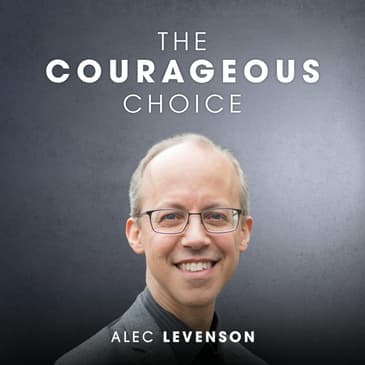
What stops an organization from making a change that the data clearly supports? In this conversation, an organizational research scientist from USC's Center for Effective Organizations explains why large companies struggle to act on solid evidence, why leadership turnover derails long-term change efforts, and how AI is beginning to reshape knowledge work, business processes, and cross-functional collaboration. Listeners will learn what actually makes change hard in complex organizations, why big consulting firms often fail to solve the real problem, how a well-designed compensation pilot at a consumer products company succeeded and was still shut down, and what leaders and individuals should do now to prepare for AI in their roles.
Key Takeaways
Most workplace challenges are not new. The hard part is applying known principles to your specific company, culture, and context.
Once an organization is too large to manage by walking around, it needs real processes, and then complexity rises sharply.
There is rarely one right answer in organization design. Every choice, such as centralized versus decentralized, carries trade-offs that pull you the other way.
Hiring a big consulting firm feels safe for leaders, but it often delivers expensive advice that does not solve the underlying problem.
Even when a pilot produces unequivocal data, new leaders may lack the appetite or courage to act on it, especially when it involves changing pay.
Leadership turnover is a major risk to long-term change because sponsors move on before results arrive.
Paying salespeople on volume rather than growth removes the incentive to grow routes or take on difficult territories.
AI will change the work of most knowledge workers but is unlikely to eliminate most jobs outside specific roles like software programming and translation.
AI lets people get to a "not bad" answer outside their expertise, which will reshape cross-functional workflows and reduce waiting on other departments.
Designing a change is the easy part. Sustaining rigor, sensing in real time, testing assumptions, and adjusting is what makes change succeed.
Timestamps
00:33 Introduction and guest background
02:32 The Center for Effective Organizations and its externally funded research model
04:54 Is the world really changing faster, or is change always hard?
10:01 Why hiring big consulting firms rarely solves the problem
13:32 Case study: redesigning route sales compensation at a consumer products company
21:47 Why leaders shut down a successful pilot despite clear data
25:32 What AI means for your job and career right now
30:04 How AI will reshape cross-functional work and business processes
34:41 What organizations are for and why that does not change with AI
36:51 Test and adjust: why sensing and feedback loops make or break change
Connect with Alec Levensonhttps://www.linkedin.com/in/alec-levenson-8915475/
Thanks for listening to “The Courageous Choice.” Be sure to leave us a review and subscribe so you don’t miss any conversations.
For more information, visit gigtalentagency.com or email us at podcast@gigtalentagency.com if you have any questions.
#StartupCulture #OrganizationalTransformation #StrategicLeadership
Powered by the WRKdefined Podcast Network.


