
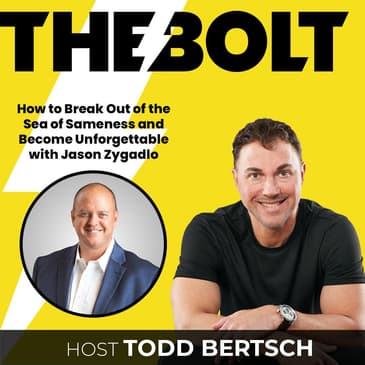
What makes someone stand out in a crowded job market, competitive industry, or rapidly changing world? In this episode, we explore how personal branding, resilience, and intentional action can help people create new opportunities and build meaningful careers. The conversation covers overcoming setbacks, navigating career transitions, building trust, creating memorable customer experiences, and why growth often requires stepping outside of comfort zones. Listeners will learn practical ways to differentiate themselves, strengthen relationships, and create lasting impact both professionally and personally.
Key Takeaways
- Success often requires leaving comfortable situations to pursue meaningful growth.
- Personal branding is about clearly communicating what makes you different and valuable.
- Career setbacks can become opportunities to reevaluate priorities and purpose.
- Building trust creates long-term opportunities that transactions alone cannot.
- Small acts of intentionality can have a lasting impact on relationships and customer experiences.
- Standing out requires more than qualifications; it requires memorable action.
- Personalized communication helps create stronger connections and credibility.
- Growth happens when people challenge themselves instead of staying comfortable.
- Resilience is built through adversity, reflection, and consistent effort.
- The most successful professionals focus on serving others and creating value.
https://www.toddbertsch.com/podcast/how-to-break-out-of-the-sea-of-sameness-with-jason-zygadlo
Thanks for listening! We appreciate you.
Follow us at:
https://www.linkedin.com/in/toddmbertsch/ https://www.facebook.com/theboltwithtoddb https://www.instagram.com/theboltwithtoddb/ https://www.youtube.com/@theboltwithtoddb
⚡ Ready to ignite lasting transformation in your team or event? Book me for keynotes, corporate training, or Positive Intelligence® coaching at ToddBertsch.com
Powered by the WRKdefined Podcast Network.
[00:00:05] Welcome to The BOLT Podcast. I'm Todd Birch, entrepreneur, mental fitness coach, and keynote speaker. I believe every person has a spark, but life, pressure, and doubt have a way of dimming it. Here's the good news. You can reignite it at any moment. That's what this podcast is all about. When you fuel your spark, everything changes. Let's ignite it together.
[00:00:28] Today, I'm joined by the incredible Jason Zygadlo, author, cancer survivor, brand strategist, and founder of Build Your Own Brand. And this conversation is all about breaking out of the sea of sameness and becoming unforgettable. After nearly 20 years of dominating the competitive world of medical sales,
[00:00:53] Jason walked away from a successful six-figure career to help individuals and businesses stand out, build credibility, and create real impact through authenticity, creativity, and boldness. We talk about personal branding, resilience, overcoming cancer, and why your uniqueness is actually your greatest advantage. Listeners, get ready. This is going to be an inspiring and high-energy conversation.
[00:01:23] Jason, welcome to The BOLT Podcast, my friend. Todd, I am so happy to be here. Thank you so much for having me. Excited to chop it up with you. Chop it up. Oh, man. Chop it up. I love it. It's so good to see you, my friend. Likewise. We've known each other for a couple of years now, has it been? Yeah. I'd like to set the stage. Our good friend, Frank Agin. Give him a little shout-out. Shout-out to Frank Agin. Man, he is the master connector. He sure is.
[00:01:52] Yeah. Frank was on the show. Check out his episode. He's got a great podcast as well and just a fabulous person. I'm blessed to know him and blessed that he connected us and we just naturally connected. We have very similar backgrounds. Yes. Especially after reading Jason's book, Built Not Born. Highly recommend that and I'm sure we're going to talk about that today. Appreciate that. Basically, it's your story. It is. Right? It's your journey.
[00:02:20] And so let's start off nearly two decades in medical sales. Highly competitive, right? If anybody knows anything about this industry, highly competitive, but highly lucrative as well. High pressure, right? With high reward. Yeah. And you do this, you're killing it. And all of a sudden you're like, nah, peace out. I'm done. I'm going to move on.
[00:02:47] So kind of walk us through what happened there. Why? Yeah. It's a great question. I mean, you heard that sigh because, man, it's heavy stuff, right? I mean, my career was kind of hitting its stride and I felt like things were just really rocking and rolling. Like I had expected them to put in a lot of work to get to where I was. And, you know, you said it earlier, Todd, I think the cancer diagnosis for me really,
[00:03:13] there was something that was just in the back of my head that was like, is this the work that you were ultimately called to do? And look, man, I mean, from a young college kid learning about medical sales, I wanted to get into that industry. And when I made it, I felt like, man, I made it. Right. And why would I just walk away from that? It was a tough decision, but I think one that I was ready.
[00:03:42] You know, you get to the point where you have a manager now who may be younger than you. And I felt like for the last several years when you're doing really well, it wasn't enough. And where you weren't doing well, sadly, those same people that are fist bumping you on the stage when you're getting ready to take a President's Club trip, they're the ones threatening your job a couple months later. Right.
[00:04:09] And I thought, I didn't forget how to do the work. So what's going on here? And where's the loyalty? And where are all these things that I expected, right? I mean, I was working like a dog for you. And now you're going to make me feel like that's not valued. And so that just kind of was haunting me. And when you hear people talk about those Sunday scaries. Yeah, I just actually heard that term for the first time a few months ago.
[00:04:39] And I was like, what is it? Yeah, that's real. That's the adult boogeyman. That's the, oh my gosh, it's Sunday night and I've got to go to work tomorrow, right? And let me be clear in saying it was never the customers that I worked with. I mean, that's what I miss even to this day. I built some really great, genuine and authentic relationships with great people all over different states from just working with them for so long.
[00:05:06] But I found that the corporate side of it was just never enough. And you had some really good managers. And those are the ones that probably kept me around as long as they did. But when you had those certain leaders or lack thereof, they'll chase you away. You hear people all the time, jump on LinkedIn. Why do people leave jobs? It's usually the leadership, right? They leave because they have that manager. Right. It's not the company. It's not the company. It wasn't the products. It wasn't any of that.
[00:05:36] And so for me, it was kind of anecdotally going back to when I broke into the industry and I did it very unconventionally. I had a lot of people that anointed me as my friends and family, as the person to come to when they were looking to be different and memorable, when they were pursuing whatever it was that they were pursuing professionally. And that was motivating to me because I'm like, who am I? Right.
[00:06:02] I was just trying to find ways to be different in how I was approaching it. And so there's a lot of people that just they don't see that and that vision of how to do maybe something a little bit differently. And so helping people anecdotally along the way, get into whatever profession they were trying to. My wife, God bless her. She was the one that said, hey, look, I had lost a job. I'd lost a mom right around the same time.
[00:06:29] And she's like, look, are you going to jump back on that hamster wheel? Because if you are great, but I would encourage you now is your chance to do something that you can build. They're suppressing you and your talent. And I'm like, what? This is all I know. I'm just a little old sales guy. You know, I'm ready to jump back on the hamster wheel. And she's like, I just challenge you to take a little time off and really think about what it is you want to truly do and how you want to impact people.
[00:06:57] Because you're always talking about helping patients, helping the surgeons and nurses and the staff. But you can serve a whole new population. How are you going to do that? And what might that look like? And I'm like, shit, I don't know. And so that's kind of how the whole thing started, Todd, was I'm going to form Build Your Own Brand. And I'm going to, at first, it was to help people be unique and different and memorable in how they tell their story to get jobs.
[00:07:26] And that's now kind of taking a whole other turn. But ultimately, that's where it all comes from. This cancer diagnosis just really kind of challenging me to look at life a little bit differently. And, you know, look, I have a lot more time to spend with my family. And I had more Marriott points than I knew what to do with. You know, it's like, for what? Right? Like, OK, you're a platinum member. Big deal. Right? Right?
[00:07:52] But if I'm being honest, I was caught up in a lot of that. I was caught up in the money. I was caught up in making this amount. I got to get to this amount. Then you get to that amount. I got to get to this amount. I want the Marriott status. I want to get upgraded in the plane. But why? My family needs me. I have a little one now. I have a daughter. I want to be around for that stuff. I've missed some things. Right. And, you know, I can now do those things. So long-winded answer. But no, no.
[00:08:22] I want to paint the picture and tell the story. Absolutely. Because I think it is important. It is. And that's not a decision that comes lightly. Right? But I love that you had that support system at home. Because it really does come back to having a strong foundation at home. And your wife supporting you and saying, hey, here's the time. You could fresh slate it right here. Right? That's right. And my wife was kind of that support as well when I started my business, Evolve Marketing.
[00:08:52] I wasn't – I had no ambition necessarily or any thoughts of being an entrepreneur. And we were engaged at the time. And she just said, look, you had just done this for somebody else. That's right. Why don't you do it on your own? Shit, why not? Yeah. You know, here we are 17 years later. So we need that. Whoever it is, we all need that Mick in our corner, right? That's right. Like Rockhead. You know, we all need that Mick to support us.
[00:09:22] Hold us accountable too, right? Not just blow us up, but also to be there for the accountability and to push us. That's right. You know, just beyond what we're comfortable of. We always say on the show, getting out of your comfort zone is one of the best things you can do. And brother, you did it. Yeah. You got out of your comfort zone. And I do want to ask, when did the cancer come? When was that just from a time perspective in that journey? Sure.
[00:09:50] So it was, I was diagnosed in 2019, finished up six months of chemotherapy that ended right before COVID. Scary time to have cancer, right? And kind of going through all of that. That journey was very uneasy because I knew my immune system was not the strongest and it was very, very scary time. Yeah. But yeah, that was in 2019. I worked, I was still selling medical devices at that time.
[00:10:20] Gotcha. That's right. And worked through my entire, because I, you know, it was important for me to keep this normalcy and to keep this schedule, right? Like to be consistent in the work I was doing because I felt like, you know, if I laid on the couch and I just kind of did whatever, that wasn't going to be good for my personality. I'm going to be in my head and I just need to try to keep this routine. As much normalcy as I possibly could.
[00:10:48] So I would work, I'd be, you know, in the cath lab. I was selling stents at the time, coronary stents. And I had some of the best work people that I, you know, would service doctors and nurses. And I'd be on a chair, they'd put a little bench for me, you know, in the room. And sometimes I'd kind of doze off and they'd say, hey, why are you here? Like, go home, rest. They knew what I was going through. And I'm like, look, I need to be here to help you guys out.
[00:11:14] And, you know, it was just this, like, this thing I had, you know, inside of me that I've got to keep doing what I'm doing. Right. Because for me, selfishly, that's what I needed. And I worked all the way through, got onto the other side of it, you know, thank God. And thought maybe if I pivoted out of the cardiothoracic and vascular space and got into oncology sales,
[00:11:42] that would now kind of scratch my itch. And maybe if I'm doing this work and serving these people, people like me, right? And so it was awesome work. I mean, very rewarding work. But still, there was this thing in my head that was like, you need to maybe look at something different. I mean, even though you're in your peak, you know, kind of, so to speak, of your career
[00:12:11] in this space, is this really what you want to keep doing? And I had this tug and pull nonstop, nonstop. Well, a small privately held company came and dangled a big carrot in front of me, equity and, you know, on the forefront of being like one of the starting sales team, salespeople of this team. And I'm like, ooh, I'm going to leave. The grass is always greener. This was in November, I believe, of 22.
[00:12:41] And I take the job, Todd, November, February, all the financials come spilling in from the previous year. They had hired like eight of us. They lay eight of us off in February. And that's when I was losing my mom to a battle of cancer. I was about to lose my job. And I'm like, what am I doing here? What's going on? I just lost this great job. Am I even going to be able to get back into the industry?
[00:13:11] My mom was my biggest supporter, my biggest fan. I talk a lot about her in Built Not Born. I mean, she really was my cheerleader, right? And so it was a tough time. And so, you know, we took a trip overseas and really just kind of level set and cleared our heads. My wife and I, that is. And that's when, you know, the whole idea of, okay, maybe I do have something within me to give others in a different way.
[00:13:41] Maybe creating my own thing is what I need to do to challenge myself and really reinvigorate myself to just do more and to still serve people, to help people, because that's ultimately what I'm about. I want people to be their highest and best selves. And I've tried to be that person along the way for people that I've come across. But now if I can make this what I do on a daily basis with no one telling me whatever it is,
[00:14:08] I'm not doing enough and I'm not doing all these things, I can do it my own way. There was some real appeal to that. And when you couple that with, as you said earlier, and as I mentioned my wife, Chelsea, with a support system that's like, yo, I believe in you. Go do you. And this will work itself out because you do good things and good things will come. The law of reciprocity is real. It is. You've helped a lot of people.
[00:14:35] Now you have to maybe call on some people to kind of give back to you and that's okay. And that was my biggest challenge was like, oh shit, I'm not, I don't want help. How am I going to ask for help? Right. I'm the giver. Right. And so it's been a humbling journey, man, but it's been an exciting journey to say the least. So that's kind of a little bit more of how it's evolved. Well, I'm glad that you obviously made it through that. I can't imagine. If you've never been through it, right, it's kind of like kids.
[00:15:05] If you've never had a kid, it's hard to understand. So I can't imagine what it would be like as a male or female going through cancer. Sure. And then coming out of that and what that does to you in the mindset shifts. But I'm sure it had a role in just like, hey man, like I really, I need to be doing something I love doing. That's right. Right. You know, so in what I'm hearing is kind of that spark dimmed a little bit. Right.
[00:15:34] And then this build your own brand becoming an entrepreneur and getting out there reignited that spark. And there's nothing like, nothing like having that spark lit. And I know we talk about on the show and that's kind of what my main message is, but we see it all the time. As adults, you know, we get comfortable and complacent and it's easy, right? It's easy to do. And then next thing you know, our spark's gone. That's right.
[00:16:00] And for some, it just stays out, but it's always, always there. It's so true. And it was dim, it was never out, right? Right. And so what can I, what's going to be the gas that sprinkles on that spark, right? That's dim, that just reignites it. And you know, you said it too, and I preach it a lot. Comfort is the enemy of growth.
[00:16:25] I tell my daughter this, you know, I speak, you know, it's a big part of the message that I give, but I wasn't taking my own advice. Right. And my wife's like, yo, again, you need that person to kind of, you know, keep you in check. She's like, you can't be speaking these things and not doing it yourself. When are you going to, you know, when are you going to break out of your own comfort zone?
[00:16:53] You talk about jumping back on the hamster wheel, that's comfort. Right. Why? You've got more to offer and you're marginalizing the things that you've done and the work that you're able to do. Right. Kick up that spark, baby. Light it up. Yeah. And she was the person to throw a little gas on it and there was what I needed. And that's funny. That's all we need sometimes. And it could come from a variety of different places.
[00:17:22] And typically it does come from some sort of traumatic event because that's what we need, right? To reset or to reflect. But it can also be somebody and it can be a manager. That's right. And that's what I talk a lot about. And my messaging is, you know, as teams, as leaders, that's our responsibility, right?
[00:17:47] It's not only our privilege, it's our responsibility as leaders, as parents to be that light, to spread that light and to keep those sparks lit. You know, you can go try to find some other employees and then lose all that money and all that investment and onboarding and this and that. Or you can just have a conversation with your current employees. And, you know, not the standard performance review. You know, here's what you're doing good. Here's what you need to work on.
[00:18:16] But hey, man, are you enjoying the work you're doing? You know, do you want to just have people that are just doing or people that are lit up? And sometimes all it takes, dude, is a little stretch assignment. Doesn't mean you need to move them into a new role, create a new role, shift things around. Sometimes it just, we as human beings crave growth and we do crave discomfort. As much as our brain tells us, no, it's danger. It's our survival brain. We do. We need it. Yep. And that's what keeps us going.
[00:18:46] And that's where that spark stays lit. Well, Andrew Huberman and David Goggins, they talk a lot about, you know, the brain. I mean, if you just continue to do this same old routine type thing and not challenge yourself, you get stale and, you know, you kind of like die off a little bit mentally. And if you're not challenging yourself personally and professionally, you know, you and I even earlier talked about jumping in the sauna, right? I mean, that's not easy to stay in there 10 minutes. No.
[00:19:15] It's a mind game, but it's strengthening your mind, right? To do a cold plunge for three minutes has never gotten easier. It never does. It's walking down to the cold plunge is like, oh, crap. But when you come out of there, you're like, oh, yeah. Right. Like, this is what I needed, right? And it's finding those things to challenge yourself. And it's because I think you're professional in your personal lives. There's so much synergy there. Oh, yeah.
[00:19:45] You know, you keep them separate. But just to be a better parent, just to be a better professional, I mean, you need to do all of these things to really kind of keep that going. And I think it's so important. It is. And unfortunately, a lot of people don't do it. And we're in our brain. We're in our head, you know, our survival brain, our judge. That's right. Saboteurs, which we'll get to. The listeners, they all know because I'm always talking about positive intelligence. But we do.
[00:20:13] We get in our heads and we just got to get out. We're our biggest barrier. And growth is key, man. It's key. Continuous learning. You know, I go back to, I don't know if I share this with you, but my mother has early stages of dementia. And this has been going on for two years. It hasn't gotten any worse, but I'm really trying to help her in as many ways as I can and to teach her the work that I'm doing.
[00:20:41] You know, I'm like, I'm a coach. I'm a growth coach. I'm a positive intelligence coach. How can I help? But going back to, you know, I tell her and my father, who's fortunately still around, look guys, you can sit on this couch and you're just going to rot away. You say you're not ready and you want to be active. Yeah. Use it or lose it. Yeah. That's it. That's the phrase that I left them with. Use it or lose it. And your brain, you have to challenge.
[00:21:09] So I got her all these books, these brain memory challenges and quizzes and, you know, different activities. You just got to, and I've made a little chart for them to track it just once, once a day, just do one thing and then move, move, use your brain, use your body. It's not that hard, but they are habits. And when your habit, when your default is to stay safe and comfortable and or sit on
[00:21:39] the couch or veg out and stream all day long, you're not doing yourself any good there. It's so true. I, you know, I forget what athlete it was. It's slipping my mind, but it was saying something to the effect of, look, we're human too. We're tired. We wake up some days and really don't win. And maybe it was even David Goggins. I know he talks a lot about this. He sees those shoes. He's like, oh shit, I don't want to go for a run today. I'm tired. I'm sore.
[00:22:07] I'm all the things, but I still go do it. And after I'm done with it, it's just like, yeah. Right. Right. I mean, we all have to have a little bit of that in us. And it's not easy at all, man, but you have to challenge yourself. And especially, you know, I think about my family, right? I have kids. I need to challenge myself to be around for them and do the things that I need to do to be the best version of myself for years to come. Right.
[00:22:37] And it's really that important to me. So that's why I do some of the hard things. Yeah. And I love, I want to stay there for a minute because I love that. And I was doing some research about, I'm just very fascinated with change and why some people embrace it, others don't. And it really does come back to what's in it for me. That one phrase, what's in it for me. And you just said it.
[00:23:05] When I start a coaching cohort in positive intelligence, I lead off with, you know, what's most important to you as a human being. Sure. And it's usually two things, my family and my job. I want to be the best at my job. People inherently want to be the best version of themselves, but we just get in our own way, you know? So if, so I go back to that question, I say, okay, so if your family is most important to
[00:23:35] you, doing this work, getting out of your comfort zone, growing, stretching, getting uncomfortable, that's going to help you be a better parent, have better wellbeing, have stronger relationships, which is going to help you with the most important thing, your family, spending more time, having more quality, better time because you're being present.
[00:24:02] And then having that longevity to walk your daughter down the aisle, to hold your granddaughter in your arms. If you don't grow, if you don't continually learn and push yourself, that's potentially not going to happen. It's so true. You know, so just circling back to what is it? And it's a quality thing for me, you know, quality versus quantity. Like I have a daughter, she doesn't live at home with us.
[00:24:31] She's with her mom and we kind of go back and forth. And I've always preached, even when she was younger, like, you know, she got to that age where it was like, hey, dad, I just wish I could, you know, stay with you longer. Wish you lived in the same house. And it's like, look, when we're together, things are off. We're present. We really focus on the quality because there's a lot of parents out there, you know, that they just kind of go through the motions and take some of that for granted.
[00:24:59] And when you don't have it, you really are hyper-focused. And so for me, it's like really being intentional with our time and our, you know, time together because it's not there all the time. And I need to make sure that she knows that I'm locked in at all times. I love that. Absolutely love that. And that is one of the benefits of being divorced and having separate households, to be honest. It is.
[00:25:27] It's that reminder that we all need that I don't have the time where we take it for granted. You know, I have a son from a previous marriage and then I have a daughter who's with me all the time. And sometimes she's there. I could spend time with her anytime I want. That's right. And then you don't, right? I always go back to like the Rock and Roll Hall of Fame. It's there. Yeah. It's been there. I haven't been there since it opened. Yeah. I know I can go there anytime. Yep.
[00:25:55] I could just go there, but I haven't. So it goes back a little bit too, Todd, to the positive intelligence, right? Like the Sherzad thing and where he talks about, oh, I just lost my train of thought because I was thinking about the Rock and Roll Hall of Fame too. Wait a second. I haven't been there in a little while either. Find the gift. Find the gift or the opportunity. That's exactly right. It's like you read my mind. Look, not being in the same household sucks.
[00:26:25] And my daughter sometimes will let me know that, right? And again, it comes back to that whole quality versus quantity. And what is the gift or opportunity in this situation? Because the situation isn't going to change. And I've let her know that, right? I mean, this is just what works now best. And your mom's happy and I'm happy. And we have all these things that are happy on both sides. And that's great for you. But for me, there's plenty of times, man, when I can think about driving home after dropping
[00:26:51] her off, crying for an hour to get back to my house. Like, am I doing the right thing? Do I just try to make this work for her sake? And I think a lot of people do that. And the reality was, I mean, it's no knock on her mom. We just weren't happy, right? So what can I do to make the best of this situation? I have to be locked into my daughter. And man, we have the best relationship now. She just turned 16. When she was little and she'd go back to her house, I made her a Build-A-Bear.
[00:27:21] And when she would click the arm, it would say, hey, Kaylee, it's daddy. I love you. I miss you. Right? And so the other day when we moved recently and we were unpacking some things, she found the bear instantly. Just muscle memory. She's going to the arm, right? The arm's dead. I mean, this was created a long time ago. So the first thought I had was, I'm going to take this thing back to Build-A-Bear and see if they can do a little operation and put a battery back into that thing because I think
[00:27:51] that would be amazing. What a gift, right? The second best thing would be, I'm just going to make her a new bear, a 16, a sweet 16 bear. And so I presented to her the gifts that we got her for her 16th birthday. She wanted to go. She's big into concerts right now. So we're going to go to the big house and see Morgan Wallen. She can't wait. This is on her favorite musician list. Her and I just together going to do this trip.
[00:28:19] The second thing I said, by the way, that box over there, I think she assumed it was for her little brother. I said, that's for you. Open that up. She opens up the box. She pulls out a bear and I see her. She has a hoodie on and she's not super emotional. She's been tough. And I think she's been calloused a little bit from her situation, right? Sure. She sees the bear. She instantly knows, pushes the button. I've rarely seen my daughter cry.
[00:28:48] She cried because it was me singing to her. Hey, I love you so much. Happy sweet 16th birthday. You mean the world to me. And it's just that special thing, right? I want her to always know, regardless of what's going on, I've got you. I love you. And the second time she cried, Todd, was when I told her. I had cancer. She's nine years old. She didn't know that I had cancer. I kept preemptively telling her, hey, when you see me next time, I might not have a lot of hair.
[00:29:18] When you see me next time, I'm going to have this little boo-boo on my chest. But don't worry. I was always setting it up because I never wanted her to be afraid. And so when I finally felt like she was old enough to know, because she's like, why do we always do this walk for other people to help them with cancer? And I said, look, here's why. I was diagnosed with cancer. And she's like, what? Instantly upset, right? But I'm like, look, here's the good news.
[00:29:47] We're going to turn this into a gift or opportunity. We're going to help other people now, help reduce the burden that cancer puts on not only patients themselves, but their loved ones. And we're going to do something really cool so that we can be the support system for them. And that was the only other time I really remember her crying. She's a tough kid, but there's a lot to unpack in that little thing there.
[00:30:13] But yeah, we started a nonprofit to help folks as well who are going through whatever cancer journey they're going through, which is really special to me. And kind of alluding back to now having more time and doing my own thing, I can pour into that like I always wanted to. We had a really successful walk last year because I had the ability to really go out and get more sponsorships and do the things that it needed to get it to where we wanted it to be.
[00:30:42] And so there's a true blessing in all of this. You just, you never see it at first, but now it's showing itself. And it's like, wow, thank you so much. Like there's a lot to do here. A lot of good work. Maybe it doesn't come with the same paycheck, but I'm beyond that now. Yeah. Man. Well, thank you for sharing that. First off, I just want to say congrats on the nonprofit.
[00:31:11] That's amazing. Thank you. That's true legacy. That's Ziggy Strong Foundation. Walk along with Ziggy Strong. Walk along with Ziggy Strong. That's right. Is there a website? There is a Facebook page. We're working on a website. Okay. We'll put a link in the show notes. Cool. You know, to the Facebook page and update it when you get the site. So if anybody's interested, you know, check that out. So much to unpack there, Ziggy.
[00:31:39] You know, it does come back to, and you've said it a couple times already, and we're just, you know, halfway through the conversation here, gift and opportunity. Yeah. You know, and Jason's a client of mine, went through positive intelligence program, which is a mental fitness program I talk about on the show all the time. I went through it. I'm a coach. And one of the core concepts is finding the gift and opportunity in any situation. Not easy. Not easy. Not easy.
[00:32:08] And especially, like, this is a great example. Like you, the stuff you went through, man, is, and read the book. It's all in the book. Trials and tribulations and really being put to the test. Talk about grit and resiliency. And that's one of the things that I love about you. But you found the gift. Like, you know, a lot of people would have just said, oh, it was me. Yeah. And, you know, invoider, victim.
[00:32:38] And, but no, you turned it into something, you know, really special. And, and, and even these small moments, I'm going to focus in on that moment with your daughter. Like, how freaking cool is that? But not everybody does that. And that comes back to intentionality. Yeah. That's, that is the quality, like you said, over the quantity, but also going a step further and just wanting to do something special to, to even, I have a 14 year old daughter.
[00:33:06] So if you have a teenage daughter and you're a male figure, right? That message hits. You know, that's a tough thing. Yeah. And, and you said you have an amazing relationship with your daughter and so do I. Yeah. But I worked at it. Yeah. And positive intelligence helped me get there, honestly. So that's a great segue into BYOB. Yeah. So we talk a lot about the, the beginning, the journey of how you got into starting your
[00:33:35] own business, build your own brand. So talk a little bit about how you help people in their careers. And then we'll, you know, talk about sales a little bit, but I think really, I'd love to learn more about in the audience because there's a lot of people, let's just be honest, man. There's a lot of people who are out of work right now, unfortunately, and trying to find a job. I just saw somebody who I knew posted on LinkedIn yesterday, like, hey, is there a, you know,
[00:34:05] how they have the badges, you know, open to network. Is there one for being laid off for two years? You know, being out of work for two years? Like, oh man, you know, and I, I always try to put myself in people's shoes, Jason. And that's a tough one. I can't imagine, you know, being out of work for two years. So it's a tough market. It is. But you help people, you help people land jobs.
[00:34:33] And, but there's a lot more to it. So let's just kind of talk a little bit about what you do and how you help people. Sure. Well, the psychological component of that too, right? Not only the financial piece, but just two years, just to, to your example, right? I mean, that's, that's a long time. That is a long time. We're conditioned to believe, oh man, two years on a resume. How do I fill this gap? Right? Like someone's going to identify that and go, whoa, what's, what's going on here? On to the next. This guy must be something wrong with this person.
[00:35:03] Right? And it's like, there's so much more to people's stories that I feel like oftentimes really good people get passed up because of maybe a situation like you, you just described. So I wanted to just kind of mention that because that's real, right? I mean, there, there are a lot of people you, your resume gets put through the, the old tracking system and it identifies that gap. And this person's like, whoa, now what? Right. How do I find anything?
[00:35:32] If that's going to now kind of prohibit me from finding something new. Right. You're not even making it through the algorithm. That's right. And now that we have AI. That's right. That's right. I mean, and, and, you know, we, again, we've been conditioned to believe even before the algorithm, you can't have a gap on your resume. You're a job hopper. There's something wrong with you. Right. And there's, again, so much more to people's individual stories. Yes.
[00:35:59] And so I really like to learn about the individual and what's going on. I mean, there's ways and strategies to overcome those gaps that I like to talk about with, you know, potential clients that I work with. But yeah, man, ultimately it was this. It was kind of alluding back to what I was saying earlier. My wife encouraging me to help the people that need help in adopting some of the blueprint that I created for my own self.
[00:36:27] So if you read, uh, built, not born a lot of what I talk about in the early days of breaking out of college and trying to find a job, I was standing out in parking lots, man, with the shiny folder, suit on, made my own business card with just my name, my number, my email. And when those Chevy Impalas and Ford Tauruses were pulling in, I was going to introduce myself. And you can only imagine how some people thought of me, like, who the hell is that weirdo? Right.
[00:36:57] But the right people were like, whoa, who the hell is that dude? I love this story, man. This is one of my favorite stories of all time. Like, seriously. Well, I appreciate that because, you know, it goes back to when we're talking about a tough job market, we're talking about a guy who, you know, I don't exactly remember what the market climate was, but I remember one thing. I was being ghosted like everyone else and there was no LinkedIn. Right. Yeah. So that makes it even harder in my opinion.
[00:37:27] Yeah. And so if I'm going to go fish, I've got a fish with a fish are not in an empty pond. And if I'm constantly blasting my email or my resume out on email and uploading it to websites and never getting a call back, I can't keep doing that forever. Right. Right. So I had this crazy idea where I'm going to go hang out and I'm going to go where the fish are and I'm going to go introduce myself. And back then, here's the thing.
[00:37:55] When someone got out of the passenger seat and I didn't know this at the time, it was a manager and they were doing a ride along with their salesperson because oftentimes in sales, a manager wants to come out and see how do you know your customers? How do you articulate the messaging that we have for you, regardless of what it is you're selling? How do you interact with the customers that you serve? All those types of things. They want to kick the tires and just see what's going on. Are you getting better?
[00:38:25] You know, and so these are coaching moments for managers to come out and see their actual employee. Well, to their surprise here, they see me. Right. This fresh college kid just looking to figure it out. And I was going to do it in a way that was professional, but I wanted to also kind of accentuate the grit and the creativity and the things that I was willing to do in order because I thought it was just like cold calling. Right.
[00:38:51] If they see me doing this, it's no different than going to a strange office and knocking on the door and saying, hey, here I am. And so that opened some doors for me, man. And that didn't get me the job exactly, but it got me an opportunity to at least then go tell my story. And that's really what it was all about. So I'm not ever asking anyone to go stand in parking lots, but I am saying, what are you doing that may be equivalent? What are you doing to be memorable?
[00:39:22] Because attention is the new currency, right? And what are we doing to hone in on? Again, I can't remember if we were talking about it on this call or just earlier pre-show, oh, but if you're an accountant, most people in that applicant or that pool of applicants, they know how to do the accounting. They get all that. But why is someone hiring someone over someone else? Why Todd over Jason or vice versa?
[00:39:51] And I'm fascinated by those things. And so I'm of the belief and opinion. You need to be doing the little things to really stand out because a lot of little things make you different. And so to articulate on that just a little bit deeper, what do I mean by that? Well, are you bringing just a piece of paper when you sit across from someone? Because here's the thing, right?
[00:40:15] You have 45 minutes, half hour, hour by Zoom or Teams, typically in now today's climate, because why am I going to waste time coming to see you if I don't need to? I need to know you're worth it. But if you get the opportunity to meet with someone in person, are you sliding over a piece of paper that's your resume? Or are you pulling out a nice shiny folder that has your business card in there and some references? The optics of that just hits differently, right?
[00:40:46] The optics and the perception, that's what I believe a lot of interviewing is all about. And I learned this early on. Now, I didn't have the magic wand to get myself every single job. There's a lot that goes into it. But I always told myself, Todd, if I could be in that upper echelon of candidates, eventually the stars are going to align for me. And how do I put myself in that arena, right? How do I keep myself in that pool of candidates? Well, it's by how I represent myself.
[00:41:16] It's how I tell my story. It's the questions I ask. It's the preparation I do. It's all of these types of things. You know, and sales, and I use sales because that's just the background I come from. Excuse me. But I oftentimes, you know, encounter the accountant and we'll pick on the accountant or the finance person or the engineer and they're like, oh, I don't like sales. Sales isn't for me. And I quickly counterpunch that with, but if you don't know how to sell yourself or represent
[00:41:45] yourself, you're really at a disadvantage, right? So some of the clients I work with is how do we package those really smart people up and help them articulate their story? And a lot of times what people do is they marginalize a lot of the great work that they've done. And so one of the things that I developed early on for myself was created what I call a legacy list.
[00:42:09] That list has all of the things that I've done, awards that I've won, sales contests that I've won, you know, because if there's no, there's no interview police, right? So if I go on an interview and someone says usually, hey, you know, how are you? Do you have good relationships? Oh yeah, I've got the best relationships. How do I prove that? How does the next guy prove that? Well, I do want to prove that. So I'm sliding over a binder that says prepared exclusively for Todd Birch with the date on
[00:42:38] it, the logo of Evolve. And you go, whoa, you know, straighten up your spine. Who's this guy? And I go, hey, Todd, turn to turn to tab one. That's all the initial fact finding I've done about Evolve before I even came here today. I see when you guys got established in your background. I've done all this homework. You're going, oh, OK, this guy's a little bit different. Then I go turn to tab two. Those are all the awards I won at my last firm. Best marketer or whatever, right? Like these are the things.
[00:43:07] I'm not just saying it. I'm proving it. My relationships you asked about? Oh yeah. Tab three. Those are highlighted emails and recognition from other clients that I've worked with. And now you go, OK, he's not just saying it. Someone else is backing it up. So when I say legacy list, that's what I'm talking about. The work that you've done and worked so hard to accomplish. Now's your time to professionally and humbly showcase that.
[00:43:36] It's just like an artist. You're a graphic design guy. I'm sure somewhere around here, you have a binder of all the wonderful work you've created. Because you would use that to tell your story. Right. It's not, oh yeah, I can make a lot of great stuff. It's, hey, here it is. Right. And so why do professionals not have that? Why do accountants and salespeople and marketers and anyone for really that matter, I would argue an attorney, anyone. I've worked at this firm. I've worked on these big cases.
[00:44:06] Those people have written me recommendation letters because we won the case. And they're thankful. Like, why are we not leveraging the work that we're doing in a professional way? Because not a lot of people are doing that. The other piece is using personalized videos. And you know, I mean, that's a lot of what I've, you know, created for myself. And, you know, shout out to Matthew Ray Scott, who really taught me about video and taught
[00:44:36] me how to use it when I was chasing around busy surgeons trying to garner their attention like a gazillion other salespeople. Right. But if I sent you a video that showed my true, genuine, authentic self, you could watch that at the luxury of your own lazy boy right before you start a Netflix show. Or you can watch perhaps the video before you start a complex procedure at the hospital. And so it was my way of building credibility and trust for myself.
[00:45:06] Then I would have colleagues go, dude, that's weird, man. You're sending videos to surgeons like loser. Right. And at first I kind of even questioned it. I had some imposter syndrome. Like, what am I doing? But then when I met those surgeons and they said, oh, hey, Jason, nice to finally meet you. And I'm like, holy shit. They knew my name. I never met them before, but it means they're consuming my videos. And I was meeting them just as an introduction to who I am.
[00:45:35] Hey, I'm the new guy with XYZ Company. I could have sent you an email or whatever, but I wanted to reach out to you in a more intentional way, a more personalized way. When you see me next time and I come to say hello, now you have a face with the name. Thank you. Little things like that, that really changed my way of selling and doing business. And I thought from that point forward, what if I'm looking for a job? Why would I not thank a hiring manager in this way?
[00:46:05] Hey, Todd, thank you so much for having me into the, you know, the firm today. And I've met some of the colleagues and I met you and learned more about Evolve. Man, I'm super stoked about this opportunity. Hopefully you can see the excitement on my face. Hopefully you learned enough about me. I could have sent you an email or shot you a text, but I wanted you to see. I'm super grateful and excited about the opportunity and to learn the next steps. Thank you. You're like, whoa, none of the other candidates did that.
[00:46:35] So again, it's this way. How do we be unique and different and memorable to tell our stories in a way that resonates a little bit differently than our peers, right? Is it a magic bullet? No. But I would argue this. It's put me into a different category of other applicants. May not get me the job, but I'm leaving it all on the field, so to speak, right? I'm throwing everything I can at this to try to showcase, hey, here's who I am.
[00:47:05] And that's what I'm going to do with customers. When I have clients, I'm going to treat them the same intentional way. So there's a lot to unpack, and there's some psychology kind of built into the whole process. And so ultimately, that's a part of the blueprint, helping people get jobs. All sorts of people, right? Fresh college graduates, people that feel stuck. Man, I've worked here 10 years. I don't know how to go out into today's market and interview in a way that I'm just,
[00:47:34] I got to just stay here. No, you don't. No, you've done a lot, I'm sure, in those 10 years. Let's pull all those great things out, put together a legacy list, and build on what you've created so you can go out. And what I see the most, Todd, is the confidence level of someone who's in the dumps. Go, wow, I have done some work. Yeah. Yeah, I am. I can go get that job that is my dream job. And I say, why the hell not?
[00:48:03] Let's put together a plan to help you do that. So that's a lot of what Build Your Own Brand is doing. I will say this, what I also have learned in the short amount of time that I've really been doing this, there's a lot of people that don't want to invest in themselves. Sadly, complain that they're stuck in a job, complain that they're unemployed. Mind you, I understand some people financially then can't afford to maybe get help. I've created a model to help certain people by them having a little skin in the game, but
[00:48:33] then I don't collect the real payment until they get a job. And I think that speaks to, I'm putting my neck on the line, not saying I can guarantee you a job, but putting it out there where you don't pay until you get the job. Right. So that model has worked fairly well in some instances. But the generalization of people, they want to complain, in my opinion, more than they want help. And so I've pivoted now to doing a lot more work with businesses and helping those progressive
[00:49:02] leaders that want their sales teams to get better, that want certain things to be different in their category, in their space. And I've had a lot of success recently in the car dealership space, just from some things that were on social media had sparked some conversation. And boom, before I know it, I'm kind of in this dealership landscape, helping those sales people level up how they're communicating and intentionally connecting with some of their
[00:49:32] potential clients. Because there's a lot of transactionally some cars being sold. But the idea is, how do we then get Todd to tell his wife? How do we get Todd to tell his soon-to-be 16-year-old, why would we not go back to that dealership? And so, yeah, man, lots of really cool things are happening with Build Your Own Brand. And I'm excited to be doing the work. And a lot of it comes from, I know you're a big reader.
[00:50:00] You're always offering up really good books. Will Gudera, this Hospitality. Yep. Unreasonable Hospitality. I just read it. Yeah. Great book, right? Oh, absolutely. I mean, it's one of the top five. I think it's one of the best books that I've written. And here's the thing. What it taught me was that on a much lower scale, I was already doing some of these things.
[00:50:27] And I think that's what helped me be a really good salesperson. And it helped me be, I think, a good parent. And it's helping me. And it's like, it's a breath of fresh air to read the book. Because, look, I'm not saying I have all the answers. But it is kind of like, all right, him and I, we align. Yep. I want to go to one of his conferences. Like, I'm so bought into this unreasonable hospitality and that 95-5 rule. Like, we can do some really cool stuff for people.
[00:50:56] And that's what I'm teaching at the dealership. We're doing all sorts of really creative things that they go, whoa, are we at a Mercedes-Benz? Are we at a Porsche dealership? No, we're just really locked into making you feel special. Yeah, I'm all in. I'm all in on Will Godero and Unreasonable Hospitality. Thank you, Scott J. Allen, for gifting me the book. Ooh, Scott, nice work. It's a great book. Yeah, it is.
[00:51:25] Took me a while to get there, but I absolutely love it. And it comes back to that experience, right? It's the experience. What's the experience, whether you're interviewing for a job or you're in a job servicing somebody, a client, right? Whether it be B2B, B2C. It's what's that experience look like? And if we go back to what leaves a mark with us in a good way, it's Chick-fil-A's.
[00:51:55] It's the Zappos, right? It's all the little touches, right? That's right. Those little nuances. But that nuance takes intentionality, and that takes work, right? So you standing in the parking lot, you did the work, one, just to research, to know where these people are. And then you kind of package yourself. You got ready for it, and you went out there. How many days?
[00:52:21] How many months did you do that standing in there potentially like a fool, right? How do I know? Laughing stock, man. And maybe some did, but some didn't, and that got you in. But you have to do the work, right? And so, yes, there will always be some who complain. I believe, again, everybody wants to be the best version of themselves. They want the best for their families. They want the best for their companies. But we just get in our way.
[00:52:50] And it does come back to that discomfort and not embracing discomfort. Put yourself out there. Don't be afraid to put together this legacy list. I love it. It's like everybody's done good stuff. That's right. And sometimes you just need someone else, an outside perspective, to kind of interview you, to say, what have you done? Yeah. Right?
[00:53:14] I used to be that guy as somebody interviewing candidates, and I'd see a gap, and I'd put it right in the trash. Yeah. And then there were a few that came by, and I paused. And I said, you know, I want to be curious. Tell me about this gap. That's right.
[00:53:31] And these were mothers who took two of my best employees that have been with me for years were because they had a gap, and they took two years off to be with their kids, to raise their kids. To me, that is – You're going to fault someone for that? That's respectful. Come on. And that's a job. That's right. Let's be honest. That's right. Put that on LinkedIn. Yeah. LinkedIn needs a category for that. That's right. These are amazing employees.
[00:53:59] Had I overlooked that, I would have missed out on some amazing people. Yeah. Don't be afraid of the gaps. Let's do something magical with those gaps. Yeah. You got to do the work. Yeah, there were some other things I wanted to touch on there, but it is just about really, one, just doing the work and doing something unique. I love how you say, breaking out of the sea of sameness.
[00:54:31] We're all, with our phones and everything, we're just being bombarded day and night. And imagine being somebody who's in a position of hiring. It's hard. And we're getting hundreds upon hundreds of resumes. How do you break through that? That's right. And you might be as good as the next Joe, Jim, Sally, Susie. You got to do something. You got to do something.
[00:54:55] Like Seth, I referred to Seth Godin's book in the last call, or the last episode, Purple Cow. I don't know if you've read that. Great book. Heard about it. Yeah. Be the Purple Cow. Yeah. Hell, that stands out. Yes. You're going to be remembered for one reason or another, right? You got to do something. So whether you really take a step back or work with somebody like Jason, or maybe you just do some videos.
[00:55:24] And those videos, there's great tools out there. Maybe we'll list a few in the show notes. We don't get anything from them. That's right. But there's really great, easy tools to just crank out a simple video. It puts a snapshot of it in the email. I've got a few from you. Yeah. It's on my list to do myself for clients. I'm a keynote speaker. How better to go back to somebody and say, with a video, this is what I am. This is what I do. This is how I talk, how I handle myself.
[00:55:54] That's memorable. Well, and you look at Etsy, right? Look at personalization, period. Let's just not even talk video yet. But there's a reason why Etsy exists. There's a reason why Coca-Cola, in some instances, when they're running a marketing campaign where they'll put names on labels. I don't know about you, Todd. But when I see that, I'm fishing through the bottles looking for Jason. Is Jason in there?
[00:56:21] When I go to my car wash place and I pull out, it says, thank you, Jason. Oh. On the screen when I'm leaving. Really? When I swipe my card at the gas station at Speedway with my rewards thing. Welcome back, Jason. Everybody loves their name, right? I'm not seeing any of those. Yeah. I'm going to. Yeah. I love it, though. I love it. It's the details.
[00:56:48] When you check in at the Marriott, welcome back, Platinum member Jason Zegadlow. And I'm like, I always still get that little giddy feeling like, yeah, that's me. Right? So when you get that video, I don't know how you felt when you got one from me. I love it. You just kind of go, oh, man. Yeah. And there's a little intentionality in the conversation. Like, oh, he talked about when we were talking about our kids and referenced that concert that my daughter and I went to.
[00:57:18] You're like, okay. He was listening. This is intentional. This just feels different. And the folks at the car dealership, the feedback that they're getting is just that. Or the trust that they're building by saying, hey, Todd, here's your cabin air filter. Here's one right out of the box. No pressure either way. But we strongly encourage you to get it changed. You're in there like this. They're going to try to take me for something today.
[00:57:47] Why wouldn't they? Right? Yeah. But now you go, whoa. Yeah, damn. That's dirty. Yeah. Go ahead. Change it. Right? Trust. Trust. Or how about this? How about you get a video from me, the technician? I say, hey, Todd, I've got great news. There's nothing that needs to be done on your BMW today. Everything was in the green. We have a red, yellow, green system. Right? Your tires are a little balding. They're yellow. Oh, hey, you need brakes. They're red. Right?
[00:58:16] Today was all green. And you go, huh? You're not even going to try to take me for a cabin air filter or some wipers? Trust being built. This now comes down a little bit. So then in four, five, six more visits, I go, hey, Todd, I've got bad news. You must have hit a pothole or something. Your alignment's off. It's a $2,800 job, but it needs done. And here's a photo of the screen. You can kind of see where yours is off. What are you going to do?
[00:58:45] Probably going to go, yeah, man. Okay. Take care of that, please. Because you built some trust. Right? Service department, capitalizing. Being intentional. Showing people that they're not just a transaction, just another vehicle coming in to get serviced. Using your name and really identifying the problem and showing you that. There's a lot there. And that can be translated into lots of businesses. The one thing I have to share this.
[00:59:15] One of the things that we talked about in the dealership that they pursued me for was, hey, look, we get people all the time that go online. They identify a vehicle that they're interested in. They put in all their information. They say they're going to be here tomorrow at 3 o'clock to test drive the vehicle. We get it all ready. And guess what? There's crickets. Ghosted. How do we reduce the amount of being ghosted? Because it's killing us.
[00:59:43] And I go, you can't sell a car when no one's test driving it, right? Rare do people buy a car without at least jumping in and taking it around the block. Sometimes. So here's what we did. We implemented a video. So you get all the information. I go, ooh, Todd Birch looking at that Ford F-150. Okay. Your contact information is there. I send you a text. Hey, Todd. Jason Zagadlow with XYZ Auto Group. Listen, I saw the inquiry come through.
[01:00:11] I just wanted to reach out in a more personalized way to say, I'm the guy that's going to take care of you moving forward. I'm Jason. I work here. The dealership's large. When you come in the front door, now you have a friendly face to look for. It can be intimidating. And you can ask Sally at the front to just, you know, come get me. I want to take good care of you. I also see that you're coming in tomorrow at three o'clock to test drive the vehicle. Listen, I've got two quick questions for you if you can answer those. What type of beverage do you prefer?
[01:00:40] And what genre of music do you listen to? If you can get back to me before tomorrow's test drive, I'd be grateful. Thank you. And there's some psychology in, well, there's a question in there. I'm not going to ghost the guy like I got to get back to him. Even if plans change. Hey, man, tomorrow doesn't work now, but can we maybe pick a different day? Yeah, sure. No problem. But when you show up and you go or you call and you go or text or whatever. Hey, I got that video. Pretty cool, man. Thank you.
[01:01:08] I love Mountain Dew and I love Van Halen. I love rock and roll, classic rock and roll. And you're like, OK, cool. We'll see you tomorrow at three. Yep, I'll be there. Car gets pulled up. Sign reserved exclusively for Todd Birch. You go, oh, there's that's that F-150 I was looking at. My name's on it. Reserved. You jump in and there's a Mountain Dew sitting in the cup holder and there's some Van Halen or some rock and roll on. And you go, hey, just wanted to get the car set up for you. You said Mountain Dew, right? Yeah. Oh, cool.
[01:01:38] That's for you. And I put on some tunes, man. Let's let's get after it. Let's go test drive this truck. You're like, what? OK, this is different. Right. So I'm I'm in the area now of trying to do that for businesses. That's really what I want to do. That's where I get geeked up. Right. Because that's missed. And that's what the Ritz-Carlton's and the Chick-fil-A's and, you know, the real intentional
[01:02:08] experience. Experience. You can't be matched. I mean, we're talking about Ford, Kia, Chrysler, Jeep. We're not talking about Porsche or, you know, some of these high level that you would expect it there. Here. You're like, whoa. And so when we can give you an experience that's unique and different and memorable and build trust. Why would you go anywhere else? That's that's unique.
[01:02:37] I get worked up about this stuff. I get it. It's awesome. It is. And there's a lot of room for opportunity because we are being so distracted and customer service in general is out the window. So, and AI is taking over and automating so many things. So there's less human touches. Yes. Less opportunities to really make that difference, to really break out of the sea of sameness. Yeah.
[01:03:07] So we need to be intentional when we do get those opportunities. And I think, Todd, sadly, I think some people just don't care. Like, you know, you may have a low level job at your restaurant, we'll say, or wherever, and you just think it's meaningless work. So when the burger comes out with tomato and someone said no, they just still send it out. And it's, you know what I mean?
[01:03:30] And it's like, no, we're missing out on these fundamental ways of just really doing the basic bare minimum stuff. But if you can just, I mean, that alone anymore goes a long way. I mean, half the time my order is wrong. High level restaurant, low level restaurant, doesn't matter. Because I think people just, they're not passionate about their work. And that's where I think guys like you and I, and a lot of folks, we're different.
[01:03:58] All the work is meaningful for it to all come together and be important and really send the message. And I think some people just don't get it. Yeah. And then we're coming to a close here, Jason. But I do want to, what you said there takes me to a point that we started with, and that's lighting that spark. When your spark is lit, you give a damn. Yeah. Well said.
[01:04:26] When it's not, you're comfortable, cozy, and we'll just do to do. Yeah. Right. So that's what I mean about really, whether that's you or your employees, like really igniting that spark. Burnout goes away. Disengagement goes away. Stress gets mitigated. Things change because you're just lit up. And that can come from anywhere. Do I have to be here, Todd? Or do I freaking want to be here?
[01:04:55] And that's different, right? Those are different. Same job, different mindset, different attitude. That's it. And we call that the reframe game. Yep. I have to, or I get to. Yep. Obligation, opportunity. Yep. And then you find the gift. And that's that cherry on top. Sure is. Sprinkle right on. Brother, this has been awesome, man. Sure has. We could go on for hours.
[01:05:20] I absolutely have so much respect for you and what you've done, what you continue to do, what you're building. Thank you. With Build Your Own Brand. You know, if you could give some advice to, if there's someone out there who's, man, they're just stuck, Jason, and maybe feeling disconnected. They've been out of work for a while. Or maybe there's a sales rep or somebody who's in sales. I'd argue we're all in sales. Yeah. It just wants to break free from that sea of sameness.
[01:05:51] What would you say to them right now? Yeah. You and I, I think we've touched on it a lot during the conversation today, Todd, but I would say comfort is the enemy of growth. You have to be comfortable being uncomfortable. Stole my line, brother. That's where the magic happens, right? That's where the good stuff happens. Mm-hmm. And it is a challenge within oneself that has to be had.
[01:06:17] And if you don't like your situation, you can change that. And you have to be the catalyst to do that. And maybe it is this conversation. Maybe, you know, it's someone close to you. You have to be surrounded by good people, I think, as well. But you ultimately have to be willing to do the work. Yeah. And so that would be my line. Comfort is the enemy of growth. And if you don't, yeah. I mean, if I could drop this, I would.
[01:06:48] Because I find that's where the magic has always happened for me. Yeah. And it's not easy. But man, when you look back on it, Dan, it is awesome. Right. I would agree. I would agree. And we'll just leave it at that, man. That is one mic drop moments. And we'll just leave it there. And it's a great segue, folks. If you want to stay on for a little bonus clip, Jason went through my mental fitness program, Positive Intelligence. Yes. And we talked pre-show.
[01:07:16] And I said, hey, man, you're here. You know, let's end with some mental fitness exercises. What we call in the program, PQ reps. Talk about getting uncomfortable, right? Yeah. Let's just, you know, for those that maybe have never done this before, join us. We're just going to do some mental fitness exercises for the next couple minutes. If I could, Todd, I would just say, if you don't know anything about this program, and again, maybe you're challenging yourself to be uncomfortable right now.
[01:07:46] And there are so many great takeaways. I mean, all of us have this mental stuff that we're working with. And to be able to identify it and then squash it has really changed a lot for me and just kind of my outlook on life and how I do things. And, you know, the saboteurs are real, man. The judge is real.
[01:08:09] And I think the book, I think your training, I think Shrazad, I mean, the whole program, it weaved into my life at the right time to validate certain things that I was doing sort of well. But then also to, like, help me catch some things that I really could improve upon. And so if you've heard of the book and you're kind of like, ooh, I would just say dive right in, check it out. Book right there. Fantastic book.
[01:08:38] Yep. And I would say you did a fantastic job of facilitating it for our group. So super, super cool. Yeah. Thanks, man. I appreciate that. Yep. It changed my life. And we talk about it all the time. Yeah. They're probably tired of hearing me talk about it. And it's not a one, oh, I went through the program, so now I'm fixed. No. And I think that's where some people also get caught up. I have to say that too. It's an ongoing intentional thing.
[01:09:07] Consistency and intentionality are the two things. To build a habit. To build a habit. That's what we're trying to change, our default. Yeah. Yep. And that takes time. Sure. And persistence. All right, guys. Well, we're going to transition into some PQ reps here. I invite you to close your eyes. Unless you're driving and listening, please don't close your eyes. But you can still participate. Yes.
[01:09:35] So get comfortable in your seats or in your chair and close your eyes. And try to let go of any thoughts that you might be having. And I want you to take a few deep breaths. And notice the rising and falling of your chest or stomach with each breath.
[01:10:26] Now relax back to the normal rhythm of your breath. Let go of any thoughts that you might be having. Instead, I want you to focus in on your body. Really feel your body in your seat. Feel your back against the chair. Feel the weight of your chest. Feel your bum against the chair.
[01:10:54] Feel the weight of the feet on the floor. And really notice all those sensations.
[01:11:02] Now I want you to take one hand and put two fingertips together like this.
[01:11:30] I want you to rub those fingertips against each other with such attention that you can feel the fingertip ridges on both fingers. Really focus in. Let go of any thoughts that you might be having.
[01:11:52] Now I want you to bring both hands together as if you're about to clap or pray.
[01:12:21] And slowly slide one hand up and the other one down against each other. Slowly slide up and down. And really notice all those sensations. Notice the change in texture. Notice the temperature up and down.
[01:13:13] Now take a few deep breaths again. And notice the rising and falling of your chest or stomach with each breath.
[01:13:44] Relax back to the natural rhythm of your breath. And when you feel ready, open your eyes. Folks, that's positive intelligence.
[01:14:14] That's mental fitness exercises. Two to three minutes. Simple as that. Power in the pause. Change your whole day. And you do it long enough, you build mental strength. You're building mental muscle. That's all I'm going to say. Brother, thank you so much. Appreciate you, man. I need a hug. Bring it in here. It's been great having you on the show. Always a pleasure, brother. Tell our audience. Thank you. Appreciate you. We'll see you next episode. Take care.
[01:14:43] Thanks for spending time with us on the Bolt Podcast. If today's conversation sparked something for you, please share it with someone who could use it. That ripple is how we create impact and light the way for others. Remember, growth doesn't come from giant leaps. It comes from small intentional shifts that build over time. Ignite your spark. Fuel the fire and light the way. We'll see you next time, my friends.
Sponsors
