
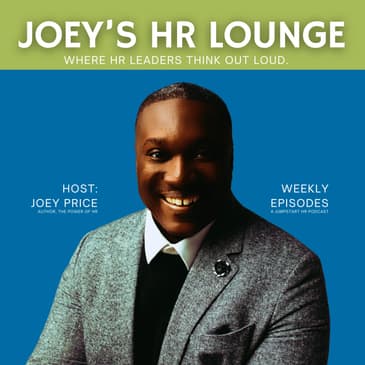
Recorded live from the SHRM Conference 2026 in Orlando, FL, Joey sits down with Troy Hupp, Director of Product Management at Experian Employer Services, to unpack one of the most overlooked corners of the HR world: employment verifications.
Get to know Jumpstart HR Research: https://www.jumpstart-hr.com/research
While no one gets promoted for nailing a verification, a botched one can quietly damage HR's reputation — from the CMO trying to close on a house to the intern applying for government benefits. Troy and Joey explore why verifications matter at every level of the organization, common misconceptions HR leaders hold, and how outsourcing the process can simultaneously reduce fraud risk and improve the employee experience.
What we cover:
- Why verification matters — How a smooth (or botched) verification follows employees through the biggest moments of their lives: buying a home, securing a loan, accessing government benefits.
- Common misconceptions — Why treating verification as a mere administrative task is a mistake, and the case for giving employees transparency and proactive access to their own data.
- Experian's approach — How a "set it and forget it" model takes the workload off HR while giving employees self-service tools and accessibility.
- Fraud & security — The rise of aggressive robo-calls and phishing attempts targeting employment data, and how a centralized verification partner acts as a critical security barrier.
- AI in verification — How Experian is using AI behind the scenes for data quality checks, efficiency gains, and faster processing — all while keeping PII protected with strict guardrails.
- Market trends & the "refi bubble" — Why 10+ million people are sitting on the sidelines waiting to refinance, and what HR teams should do now to prepare for the coming "avalanche of verifications."
- Closing advice — Troy's practical takeaway: do an internal audit of your verification process across all locations before the surge hits.
Guest: Troy Hupp, Director of Product Management, Experian Employer Services — https://www.linkedin.com/in/troyhupp/
*Like and subscribe wherever you get your podcasts. To learn more about Experian Employer Services, visit their website or connect with Troy on LinkedIn.*
Powered by the WRKdefined Podcast Network.
[00:00:00] Hey, what's going on? Thank you for tuning into another episode of Joey's HR Lounge, where HR leaders think out loud. I'm your host, Joey Price, and we're here live on the scene at the SHRM Conference. It's 2026, Orlando, Florida. It's hot, as you can imagine, but the conference room is cool, so we're grateful for that.
[00:00:20] But I'm joined by a special guest, and we're going to talk about something that doesn't get enough attention. We're going to talk about employment verifications, the importance of it, the misconceptions around it. And if you're working at a really large organization, whether you're in HR and you're doing the work or oversee the work, or if you work at a large organization and you're planning to get a house and you want to know if your HR team's employment verification house is in order, this conversation is for you.
[00:00:47] Absolutely. So to have that conversation, I've got Troy Hupp here. Troy is the Director of Product Management at Experian Employer Services, specifically within the employment verification products arena. So I couldn't think of a better person to have this conversation with than you, Troy. So hey, thanks for joining me on the show. Yeah, thanks for having me, Joey. So Troy, not a lot of people think about verifications until it's time for them to need it at work, but it's something that you think about all the time.
[00:01:15] Why should HR leaders be thinking more about employment verification and what it means for the employee experience at their job? Yeah. So, you know, as we know, employers are always trying to attract the top talent, attain the top talent, right? So you always want to look for ways to, as you said, improve that employee experience. When we, when we, or when I look at employment verifications, we always try to think about it from the lens of consumer.
[00:01:44] And really employment verifications, that's where an employee and their consumer life kind of meet, right? Yep. Because some of the more critical, stressful times in their life, you mentioned buying a house, getting a loan. Some of those may be government benefits, but outside of work, those can be some of the most critical, important and stressful times in an employee's life. We want that to be smooth from a consumer perspective, right? So that they don't have delays or issues. Yeah.
[00:02:12] And it doesn't impact their, their work, right? Yeah. Spill over into work. Yeah. I'm an HR practitioner by trade. I have seen, no one remembers the flawlessly executed employment verification process, but they remember the botched one. Oh yeah. And imagine if you are in HR and your CMO picks up the phone and says, Hey, you're going to get a call or an email in a few days.
[00:02:38] Cause I've got this thing that I'm working on, I'm trying to buy a house or I need these, these, this assistance. Can you make sure that goes well? Well, if you do it well, great. But if you don't do it well, that has a lot of ramifications, right? You sour the reputation of HR with an executive of influence. And of course it matters for the first time employee, the intern all the way up to the executive, right? Verification matters for everyone across the spectrum.
[00:03:07] But when we think about the reputation for HR, it's important to have tools that can help you preserve that good reputation. And verifications is like payroll. When you do it well, people remember and they move on. But when you don't do it well, they remember, they talk about it. And sometimes it might come up in an exit interview of, Hey, I just didn't feel like I was treated well as an employee.
[00:03:32] And so it's time for me to go somewhere else where I think maybe their technology is better, their attention to detail is better. I'm waxing poetic here, but let's maybe recenter about the misconceptions that HR or employees may have about the employment verification process. Yeah. So misconceptions, we could go a lot of directions because, but I think one misconception some HR folks may have is looking at it as an administrative task.
[00:04:02] A request came in, I got to fulfill this and respond versus thinking of each of those situations as one of the most critical points in that employee or consumer's life. They're buying a house that I'm a homeowner. That's stressful, right? Yep. You get through the process. The last thing that you want is to add stress because somebody can't get your information or to your point, information is incorrect.
[00:04:25] So that leads me to, you know, an important aspect also is transparency, right? So you mentioned calling somebody to get the information or finding out at the last minute that something is incorrect, right? Maybe your hire days fall. Yep. So having transparency, not that you have to, but if you want to, a lot of employees, consumers are taking a much more proactive role in their information, their data.
[00:04:51] And so having the ability to, if they would like to go look at it at a time so that you can make sure that it's right. If it's not get it corrected before it's, you're at a point where it's urgent and you get it tomorrow and you run into an issue. Yeah. Things are competitive everywhere. Interest rates are fluctuating. So you want to get the best rate. You don't want to have a delay and not get a rate. Yeah. You want to get, I know we're talking a lot about purchasing homes, but I think that's the one that is a lot of people can resonate with because it's a lot of people go through it.
[00:05:19] And, but there's many other things like social service where they're trying to get, get assistance or get a benefit. And even if you are, even if you are not the employee, but maybe you are a family member and you're helping that employee walk through the process of getting those benefits. Right. Knowing that your family member is working somewhere that has their house in order. It's, it takes a lot of the stress off the situation there. So then maybe let's talk about experienced employer services more specifically.
[00:05:48] How are you all showing up in this space to create that, that frictionless experience for HR? What does that look like? Yeah. So I'll be honest in, in the best situation, it's almost invisible to the HR phones, right? It said it and forget it. But like, is it that there are tools available. They can access and monitor things as needed. But we really want to take a hundred percent of that workload off of HR, but not only just take the workload off, improve the experience for the employee. Yeah. Right.
[00:06:16] From a data quality standpoint, from a transparency standpoint, so that they can get the, make sure that their information is, is correct. Again, we, so we take that with HR, but then we try to then begin to focus on the employee experience or the consumer. Right. So giving that employee self-service tools. Yeah. Not everybody wants to use self-service. Self-service sometimes gets a bad rap where it's like, Hey, I'm expecting you to do the work. Yeah. It's not that. Yeah.
[00:06:44] It's more so that the employee has information available. They have access if they would like. Yeah. They don't, there's no need for them to do that, but they can, if they'd like. And many of them do. Right. Yeah. And so let's talk about maybe some, some industries or if you have any success stories or wins that you don't have to name customers by name. I know that's like a confidential thing, but what are some wins that you've seen some customers experience by working with experience? Yeah.
[00:07:11] So this is like, I was talking to a, a client that we'll be named later. No, I was talking to a client. I think it was like maybe a week or two ago. And we've had a very, we've had a very great relationship with them. Great experience. We were talking about new innovations. Always like to check in to understand, Hey, what's new? What are you guys hearing? What do you see?
[00:07:33] And they anecdotally told me that they're starting to get, get calls like robo automated calls asking for employment information. And these calls are getting like aggressive, progressively more aggressive. Yep. Yep. And to them, it's peace of mind that they can basically put up the barrier and direct folks to funky experience. Yeah.
[00:07:55] Because the concern being, especially with larger organizations distributed, you've got a lot of kind of frontline folks that may get calls and you know, all the phishing kind of stuff where it's, they create a sense of urgency. You need to get this tomorrow. Like you said, the CMO, you need to get this. And by outsourcing, you can help to improve your security and have a consistent thorough vetting and credentialing of the third party requesters that are coming in to ensure that they have a business reason for a permissible purpose. Yeah.
[00:08:24] They have authorization from the employee. The consumer. And so that's, that, that was one. It was interesting to hear, but also it felt great that we were helping protect their weeds. Yeah. That, that risk is so huge because it's, especially when we're talking about verifications for employment, you think about fraudster perspective.
[00:08:46] You never know how large the operation is and they may be requesting employment information, which as we typically know is going to be rates of employment, dates and times worked, eligibility for rehire, yes or no. But is that part of a bigger picture that they're trying to create for their fraudulent activities? Yes. And so for an employer to be able to say, Hey, we're not going to play those games. They're not going to interact with that. We have a system. We have a process.
[00:09:15] We have a partner in this to support us. Everybody from the barista to the finance team, to the HR team, whenever verifications happen, this or are needed. This is where you go. It's incredibly important. Yeah. Because fraud doesn't happen in a vacuum. No, you're, you're totally right. Because they could just be pulling bits of data from different sources to try to build a profile. They could use. So yeah, absolutely. Yep. I'm sure y'all are building some full stuff.
[00:09:45] What should people know about the product in and of itself? And is there anything you can share about recent innovations that might resonate with an HR leader that's got a large subset of employees that they have to look after when it comes to verification? Yeah, I know I mentioned self-service tools. And so we're really excited to, we launched a brand new employee experience, employee portal. So we've got a lot more things to come focusing on accessibility.
[00:10:14] So that's huge for, it's only getting bigger, right? Folks are looking for improved accessibility, mobile access to their information. And so that's really, that's the latest of what we've delivered. And we're really excited about the feedback. Okay. Awesome. Awesome. I'm going to, I want to throw out a word that I feel like everyone has to have on their podcast and you tell me where you want to go with it. Artificial intelligence. AI. How's that showing up in your work? How's it helping the customer?
[00:10:43] Wherever you want to go with it. Cause I feel like we've got to, we've got to talk about it. Cause it's the hot topic in the industry. Yeah. And it is the interesting thing is especially in the HR space, we have, we're a data company, right? Experian is a data company. And so certainly we are, we feel kind of leaders in AI across the board, right? Globally for our company. But we also have to be extremely, extremely cautious about where and how we utilize AI
[00:11:12] with specific guardrails to protect the data. You mentioned Froster. So, you know, it's protecting data. So we're always looking for ways that we can do that. Utilize AI while not exposing PII. And I mentioned, I mentioned the employee, employee experience for could be the verifier or the employer. And we're utilizing AI for that. A lot of the AI we're also using is for our improving efficiencies on our end so that we can deliver things faster.
[00:11:41] And so maybe not specifically client facing, but as we're building things, utilizing AI AI to speed that process, to improve the quality testing of it. Yep. We also are looking at building AI capabilities. A lot of verifier. We talk about data accuracy is, is that that's important, very important for verification. Yeah. Right. And so, like I said, if we want to find out if you have incorrect data at the 11th hour,
[00:12:09] and so use utilizing AI to work data quality checks, whether it's confirming that data feeds are continuing to happen, that they're complete, all those kinds of things. And so a lot of behind the scenes things for AI as well. Yeah. As well as our support teams. We do a lot of, still to this day, there's a lot of manual processing, believe it or not. You still get back to this. I believe it. There's a lot, a lot of opportunities there, but, and where that helps the employee
[00:12:36] and the consumer, I'm sorry, the employee and the employer or consumer is as we can add efficiencies, a manual request that may, in an HR environment may take them a week or multiple days to process. Yep. As we can add efficiencies, we can return those much, much quicker, right? To the request for, and then in turn, the consumer gets their benefit more quick, right? Yeah. Don't miss out on something. And you touched base on it earlier, but I want to sit on this for a little bit.
[00:13:05] For the past several years, we've been in a economic environment where the rates have fluctuated so much. Interest rates have fluctuated so much. And as an HR person who reads the Wall Street Journal, who reads the New York Times, who reads all sorts of information around finance and economics, I've got to imagine that I'm not the only one and the person who's looking to buy a home or refinance a home, take advantage
[00:13:35] of these rates. Realtors are always going to tell you now's the time to buy, now's the time to sell, no matter what environment. Yeah, that's true. But you're leaning on that other data of, okay, where are the interest rates and school logistics and all that other stuff. But like thinking about how the home buying, home refinancing process and the government benefits process is such a deeply human experience and it matters to the humans that are at work. This is something that you can't get wrong.
[00:14:03] And I appreciate experience, innovations in the market to have that self-service and to say, hey, listen, HR folks, you're not going to get promoted because you did a verification as well, but it might impact your job if you didn't do them well. So let us handle it and you can focus on the other stuff, right? So I want to talk a little bit about the markets, financial markets, and do you see that impacting
[00:14:29] the utilization rates of people taking advantage of opportunities? Yeah. So yes, to answer, we pay very close attention to the economy, lots of different aspects. And this is experience in North America, right? We have an entire team of economists that they're always trying to talk about what's happening, what they're seeing, what's being projected, what's being forecasted. And so the interesting thing is I'll start by saying, you mentioned the fluctuations in interest
[00:14:59] rates and potentially volumes increasing or decreasing. One constant is for verifications is they always, they're continuing to become more complex, right? So we talked about some of the fraudsters coming in, right? The security aspects of things. Work from home was something after COVID. That was a big thing where people were getting verifications.
[00:15:23] And then there were folks working, there were situations where in mortgage, where mortgage companies or lenders were, they would get verification from you. And it says you live in, you live in. It's now in Orlando. Yeah. You live in Orlando, Florida. Right. But your employment says you're employed in Los Angeles. That's a good point. Yeah.
[00:15:46] And so what happened was it would create questions from the verifier, which would ultimately, most likely have to, sorry, ultimately have to go back to the employer potentially to say, hey, is Joey, it says that he lives in Orlando, but he works in LA. How does that work? Is he approved to work from home because they had situations where maybe they weren't
[00:16:10] checking that and the employee ended up, he wasn't supposed to be working or living where he was living, working there. Right. It wasn't approved by an employer and something happened with the employment and then the mortgage goes, so they started checking stuff. So one, but there's a million different examples of that, but. We could probably do another show at another time on that awkward when you're verifying employment and someone's got two jobs. Right. Yeah. That's probably an awkward thing. We're not going to get into it, but, but that double employment, triple employment, it's real.
[00:16:40] It happened. So back to the fluctuations, right? There's also a yin and yang balancing across the different types. So pre-employment is another main huge area for employment verifications. And so a lot of times when one is up, the other might be down or vice versa. And then you've got government social service. And so when employment is, when unemployment is high, typically those get higher.
[00:17:08] So again, it's not, we don't really see, we see them continuing to increase volumes, but they might be in different areas. And so that adds complexity too, because there's requirements, different information that's needed for mortgage versus employment screening. Yeah. And yeah, there are a lot of, but there are things that we can look at. One of the things that we've been talking about for a little while is there's this huge bubble of folks. You mentioned refinancing that maybe myself, maybe others are in this space where they're waiting for playing the market, right?
[00:17:37] Waiting for a certain, and you can talk about- Following the Fed chair, following the, what's happening out in the Middle East, all that stuff. I have a line of demarcation where there are like 10 million plus people that are waiting to refinance to get there, right? They've got an adjustable rate, potentially waiting to refinance that. And so we've been referring this to the bubble. We haven't gotten there yet, but you know, at some point that's going to come. We've followed it. The avalanche of verifications, because it's going to be this certain point and things you're going to- Absolutely. Right. Get your house in order.
[00:18:07] Absolutely. Yeah. Careful. And I think to bring this to a close, the whole point of this episode is really to just explore and expand on just how important verifications are. HR owns the process, but I think it is a best practice to have a partner who can assist in streamlining those and making sure it's as frictionless of an experience for your consumers, your employees. So are there any parting thoughts, maybe any practical takeaways or things you'd want to
[00:18:37] share with the HR leader that's listening to this or watching this, or the person who's working at that large employer and might want to poke and see if HR has got their verification house in order? Yeah. That's, I think that's, that would be my, that would be my ask, right? Do a little internal checking, see what you guys are doing. If you feel like you've got your house in order, if you're distributed, you're going to have to check with the folks that are in other locations to check too, but see what you find. And then maybe there's an opportunity. Awesome. Awesome.
[00:19:07] Troy. So great to have you on the show. That'll get you back sometime soon. We'll be chatting college football season. I'm a Terp and so we're not competitive by any stretch, but I like to follow the top team. I'm a Buckeye. Okay. We're like, oh, for four in an embarrassing fashion, but we'll talk about that off camera. Yeah, let's do it. Thanks for tuning in to Joey's HR Lounge. Until next time, make sure you like, and subscribe wherever you get your podcasts.
[00:19:33] If you enjoyed this episode, make sure you check out Experian Employer Services to learn more information. Find Troy on LinkedIn and just continue to follow the journey because as they bring helpful content to the marketplace, that might impact the decisions you make around evaluating your employment verification in the house in your company. So take care. See you later. you
Sponsors
