
About
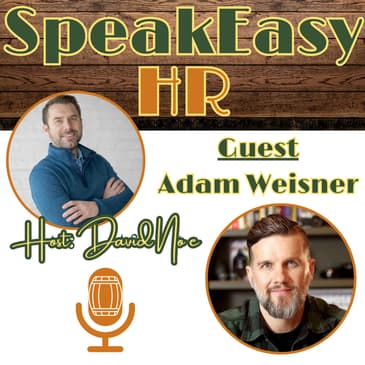
In Episode 85 of SpeakEasy HR, David sits down with Adam Weisner—entrepreneur, investor, executive coach, author, and business leader—for a powerful conversation around The 7 Unbreakable Laws of Leadership.
With more than two decades of leadership experience across banking, manufacturing, investing, and financial technology, Adam has built and scaled organizations while staying grounded in a belief that leadership is stewardship and business can be a force for good. As President and CEO of Sherman Research, he leads a company focused on helping people make wiser financial decisions through independent research, education, and long-term thinking.
Adam also shares his philosophy of Purpose Beyond Profit, including Sherman Research’s commitment to directing 51% of distributable profits toward advancing the Gospel through churches, ministries, missionaries, nonprofits, and Kingdom-focused initiatives.
The conversation explores leadership, culture, purpose, faith, family, stewardship, and legacy, along with Adam’s concept of Asymmetric Endurance—building organizations that become less dependent on one leader and more capable of creating freedom, sustainability, and lasting impact.
Whether you’re leading a team, building a business, or simply trying to become a better leader, this episode offers practical wisdom for leading with conviction and building something that truly lasts.
To preorder Adam's book, visit https://www.biblicalbusiness.com/
Powered by the WRKdefined Podcast Network.
[00:01:02] What's going on everybody? David Noe with SpeakEasy HR presented by Payroll Partners. Back at it. Brand new episode for episode 85. Exciting guest today and I cannot wait to talk on this topic that's been a consistent topic on SpeakEasy HR about leadership and I am thrilled to have on today Adam Wisner. Welcome Adam. How are you today my friend? I'm fantastic. Thank you for having me on. Appreciate it.
[00:01:32] Yeah, yeah, I was talking to Adam before we came on live. We are live on LinkedIn, YouTube and also Adam's Instagram, a couple other platforms as well with Adam. So thrilled to have people watching live wherever you're tuning in. Thanks for making this part of your day and really just having this authentic conversation with Adam.
[00:01:52] For those of you who are new to SpeakEasy HR, my name is David Noe. I started this back in 2024 and have now gone to 85 episodes. Really Adam and I, I'm on tick tock every now and then for a different topic other than HR and I've seen Adam's work.
[00:02:12] I run a small business with my wife that is a bookstore, Christian bookstore, gift shop and I was just following Adam and I was like, Adam would love to have you on and so he's like, hey, let's connect. And so here we are and it's the end of July or end of August. Crazy to think that we are through the summer.
[00:02:30] So for those who are watching live, Adam, you bring a very interesting approach to a lot of this stuff that I think people every day in leadership that aren't in leadership will learn from. And so can you take us back for the listeners to get a better understanding of who you are, your professional journey?
[00:02:55] What does that look like and what are some of those pivotal moments that really shaped where you are today as a leader? Man, gosh, it's been such a journey and I've done so many different things. I feel like I'm a jack of many trades and a master of none. I, you know, I, the first work I can remember is cleaning offices and churches at 5 a.m.
[00:03:25] and at 5 p.m. before and after school with my mom, who was kind of the dual entrepreneur. She, she had a thrift store, she had a cleaning business. And so a part of just our childhood was working. And so I remember as being as young as, I don't know, eight or nine. And the highlight of our day was taking out the trash at the end of the night, riding on the hood of the blue bomber.
[00:03:52] So we called it the blue station wagon that my mom was gifted to ride in the parking lot to take trashes out. So, yeah, I mean, I think work has been something that's been fascinating for me growing up. You know, not a lot. You learn some poor lessons and you learn some amazing lessons along the way. So, yeah, I think career wise. I mean, I've done everything. I started outside of that.
[00:04:21] My first corporate job was selling cell phones in a single person kiosk inside of a Walmart in Pomona, California. I used to throw the dummy phones into people's carts as they walked past me to try and convince them to come talk to me because they were there for anything but that. And then eventually made my way into finance, did lending and then banking. Made my way through that period of time.
[00:04:47] Eventually became a managing director at a Fortune 150 Japanese owned bank at around 31. Spent most of my career there, really found what I was looking for. You know, they say you play stupid games, you win stupid prizes. So I was chasing money and I found it and really didn't like the person that I became as a part of it. And God graciously allowed me to get out of that and make a choice to do something different.
[00:05:15] And then I got into the automotive industry, became the president, eventually the president of an automotive suspension manufacturer based out of Santa Barbara, California. And then about three, four, three years ago, I was a part of something called C12, where Christian business leaders meet once a month in their local community. And I started to learn about this thing called business as a ministry. And it sort of blew my mind.
[00:05:44] And I felt really dumb that I hadn't realized that my work and my faith were never separate. And so that set me on a path. And so from there, I started our business, Kingdom Mindset Investing, and then eventually joined Sherman Research, which is where I'm the CEO of now, because we were going to give away 51% of our net income to advance the gospel. So that was the only draw that mattered to me at that point.
[00:06:12] And we've just been running ever since. Every day I wake up with breath in my lungs and I put two feet on the ground. It's a gift. So I say it's the best day of my life and I mean it. Well, that's exciting. And I have not heard all of that. So I just gathered more about you and your background. And so we've had a few discussions up to this point, back to earlier this year, and seeing some of the work you're doing. Now you're writing a book as well. When's the book set to be released? Do you have that date yet?
[00:06:43] Yeah, the book's out. I mean, the book's done. Man, we're just working on materials right now. You know, pretty particular, but pre-orders are available. And it's set most likely late October, early November is the target right now. We're kind of in our final round of line editing and materials choices. But I've spent the last, oh gosh, almost year and a half, two years working on this. And it's the embodiment of really everything when it comes to these biblical principles.
[00:07:12] Yeah. Yeah, we'll have this link in the show notes as well for those who are not watching the audio and video version of this today. And this is kind of what we're going to be talking about today on the unbreakable laws of leadership. And so, Adam, I'm sure you've gotten a lot of advice in your career. I feel like everybody that goes through ups and downs in their career and shifts in different directions and what you're doing and what your focus and what your why is.
[00:07:42] So, what's the biggest piece of advice you've ever received that stands out to you? You know, outside of the wisdom of the infinite wisdom of God's word, which is where I draw all of the advice from for everything at this point, especially business. A very practical piece of advice I got was from an executive coach when I first became a managing director at the bank.
[00:08:10] I was assigned an executive coach. And so, they sit in some of your meetings and they watch you interact. And at that time, I was very concerned with or good at vertical management. Right. I was really good at making sure my bosses were really excited about what I was doing and managing people who worked for me. But he opened my eyes to this idea of horizontal management and managing the relationships with your peers.
[00:08:37] And because I kind of have the two-sided coin of relentless focus, that can send you on a path forward and then you lose that horizontal side of things. And so, this coach sat in one of the meetings and after he came to me, he said two things that I'll never forget. He said, one, Adam, just because you have a good idea doesn't mean you need to share it. I just thought, what are you even talking about right now? And then he began to explain it.
[00:09:05] And he said, when you're in a room of peers, it is influence management. Right. This is about the influence that you have. And so, how are you bringing people along? And so, what I want you to do is work on sharing an idea you might have 70% of the way and then letting the room bake it through the rest of the 100%. Because when you do that, not only will you find that you've brought people along, but you'll also find that there's better ideas that come out at the end of it.
[00:09:34] And there's never been truer words that have been said to me. Gosh, I've realized so much in my career how many times I didn't have the best idea, which was most of the time. And so, that advice really stuck with me. Got to give you the mini ear horn for that. I love asking guests that. So, all right. We're going to shift just a little bit. Hear more about you, Adam. So, there's 15 envelopes in here.
[00:10:00] Just think of a number, 1 through 15, and we'll get to that in just one second. All right. What do you got? 1 through 15. 7. 7. It is. Let's see. All right. What's a TV show or movie you quote way too often?
[00:10:32] Man, I've got multiples, but let's just go Tommy Boy. Fat guy in a little coat. Fat guy in a little coat. He's just a little guy. Yeah, that's one where, you know, when you have kids, you become a parent. You start to realize the movies you probably shouldn't have watched as a young person. And then you find clips. You find clips to be able to show them that work. So, yeah, my kids quote Tommy Boy, but they've never seen it. Yeah. I'm like that with several movies. Yeah.
[00:11:02] And they're all like older movies that I saw when I was, you know, a teenager. And they're still just classics. So, well, that is awesome. And I hope everybody learned a little bit more about Adam as I did. So grab something to drink. We'll be back in one minute after a few messages from our presenting sponsor, Payroll Partners. We'll be right back. Finding a new employee takes time and money.
[00:11:27] For one position on a single job board, you could easily spend a minimum of $5 to $10 a day advertising a job post. It's worth noting that the average time it takes to hire a new employee is 36 days. However, it can take longer than that. You could find yourself paying hundreds of dollars a month for a single job board. And if you're using multiple job boards for multiple positions, this could add up to thousands of dollars a month. There is a much simpler and more affordable way of finding the right candidate.
[00:11:56] At Payroll Partners, we offer an applicant tracking system to help manage your hiring process. Our ATS is customizable, allowing you to decide which days you want to run the job and when to close it so you don't break the bank. And this feature lets you e-blast your network, hosting jobs on multiple boards at once, all managed in one location. Payroll Partners, elevating your payroll and HR experience.
[00:12:23] So running a business is hard enough as it is and you shouldn't have to take on the complexity of payroll, HR, tax, compliance, all that stuff that you have to deal with as a business owner. So if what you have is not working, look me up on LinkedIn. Connect with me. We'd love to hear about your situation. I've been in HR for 20 years and I've seen it. I have felt it and I have lived it.
[00:12:45] So let me know if I can help, see if we can help you out in your business and all of your challenges with the technology that comes with it. So, all right. Well, Adam, we are going to just kind of ease our way into this topic for today. And next is the five rapid fire questions for you. So these are the quick five, 10 second responses. Ready? I'm ready. Okay. One word that best describes great leadership.
[00:13:15] Servant. Best leadership book you've ever read. The Bible. One leadership habit you wish every leader had. Doing the job of the people that they're working for. What's one thing great leaders never compromise on? Integrity. And finish this sentence. A leader's legacy is?
[00:13:44] How they make people feel. Man, you just flew right through that. That was unbelievable. That was great. Well, we are live on LinkedIn, YouTube, Instagram. For those of you who are watching, thanks for making us part of your day. My name is David Noe, host of Speakeasy HR, content creator, business owner. And so along my way of this journey, I am constantly trying to learn from others when it comes to leadership.
[00:14:14] And, you know, being a part of the community and a part of a family and a part of a church community. So there's just a lot of layers to this topic that I think for myself and everybody else listening is going to learn from Adam. And maybe you'll take away a few things on your own. But let's start with this big idea. So what are the seven unbreakable laws of leadership? You don't have to go through every single one of them. But what really inspired you to identify these seven?
[00:14:43] You know, I have lived and run businesses by a level of principles. And I think that what I realized was that some of them were rooted in the world's wisdom and some were rooted in biblical wisdom.
[00:15:04] And in doing kind of a postmortem of the successes that I've had in business, it was really clear that any of the wisdom from the word of God was the wisdom that actually produced the best everything in a business.
[00:15:22] And the moment was after I had made this shift to become the CEO of Sherman Research and was really passionate about, you know, seeing the business be an engine for the gospel, giving away 51% of our net profit. I had just shifted to give the team Christmas Eve through New Year's Day off as a standard vacation, right?
[00:15:47] It was just part of the leading people well, right, is leading people well and caring about them as humans. And that period of time, I was at home and I was sitting in front of the fireplace and I felt compelled to write. And I very rarely feel compelled to write like that. And I cannot ever recall a time where I felt that compelled.
[00:16:14] And so I grabbed my computer and I told my wife, Jen, I'm like, I got to get this out. And so I just started writing. And I do have kind of a fixation mentality. And she said that I just sat there and I looked like a mad scientist. I was just, I was writing and writing and writing. And what came out the other side of that was really the seven laws.
[00:16:37] And the desire was, gosh, you know, it is so amazing that when we look at the word of God, that these are the only true and active living words in anywhere in the entire universe. And the mystery of that is something that isn't just to be applied in your personal life. It's to be applied in your life. And we are made whole humans.
[00:17:04] And so I started to uncover and write these concepts that I knew I was applying in business from a place of biblical wisdom. You know, as you read God's word, you know, the first time I read the Bible all the way through was 2012. I read it Genesis to Revelation and the principles were all there that I was applying, but I was kind of taking credit for them. So it was a realization in that period.
[00:17:32] I think God giving me the opportunity to just humble myself. I mean, humility is really having a right view of yourself. It's not thinking less of yourself. So when you understand that he is God and you're not, it's really easy to realize that all of these things, that every good gift, every perfect gift is from him. So I started to combine my passion for pragmatic and practical application of things into writing something that could be accessible to people that they could then use.
[00:18:02] And that was a big part of why I had joined Sherman, because it's not that giving away 51% makes our company any more special. It's all God's. The question isn't how much are you going to give back to him? The question is how much are you going to keep for yourself? He's not impressed by a number. It's the heart. That's all he's ever concerned with. But for me, it was, I wanted to be a part of something pragmatically that was going to be an engine for the gospel.
[00:18:26] So we can then take those resources, the store of value and use it to truly impact people's lives for the only thing that actually matters. So this was like a, this was a mind to go, how do I take these laws and make something that can show you how to practically apply them into your business every day so that you can then, right? The business flywheel here is to move everyone to here. Like I have a book that you can, you could pre order here.
[00:18:55] I don't care if you ever pre-order that. My goal is to get you to this book right here. This is the only book that matters. You can skip that one, skip my book, go straight to this one, but just so that no people don't think it's a bait and switch. That's the whole point. I want to show you how to run a great business to lead you to Jesus, not to lead you to something that I have. Yeah. We are live on LinkedIn, YouTube, Instagram. So if you do have a question, throw it in the chat. I know someone just asked if there's a Q and A session.
[00:19:23] So there, there really is a Q and A session the entire time. I have questions. I'm going to ask Adam, if you have a question, throw it out there. And we'll try to pull it up. So if you have a question along the way, would love to hear from you, engage with us. So we are with Adam Wisner. He is getting ready to launch this, this book. And this, this is for me too, Adam, because I'm in the process and the journey of writing a book myself.
[00:19:49] So like, I know, I know the thought and I can just vision you like typing away and just being in this mindset. But like, is there one part about writing a book that you thought would be way easier that you have just now learned that like, that is one of the most challenging parts of writing a book from start to finish?
[00:20:10] I think for me, it's the same challenge that most business owners and that I faced early on, which is getting it out there. Yeah. Yeah. Right. And I think especially for your first book, if you are somebody who cares deeply about excellence and authenticity, then you have a low tolerance for being misunderstood.
[00:20:36] But I think that one of the great characteristics of a leader is that you're willing to be misunderstood because you will be, you don't have a choice. Yeah.
[00:20:46] However, the hard part was getting through and writing something that would feel like an authentic embodiment that encapsulated sort of how you feel, how I feel about these things put into words. And so that is a, it's a unique challenge because, you know, we were made to speak. We weren't made to write or read.
[00:21:16] That is something that came later, right? When God designed us in the Garden of Eden, we had this right here. We had words, we had language. And so we have this incredible amalgam of information and a really poor processor. And then the processor gets even worse as you go into trying to get this to here. So yeah, the hardest part is wanting to, I would say a bit of the perfectionist mentality where you feel like, okay, man, I really want this to be exactly what it is.
[00:21:46] And I think in the age of AI slop, it's super easy and tempting for a lot of people to go down the path of having AI help them write a book. And it's not that I have a problem with the use of AI at all. I use it a ton. But I think writing is a very personal thing. And so for me, I wanted it to be deep, authentic expression of my philosophy. Yeah.
[00:22:17] So how does trust, and for me too, I think trust goes a long way when it comes to great leadership. And I think it's one of the more important factors that any leader sometimes will struggle with.
[00:22:35] So how does the trust factor in great leadership, how can a leader do that when trust has been lost or like, how can they rebuild that with their team? If they've personally lost trust or if trust generally has been lost and they're coming in. Let's start with the second.
[00:23:01] So you're coming in to an organization and you're trying to build the trust, gain the trust from everybody. When you're coming into a brand new company, what are some of the first things that that individual as a leader has to do? Like, what do they have to do? You know, I've had the great opportunity to do this in a lot of organizations.
[00:23:25] And, you know, I remember when I first came to run the Los Angeles Metropolitan Branch Banking Area. So it was the largest market in the company, but it was, you know, a dog. It was struggling. And so I covered from, you know, northern L.A. all the way down to Crenshaw, all the way into sort of nearing Ventura County. And it's a bunch of different people with a lot of experience.
[00:23:54] And they've been they've been wronged in a lot of ways. They they didn't trust a lot of what was going on. The first thing that I always do in any situation is I do nothing except spend time with them, asking a lot of questions. You know, I sign off all of my emails from for Sherman with to curiosity. I am an extremely curious person.
[00:24:21] I think that the more questions you ask, the better you can understand people. And when you understand people, you can serve them better. And so I spent, you know, the first typically 60 to 90 days just going out to each location and spending time with each of the leaders, asking them questions. Hey, if you had the keys to the kingdom, what would you change right now? Hey, you know, what are some of the things that have gone wrong?
[00:24:48] Tell me about the times that people have said they were going to do something and they didn't for you in leadership. Right. That one's a big one. So you start to uncover these things and then you have to be the real deal. Right. You have to do what you say you're going to do. So I think just being really cognizant about keeping your word is important. And then it goes back to hospitality for clients. It's really caring about people personally.
[00:25:17] Right. People don't care what you know until they know that you care. And so how are you asking them questions? Right. It's like you bring you bring me a Starbucks gift card. What if I don't like coffee? You haven't asked me any questions. So seeing what people care about, what motivates them are really it's a really important first few steps to regain trust. Yeah. And that leads me to the next question about culture and leadership.
[00:25:43] So what are some of the signs that a leader may be unintentionally damaging their culture? The first one I can think of is that people get quiet. As soon as you start to run meetings and your voice is the most prominent one in the room, you are failing. People don't trust either that you are listening.
[00:26:10] Right. Or they don't trust that you're going to do anything if they speak up about something, an idea they have or a thought pattern or an issue that they're bringing up. So I think that would be a big first sign is that people stop talking in your meetings. The others are really more around week to week behavior. You know, I think when you're not checking in with people every week who are your direct reports, you are failing.
[00:26:40] And as a part of one of the laws, right, very basic part of leadership is that every one of my leaders has, including myself, has to check in with their direct reports. And I only expect you to ask three very simple questions. The numbers are numbers. That's called supervising. Right. That works if you're trying to get, you know, call center stats or, you know, turn time or right. These are things you can look at in a report. The three questions I've been asking my leaders for the last decade are what are you proud of right now?
[00:27:10] Where do you have an opportunity to get better? And what can I do to serve you better? That's it. You keep it simple. But you are giving them an opportunity to talk about awesome things that they're really proud of. You're also having them push to say, hey, man, I can get better in these things, recognize and humility. And then you're coming alongside saying my job is to actually serve you. So what can I do to serve you better?
[00:27:34] And, you know, if you ask those three questions every week, it makes a massive difference in your leadership trust over time. Yeah. No, I love those questions. There are so many ways that people should be making efforts in connecting with their team, whether it's virtual, in person. Really applies to anybody. So what have you seen? I mean, from an HR perspective, what are what would you say is the top sign that somebody is losing trust with their team?
[00:28:05] What I have found is that when you ask for feedback and you do nothing with it, that is the opposite of what a lot of companies intentions are when you ask for feedback. So if you want feedback, you better be ready to act on it and also clearly communicate why and what you're doing so that they understand that, yes, we're listening to you. You all have good ideas and you all have a different experience of being a part of our team.
[00:28:34] And when we get that feedback and we understand as a leadership team what they want more out of us as a leadership team and the culture and the environment, making them feel safe and heard and valued. You know, that is super important. And so then it's trickling into the actual departments and the managers of those departments to see what truly is making their team tick.
[00:29:02] Frustrated, happy, you know, waking up on a Monday morning, just not excited to go to work. And if you can identify those things and be out in front of them, then you may not have someone be to the point of like, this isn't working out. I've lost my why. I'm not here for anything more than a paycheck. And they'll get checked out and they'll have customer performance issues, attendance issues, that kind of stuff.
[00:29:31] So, you know, and mental health and the ways that people just have to deal with a lot. And leaders should not expect them to just leave all of that at the door when they walk in. They're going to bring that in. They're going to bring that in. So you better you better be ready. And the HR team or department better be ready to help tackle that. And it's that human connection and just showing that you are showing empathy, right?
[00:30:01] Like that is critical. So, sorry, you were going to say something else. Oh, I think it's such a great point because it feeds into this idea also of faith and work, right? This idea that we have to leave things at home before we come into the office is ludicrous because it's not possible. So when you ask somebody to leave something at home, no one's leaving anything anywhere.
[00:30:31] We are whole humans. You are asking them to compartmentalize. That's a very different skill set, one. Two, that doesn't mean it's gone. It's there. And that's not how we were created, right? The work was created before sin entered the world. When God was thinking, how about design? The most perfect place on the planet. He thought, I'm going to create a place and you're going to tend and keep it. You're going to work.
[00:30:58] And so the only difference after the fall of man is that thorns and thistles and by the sweat of our brow, it's going to be hard. So that doesn't mean work is bad, but work is not something that is bad in any way, one. And two, it's not something that you can separate. You can't separate your faith from your work because God never intended it to be separate. Work is worship. Actually, the word for work means worship in the Hebrew.
[00:31:25] And so, you know, when we say things like, you know, you've had a rough thing going on at home or you've had to sleep at home. You know, you've got to come here with it. No, absolutely not. So what we do is one thing I do is I got really tired in corporate of these kind of annual employee engagement surveys. But then you try to take some sweeping action on and some consulting firm, you know, charges you a bunch of money to give you a deck and tell you some of the things you need to do with responses.
[00:31:52] The problem is there's no silver bullet. You know, Proverbs 21.5 says the plans of the diligent lead surely to abundance, but haste leads to poverty. When we are trying to just take this big swinging pendulum action on something, that's not going to work. It is inch by inch. And so how do you do that? So what do we do?
[00:32:16] Every week, I get a weekly employee sentiment where people rate one to seven. It's a vibe check. Hey, how are you feeling this week? One to seven. Four gives you a natural middle. And then, hey, is there anything else you want to share? And also, do you have anything that we can be praying for? Both optional fields. But I can get a quick vibe check on like how are people doing? And then you can do something with that, right?
[00:32:42] So now every week, if I see that it's going like this, you know, hey, man, people are feeling stressed. They're feeling overworked because the numbers aren't going to be your indicator of how people are doing. And if you just check on them once a year, you're not really checking on them at all. You want to do the same thing in your marriage? See how that goes. Yeah, I couldn't have said it any better. That's so important.
[00:33:05] So if you are not handling things from a leadership perspective this way, it might be time to reevaluate and try to get some buy-in from others in your organization. And you bring up the faith and values. You know, so I'm curious to hear more about this, Adam. So how do faith and personal values influence your approach to leadership and the decision-making process? Completely.
[00:33:34] They are everything. And it is the root of every desire for leadership for me. I mean, in our company, our core values are the fruits of the spirit from Galatians 5. Love, joy, peace, patience, kindness, goodness, faithfulness, gentleness, and self-control. And when we do an annual check-in, that check-in is not about all of your numbers.
[00:34:02] It is how have you demonstrated each one of these? One. And two, how has your leader, including me, how has your leader demonstrated love, joy, peace, patience? Because if I am abiding in and following Jesus, then the expectation is that I should be bearing fruit.
[00:34:23] And I want to be held accountable to that, not to excellence and to not to say those things aren't happening because those go together. But those aren't the markers of what actually matters. And what you find is when you follow the word of God, the upside down, it makes everything right side up. You run great businesses where people love to be and they're well taken care of and they've got great benefits and they're paid well.
[00:34:53] And they have, right? There's a, and you deliver an excellent product. You know, historically, if you attached Christian to any company, that meant, oh, it's subpar, right? Like that's how you know, it's a, it's a Christian movie. It's a Christian, whatever it is. And man, that should be the opposite. We serve the literal creator of the universe. We should have the best businesses on the planet in every way. Absolutely. Yeah.
[00:35:22] So the seven laws of, of leadership, the unbreakable laws, what do you believe leaders struggle with the most right now and why? You know, it's interesting. It depends on the size of the business, I would say. Yeah.
[00:35:38] As you get up market and you get into businesses that have been established for longer, purpose beyond profit becomes the biggest challenge because they've built a mountain of money as that they're climbing. Yeah. And, you know, when you climb money mountain, you find a hamster wheel at the top. And if you don't believe me, you either haven't reached the summit or you're in the hamster wheel as we speak.
[00:36:04] And so as companies get big, it's like, man, it's like making a U-turn in a cruise ship to go, wait, we don't, we stand for something more than just making money. If they're publicly traded, right? There's all these downstream impacts. So that would be one on the smaller business side, it's more common that people who start a business as an entrepreneur are good at two, two things really. They're good at selling. Okay. Cause they know how to sell their service or product and they're good at fulfillment.
[00:36:32] They know how to deliver said product. So they're really good at sales and operations. And what they're really typically not skilled at is finance. And so law number three, the net seven method is the one that I would say most small business owners struggle with. And then second to that would be law number five, which is decision velocity. So that's about accountability and execution and a system for accountability and execution.
[00:37:02] And then I would even go, it's kind of the odd numbers, three, five, and law seven, asymmetric endurance. So most small business owners build their businesses in perfect symmetry as their business grows. It's dependency on them grows in perfect symmetry with it. And what they realize is they built a prison. They built a cage. Now they can't get out of it. They can't leave. They can't go on vacation. They can't, I'm in Yellowstone right now, right? They can't do that.
[00:37:31] This is the only thing I'm doing the whole time I'm here, by the way. So what you want, asymmetric endurance says as your business grows, its dependency on you or any single individual should move in the opposite direction. It should become less dependent on you. It should be asymmetric. And so I would say those three are the ones that the small business owners struggle with the most. Whereas corporate, as you get corporate, that's actually the one that you can take the most from. In the corporate world, everyone's dispensable, right?
[00:37:58] My handle on social media is the dispensable CEO, right? What I learned from corporate is that everyone's dispensable. Well, how do we take that and apply that into small businesses across America that need it with redeeming the human side of it, right? Where it's not just about making the money, hence law one, purpose beyond profit. So, I mean, I can tell you people struggle all the way through the gamut on all of the laws. That's why they exist.
[00:38:26] And depending on the business, I would say, which law do they struggle with? Well, I'm not a lawyer, but it depends. As you explained all those, I just go back to the previous companies and roles I've been in. And I feel like I've seen all of that almost. You know, it's like I've been in the large business, you know, healthcare. I've been in the startup. I've been in the small, mid-sized business. So it's so true.
[00:38:52] And I think anybody that's curious about learning more about these seven unbreakable laws pre-order, the book will have that in the summary notes of the podcast episode. So, Adam, what role does accountability play in these laws? And how can leaders really create accountability without creating fear? You know, I think most people have one of two reactions to accountability.
[00:39:20] And typically it's either, oh, great. You're going to see all the great stuff I'm doing. Or, wait a second. Somebody's going to make me do my job and hold me accountable to it. Those are the two main responses. Now, there's a big gray area in between. But accountability is the essence of law number five, decision velocity. So velocity requires both speed and direction.
[00:39:47] If you're going fast in the wrong direction, that's a problem. If you're going slow in the right direction, that's also a problem. So the idea of decision velocity is how do we move fast and in the right direction? And so what the law does is it creates a framework for both keeping your eye on the destination for the GPS for the next year, and then systematically working through cycles, monthly cycles of execution,
[00:40:17] where at the end of every cycle, there's only one option, executed or failed. And as you do that, people understand that failure isn't a problem, right? Failure is feedback. Failure is an opportunity to learn. And so it's really, I would say, beating the drum on the idea of a feedback loop, right? So a feedback loop is simply the scientific method of thinking. It's I have an experiment.
[00:40:47] I'm going to experiment. I have a hypothesis. I'm going to experiment. I'm going to try stuff. And then I'm going to get results. I'm going to analyze those results. And I'm going to take new action. Then I'm going to experiment again. And I'm going to keep repeating. What happens when you are moving in these monthly cycles of execution that are gated to say, everything that we work on each month is going to move us toward, meaningfully toward one of those big three goals for the year.
[00:41:15] You, one, connect people's short-term work into the long-term goals. And then two, you know, I jokingly say it's a nudist colony. So everybody sees the failure and the execution. And failure isn't a bad thing. It means maybe you didn't have the right resources. Maybe your leader, you know, didn't give you what you need along the way. Maybe you're in the wrong position. But we have to face that in order to do something about it.
[00:41:39] And so decision velocity, I would say, is one of the most pivotal laws because economic value is measured in execution. So in the age of AI, people have lots of ideas. And man, hope is not a plan. And guess what? A plan is not an execution. So you can plan all you want, but if you don't know how to execute, it doesn't really matter.
[00:42:08] And so what decision velocity forces is a systematic way of tracking execution and gating bad ideas from getting in that don't move you toward your big goals. So you've probably seen the difference between a boss and a true leader.
[00:42:29] You know, so what have those experiences taught you about that and what the difference is between being a boss and being a true leader in an organization? You know, I think bosses get a bad rap. I think a lot of people have kind of gone down this path of like the difference between a boss and a leader. And let's look at the difference between a boss and a leader. And you've all seen all the images of someone dragging versus someone yelling.
[00:42:55] And I think that I just see them with less emotion tied to the defining characteristics. I think that a whole leader sometimes needs to exercise their boss muscle and sometimes needs to exercise their EQ. I'm going to call it leader muscle, right?
[00:43:20] I would say bosses are characterized as being focused just on the task and pushing people forward to the task and not really caring about the human. And the leader is characterized as caring about the human. But, you know, there's definitely a point, right? A great book called Radical Candor where you can have ruinous empathy, right? Where you can be a leader who's all about the people, but you avoid accountability.
[00:43:49] You avoid driving execution. You avoid hard conversations because you just want to be a leader. I just want to, you know, we're just going to read the next exciting leadership book and go throw tomahawk axes and zip line and do trust fall. But we need to do execution. And then you've got the other side of it who's like, you know, the driver who doesn't care about the person, doesn't know your wife's name, doesn't know that you just had a baby, just wants to make sure you hit the numbers.
[00:44:17] There is a place to meet both of those things. And I think the best business people, the best leaders in general have some element of knowing how to be a really great boss. Right? That used to be a great thing. World's best boss. It wasn't just a Michael Scott thing. Like it was, that was, it became parody because it was a real thing, right? It was like world's best dad. We used to have national bosses day. I don't even know if that's a thing anymore.
[00:44:48] But, but yeah, I think there's a, there's a place to flex both muscles. And I think that you need both to be a great CEO. You are responsible for vision and execution. It doesn't mean that you're doing both. It just means that you're responsible to drive both. Yeah. And with leadership, it, it brings a lot of pressure and setbacks and failure. You know, a lot of good leaders, a lot of businesses have failed.
[00:45:14] So what, what have you learned about leading and what should others learn about themselves before they can really actually effectively lead other people? Hmm. You know, you need to fail. You need to fail a lot because failure will teach you more than success ever will.
[00:45:41] And when you're leading people until you understand what they're actually feeling and going through, it can be difficult to truly empathize, to truly understand what it's like to work in a one person kiosk or to bus tables and, you know, eat people's French fries. When I bussed tables because they, I didn't have any food and I was hungry and they hadn't touched them.
[00:46:08] Like until you, until you have a place to be humbled and to fail and fail publicly, it's difficult to be a great good leader. It doesn't mean it's required. It's just that failure is going to teach you so much. That's one.
[00:46:27] And then two, I would just say, when you are rooted in scripture and when you look at the, you know, God in the flesh in, in Jesus, Jesus was the perfect picture of service, service and submission in a leadership position. And, you know, when he's washing his disciples feet, right, we're talking about like an age where we're talking sandals here. We're talking nasty.
[00:46:55] There's poop, there's mud, there's, there's all kinds of stuff, right? He's washing their feet. That was the lowest of the low. And he says, do I do this as an example. It's the only time he says that. This is an example for you. And so until you understand that God in the flesh who created matter out of nothing, washed the feet of those he served, man, it's, it's difficult to lead well, because it's really easy.
[00:47:24] The world's going to tell you that, you know, you're awesome. And as you get success, success has many followers, but failure is an orphan. And so as you gain success, you're going to start to believe your own hype. And, and so being rooted in understanding that, you know, all we bring is rags is, is a really important thing to lead people well, I think. Yeah. Yeah. I think trust and respect go hand in hand.
[00:47:49] And I think everything that you just have described for the last 30 minutes, people around you are going to gain that respect and trust from you. So, Adam, this has been phenomenal. I got one more question for you before we jump off. So if someone listening today could take your seven unbreakable laws and put it into practice, which one would you want them to choose? And what would you tell them to do?
[00:48:23] The first law is the one that I would tell them to choose purpose beyond profit. You have to have a reason to exist as a business that's bigger than just making money. If you want to attract the best people, if you want to retain the best people, if you want to wake up every day excited, if you want Friday to come and you say two days till Monday, you need a purpose that is bigger than just making money.
[00:48:53] And so my encouragement would be that each person sits down and there's a very simple application for this. And that is to state it in seven words or less because constraint breeds creativity. So my purpose beyond profit is to share Jesus love through excellence in business, because I believe that excellence generates curiosity. Right. How did you do it?
[00:49:20] And curiosity gives me an opportunity to point them to Jesus. Right. You're as a follower of Christ. The legacy that I want is to be forgotten. I want Jesus name to be remembered. And so what that means, it's a freeing feeling to know that what you are here for is to steward something that God has given you. You're the chief stewardship officer.
[00:49:45] So steward it well, each person, each life, each portion, the money, the marketing, all of it, every aspect of the business, see it from a stewardship perspective. And that will change your whole life. And to do that, you need to first define. Listen, you don't have to believe what I believe to apply the wisdom of the Bible. But my secret, you know, the scam here is that I'm trying to lead you to Jesus.
[00:50:11] But I'm just going to tell you up front, you can use all of these things, but you need to define that purpose beyond profit first. When you do, it really changes your mindset and it gives you a freeing mindset to run your race. That's incredible. I think I wish I knew all this about 15 years ago. But you and me both. Right. Well, now you have the chance to share this and help other people and inspire them. I'm still learning.
[00:50:41] So, yeah, we all are. Every day. We all are. So for those of you who have enjoyed this conversation, who want to learn more about Adam's work and his book that's coming out, you can preorder it now. So check out the QR code on the screen. It'll also be in the show notes so that if you are catching this on demand, you can find this and follow Adam's work.
[00:51:07] But if you're on TikTok or any other social media platform, which is where I found Adam, you know, go out, follow him. He's an incredible speaker. And every time I catch him on a live, I learn. And I'm just so fortunate to have him on my podcast now for episode 85. So, Adam, I really appreciate your time today. This has been great. Hopefully you enjoyed it as well. Yeah, David, thank you so much. Been super generous of you. Thanks for inviting me on and taking the time to get this thing set up. The show's great.
[00:51:37] I encourage you to keep going. Get to 850 because this is awesome. So well done. Yeah. Thank you very much. I hope everyone has a great rest of your day. Go out, make it a great day, and we'll talk to you all soon. Take care. God bless. Bye-bye.
Sponsors
