
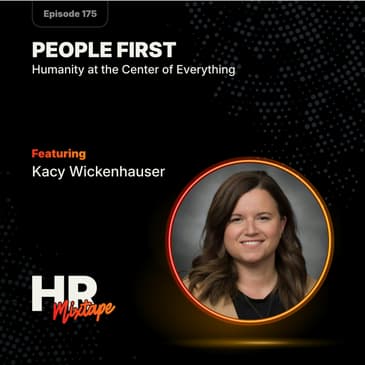
In this episode of the HR Mixtape, Dr. Shari Simpson speaks with Kacy Wickenhauser, Chief HR Officer at Wolverine Power Cooperative. They discuss the importance of maintaining a human-centered approach in the workplace, especially in the context of conflict and the rise of AI.
Listeners will learn practical strategies for managing workplace conflict, the significance of validating emotions, and how to balance data-driven decision-making with empathy.
• Understand the role of inner dialogue in conflict resolution.
• Learn techniques for validating employee feelings without agreeing with inaccurate information.
• Discover how to approach difficult conversations with empathy and clarity.
• Explore the importance of building trust in union environments.
Recognize the value of employee engagement data in decision-making.
00:00 -- Introduction to the episode and guest.
00:16 -- Kacy's journey in HR and passion for people.
00:57 -- The impact of AI on workplace credibility.
02:14 -- Best practices for double-checking AI information.
03:38 -- The importance of critical thinking in AI use.
05:04 -- Skills for leaders to navigate workplace conflict.
06:53 -- Managing inner chatter before conflict resolution.
07:45 -- The power of acknowledging and validating feelings.
09:26 -- Developing empathy in HR roles.
12:10 -- The importance of not solving others' problems.
15:33 -- Using data to support tough organizational decisions.
20:17 -- Building trust in union environments.
22:03 -- Final advice for HR practitioners.
Guest(s): Kacy Wickenhauser, Chief HR Officer at Wolverine Power Cooperative. She leads HR strategy in complex environments, focusing on trust and operational clarity. Kacy has over 20 years of experience in HR and has developed skills in conflict resolution and employee engagement.
Keywords: workplace conflict resolution, validating employee feelings, HR strategies, AI in the workplace, trust in unions, employee engagement data, critical thinking skills, managing difficult conversations, HR leadership, human-centered workplace
Powered by the WRKdefined Podcast Network.
[00:00:01] You're listening to the HR Mixtape, a podcast for leaders who want to understand people, strengthen culture and navigate change with clarity. Today's conversation starts now. Joining me today is Casey Wickenhauser, Chief HR Officer at Wolverine Power Cooperative. Casey brings deep experience leading HR strategy in complex environments where trust and operational clarity matter.
[00:00:34] Casey, thank you so much for jumping on the podcast with me today. Yes. I'm glad to be here. Thank you. So I love your journey that you've led across HR, finance, tech, safety. In all of that, what really drives your passion for keeping work human, especially as we think about what AI is doing to our environments? In my world, you know, my specialty is HR and so human has to remain at the forefront of what's happening in my world.
[00:01:02] of everything we do. And probably the teams that I do lead that are not HR might get tired of me saying that, you know, we have to be the model, you know, on how to lead and how to treat people and how to put, you know, how to be a people first company. And so I don't think it matters what department I'm ultimately responsible for or, you know, what the reporting relationship is. Leading a culture that puts people first is important, no matter the work that's getting
[00:01:28] done behind the scenes. Do you think AI has the potential to impact our credibility right now? I think about that a lot. I absolutely think it has the impact. Just as an AI user, I mean, the thought of taking something at face value and not checking it and sharing that broadly with a group of employees is potentially horrifying. Some of the things that it hallucinates and,
[00:01:56] you know, even with me who, you know, I use it every single day. Yeah, it absolutely does. The thought of not doing a double check and understanding the true source of the information would lead to huge credibility issues undoubtedly. As somebody who uses it every day, what have you found has been the best approach to double check it? Because I think, you know, sometimes we may not have the
[00:02:24] expertise to know it's giving us, you know, fake information because it's such a great resource right now. That's one of the reasons, I mean, I personally have tested out a few. It's one of the reasons I love perplexity, to be honest. I love that platform because it's such a rich trove of sourcing that it's doing and showing you in real time that it's happening. And if it's me doing something related to, you know, deeper technical work, that's one thing that I'm going to double check. And I'm
[00:02:54] going to really gut check that. And I'm going to ask for specific details. It just happened this week that I was provided something that seemed like it could be a real actual story to feature and something that I was talking about with our employees. And when I probed one question further, it was immediately, you know, oh, you caught me. I made that up because I thought that would be interesting for you to share. So that fact check has to be part of it. When I'm just doing, I'll call it like thought sparring or like using it as a thought partner. That's one thing, right? But if it's
[00:03:23] something that I'm going to be publishing or utilizing or, you know, incorporating into some sort of communication that's going out to our employees, it just doesn't even cross my mind that you wouldn't double check that from a separate source that it's pointing to. I love that. I often will ask it when it's giving me sources to provide me the full URL of where you got that information so I could double check it. And, and you're right. It's so helpful. And yet there are times where it
[00:03:51] gives you information where you're just like, that's, that's not quite right. I was talking to my husband the other day and he was working on something and he was trying to do this like statistical analysis on some information and that's not his background. And so he's having this conversation with a tool. I'm not going to call it out. And the tool was like, oh, well, I can't do that. I, you have to go buy this software, recommended a software for him to buy. And I just happened to walk in his office at the right moment. And I was like, what, what are you, what are you doing? Like, you know, just curious what he was working on. And he told me and I was
[00:04:21] like, it can totally do that. And he's like, what do you mean? I was like, I've had to do it for data. Like that exact thing you're asking, it can do it. I was like, tell it. And it was really funny because he was like, my wife said that you can do this. And I was like, yeah, I absolutely can do it actually. And, and spit out the information. So it was just, it was funny to think about you know, handling conversations like that, which could be, we're going to call them difficult conversations. I'm using air quotes with an AI tool, because we're still trying to figure out
[00:04:48] how to bring critical thinking into how we use that. But we also have this uniquely human experience where we're having these kinds of critical thinking conversations with, with our peers. So I want to talk a little bit about that, you know, that bridge, that humanity that we deal with in organizations, when we deal with conflict and, you know, you've been able to coach leaders
[00:05:13] through conflict and, and really help them develop some of those critical thinking skills, but in a way that brings the humanity back to work. So, I mean, that was a long kind of winded explanation to get to, you know, as you see conflict in the workplace, what are the skills that you're teaching leaders now to navigate that? Yeah, this is a really ripe question, because I just had a conversation, actually, with our field teams related to conflict and how to navigate conflict in the workplace.
[00:05:41] Wow. And yeah, so very timely. The thing that I really honed in on with that group is the inner work that we do as human beings. You have to start with that. I call it the inner chatter, right? We all have that inner chatter. We all have that inner voice that is constantly scanning for a threat or looking for a reason to be upset or trying to make sure that we survive whatever is in front of us. And if you're not managing and understanding what your inner voice is telling
[00:06:10] you, you're already coming into a potential conflict situation, perhaps really keyed up or emotionally hijacked, right? And so you've got to figure out how to manage what that voice is telling you before you can get through conflict. Once you understand how you're coming to a situation and you understand what your inner conflict or your inner voice is saying, then there are a handful of tools you can use in conflict. Something that I love and I constantly talk to our workforce about
[00:06:37] is just the simple idea of acknowledging and validating someone. I talk about it all the time. I try to include it in every conversation that I have with people. And I try to do it when I'm in conflict with someone. I hear what you're saying. I understand why you're upset. It makes perfect sense why you would be frustrated. It's a really simple thing that you can use to make people feel like, wow, you do hear me and you do hear what I'm saying and you understand my frustration, right?
[00:07:05] I don't have to have the answer and they don't have to have the answer. But human to human, I can look you in the eye and say, I hear you and I see that you're upset. We'll figure this out together. I love that example because I think that it doesn't take away from our role oftentimes in HR where we have to navigate somebody who has a heightened emotion state and maybe they don't have all the
[00:07:30] details. Maybe we don't have all the details, right? Maybe the thing they're upset about might be out of proportion. And I'm choosing new words carefully, but that's how humans are, right? Sure. But validating feelings is different than validating inaccurate information. So maybe you could talk about that a little bit. Yes, you absolutely nailed it. Validating feelings or validating what someone is going
[00:07:54] through is neutral, right? I am not judging it. I'm not saying I agree with the level of outrage that you're feeling based on this, you know, perhaps slight that you feel happened, but it's neutralizing the situation. It's saying anybody in the situation would feel upset. It's completely understandable why you would feel that way, right? It's not, you're right. And I think that we need to go, you know,
[00:08:19] burn the place down because you've been wronged, right? That's getting way too into it with them. It is a completely neutral response. How did you find your magic place? That's a really terrible description. But like that place as an HR person where you can sit in a room with somebody who's having a heightened emotion, whether that's screaming, whether that's crying, whether that's
[00:08:47] being quiet or indignant, you know, often people who are in HR get into the field because we love people and we want to help them. And we quickly learned that that's a very, very, very hard job. And it requires in some ways for us to develop a really thick skin. I definitely took that approach early on in my career, that thick skin mentality. And it wasn't until I realized that that was actually
[00:09:12] hurting my credibility as an HR leader coming with that thick skin. I had to find that place where I could sit and be empathetic and show up with humanity. How did you discover that for yourself? 20 plus years of hard lessons, right? I also came from that place of you cannot hurt me. I will help you before we get out of this situation. Yeah, I went into HR because I really wanted to go to med
[00:09:39] school and I wanted to help save people's lives. And while I'm not saving people's lives today, I do feel like I'm helping save their career in some situations. I spent the first at least three quarters of my career trying to solve other people's problems. So they might come to me in a very high emotional state. And it's hard not to get hooked, right? When you're in that, maybe they're upset with you or a policy or the way you interpreted something, or maybe it's a labor relations issue, right? And learning that you
[00:10:09] have to attack the situation and the problem and not the person is a really important thing that I had to tell myself over and over again. I'm a generally pretty empathetic person. So it's easy for me not to want to attack people. It's just not my usual MO. But it took me a long time to learn that. And it wasn't until I went through some really intense, a really intense coaching certification that I learned it is not my job to solve
[00:10:37] their problem. It is not my job to prescribe a solution. It is my job to help them come to the answer that best serves them, right? So if they come to me and I prescribe this prescription that I think is going to work, and it doesn't feel authentic to them, and it doesn't make sense, and maybe they're having conflict with their leader or another coworker, and I say, go say this, go try that, go do this, and it feels really foreign to them, it's not going to work. And they're going to be in back in my office
[00:11:07] in a week, and we're going to have the same problem. When I figured out it's my job to hold that space with them, and then gently put that ball back in their court to say, what are some ways that we can figure out a better outcome? It changed a lot. And it helped me not take on so much personal angst, because the days can be long when you have really upset people in your office.
[00:11:33] Oh, that's so true. I think I've shared this before on the podcast, but you know, many years ago, I had an employee who came into my office upset about a decision I had made, and screaming and yelling at me. And it was probably the tipping point for me in my career where I was able to take that step back and go, okay, this is an emotional reaction. And obviously showed up with compassion and said, hey, you know what? I hear you. You seem really upset right now. I want to acknowledge that.
[00:11:58] I want to talk about that. Can we talk about that when we are both in a space where we can hear each other, you know? But that was really hard because I wanted to solve the problem right then, right that moment, right? Know that like, have that like tiny bow wrapped up where they walked away and they felt good, you know? I've heard that a lot, though, those who have gone through coaching, like intense coaching practices, that it teaches them to take that stuff away from being a problem solver to being
[00:12:25] an empower in the conversation. As you learned those skills, how did you layer in data? Because I think, you know, often we end up in a space where we have to be a very data-driven organization, data-driven mindset, and help move our businesses forward. And sometimes that takes out the humanity. And so how did you balance that as you learned this skill of asking questions, but also you have to lean on some of that data and you do have to help drive things in a certain way?
[00:12:55] Sure. Yeah. And we look at data all the time. I mean, I work in the utility industry, so you can imagine the amount of data that we're seeing and how we have to rely on that to make, you know, wise decisions for our energy future. But we really are a relationship and a trust-based organization. And when it comes to data on the HR side, of course, we're looking at all those metrics related to, you know, retention and time to fill and all of the things that we've been
[00:13:19] looking at for years and years and years. But one of the biggest pieces of data that I use when it comes to, I don't say recruiting, hard to fill positions or executive level roles is I have some data, like based on our last employee engagement survey that we did related to the employee net promoter score. And, you know, for those of us that are HR nerds, you know what the employee net promoter
[00:13:44] score is. It's basically a scorecard that says how excited are employees to bring others into the organization? How much would they say this is a great place to work for people that they know, like, and trust? And our score was a 79. It's unheard of to be that high. It's like in a new stratosphere. And that data alone showed me that our employees like who they work with and they have
[00:14:12] real autonomy in their job. They understand how they fit into the mission. And so I am always thinking about how do we maintain that level of, you know, belonging and culture here that these 180 employees we have want to bring someone that they care about into this organization to experience. And that's probably the most important piece of data that I look at as our HR head. Well, and if you weren't
[00:14:39] getting the feels listening to Casey talk about that, you should definitely revisit that because I was getting the feels hearing you talk about your organization and that data. And I think you made the point for me is that data doesn't have to be this raw thing. It can really tell a beautiful story about your organization. How have you used that data to help your employees understand maybe a tough
[00:15:05] decision you had to make in an organization? Because sometimes, you know, depending upon where you're at financially, you know, I think back to 2008, a lot of organizations had to lay off people. You know, one of the things that our organization did during that time, instead of laying off people, they decided to pull back the 401k match, right? That was a really hard conversation. But they were using data to make it and and they were doing it because of their humanity.
[00:15:33] Yes, I lived through that 2008 layoff period, where not yeah, where, where we as salaried employees were taking pay cuts, right? So work the same amount of hours, but do it with 20% less because we are, we're struggling. At that time, I worked for a fortune 500 printing company. And so I remember there was one day in my career where I, you know, quote unquote, had to work, do a workforce reduction
[00:15:57] on 180 years worth of experience. Wow, that's the that's the level of, you know, experience those employees had that were caught in a workforce reduction. And that was earlier on in my career. You know, I had some skill set, but I'll tell you, I it was a very emotional time for me. And while I may not approach it the same way today, I let my emotions show with those, with those people that were affected. Some of these people had been here 30, 35 years.
[00:16:27] And to know that, that we had to make a pivot, there was no choice. We had to do layoffs, we had to do some restructuring because our business was not surviving. Those were tough times. And to be honest, that's why I left that industry. I wanted to work in an industry where I knew stability and growth was going to be happening, which is why I chose energy. That was a strategic move I made in 2010
[00:16:51] to come into energy. And now I look at it with the lens of we will thoughtfully and methodically add to this team. We are typically electric cooperatives that I work in. We're lean organizations. And we hire very thoughtfully. So if an opening comes up, we're deciding, is this really what we need? Do we really need to replace this? Do we need to change this role? Because as long as I'm around, I don't want to go through the workforce reduction time again. I don't want to bring people
[00:17:20] into this organization, potentially with a life-changing opportunity. And two years from now say, well, AI took your job. That's just, I'm not willing to do that as a leader anymore. Well, and you make such a good point about thinking long-term. I think we lost a little bit of that coming out of COVID because we went from five, 10, 15-year plans and everybody was like, oh, we need like a two-year plan and maybe we should write it in pencil.
[00:17:49] Yeah, maybe six months. We just don't know what's going to happen. Fortunately, the pendulum has swung a little bit and we've learned some lessons from that. But you're right in thinking more strategically long-term about our workforce planning and the humanity that we bring into organizations. I'm curious, have you had the experience of working in a union environment and the differences that potentially you see in those environments when it comes to showing up?
[00:18:19] Because it is regulated a little differently when you have that bargaining agreement that you have to align to. Sure. Yeah. I've worked in union environments for the last 16 years and coming into that environment when I had no experience first with unions other than maybe what I'd experienced in my own personal family, you know, with a parent that was part of a union. And I didn't really know
[00:18:46] how to approach it. I didn't know how to utilize my relationship with the union as a strategic asset and a strategic partner. And after a couple of years and some really good relationship building with, you know, the business managers and the union stewards, it became crystal clear to me that number one, the union is not going anywhere. They are a deep embedded part of our
[00:19:14] workforce and they are people that I care deeply about just like I do our non-union workforce. So how about we work together? And so for the last, you know, decade plus, I've really subscribed to the attitude of we are in this together. I have expectations for how you're going to show up as a business leader on the union side and as a steward on the union side, just like you have expectations of me as an employer. I'm going to hold you to it just like you hold me to it.
[00:19:42] And that has worked so well. It is a, like everything, it is a trust-based relationship. There are, I endeavor never to surprise the union, always bring them in early and act as a strategic partner to me. It's another, they're another tool that we have in our tool belt to make our workforce thrive. And that's how I look at our union relationship now. And that's why we have very
[00:20:11] few to really zero grievances in the last, you know, five years. Well, and I'll add a note here, if you have not worked in a union environment before and you're coming into it as an HR practitioner for the first time, and Casey, I'm sure you would agree with this, is you should spend a significant amount of time understanding the contract that they have and a significant amount of time, like you said, building relationships with the union leaders
[00:20:37] and union stewards. I also have a different perspective having, you know, a husband who's in the fire service and used to be a union president. So I bring a different perspective to the table in working with those organizations. And granted, not every other side of the table is as collaborative as we would like them to be. And sometimes we aren't as well, but I just love how you described it. It's another tool. It's another resource to be able to be successful in your organization.
[00:21:04] Right. Yeah. I've never met a union leader that we've not been able to agree that a healthy, thriving, safe, well-educated union partnership, we all agree that that's a good thing, right? So if we have many of the same values, we can work around all of the weird stuff that comes up. Yeah. And there definitely will be weird stuff. We know that. We know that for sure. Yes. Casey, we've talked about a ton of different things and I could spend probably another hour
[00:21:34] talking through just all of your experiences and the different perspectives that you have. But I'll ask you this question, you know, as the last one, is you think about our practitioners listening who are navigating all of these different things, you know, understanding conflict, keeping humanity in the workplace, dealing with AI. What's one piece of advice or one takeaway you really hope that they could maybe implement or try today to bring humanity back to the workplace?
[00:22:02] I think really getting in touch with your values and figuring out who do you want, who do you want to be as a leader, right? I've tried on different personas over the years and I've tried different tactics with different people. But at the end of the day, I come back to when I retire and I leave this organization or I leave this industry that I care deeply about. I want people
[00:22:25] to look back and think, man, she was warm, she was competent, and she was fun. That's what I want people to think. And so I would encourage new people that are coming into this, you know, space in this field to think about who do you want to, who do you want to be remembered as? That motivates me a lot and kind of gives me that compass and that North Star to approach new, different, uncomfortable
[00:22:53] things that come my way. So I would start there. I love it. Well, Casey, thank you so much for sitting down and having this really important chat with me today. You're welcome. Yeah, thank you. Thanks for tuning in to the HR Mixtape. Like, share, review, and subscribe to support the show and help more people discover these conversations. Until next time, keep the conversation going.
Sponsors
