
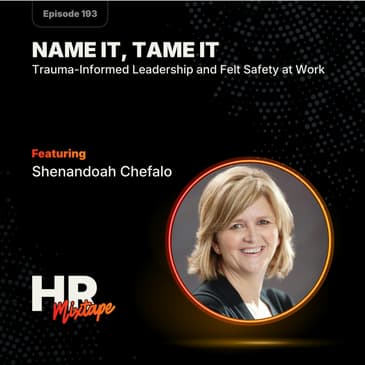
When performance problems show up at work, most organizations respond by adding something: a new policy, more training, another initiative. But those problems usually aren't what they look like. What gets logged as a performance issue is often a nervous system response to culture, and no policy fixes a nervous system.
Shenandoah Chefalo, Trauma Informed Systems Change Consultant at Chefalo Consulting and author of Garbage Bag Suitcase, has spent 20+ years helping organizations apply what we know about trauma to how they lead, drawing on both rigorous research in adverse childhood experiences and her own experience aging out of foster care at 18.
In this episode, she covers:
- Why what looks like a performance problem is usually a nervous system problem caused by culture, and why that changes the intervention entirely
- How the community meeting practice from Dr. Sandra Bloom creates felt safety through ritualized behavior, so hard conversations stop feeling like surprises
- Why the first move in any culture change effort should be asking what you can stop doing before adding anything new
Timestamps
[00:01:40] Shenandoah's personal story: 50 moves, 35 schools, and self-reporting into foster care at 13 with the hope of an Annie ending
[00:04:00] Aging out at 18 mid-senior year, hiding her foster care background, and taking eight years to finish her undergrad degree
[00:05:22] How 20+ years of organizational culture change work grew out of lived experience and timing with the adverse childhood experience research
[00:07:37] A corrections officer's observation that reframed everything: "It's hard to know who the bars are holding in"
[00:08:05] Every organization says it wants emotionally intelligent employees, but almost no organization wants to talk about feelings at work
[00:10:20] What looks like a performance problem is usually a nervous system problem caused by the culture, not the individual
[00:11:31] Why modeling repair work is the most powerful thing a leader can do to maintain trust and keep small things from becoming big ones
[00:13:19] The transparency framework for building felt safety: share what you know, what you don't, what's decided today, and what needs to come back
[00:15:11] The critical difference between feeling unsafe ("if I say this I might get fired") and feeling uncomfortable ("I have something hard to say")
[00:19:01] The community meeting practice from Dr. Sandra Bloom: three questions that normalize emotional check-ins so hard conversations stop being exceptional
Brought to You by Paylocity
Paylocity is the fastest growing unified platform for HR, Finance, and IT. Paylocity brings your people, processes, and data together in one place so HR leaders can spend less time managing systems and more time doing the work that actually moves their organizations forward. Learn more at paylocity.com
Keywords: trauma-informed leadership, felt safety, psychological safety, repair work, culture change, nervous system regulation, community meeting practice, adverse childhood experiences, burnout prevention, employee retention, middle manager development, mental health at work, transparency in leadership, workplace wellbeing, accountability, HR leadership, Shenandoah Chefalo, Chefalo Consulting, Garbage Bag
Powered by the WRKdefined Podcast Network.
Sponsors
