
Thanks to HRBench for powering this episode. To find out more about the company building the future of people intelligence, reach out to book a demo at hrbench.com/directionallycorrect
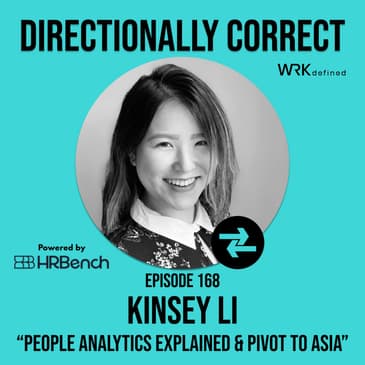
Check out this episode of the #1 people analytics podcast special guest, Kinsey Li, Author of "People Analytics Explained" and Advisor at PwC!
In this wide-ranging and deeply thoughtful conversation, host Cole Napper sits down with Kinsey to explore what it truly takes to succeed in people analytics beyond the technical skills that often dominate the narrative.
Kinsey shares the inspiration behind her book, which emerged from her own early frustrations breaking into the field. Despite completing courses and gaining certifications, she found a major gap between technical training and the real-world capabilities required to be effective. Her core insight reframes the discipline: people analytics is not primarily about data, but about relationships. In her experience, success in the field is closer to 80% stakeholder management and 20% technical execution, a perspective that challenges how many professionals approach their development.
The conversation dives into the consulting mindset that has shaped Kinsey’s career, highlighting two essential skills: scoping and listening. She explains that scoping is fundamentally about defining boundaries—understanding what problem you are solving, what success looks like, and just as importantly, what you will not address. In a field where organizational challenges are deeply interconnected, the ability to prioritize and maintain focus is critical. This requires not only analytical thinking but also confidence and judgment to push back when necessary.
Kinsey also offers a fascinating look at how cultural context shapes people analytics work. Drawing on her experience across Australia, the UK, and now Jakarta, she contrasts Western and Eastern workplace dynamics. In more hierarchical environments, decisions can be executed بسرعة and scaled quickly, but often with less consultation. At the same time, she notes that some of the most advanced people analytics practices exist in small, less visible pockets across Asia, where innovation happens quietly without widespread sharing.
The discussion expands into themes of career growth and learning, reinforcing the idea that breadth of experience often outweighs early specialization. Kinsey connects this to probabilistic thinking, emphasizing that careers are less like chess and more like poker, where exposure to diverse experiences increases the likelihood of long-term success. This aligns with Cole’s own reflections on building expertise through multidisciplinary exposure rather than narrow focus.
They also explore evolving attitudes toward AI and data privacy, particularly among younger generations. Kinsey observes that digital natives are more willing to delegate thinking to AI and are often more comfortable sharing personal data, a shift that has significant implications for the future of people analytics. At the same time, both highlight the importance of maintaining ethical guardrails as capabilities expand.
Throughout the episode, Kinsey brings a candid and personal perspective, discussing how her evolving mindset, including embracing a “default trust” approach and navigating neurodiversity, has shaped how she works and interacts with others. Her journey underscores that effectiveness in people analytics is as much about self-awareness and adaptability as it is about technical skill.
This episode is a compelling reminder that the future of people analytics will be defined not just by better data, but by better thinking, stronger relationships, and a deeper understanding of how work actually gets done across different contexts and cultures. If you like this episode, you’d also love exploring prior episodes—visit colenapper.com for the full archive and show links.
Powered by the WRKdefined Podcast Network.
Sponsors
