
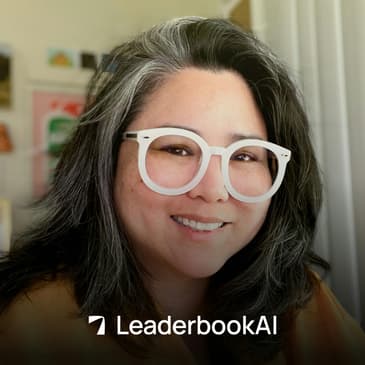
How does perimenopause impact career trajectories—and leadership confidence?
Marie Kare, Head of Creative at Reddit, shares a deeply personal story rarely discussed at work. This episode reframes leadership, decision making, and inclusion—underscoring why modern organizations must pair empathy with scalable systems, supported by business process automation and thoughtful digital transformation.
—
Subscribe to the LeaderbookAI Podcast (formerly CPO PLAYBOOK): https://leaderbook.ai/podcast
Want to create 10x the value of your business or investments? Let’s talk: https://leaderbook.ai/contact
Powered by the WRKdefined Podcast Network.
[00:00:00] [SPEAKER_01]: I'm Felicia Shakiba and this is CPO PLAYBOOK, where we solve a business challenge in every episode.
[00:00:14] [SPEAKER_01]: According to a Mayo Clinic study cited by the New York Times, menopause costs American
[00:00:20] [SPEAKER_01]: women an estimated $1.8 billion in lost working time each year.
[00:00:27] [SPEAKER_01]: Despite affecting around 1 billion women worldwide, many in the workplace may not even realize
[00:00:33] [SPEAKER_01]: they're experiencing perimenopause or menopause.
[00:00:36] [SPEAKER_01]: This could be your wife, sister, colleague, or even you.
[00:00:41] [SPEAKER_01]: Without awareness, women can't ask for the support they need.
[00:00:45] [SPEAKER_01]: The U.S. Census data reveals that over 15 million women aged 45 to 60 are in
[00:00:52] [SPEAKER_01]: the workforce, and many may be unaware of the changes their bodies are going through.
[00:00:57] [SPEAKER_01]: Medical expenses for perimenopause and menopause are soaring to a staggering $26 billion
[00:01:02] [SPEAKER_01]: annually, nearly rivaling the combined costs of hypertension, diabetes, smoking, obesity,
[00:01:10] [SPEAKER_01]: and unhealthy habits, which total just $10 billion more.
[00:01:14] [SPEAKER_01]: Today I'm joined by Marie Kerr, Head of Creative Global Business Brand at Reddit,
[00:01:21] [SPEAKER_01]: who will share her own personal story with us.
[00:01:26] [SPEAKER_01]: Marie, thank you so much for being here.
[00:01:28] [SPEAKER_00]: Thank you so much for having me.
[00:01:29] [SPEAKER_00]: I'm really excited to talk about this.
[00:01:31] [SPEAKER_01]: Marie, can you start by explaining what perimenopause is and the typical timeline
[00:01:38] [SPEAKER_01]: and symptoms that women might experience?
[00:01:41] [SPEAKER_00]: Absolutely.
[00:01:42] [SPEAKER_01]: I love your podcast voice.
[00:01:43] [SPEAKER_00]: It's terrific.
[00:01:44] [SPEAKER_00]: Let me say...
[00:01:46] [SPEAKER_00]: So let me start by saying I am not a doctor.
[00:01:49] [SPEAKER_00]: I am not a trained medical physician in any way, but I am a human being experiencing
[00:01:55] [SPEAKER_00]: perimenopause and I have a tendency to go all in on things I'm up to.
[00:02:00] [SPEAKER_00]: So I've done a lot of research.
[00:02:02] [SPEAKER_00]: So the word perimenopause literally means around menopause.
[00:02:07] [SPEAKER_00]: And menopause is specifically the one day that is 12 months from your last period.
[00:02:15] [SPEAKER_00]: So that could be anywhere.
[00:02:19] [SPEAKER_00]: I believe the National Institute of Aging said that it's somewhere between eight to
[00:02:24] [SPEAKER_00]: 10 years long.
[00:02:26] [SPEAKER_00]: It can be up to 14 years long.
[00:02:29] [SPEAKER_00]: Yes, it typically happens in your early 40s to 50s, but we are seeing people getting
[00:02:37] [SPEAKER_00]: it younger and younger.
[00:02:38] [SPEAKER_00]: There is precocious perimenopause or people getting into this phase of their life in
[00:02:43] [SPEAKER_00]: their early 30s.
[00:02:45] [SPEAKER_00]: So it is a very interesting experience.
[00:02:49] [SPEAKER_00]: Would you like me to give an overall description of what's happening to the body?
[00:02:53] [SPEAKER_01]: Yes, please.
[00:02:55] [SPEAKER_00]: Okay.
[00:02:55] [SPEAKER_00]: So what's happening typically in perimenopause is that your ovaries are producing a little
[00:03:01] [SPEAKER_00]: less estrogen and we need estrogen for everything.
[00:03:05] [SPEAKER_00]: Men have estrogen in their bodies.
[00:03:06] [SPEAKER_00]: And so that diminishing estrogen is causing a lot of hormonal upheaval.
[00:03:12] [SPEAKER_00]: There's a misbalance between estrogen and progesterone, and your hormones fluctuate
[00:03:18] [SPEAKER_00]: throughout the day causing a variety of symptoms.
[00:03:22] [SPEAKER_00]: And those symptoms are vasomotor, which most people associate like hot flashes, night
[00:03:29] [SPEAKER_00]: sweats.
[00:03:30] [SPEAKER_00]: There can be urogenital ones.
[00:03:32] [SPEAKER_00]: These are ones that people typically are a little shy to talk about like vaginal
[00:03:36] [SPEAKER_00]: dryness, urinary incontinence, just fibroids in the uterus.
[00:03:41] [SPEAKER_00]: These are uncomfortable things, but they're real things that happen to people.
[00:03:45] [SPEAKER_00]: Sleep disturbances, I mentioned night sweats already, but you can also have insomnia.
[00:03:52] [SPEAKER_00]: There's a thing called cortisol awakening response that gets you up pretty early
[00:03:56] [SPEAKER_00]: with a flush of cortisol, which is the stress hormone.
[00:04:00] [SPEAKER_00]: And there are psychological ones.
[00:04:03] [SPEAKER_00]: Mood disturbances, anxiety and depression are frequent and early symptoms of perimenopause.
[00:04:09] [SPEAKER_00]: Brain fog can be something.
[00:04:12] [SPEAKER_00]: One thing I've read about on forums, sorry, there's so many things.
[00:04:17] [SPEAKER_00]: Perimenopausal rage.
[00:04:19] [SPEAKER_00]: Wow.
[00:04:20] [SPEAKER_00]: What a fun, sexy time for us.
[00:04:22] [SPEAKER_00]: And then there are like the general physical symptoms.
[00:04:25] [SPEAKER_00]: So skin changes, like your complexion can change.
[00:04:29] [SPEAKER_00]: There can be hair loss.
[00:04:30] [SPEAKER_00]: Again, estrogen is so helpful for all of these things with your soft tissues,
[00:04:34] [SPEAKER_00]: mucous membranes.
[00:04:35] [SPEAKER_00]: Hair loss is a rough one.
[00:04:37] [SPEAKER_00]: Osteoporosis, bone loss, palpitations, fatigue.
[00:04:41] [SPEAKER_00]: And there are a lot of symptoms.
[00:04:43] [SPEAKER_00]: I can't recall offhand, but I think it's 37 different symptoms associated with perimenopause.
[00:04:48] [SPEAKER_00]: And it's because your hormones are changing and that upheaval is disrupting your status quo
[00:04:54] [SPEAKER_00]: and it's challenging for your body to adapt.
[00:04:56] [SPEAKER_01]: Wow.
[00:04:58] [SPEAKER_01]: So it sounds like there's just a lot going on with women in this,
[00:05:04] [SPEAKER_01]: or some women in this age bracket.
[00:05:07] [SPEAKER_01]: And that could essentially affect a lot of things, both your personal life and your work life.
[00:05:14] [SPEAKER_00]: Yes, I don't want to be a scaremonger.
[00:05:15] [SPEAKER_00]: I've listed a lot of potential symptoms of perimenopause.
[00:05:20] [SPEAKER_00]: About 80% of women, I understand, will experience some of these symptoms,
[00:05:24] [SPEAKER_00]: particularly vasomotor and mood disorders.
[00:05:27] [SPEAKER_00]: But yes, there is a lot going on.
[00:05:29] [SPEAKER_00]: I would like to say not everyone experiences these things.
[00:05:33] [SPEAKER_00]: I was reading very recently in, I believe, r slash menopause,
[00:05:36] [SPEAKER_00]: which is a subreddit that there are some people who have had no idea.
[00:05:39] [SPEAKER_00]: They had an IUD, they had it up, and they were already post-menopausal.
[00:05:44] [SPEAKER_00]: Amazing. No symptoms.
[00:05:46] [SPEAKER_00]: And then it's a gamut. Everyone is different.
[00:05:48] [SPEAKER_00]: Your mileage may vary.
[00:05:50] [SPEAKER_01]: Interesting. Okay.
[00:05:52] [SPEAKER_01]: So how did you first become aware that you were going through perimenopause?
[00:05:57] [SPEAKER_01]: And what were some of those initial challenges that you might have faced?
[00:06:01] [SPEAKER_00]: It's very interesting because I don't think I reflected on it until you've asked this question.
[00:06:07] [SPEAKER_00]: I would say there was a point at which I started feeling that there was something wrong.
[00:06:13] [SPEAKER_00]: And I said to a colleague, and this was before I was at my current workplace,
[00:06:17] [SPEAKER_00]: I said to a colleague, I think I'm having a nervous breakdown.
[00:06:20] [SPEAKER_00]: I just felt so wrong. Something was wrong.
[00:06:24] [SPEAKER_00]: I felt anxiety for the first time, and I had never experienced this before.
[00:06:30] [SPEAKER_00]: And my sleep was weird, and I couldn't figure out what was going on.
[00:06:35] [SPEAKER_00]: And the symptoms just cascaded from there.
[00:06:38] [SPEAKER_00]: I started getting sleep disturbances.
[00:06:40] [SPEAKER_00]: I started getting night sweats.
[00:06:43] [SPEAKER_00]: I started getting hot flashes.
[00:06:46] [SPEAKER_00]: And it was all very surprising.
[00:06:48] [SPEAKER_00]: And of course, if you add things up when you list it out loud like I just did,
[00:06:53] [SPEAKER_00]: that sounds like perimenopause.
[00:06:55] [SPEAKER_00]: But no one had ever talked to me about perimenopause before.
[00:06:58] [SPEAKER_00]: No one had educated me about it.
[00:07:00] [SPEAKER_00]: So I didn't really know what was going on.
[00:07:03] [SPEAKER_00]: And I remember just Googling for a while, what are these symptoms I'm having?
[00:07:08] [SPEAKER_00]: And someone suggested perimenopause in one of the forums I read.
[00:07:12] [SPEAKER_00]: And I went to a doctor, and unfortunately, as is the case sometimes,
[00:07:18] [SPEAKER_00]: she was rather dismissive.
[00:07:19] [SPEAKER_00]: She said, you're too young.
[00:07:21] [SPEAKER_00]: You probably just need to lose some weight.
[00:07:23] [SPEAKER_00]: Even though by the age I was then, my mother had already completed menopause.
[00:07:29] [SPEAKER_00]: She was post-menopausal.
[00:07:31] [SPEAKER_00]: So even with the background, even with the symptoms, she just dismissed it.
[00:07:35] [SPEAKER_00]: And so I, for a while, just thought, oh, I've developed anxiety and depression.
[00:07:40] [SPEAKER_00]: And I went to psychiatric care for that and started taking medications.
[00:07:46] [SPEAKER_00]: So it took a while for me to actually come to this conclusion.
[00:07:50] [SPEAKER_00]: And luckily, I found like a physician who was like, oh, have you considered
[00:07:54] [SPEAKER_00]: that as perimenopause?
[00:07:55] [SPEAKER_00]: And the treatments since then have been tremendous.
[00:07:59] [SPEAKER_01]: Wow.
[00:08:00] [SPEAKER_01]: I'm very happy that you found a doctor that was able to pinpoint what the
[00:08:05] [SPEAKER_01]: challenges were coming from.
[00:08:07] [SPEAKER_01]: And thank goodness for that doctor.
[00:08:09] [SPEAKER_00]: Absolutely.
[00:08:10] [SPEAKER_01]: And so I want to go into a couple other things, which is one being once you
[00:08:15] [SPEAKER_01]: realized what this was, how did you approach having open conversations about
[00:08:22] [SPEAKER_01]: your perimenopause experience with your colleagues?
[00:08:26] [SPEAKER_01]: What were their reactions?
[00:08:29] [SPEAKER_00]: It's so interesting.
[00:08:30] [SPEAKER_00]: Not everyone has this luxury, but I very much enjoy being myself at all
[00:08:35] [SPEAKER_00]: times.
[00:08:35] [SPEAKER_00]: I find it very challenging to pretend or obfuscate.
[00:08:41] [SPEAKER_00]: Subterfuge is really another matter to me.
[00:08:44] [SPEAKER_00]: So I didn't have an approach.
[00:08:47] [SPEAKER_00]: I simply continued to be myself and myself, especially at my current
[00:08:53] [SPEAKER_00]: workplace, is welcomed.
[00:08:55] [SPEAKER_00]: I don't know how familiar you are with Reddit's mission, which is to
[00:08:58] [SPEAKER_00]: bring community belonging and empowerment to everyone in the world.
[00:09:02] [SPEAKER_00]: But it was a workplace that very much welcomes one's authentic self.
[00:09:07] [SPEAKER_00]: So I was very active in our ERGs, like Ability, Reddit Asian Network,
[00:09:12] [SPEAKER_00]: Women of Reddit.
[00:09:13] [SPEAKER_00]: And so what I did was continue to be myself, but now in perimenopause,
[00:09:17] [SPEAKER_00]: which is posting to our Slack channels, Women of Reddit, period yelling,
[00:09:23] [SPEAKER_00]: which is one of my favorite Slack channels where you just post.
[00:09:26] [SPEAKER_01]: I love that.
[00:09:26] [SPEAKER_01]: I think every organization should have that Slack channel.
[00:09:30] [SPEAKER_01]: Perimenopause or not.
[00:09:32] [SPEAKER_00]: Yes, period yelling is amazing.
[00:09:35] [SPEAKER_00]: And I just started posting there in Slack about what's going on with me.
[00:09:41] [SPEAKER_00]: And I got support.
[00:09:43] [SPEAKER_00]: People who are experiencing the same things, people from different sides
[00:09:46] [SPEAKER_00]: of the organization that I would never meet in my day to day were coming
[00:09:50] [SPEAKER_00]: like, me too, sister, this is happening.
[00:09:53] [SPEAKER_00]: And it was so great to just know that other people were experiencing
[00:09:57] [SPEAKER_00]: it, hearing from them.
[00:09:59] [SPEAKER_00]: And also surprisingly, it was really validating to hear from people who
[00:10:04] [SPEAKER_00]: were not experiencing it, but were curious about it because it might
[00:10:08] [SPEAKER_00]: happen to them or someone they love.
[00:10:11] [SPEAKER_00]: And that was so helpful because I think there is this massive stigma
[00:10:15] [SPEAKER_00]: around being in this age range, even though it can happen quite young,
[00:10:19] [SPEAKER_00]: that to experience perimenopause or menopause.
[00:10:22] [SPEAKER_00]: And it really helped diminish that perceived stigma because I was hearing
[00:10:27] [SPEAKER_00]: so many positive things from other people.
[00:10:30] [SPEAKER_00]: Maybe not positive, let's get real.
[00:10:32] [SPEAKER_00]: Some of it was terrible.
[00:10:33] [SPEAKER_00]: But people were responding in a positive way to knowing each other,
[00:10:36] [SPEAKER_00]: knowing our own experiences.
[00:10:38] [SPEAKER_01]: I think it's fair to say that most people know at least one person
[00:10:42] [SPEAKER_01]: going through this, whether it be their mother, their wife,
[00:10:46] [SPEAKER_01]: their sister, their best friend.
[00:10:49] [SPEAKER_01]: So I feel like it's really that type of communication is not just for people
[00:10:55] [SPEAKER_01]: with perimenopause.
[00:10:56] [SPEAKER_01]: It's maybe people who are like, how do I handle this with my colleague
[00:11:01] [SPEAKER_01]: or my best friend in the organization?
[00:11:03] [SPEAKER_01]: And so what did that do for you when you got that feedback and that
[00:11:08] [SPEAKER_01]: community and that feeling of belonging, it sounds like?
[00:11:11] [SPEAKER_01]: What did that do for you?
[00:11:13] [SPEAKER_00]: I think I am not alone.
[00:11:14] [SPEAKER_00]: This will sound ironic.
[00:11:15] [SPEAKER_00]: I am not alone in feeling that perimenopause is an isolating experience.
[00:11:21] [SPEAKER_00]: It feels like something has come over your body.
[00:11:23] [SPEAKER_00]: It's so physical you don't understand what's happening.
[00:11:26] [SPEAKER_00]: And sometimes I feel like a stranger to myself.
[00:11:28] [SPEAKER_00]: What is happening?
[00:11:29] [SPEAKER_00]: My body is betraying me.
[00:11:30] [SPEAKER_00]: And so when you're feeling this isolated, having that response,
[00:11:35] [SPEAKER_00]: having those people share with you breaks down that isolation,
[00:11:39] [SPEAKER_00]: helps you feel connected.
[00:11:41] [SPEAKER_00]: And we're a remote company primarily.
[00:11:43] [SPEAKER_00]: There are offices.
[00:11:44] [SPEAKER_00]: But I'm connecting with people internationally, different apartments,
[00:11:49] [SPEAKER_00]: different locations.
[00:11:50] [SPEAKER_00]: And they're there when I'm there online sharing our experiences.
[00:11:55] [SPEAKER_00]: And I can't say enough about how much it helps just to know someone
[00:12:00] [SPEAKER_00]: else is going through this with you.
[00:12:03] [SPEAKER_01]: It really does heighten that sense of belonging, what it sounds like.
[00:12:09] [SPEAKER_01]: And sense of belonging is really important, not just in your personal life,
[00:12:15] [SPEAKER_01]: but at work.
[00:12:16] [SPEAKER_01]: If you don't feel like you belong at work,
[00:12:19] [SPEAKER_01]: there's a pretty good chance you're going to leave that organization
[00:12:22] [SPEAKER_01]: fairly soon.
[00:12:23] [SPEAKER_01]: And I can only imagine how much that community or that feeling of
[00:12:27] [SPEAKER_01]: community has really allowed you to thrive in your own space at work.
[00:12:34] [SPEAKER_00]: I think that we've discussed this on our previous call,
[00:12:36] [SPEAKER_00]: but the impact economically to women is huge during paramenopause.
[00:12:41] [SPEAKER_00]: And I can imagine that some of it is this isolated feeling as though you
[00:12:45] [SPEAKER_00]: can't share with other people what you're going through and not being
[00:12:48] [SPEAKER_00]: accepted for what you're going through.
[00:12:50] [SPEAKER_00]: 23% of people in paramenopause will leave the workforce.
[00:12:55] [SPEAKER_00]: I don't have the number in front of me,
[00:12:57] [SPEAKER_00]: but it's quite a lot of women.
[00:12:59] [SPEAKER_00]: And I know that right now there's an estimated 47 million women in the
[00:13:04] [SPEAKER_00]: US alone who are menopausal or post-menopausal.
[00:13:08] [SPEAKER_00]: And forgive me for reading out a sat.
[00:13:10] [SPEAKER_00]: They're estimated by 2030,
[00:13:12] [SPEAKER_00]: the world population of menopausal and post-menopausal women will be
[00:13:16] [SPEAKER_00]: 1.2 billion and 47 million people who have had uteruses at some point
[00:13:21] [SPEAKER_00]: will become part of that group every year.
[00:13:26] [SPEAKER_00]: It's a huge amount of people who are not connecting,
[00:13:29] [SPEAKER_00]: not feeling like you can be themselves at work,
[00:13:32] [SPEAKER_00]: feeling that they have to leave the workplace because of their symptoms.
[00:13:36] [SPEAKER_00]: And that's a tragedy.
[00:13:38] [SPEAKER_01]: It's an astounding number.
[00:13:40] [SPEAKER_01]: And so being at Reddit,
[00:13:42] [SPEAKER_01]: I'd love to learn more about what type of support have you received
[00:13:47] [SPEAKER_01]: to help manage your wellbeing and is the support that they're
[00:13:52] [SPEAKER_01]: providing working for you?
[00:13:54] [SPEAKER_01]: I know you've mentioned the Slack channel and that sounds like I said,
[00:13:57] [SPEAKER_01]: every organization should have a period yelling channel at one point.
[00:14:03] [SPEAKER_01]: What's working for your wellbeing?
[00:14:06] [SPEAKER_00]: I think a huge part is my boss.
[00:14:09] [SPEAKER_00]: So I have a boss who is in my age range and when the symptoms got really
[00:14:13] [SPEAKER_00]: bad for me, I got very self-critical.
[00:14:16] [SPEAKER_00]: I'm used to performing at a certain level and I'm tired and I'm moody
[00:14:20] [SPEAKER_00]: and I'm hot all of a sudden and just didn't feel like I was doing well.
[00:14:25] [SPEAKER_00]: So I went to her and I'm like, I don't think I'm doing well.
[00:14:28] [SPEAKER_00]: I think I'm failing.
[00:14:30] [SPEAKER_00]: And what was helpful about that was getting outside your perspective.
[00:14:34] [SPEAKER_00]: She didn't think I was failing.
[00:14:35] [SPEAKER_00]: She thought I was doing a good job.
[00:14:37] [SPEAKER_00]: Hey, maybe my hormones and what's going on with me,
[00:14:40] [SPEAKER_00]: my lack of sleep are impacting my judgment or my self-assessment.
[00:14:45] [SPEAKER_00]: So that was really helpful.
[00:14:46] [SPEAKER_00]: It was also helpful to have a person who is an authority figure share
[00:14:50] [SPEAKER_00]: with me that she again had very similar experiences where she was going
[00:14:55] [SPEAKER_00]: through some hormone challenges.
[00:14:57] [SPEAKER_00]: Doctor was dismissive.
[00:14:59] [SPEAKER_00]: She insisted on treatment.
[00:15:01] [SPEAKER_00]: The treatment helped her tremendously and she said she would go on
[00:15:05] [SPEAKER_00]: record as an advocate for the treatment she received.
[00:15:08] [SPEAKER_00]: So I hope everyone can have a supportive boss.
[00:15:12] [SPEAKER_00]: Maybe they won't necessarily have a boss that can relate to their
[00:15:15] [SPEAKER_00]: specific experiences.
[00:15:16] [SPEAKER_00]: I was very lucky there, but that was helpful.
[00:15:18] [SPEAKER_00]: I did reach out to my HR BP and just see what kind of services are
[00:15:24] [SPEAKER_00]: available to me.
[00:15:26] [SPEAKER_00]: And we have carrot and Lyra.
[00:15:28] [SPEAKER_00]: And so I think a lot of companies have carrot,
[00:15:31] [SPEAKER_00]: but everyone I know associates it with strictly like fertility.
[00:15:37] [SPEAKER_00]: But the menopausal transition is part of fertility and they have
[00:15:41] [SPEAKER_00]: services for paramedic pause and menopause had no idea until I
[00:15:46] [SPEAKER_00]: spoke to HR.
[00:15:47] [SPEAKER_00]: And then I haven't used care.
[00:15:49] [SPEAKER_00]: I haven't used Lyra personally, but just being armed with this knowledge.
[00:15:53] [SPEAKER_00]: People have reached out to me because I'm so open about it and I've been
[00:15:57] [SPEAKER_00]: able to help them get hooked up with carrot, get hooked up with Lyra,
[00:16:02] [SPEAKER_00]: because it's so overwhelming.
[00:16:04] [SPEAKER_00]: You need support.
[00:16:05] [SPEAKER_00]: And thankfully we have services to support her.
[00:16:08] [SPEAKER_01]: What do you think men's roles are in these situations?
[00:16:13] [SPEAKER_01]: How can they best support the women that they work with,
[00:16:18] [SPEAKER_01]: with whom might be having the same experience?
[00:16:22] [SPEAKER_00]: Well, I certainly can't speak for men on behalf of them.
[00:16:26] [SPEAKER_00]: I want to say that I hope that men's roles are similar to everyone's
[00:16:30] [SPEAKER_00]: role in this, which is be a good human,
[00:16:34] [SPEAKER_00]: be a supportive colleague and be open to the experiences of others.
[00:16:39] [SPEAKER_00]: I think I did have some tips in general.
[00:16:43] [SPEAKER_00]: First, let me say that some of the most engaged people,
[00:16:47] [SPEAKER_00]: most supportive people when I've been open about paramedic
[00:16:51] [SPEAKER_00]: pause have been men, male colleagues.
[00:16:53] [SPEAKER_00]: I briefly, oh, go ahead.
[00:16:55] [SPEAKER_00]: No, really?
[00:16:56] [SPEAKER_00]: I'm just my, I'm just posting.
[00:16:59] [SPEAKER_00]: Yes.
[00:16:59] [SPEAKER_00]: There was a brief period where I considered having my own podcast
[00:17:04] [SPEAKER_00]: about paramedic pause in the workplace,
[00:17:06] [SPEAKER_00]: but unfortunately it was rather taxing the stories that women shared
[00:17:10] [SPEAKER_00]: were not all as positive as mine.
[00:17:13] [SPEAKER_00]: And it was very disheartening to hear some of the struggles that
[00:17:17] [SPEAKER_00]: people had gone through, but I was posting about those openly on LinkedIn,
[00:17:21] [SPEAKER_00]: which I was told later felt like a really dicey thing to do.
[00:17:26] [SPEAKER_00]: But the most active engagement came from men.
[00:17:30] [SPEAKER_00]: I remember David from Supermoon reached out and he was like,
[00:17:33] [SPEAKER_00]: I am so grateful you're going to do this.
[00:17:35] [SPEAKER_00]: My wife is experiencing this and she works and no one is talking about it at all.
[00:17:41] [SPEAKER_00]: And I can consistently received really positive feedback from men.
[00:17:47] [SPEAKER_00]: And interestingly, a colleague told me she felt that women weren't
[00:17:51] [SPEAKER_00]: engaging with this content because they would be outing themselves
[00:17:55] [SPEAKER_00]: because of the stigma.
[00:17:56] [SPEAKER_00]: They might be letting people know how old they are,
[00:17:59] [SPEAKER_00]: letting them know that they might be experiencing something with their mood
[00:18:02] [SPEAKER_00]: or physical health where men didn't necessarily run that risk.
[00:18:05] [SPEAKER_00]: But then could express their support on behalf of others.
[00:18:09] [SPEAKER_00]: So yes, men are surprisingly supportive that I found.
[00:18:13] [SPEAKER_01]: That's fantastic.
[00:18:13] [SPEAKER_01]: And I think that men do have a very important role in this type of situation.
[00:18:19] [SPEAKER_01]: Like I said before, like those who have wives and colleagues and sisters,
[00:18:23] [SPEAKER_01]: men are also surrounding this type of experience
[00:18:29] [SPEAKER_01]: and can be the ones to have that empathy and remind you to be good to yourself.
[00:18:35] [SPEAKER_01]: Even when you're not always going to be at the top of your performance 24-7.
[00:18:42] [SPEAKER_01]: We're human and we have things happening to us and to our body
[00:18:46] [SPEAKER_01]: and especially at this age.
[00:18:48] [SPEAKER_01]: How have you coped with the emotional and psychological impacts
[00:18:53] [SPEAKER_01]: of paramanopause at work?
[00:18:55] [SPEAKER_00]: Oh, it's been very challenging, frankly.
[00:18:58] [SPEAKER_00]: I would say I struggled and I struggled a little less
[00:19:03] [SPEAKER_00]: and I continue to struggle a little less every day.
[00:19:06] [SPEAKER_00]: So I think at first there's the denial because there is that stigma about age
[00:19:12] [SPEAKER_00]: and then you're just like, this isn't happening to me.
[00:19:14] [SPEAKER_00]: I'm young.
[00:19:16] [SPEAKER_00]: I still want to believe that's not me.
[00:19:19] [SPEAKER_00]: It's just been hard.
[00:19:20] [SPEAKER_00]: I have therapy.
[00:19:21] [SPEAKER_00]: I have support.
[00:19:23] [SPEAKER_00]: I have friends.
[00:19:24] [SPEAKER_00]: I have family.
[00:19:24] [SPEAKER_00]: I have support at work.
[00:19:26] [SPEAKER_00]: My physicians, now that I've gotten all my ducks in a row,
[00:19:29] [SPEAKER_00]: are incredibly supportive and responsive.
[00:19:31] [SPEAKER_00]: I have been open to discussing therapies that I've been interested in
[00:19:35] [SPEAKER_00]: and for me, hormone therapy has been a game changer,
[00:19:39] [SPEAKER_00]: especially for the mood disorder stuff.
[00:19:42] [SPEAKER_00]: It's an incredible difference for me.
[00:19:44] [SPEAKER_00]: If I may be incredibly frank and possibly TMI about it,
[00:19:48] [SPEAKER_00]: one of the possible symptoms I mentioned was fibroids
[00:19:52] [SPEAKER_00]: and I had surgery earlier this year and that surgery helped tremendously
[00:19:58] [SPEAKER_00]: because the things in your uterus unfortunately can impact your hormones
[00:20:03] [SPEAKER_00]: and the hormone fluctuations you experience daily impact your mood
[00:20:08] [SPEAKER_00]: and so you're going through this roller coaster every day
[00:20:10] [SPEAKER_00]: and I think just the anxiety of what the roller coaster is is so challenging.
[00:20:15] [SPEAKER_00]: That surgery, terrified of it?
[00:20:17] [SPEAKER_00]: Primo.
[00:20:18] [SPEAKER_00]: Excellent.
[00:20:19] [SPEAKER_00]: Literally would do it again.
[00:20:20] [SPEAKER_00]: My first surgery ever was terrified.
[00:20:23] [SPEAKER_00]: It was such an incredible help.
[00:20:25] [SPEAKER_00]: Again, I'm not a doctor.
[00:20:26] [SPEAKER_01]: No, but I think that there's going to be women that are,
[00:20:30] [SPEAKER_01]: like I said, are experiencing the same thing
[00:20:32] [SPEAKER_01]: and to know that they have that option.
[00:20:34] [SPEAKER_01]: Ask questions and be curious.
[00:20:36] [SPEAKER_01]: I think it's really important to mention.
[00:20:39] [SPEAKER_01]: In your opinion, what's the biggest misconception
[00:20:41] [SPEAKER_01]: or lack of awareness around paramanopause
[00:20:44] [SPEAKER_01]: that really needs to be addressed?
[00:20:47] [SPEAKER_00]: Lack of awareness is the biggest lack of awareness.
[00:20:51] [SPEAKER_00]: People simply don't know that this is a thing.
[00:20:55] [SPEAKER_00]: Women within my age range with whom I work are like,
[00:20:59] [SPEAKER_00]: what's paramanopause?
[00:21:00] [SPEAKER_00]: Never heard of it.
[00:21:02] [SPEAKER_00]: Personally, until it happened to me,
[00:21:04] [SPEAKER_00]: my perception of menopause was one day my period will stop
[00:21:09] [SPEAKER_00]: and I'll have hot flashes maybe.
[00:21:11] [SPEAKER_00]: And that was not a very robust picture
[00:21:15] [SPEAKER_00]: of what actually goes on.
[00:21:18] [SPEAKER_00]: Only when it happened to me did I understand
[00:21:20] [SPEAKER_00]: the full picture of what could go on.
[00:21:22] [SPEAKER_00]: So just awareness in general seems to be lacking.
[00:21:26] [SPEAKER_00]: But I will say, not to be very negative,
[00:21:29] [SPEAKER_00]: there is a huge increase lately.
[00:21:32] [SPEAKER_00]: I don't know if you've seen it.
[00:21:33] [SPEAKER_00]: People openly talking about the menopausal transition.
[00:21:36] [SPEAKER_00]: A fem tech got wicked money over the last several years
[00:21:41] [SPEAKER_00]: in startups.
[00:21:43] [SPEAKER_00]: There are a lot of incredible startups with telehealth,
[00:21:46] [SPEAKER_00]: even IRL clinics that specialize
[00:21:49] [SPEAKER_00]: in the menopausal transition.
[00:21:52] [SPEAKER_00]: I know the North American Menopause Society rebranded
[00:21:55] [SPEAKER_00]: to be menopause.org.
[00:21:56] [SPEAKER_00]: There are just so many things.
[00:21:58] [SPEAKER_00]: An old research study that suggested
[00:22:01] [SPEAKER_00]: that hormone therapy was highly associated
[00:22:03] [SPEAKER_00]: with breast cancer was shown recently to be overblown.
[00:22:08] [SPEAKER_00]: And that unfortunately a lot of women were denied
[00:22:11] [SPEAKER_00]: hormone therapy based on not the best positioning
[00:22:16] [SPEAKER_00]: of research because the incidence of breast cancer
[00:22:20] [SPEAKER_00]: as a result of hormone therapy was largely overblown.
[00:22:22] [SPEAKER_00]: There are a lot of good things happening.
[00:22:24] [SPEAKER_00]: People are talking about it.
[00:22:26] [SPEAKER_00]: Celebrities are talking about it.
[00:22:28] [SPEAKER_00]: And people are making big investments.
[00:22:30] [SPEAKER_00]: It's a big audience that you can market to.
[00:22:34] [SPEAKER_00]: So people are like VCs are and funding startups.
[00:22:38] [SPEAKER_01]: I'm very happy to hear that the word is getting out there.
[00:22:42] [SPEAKER_01]: And to be quite honest, I didn't even know what that was
[00:22:47] [SPEAKER_01]: until you mentioned it to me.
[00:22:49] [SPEAKER_01]: No, I'm very thankful for you to share that.
[00:22:53] [SPEAKER_01]: And what do you think organizations should be doing
[00:22:58] [SPEAKER_01]: to better support women experiencing paramedicine
[00:23:01] [SPEAKER_01]: in the workplace?
[00:23:03] [SPEAKER_00]: Education.
[00:23:04] [SPEAKER_00]: Clearly there's a lack of awareness.
[00:23:06] [SPEAKER_00]: So if there can be educational programs,
[00:23:09] [SPEAKER_00]: purely opt-in, not mandatory,
[00:23:11] [SPEAKER_00]: where they could just give people the option
[00:23:13] [SPEAKER_00]: to learn about reproductive health in general.
[00:23:15] [SPEAKER_00]: Amazing.
[00:23:16] [SPEAKER_00]: Or maybe give them this episode.
[00:23:17] [SPEAKER_00]: Yes, absolutely.
[00:23:19] [SPEAKER_00]: It's just put it in one of the trainings
[00:23:20] [SPEAKER_00]: and they have to click through.
[00:23:22] [SPEAKER_00]: But absolutely just education.
[00:23:24] [SPEAKER_00]: Certainly we have all kinds of different options at work.
[00:23:27] [SPEAKER_00]: I know that we have an education session
[00:23:29] [SPEAKER_00]: about infertility treatments once,
[00:23:32] [SPEAKER_00]: but I haven't seen anything about paramedicine quite yet.
[00:23:34] [SPEAKER_00]: So I would love to see that.
[00:23:37] [SPEAKER_00]: It's weird just talking about it in our benefits training
[00:23:40] [SPEAKER_00]: or when you're talking about benefits
[00:23:42] [SPEAKER_00]: because I did know that we had carrot
[00:23:44] [SPEAKER_00]: and I did know that we had a stipend for fertility
[00:23:47] [SPEAKER_00]: and reproductive health.
[00:23:50] [SPEAKER_00]: But I didn't know that paramedicine was part of that.
[00:23:53] [SPEAKER_00]: It didn't even occur to me until I spoke to an HRBP about it.
[00:23:58] [SPEAKER_00]: So if they could be more open.
[00:24:01] [SPEAKER_00]: So absolutely education.
[00:24:03] [SPEAKER_00]: I know that we've had educational sessions in the past at Reddit
[00:24:06] [SPEAKER_00]: where we learned about different infertility treatments,
[00:24:09] [SPEAKER_00]: but wouldn't it be wonderful to have
[00:24:11] [SPEAKER_00]: like paramedicine sessions
[00:24:13] [SPEAKER_00]: where we can learn about paramedicine and what to expect?
[00:24:16] [SPEAKER_00]: We have carrot benefit.
[00:24:18] [SPEAKER_00]: We have a stipend in fact for reproductive health.
[00:24:20] [SPEAKER_00]: I wasn't aware and I've been here almost six years
[00:24:23] [SPEAKER_00]: that included the menopausal transition,
[00:24:27] [SPEAKER_00]: which is part of reproductive health.
[00:24:29] [SPEAKER_00]: So habituating the information,
[00:24:30] [SPEAKER_00]: making it available to people,
[00:24:32] [SPEAKER_00]: letting people know right off the bat when they're onboarded,
[00:24:36] [SPEAKER_00]: reminding them every time our benefits change
[00:24:39] [SPEAKER_00]: at the end of the year or renew.
[00:24:41] [SPEAKER_00]: That would be incredibly helpful
[00:24:43] [SPEAKER_00]: because honestly even if they had told me
[00:24:45] [SPEAKER_00]: that there was support for paramenopause,
[00:24:48] [SPEAKER_00]: I might not have thought about it
[00:24:50] [SPEAKER_00]: until it came time for me to need it,
[00:24:53] [SPEAKER_00]: at which point I wouldn't even know where to look.
[00:24:55] [SPEAKER_00]: So just keep putting that message out there
[00:24:58] [SPEAKER_00]: that support is available.
[00:25:00] [SPEAKER_00]: There are so many women in this workplace
[00:25:02] [SPEAKER_00]: and so many people who have had uteruses
[00:25:05] [SPEAKER_00]: that it's going to affect them at some point.
[00:25:10] [SPEAKER_01]: For those who are men or those who are maybe not at that age yet,
[00:25:14] [SPEAKER_01]: for them to just be aware how they can be supportive
[00:25:19] [SPEAKER_01]: to their colleagues who might be going through this
[00:25:21] [SPEAKER_01]: is also important.
[00:25:23] [SPEAKER_00]: Absolutely.
[00:25:24] [SPEAKER_00]: I think we just need to start that open discussion.
[00:25:28] [SPEAKER_00]: And I do think about this every time I post,
[00:25:31] [SPEAKER_00]: like someone will ask about it.
[00:25:33] [SPEAKER_00]: I posted I think last week,
[00:25:35] [SPEAKER_00]: this is so timely,
[00:25:37] [SPEAKER_00]: about in period yelling
[00:25:38] [SPEAKER_00]: and how that paramenopause was kicking me in stuff
[00:25:45] [SPEAKER_00]: and it was so hard.
[00:25:47] [SPEAKER_00]: And a younger colleague, they're like,
[00:25:49] [SPEAKER_00]: hey, tell me more.
[00:25:51] [SPEAKER_00]: And I in all caps told her more
[00:25:54] [SPEAKER_00]: for like several paragraphs
[00:25:56] [SPEAKER_00]: because it is period yelling and you must yell
[00:25:58] [SPEAKER_00]: but never put an exclamation mark.
[00:26:01] [SPEAKER_00]: It's all caps.
[00:26:02] [SPEAKER_00]: Anywho, then there's like responses to that.
[00:26:04] [SPEAKER_00]: Maybe someone is shy about asking
[00:26:06] [SPEAKER_00]: but someone is out there and asking
[00:26:08] [SPEAKER_00]: and then other people see the information.
[00:26:10] [SPEAKER_00]: The more they see it,
[00:26:10] [SPEAKER_00]: the more comfortable they get around it.
[00:26:13] [SPEAKER_00]: And yeah, we'll all be better off
[00:26:15] [SPEAKER_00]: if we could just talk more openly and be ourselves.
[00:26:18] [SPEAKER_01]: Is there any other advice that you would give
[00:26:21] [SPEAKER_01]: to women who may be going through paramenopause
[00:26:25] [SPEAKER_01]: but are unsure of what's happening
[00:26:28] [SPEAKER_01]: or hesitant to speak up?
[00:26:31] [SPEAKER_00]: I'll first say,
[00:26:32] [SPEAKER_00]: if you're hesitant to speak up,
[00:26:34] [SPEAKER_00]: that's okay.
[00:26:35] [SPEAKER_00]: You don't have to.
[00:26:37] [SPEAKER_00]: Whatever you're comfortable with is what's right for you.
[00:26:40] [SPEAKER_00]: You are going through an incredibly uncomfortable experience.
[00:26:44] [SPEAKER_00]: Make yourself comfortable.
[00:26:45] [SPEAKER_00]: Give yourself whatever comforts you can.
[00:26:47] [SPEAKER_00]: It's hard.
[00:26:49] [SPEAKER_00]: If you're not sure what's going on,
[00:26:51] [SPEAKER_00]: there are so many resources out there
[00:26:53] [SPEAKER_00]: that you might not know of.
[00:26:55] [SPEAKER_00]: Of course I'm gonna plug subreddits.
[00:26:57] [SPEAKER_00]: Like we have several subreddits that you could go to.
[00:27:00] [SPEAKER_00]: Here are just like three that were helpful to me.
[00:27:03] [SPEAKER_00]: r slash menopause, who to thunk it.
[00:27:06] [SPEAKER_00]: r slash 2x chromosomes.
[00:27:08] [SPEAKER_00]: That's a dicey one.
[00:27:09] [SPEAKER_00]: But r slash witches versus patriarchy
[00:27:11] [SPEAKER_00]: was surprisingly a very helpful one.
[00:27:14] [SPEAKER_00]: And then there are, you know,
[00:27:16] [SPEAKER_00]: there's a wealth of information.
[00:27:18] [SPEAKER_00]: Like the Mayo Clinic has some wonderful information.
[00:27:20] [SPEAKER_00]: The North American Menopause Society,
[00:27:23] [SPEAKER_00]: which is all called menopause.org,
[00:27:25] [SPEAKER_00]: they post on Instagram.
[00:27:27] [SPEAKER_00]: There are startups and apps
[00:27:29] [SPEAKER_00]: that FemTech Explosion is out there.
[00:27:31] [SPEAKER_00]: Evernow, Perry, Midi, Genev, Winona.
[00:27:36] [SPEAKER_00]: There are so many more than that.
[00:27:38] [SPEAKER_00]: So you can have telehealth.
[00:27:39] [SPEAKER_00]: You can meet with someone.
[00:27:41] [SPEAKER_00]: When you go to the NAMS website,
[00:27:43] [SPEAKER_00]: NorthAmericanMenopauseSociety.org,
[00:27:45] [SPEAKER_00]: you can find a certified NAMS practitioner.
[00:27:49] [SPEAKER_00]: Risa Kagan is a physician in San Francisco
[00:27:51] [SPEAKER_00]: and has been working in gynecology,
[00:27:54] [SPEAKER_00]: obstetrics for her whole career.
[00:27:55] [SPEAKER_00]: She told me that most physicians
[00:27:58] [SPEAKER_00]: that are practicing today
[00:28:00] [SPEAKER_00]: probably spent maybe a half an hour to an hour
[00:28:03] [SPEAKER_00]: learning anything at all about menopause
[00:28:06] [SPEAKER_00]: during their general training.
[00:28:08] [SPEAKER_00]: And her feeling was that practitioners now
[00:28:12] [SPEAKER_00]: are about 10 years behind the actual science.
[00:28:16] [SPEAKER_00]: That's incredible.
[00:28:17] [SPEAKER_00]: She is really on like the front lines of it.
[00:28:21] [SPEAKER_00]: So if your physician is dismissive,
[00:28:24] [SPEAKER_00]: you feel like you're not being heard,
[00:28:26] [SPEAKER_00]: you can push back.
[00:28:28] [SPEAKER_00]: You can find help you need.
[00:28:31] [SPEAKER_00]: And I'm not saying see every doctor.
[00:28:33] [SPEAKER_00]: I know that's not feasible for everyone,
[00:28:35] [SPEAKER_00]: depending on their health care plans, et cetera.
[00:28:37] [SPEAKER_00]: But there are things like telehealth available to you
[00:28:41] [SPEAKER_00]: where it might be possible to find a practitioner
[00:28:43] [SPEAKER_00]: or a healthcare professional who's more educated about,
[00:28:47] [SPEAKER_00]: specifically, perimenopause.
[00:28:49] [SPEAKER_01]: Is there anything else that you want to share
[00:28:53] [SPEAKER_01]: before we close this combo?
[00:28:55] [SPEAKER_00]: Just thank you so much for having me
[00:28:57] [SPEAKER_00]: because I'm so passionate about this topic.
[00:29:00] [SPEAKER_00]: I really want people to start feeling comfortable
[00:29:04] [SPEAKER_00]: with going through perimenopause.
[00:29:06] [SPEAKER_00]: Okay, absolutely.
[00:29:07] [SPEAKER_00]: You may not feel comfortable physically, emotionally.
[00:29:10] [SPEAKER_00]: It's rough, but like talking about it, cool.
[00:29:13] [SPEAKER_00]: Let's do it.
[00:29:14] [SPEAKER_00]: Let's talk about it
[00:29:15] [SPEAKER_00]: because feeling less isolated is amazing.
[00:29:20] [SPEAKER_00]: And we live in an increasingly isolating world.
[00:29:24] [SPEAKER_00]: Connect.
[00:29:25] [SPEAKER_00]: Talk to people.
[00:29:27] [SPEAKER_00]: It's so powerful.
[00:29:28] [SPEAKER_00]: It really boosts your mood.
[00:29:30] [SPEAKER_00]: It helps you cope in really hard times.
[00:29:32] [SPEAKER_00]: I'm rooting for you, people.
[00:29:34] [SPEAKER_00]: Good job.
[00:29:36] [SPEAKER_01]: I love that.
[00:29:37] [SPEAKER_01]: Marie, thank you so much.
[00:29:39] [SPEAKER_01]: You are so brave.
[00:29:41] [SPEAKER_01]: And thank you for sharing something so personal to you.
[00:29:45] [SPEAKER_01]: And I think that because you have shared,
[00:29:49] [SPEAKER_01]: you have likely made so many more people in general,
[00:29:54] [SPEAKER_01]: not just women,
[00:29:55] [SPEAKER_01]: but just people help understand what they can do
[00:30:00] [SPEAKER_01]: both personally and professionally at work.
[00:30:03] [SPEAKER_01]: And I'm hoping that this reaches as many people as possible
[00:30:07] [SPEAKER_01]: so they learn and they're more aware of what's going on.
[00:30:11] [SPEAKER_01]: So thank you.
[00:30:12] [SPEAKER_00]: I hope so too.
[00:30:13] [SPEAKER_00]: Yay.
[00:30:14] [SPEAKER_01]: That's Marie Kerr,
[00:30:16] [SPEAKER_01]: head of creative global business brand at Reddit.
Sponsors
